You can't just compare between what something costs between different countries. CV makes the lenses in Japan and they may or may not have a distributor in Japan. In other countries there will be an importer/distributor who needs to organise import and transport (ie paperwork, logistics, etc) then sort out distribution from individual dealers etc etc as CV will not be dealing with individual shops sending orders for a lens or three here and there.
All these are importers/distributors/dealers are middle men who will want a cut. They need to account for things like currency fluctuations, the risk of buying too much or too little or this or that or keeping lots of stock in a warehouse that may burn down so you have to pay more insurance and so on.
Also for the same base product cost different countries will have different running costs, think how much profit Amazon makes sending you something from a massive warehouse in the middle of nowhere and paying minimum wage vs a shop down in big city paying big city wages and big city rent for selling the same thing for the same price.
The more you sell the lower the markup is going to be as you cover your costs like that. The fewer you sell the higher the mark up has to be. At some point you make a guesstimate of how many you expect to sell and what the mark up needs to be to cover your costs.
Hodie wrote:
I, too, often think about the resale value of CV lenses. It's not great, but at the same time, it's not the only thing you should factor in unless you know you'll be flipping it eventually. There's an easy solution, buy it used at a pretty good discount and no tax. CV lenses are constantly on sale in the B&S forum.
CV lenses are beautiful, both in construction and how they render, but one thing that bothers me about them is the durability. In my experience, they ding and wear much easier than other lens manufacturers. Maybe it's just me.
Yes I like the C/V lenses and I don't just buy lenses to flip them, but I have been learning about Sony in the last 2-1/2 years and have made some changes. I especially like C/V lenses since they have the electronic contacts for Sony and the all metal build, but what worries me is the lack of ANY weather sealing. My experience with Olympus and their excellent weather sealing in their gear has taught me the benefit of that on my many trips to Thailand, my wife is Thai, where it can rain every day. When I go back this year for a couple of months, I am taking my Sony gear there for the 1st time. I plan on taking my Sony 20G, on order 35GM, Batis 85 and 135 lenses that are all weather sealed, but leaving my C/V lenses at home.
Ha! Technically the two 50 apo should have the same price. But you know what, in China the price of
E mount 50 apo is 7280, while M verson? 8280...
Explanation? Not a word. I guess they simply think M users are rich men, 1000(150usd) should be a piece of cake.
Oh wait, how about have another cake? We are offering lens hood for JUST 980...
I did a brief study on this aspect last year, comparing Loxias with the CVs. The Loxias lost 50% in a short period, the CVs lost around 30%. That's the great benefit to users of sensible pricing for such high quality lenses. The (now $1700 RRP) Batis 135mm goes for around $900 here on BS. It used to sell for $2000. That is what happens when makers overprice their goods relative to market demand. The Batis 25mm goes for $600, they sell new for $1300. I could go on, these were the first two examined.
'is the durability'
It might be just you. No company can survive for long making M mount lenses unless they are extremely high quality - think about it, the clientele. As for 'weather sealing', it's making lens choice dependent on being able to shoot in non-photogenic weather. Many, in fact most, will prefer to choose lenses for their great image quality and exercise appropriate protection. Did you know the APO-Summicron-M range is not 'weather sealed' including the latest 35/2 ($8500)?
Believe me, there are plenty of tough markers here who would be very happy to inform all of any and all serious defects in the CV ranges. They manufacture Otus lenses. All but the latest is not 'weather sealed' either.
Lloyd Chambers weighs in:
'As for Otus, neither Ming Thein nor I have experienced any dust or moisture problems with Otus lenses (he is in a much more moisture prone environment than I am). The Otii have cine-lens bearings for the best focusing feel available. I would be loathe to see that fabulous focusing feel compromised by weather sealing, so I am content. And I think that one could have Zeiss clean the lens if dust were to make ingress. Accordingly I do not see weather sealing as a “build quality” issue. I see it as a design choice.' Indeed it is, and the CVs are great tactile focus lenses, with much nicer rings than Otuses. They are ribbed or scaloped metal! Not rubber!
'The rubber focus ring is perfectly functional, but gets damaged within hours..'
SpecFoto wrote:
Why is CameraQuest ripping US customers for an extra $200 on this new lens? Because they can, they have been getting an extra $100 on the 50 APO for over a year. Why not double their extra profit here on the newest lens?
genji wrote:
Members from Canada, the UK, and Europe can possibly correct me but my understanding is that there is not much variation in the prices of CV products in different markets around the world.
Back around 2015 there was a fair range of pricing depending on where you could source Voigtlander lenses. I'm in Canada and ended up buying one from the Leica Shop in Austria when they still carried Voigtlander. It was the 35/1.7 and I got it at time of initial release for something like $250 less than US retail. I picked up my 15/4.5 III from Map Camera on a trip to Japan and saved at least $100 at the time. Pricing for a lot of Zeiss glass was also considerably less in Japan than the US market back then. The Otus 55/1.4 was something like $1000 less, IIRC. I wanted to get the ZM35/1.4, which was around $2100 in the US and was launched for around $1750 in Japan something like 6 months later, but I was there before its release and missed that opportunity. A couple years ago I was very close to buying some from Robert White in the UK but the price difference wasn't as great as I had previously seen, so held off...
I haven't shopped around as much lately but my impression is pricing has become more globally consistent. Are CameraQuest and the other US dealers possibly taking advantage of less price sensitive early adopters? Perhaps. They wouldn't be the first to do so...
panos.v wrote:
You can't just compare between what something costs between different countries.
I understand the points in your post but want to say, in a global market, the consumer can shop around and buy from virtually anywhere. Yes, buying from overseas may incur costs such as shipping and import duties/taxes that reduce the potential savings. But sometimes the stars align and you can legitimately save money, as I did with the 35/1.7.
SpecFoto wrote:
Yes I like the C/V lenses and I don't just buy lenses to flip them, but I have been learning about Sony in the last 2-1/2 years and have made some changes. I especially like C/V lenses since they have the electronic contacts for Sony and the all metal build, but what worries me is the lack of ANY weather sealing. My experience with Olympus and their excellent weather sealing in their gear has taught me the benefit of that on my many trips to Thailand, my wife is Thai, where it can rain every day. When I go back this year for a couple of months, I am taking my Sony gear there for the 1st time. I plan on taking my Sony 20G, on order 35GM, Batis 85 and 135 lenses that are all weather sealed, but leaving my C/V lenses at home. ...Show more →
If I'd be spending a couple months in a place like Thailand, I'd rather have access to a dry cabinet in which to store gear overnight or when not in use, than worry too much about a given lens's weather sealing. Like any equipment, the Voigtlander lenses will be fine if you're not excessively careless about how wet they become. I would expect moist would be fine whereas soaked in pouring rain may still be OK, but might invite eventual problems (perhaps less problematic with the all-mechanical VM versions compared to E mount). I'd be more worried about the Sony gear, TBH, given how their weather sealing track record has not been the greatest.
rscheffler wrote:
I'd be more worried about Sony gear, TBH, given how their weather sealing track record has not been the greatest.
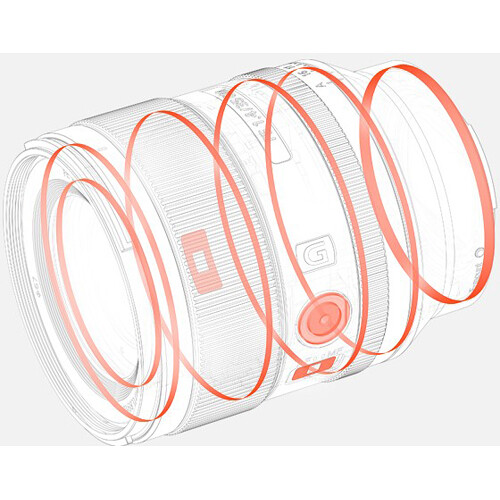
For older lenses and bodies, yes this is true, but Sony has made improvement to weather sealing and stresses that now. My A7RIV claims better weather sealing than my previous A7RIII and the new Sony 20G and 35mm GM have full gasketing, including buttons, switches and the rear gasket. Look at the diagram of the 35GM below, if this doesn't keep the lens dry, I don't know what would.
I'm super curious about this lens and have been planning to buy it.
Some of the images here make me still want it. Some not so much.
The last two Jonathon, were they taken at f/2?
I'm not a bokeh snob, at least not an extreme one, but the background blur call for some attention in those images. Hmm...
Mar 27, 2021 at 10:19 AM
Steve Spencer Online • • • • • • • Upload & Sell: On
Jonas B wrote:
I'm super curious about this lens and have been planning to buy it.
Some of the images here make me still want it. Some not so much.
The last two Jonathon, were they taken at f/2?
I'm not a bokeh snob, at least not an extreme one, but the background blur call for some attention in those images. Hmm...
Interesting. I can be a bit of a bokeh snob and I am pleasantly surprised by the bokeh in those images. Maybe that is because I have low expectations. It shows bokeh of what I expect from the better APO lenses, which is bokeh free from obvious defects but high in contrast. I really prefer bokeh that is lower in contrast, but I see part of the price to be paid with an APO lens is that I am not going to get that. I am happy as long as there isn't double outlining, onion rings, axial CA (here APO lens have an advantage), harsh outlining, etc. In Jonathan's shot I see some mild outlining and high contrast, but no other clear nasties, so it look about a good I could expect from an APO lens to me.
Right, bokeh looks very good with this pictures. These are very high contrast situations so look at the dress of the little girl in the last picture. I am really a bokeh photographer doing a lot with the 100 STF and I just ordered this lens.
OK, you are right and I'll have to correct myself. Thinking about it I am a bokeh snob. Somewhat.
Furthermore, I agree with you (both Steve and Garten), at least partly. This is about what one can expect and something we recognize from the 50mm APO. I guess I had hoped for something softer. My expectations was higher but perhaps not a result of logical thinking.
I think I hoped for something more to my taste as I just have checked the Samyang 35/1.8 and the new Sigma 35/2 DG DN carefully and I'm not really happy with any of them.
Saying the bokeh looks good, even very good, is stretching it though. This is clinical and somewhat disturbing.
Jonas B wrote:
I'm super curious about this lens and have been planning to buy it.
Some of the images here make me still want it. Some not so much.
The last two Jonathon, were they taken at f/2?
I'm not a bokeh snob, at least not an extreme one, but the background blur call for some attention in those images. Hmm...
The last two were both taken at f/2.8, Jonas. Almost all my pictures are taken at either f/2.8 or f/5.6 and the fact that the apertures of the APO-Lanthar 35mm and 50mm lenses are rounded at these values (plus f/16 for the 35mm) is of enormous value to me. Ten years ago I preferred buttery bokeh but now, with the 35mm and 50mm lenses that I mostly use, I want the background content to be legible.
The sculpture of the female head alone is not something I would normally photograph or, if I had photographed it, bother to post-process. I included it (and the first two photos) because I hoped they might provide some useful information about the lens. If I had been able to make an interesting *picture* at that moment (which would have required some other element in addition to the sculpture) the background blur would not have troubled me.
Are you sure, EXIF says f/2 and f/3.4? I assumed it was wide open and the half stop between f/2.8 and f/4? Honest question, I peeked before you replied.
tsdevine wrote:
Are you sure, EXIF says f/2 and f/3.4? I assumed it was wide open and the half stop between f/2.8 and f/4? Honest question, I peeked before you replied.-Tim
Aperture EXIF from M cameras is quite unreliable since there is no electronic connection between the lens and the body. The camera makes a guess based on the ambient light, shutter speed, ISO, and the maximum aperture of lens set via the menu—the latter being either assigned automatically for lenses with 6-bit coding or manually (as occurred in this case). If I post a Leica M photograph on FM, you can pretty much assume it was taken at f/2.8 or f/5.6.
Makes perfect sense thanks, I never thought about that. I'm used to either no EXIF for aperture due to adapted lenses or accurate aperture.
genji wrote:
Aperture EXIF from M cameras is quite unreliable since there is no electronic connection between the lens and the body. The camera makes a guess based on the ambient light, shutter speed, ISO, and the maximum aperture of lens set via the menu—the latter being either assigned automatically for lenses with 6-bit coding or manually (as occurred in this case). If I post a Leica M photograph on FM, you can pretty much assume it was taken at f/2.8 or f/5.6.
genji wrote:
Aperture EXIF from M cameras is quite unreliable since there is no electronic connection between the lens and the body. The camera makes a guess based on the ambient light, shutter speed, ISO, and the maximum aperture of lens set via the menu—the latter being either assigned automatically for lenses with 6-bit coding or manually (as occurred in this case). If I post a Leica M photograph on FM, you can pretty much assume it was taken at f/2.8 or f/5.6.
+1. None of my M-lenses is 6-bit coded and the EXIF information seems still the same. Most of the time I don't tell my M 240 which kind of specific lens is attached either (I use many other brand M-lenses which are not even listed, so I simply ignore this option even with my Leica M lenses) - it makes no difference what the EXIF registers as values from my experience. Actually my LTM-attached lenses show similar values in the EXIF files depending on the aperture used. I simply use this information as rough estimate only if the photo was taken wider open or more closed down.
For wider lenses I sometimes apply in CS6 lens corrections from the Adobe lens database (it changes a bit but not much, so I sometimes forget to apply ), but for everything 50 mm and longer it is IMO useless anyway.
I wrote: (...)
The last two Jonathon, were they taken at f/2?
I'm not a bokeh snob, at least not an extreme one, but the background blur call for some attention in those images. Hmm...
genji replied: The last two were both taken at f/2.8, Jonas. Almost all my pictures are taken at either f/2.8 or f/5.6 and the fact that the apertures of the APO-Lanthar 35mm and 50mm lenses are rounded at these values (plus f/16 for the 35mm) is of enormous value to me. Ten years ago I preferred buttery bokeh but now, with the 35mm and 50mm lenses that I mostly use, I want the background content to be legible.
The sculpture of the female head alone is not something I would normally photograph or, if I had photographed it, bother to post-process. I included it (and the first two photos) because I hoped they might provide some useful information about the lens. If I had been able to make an interesting *picture* at that moment (which would have required some other element in addition to the sculpture) the background blur would not have troubled me....Show more →
Thanks you for getting back on this.
I wasn't sure they were taken wide open. I assumed that at first (common FM style when showing what a lens can do, never stop down....) but there was something telling me they could have been stopped down somewhat.
Yes, round aperture openings are fine! Of course, "wide open" nearly always also means a round opening. So f/2 should be OK as well with this lens, no? Anyway, I really like the Cosina/Voigtländer take on the shape of the aperture blades in this case!
However, there is always a "but"!
It is common that the bokeh gets a bit softer/more rounded/easier on the eyes when stopping down a stop or two.
In the last two images we can see, quoting Steve, "some mild outlining and high contrast". I find this disturbing but this is very much down to personal taste. So, what would the same image taken at f/2 look like? Is the "mild outling" the same or is it...let's say "less mild"?
I realize you haven't had the lens for long so maybe no clear reply is possible yet.Have you seen differences in background rendering between f/2 and f/2.8?


 ), but for everything 50 mm and longer it is IMO useless anyway.
  I'll see myself out.