Have also posted this on a related thread below, but thought I would also start a more general thread.
I was hoping that those of you using or having used CamRanger 2 with the A7R IV or III might share your more recent experience please. I am still having some issues with this combination (getting Camera Busy error when I try to change focus) but Dave at CamRanger continues to be very responsive, so expect to get this sorted. My application is a bit unusual: focus stacking for panoramas, either landscape or architecture. So there is a need to standardise the focus between shots which will be stitched for the pan. I bought the CamRanger 2 for the automated focus stacking as a solution to this, but found out that auto focus stacking does not work with Sony, only the old manual version. Dave at CamRanger suggests I can get a standard reference point between shots by starting at the closest focus point for the lens and then taking a couple of big jumps. Hoping to try this soon.
My question is what folks are using for focus stacking on the A7R IV or III, and is there anything out there that could help guarantee identical focus between shots (as one normally does when not using focus stacking by locking the focus across all the shots by switching to MF after choosing a focus point)? Any difference in focus between shots leads to alignment problems in PTGUI and other software. Thanks very much for any thoughts on this!
Solutions completely outside CamRanger are also welcome, I am just keen for a way to get sets of focus stacked shots that are perfectly aligned with one another to stitch for a pan. Thanks for any thoughts!
I have a slightly different workflow that usually works for me when I make focus-stacked panos. I don't use CamRanger to change focus but use the Sony bluetooth remote. For each stack I start by focusing the lens to the closest or furthest object and then take a lot of photos until I get to the other end of the focus range. It doesn't matter if I take different amounts of photos for each stack as long as I get enough of them to get everything in focus. So on one stack I start on a close object and finish and the furthest object, the next stack would be the opposite, furthest first, and end on the closest object. Back on the computer I run the focus stacking program (helicon) on each stack first, and then I stitch all the stacks together (auto pan pro). It sounds like you might be stitching first, then focus stacking second.
There are a lot of ways to do focus stacking. For a panorama, I usually focus at the closest point then execute the panorama. Focus on the next point and re-execute the panorama. With something like a Nodal Ninja Rotator, you can precisely repeat the frames in the pano.
Another way to guarantee the focus is the same in multiple shot stitches is to use the distance scale with manual focus. I.e. do the focus stack at say 2m, 5m, 10m. If you set the distance to when the number changes (i.e. when 9 turns into 10), it is fairly repeatable.
sbay wrote:
There are a lot of ways to do focus stacking. For a panorama, I usually focus at the closest point then execute the panorama. Focus on the next point and re-execute the panorama. With something like a Nodal Ninja Rotator, you can precisely repeat the frames in the pano.
Another way to guarantee the focus is the same in multiple shot stitches is to use the distance scale with manual focus. I.e. do the focus stack at say 2m, 5m, 10m. If you set the distance to when the number changes (i.e. when 9 turns into 10), it is fairly repeatable.
Agreed, I also use those 2 methods, but in the second one with manual focus I made a minor addition of a piece of white tape. I place the tape on the barrel over the distance numbers and I focus the lens to all the important parts of the scene and make a mark on the tape. Then when I'm adjusting the focus for the stack, I make sure to hit all the marks.
Very interesting, as long as you have enough points in common that are properly in focus between the stacks you will stitch, it is sufficient to get a good stitch even if rhe exact focal points are not the same. Thanks for this good suggestion! The question that comes to mind for me is: if you are essentially manually sorting out the focus algorithm for each shot, what is the advantage of using the Sony BT controller? Maybe I am not understanding the speed it confers? With Camranger 2, there is a min of 7 seconds between each shot in the stack. But if the Sony BT is letting you somehow shoot a stack in a matter of seconds, I can certainly understand the advantage. And if memory serves, the cost is quite a bit less on the Sony BT, the CR 2 is over £400! Thanks very much for the clarification!
Thanks for this! I am wanting to make sure that I understand. I use a Really Right Stuff PG-01 panorama head and RRS nodal slide on a ball head, so I can readily do multilayer pans. But when I come back to shoot the next iteration of the pan at a different focus, how tight are the tolerances in terms of being in perfect alignment with the previous one? I remember when I first started doing HDR pans, I initially tried to make 5 or 7 or 9 pans, one for each exposure, but when I would merge them they would sometimes be off by a pixel or two and I would get strange ghosting effects. So now I do the DHR merge first and then stitch the pan. Not sure if this is analogous? Anyway, just trying to understand how careful I would have to be to get each iteration of the pan at a different focus perfectly lined up with the last.
Thanks for your guidance! This is a great forum, I have been scratching my head in these issues for weeks and not finding answers as good as the ones I have had today!
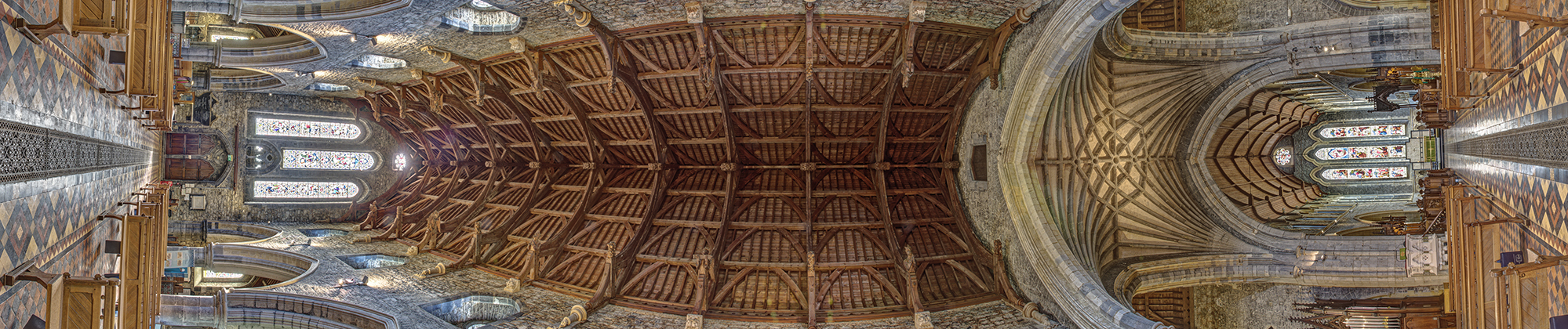
OK, here is the ceiling of Christchurch in Dublin. I shot this vertical pan back in July, during lockdown. This has HDR (9 exposures in each of 12-15 shots that make up the pan), but no focus stacking. I need to find a good site for sharing these pan images, they are huge even when down-rezzed, this very small version kind of defeats the purpose of "seeing it all" with a pan. I think this looks like some kind of tropical shell...
Nathan -- the BT controller allows you to adjust the focus remotely and if you hit the advance button 3 times, the amount of shift is perfect for focus stacking. So it's not completely automatic but easier than manual focus or picking points out with AF. I haven't used this personally because the focus advance didn't work with my lens (sigma 14-24) until a recent firmware update.
Regarding the RRS PG-01 -- that is the pano head I use. However it is not indexed so if you want to repeat shots, you need to carefully align on the degree markings. I don't do that, instead I've mounted the PG-01 on a Nodal Ninja RD-10 so I can precise advance the frame a certain number of degrees. I don't know if this is precise enough for automatic HDR as I do manual exposure blending. But for manual blending it is great.
I focus blend everything, although I am finding with the lenses I own and shot at f/7.1 (or whatever), that i need only a few shots to get everything in focus.
I always start at the lower left and work my way across the frame. Then go to mid and then the high range if that makes sense. I work in thirds of the frame, if that makes sense. When shooting panos, I think you need like 25-30% overlap coverage when using PS (only program I have use when editing).
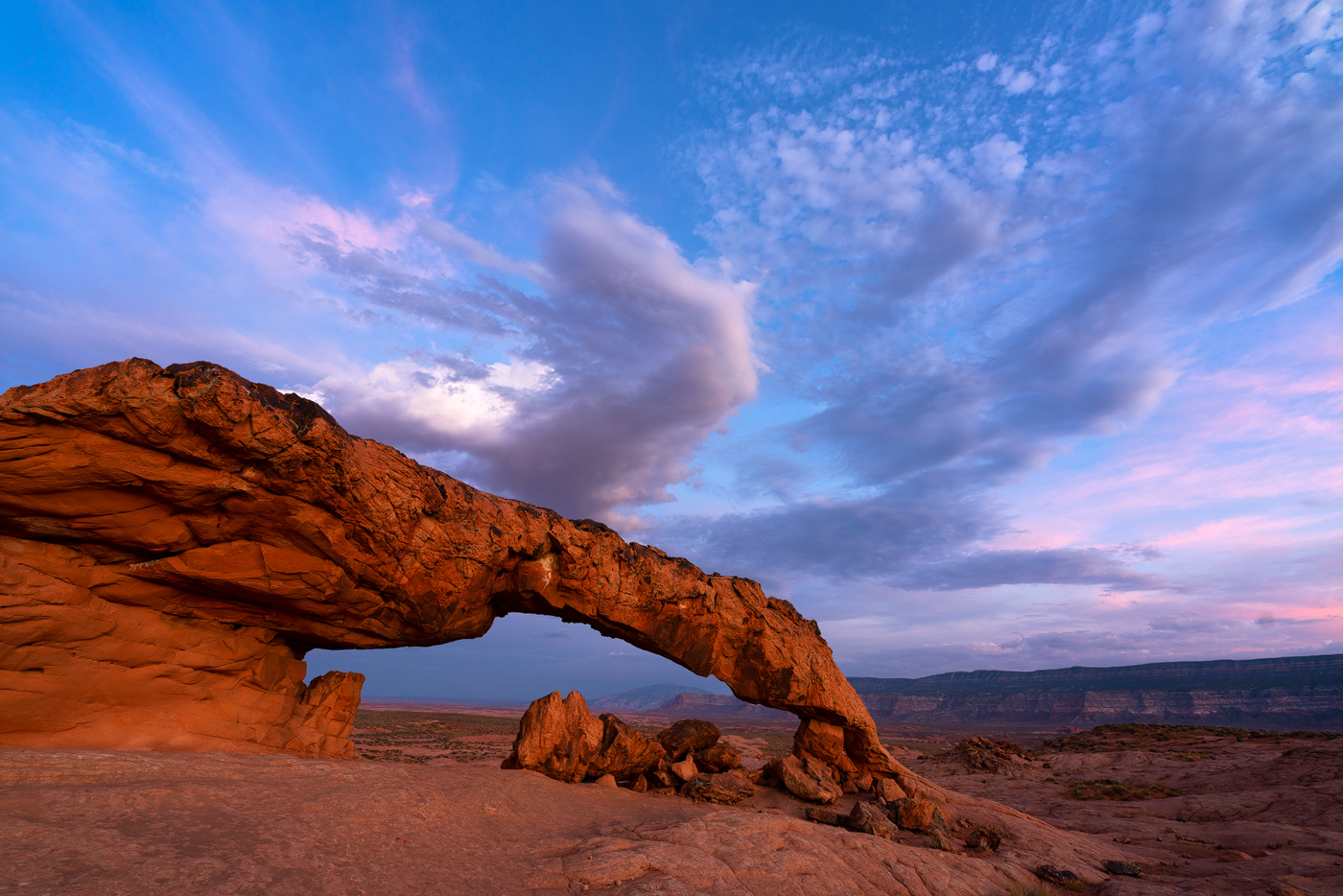
Here is one from my Sigma 14-24 - think I used 3 files.
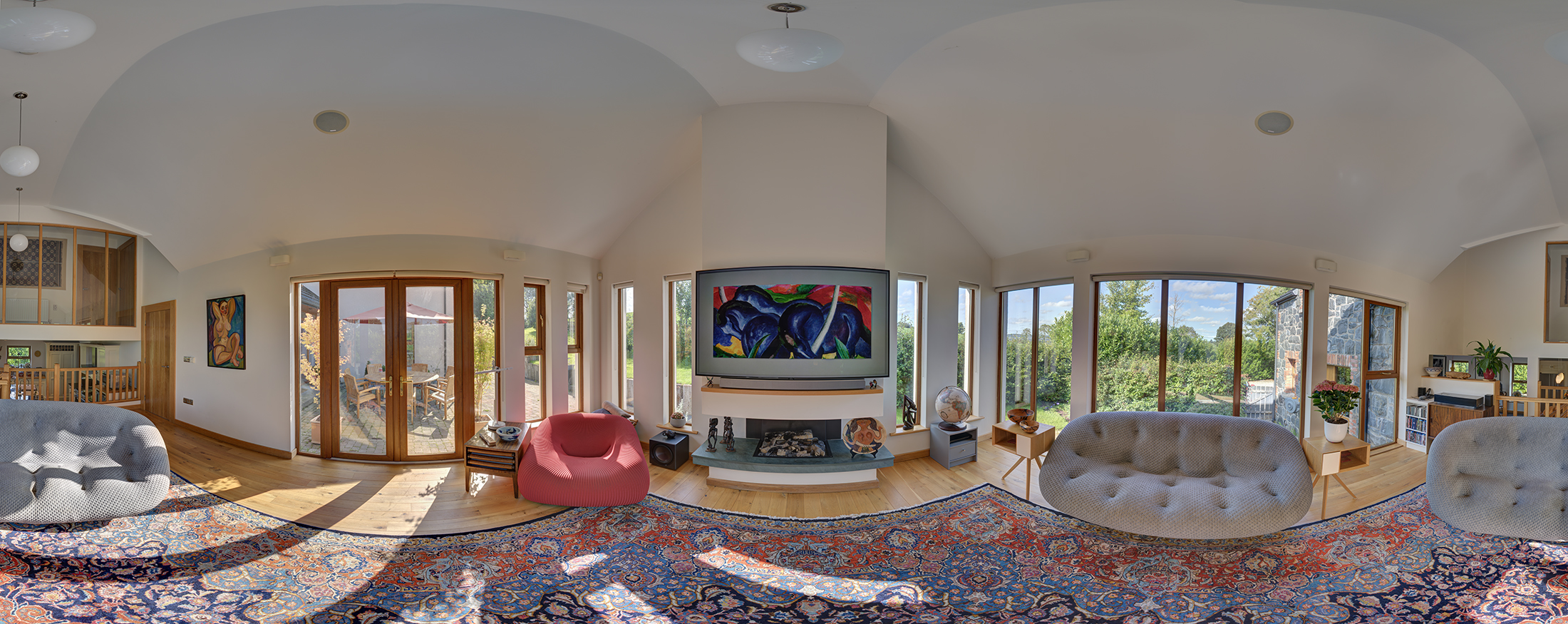
Here are a few more HDR pans. The one in the living room is a multi-row pan of 80 images, each done with 9 exposures in PhotoMatix and then stitched in PTGUI. St Canice Cathedral was done on a recent trip to Kilkenny (we live in N Ireland, so it's easy to drive down, even now). It is a vertical pan done with HDR to capture the stained glass windows.
I like the way the distortions of a really wide angle pan can create an abstract image and bring out symmetries you wouldn't otherwise be aware of.
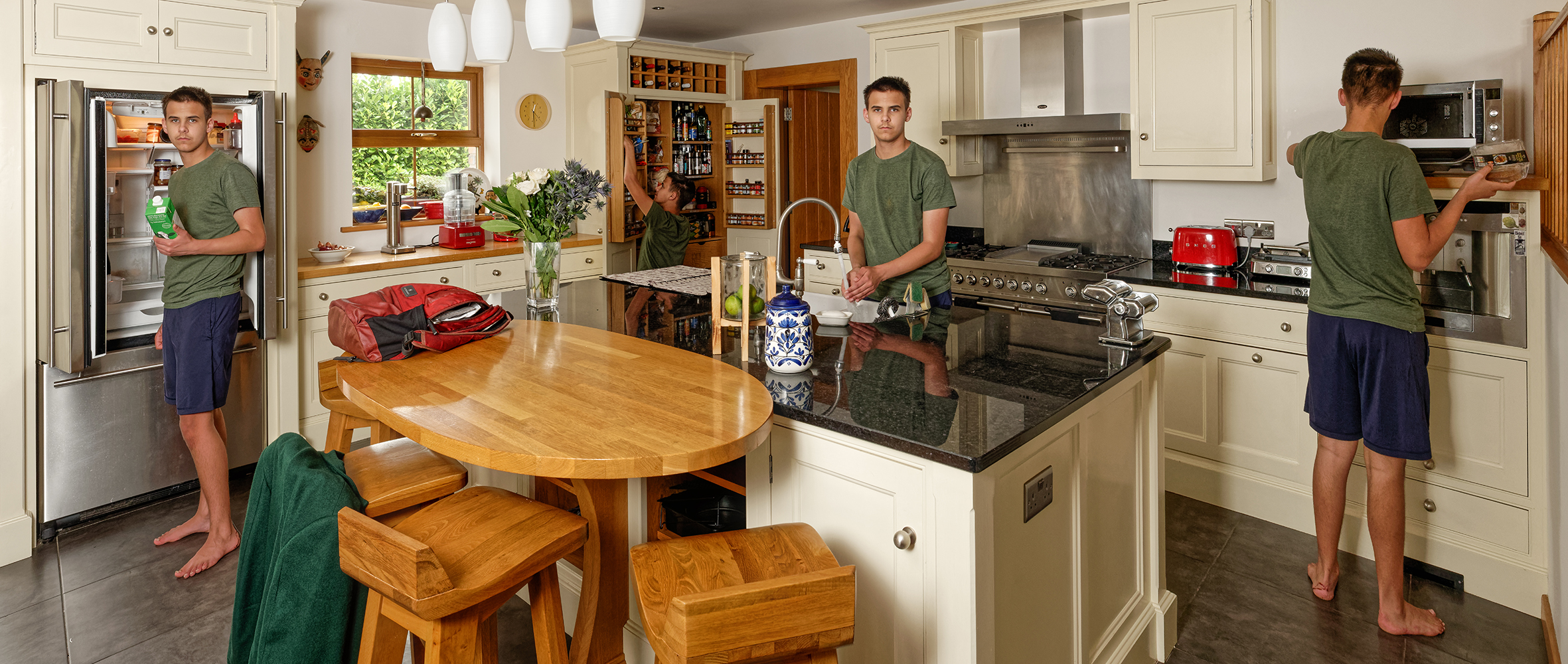
And then that's my son, where he likes to be, in the kitchen! I enjoy pan portraits, and sometimes it can be fun to create "twins" (or triplets or quads, as here).