airfrogusmc wrote:
In my opinion if you are shooting a lot with anything longer than 90mm then Leica M is clearly not you. The one lens I thought I would really miss when I switched over to Leica M was the Canon 200 2L. I haven't missed it at all.
+1. I have taken very good shots with my M cameras and the Leica 135/4.5 Hektor lens. I rarely use tele lenses on my Leica cameras though because the majority of my photos were and are always taken at 50 mm and wider. 90 mm is excellent for portraits with the Leica M but I am not doing portrait shots often either.
This brings me to a IMO rarely discussed point regarding Leica cameras. Looking online and even here on FM in the Leica photo threads, it seems the big majority uses Leica M cameras for people and street photography. It also makes sense that this is the case for reasons already stated here earlier. Even Leica-sponsored exhibits favor to the most part people photography of any kind. There are a few exemptions though when Leica spotlights famous photographers sponsored by Leica which favor a different style - Ralph Gibson is one to mention. Leica has always been and still is very strong with the rangefinder system for people and street photography, but the system can be applied to lots more than this. This gets especially important since there are many very good alternatives out there allowing this kind of shooting in similar (not only rangefinder based) ways like the Leica Q and Fuji MLCs.
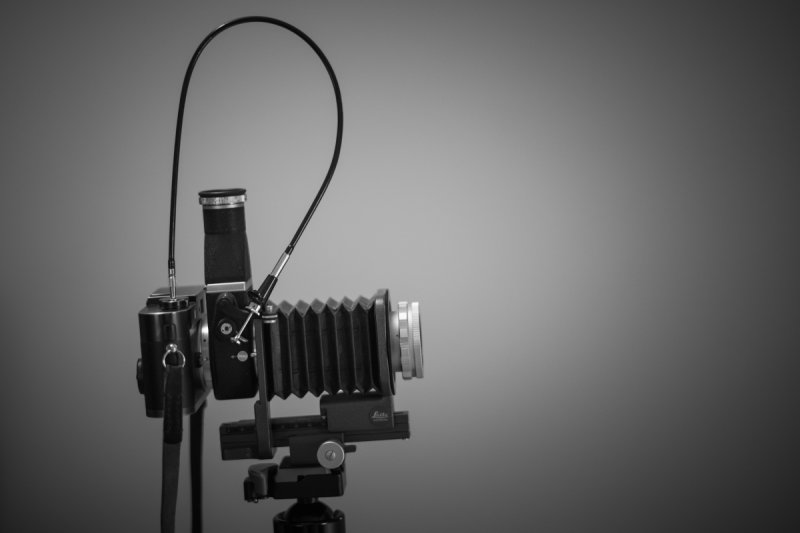
Biggest limitation of Leica M is the MFD with lenses between 0.7 to 1 meter. There are macro lenses/tools available to make this work with Leica M, but they are very pricey and more specialized. It is easy to do with any kind of (D)SLR or MLC - with extension tubes, close-up lenses, or reversed lenses. I know a few portrait shooters using Leica M cameras who are bugged by this limitation since they have a hard time to get closer to the subject than 0.7 meters.
Yeah I've seen the post on Huff. And I agree that is the look. So also think the mirror shot in the article shows it to.
I also think there is something to the lens design and certain designers have designed lenses that exploit it more that others have. With Leica I think Mandler comes to mind. I do think it is much more shallow DoF. I think at times the Elmatit 24 2.8 ASPH can really give that 3D Leica look to an image. Not so much the glow.
IIRC I read somewhere an interview with Peter Karbe where he was talking about lens design. As you know he has designed some of the modern Leica lenses. He said the good thing about Leica is you have an archive of decades and decades of lens design and if a designer wants a certain look from a lens he has history to pull from to help. Thoiugh it is a bit slanted but still a good read. https://www.leica-camera.blog/2020/02/27/peter-karbe/
Many modern lenses from other makers are now designed by computers. And a lot of the lenses that are designed that way are really sharp but have little charcter. And that of course is subjective. You know I have a lens that in certain situations I love to use just becasue of its character. A 1950 Soviet Jupiter. It renders nothing like modern glass. They are dirt cheap to. Less than a C note.
Not all Leica, Zeiss and Voigtlander lenses have a distinct look to them. But many do. And again this is of course all subjective. I love the way the Voigt 50 1.2 Nokton renders in some situations. I know I am not the norm but I really like the way the 35 Lux FLE renders. it is my favorite 35mm lens I have ever shot with, Also the 90 Cron APO. I also really like some of the Zeiss offerings. I have a 35 2.8 Biogon C that is a great little lens.
Kent, Oh yeah it is way different from any other non rangefinder system I have shot with. Just a short putt up 55. Good excuse to get the scooter pointed north ha ha. I'll buy lunch or dinner.
retrofocus wrote:
+1. I have taken very good shots with my M cameras and the Leica 135/4.5 Hektor lens. I rarely use tele lenses on my Leica cameras though because the majority of my photos were and are always taken at 50 mm and wider. 90 mm is excellent for portraits with the Leica M but I am not doing portrait shots often either.
This brings me to a IMO rarely discussed point regarding Leica cameras. Looking online and even here on FM in the Leica photo threads, it seems the big majority uses Leica M cameras for people and street photography. It also makes sense that this is the case for reasons already stated here earlier. Even Leica-sponsored exhibits favor to the most part people photography of any kind. There are a few exemptions though when Leica spotlights famous photographers sponsored by Leica which favor a different style - Ralph Gibson is one to mention. Leica has always been and still is very strong with the rangefinder system for people and street photography, but the system can be applied to lots more than this. This gets especially important since there are many very good alternatives out there allowing this kind of shooting in similar (not only rangefinder based) ways like the Leica Q and Fuji MLCs.
Biggest limitation of Leica M is the MFD with lenses between 0.7 to 1 meter. There are macro lenses/tools available to make this work with Leica M, but they are very pricey and more specialized. It is easy to do with any kind of (D)SLR or MLC - with extension tubes, close-up lenses, or reversed lenses. I know a few portrait shooters using Leica M cameras who are bugged by this limitation since they have a hard time to get closer to the subject than 0.7 meters. ...Show more →
Yeah I agree about the MFD. One thing I like about the 50 Voigt 1.2 is it can focus down to 2 ft. For any macro or close up work I have one of these.
I photographed one of my clients extensive car collections over a couple of winters and early springs in 2018 and 2019. Average of 2 cars a day. And I shot them all with Leica M and it was an amazing experience. For those who haven't seen the work here is a link and this is such a small sample of the project. https://www.fredmiranda.com/forum/topic/1643295/0?keyword=collection#15203355
Poking fun, but I enjoyed using a good cable release, too. That, and the mantra that your best 2nd lens is a tripod.
Hmmm, let me think about this ... went to digital for the purpose of variable film profiling. Did NOT go to digital for the purpose of AF (came along for the ride).
airfrogusmc wrote:
I photographed one of my clients extensive car collections over a couple of winters and early springs in 2018 and 2019. Average of 2 cars a day. And I shot them all with Leica M and it was an amazing experience. For those who haven't seen the work here is a link and this is such a small sample of the project. https://www.fredmiranda.com/forum/topic/1643295/0?keyword=collection#15203355
Judging by the pictures the rangefinder works really well for you!
Your need to prove that rangefinder technology is better than other alternatives though, that's where you lose me...
For me it is a different user experience, not better, not worse, and if you like that experience better you are indeed likely to produce better images, but you can't generalize that for everybody IMO.
Leica M is perfect for the way I see and work so I don't need to prove anything about technology to anyone. In fact to me all the stuff (technology that doesn't improve my work) just gets in my way.
airfrogusmc wrote:
Yeah I've seen the post on Huff. And I agree that is the look. So also think the mirror shot in the article shows it to.
I also think there is something to the lens design and certain designers have designed lenses that exploit it more that others have. With Leica I think Mandler comes to mind. I do think it is much more shallow DoF. I think at times the Elmatit 24 2.8 ASPH can really give that 3D Leica look to an image. Not so much the glow.
IIRC I read somewhere an interview with Peter Karbe where he was talking about lens design. As you know he has designed some of the modern Leica lenses. He said the good thing about Leica is you have an archive of decades and decades of lens design and if a designer wants a certain look from a lens he has history to pull from to help. Thoiugh it is a bit slanted but still a good read. https://www.leica-camera.blog/2020/02/27/peter-karbe/
Many modern lenses from other makers are now designed by computers. And a lot of the lenses that are designed that way are really sharp but have little charcter. And that of course is subjective. You know I have a lens that in certain situations I love to use just becasue of its character. A 1950 Soviet Jupiter. It renders nothing like modern glass. They are dirt cheap to. Less than a C note.
Not all Leica, Zeiss and Voigtlander lenses have a distinct look to them. But many do. And again this is of course all subjective. I love the way the Voigt 50 1.2 Nokton renders in some situations. I know I am not the norm but I really like the way the 35 Lux FLE renders. it is my favorite 35mm lens I have ever shot with, Also the 90 Cron APO. I also really like some of the Zeiss offerings. I have a 35 2.8 Biogon C that is a great little lens.
I remember listening to an interview a few years back with the current owner of Cooke Optics and when asked about the ability to produce, reproduce the Cooke signature look, he said something like, "oh that's the easy part..."
Like you, and based upon what I read and see, I suspect the look is indeed an optical formula, both pre and post computer aided design supported by the fact that some people recognize a certain signature look ( Leica, Cooke, Zeiss) across different camera sensors. Some lenses are designed with the signature look and maybe some lenses are not, or maybe extreme corrections of some modern day optics might obscure the look more than others. Again, just speculation on my part.
In my own work, I think I see the look more often with the 50 Lux/ASPH and it is the reason I decided to keep the 50 Lux instead of the very nice and highly regarded Voigtlander 50 1,2 for a fraction of the cost of the Lux when I did a hands on side by side comparison of the two and why I didn't even bother to try the newest even more fantastic Voigt 50/2.
FWIW, I also see what I perceive as the Zeiss Look in some of my Batis lenses too. But I don't yet recognize any signature look in any of my Sony or Zeiss-Badged Sony lenses so far.
If a 50 was really the way I see naturally I would probably have picked up a Noctilux 1.0. The camera and lens I do 85% of personal work with is the M Mono and the 35 Lux FLE. When I retire I will probably dump all of my color bodies and most of my glass except maybe the 35 Lux FLE, 24 Elmarit and the 90 Cron APO.
airfrogusmc wrote:
Technology is not why one picks a rangefinder.
And that is just one reason I prefer Leica M.
Leica M is perfect for the way I see and work so I don't need to prove anything about technology to anyone. In fact to me all the stuff (technology that doesn't improve my work) just gets in my way.
I would however say there is an awful lot of high tech under the Leica M10 hood. IMO Leica has down a marvelous job of streamlining old world look/feel and results of Rangefinder technology integration with modern day, miniaturized high tech digital electronics to present a very simplistic Rangefinder user experience.
For some reason, I think this high design concept and result is often missed by many that can't understand why the love for the Leica M system even in 2020.
airfrogusmc wrote:
If a 50 was really the way I see naturally I would probably have picked up a Noctilux 1.0. The camera and lens I do 85% of personal work with is the M Mono and the 35 Lux FLE. When I retire I will probably dump all of my color bodies and most of my glass except maybe the 35 Lux FLE, 24 Elmarit and the 90 Cron APO.
Me too. The 35 Lux FLE/ASPH is my most used Leica M lens. The world is only a point and shoot nanosecond away with the 35/Lux at F8 set to 14-15' Ha Ha.
I started my Leica adventure with the 35/50 Lux lenses kit. After a long term hunt, added the Noctilux 50 0,95 to my kit last year luckily just before the last big price hike. Beautiful lens both in make and results, but I really like the special look of the tiny 50 Lux too, so here I am all 50'ed up.
LBJ2 wrote:
I would however say there is an awful lot of high tech under the Leica M10 hood. IMO Leica has down a marvelous job of streamlining old world look/feel and results of Rangefinder technology integration with modern day, miniaturized high tech digital electronics to present a very simplistic Rangefinder user experience.
For some reason, I think this high design concept and result is often missed by many that can't understand why the love for the Leica M system even in 2020.
Yeah agree it doesn't function like a high tech bells and whistles camera. Thank God.
Got a couple questions ... bear in mind these are related to the process of transition and working with current glass.
Can you use adapted lenses Leica R, Oly, C/Y, etc. on the M mount, and what limitations would the use of non-M glass have on focusing. I'm good with aperture priority or manual exposure. Yes, I know the M glass is the point ($$$ is another point) ... but, since I've already got my arsenal of manual primes, to what degree are they viable on the M bodies?
SL body ... same question, but to include the M glass adapted to L mount?
airfrogusmc wrote:
I think R lenses can be adapted to M. Not sure. I'm sure there is someone here that can speak to that and M to L.
I am pretty certain that any kind of manual focus lenses with aperture ring and longer flange distance will work with adapter on Leica M cameras. What will not work is the rangefinder focusing - you would need to rely either on zone focusing with Leica M film cameras or LiveView/EVF focusing with digital Leica M. I have done this for example with my Peleng 8 mm fisheye (D)SLR lens by using an EF/M mount adapter. For ultra-wides and fisheye lenses zone focusing is good enough anyway in most cases.
One culprit maybe is the thinner sensor stack on Leica M digital cameras: (D)SLR lenses might not be so optimized for this kind of usage here. I have never read anywhere if this difference is actually visible in the photo.
retrofocus wrote:
I am pretty certain that any kind of manual focus lenses with aperture ring and longer flange distance will work with adapter on Leica M cameras. What will not work is the rangefinder focusing - you would need to rely either on zone focusing with Leica M film cameras or LiveView/EVF focusing with digital Leica M. I have done this for example with my Peleng 8 mm fisheye (D)SLR lens by using an EF/M mount adapter. For ultra-wides and fisheye lenses zone focusing is good enough anyway in most cases.
One culprit maybe is the thinner sensor stack on Leica M digital cameras: (D)SLR lenses might not be so optimized for this kind of usage here. I have never read anywhere if this difference is actually visible in the photo. ...Show more →
No Rangefinder focusing. If I remember correctly, that is what I encountered when I adapted the Voigt 58/1.4 Sl II F AIS Nikon mount to the Leica M 10.
RustyBug wrote:
Got a couple questions ... bear in mind these are related to the process of transition and working with current glass.
... on the M mount, and what limitations would the use of non-M glass have on focusing.
Limited to EVF or Zone Focusing. Any manual lens needs zone focusing markings on the lens if you opt for zone focusing. EVF you get accurate focusing on any lens. Adapters are available for most mounts. I have FD,F, MD and EF(Wide open shooting only). My favourite non Leica M lens to use is Nikon 28 D F/1.4 which I use with the EVF. I enjoy using my Canon FDs which I can use zone focusing if I choose as my lenses have zone focus markings. I also find that the FD on the Leica Monochrom feels just like my Canon F1.
As others said Rangefinder focusing is not available though you can still look through it to see the scene as if it the camera has an approximate FOV of 28mm lens but no framelines or focus window will appear. Thus essentially an approximate 28mm optical viewfinder no matter what lens you attach.
I like the option of attaching my manual focus lenses but as time progresses I tend to use my M lenses more often.