philip_pj
Offline
• • • • • •
Upload & Sell: On
|
 p.2 #5 · How is Sony Image quality better than Canon? p.2 #5 · How is Sony Image quality better than Canon? | |
'I am interested to know what does that 2.5 point of dynamic range difference at iso100 do in a real life scenario?'
1. DR matters so much that all the top DR cameras are in high end medium format cameras. You can check at the PTP site, click on the 'Maximum PDR' column header. The 5D3 up to a7r gain is over 2.7 stops at/near ISO 50 and the gap stays significant before narrowing at ISO 800, a span of around four stops at landscape ISO levels (and with IBIS, h/h becomes viable at lower ISOs).
2. A threshold comes into play for high SBR (subject brightness range) scenes, excluding specular highlights and acceptable black tones. It varies of course, but for me it's 10 in Bill Claff's scale. Less than 10 is a concern, often a shot lost to ugly compressed highlights, blocked resistant shadows. Even if rescuable, it will take more effort for less quality in the resulting image. Sony's big leap forward came with the 2012 a99v, which delivered a huge increase of 1.7 stops over the a900. BTW, the 2008 a900 still delivers 0.7 stops more DR than the 2015 5D3. Sony moved on DR from the very beginning.
3. With very high SBRs, you are forced to reduce exposure to just sneak highlights into the histogram without clipping (hence the risky fudge of using ETTR for RAW images, a time-honoured Canon move). With poor DR, the image data forms a concertina as it is compressed into a narrower band, with midtones and higher tone shadows jammed up at the bottom of the histo distribution.
4. As you can imagine, this greatly disrupts any attempt at representing the image faithfully to what you saw (this will be painfully familiar to anyone who ever used E6 transparencies). This often includes what attracted you to take the shot in the first place. So you try to lift midtones, dragging up some shadow data, but much of the bottom end remains stubbornly attached to the black point zone. It's painful at times.
5. With over 2.5 stops extra to play with, PLUS stronger recovery and very good (made to fix Canon) RC s/w, exposure losses are virtually a thing of the past. Images are more authentic, colour is improved greatly and colour has much better tonal gradation - enhancing apparent image depth. Exposure becomes more a matter of choice - some of us believe meter exposure reading (or near) is usually best for protecting colour at the high end of the tone range. And slip ups are forgiven much more often, when you over-expose. Exposure bracketing is less of a necessity.
6. High (macro) contrast lenses become viable again, many have gain a new lease on life, on Sonys. Lenses can now be designed to match sensor characteristics (DR is the big one) so the whole process chain from design to final image is improved. Older, less contrasty (by design) lenses made for print film usage (weddings etc.) are very satisfying on Sonys.
7. On image start up, you see a good fasimile of the scene, helping you to decide your overall tone range targets, colour work required etc. You have a far better chance of ending up with BOTH elegant highlight detail and realistic well-graded shadow detail, AND you can decide your contrast levels yourself. You can now save more marginal images, turn more B images into A images, the As are much better, and have better vision in the post process phase.
8. Because nothing illustrates all this like real images, here are two different types of images, in scenarios that needed shadow work and highlight work to give viewers a sound look at what I saw (I shoot a documentary style). They both pretty much filled up the (2013) a7r histogram, shot in very harsh light. I'll finish by saying the DR advantage assists even with less extreme SBR scenes, no downside to it.

face skin and clothes had to be lifted a lot and retain good colour, some detail
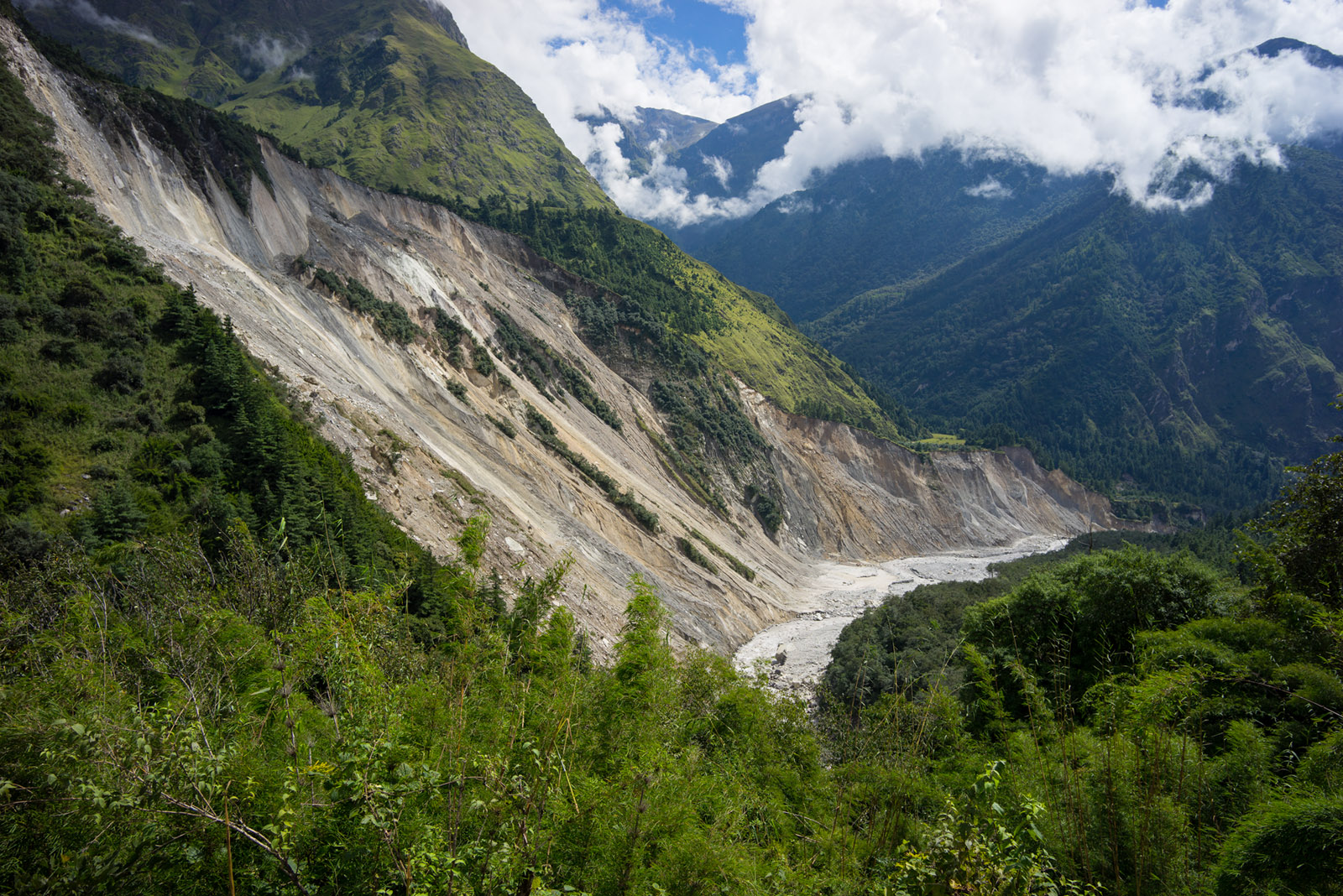
note cloud highlight tone spread and hillside shadow detail, separation of green hues
|


