This topic is in the 2019 archive. You can read it and like its posts here. It is read only.
Archive 2019Pre-order: Voigtländer 50mm f/2 APO-LANTHAR
p.20 #1Pre-order: Voigtländer 50mm f/2 APO-LANTHAR
Looks really good at f/2 and f/2.8, as promised. However, in between those two, you can see the effect of straight blades. Somewhat concerning for what this may do to bokeh busy-ness in those interim apertures, though I'm sure it'll be sharp as can be.
Really interesting design- I'd love to see the shape of the blades. Looks perfectly round at f/2.8.
I'm much more in the "round blade / smooth bokeh" camp, not a fan of sun stars at all, but I'm stoked we may get the best of both worlds with this one.
lunar module wrote:
Quick summary of Japanese video showing bokeh ball findings at varying apertures:
Oct 18, 2019 at 08:01 PM
p.20 #2Pre-order: Voigtländer 50mm f/2 APO-LANTHAR
Fred Miranda wrote:
https://dc.watch.impress.co.jp/docs/news/1211601.html
At f4 it is very close to the 1130g Milvus 35mm f1.4 (14/11), but has better corners. At f2, it is in the technical class of the APO-Summicron-SL 50 f/2 Asph, a 740g 12/10 AF item, yet to be released. ($4500).
It will most definitely pair well with the 21/3.5, with only a great short tele portrait/general lens yet to appear, specific to E mount. A revised 75/1.5 VM (or a similar 90-100/2) would round out a great three lens kit weighing under a kilo.
People may try to paint it as a 'landscape lens', but it is more designed after Leica's better 50mm portrait/general lenses, and just happens to have the superb resolution of new lenses 2/3 times its weight/cost, with great versatility for much broader, real world usage.As far as resolution, it would probably pair better with the Loxia 21 and 85 lenses.
And the CV 21/1.4 ?
philip_pj wrote
'The figures in the MTF diagram are actually measured by mass-produced products, not by design values.'https://dc.watch.impress.co.jp/docs/news/1211601.html
At f4 it is very close to the 1130g Milvus 35mm f1.4 (14/11), but has better corners. At f2, it is in the technical class of the APO-Summicron-SL 50 f/2 Asph, a 740g 12/10 AF item, yet to be released. ($4500).
It will most definitely pair well with the 21/3.5, with only a great short tele portrait/general lens yet to appear, specific to E mount. A revised 75/1.5 VM (or a similar 90-100/2) would round out a great three lens kit weighing under a kilo.
People may try to paint it as a 'landscape lens', but it is more designed after Leica's better 50mm portrait/general lenses, and just happens to have the superb resolution of new lenses 2/3 times its weight/cost, with great versatility for much broader, real world usage.
And the CV 21/1.4 ?
Oct 18, 2019 at 08:05 PM
p.20 #3Pre-order: Voigtländer 50mm f/2 APO-LANTHAR
bjornthun wrote:
https://dc.watch.impress.co.jp/docs/news/1211601.html
At f4 it is very close to the 1130g Milvus 35mm f1.4 (14/11), but has better corners. At f2, it is in the technical class of the APO-Summicron-SL 50 f/2 Asph, a 740g 12/10 AF item, yet to be released. ($4500).
It will most definitely pair well with the 21/3.5, with only a great short tele portrait/general lens yet to appear, specific to E mount. A revised 75/1.5 VM (or a similar 90-100/2) would round out a great three lens kit weighing under a kilo.
People may try to paint it as a 'landscape lens', but it is more designed after Leica's better 50mm portrait/general lenses, and just happens to have the superb resolution of new lenses 2/3 times its weight/cost, with great versatility for much broader, real world usage.As far as resolution, it would probably pair better with the Loxia 21 and 85 lenses.And the CV 21/1.4 ?
Yes, for an exclusive Voigtlander set and striving for high resolution/contrast, perhaps CV 21/1.4, CV 50/2 APO and CV 110/2.5 APO. Just missing that 28mm!
Fred Miranda wrote
philip_pj wrote
'The figures in the MTF diagram are actually measured by mass-produced products, not by design values.'https://dc.watch.impress.co.jp/docs/news/1211601.html
At f4 it is very close to the 1130g Milvus 35mm f1.4 (14/11), but has better corners. At f2, it is in the technical class of the APO-Summicron-SL 50 f/2 Asph, a 740g 12/10 AF item, yet to be released. ($4500).
It will most definitely pair well with the 21/3.5, with only a great short tele portrait/general lens yet to appear, specific to E mount. A revised 75/1.5 VM (or a similar 90-100/2) would round out a great three lens kit weighing under a kilo.
People may try to paint it as a 'landscape lens', but it is more designed after Leica's better 50mm portrait/general lenses, and just happens to have the superb resolution of new lenses 2/3 times its weight/cost, with great versatility for much broader, real world usage.
Yes, for an exclusive Voigtlander set and striving for high resolution/contrast, perhaps CV 21/1.4, CV 50/2 APO and CV 110/2.5 APO. Just missing that 28mm!
 |
||
 |
||
|
Oct 18, 2019 at 08:13 PM
p.20 #4Pre-order: Voigtländer 50mm f/2 APO-LANTHAR
Fred Miranda wrote:
https://dc.watch.impress.co.jp/docs/news/1211601.html
At f4 it is very close to the 1130g Milvus 35mm f1.4 (14/11), but has better corners. At f2, it is in the technical class of the APO-Summicron-SL 50 f/2 Asph, a 740g 12/10 AF item, yet to be released. ($4500).
It will most definitely pair well with the 21/3.5, with only a great short tele portrait/general lens yet to appear, specific to E mount. A revised 75/1.5 VM (or a similar 90-100/2) would round out a great three lens kit weighing under a kilo.
People may try to paint it as a 'landscape lens', but it is more designed after Leica's better 50mm portrait/general lenses, and just happens to have the superb resolution of new lenses 2/3 times its weight/cost, with great versatility for much broader, real world usage.As far as resolution, it would probably pair better with the Loxia 21 and 85 lenses.And the CV 21/1.4 ?Yes, for an exclusive Voigtlander set and striving for high resolution/contrast, perhaps CV 21/1.4, CV 50/2 APO and CV 110/2.5 APO. Just missing that 28mm!
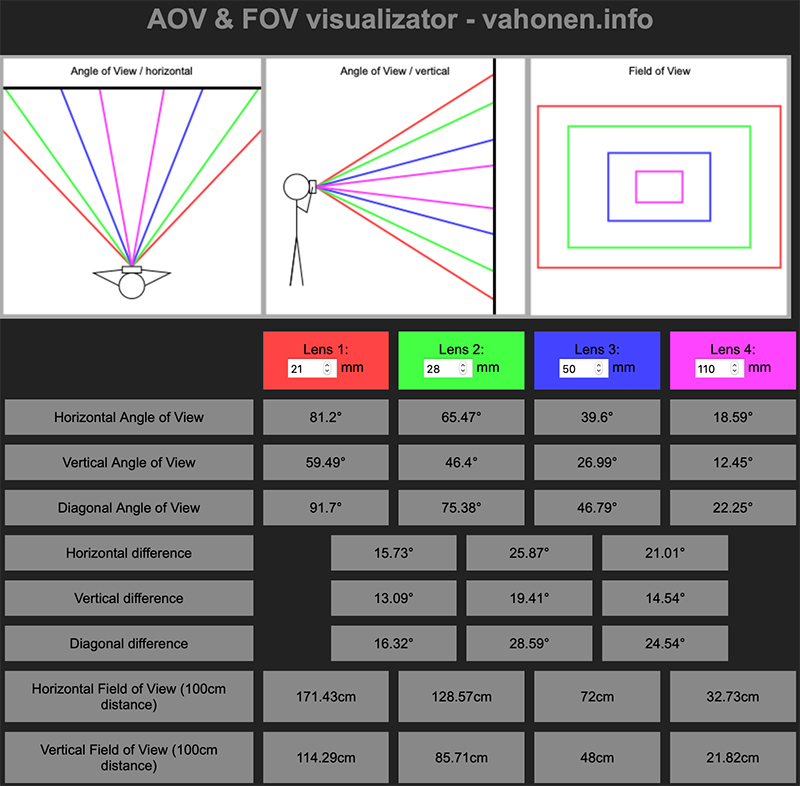
Wow, I just went to the website for that visualizer and it changes my perspective on things quite a bit. Thanks for posting it.
bjornthun wrote
Fred Miranda wrote
philip_pj wrote
'The figures in the MTF diagram are actually measured by mass-produced products, not by design values.'https://dc.watch.impress.co.jp/docs/news/1211601.html
At f4 it is very close to the 1130g Milvus 35mm f1.4 (14/11), but has better corners. At f2, it is in the technical class of the APO-Summicron-SL 50 f/2 Asph, a 740g 12/10 AF item, yet to be released. ($4500).
It will most definitely pair well with the 21/3.5, with only a great short tele portrait/general lens yet to appear, specific to E mount. A revised 75/1.5 VM (or a similar 90-100/2) would round out a great three lens kit weighing under a kilo.
People may try to paint it as a 'landscape lens', but it is more designed after Leica's better 50mm portrait/general lenses, and just happens to have the superb resolution of new lenses 2/3 times its weight/cost, with great versatility for much broader, real world usage.
Wow, I just went to the website for that visualizer and it changes my perspective on things quite a bit. Thanks for posting it.
Oct 18, 2019 at 09:54 PM
p.20 #5Pre-order: Voigtländer 50mm f/2 APO-LANTHAR
DavidBM wrote:
Definitely better than what I see from the Loxia 50/2.
Can't see axial / lateral CA either. Looking great!Nice almost free of sperochromatism!!
I also learn that that Japanese guys pronounces Apo Lanthar the German way, and almost (just a typical extra vowel sound in the middle) pronounces Voigtländer the German way! (he says Foacht-o-lender, whereas Foacht-lender is not a bad English way to represent the Germans sounds.
More exactly, the Japanese text on screen says フォクトレンダー. (My iPhone’s autocorrect suggested the complete word as soon as I’d typed the first three characters.) This transliterates as fokutorendaa but he pronounces it as foktorendaa which as you suggest, isn’t a bad way to represent the German sounds.
Fred Miranda wrote
Looking at the samples from the video above, I think rendering is quite pleasant (smooth) even at mid-distance.Definitely better than what I see from the Loxia 50/2.
Can't see axial / lateral CA either. Looking great!
I also learn that that Japanese guys pronounces Apo Lanthar the German way, and almost (just a typical extra vowel sound in the middle) pronounces Voigtländer the German way! (he says Foacht-o-lender, whereas Foacht-lender is not a bad English way to represent the Germans sounds.
More exactly, the Japanese text on screen says フォクトレンダー. (My iPhone’s autocorrect suggested the complete word as soon as I’d typed the first three characters.) This transliterates as fokutorendaa but he pronounces it as foktorendaa which as you suggest, isn’t a bad way to represent the German sounds.
Oct 19, 2019 at 12:49 AM
p.20 #6Pre-order: Voigtländer 50mm f/2 APO-LANTHAR
フォクトレンダー (fokutorendaa) is the Japanese katakana presentation of the original name, phonetically transcribed to closest sounding existing kana symbols. There is no 'v' in katakana so it becomes ’f' and there is no way to use a 'k' as standalone in katakana so it's combined with a vowel 'u'. By some luck it may sound close to German pronunciation 
genji wrote:
Definitely better than what I see from the Loxia 50/2.
Can't see axial / lateral CA either. Looking great!Nice almost free of sperochromatism!!
I also learn that that Japanese guys pronounces Apo Lanthar the German way, and almost (just a typical extra vowel sound in the middle) pronounces Voigtländer the German way! (he says Foacht-o-lender, whereas Foacht-lender is not a bad English way to represent the Germans sounds.More exactly, the Japanese text on screen says フォクトレンダー. (My iPhone’s autocorrect suggested the complete word as soon as I’d typed the first three characters.) This transliterates as fokutorendaa but he pronounces it as foktorendaa which as you suggest, isn’t a bad way to represent the German sounds.
genji wrote:
DavidBM wrote
Fred Miranda wrote
Looking at the samples from the video above, I think rendering is quite pleasant (smooth) even at mid-distance.Definitely better than what I see from the Loxia 50/2.
Can't see axial / lateral CA either. Looking great!
I also learn that that Japanese guys pronounces Apo Lanthar the German way, and almost (just a typical extra vowel sound in the middle) pronounces Voigtländer the German way! (he says Foacht-o-lender, whereas Foacht-lender is not a bad English way to represent the Germans sounds.
Oct 19, 2019 at 02:12 AM
p.20 #7Pre-order: Voigtländer 50mm f/2 APO-LANTHAR
Really good/notable lens walk through! I really like the visual approach. Very thorough and practical and quick. Need to find his channel to see what other lenses he may have reviewed. Hope there are more.
What did he say at the end when comparing to the 1.2 ?
Fred Miranda wrote:
Which video, David?
~8:08m
What did he say at the end when comparing to the 1.2 ?
Fred Miranda wrote:
DavidBM wrote
davidmarinero wrote
Great video! Sunstars from 9:15. It’s crazy how wonderful the sunstars appear after f3.2 and then they become really bad at f16.~8:08m
Oct 19, 2019 at 04:52 AM
p.20 #8Pre-order: Voigtländer 50mm f/2 APO-LANTHAR
LBJ2 wrote:
Really good/notable lens walk through! I really like the visual approach. Very thorough and practical. Need to find his channel to see what other lenses he may have reviewed. Hope there are more.
What did he say at the end when comparing to the 1.2 ?
Which video, David?
~8:08m
He was thinking that the new 50/2 APO-Lanthar may be the "most powerful" lens made by Cosina up to now but personally he wants 50/1.2 even more. Then he mostly talked about how he has been borrowing the 50/1.2 from Cosina for a long time now and he should probably return it sometime soon... He didn't really talk about the differences between those 2 in the review so much but he seems to personally prefer a faster aperture for portraits and such.
He has reviewed a lot of stuff before too, not only Sony related but all kinds of cameras and gadgets so he's not specializing on lenses only. A few days ago there was a Tokina Firin 100/2.8 Macro lens review:
Here is an earlier CV 50/1.2 (VM) review on A7R3:
Really good/notable lens walk through! I really like the visual approach. Very thorough and practical. Need to find his channel to see what other lenses he may have reviewed. Hope there are more.
What did he say at the end when comparing to the 1.2 ?
Fred Miranda wrote
DavidBM wrote
davidmarinero wrote
Great video! Sunstars from 9:15. It’s crazy how wonderful the sunstars appear after f3.2 and then they become really bad at f16.~8:08m
He was thinking that the new 50/2 APO-Lanthar may be the "most powerful" lens made by Cosina up to now but personally he wants 50/1.2 even more. Then he mostly talked about how he has been borrowing the 50/1.2 from Cosina for a long time now and he should probably return it sometime soon... He didn't really talk about the differences between those 2 in the review so much but he seems to personally prefer a faster aperture for portraits and such.
He has reviewed a lot of stuff before too, not only Sony related but all kinds of cameras and gadgets so he's not specializing on lenses only. A few days ago there was a Tokina Firin 100/2.8 Macro lens review:
Here is an earlier CV 50/1.2 (VM) review on A7R3:
Oct 19, 2019 at 05:16 AM
p.20 #9Pre-order: Voigtländer 50mm f/2 APO-LANTHAR
Juha Kannisto wrote:
フォクトレンダー (fokutorendaa) is the Japanese katakana presentation of the original name, phonetically transcribed to closest sounding existing kana symbols. There is no 'v' in katakana so it becomes ’f' and there is no way to use a 'k' as standalone in katakana so it's combined with a vowel 'u'. By some luck it may sound close to German pronunciation
Definitely better than what I see from the Loxia 50/2.
Can't see axial / lateral CA either. Looking great!Nice almost free of sperochromatism!!
I also learn that that Japanese guys pronounces Apo Lanthar the German way, and almost (just a typical extra vowel sound in the middle) pronounces Voigtländer the German way! (he says Foacht-o-lender, whereas Foacht-lender is not a bad English way to represent the Germans sounds.More exactly, the Japanese text on screen says フォクトレンダー. (My iPhone’s autocorrect suggested the complete word as soon as I’d typed the first three characters.) This transliterates as fokutorendaa but he pronounces it as foktorendaa which as you suggest, isn’t a bad way to represent the German sounds.
Is R pronounced like an L in Japanese? The «ä» in Voigtländer is only approximately represented with an e, the «l» is not an «r» in German. The ending «er» is phonetically well represented with a dark «a». German and Swedish ä are very close.
フォクトレンダー (fokutorendaa) is the Japanese katakana presentation of the original name, phonetically transcribed to closest sounding existing kana symbols. There is no 'v' in katakana so it becomes ’f' and there is no way to use a 'k' as standalone in katakana so it's combined with a vowel 'u'. By some luck it may sound close to German pronunciation
genji wrote
DavidBM wrote
Fred Miranda wrote
Looking at the samples from the video above, I think rendering is quite pleasant (smooth) even at mid-distance.Definitely better than what I see from the Loxia 50/2.
Can't see axial / lateral CA either. Looking great!
I also learn that that Japanese guys pronounces Apo Lanthar the German way, and almost (just a typical extra vowel sound in the middle) pronounces Voigtländer the German way! (he says Foacht-o-lender, whereas Foacht-lender is not a bad English way to represent the Germans sounds.
Is R pronounced like an L in Japanese? The «ä» in Voigtländer is only approximately represented with an e, the «l» is not an «r» in German. The ending «er» is phonetically well represented with a dark «a». German and Swedish ä are very close.
Oct 19, 2019 at 05:45 AM
p.20 #10Pre-order: Voigtländer 50mm f/2 APO-LANTHAR
bjornthun wrote:
Definitely better than what I see from the Loxia 50/2.
Can't see axial / lateral CA either. Looking great!Nice almost free of sperochromatism!!
I also learn that that Japanese guys pronounces Apo Lanthar the German way, and almost (just a typical extra vowel sound in the middle) pronounces Voigtländer the German way! (he says Foacht-o-lender, whereas Foacht-lender is not a bad English way to represent the Germans sounds.More exactly, the Japanese text on screen says フォクトレンダー. (My iPhone’s autocorrect suggested the complete word as soon as I’d typed the first three characters.) This transliterates as fokutorendaa but he pronounces it as foktorendaa which as you suggest, isn’t a bad way to represent the German sounds.Is R pronounced like an L in Japanese? The «ä» in Voigtländer is only approximately represented with an e, the «l» is not an «r» in German. The ending «er» is phonetically well represented with a dark «a». German and Swedish ä are very close.
Yeah, there is no L in Japanese and R is prounounced as something that is in-between R and L so both R and L are represented by R in Japanese loanwords. Japanese people typically make mistakes between use of R and L when they use other languages as a result...
Juha Kannisto wrote
フォクトレンダー (fokutorendaa) is the Japanese katakana presentation of the original name, phonetically transcribed to closest sounding existing kana symbols. There is no 'v' in katakana so it becomes ’f' and there is no way to use a 'k' as standalone in katakana so it's combined with a vowel 'u'. By some luck it may sound close to German pronunciationgenji wrote
DavidBM wrote
Fred Miranda wrote
Looking at the samples from the video above, I think rendering is quite pleasant (smooth) even at mid-distance.Definitely better than what I see from the Loxia 50/2.
Can't see axial / lateral CA either. Looking great!
I also learn that that Japanese guys pronounces Apo Lanthar the German way, and almost (just a typical extra vowel sound in the middle) pronounces Voigtländer the German way! (he says Foacht-o-lender, whereas Foacht-lender is not a bad English way to represent the Germans sounds.
Yeah, there is no L in Japanese and R is prounounced as something that is in-between R and L so both R and L are represented by R in Japanese loanwords. Japanese people typically make mistakes between use of R and L when they use other languages as a result...
Oct 19, 2019 at 06:00 AM
p.20 #11Pre-order: Voigtländer 50mm f/2 APO-LANTHAR
those two are the holly grial! even if resolution is excellent, it remains to see what about colors and contrast. i am skeptic about colors of voigtländer. whenever i use the lox 21 i do not want to remove it . if zeiss anounces the vm 35 f1.4 it is going to be a interesting choice, which one to get
Fred Miranda wrote:
https://dc.watch.impress.co.jp/docs/news/1211601.html
At f4 it is very close to the 1130g Milvus 35mm f1.4 (14/11), but has better corners. At f2, it is in the technical class of the APO-Summicron-SL 50 f/2 Asph, a 740g 12/10 AF item, yet to be released. ($4500).
It will most definitely pair well with the 21/3.5, with only a great short tele portrait/general lens yet to appear, specific to E mount. A revised 75/1.5 VM (or a similar 90-100/2) would round out a great three lens kit weighing under a kilo.
People may try to paint it as a 'landscape lens', but it is more designed after Leica's better 50mm portrait/general lenses, and just happens to have the superb resolution of new lenses 2/3 times its weight/cost, with great versatility for much broader, real world usage.As far as resolution, it would probably pair better with the Loxia 21 and 85 lenses.
. if zeiss anounces the vm 35 f1.4 it is going to be a interesting choice, which one to getFred Miranda wrote:
philip_pj wrote
'The figures in the MTF diagram are actually measured by mass-produced products, not by design values.'https://dc.watch.impress.co.jp/docs/news/1211601.html
At f4 it is very close to the 1130g Milvus 35mm f1.4 (14/11), but has better corners. At f2, it is in the technical class of the APO-Summicron-SL 50 f/2 Asph, a 740g 12/10 AF item, yet to be released. ($4500).
It will most definitely pair well with the 21/3.5, with only a great short tele portrait/general lens yet to appear, specific to E mount. A revised 75/1.5 VM (or a similar 90-100/2) would round out a great three lens kit weighing under a kilo.
People may try to paint it as a 'landscape lens', but it is more designed after Leica's better 50mm portrait/general lenses, and just happens to have the superb resolution of new lenses 2/3 times its weight/cost, with great versatility for much broader, real world usage.
Oct 19, 2019 at 12:12 PM
p.20 #12Pre-order: Voigtländer 50mm f/2 APO-LANTHAR
Fred Miranda wrote:
bjornthun wrote
Fred Miranda wrote
philip_pj wrote
'The figures in the MTF diagram are actually measured by mass-produced products, not by design values.'https://dc.watch.impress.co.jp/docs/news/1211601.html
At f4 it is very close to the 1130g Milvus 35mm f1.4 (14/11), but has better corners. At f2, it is in the technical class of the APO-Summicron-SL 50 f/2 Asph, a 740g 12/10 AF item, yet to be released. ($4500).
It will most definitely pair well with the 21/3.5, with only a great short tele portrait/general lens yet to appear, specific to E mount. A revised 75/1.5 VM (or a similar 90-100/2) would round out a great three lens kit weighing under a kilo.
People may try to paint it as a 'landscape lens', but it is more designed after Leica's better 50mm portrait/general lenses, and just happens to have the superb resolution of new lenses 2/3 times its weight/cost, with great versatility for much broader, real world usage.
A CV28mm APO would be awesome and probably sell really well, imo
Oct 19, 2019 at 02:13 PM
p.20 #13Pre-order: Voigtländer 50mm f/2 APO-LANTHAR
Juha Kannisto wrote:
Definitely better than what I see from the Loxia 50/2.
Can't see axial / lateral CA either. Looking great!Nice almost free of sperochromatism!!
I also learn that that Japanese guys pronounces Apo Lanthar the German way, and almost (just a typical extra vowel sound in the middle) pronounces Voigtländer the German way! (he says Foacht-o-lender, whereas Foacht-lender is not a bad English way to represent the Germans sounds.More exactly, the Japanese text on screen says フォクトレンダー. (My iPhone’s autocorrect suggested the complete word as soon as I’d typed the first three characters.) This transliterates as fokutorendaa but he pronounces it as foktorendaa which as you suggest, isn’t a bad way to represent the German sounds.Is R pronounced like an L in Japanese? The «ä» in Voigtländer is only approximately represented with an e, the «l» is not an «r» in German. The ending «er» is phonetically well represented with a dark «a». German and Swedish ä are very close.Yeah, there is no L in Japanese and R is prounounced as something that is in-between R and L so both R and L are represented by R in Japanese loanwords. Japanese people typically make mistakes between use of R and L when they use other languages as a result...
I recall that many years ago, when I was studying Japanese in Tokyo, I saw a humorous book on this subject in the Kinokuniya store in Shinjuku. It was titled Is That “R” as in London or “L” as in Paris.
bjornthun wrote
Juha Kannisto wrote
フォクトレンダー (fokutorendaa) is the Japanese katakana presentation of the original name, phonetically transcribed to closest sounding existing kana symbols. There is no 'v' in katakana so it becomes ’f' and there is no way to use a 'k' as standalone in katakana so it's combined with a vowel 'u'. By some luck it may sound close to German pronunciationgenji wrote
DavidBM wrote
Fred Miranda wrote
Looking at the samples from the video above, I think rendering is quite pleasant (smooth) even at mid-distance.Definitely better than what I see from the Loxia 50/2.
Can't see axial / lateral CA either. Looking great!
I also learn that that Japanese guys pronounces Apo Lanthar the German way, and almost (just a typical extra vowel sound in the middle) pronounces Voigtländer the German way! (he says Foacht-o-lender, whereas Foacht-lender is not a bad English way to represent the Germans sounds.
I recall that many years ago, when I was studying Japanese in Tokyo, I saw a humorous book on this subject in the Kinokuniya store in Shinjuku. It was titled Is That “R” as in London or “L” as in Paris.
Oct 19, 2019 at 04:53 PM
p.20 #14Pre-order: Voigtländer 50mm f/2 APO-LANTHAR
genji wrote:
I also learn that that Japanese guys pronounces Apo Lanthar the German way, and almost (just a typical extra vowel sound in the middle) pronounces Voigtländer the German way! (he says Foacht-o-lender, whereas Foacht-lender is not a bad English way to represent the Germans sounds.More exactly, the Japanese text on screen says フォクトレンダー. (My iPhone’s autocorrect suggested the complete word as soon as I’d typed the first three characters.) This transliterates as fokutorendaa but he pronounces it as foktorendaa which as you suggest, isn’t a bad way to represent the German sounds.Is R pronounced like an L in Japanese? The «ä» in Voigtländer is only approximately represented with an e, the «l» is not an «r» in German. The ending «er» is phonetically well represented with a dark «a». German and Swedish ä are very close.Yeah, there is no L in Japanese and R is prounounced as something that is in-between R and L so both R and L are represented by R in Japanese loanwords. Japanese people typically make mistakes between use of R and L when they use other languages as a result...I recall that many years ago, when I was studying Japanese in Tokyo, I saw a humorous book on this subject in the Kinokuniya store in Shinjuku. It was titled Is That “R” as in London or “L” as in Paris.
My name, Laurent or Lawrence depending upon which language spoken was translated in Japanese to me phonetically as Ro-rensu. While I was happy that someone took the time to translate my name...I always wondered what does Ro-rensu really mean Was the joke on me the Gaijin ? Ha Ha
Edited on Oct 19, 2019 at 05:41 PM · View previous versions
Juha Kannisto wrote
bjornthun wrote
Juha Kannisto wrote
フォクトレンダー (fokutorendaa) is the Japanese katakana presentation of the original name, phonetically transcribed to closest sounding existing kana symbols. There is no 'v' in katakana so it becomes ’f' and there is no way to use a 'k' as standalone in katakana so it's combined with a vowel 'u'. By some luck it may sound close to German pronunciationgenji wrote
DavidBM wrote
Nice almost free of sperochromatism!!I also learn that that Japanese guys pronounces Apo Lanthar the German way, and almost (just a typical extra vowel sound in the middle) pronounces Voigtländer the German way! (he says Foacht-o-lender, whereas Foacht-lender is not a bad English way to represent the Germans sounds.
My name, Laurent or Lawrence depending upon which language spoken was translated in Japanese to me phonetically as Ro-rensu. While I was happy that someone took the time to translate my name...I always wondered what does Ro-rensu really mean
Was the joke on me the Gaijin ? Ha Ha Edited on Oct 19, 2019 at 05:41 PM · View previous versions
Oct 19, 2019 at 05:36 PM
p.20 #16Pre-order: Voigtländer 50mm f/2 APO-LANTHAR
I can easily imagine the CV 50mm APO besting the Loxia 50mm, but the Loxia 21mm seems to many people to still have the better rendering compared to the CV 21/1.4. Works against making a consistent set of the same brand/ergonomics. Or is that just my OCD speaking?
Oct 20, 2019 at 08:49 AM
p.20 #17Pre-order: Voigtländer 50mm f/2 APO-LANTHAR
chiron wrote:
I can easily imagine the CV 50mm APO besting the Loxia 50mm, but the Loxia 21mm seems to many people to still have the better rendering compared to the CV 21/1.4. Works against making a consistent set of the same brand/ergonomics. Or is that just my OCD speaking?
I've owned both the Loxia 21 and (currently) the CV 21/1.4. IMO, they are equal in IQ, both excellent. The biggest differentiators are size (win: Loxia) and speed (win: Voigtlander). Some prefer the Loxia sunstars. I kept the CV 21 for the abilty to do astro (which I never do ). No wrong choice between the two.
I can easily imagine the CV 50mm APO besting the Loxia 50mm, but the Loxia 21mm seems to many people to still have the better rendering compared to the CV 21/1.4. Works against making a consistent set of the same brand/ergonomics. Or is that just my OCD speaking?
I've owned both the Loxia 21 and (currently) the CV 21/1.4. IMO, they are equal in IQ, both excellent. The biggest differentiators are size (win: Loxia) and speed (win: Voigtlander). Some prefer the Loxia sunstars. I kept the CV 21 for the abilty to do astro (which I never do
). No wrong choice between the two.Oct 20, 2019 at 09:12 AM
p.20 #18Pre-order: Voigtländer 50mm f/2 APO-LANTHAR
smpetty wrote:
I've owned both the Loxia 21 and (currently) the CV 21/1.4. IMO, they are equal in IQ, both excellent. The biggest differentiators are size (win: Loxia) and speed (win: Voigtlander). Some prefer the Loxia sunstars. I kept the CV 21 for the abilty to do astro (which I never do ). No wrong choice between the two.
They also differ in field curvature shape. The Voigtlander's is wavy (which affects the midfield) and the Loxia is inwards (which affect the extreme corners). Take your poison.
chiron wrote
I can easily imagine the CV 50mm APO besting the Loxia 50mm, but the Loxia 21mm seems to many people to still have the better rendering compared to the CV 21/1.4. Works against making a consistent set of the same brand/ergonomics. Or is that just my OCD speaking?). No wrong choice between the two.They also differ in field curvature shape. The Voigtlander's is wavy (which affects the midfield) and the Loxia is inwards (which affect the extreme corners). Take your poison.
Oct 20, 2019 at 10:24 AM

p.20 #19Pre-order: Voigtländer 50mm f/2 APO-LANTHAR
Fred Miranda wrote:
I've owned both the Loxia 21 and (currently) the CV 21/1.4. IMO, they are equal in IQ, both excellent. The biggest differentiators are size (win: Loxia) and speed (win: Voigtlander). Some prefer the Loxia sunstars. I kept the CV 21 for the abilty to do astro (which I never do ). No wrong choice between the two.They also differ in field curvature shape. The Voigtlander's is wavy and the Loxia is inwards.
Two other important differences for me after owning both:
1) I like the CV 21 f/1.4 better for up close performance. I think the floating element in the CV really helps provide very high level performance up close.
2) I much prefer the ergonomics of the CV especially the aperture ring at the front of the lens instead of back close to the mount on the Loxia. I also find the CV 21 f/1.4 a lot easier to get on and off the camera.
smpetty wrote
chiron wrote
I can easily imagine the CV 50mm APO besting the Loxia 50mm, but the Loxia 21mm seems to many people to still have the better rendering compared to the CV 21/1.4. Works against making a consistent set of the same brand/ergonomics. Or is that just my OCD speaking?). No wrong choice between the two.Two other important differences for me after owning both:
1) I like the CV 21 f/1.4 better for up close performance. I think the floating element in the CV really helps provide very high level performance up close.
2) I much prefer the ergonomics of the CV especially the aperture ring at the front of the lens instead of back close to the mount on the Loxia. I also find the CV 21 f/1.4 a lot easier to get on and off the camera.
Oct 20, 2019 at 10:55 AM
p.20 #20Pre-order: Voigtländer 50mm f/2 APO-LANTHAR
Steve Spencer wrote:
I've owned both the Loxia 21 and (currently) the CV 21/1.4. IMO, they are equal in IQ, both excellent. The biggest differentiators are size (win: Loxia) and speed (win: Voigtlander). Some prefer the Loxia sunstars. I kept the CV 21 for the abilty to do astro (which I never do ). No wrong choice between the two.They also differ in field curvature shape. The Voigtlander's is wavy and the Loxia is inwards.Two other important differences for me after owning both:
1) I like the CV 21 f/1.4 better for up close performance. I think the floating element in the CV really helps provide very high level performance up close.
2) I much prefer the ergonomics of the CV especially the aperture ring at the front of the lens instead of back close to the mount on the Loxia. I also find the CV 21 f/1.4 a lot easier to get on and off the camera.
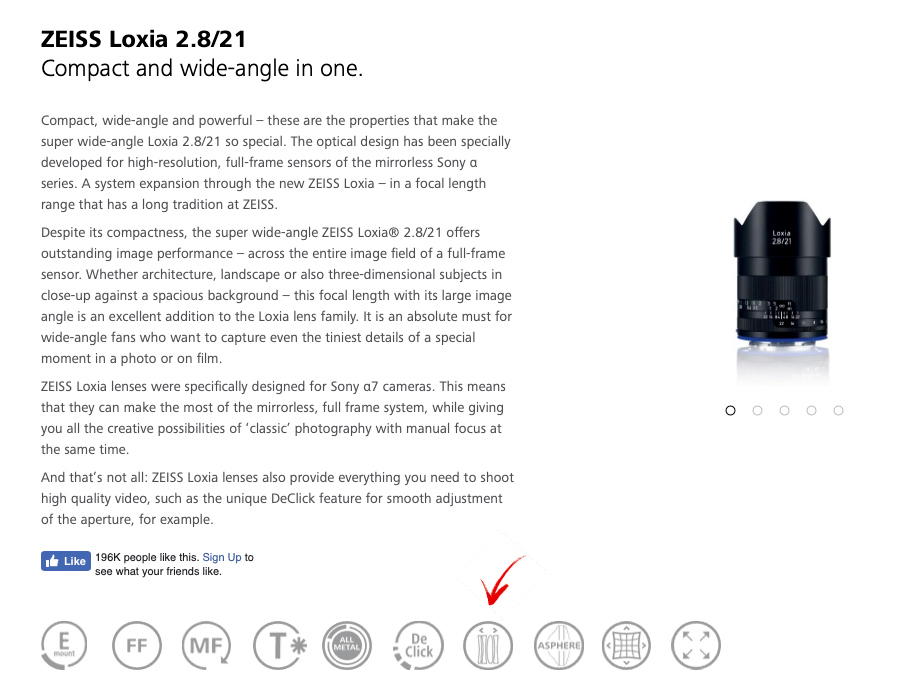
Are you sure the Loxia 21/2.8 does not feature a floating system?
On Zeiss' official page, it shows the FLE icon:
Fred Miranda wrote
smpetty wrote
chiron wrote
I can easily imagine the CV 50mm APO besting the Loxia 50mm, but the Loxia 21mm seems to many people to still have the better rendering compared to the CV 21/1.4. Works against making a consistent set of the same brand/ergonomics. Or is that just my OCD speaking?). No wrong choice between the two.1) I like the CV 21 f/1.4 better for up close performance. I think the floating element in the CV really helps provide very high level performance up close.
2) I much prefer the ergonomics of the CV especially the aperture ring at the front of the lens instead of back close to the mount on the Loxia. I also find the CV 21 f/1.4 a lot easier to get on and off the camera.
Are you sure the Loxia 21/2.8 does not feature a floating system?
On Zeiss' official page, it shows the FLE icon:
 |
||
 |
||
|
Oct 20, 2019 at 11:13 AM