From what I have seen so far and obviously up to your own expectations and preference it looks like ISO 3200 is the max I’d go on this cam. Now I owned a 60mpx CCD back not a CMOS in medium format . No way you get past ISO 400.
Heck I ate,slept and shot Kodachrome 64 for decades. 12800 was never ever a option
You wonder where 1.4 lenses came from , it was not about bokeh
GMPhotography wrote:
From what I have seen so far and obviously up to your own expectations and preference it looks like ISO 3200 is the max I’d go on this cam. Now I owned a 60mpx CCD back not a CMOS in medium format . No way you get past ISO 400.
Heck I ate,slept and shot Kodachrome 64 for decades. 12800 was never ever a option
You wonder where 1.4 lenses came from , it was not about bokeh
Good point about fast glass origin! Newer shooters didn’t live in that world
daniel.in.la wrote:
Good point about fast glass origin! Newer shooters didn’t live in that world
No they did not. The fastest film in transparency I think was ISO 160. Testing my memory here.
Why we had 300 2.8 , 200 F 2 and the list goes on. It was never about bokeh like it is today . It was about speed in lenses because we had low ISO film.
David's point is perhaps that a high res camera is unnecessary for extreme low light conditions. No need for hostility. It lags the a7rII/III above intermediate levels, well, low levels these days. As for ISO 12800, I bought an a7rII for the almost extra stop over the a7r above 6400, to be able to better shoot in EV zero (flash-prohibited to protect the artwork) Tibetan assembly halls, so flame me too if it makes you happy.
PS does best downsizing in 50% increments until you can specify the final pixel dimensions as the last step, using the (default) standard bicubic method. Bicubic sharper is a little savage. BTW, even the tech guys at Adobe now acknowledge this as the superior method. Some elaborate to add sharpening at each step, but, personal opinion, it's not a good idea.
philip_pj wrote:
David's point is perhaps that a high res camera is unnecessary for extreme low light conditions. No need for hostility. It lags the a7rII/III above intermediate levels, well, low levels these days. As for ISO 12800, I bought an a7rII for the almost extra stop over the a7r above 6400, to be able to better shoot in EV zero (flash-prohibited to protect the artwork) Tibetan assembly halls, so flame me too if it makes you happy.
PS does best downsizing in 50% increments until you can specify the final pixel dimensions as the last step, using the (default) standard bicubic method. Bicubic sharper is a little savage. BTW, even the tech guys at Adobe now acknowledge this as the superior method. Some elaborate to add sharpening at each step, but, personal opinion, it's not a good idea. ...Show more →
You must be directing part of your response to me, so I’ll happily respond to your comments.
My reply to DC’s comment was clearly asking him why he would aim at potential buyers making a mistake in buying this body, yet Sony putting forth a solid effort in this iteration of their R series. It’s worded in a way where everyone who relies on higher ISO shooting to basically steer clear of a brand new product. Sorry you read that as hostile, but what is your shooting experience with the R IV, and can you validate his opinion?
Yep, shooting religious ceremonies in early dim light in India had me at ISO 6400 and sometimes to 12,800 with a 1.8 aperture. Sometimes you just don't have the luxury of well lit venues.
daniel.in.la wrote:
Please elaborate. Do you mean you use these high ISOs in your shots? Or if possible, could you point me to some photography that lives at 12800 ISO? I want to make sure I’m not ‘out of touch’ with reality.
Not all of us live in Los Angeles and photograph automobiles.
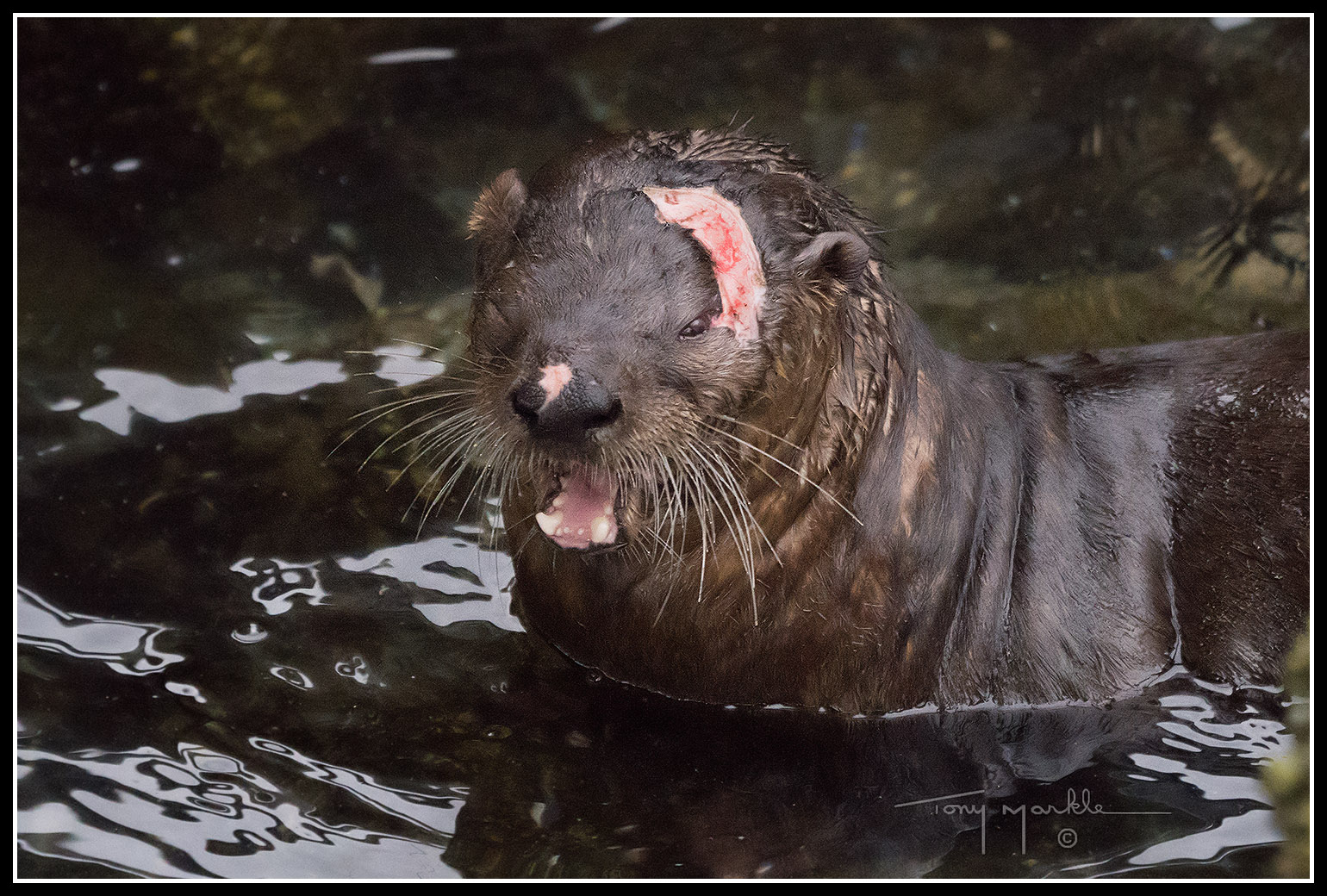
I guess I should have had a 400mm 2.8 lens at the time, or maybe a flash unit. Oh wait, I could have asked the otter to sit still so I could use slower shutter speeds. Dang, I guess the reality of the moment was that I had to shoot at ISO 6400 (underexposed by 1 to 2 f-stops), or get no shot at all.
How's that for reality
And if you want to go back to the film days, why do you think some photographers needed ASA 400 instead of 25?
chez wrote:
Yep, shooting religious ceremonies in early dim light in India had me at ISO 6400 and sometimes to 12,800 with a 1.8 aperture. Sometimes you just don't have the luxury of well lit venues.
Would love to know how film photographers of yesteryear worked around dim lighting situations with the limitations of what was available back then? Boosting ISO is the luxury that once wasn’t. Photography was still possible with fast glass in low light. New cameras take away the problem solving and add new world complaints like high ISO noise like the R IV is apparently plagued with.
Imagemaster wrote:
Not all of us live in Los Angeles and photograph automobiles.
I guess I should have had a 400mm 2.8 lens at the time, or maybe a flash unit. Oh wait, I could have asked the otter to sit still so I could use slower shutter speeds. Dang, I guess the reality of the moment was that I had to shoot at ISO 6400 (underexposed by 1 to 2 f-stops), or get no shot at all.
How's that for reality
And if you want to go back to the film days, why do you think some photographers needed ASA 400 instead of 25? ...Show more →
See my last comment. Sorry you have to deal with high ISO shortcomings of modern day cameras. Those old photographers must have been magicians or had something that was left behind when we all transitioned to modern day equipment.
Oh, and I’m sorry, but posting a high ISO shot from an APS-C body sensor and no so fast glass did little to help your argument
dclark wrote:
The A7R4 is optimized for use up to ISO 500. If you are buying the A7R4 for use at ISO beyond that I believe you are making a mistake. It's optimized for high res applications.
Dave
Optimized, yes. But also within a half stop of the class leaders at high ISO.
So it’s hardly a mistake to buy it for high ISO if you also want the other things it can do.
My comment used the term "optimized". Just because a camera is not optimum for a particular use does not mean it cannot be used, just that there may be other cameras that are better optimized for that application. Sony made an engineering decision to change the conversion gain in the A7R4 at ISO 320 rather than ISO 640 as they had in their prior A7/A9 cameras. That optimized the camera for use up to ISO 500 at a slight penalty for higher ISO compared to, for example, the A7R3. IMO that was a wise decision. The A7R4 has a very high resolution and high resolution benefits applications like landscapes and portraits which are normally shot to achieve the lowest possible noise. That means shooting at lower ISOs. If you are going to be routinely using higher ISOs, the A7R3 may be a better choice, or maybe even the A9.
I own all three, the A9, A7R3, and the A7R4. What I pickup depends on what I intend to do. If I was expecting to shoot at ISO 12400 I would not pick up the A7R4. I realize that very few people have the luxury of having all three available and need to make a purchase that covers as many uses as possible. If you do a lot of landscapes the A7R4 is a good choice. Just realize that it may not give quite as good a performance at ISO 12400 as the A7R3.
Someone who is planning to shoot a lot at higher ISO may be better to buy my A7R3 used (when I finally get around to selling it) than coughing up the $$$$ to buy an A7R4.
dclark wrote:
My comment used the term "optimized". Just because a camera is not optimum for a particular use does not mean it cannot be used, just that there may be other cameras that are better optimized for that application. Sony made an engineering decision to change the conversion gain in the A7R4 at ISO 320 rather than ISO 640 as they had in their prior A7/A9 cameras. That optimized the camera for use up to ISO 500 at a slight penalty for higher ISO compared to, for example, the A7R3. IMO that was a wise decision. The A7R4 has a very high resolution and high resolution benefits applications like landscapes and portraits which are normally shot to achieve the lowest possible noise. That means shooting at lower ISOs. If you are going to be routinely using higher ISOs, the A7R3 may be a better choice, or maybe even the A9.
I own all three, the A9, A7R3, and the A7R4. What I pickup depends on what I intend to do. If I was expecting to shoot at ISO 12400 I would not pick up the A7R4. I realize that very few people have the luxury of having all three available and need to make a purchase that covers as many uses as possible. If you do a lot of landscapes the A7R4 is a good choice. Just realize that it may not give quite as good a performance at ISO 12400 as the A7R3.
Someone who is planning to shoot a lot at higher ISO may be better to buy my A7R3 used (when I finally get around to selling it) that coughing up the $$$$ to buy an A7R4.
The OP emphasis on performance at ISO 12400 is a bit off the mark for a camera optimized for high resolution applications and IMO is "stirring the pot".
Dave thank you for responding. Helps to hear you elaborate on your first comment. What I think comes to light in other’s responses from what I see, is that reaching up to those higher ISOs seems to question the type of gear they’re using. This was illustrated quite well when I responded earlier to a post of a shot using less than optimal equipment for the shooting conditions the person was in. Granted, when we go out and shoot, we may not always have the proper gear with us, but when the argument that higher ISO photos are part of the game and then those who don’t rely on that outlier type of shooting can’t wrap their heads around it or and out of touch, it simply goes against practicality. Use what you got, yes, but let’s not put out the narrative that this should somehow be standardized and then faulted when new gear isn’t optimized as you have explained.
chez wrote:
Yep, shooting religious ceremonies in early dim light in India had me at ISO 6400 and sometimes to 12,800 with a 1.8 aperture. Sometimes you just don't have the luxury of well lit venues.
True. In German churches flash is usually not allowed. Some churches are 1000 years old and don't have large windows. It doesn't happen often, but from time to time. Means f1.2-f1.8 and ISO 4000-8000 in darker portions.
Not optimal and not something you can print out large! I now have a Dedolight, too for those situations to reduce iso further, but sometimes it is unavodable.
The A9/A73/A7r3 so far handled that nicely. The A7riv might have a minor penalty compared to those, but I personally wouldn't want that camera for weddings in the first place due to file size.
As we have all the other Sony cams it would be easy though: use the A9 ;-)
daniel.in.la wrote:
Please elaborate. Do you mean you use these high ISOs in your shots? Or if possible, could you point me to some photography that lives at 12800 ISO? I want to make sure I’m not ‘out of touch’ with reality.
Starry landscape shots often live between ISO6400 and ISO12800.
Technology has expanded the shooting envelope and allows photographs to be taken now that weren't possible in the past.
I've shot sports indoors at 1/500 f2.8 and ISO6400. I would love to have clean ISO12800 so I could use a shutter of 1/1000. In the past, pro photographers (which I'm not) would have had to set up external flashes to help freeze movement.
As other implied: I think this is borderline to trolling, unless you don't know that downsizing to the camera with lowest MP to compare like to like makes more sense. Otherwise: scale the other images up to see what you would get from the lower MP cameras for the same print size.
@jman showed a nice comparison, which shows the A7riv to be close to the A7iii when downsized.
Lately, I have shot 4 events using only available light, and the lowest ISO I used was 2500,with 12800 iso and 25600 in a couple of situations, at f2. Some would say "I should have brought flash lights" and I respond "If you want to fake situations then yes, bring flash everywhere". I know lots and lots of people that does not use flashes, Ai can't call it "standard". But it is so common that I would separate "optimal" to "common experience". I would buy an A7RIV if I needed high res, but I would buy it too if I hadn't need for A9 autofocus performance, even if A7RIII has a tick better high iso advantage. Because of all other advantages. I can't afford many bodies, I don't do this for work, and the most part of A7RIV buyers don't.
But I see your points. It's not the optimal high iso machine. But then, let's talk about film, so much of the photos you call in for reference, are shot in good light conditions, or suffer tremendously from shake or low detail. So I'll take 12800iso anytime. The main feature a photo should show is content. Better with a good form. But we are boringly full of glittering stuff full of nothing.
Well as someone who spent some of my working life shooting film I have to say that the high iso capabilities of shooting modern digital cameras is so liberating. Personally I find it hardly surprising that the A7rIV might lag slightly behind when it comes to high iso as that is hardly it's intended use. As someone who shoots both landscape and often low light documentary work I will be sticking with my A7rIII's for the time being and wait to see what develops with a new A9 or A7IV


 Archive 2019 · Sony A7R4 incredible high ISO