This topic is in the 2019 archive. You can read it and like its posts here. It is read only.
Archive 2019The 24-240 kicks you know what
p.2 #1The 24-240 kicks you know what
Holy ****. I guess that was perhaps to be expected with the range starting at 24mm instead of 28mm like every comparable lens. But I had hoped the RF mount would enable some wide end magic.
stanj wrote:
Not really. This is at f8 without lens correction. More testing is needed.
stanj wrote:
mb126 wrote
Does vignetting settle when stopped down as well?Sep 06, 2019 at 05:39 AM
p.2 #2The 24-240 kicks you know what
Khun Hans wrote:
August 7, 2019
Firmware changes:
Firmware Version 1.3.0 incorporates the following enhancement:
1. Support for the RF24-240mm F4-6.3 IS USM lens has been added.
Distortion and vignetting correction is - I think - built into the lens firmware (that's how it works with Sony lenses).
August 7, 2019
Firmware changes:
Firmware Version 1.3.0 incorporates the following enhancement:
1. Support for the RF24-240mm F4-6.3 IS USM lens has been added.
Distortion and vignetting correction is - I think - built into the lens firmware (that's how it works with Sony lenses).
Sep 06, 2019 at 05:55 AM
p.2 #3The 24-240 kicks you know what
mb126 wrote:
Holy ****. I guess that was perhaps to be expected with the range starting at 24mm instead of 28mm like every comparable lens. But I had hoped the RF mount would enable some wide end magic.
Not really. This is at f8 without lens correction. More testing is needed.
There is no magic. If one would want to optically correct the 24mm vignetting and distortion, the lens would be much larger and heavier and a bit more expensive. So it is designed with those "flaws" which can be corrected by the proper lens profile at very little IQ expense.
Holy ****. I guess that was perhaps to be expected with the range starting at 24mm instead of 28mm like every comparable lens. But I had hoped the RF mount would enable some wide end magic.
stanj wrote
mb126 wrote
Does vignetting settle when stopped down as well?There is no magic. If one would want to optically correct the 24mm vignetting and distortion, the lens would be much larger and heavier and a bit more expensive. So it is designed with those "flaws" which can be corrected by the proper lens profile at very little IQ expense.
Sep 06, 2019 at 05:58 AM
p.2 #4The 24-240 kicks you know what
Anyone that has expectations that a $900, 24mm -240mm lens would be without compromise, or expect performance mimicking a 24-70L at the wide end, or an EF 28-300L at the long end is living in "La-la " land.
Any such lens's, weather from Tamron, Sigma, Canon or others are for the convenience of covering a broad range with a single lens, albeit the obvious concessions.
Any such lens's, weather from Tamron, Sigma, Canon or others are for the convenience of covering a broad range with a single lens, albeit the obvious concessions.
Sep 06, 2019 at 08:15 AM
p.2 #5The 24-240 kicks you know what
alundeb wrote:
That cannot possibly be right.My guess is that the hard vignetting is corrected by the distortion correction. This behaviour is very common among compact cameras. If you look at an uncorrected raw file from say a Canon G7X in an independent raw converter, you will see the same, but much more pronounced.The uncorrected field of view at the wide end is also wider than the focal length suggests.
In-camera correction of vignetting, etc. is common, as is the application of profile corrections in post. However...
... I've never seen a camera/lens do that to the corners where things are working correctly. The furthest corners are nearly black, and the cutoff of light is very abrupt, more so that what you'd see with typical lens vignetting. Seriously, it looks like something is blocking the image corners or a lens with insufficient coverage is being used on a camera with a format that the lens wasn't designed for. Are you sure that you didn't have a filter (UV?) or something on that lens?
Profile corrections can improve things like vignetting, but they cannot turn black corners into a good picture. At a minimum there would be significant DR issues there and color shifts would also be quite likely.
If the lens really does that when set up correctly... I think something is very wrong here.
gdanmitchell wrote
Something is very wrong if you are getting that "vignetting" with the lens. It looks like something (filter? step down ring? hood mounted incorrectly?) is interfering at the edges and corners.That cannot possibly be right.
In-camera correction of vignetting, etc. is common, as is the application of profile corrections in post. However...
... I've never seen a camera/lens do that to the corners where things are working correctly. The furthest corners are nearly black, and the cutoff of light is very abrupt, more so that what you'd see with typical lens vignetting. Seriously, it looks like something is blocking the image corners or a lens with insufficient coverage is being used on a camera with a format that the lens wasn't designed for. Are you sure that you didn't have a filter (UV?) or something on that lens?
Profile corrections can improve things like vignetting, but they cannot turn black corners into a good picture. At a minimum there would be significant DR issues there and color shifts would also be quite likely.
If the lens really does that when set up correctly... I think something is very wrong here.
Sep 06, 2019 at 09:14 AM
p.2 #6The 24-240 kicks you know what
Sy Sez wrote:
Anyone that has expectations that a $900, 24mm -240mm lens would be without compromise, or expect performance mimicking a 24-70L at the wide end, or an EF 28-300L at the long end is living in "La-la " land.
Of course such a lens is going to have compromises. But the mix of compromises between size, sharpness, cost, vinetting, focal range, etc. is important too. The question for me is which compromises were made and can I live the compromise "recipe" selected by Canon. Personally, that vinetting on the wide-end is absolutely horrible and might make this lens a no-go for me. I would have preferred Canon make the lens slightly larger to fix that issue.
My solution: I'll compromise and either take a larger kit on vacation or just forgo the 105-240 focal range.
Sep 06, 2019 at 09:20 AM
p.2 #7The 24-240 kicks you know what
gdanmitchell wrote:
That cannot possibly be right.My guess is that the hard vignetting is corrected by the distortion correction. This behaviour is very common among compact cameras. If you look at an uncorrected raw file from say a Canon G7X in an independent raw converter, you will see the same, but much more pronounced.The uncorrected field of view at the wide end is also wider than the focal length suggests.In-camera correction of vignetting, etc. is common, as is the application of profile corrections in post. However...
... I've never seen a camera/lens do that to the corners where things are working correctly. The furthest corners are nearly black, and the cutoff of light is very abrupt, more so that what you'd see with typical lens vignetting. Seriously, it looks like something is blocking the image corners or a lens with insufficient coverage is being used on a camera with a format that the lens wasn't designed for. Are you sure that you didn't have a filter (UV?) or something on...Show more →
With the Sony E18135 w/o lens profile applied @18mm corners looks the same. It is a great lens, though. And the G1X was know to do the same thing. Great camera if it wouldn't have been so slow.
alundeb wrote
gdanmitchell wrote
Something is very wrong if you are getting that "vignetting" with the lens. It looks like something (filter? step down ring? hood mounted incorrectly?) is interfering at the edges and corners.That cannot possibly be right.
... I've never seen a camera/lens do that to the corners where things are working correctly. The furthest corners are nearly black, and the cutoff of light is very abrupt, more so that what you'd see with typical lens vignetting. Seriously, it looks like something is blocking the image corners or a lens with insufficient coverage is being used on a camera with a format that the lens wasn't designed for. Are you sure that you didn't have a filter (UV?) or something on...Show more →
With the Sony E18135 w/o lens profile applied @18mm corners looks the same. It is a great lens, though. And the G1X was know to do the same thing. Great camera if it wouldn't have been so slow.
Sep 06, 2019 at 09:43 AM
p.2 #8The 24-240 kicks you know what
gdanmitchell wrote:
That cannot possibly be right.My guess is that the hard vignetting is corrected by the distortion correction. This behaviour is very common among compact cameras. If you look at an uncorrected raw file from say a Canon G7X in an independent raw converter, you will see the same, but much more pronounced.The uncorrected field of view at the wide end is also wider than the focal length suggests.In-camera correction of vignetting, etc. is common, as is the application of profile corrections in post. However...
... I've never seen a camera/lens do that to the corners where things are working correctly. The furthest corners are nearly black, and the cutoff of light is very abrupt, more so that what you'd see with typical lens vignetting. Seriously, it looks like something is blocking the image corners or a lens with insufficient coverage is being used on a camera with a format that the lens wasn't designed for. Are you sure that you didn't have a filter (UV?) or something on...Show more →
It was very surprising to me as well the first time I saw how lens correction is taken to a new level.
Here you have an image from the G7X at the wide end, 9 mm. The camera was set to store both jpg and raw images. First the whole image jpg straight out of camera, no crop.
Then what it looks like when I open the raw file in CaptureOne.
The dark corners are not so readily visible here, but you can see how much is cropped from the sensor in the image we normally see as the whole image at 24 mm equivalent field of view.
Edit:
Added a third image with lens correction off.
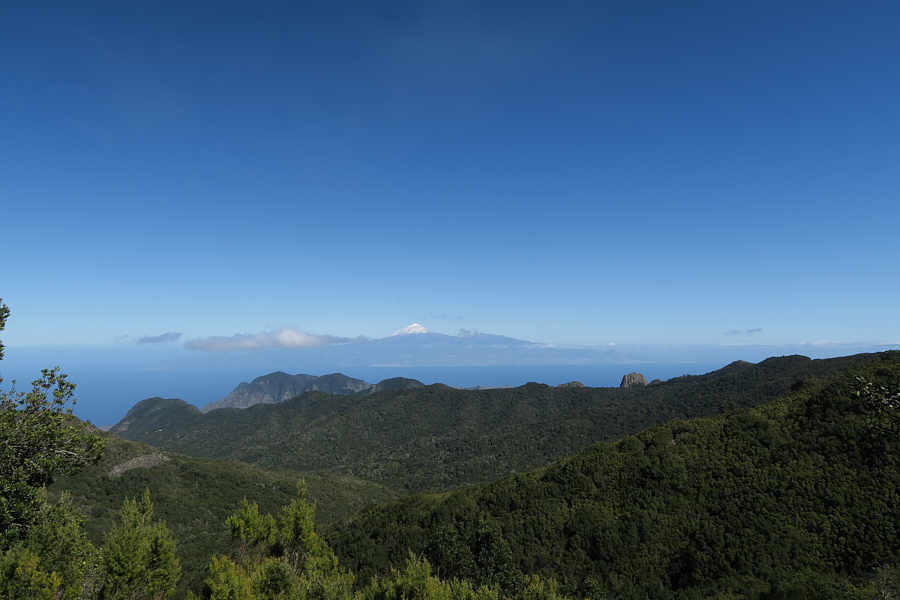
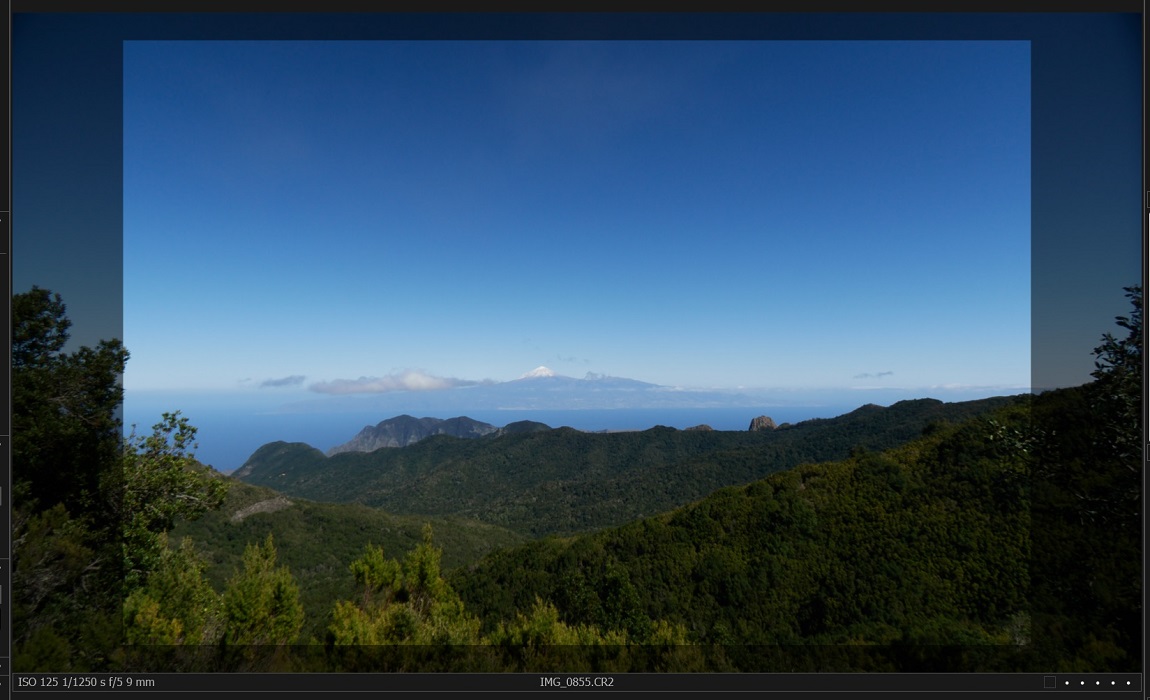
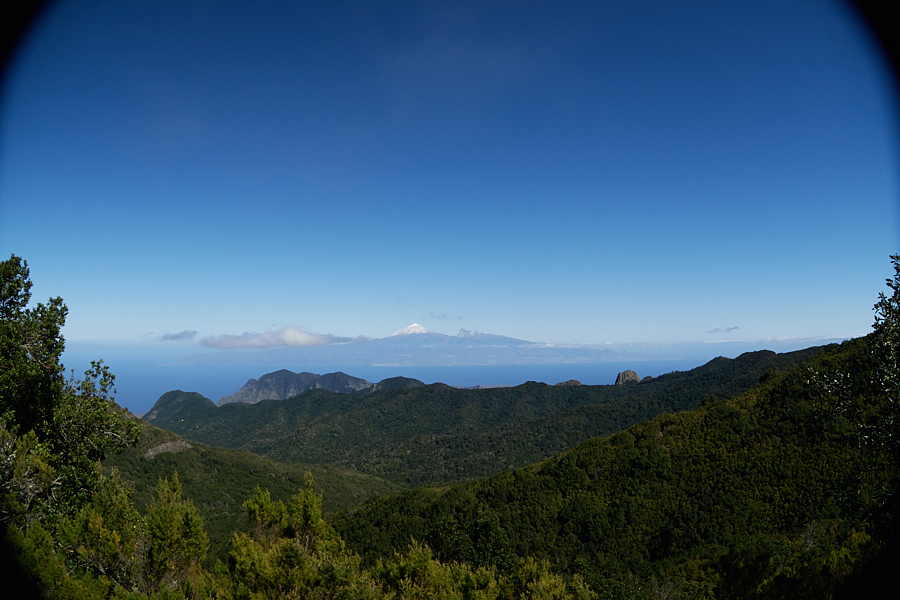
Edited on Sep 06, 2019 at 11:32 AM · View previous versions
alundeb wrote
gdanmitchell wrote
Something is very wrong if you are getting that "vignetting" with the lens. It looks like something (filter? step down ring? hood mounted incorrectly?) is interfering at the edges and corners.That cannot possibly be right.
... I've never seen a camera/lens do that to the corners where things are working correctly. The furthest corners are nearly black, and the cutoff of light is very abrupt, more so that what you'd see with typical lens vignetting. Seriously, it looks like something is blocking the image corners or a lens with insufficient coverage is being used on a camera with a format that the lens wasn't designed for. Are you sure that you didn't have a filter (UV?) or something on...Show more →
It was very surprising to me as well the first time I saw how lens correction is taken to a new level.
Here you have an image from the G7X at the wide end, 9 mm. The camera was set to store both jpg and raw images. First the whole image jpg straight out of camera, no crop.
Then what it looks like when I open the raw file in CaptureOne.
The dark corners are not so readily visible here, but you can see how much is cropped from the sensor in the image we normally see as the whole image at 24 mm equivalent field of view.
Edit:
Added a third image with lens correction off.
Edited on Sep 06, 2019 at 11:32 AM · View previous versions
Sep 06, 2019 at 10:25 AM
p.2 #9The 24-240 kicks you know what
Canon could never get away with this in their DSLR lineup, as the viewfinder could not correct the design compromise. I think most Canon users are used to their lenses being optically corrected and not digitally corrected.
Some issues that might be caused by digital correction, regardless of how severe or how much anyone cares:
1. Noise correction must be applied before distortion correction or else noise reduction might not perform evenly across the frame.
2. The sensor is being cropped. By a decent amount by the looks of how much stretching is being applied to the extreme distortion. Does Canon inform anyone, anywhere that their sensor is being cropped when they assumed they bought a full frame camera and lens?
I also wonder, if Canon has no problem faking their lenses at the wide end, then why would anyone complain if they released a 600mm f4 lens that is less than half the size and weight of the current model, yet to find out Canon just crops the sensor digitally and outputs the same FOV using a 300mm lens design. I personally think people would be laughing them off the ends of the Earth, but for whatever reason, seem more accepting of trickery at the wide end.
Sep 06, 2019 at 10:25 AM
p.2 #10The 24-240 kicks you know what
I think it's a serious question of whether it actually achieves 24mm FOV (after correction) and FF sensor coverage on the wide end.
Obviously some compromises are to be expected. It's a full frame super zoom for <$1000. But if it's truly 28mm on the wide end for example then marketing it as a 24 is not really a compromise, it's misleading.
Nielk Mike wrote:
Not really. This is at f8 without lens correction. More testing is needed.There is no magic. If one would want to optically correct the 24mm vignetting and distortion, the lens would be much larger and heavier and a bit more expensive. So it is designed with those "flaws" which can be corrected by the proper lens profile at very little IQ expense.
Obviously some compromises are to be expected. It's a full frame super zoom for <$1000. But if it's truly 28mm on the wide end for example then marketing it as a 24 is not really a compromise, it's misleading.
Nielk Mike wrote:
mb126 wrote
Holy ****. I guess that was perhaps to be expected with the range starting at 24mm instead of 28mm like every comparable lens. But I had hoped the RF mount would enable some wide end magic.stanj wrote
mb126 wrote
Does vignetting settle when stopped down as well?Sep 06, 2019 at 10:39 AM

p.2 #11The 24-240 kicks you know what
gdanmitchell wrote:
Something is very wrong if you are getting that "vignetting" with the lens. It looks like something (filter? step down ring? hood mounted incorrectly?) is interfering at the edges and corners.
That cannot possibly be right.
There's no hood available for that lens yet, and no I don't use any filters. So that's not it. I am pretty confident that I have the lens screwed on properly as well. I'll do more shots against the RF 24-105L this weekend.
Sep 06, 2019 at 10:53 AM
p.2 #12The 24-240 kicks you know what
JohanEickmeyer wrote:
I also wonder, if Canon has no problem faking their lenses at the wide end, then why would anyone complain if they released a 600mm f4 lens that is less than half the size and weight of the current model, yet to find out Canon just crops the sensor digitally and outputs the same FOV using a 300mm lens design. I personally think people would be laughing them off the ends of the Earth, but for whatever reason, seem more accepting of trickery at the wide end.
On the tele end, one can take an actual 300mm FOV image and crop tighter to a 600mm FOV (obviously with fewer pixels than the 300mm image).
But on the wide end, it's obviously impossible to start with an actual 30mm FOV image and widen the crop for a 24mm FOV. If I understand correctly, what Canon and others are doing is taking an actual 22mm FOV (just for example) with awful vignetting and then cropping tighter to a 24mm FOV, with obviously fewer pixels. Yes?
I'm not thrilled with this approach, but you are getting an image (albeit not at full sensor resolution) with the FOV of the stated focal length on a FF sensor. Similarly, one could adapt an EF-S 10-18mm on an RF mount, then at the reduced image circle get an image having a FOV equivalent to a FF 16mm wide-angle.
I would prefer that Canon (and other camera makers) come up with a clear way of communicating to consumers that this is how they are achieving the advertised "focal lengths".
Sep 06, 2019 at 10:58 AM
p.2 #13The 24-240 kicks you know what
mb126 wrote:
I think it's a serious question of whether it actually achieves 24mm FOV (after correction) and FF sensor coverage on the wide end.
Obviously some compromises are to be expected. It's a full frame super zoom for <$1000. But if it's truly 28mm on the wide end for example then marketing it as a 24 is not really a compromise, it's misleading.
Not really. This is at f8 without lens correction. More testing is needed.There is no magic. If one would want to optically correct the 24mm vignetting and distortion, the lens would be much larger and heavier and a bit more expensive. So it is designed with those "flaws" which can be corrected by the proper lens profile at very little IQ expense.
The Sony lenses are their stated focal length FOV after corrections. I doubt Canon would be that shady, as they would get called out on it pretty quick.
It's obvious that these types of lenses need extra elements or changes to the optical path in order to optically correct for distortion at the wide end. By letting the last few mm on the wide end go crazy with distortion, it reduces the size, weight, and cost of the lens (or improve profits, if looked at another way).
One thing I think may be missed my many, is that a lens that has lots of distortion usually has a wider FOV compared to one that is more corrected. This is also why fish-eye lenses, even at longer focal lengths will produce a much wider FOV than non-fisheye lenses of the same focal length. The 24-240 is probably 24mm on the wide end with a much wider FOV pre-corrections.
I think it's a serious question of whether it actually achieves 24mm FOV (after correction) and FF sensor coverage on the wide end.
Obviously some compromises are to be expected. It's a full frame super zoom for <$1000. But if it's truly 28mm on the wide end for example then marketing it as a 24 is not really a compromise, it's misleading.
Nielk Mike wrote
mb126 wrote
Holy ****. I guess that was perhaps to be expected with the range starting at 24mm instead of 28mm like every comparable lens. But I had hoped the RF mount would enable some wide end magic.stanj wrote
mb126 wrote
Does vignetting settle when stopped down as well?The Sony lenses are their stated focal length FOV after corrections. I doubt Canon would be that shady, as they would get called out on it pretty quick.
It's obvious that these types of lenses need extra elements or changes to the optical path in order to optically correct for distortion at the wide end. By letting the last few mm on the wide end go crazy with distortion, it reduces the size, weight, and cost of the lens (or improve profits, if looked at another way).
One thing I think may be missed my many, is that a lens that has lots of distortion usually has a wider FOV compared to one that is more corrected. This is also why fish-eye lenses, even at longer focal lengths will produce a much wider FOV than non-fisheye lenses of the same focal length. The 24-240 is probably 24mm on the wide end with a much wider FOV pre-corrections.
Sep 06, 2019 at 11:26 AM
p.2 #14The 24-240 kicks you know what
paulfeng wrote:
On the tele end, one can take an actual 300mm FOV image and crop tighter to a 600mm FOV (obviously with fewer pixels than the 300mm image).
But on the wide end, it's obviously impossible to start with an actual 30mm FOV image and widen the crop for a 24mm FOV. If I understand correctly, what Canon and others are doing is taking an actual 22mm FOV (just for example) with awful vignetting and then cropping tighter to a 24mm FOV, with obviously fewer pixels. Yes?
I'm not thrilled with this approach, but you are getting an image (albeit not at full...Show more →
My point was that the final image output will be less sensor surface area in both instances, but for the logner lenses, people would laugh at Canon for selling a 300mm lens for mirrorless and just cropping it in camera without ever telling anyone it is not a 600mm lens. It's just magically small!
JohanEickmeyer wrote
I also wonder, if Canon has no problem faking their lenses at the wide end, then why would anyone complain if they released a 600mm f4 lens that is less than half the size and weight of the current model, yet to find out Canon just crops the sensor digitally and outputs the same FOV using a 300mm lens design. I personally think people would be laughing them off the ends of the Earth, but for whatever reason, seem more accepting of trickery at the wide end.But on the wide end, it's obviously impossible to start with an actual 30mm FOV image and widen the crop for a 24mm FOV. If I understand correctly, what Canon and others are doing is taking an actual 22mm FOV (just for example) with awful vignetting and then cropping tighter to a 24mm FOV, with obviously fewer pixels. Yes?
I'm not thrilled with this approach, but you are getting an image (albeit not at full...Show more →
My point was that the final image output will be less sensor surface area in both instances, but for the logner lenses, people would laugh at Canon for selling a 300mm lens for mirrorless and just cropping it in camera without ever telling anyone it is not a 600mm lens. It's just magically small!
Sep 06, 2019 at 11:27 AM
Guest
Offline
Guest
Details
p.2 #15The 24-240 kicks you know what
Looks like the image I get when I mount a 18-135 STM lens (or most any APS-C lens, actually) on my 1D and zoom out into the lower part of the range. 
I know Sony 24-105 has 5+ stops of vignetting at 24mm f/4 without the correction but even that was nowhere as harsh or extending as far into the frame:
https://opticallimits.com/images/8Reviews/lenses/sony_24105_4g/vig_24mm_f4.jpg
(Image courtesy of OpticalLimits.com, from their review of the Sony).
Sep 06, 2019 at 12:03 PM
p.2 #16The 24-240 kicks you know what
JohanEickmeyer wrote:
On the tele end, one can take an actual 300mm FOV image and crop tighter to a 600mm FOV (obviously with fewer pixels than the 300mm image).
But on the wide end, it's obviously impossible to start with an actual 30mm FOV image and widen the crop for a 24mm FOV. If I understand correctly, what Canon and others are doing is taking an actual 22mm FOV (just for example) with awful vignetting and then cropping tighter to a 24mm FOV, with obviously fewer pixels. Yes?
I'm not thrilled with this approach, but you are getting an image (albeit not at full sensor resolution) with the FOV of the stated focal length on a FF sensor. Similarly, one could adapt an EF-S 10-18mm on an RF mount, then at the reduced image circle get an image having a FOV equivalent to a FF 16mm wide-angle.
I would prefer that Canon (and other camera makers) come up with a clear way of communicating to consumers that this is how they are achieving the advertised "focal lengths".My point was that the final image output will be less sensor surface area in both instances, but for the logner lenses, people would laugh at Canon for selling a 300mm lens for mirrorless and just cropping it in camera without ever telling anyone it is not a 600mm lens. It's just magically small!
Telephoto on the micro four thirds format is a business model built entirely on that platform. 300 mm f/4 lenses are marketed as 600 mm f/4 equivalents, just so much smaller! They get called out for it all the time but nothing sticks.
paulfeng wrote
JohanEickmeyer wrote
I also wonder, if Canon has no problem faking their lenses at the wide end, then why would anyone complain if they released a 600mm f4 lens that is less than half the size and weight of the current model, yet to find out Canon just crops the sensor digitally and outputs the same FOV using a 300mm lens design. I personally think people would be laughing them off the ends of the Earth, but for whatever reason, seem more accepting of trickery at the wide end.But on the wide end, it's obviously impossible to start with an actual 30mm FOV image and widen the crop for a 24mm FOV. If I understand correctly, what Canon and others are doing is taking an actual 22mm FOV (just for example) with awful vignetting and then cropping tighter to a 24mm FOV, with obviously fewer pixels. Yes?
I'm not thrilled with this approach, but you are getting an image (albeit not at full sensor resolution) with the FOV of the stated focal length on a FF sensor. Similarly, one could adapt an EF-S 10-18mm on an RF mount, then at the reduced image circle get an image having a FOV equivalent to a FF 16mm wide-angle.
I would prefer that Canon (and other camera makers) come up with a clear way of communicating to consumers that this is how they are achieving the advertised "focal lengths".
Telephoto on the micro four thirds format is a business model built entirely on that platform. 300 mm f/4 lenses are marketed as 600 mm f/4 equivalents, just so much smaller! They get called out for it all the time but nothing sticks.
Sep 06, 2019 at 12:27 PM
p.2 #17The 24-240 kicks you know what
alundeb wrote
My point was that the final image output will be less sensor surface area in both instances, but for the logner lenses, people would laugh at Canon for selling a 300mm lens for mirrorless and just cropping it in camera without ever telling anyone it is not a 600mm lens. It's just magically small!
Telephoto on the micro four thirds format is a business model built entirely on that platform. 300 mm f/4 lenses are marketed as 600 mm f/4 equivalents, just so much smaller! They get called out for it all the time but nothing sticks.
Or more accurately, a 600mm f/8. Put that way, the smaller size isn't nearly as impressive as the marketing people suggest.
Sep 06, 2019 at 01:30 PM
p.2 #18The 24-240 kicks you know what
Mike_5D wrote:
Or more accurately, a 600mm f/8.
So, you have to quadruple the exposure time when you use that f/4 lens?
Or more accurately, a 600mm f/8.
So, you have to quadruple the exposure time when you use that f/4 lens?
Sep 06, 2019 at 02:13 PM
p.2 #19The 24-240 kicks you know what
gdanmitchell wrote:
So, you have to quadruple the exposure time when you use that f/4 lens?
Just too stops deeper DOF and two stops worse ISO performance when you equalize the exposure.
Mike_5D wrote
Or more accurately, a 600mm f/8.Just too stops deeper DOF and two stops worse ISO performance when you equalize the exposure.
Sep 06, 2019 at 03:38 PM
p.2 #20The 24-240 kicks you know what
Mike_5D wrote:
So, you have to quadruple the exposure time when you use that f/4 lens?Just too stops deeper DOF and two stops worse ISO performance when you equalize the exposure.
Whether using LF, 6x7, miniMF, full frame, APS-C, MFT, or your smart phone... f/4 is still f/4.
We all get it that f/4 provides different DOF on different formats. And that you'll have a more limited set of usable apertures with smaller formats... and that you typically won't be able to get apertures as large on some of the larger formats. Yet, f/4 provides the same exposure on all of them.
It is still f/4.
gdanmitchell wrote
Mike_5D wrote
Or more accurately, a 600mm f/8.Whether using LF, 6x7, miniMF, full frame, APS-C, MFT, or your smart phone... f/4 is still f/4.
We all get it that f/4 provides different DOF on different formats. And that you'll have a more limited set of usable apertures with smaller formats... and that you typically won't be able to get apertures as large on some of the larger formats. Yet, f/4 provides the same exposure on all of them.
It is still f/4.
Sep 06, 2019 at 04:13 PM