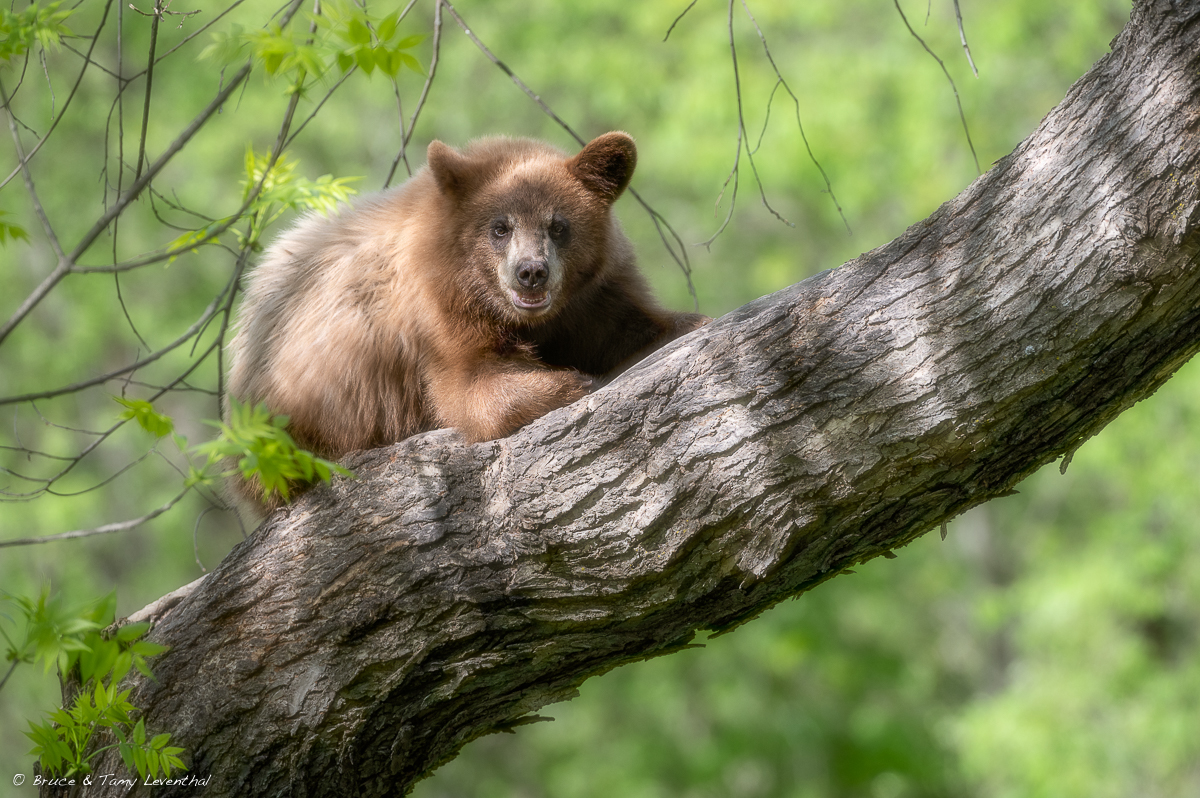
I spent the better part of the weekend searching for black bears, mommas, and cubs.
My wife and I found a quiet campground and managed to get a bit of success. I used a variety of bodies and lenses, including the Z6.
This is one of my favorite bear in tree shots from my days in the field.
cheers,
bruce
OwlsEyes wrote:
I spent the better part of the weekend searching for black bears, mommas, and cubs.
My wife and I found a quiet campground and managed to get a bit of success. I used a variety of bodies and lenses, including the Z6.
This is one of my favorite bear in tree shots from my days in the field.
cheers,
bruce
Nice shot
can you tell how old?
I see 6 small lower teeth and I can not see canines.
James Farrell wrote:
Nicely done, Bruce. BTW, I’ll try to catch up with you soon. Stay safe. Best to Tammy. Jim
Thanks Jim...
I am fortunate to leave in a state where I can do some decent bear photography from time to time. While it lacks the majesty and diffuse light of the BC coast, it offers the proximity and abundance of photo opportunity as the Khutzeymateen. Lots of bears without all of the environmental beauty. Much like your first trip to the Khutz, good weather was my enemy. I had two days of full sun and cloudless skies. The cinnamon phased bears were easier on the eyes than the black-phased animals. Contrast was my enemy for sure!
I look forward to catching up with you
regards,
bruce
I see 6 small lower teeth and I can not see canines.
If it were a goat it is less than a year old
This little "honey bear" (honey colored cinnamon black bear) is a yearling. It was born in late 2018/19 during the winter and roamed the world with its siblings and mom during the spring summer and fall of 2019. One year later it is semi-independent but still has a bond with its mother. It does have canines, but they are hidden by the bear lips.
This is a lovely and diverse set of images... As a lover of mammals, the tree kangaroo is my favorite only because this might be the first time I have seen a photograph of one. Is this an endangered species? Where in Australia do they live?
Lance, I am also curious about the Golden Pheasant. Is this bird endemic to Australia or was in introduced from Asia? The US has a large pheasant population, but these birds are not native. Prized by hunters, they have caused a massive decline in grouses populations throughout the US. While I have enjoyed photographing pheasants this year, it also makes me ill to see and hear them everywhere, for every pheasant alive here means there are fewer prairie chickens and sharp-tailed grouse near my home.
OwlsEyes wrote:
This is a lovely and diverse set of images... As a lover of mammals, the tree kangaroo is my favorite only because this might be the first time I have seen a photograph of one. Is this an endangered species? Where in Australia do they live?
Lance, I am also curious about the Golden Pheasant. Is this bird endemic to Australia or was in introduced from Asia? The US has a large pheasant population, but these birds are not native. Prized by hunters, they have caused a massive decline in grouses populations throughout the US. While I have enjoyed photographing pheasants this year, it also makes me ill to see and hear them everywhere, for every pheasant alive here means there are fewer prairie chickens and sharp-tailed grouse near my home.
But we do have feral populations in Australia, as do many other countries like the USA etc.
Like the US, we have many introduced species that have overtaken areas where our native species live and pushed them out of their habitat and thus have threatened their existence in some cases.