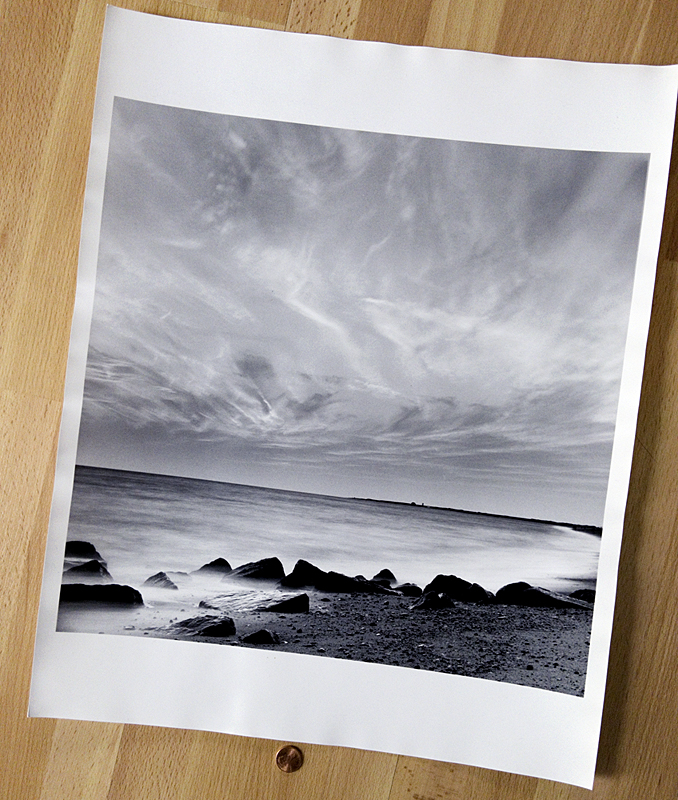
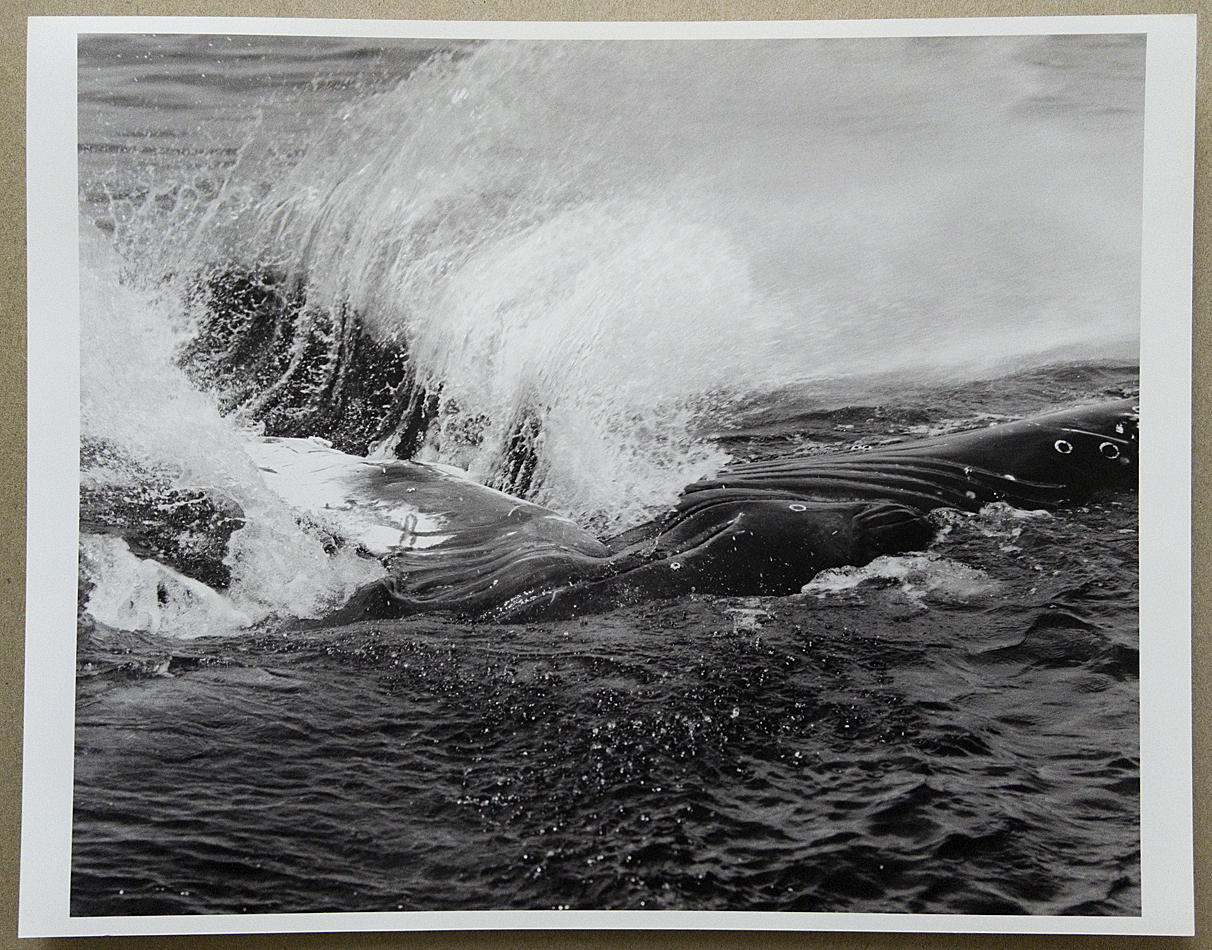
Very nice - just of curiosity, is this one which you made recently or on older print? The question just aims if you are still using a darkroom for printing at this point now.
retrofocus wrote:
Very nice - just of curiosity, is this one which you made recently or on older print? The question just aims if you are still using a darkroom for printing at this point now.
This 20x24 print is one I just made. I've printed this image before but only up to 11x14. When I use my darkroom now it's only to develop 120 B&W film and print large images.
fotografur wrote:
This 20x24 print is one I just made. I've printed this image before but only up to 11x14. When I use my darkroom now it's only to develop 120 B&W film and print large images.
Cheers
Dennis
That's pretty cool - I wish I had the space currently to handle 20x24 prints. My enlargers are certainly capable to do so, but my closet space is simply limiting me to a max. size of 11x14". On my next move I hope to change this and accommodate for larger space!
retrofocus wrote:
That's pretty cool - I wish I had the space currently to handle 20x24 prints. My enlargers are certainly capable to do so, but my closet space is simply limiting me to a max. size of 11x14". On my next move I hope to change this and accommodate for larger space!
Yeah I've been printing since I was a kid in the late '70s. When we purchased our our house (an old cape built in the 50's) I built a nice sized darkroom in the basement when I was remodeling. Those large trays take up a lot of space
Did some darkroom work today in this cold and snowy weather outside. 11x14" print made on Ilford MG fiber paper from a 35 mm negative taken with Leica IIIc and Leica 50/1.5 Summarit LTM lens. Developed in Kodak Dektol and slightly toned with Se-toner (1:20) to increase contrast. Finished framed print in 12x18" clip-frame after flattening the print in my dry mount press.
Is anyone using enlarging lenses to effect the creative process, at all? I ask because they rarely get a mention in the 'credits' of an image, maybe they just don't matter much, but I'm curious about peoples experience with this.
Old EL's such as the Wollensak 50 mentioned by @retrofocus, which I think date to c. '50s, are Tessars with likely poorer coatings (Wollensak 'Wocoated') than modern EL's so they can potentially lower contrast. Sharpness into the corners is affected by the lens design and aperture used (optimum is typically 2 stops down from wide open), amongst other factors such as magnification and using the sweet spot of a longer focal length lens to enlarge a smaller format neg. The 'perfect' EL will have zero distortion, minimal effect on contrast and perfect sharpness/resolution across the frame (and into the corners). So on the basis that most lenses don't achieve perfection, is the enlarging lens, in effect, part of the creative process?
JohnJ wrote:
Is anyone using enlarging lenses to effect the creative process, at all? I ask because they rarely get a mention in the 'credits' of an image, maybe they just don't matter much, but I'm curious about peoples experience with this.
Old EL's such as the Wollensak 50 mentioned by @retrofocus@, which I think date to c. '50s, are Tessars with likely poorer coatings (Wollensak 'Wocoated') than modern EL's so they can potentially lower contrast. Sharpness into the corners is affected by the lens design and aperture used (optimum is typically 2 stops down from wide open), amongst other factors such as magnification and using the sweet spot of a longer focal length lens to enlarge a smaller format neg. The 'perfect' EL will have zero distortion, minimal effect on contrast and perfect sharpness/resolution across the frame (and into the corners). So on the basis that most lenses don't achieve perfection, is the enlarging lens, in effect, part of the creative process?...Show more →
The largest I print in my darkroom are 11x14" prints due to space limitations. I find it really hard to tell a difference between enlarger lenses when stopped down. I normally always - no matter which kind of enlarger lens I am using - step down to f/11. This makes them all fairly equal in performance. Even the cheaper Wollensak 50 mm lens performs great when stopped down with good contrast and sharpness. I find much more critical in my work is the quality of the negative in the first place and that the enlarger itself is as best possible straightened out between paper plane and enlarger lens plane (meaning having both of them parallel). I am using a laser calibrator for this, otherwise it is a gamble and easily corners of the print can turn unsharp.
pasblues wrote:
B/W printing is a craft that takes a lot of skill and experience eventually to get really good at it. Ansel Adams would not have been as successful had it not been for his darkroom guy.
Adams printed his own work. You may be thinking of Henri Cartier-Bresson who did not print.
JohnJ wrote:
Is anyone using enlarging lenses to effect the creative process, at all? I ask because they rarely get a mention in the 'credits' of an image, maybe they just don't matter much, but I'm curious about peoples experience with this.
Old EL's such as the Wollensak 50 mentioned by @retrofocus@, which I think date to c. '50s, are Tessars with likely poorer coatings (Wollensak 'Wocoated') than modern EL's so they can potentially lower contrast. Sharpness into the corners is affected by the lens design and aperture used (optimum is typically 2 stops down from wide open), amongst other factors such as magnification and using the sweet spot of a longer focal length lens to enlarge a smaller format neg. The 'perfect' EL will have zero distortion, minimal effect on contrast and perfect sharpness/resolution across the frame (and into the corners). So on the basis that most lenses don't achieve perfection, is the enlarging lens, in effect, part of the creative process?...Show more →
I have been using the Schneider for years. This lens provides me with a sharp, flat image. I previously used a Nikon EL-Nikkor (which is a very nice optic). The 80mm is okay for most of my formats but pushes the limits for my 6x7 negatives.
Liliane De Cock Morgan: "During this time working with Adams she printed his master works, prepared prints for exhibitions, travelled with him to capture images, instructed in summer workshops, and was an integral part of the social environment that connected scores of artists, intellectuals, and conservationists of that time."
Liliane De Cock Morgan: "During this time working with Adams she printed his master works, prepared prints for exhibitions, travelled with him to capture images, instructed in summer workshops, and was an integral part of the social environment that connected scores of artists, intellectuals, and conservationists of that time."
Again, you are completely wrong. Adams had an *assistant*. That is someone who worked under HIS direction. EJ Corey had plenty of assistants working in his laboratory when he won the Nobel prize for Chemistry. Corey won the prize, not his assistant.
Your assertion that Adams' assistants are responsible for his grand reputation is ridiculous and utterly incorrect.
rattymouse wrote:
Adams had an *assistant*. That is someone who worked under HIS direction. EJ Corey had plenty of assistants working in his laboratory when he won the Nobel prize for Chemistry. Corey won the prize, not his assistant.
This is a correct comparison. I was myself in the past in such assistant role in chemistry, and one of my advisors at a reputable University in the US received a well-recognized award for the research I did at the time. This is how the system works - the one who pays the bills (and/or gets the external funding to allow this project) receives the awards and main recognition. Nevertheless, all contributors are named as authors on any kind of publications and patents, and usually the lead assistant doing most of the presented work is named as first author. But the advisor will always be part of it (his name will carry the asterix). What else happens is pretty much up to the advisor her/himself. I was lucky that my former advisor mentioned me during his award celebration and gave me lots of recognition there. But not every advisor behaves like this.
In photography, this might be even more difficult regarding recognition: The assistant will likely be much more in the shade for the performed work because the "publication" - here the final print - only carries the name of the hiring photographer, in this case Adams. Only a small community of people will likely know who also did much of the work in the darkroom, but those will be quickly forgotten if they don't move up later starting their own photography business and gain reputation.
rattymouse wrote:
Again, you are completely wrong. Adams had an *assistant*. That is someone who worked under HIS direction. EJ Corey had plenty of assistants working in his laboratory when he won the Nobel prize for Chemistry. Corey won the prize, not his assistant.
Your assertion that Adams' assistants are responsible for his grand reputation is ridiculous and utterly incorrect.
You're right - I should have indicated plural for assistants and should have not assigned a gender since Liliane deserves a lot of credit also.
I'm actually really stoked that Liliane was mentioned here as a part of his sphere. Women rarely are mentioned in the archives of photography.