This topic is in the 2018 archive. You can read it and like its posts here. It is read only.
Archive 2018The “Offical”, undeclared Nikon supertelephoto lens thread
p.1 #1The “Offical”, undeclared Nikon supertelephoto lens thread
Here, you can choose to post images taken with any supertelephoto lenses, without identifying that lens.
Who knows; this may lead to some interesting discussions.
Dec 18, 2018 at 04:23 AM
p.1 #2The “Offical”, undeclared Nikon supertelephoto lens thread
Is the intended rule to not disclose which lens? Is super tele from 300 and up?
Dec 18, 2018 at 07:55 AM
p.1 #3The “Offical”, undeclared Nikon supertelephoto lens thread
Yes and yes 👍
Dec 18, 2018 at 10:10 AM
p.1 #4The “Offical”, undeclared Nikon supertelephoto lens thread
Yes and yes 👍
Dec 18, 2018 at 10:11 AM
p.1 #5The “Offical”, undeclared Nikon supertelephoto lens thread
No discrimination against zooms/primes?
Dec 18, 2018 at 10:12 AM
p.1 #6The “Offical”, undeclared Nikon supertelephoto lens thread
Initially, I had the notion to start this thread on all three forums....Canon, Nikon and Sony.
My second thought was that it might start brand arguments. Which of course we do not want.
But maybe not. What do you think Geoff?
Seems to me it would be very interesting if all three brands were included.
Only rules are that the lens used is not named and that 300 mm is the threshold.
My second thought was that it might start brand arguments. Which of course we do not want.
But maybe not. What do you think Geoff?
Seems to me it would be very interesting if all three brands were included.
Only rules are that the lens used is not named and that 300 mm is the threshold.
Dec 18, 2018 at 10:23 AM
p.1 #7The “Offical”, undeclared Nikon supertelephoto lens thread
None...in fact that is one reason for the thread..
to reduce/eliminate bias.
No discrimination against zooms, primes, TC’s, models or brands.
Of course, we will guess what lens took the image. And we already have a limited knowledge of the lens(s) some of us now own and shoot with. But that changes too. And a few here, have/do owned/own a variety of long glass.
I think it would be fun to guess/discuss/speculate on what lens was used.
webmstrk9 wrote:
No discrimination against zooms/primes?
Dec 18, 2018 at 12:45 PM
p.1 #8The “Offical”, undeclared Nikon supertelephoto lens thread
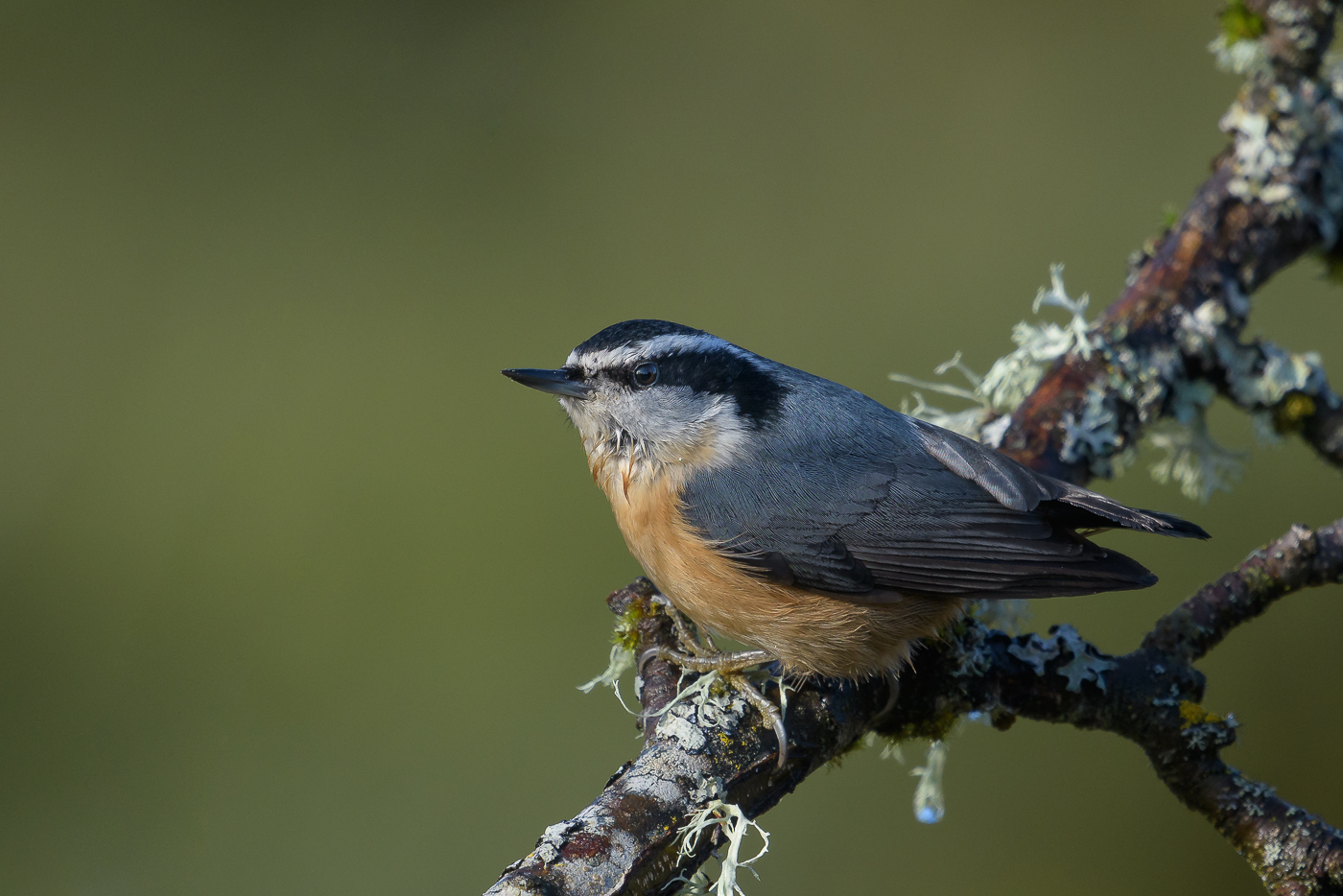
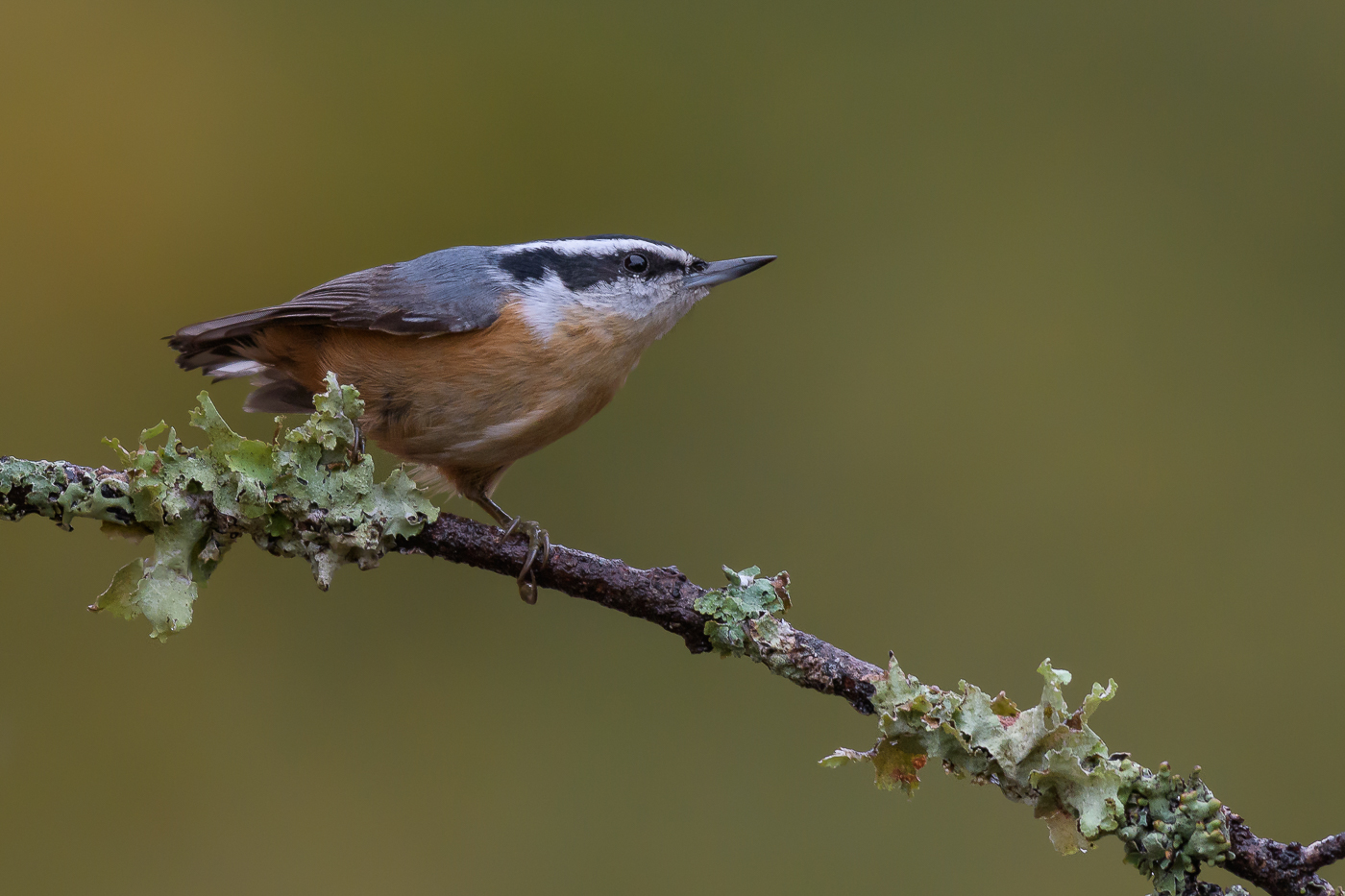
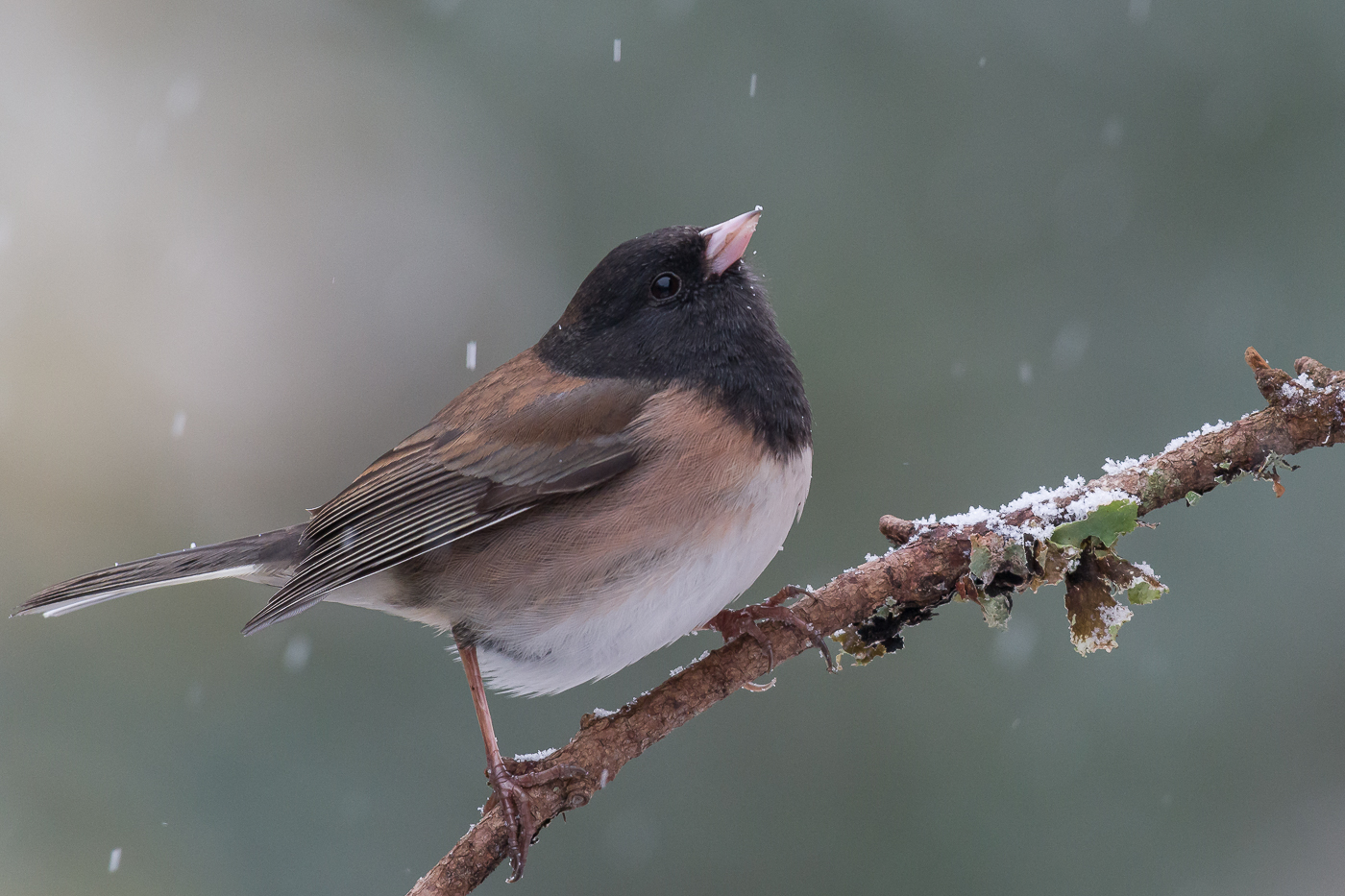
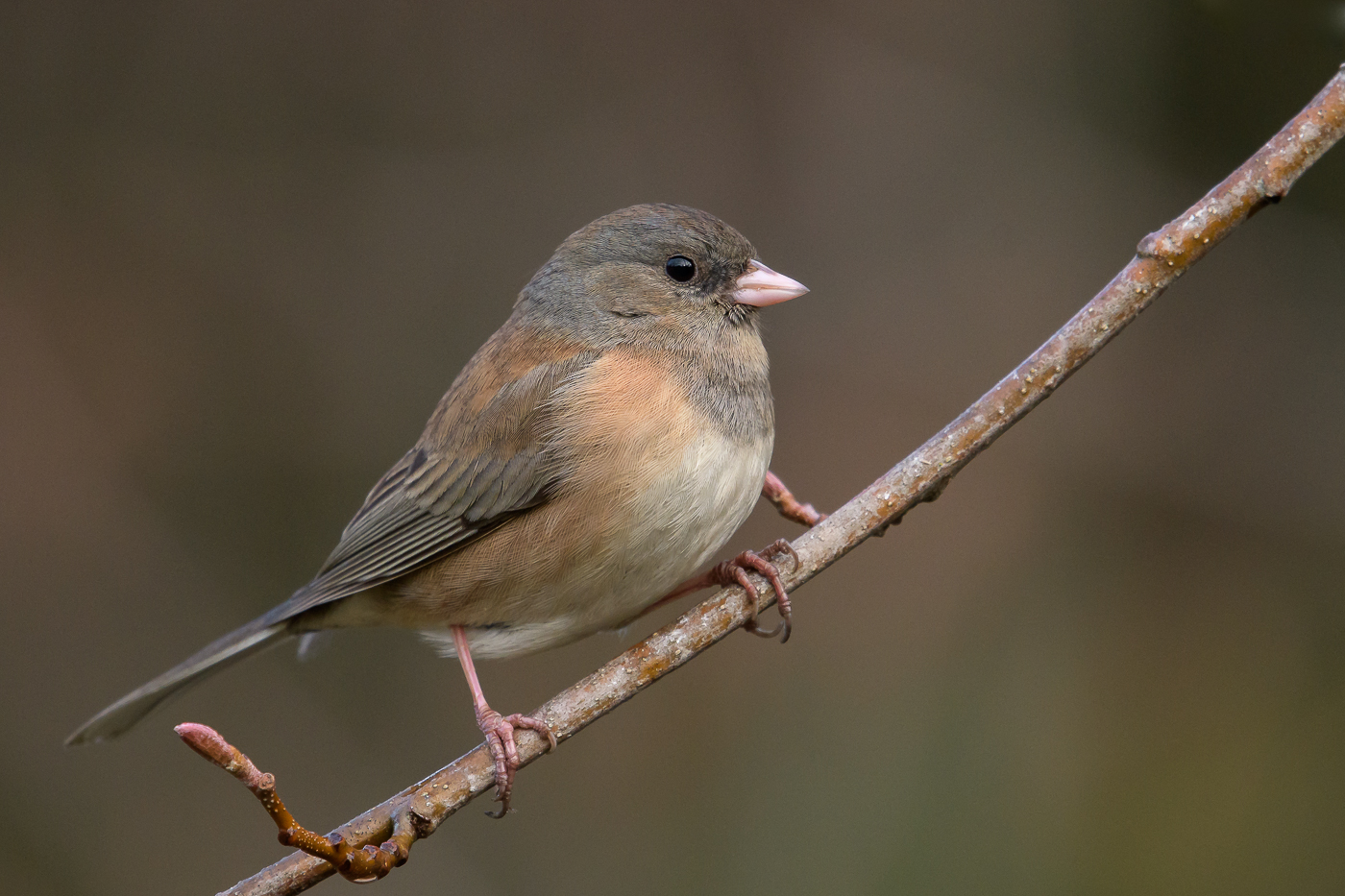
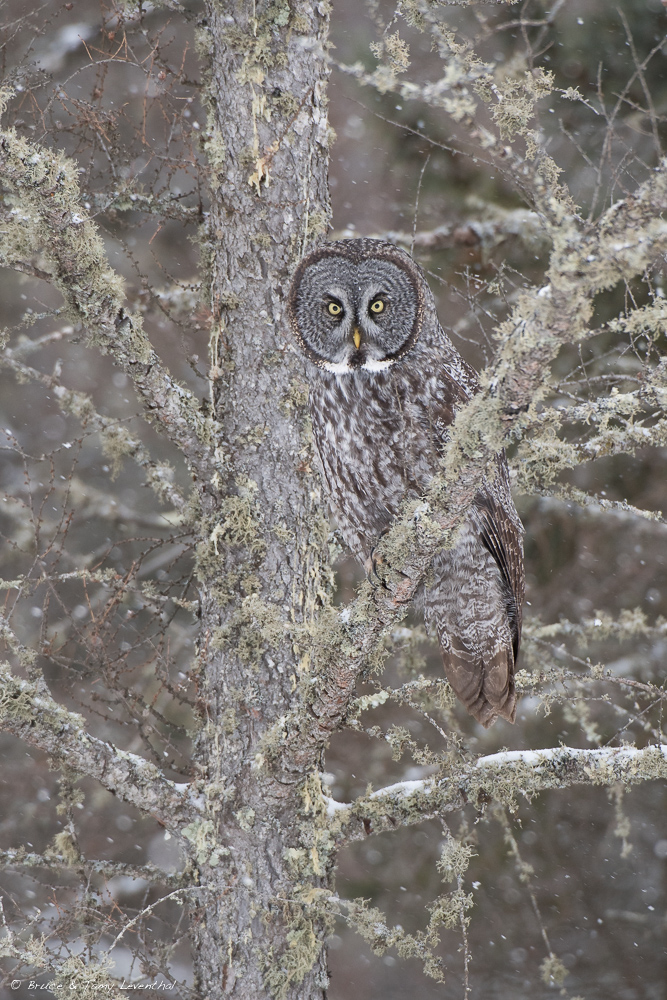
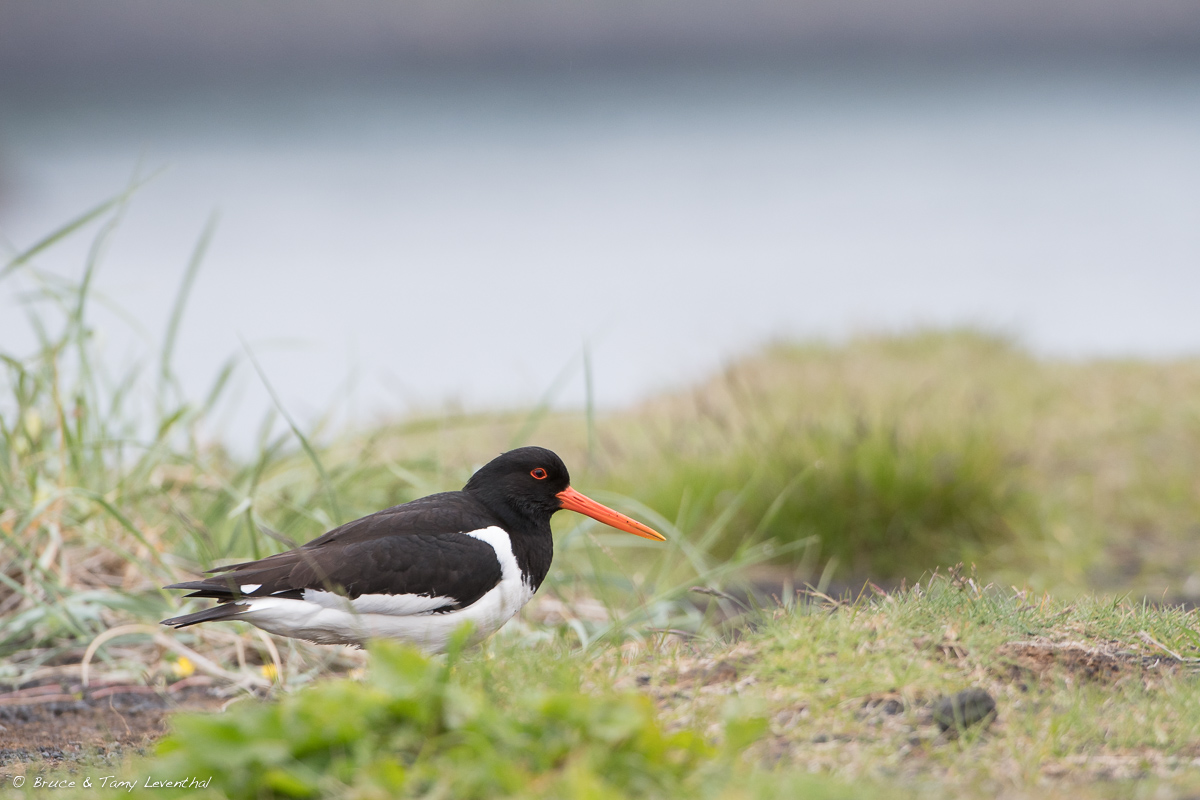
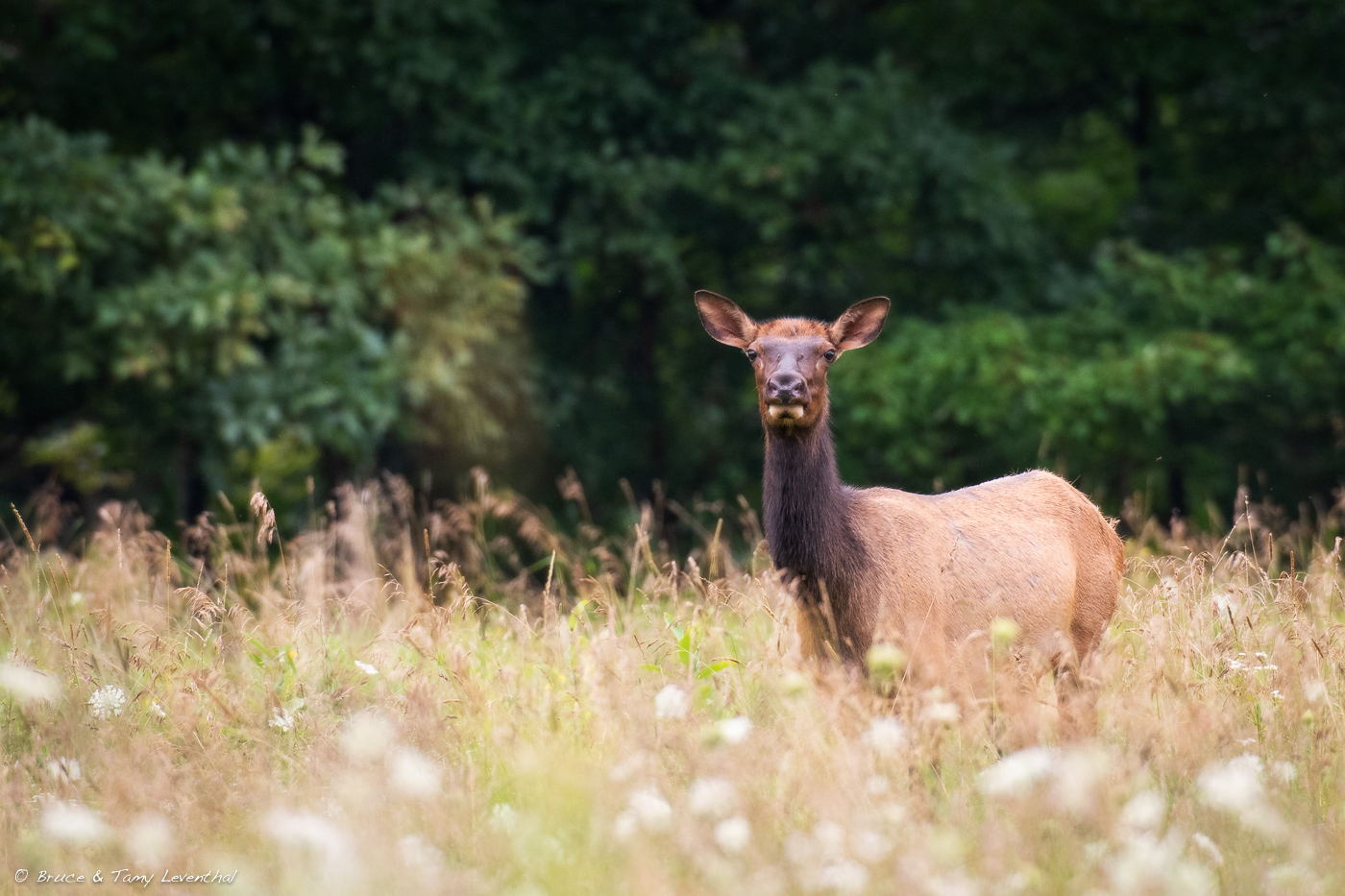
Four photos....two different lenses....one of each species is with each lens....
 |
||
 |
||
|
|
||
 |
||
|
|
||
 |
||
|
|
||
 |
||
|
Dec 19, 2018 at 08:39 AM


p.1 #11The “Offical”, undeclared Nikon supertelephoto lens thread
Love Nikon long glass with DX bodies....
Dec 19, 2018 at 05:51 PM
p.1 #12The “Offical”, undeclared Nikon supertelephoto lens thread
1
Edited on Dec 20, 2018 at 03:02 AM · View previous versions
Edited on Dec 20, 2018 at 03:02 AM · View previous versions
Dec 19, 2018 at 06:38 PM
p.1 #13The “Offical”, undeclared Nikon supertelephoto lens thread
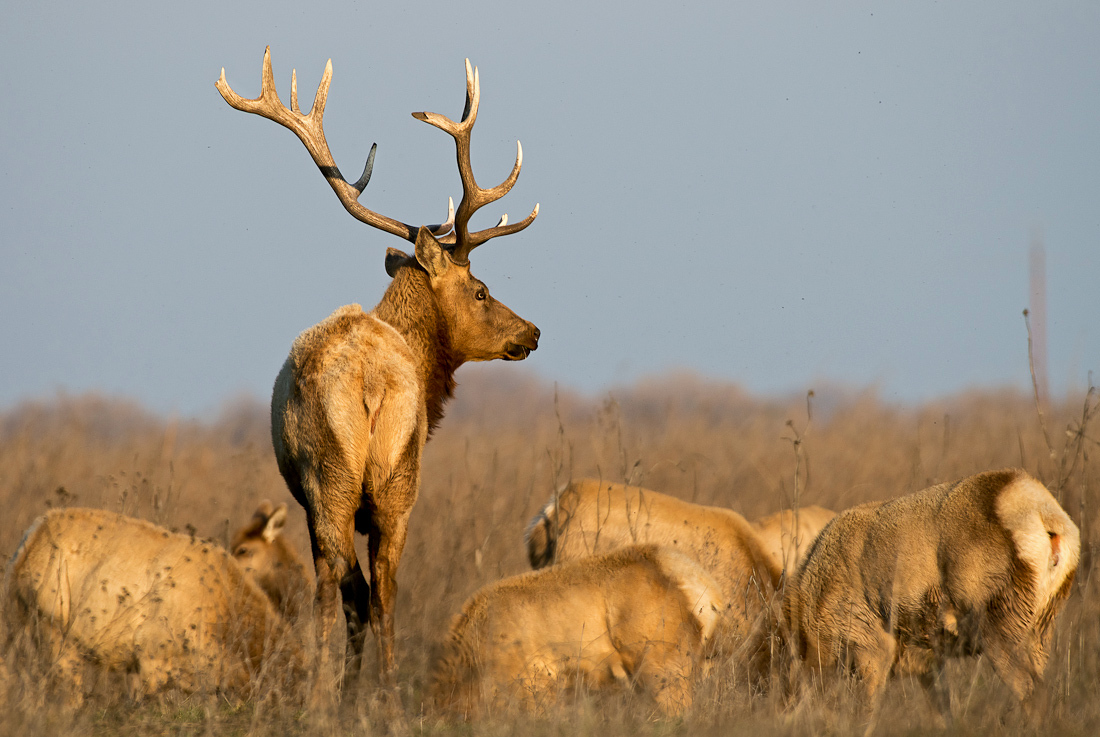
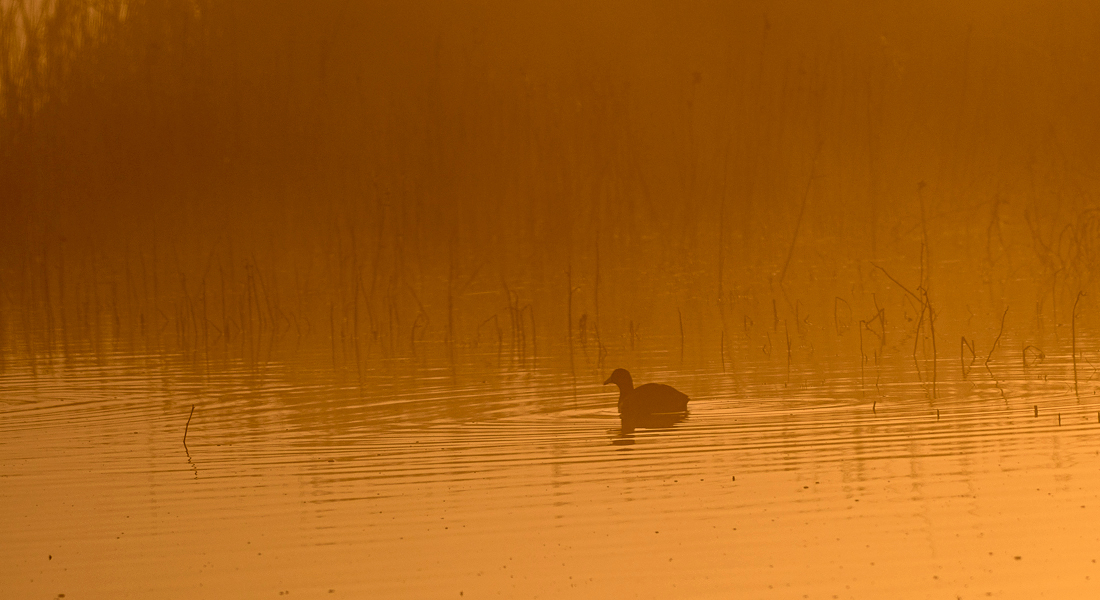
Here's two
Dec 19, 2018 at 07:19 PM
p.1 #14The “Offical”, undeclared Nikon supertelephoto lens thread
 double-crested cormorant by Christian Hunold, on Flickr
Dec 20, 2018 at 08:10 AM
p.1 #15The “Offical”, undeclared Nikon supertelephoto lens thread
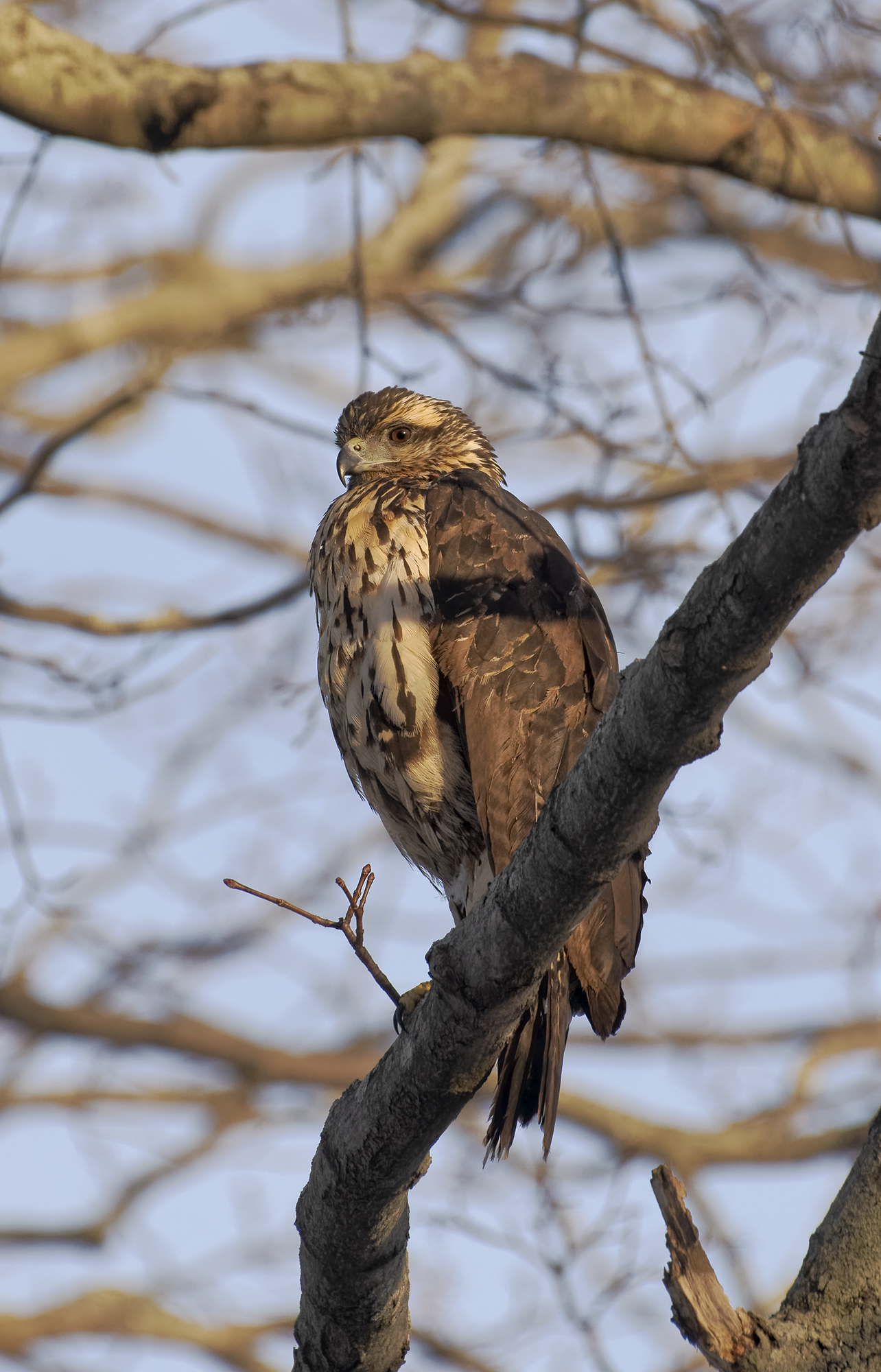
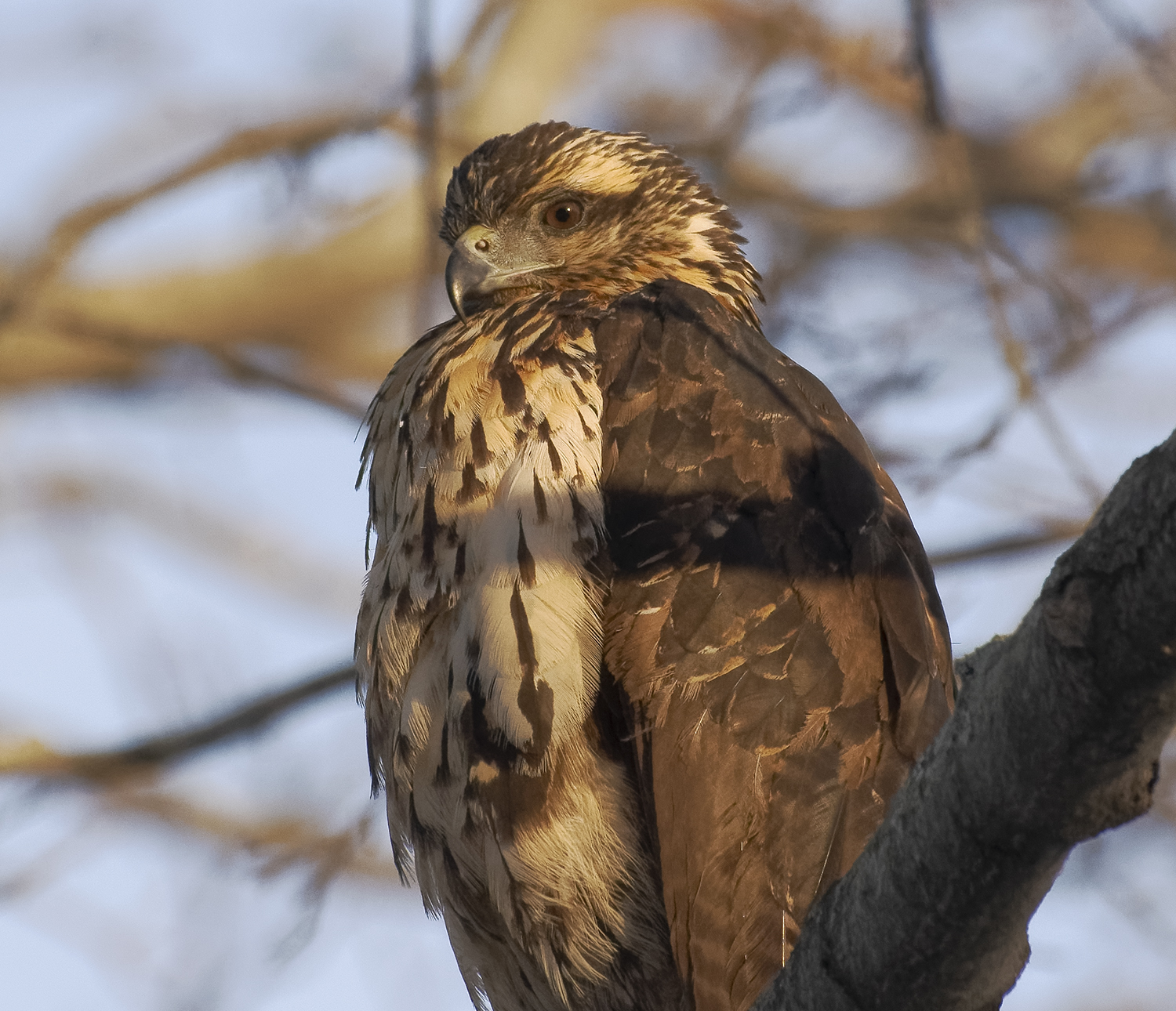
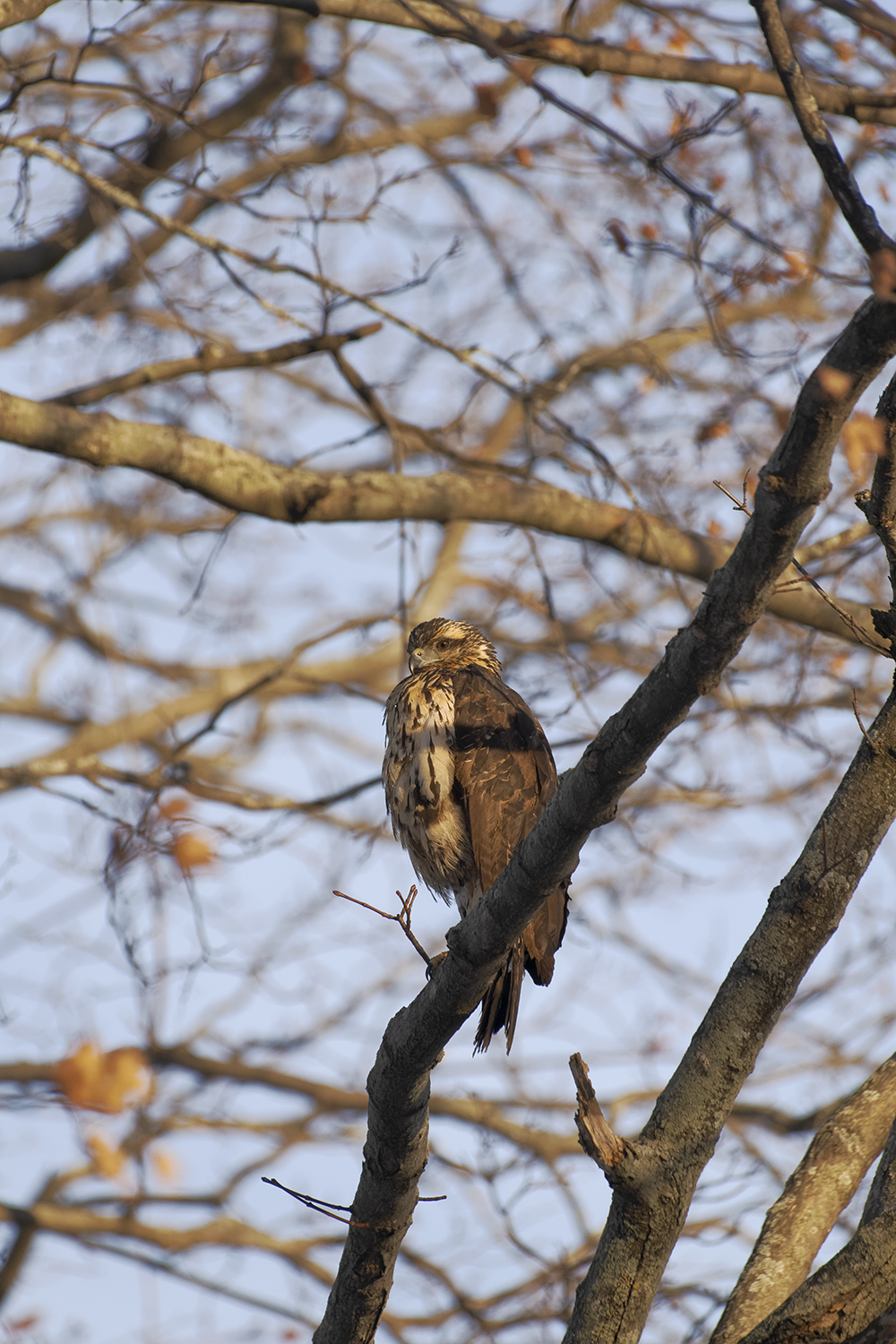
Where: Deering Oaks Park, Portland, Maine.
This bird is up from its home, somewhere from Mexico to South America.
https://neotropical.birds.cornell.edu/Species-Account/nb/species/grbhaw1/overview
It is here, probably because it wants to be here...for now. In North America, our young Bald Eagles often take off on long sojourns, before returning to their place of origin when intent on finding a mate and nesting.
There is some on-line documentation of this hawk being in Texas last August (2018)
Portland Maine’s Deering Oaks is comprised of a nearly pure stand of old Northern Red Oaks (Quercus rubra). And with these come an abundance of acorns and Gray Squirrels (Sciurus carolinensis). For a while anyway, this hawk has all the food it needs, and takes a squirrel whenever it desires. Whether it stays and survives the winter, is anyone’s guess.
Robert King
ISO 400
ISO 400
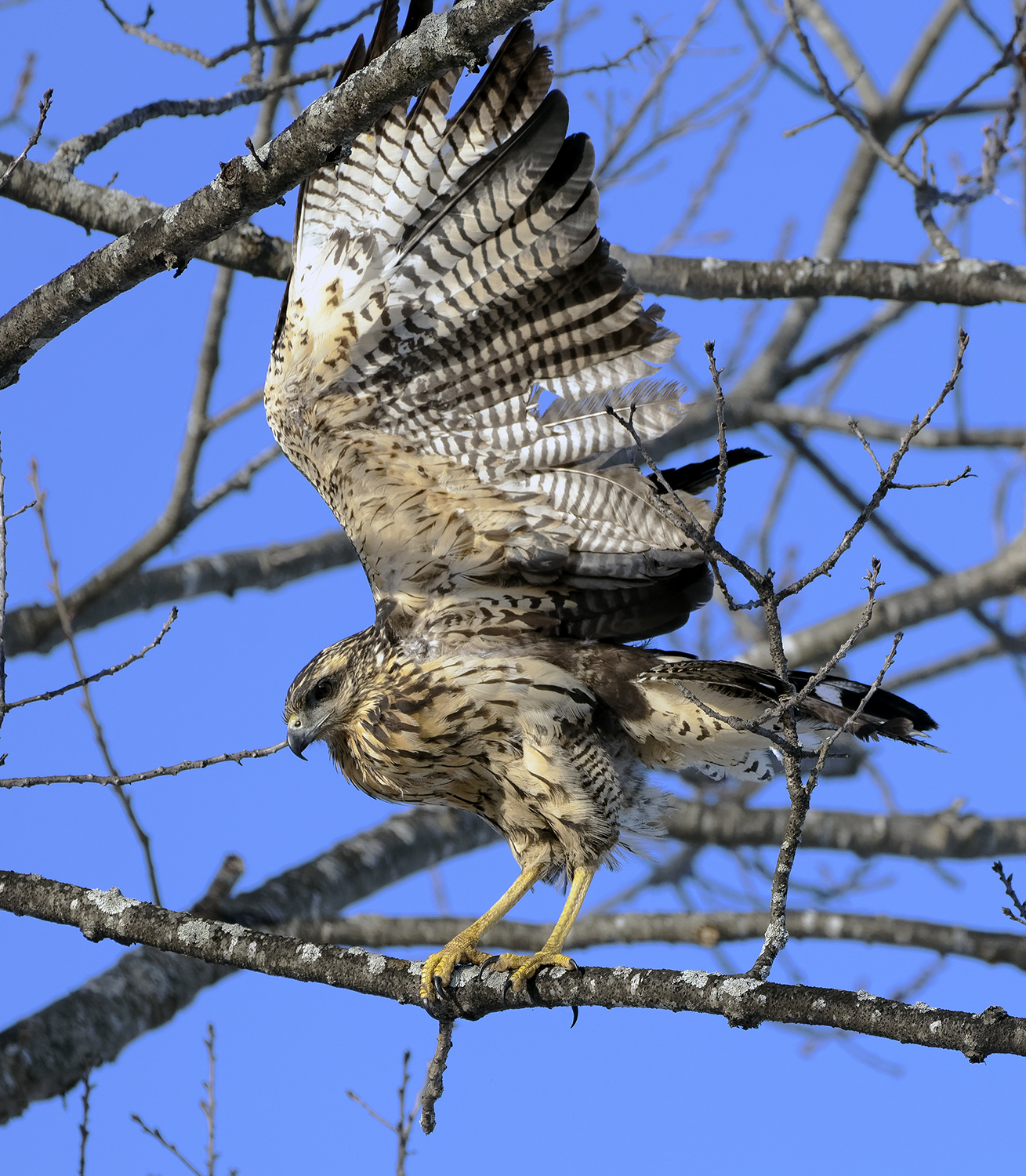
ISO 800
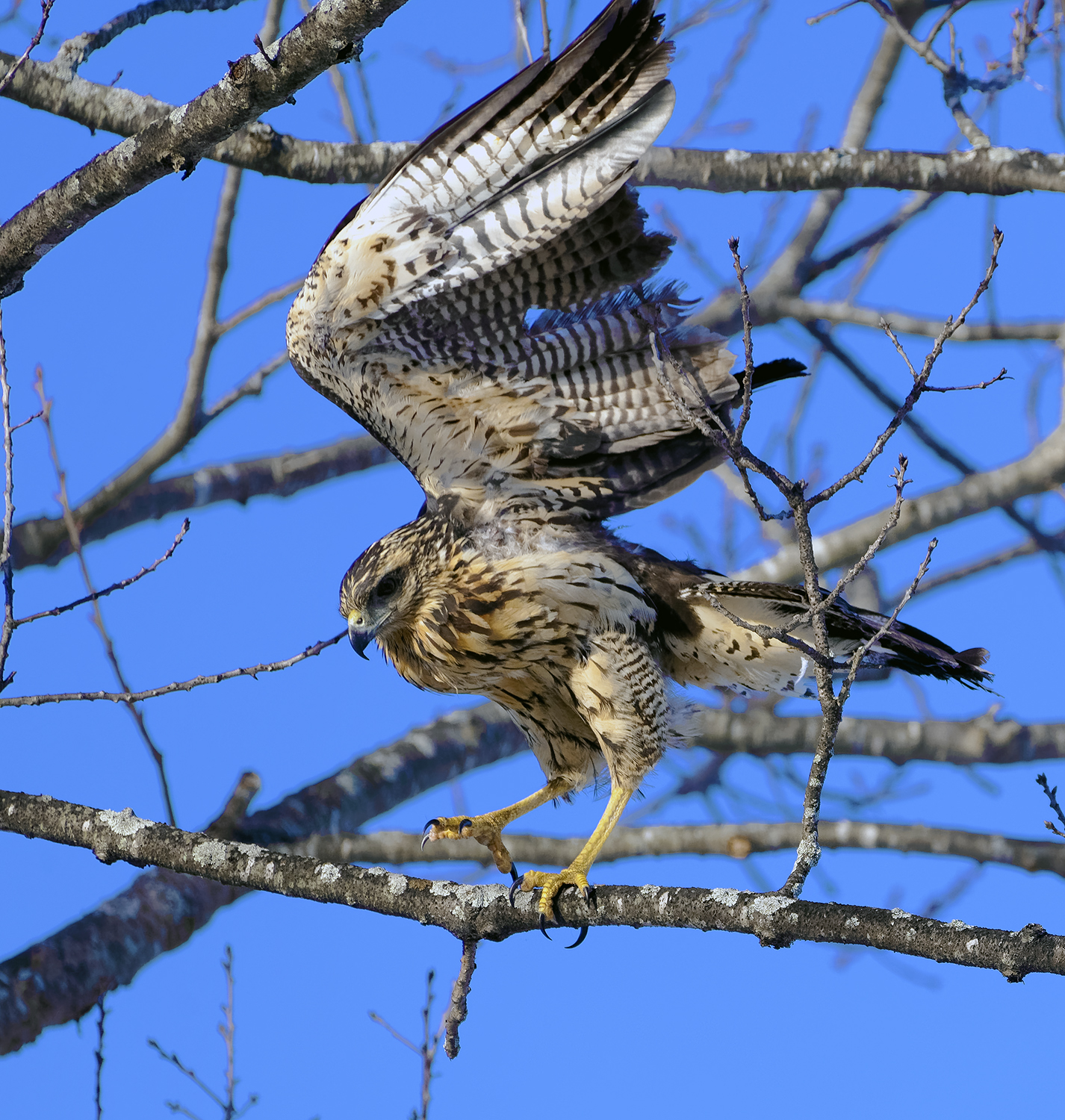
ISO 800
Edited on Dec 22, 2018 at 07:51 PM · View previous versions
This bird is up from its home, somewhere from Mexico to South America.
https://neotropical.birds.cornell.edu/Species-Account/nb/species/grbhaw1/overview
It is here, probably because it wants to be here...for now. In North America, our young Bald Eagles often take off on long sojourns, before returning to their place of origin when intent on finding a mate and nesting.
There is some on-line documentation of this hawk being in Texas last August (2018)
Portland Maine’s Deering Oaks is comprised of a nearly pure stand of old Northern Red Oaks (Quercus rubra). And with these come an abundance of acorns and Gray Squirrels (Sciurus carolinensis). For a while anyway, this hawk has all the food it needs, and takes a squirrel whenever it desires. Whether it stays and survives the winter, is anyone’s guess.
Robert King
ISO 400
ISO 400
ISO 800
ISO 800
Edited on Dec 22, 2018 at 07:51 PM · View previous versions
Dec 22, 2018 at 06:58 PM
p.1 #16The “Offical”, undeclared Nikon supertelephoto lens thread
In a blind, I was anticipating the procession of 30 Eastern Wild Turkeys (Meleagris gallopavo) that would emerge from the forest (just down from their tree roost), into a swale and then up onto an “old field” plateau for their first foraging of the day. This was their routine on every single day since about last August.
But on this morning, the turkeys did not appear, and the coyote did, apparently following their scent.
Speculation: At some time during the past several nights, (from their tree roosts) the turkeys observed the predator along the forest floor and simply grabbed a new zip code (for the time being). They will be back, as they follow a circuit.
Upon emerging from the woods, the coyote did not immediately spot my blind (at about 80 meters distance). It was not until hearing the D850’s “latchuk”, as I used the usual shutter release, rather than Silent Shutter mode. At that sound, it instantly looked up at my blind (me!) and retreated to the forest edge (about 120 meters distance), sat and just observed the blind.
Finally (for me) this encounter illustrated the big value of silence in a mirrorless. Yes, the coyote would likely have eventually spotted the blind. But I feel quite certain it would not have been alarmed by the sight of it. It *was* alarmed by the combination of the sound of the camera, coming from the blind.
I look forward to Nikon’s next mirrorless, hoping it to *be as AF-fast as my D850/D500* and 45 mpx. It now looks like the D850 is my last DSLR.
Robert King
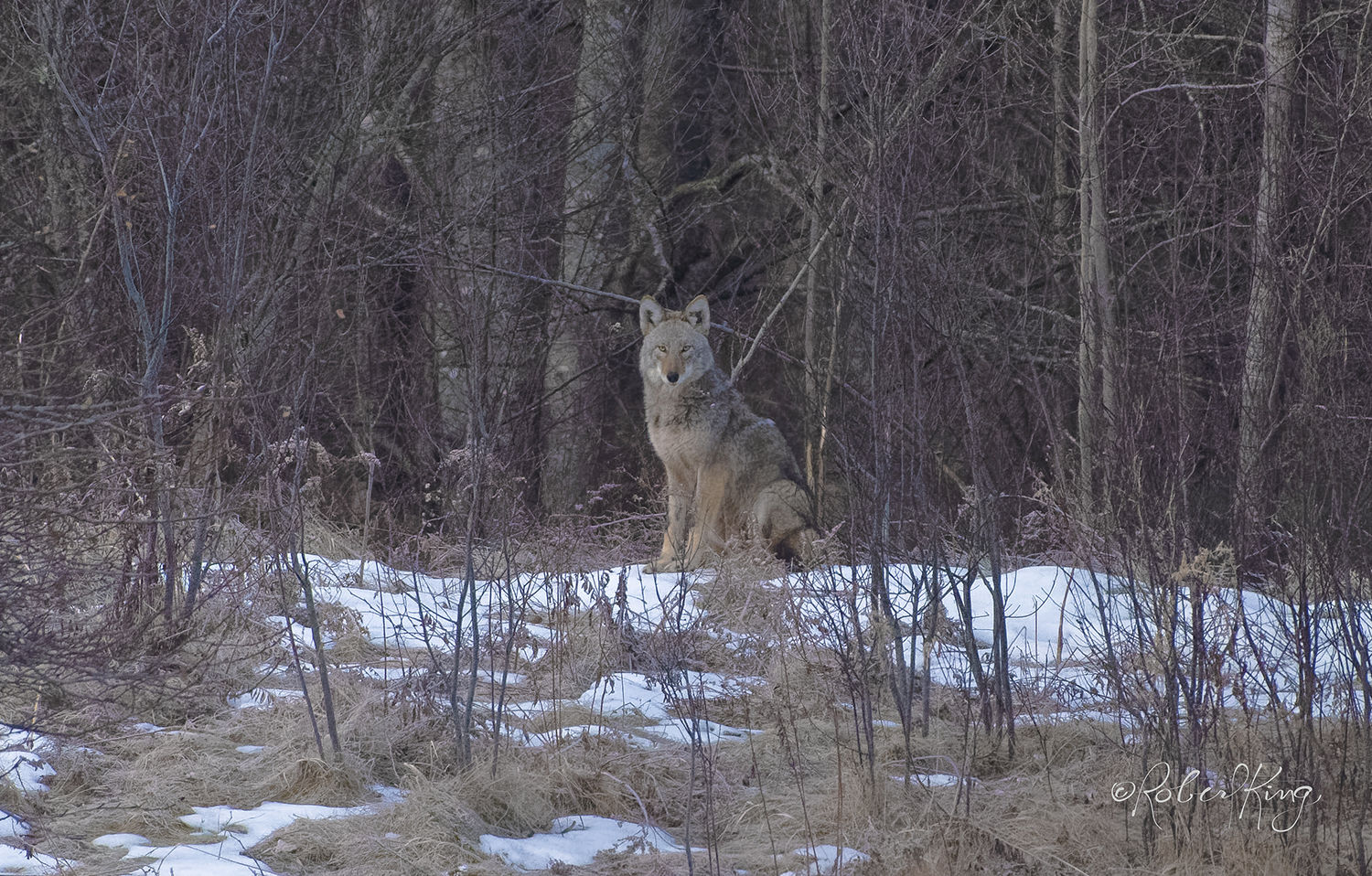
#4: ISO 3200. It was a dank, overcast day
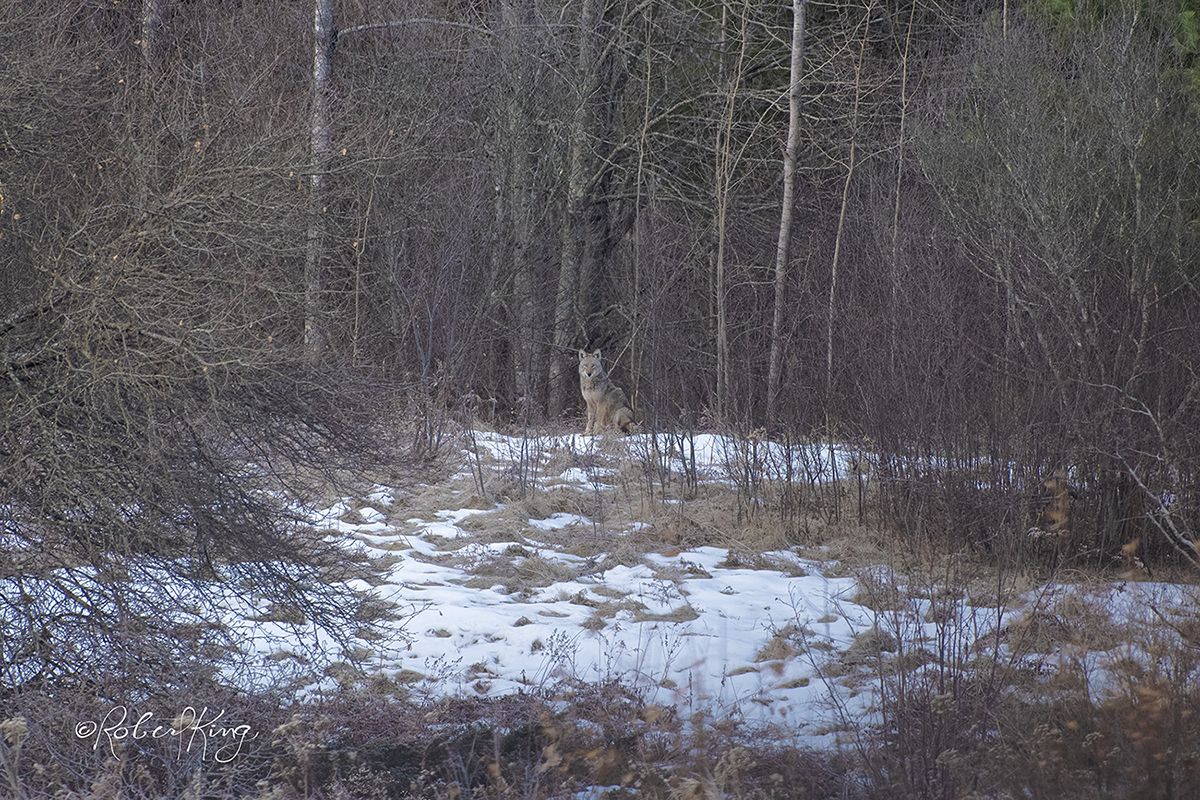
#3: After #2 image, the coyote retreated to forest edge and just watched my blind.
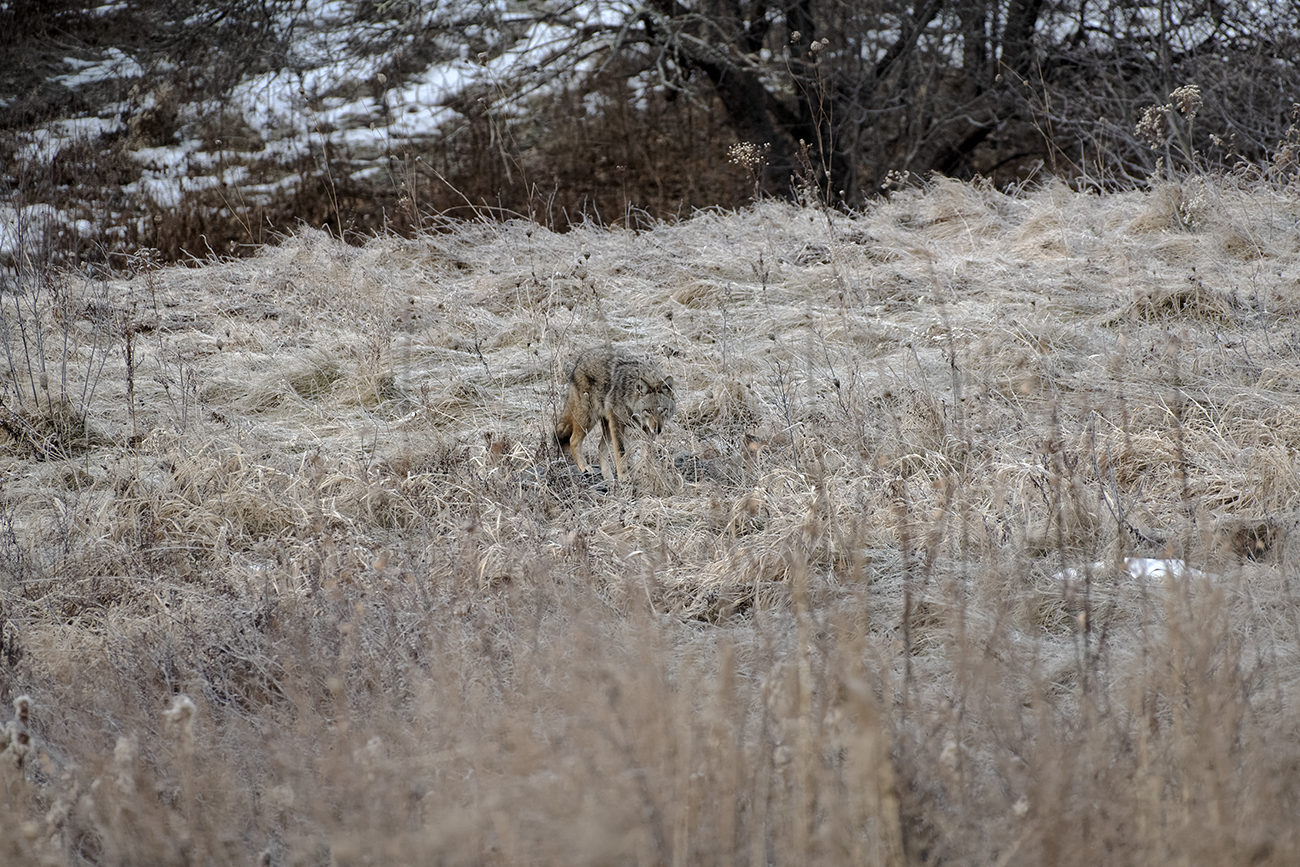
#2: Upon hearing the camera, the coyote looked uo.
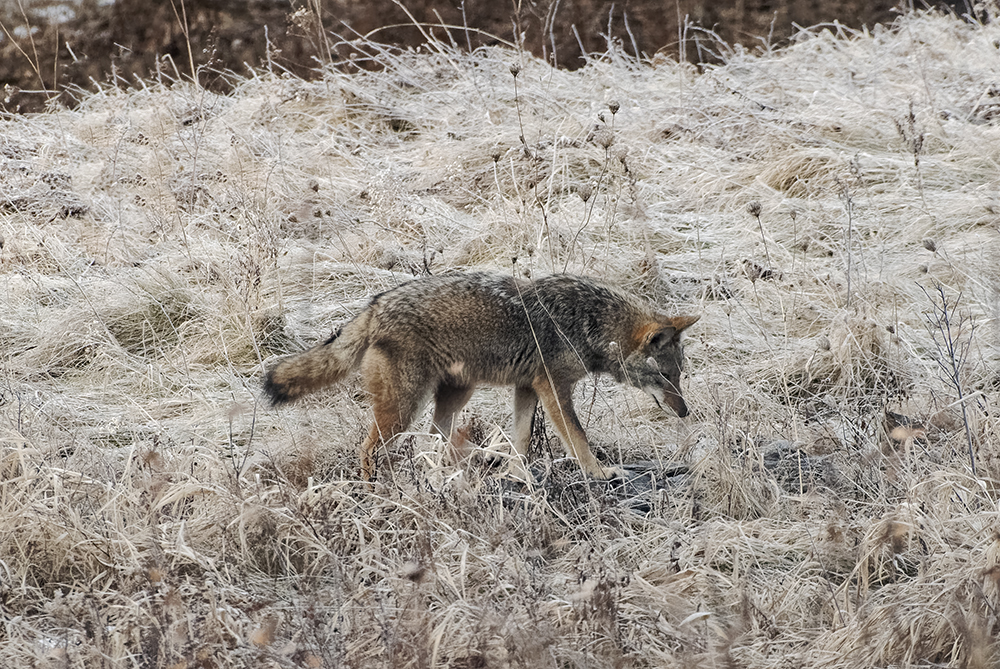
#1: At first, it was not aware of my blind.
But on this morning, the turkeys did not appear, and the coyote did, apparently following their scent.
Speculation: At some time during the past several nights, (from their tree roosts) the turkeys observed the predator along the forest floor and simply grabbed a new zip code (for the time being). They will be back, as they follow a circuit.
Upon emerging from the woods, the coyote did not immediately spot my blind (at about 80 meters distance). It was not until hearing the D850’s “latchuk”, as I used the usual shutter release, rather than Silent Shutter mode. At that sound, it instantly looked up at my blind (me!) and retreated to the forest edge (about 120 meters distance), sat and just observed the blind.
Finally (for me) this encounter illustrated the big value of silence in a mirrorless. Yes, the coyote would likely have eventually spotted the blind. But I feel quite certain it would not have been alarmed by the sight of it. It *was* alarmed by the combination of the sound of the camera, coming from the blind.
I look forward to Nikon’s next mirrorless, hoping it to *be as AF-fast as my D850/D500* and 45 mpx. It now looks like the D850 is my last DSLR.
Robert King
#4: ISO 3200. It was a dank, overcast day
#3: After #2 image, the coyote retreated to forest edge and just watched my blind.
#2: Upon hearing the camera, the coyote looked uo.
#1: At first, it was not aware of my blind.
Dec 22, 2018 at 07:05 PM
p.1 #17The “Offical”, undeclared Nikon supertelephoto lens thread
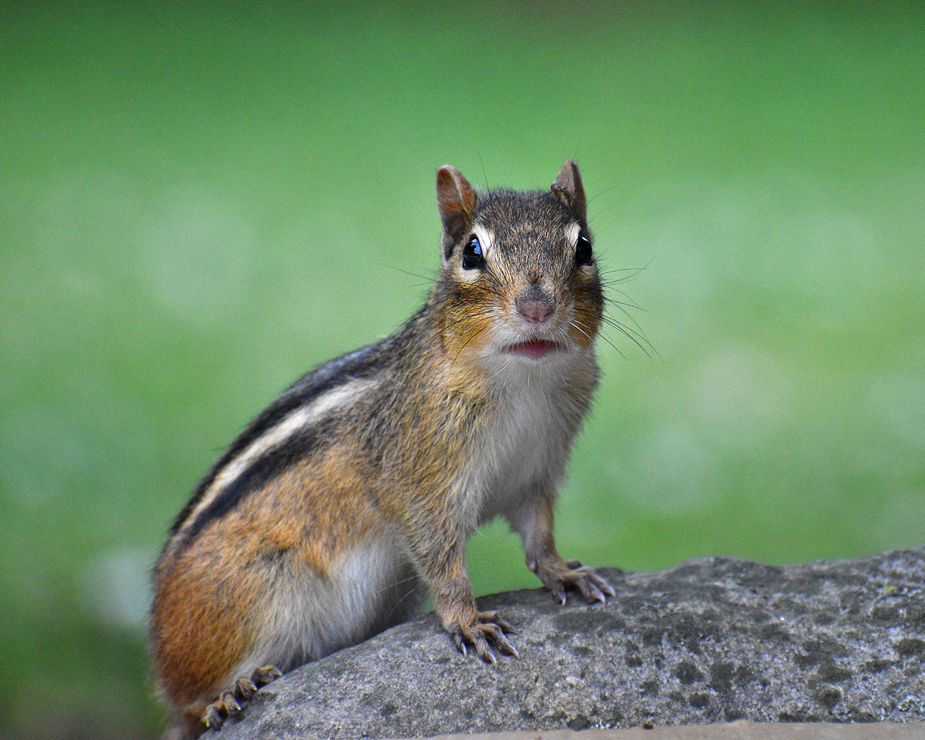
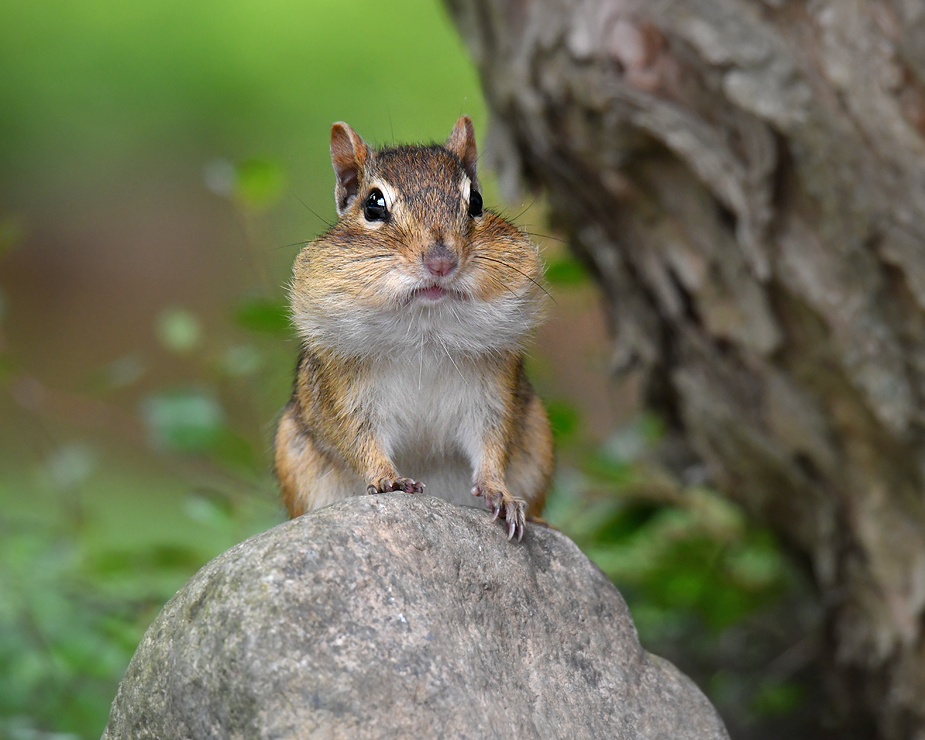
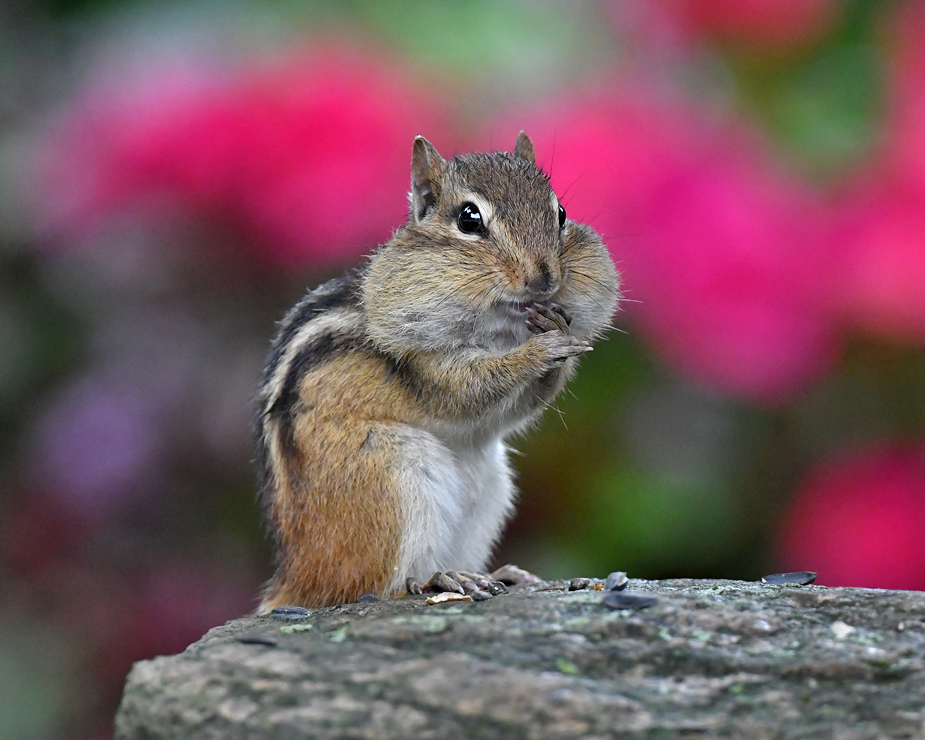
3 different lenses. One a 30 year old fast prime. One a current superzoom. And one a very cheap DX zoom
 |
||
 |
||
 |
|
||
 |
||
|
|
||
 |
||
|
Dec 25, 2018 at 10:25 AM
p.1 #18The “Offical”, undeclared Nikon supertelephoto lens thread
Intereting
Dec 25, 2018 at 04:35 PM
p.1 #19The “Offical”, undeclared Nikon supertelephoto lens thread
bs kite wrote:
Finally (for me) this encounter illustrated the big value of silence in a mirrorless. Yes, the coyote would likely have eventually spotted the blind. But I feel quite certain it would not have been alarmed by the sight of it. It *was* alarmed by the combination of the sound of the camera, coming from the blind.
I look forward to Nikon’s next mirrorless, hoping it to *be as AF-fast as my D850/D500* and 45 mpx. It now looks like the D850 is my last DSLR.
Robert King
Interesting problem. I never use blinds or other forms of concealment. In North America, most animals associate concealment and camo with hunting, so it's not the best way to get animals to relax around you. (And the Peeping Tom vibe of the thing whigs me out.) Anyway, since the animals I hope to shoot always know I'm there, the shutter sound makes no difference. If an animal isn't relaxed enough around me to have their picture taken, I don't get a picture.
Christian
Dec 25, 2018 at 05:40 PM
p.1 #20The “Offical”, undeclared Nikon supertelephoto lens thread
Christian H wrote:
I look forward to Nikon’s next mirrorless, hoping it to *be as AF-fast as my D850/D500* and 45 mpx. It now looks like the D850 is my last DSLR.
Robert KingInteresting problem. I never use blinds or other forms of concealment. In North America, most animals associate concealment and camo with hunting, so it's not the best way to get animals to relax around you. (And the Peeping Tom vibe of the thing
whigs me out.)
Anyway, since the animals I hope to shoot always know I'm there, the shutter sound makes no difference. If an animal isn't relaxed enough around me to have their picture taken, I don't get a picture.
Christian
I am also one who chooses the conspicuous approach virtually 100% of the time.
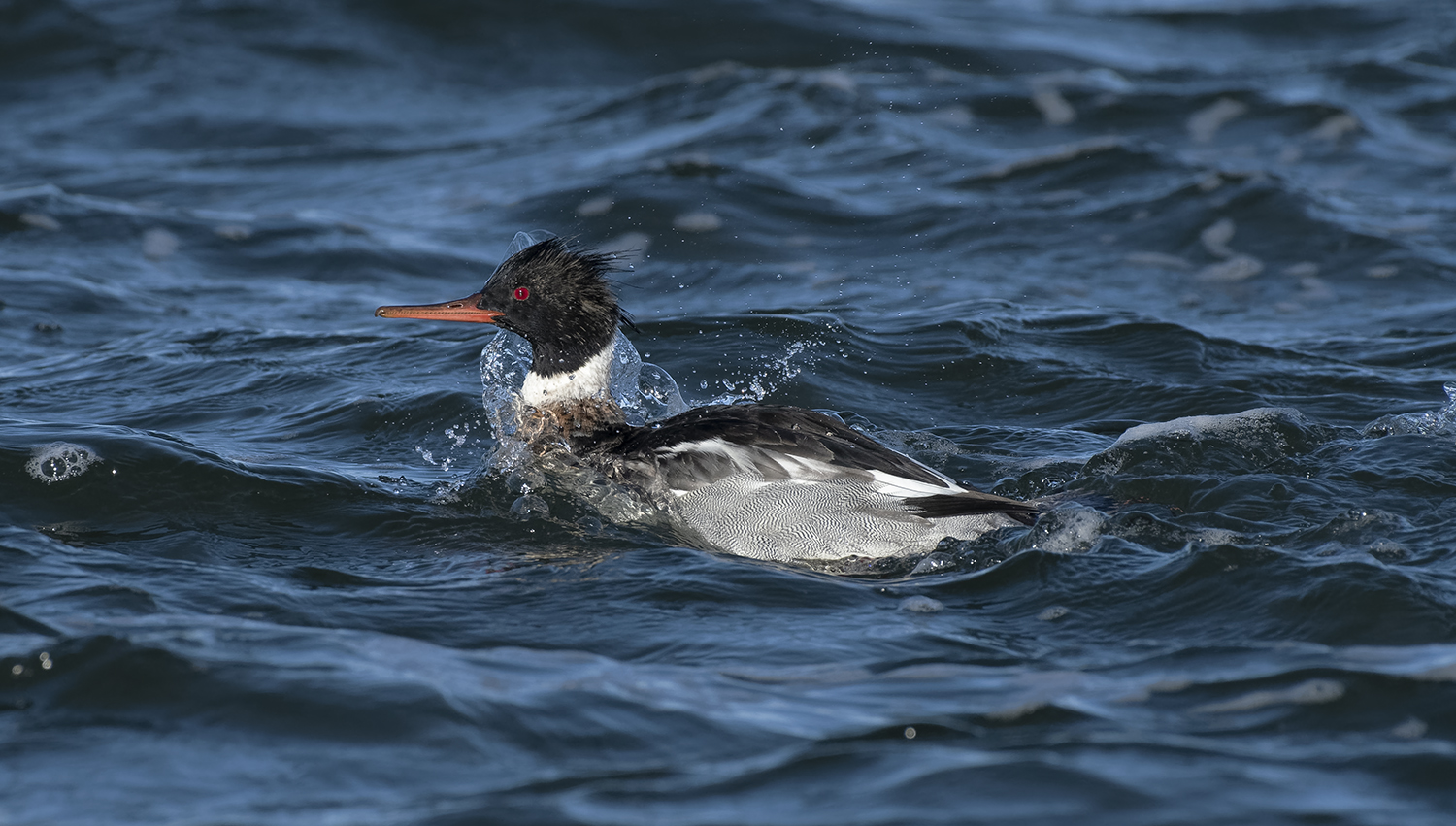
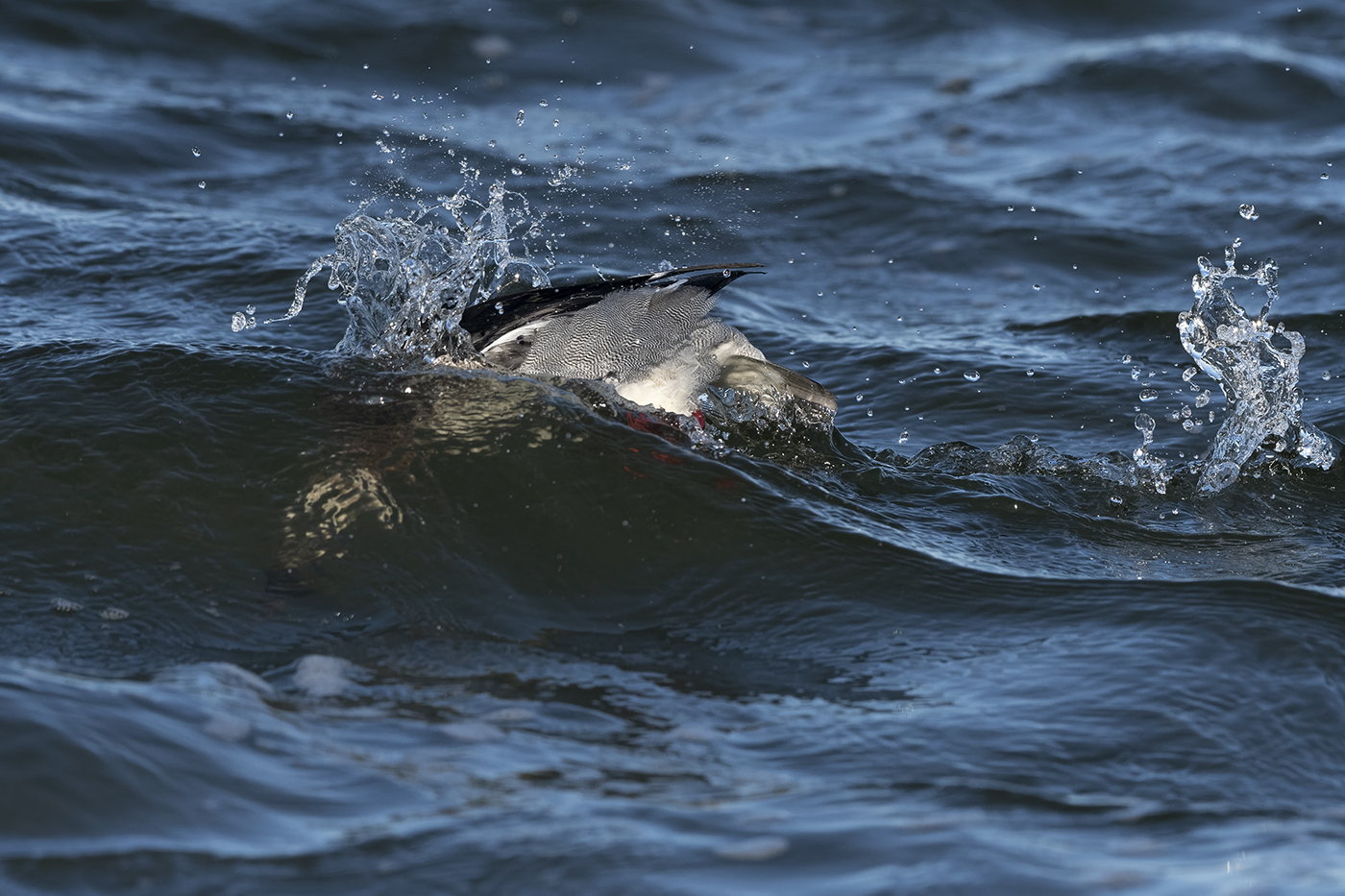
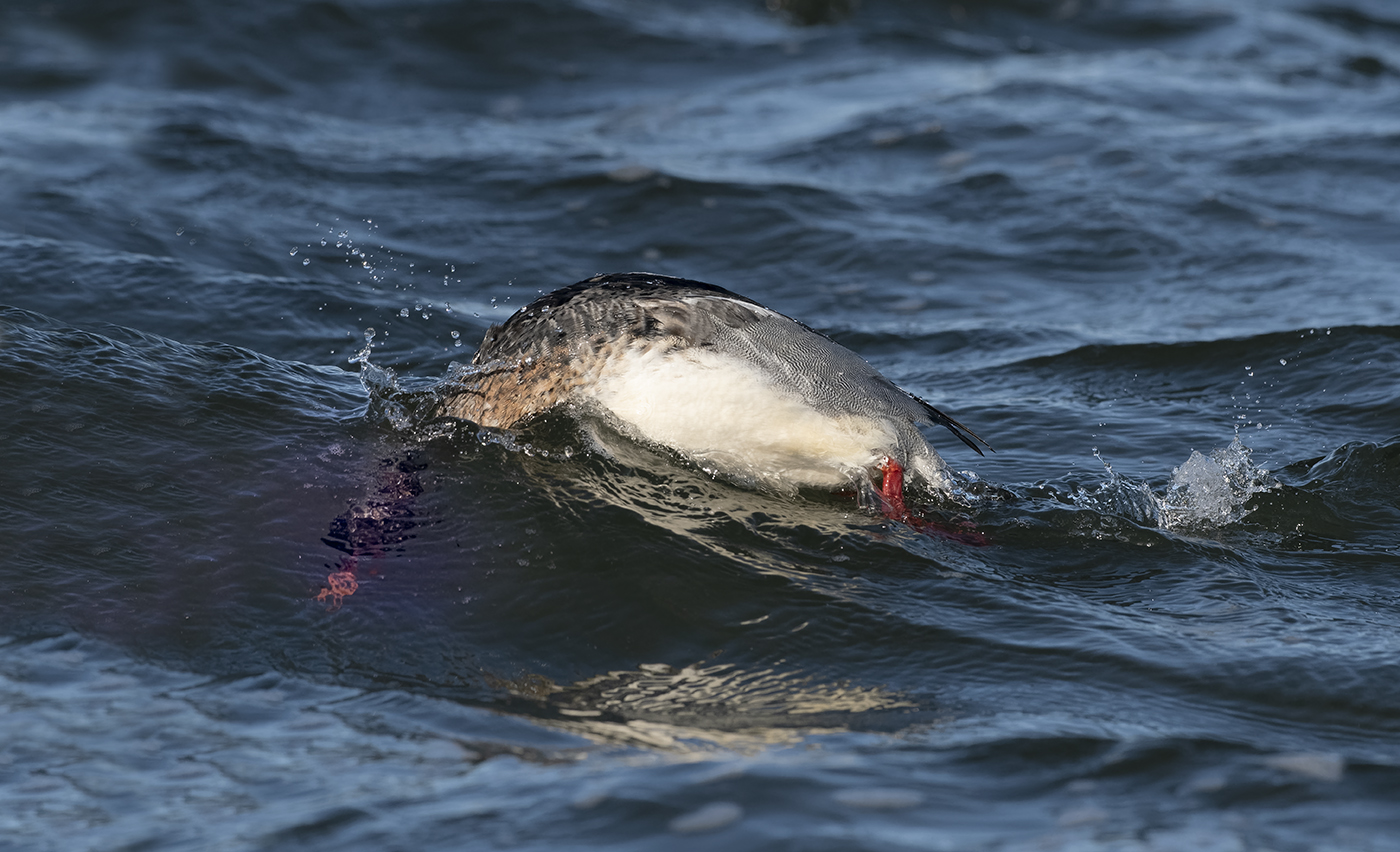
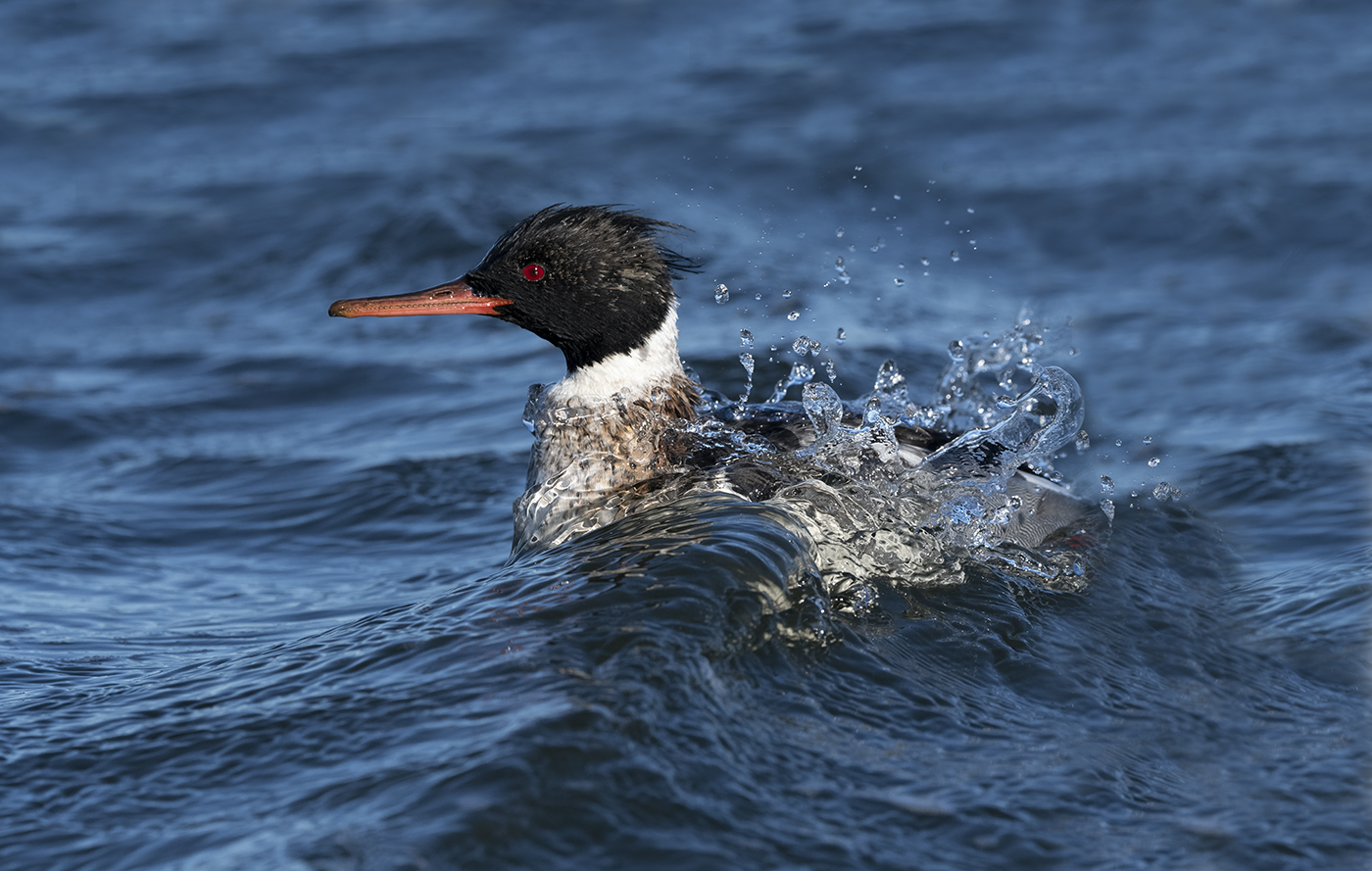
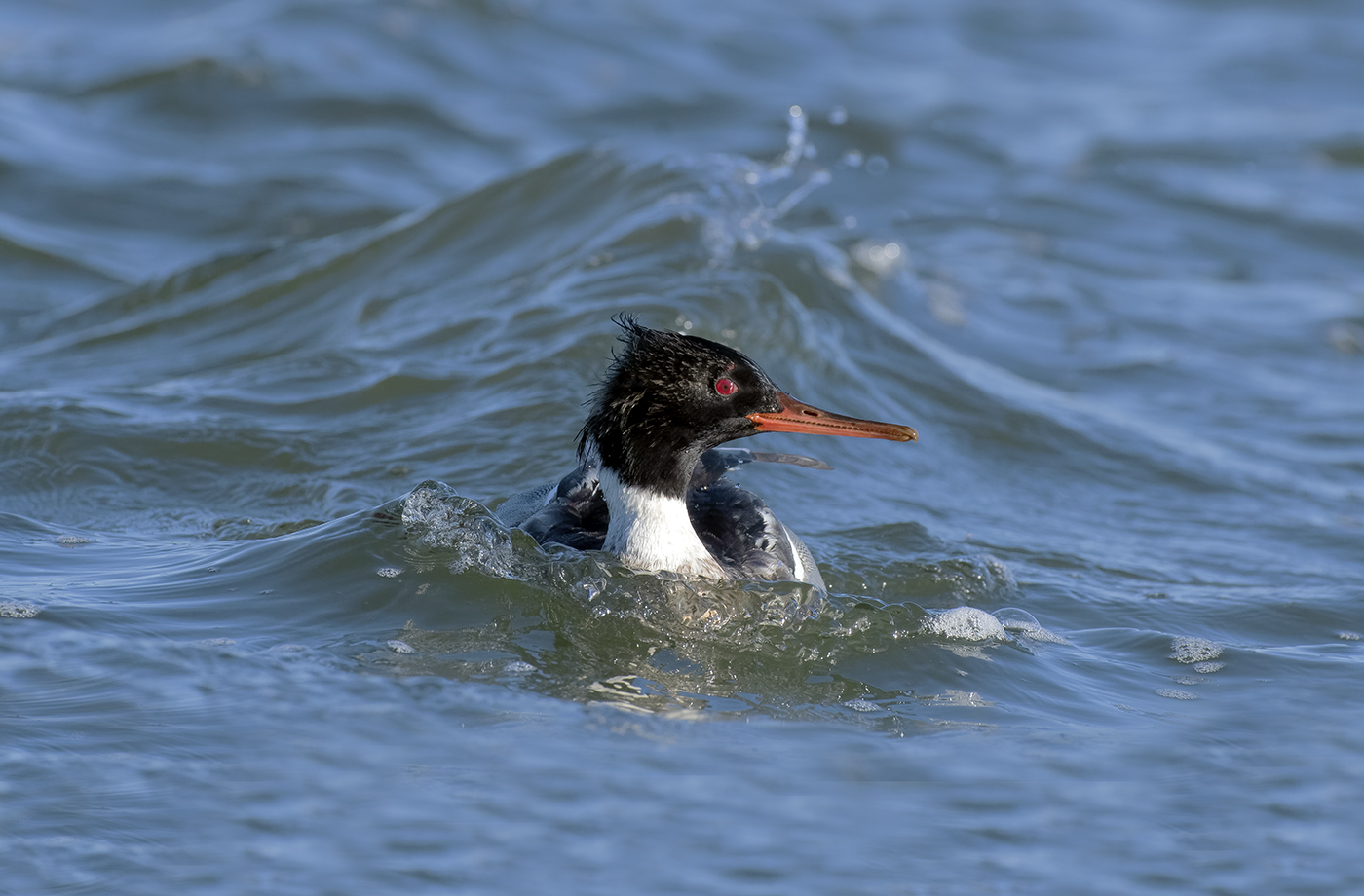
This RB Merganser blessed me on a Christmas Day. I was at the local estuary and elated to see it come up-current directly toward me. The problem was, I was standing. It got to within about 25 feet and stopped. It was a afraid. I sat down, while still in 100% full view of the merganser. It then continued up-current and right past me, just as if I was not there. It caught an eel and a small flounder.
But the conspicuous approach would not work with the coyote. Now if I opted to feed coyotes, I would eventually get all the coyote images I want. But if you feed coyotes, they lose their fear of humans, and then, you are jeopardizing the safety of others. Doesn’t California now have a problem with coyotes attacking people?
Anyway, maybe I will have more on this later.
1
2
3
4
5
Edited on Dec 26, 2018 at 03:21 PM · View previous versions
bs kite wrote
Finally (for me) this encounter illustrated the big value of silence in a mirrorless. Yes, the coyote would likely have eventually spotted the blind. But I feel quite certain it would not have been alarmed by the sight of it. It *was* alarmed by the combination of the sound of the camera, coming from the blind.I look forward to Nikon’s next mirrorless, hoping it to *be as AF-fast as my D850/D500* and 45 mpx. It now looks like the D850 is my last DSLR.
Robert King
whigs me out.)
Anyway, since the animals I hope to shoot always know I'm there, the shutter sound makes no difference. If an animal isn't relaxed enough around me to have their picture taken, I don't get a picture.
Christian
I am also one who chooses the conspicuous approach virtually 100% of the time.
This RB Merganser blessed me on a Christmas Day. I was at the local estuary and elated to see it come up-current directly toward me. The problem was, I was standing. It got to within about 25 feet and stopped. It was a afraid. I sat down, while still in 100% full view of the merganser. It then continued up-current and right past me, just as if I was not there. It caught an eel and a small flounder.
But the conspicuous approach would not work with the coyote. Now if I opted to feed coyotes, I would eventually get all the coyote images I want. But if you feed coyotes, they lose their fear of humans, and then, you are jeopardizing the safety of others. Doesn’t California now have a problem with coyotes attacking people?
Anyway, maybe I will have more on this later.
1
2
3
4
5
Edited on Dec 26, 2018 at 03:21 PM · View previous versions
Dec 26, 2018 at 03:16 PM