Voigtlander 110mm f/2.5 Macro APO-Lanthar Review

p.11 #1Voigtlander 110mm f/2.5 Macro APO-Lanthar Review
sebbe wrote:
Perhaps the new CV 110/2.5 APO is not as well desired or maybe its focal length makes it a more specialist lens?Sony FE 90/2.8 G Macro + Sony FE 85/1.4 GM + hardly shoot Landscape above 50mm = no need for the CV 110/2.5 APOPerhaps no need for the CV in this scenario, but if it was me I would be replacing he Sony G 90 f/2.8 with the CV 110 and getting a lens that does macro just as well and does other things a bit better making it a more versatile lens. Then you could save the GM 85 for those situations in which you are just focussed on doing portraiture. For me there are times I would want to do a bit of macro and a bit of portraiture (for example out on a hike with friends) and I definitely wouldn't want to carry the G 90 Macro and the GM 85 in those situations. Having the CV 110 would just be much preferred, for me anyway.Take the 85GM with a Marumi Achromat. Much better for such situations. And without sunstars and octagon bokeh. 
In addition to what Fred said, the GM 85 f/1.8 is a whopping 11mm fatter in diameter, and almost 10mm longer, so although it is only a bit heavier it is really a lot bigger. Something that would matter to me on a hike like I described. I think it is pretty obvious the CV 110 is going to be better for macro and for my purposes better for landscapes, but the Sony GM would be better for portraits. I am very happy that at our house, I can get the CV 110, and my wife who focusses on portraits most in her shooting is getting the GM 85 f/1.4. Both are great lenses, and certainly could be wonderful choices based on what you shoot, but if you do lots of closeup and landscapes with a moderate telephoto as I do, then the CV 110 is a very compelling lens.
By the way, I do share the concern about the focus throw. As a former owner and lover of the Zeiss ZE 100 MP, its short focus throw for non-close up shots annoyed me for quite awhile. I did find after awhile, however, I got totally used to the very fine control needed with the short focus throw. After six months or so, for me I didn't even think about it any more, even though it bugged me to no end at the beginning. I hope I have a similar experience and perhaps a shorter learning curve with the CV 110.
Steve Spencer wrote
sebbe wrote
Fred Miranda wrote
Is it me or the CV 65/2 APO got more enthusiasm when first released? I remember we all wanted to get one and soon enough we had an explosion of samples.Perhaps the new CV 110/2.5 APO is not as well desired or maybe its focal length makes it a more specialist lens?
In addition to what Fred said, the GM 85 f/1.8 is a whopping 11mm fatter in diameter, and almost 10mm longer, so although it is only a bit heavier it is really a lot bigger. Something that would matter to me on a hike like I described. I think it is pretty obvious the CV 110 is going to be better for macro and for my purposes better for landscapes, but the Sony GM would be better for portraits. I am very happy that at our house, I can get the CV 110, and my wife who focusses on portraits most in her shooting is getting the GM 85 f/1.4. Both are great lenses, and certainly could be wonderful choices based on what you shoot, but if you do lots of closeup and landscapes with a moderate telephoto as I do, then the CV 110 is a very compelling lens.
By the way, I do share the concern about the focus throw. As a former owner and lover of the Zeiss ZE 100 MP, its short focus throw for non-close up shots annoyed me for quite awhile. I did find after awhile, however, I got totally used to the very fine control needed with the short focus throw. After six months or so, for me I didn't even think about it any more, even though it bugged me to no end at the beginning. I hope I have a similar experience and perhaps a shorter learning curve with the CV 110.
Dec 14, 2018 at 02:46 PM
p.11 #2Voigtlander 110mm f/2.5 Macro APO-Lanthar Review
Steve Spencer wrote:
Perhaps the new CV 110/2.5 APO is not as well desired or maybe its focal length makes it a more specialist lens?Sony FE 90/2.8 G Macro + Sony FE 85/1.4 GM + hardly shoot Landscape above 50mm = no need for the CV 110/2.5 APOPerhaps no need for the CV in this scenario, but if it was me I would be replacing he Sony G 90 f/2.8 with the CV 110 and getting a lens that does macro just as well and does other things a bit better making it a more versatile lens. Then you could save the GM 85 for those situations in which you are just focussed on doing portraiture. For me there are times I would want to do a bit of macro and a bit of portraiture (for example out on a hike with friends) and I definitely wouldn't want to carry the G 90 Macro and the GM 85 in those situations. Having the CV 110 would just be much preferred, for me anyway.Take the 85GM with a Marumi Achromat. Much better for such situations. And without sunstars and octagon bokeh. In addition to what Fred said, the GM 85 f/1.8 is a whopping 11mm fatter in diameter, and almost 10mm longer, so although it is only a bit heavier it is really a lot bigger. Something that would matter to me on a hike like I described. I think it is pretty obvious the CV 110 is going to be better for macro and for my purposes better for landscapes, but the Sony GM would be better for portraits. I am very happy that at our house, I can get the CV 110, and my wife who focusses on...Show more →
You are right. The 85GM wouldn't be my choice either. On hikes I prefer wider lenses (cv 12/5.6, loxia 21/2.8 and cv40/1.2). But that's my preference. I'm looking forward to your shots with the CV110. Maybe I'll jump over and take one too then.
sebbe wrote
Steve Spencer wrote
sebbe wrote
Fred Miranda wrote
Is it me or the CV 65/2 APO got more enthusiasm when first released? I remember we all wanted to get one and soon enough we had an explosion of samples.Perhaps the new CV 110/2.5 APO is not as well desired or maybe its focal length makes it a more specialist lens?
You are right. The 85GM wouldn't be my choice either. On hikes I prefer wider lenses (cv 12/5.6, loxia 21/2.8 and cv40/1.2). But that's my preference. I'm looking forward to your shots with the CV110. Maybe I'll jump over and take one too then.
Dec 14, 2018 at 03:00 PM
p.11 #3Voigtlander 110mm f/2.5 Macro APO-Lanthar Review
Steve Spencer wrote:
I don't expect to see much difference to what Fred posted here. But as he also did his default sharpening it's difficult to judge if there is something. I'm thinking to replace the Sony FE 90/2.8 and if the lens really shows no CA this may be a good reason. The 90 shows the same bokeh balls when you stop it down and it seems to perform similar at 1:1.The 90, in most situations I've use it in, has much rounder balls at f6.3 than this.
The axial CA of 90 is a touch worse, but still plenty low enough not to bother me.
The FBW is excellent on the 90, but I'd still prefer the real helicoid.
OTOH I like that the 90 doesn't extend.
The 90 is a touch worse at infinity.
At macro distances the 90 is about as good and contrasty as I think I can detect even life size, so I'll call that a draw with the CV based on the samples I've seen.
Of course the 90 means you don't need to pack an AF portrait lens with you on macro trip. (not I think that I've ever used it that way except as a test)The FE 90/2.8 Macro is "internal focus" and therefore focal length will be much reduced at MFD. Have you calculated the real FL at 1:1 magnification? It's different with the 110/2.5 APO as it extends to reach its maximum magnification.
What is the working distance with the FE 90? With the CV 110 at 1:1 macro, it's 7 inches. (without the hood)7 inches = 7 * 25.4mm = 177.8mm
The close focus of the Sony 90 G is 28cm. So 280mm - 130.5mm -18mm = 141.5mm free working distance when length of lens and flange to sensor distances are subtracted. (Sony 90 G is 130.5mm long and Sony has a flange to sensor distance of 18mm.)
Focal lengths at lifesize magnification
Corresponding focal length of a symmetrical lens at lifesize magnification for Sony 90 G:
280mm /4 = 70mm
Corresponding focal length of a sym. lens at lifesize mag. for CV 110/2.5
350mm /4 = 87.5mm
Both lenses drop some of their focal length when going to lifesize magnification. Both lenses are floating element designs, Sony 90 G through internal focus and the CV 110/2.5 through three focus groups.Basically all modern macro lenses drop focal length when they go to 1:1. Here are some examples:
Canon 100 f/2.8L - drops to 75mm
Nikon 105 f/2.8 G VR - drops to 78.5mm (25% drop)
Sony 90 f/2.8 G - drops to 70mm (22% drop)
Leica R 100 f/2.8 APO - drops to 75mm with elpro 1:1 adapter (no drop at 1:2)
Voigtlander 125 f/2.5 APO - drops to 95mm (24% drop)
Voigtlander 110 f/2.5 APO - drops to 87.5 (20% drop)
Zeiss Milvus (or ZE/ZF) - drops to only 97mm at 1:2 (when lenses only go to 1:2 we tend to not see them drop...Show more →
Thank you for that great summary. The drop in FL at higher mag does result in less loss of light. For example my CV 125/2.5 at 1:1 loses (in round numbers) only 1 stop of light with the helicoid extension whereas the Zuiko 135 which is a bellows lens and uses pure extension loses 2 stops. The gain in the light does result in loss of working distance demonstrating the "no free lunch" rule of optics. The "no penalty goes uncompensated" corollary with the Zuiko mean the effective aperture is smaller ( size, i.e. higher number) resulting in more dof at the same aperture "lens setting." The Zuiko is symmetric so the pupil mag is 1 but the complex macro lenses now are unlikely to be so.
bjornthun wrote
Fred Miranda wrote
DavidBM wrote
sebbe wrote
elimoss wrote
If we are talking strictly about axial CA correction -- I could be wrong, but -- I don't think the inbuilt lens profiles, even sneaky ones, correct axial CA to any significant extent. Lateral CA, certainly.The axial CA of 90 is a touch worse, but still plenty low enough not to bother me.
The FBW is excellent on the 90, but I'd still prefer the real helicoid.
OTOH I like that the 90 doesn't extend.
The 90 is a touch worse at infinity.
At macro distances the 90 is about as good and contrasty as I think I can detect even life size, so I'll call that a draw with the CV based on the samples I've seen.
Of course the 90 means you don't need to pack an AF portrait lens with you on macro trip. (not I think that I've ever used it that way except as a test)
What is the working distance with the FE 90? With the CV 110 at 1:1 macro, it's 7 inches. (without the hood)
The close focus of the Sony 90 G is 28cm. So 280mm - 130.5mm -18mm = 141.5mm free working distance when length of lens and flange to sensor distances are subtracted. (Sony 90 G is 130.5mm long and Sony has a flange to sensor distance of 18mm.)
Focal lengths at lifesize magnification
Corresponding focal length of a symmetrical lens at lifesize magnification for Sony 90 G:
280mm /4 = 70mm
Corresponding focal length of a sym. lens at lifesize mag. for CV 110/2.5
350mm /4 = 87.5mm
Both lenses drop some of their focal length when going to lifesize magnification. Both lenses are floating element designs, Sony 90 G through internal focus and the CV 110/2.5 through three focus groups.
Canon 100 f/2.8L - drops to 75mm
Nikon 105 f/2.8 G VR - drops to 78.5mm (25% drop)
Sony 90 f/2.8 G - drops to 70mm (22% drop)
Leica R 100 f/2.8 APO - drops to 75mm with elpro 1:1 adapter (no drop at 1:2)
Voigtlander 125 f/2.5 APO - drops to 95mm (24% drop)
Voigtlander 110 f/2.5 APO - drops to 87.5 (20% drop)
Zeiss Milvus (or ZE/ZF) - drops to only 97mm at 1:2 (when lenses only go to 1:2 we tend to not see them drop...Show more →
Thank you for that great summary. The drop in FL at higher mag does result in less loss of light. For example my CV 125/2.5 at 1:1 loses (in round numbers) only 1 stop of light with the helicoid extension whereas the Zuiko 135 which is a bellows lens and uses pure extension loses 2 stops. The gain in the light does result in loss of working distance demonstrating the "no free lunch" rule of optics. The "no penalty goes uncompensated" corollary with the Zuiko mean the effective aperture is smaller ( size, i.e. higher number) resulting in more dof at the same aperture "lens setting." The Zuiko is symmetric so the pupil mag is 1 but the complex macro lenses now are unlikely to be so.
Dec 14, 2018 at 04:03 PM
p.11 #4Voigtlander 110mm f/2.5 Macro APO-Lanthar Review
On its way!
I'm simply in love with the Voigtlander 40/1.2 Nokton, and I didn't jump on the 65 being so close in focal range. But I can't resist this, since I got rid of my 135 leica a bit ago, and only have the 85/1.8
Haven't had a dedicated macro in some time, so this is going to be a treat!
I'm simply in love with the Voigtlander 40/1.2 Nokton, and I didn't jump on the 65 being so close in focal range. But I can't resist this, since I got rid of my 135 leica a bit ago, and only have the 85/1.8
Haven't had a dedicated macro in some time, so this is going to be a treat!
Dec 14, 2018 at 09:17 PM
p.11 #5Voigtlander 110mm f/2.5 Macro APO-Lanthar Review
avuroski wrote:
On its way!
I'm simply in love with the Voigtlander 40/1.2 Nokton, and I didn't jump on the 65 being so close in focal range. But I can't resist this, since I got rid of my 135 leica a bit ago, and only have the 85/1.8
Haven't had a dedicated macro in some time, so this is going to be a treat!
It won't disappoint you.
Dec 14, 2018 at 11:19 PM
p.11 #6Voigtlander 110mm f/2.5 Macro APO-Lanthar Review
I'll get one right away if its made in EOS/F mount, or at least other mirrorless mounts with/without the electrical contacts. 
But yea the lens looks lovely even when adapted.
But yea the lens looks lovely even when adapted.
Dec 15, 2018 at 09:01 AM
p.11 #7Voigtlander 110mm f/2.5 Macro APO-Lanthar Review
Few messing around today. Some cross posted:
 |
||
 |
||
|
|
||
 |
||
|
|
||
 |
||
|
|
||
 |
||
|
|
||
 |
||
|
Dec 15, 2018 at 03:13 PM


p.11 #9Voigtlander 110mm f/2.5 Macro APO-Lanthar Review
The weather hasn't been fair to me - shiny new lens on my desk and nothing to photograph. I had a french Viola flower that was waiting for the lens to arrive, but it died suddenly. Alas, had to use a tulip, even though I didn't have good light either right now. But couldn't wait to try the lens.
So far, incredibly sharp with no hint of chromatic aberration and I think its perfect for Sony pixel-shift mode, to get every minute detail out of the lens. The tulip was 41 pixel-shifted frames, focus-stacked using macro rail and processed in Helicon Focus. For tech interest, 41 a7r3 dng files took about 34GB of RAM in Photoshop to process (though didn't do a good job stacking) and 12GB in Helicon Focus.
Can't wait to try it on something in decent light!
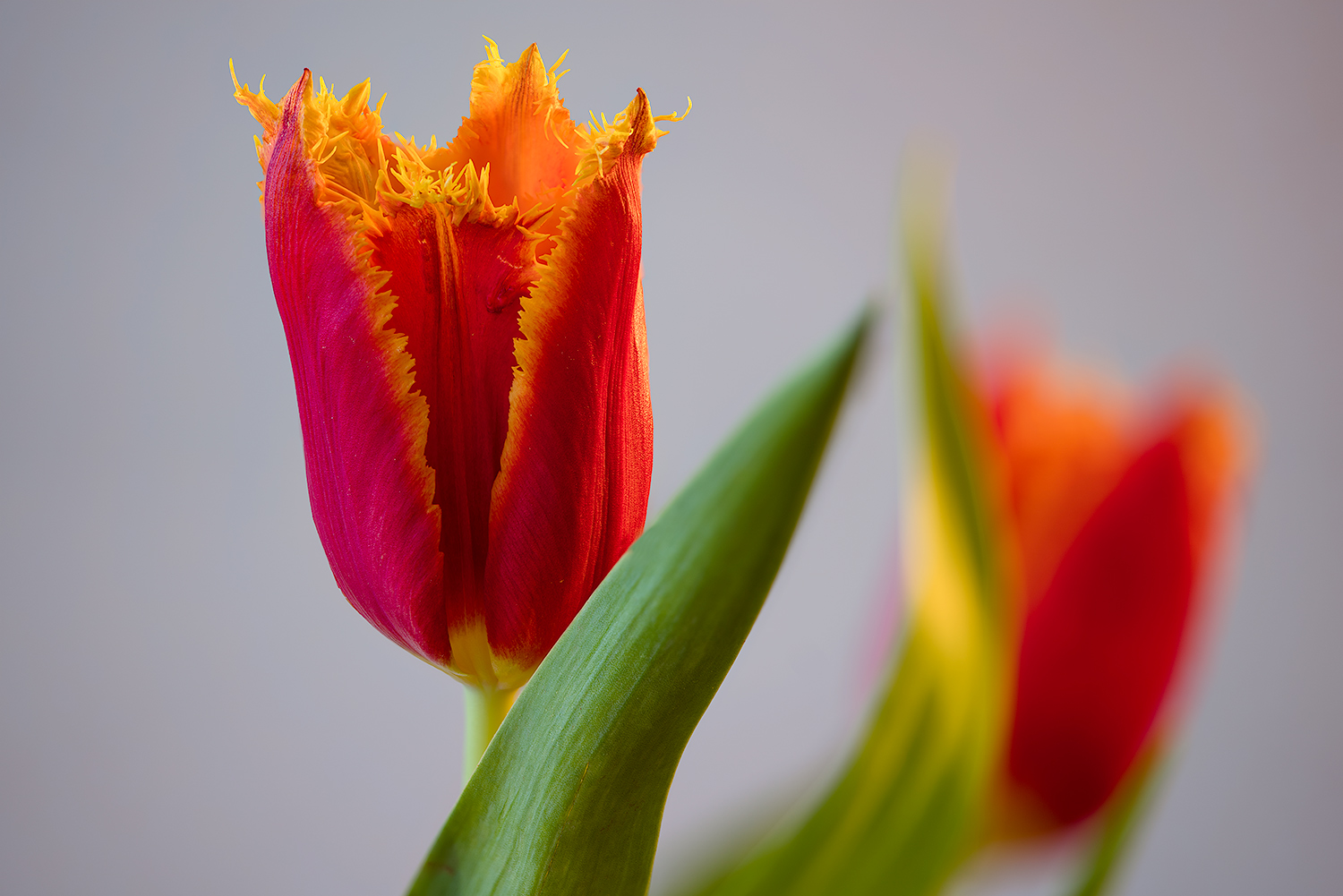
A7R3, 1/8s @ f2.8, ISO100
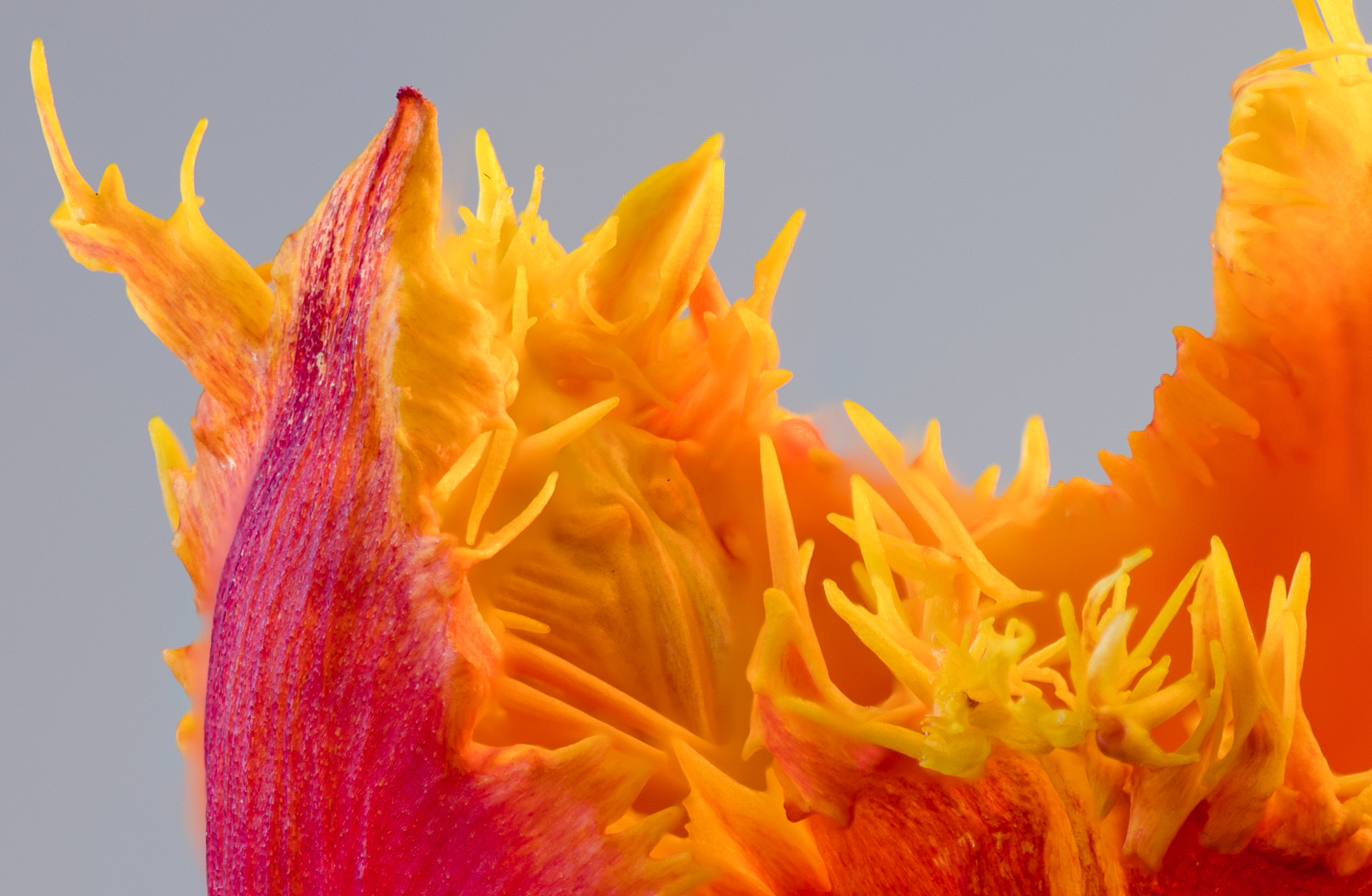
100% crop of the top section of the flower
So far, incredibly sharp with no hint of chromatic aberration and I think its perfect for Sony pixel-shift mode, to get every minute detail out of the lens. The tulip was 41 pixel-shifted frames, focus-stacked using macro rail and processed in Helicon Focus. For tech interest, 41 a7r3 dng files took about 34GB of RAM in Photoshop to process (though didn't do a good job stacking) and 12GB in Helicon Focus.
Can't wait to try it on something in decent light!
A7R3, 1/8s @ f2.8, ISO100
100% crop of the top section of the flower
Dec 15, 2018 at 05:08 PM
p.11 #10Voigtlander 110mm f/2.5 Macro APO-Lanthar Review
Luvwine wrote:
Few messing around today. Some cross posted:
http://a4.pbase.com/o10/91/505291/1/168542439.1IkHdRvn._DSC6371.jpg
http://a4.pbase.com/o10/91/505291/1/168542440.HZdAWcvl._DSC6383.jpg
http://a4.pbase.com/o10/91/505291/1/168542441.JDhG43YO._DSC6388.jpg
http://a4.pbase.com/o10/91/505291/1/168542442.6Dgff8ZQ._DSC6399.jpg
http://a4.pbase.com/o10/91/505291/1/168542444.JiwHIyrf._DSC6424.jpg
So is the message here you buy a Porche you get a free headstone.
Dec 15, 2018 at 05:21 PM
|
p.11 #11Voigtlander 110mm f/2.5 Macro APO-Lanthar Review
GMPhotography wrote:
http://a4.pbase.com/o10/91/505291/1/168542439.1IkHdRvn._DSC6371.jpg
http://a4.pbase.com/o10/91/505291/1/168542440.HZdAWcvl._DSC6383.jpg
http://a4.pbase.com/o10/91/505291/1/168542441.JDhG43YO._DSC6388.jpg
http://a4.pbase.com/o10/91/505291/1/168542442.6Dgff8ZQ._DSC6399.jpg
http://a4.pbase.com/o10/91/505291/1/168542444.JiwHIyrf._DSC6424.jpgSo is the message here you buy a Porche you get a free headstone.
Well, I know of a place where there was once a funeral home, now there's a driving school there....
Luvwine wrote
Few messing around today. Some cross posted:http://a4.pbase.com/o10/91/505291/1/168542439.1IkHdRvn._DSC6371.jpg
http://a4.pbase.com/o10/91/505291/1/168542440.HZdAWcvl._DSC6383.jpg
http://a4.pbase.com/o10/91/505291/1/168542441.JDhG43YO._DSC6388.jpg
http://a4.pbase.com/o10/91/505291/1/168542442.6Dgff8ZQ._DSC6399.jpg
http://a4.pbase.com/o10/91/505291/1/168542444.JiwHIyrf._DSC6424.jpg
Well, I know of a place where there was once a funeral home, now there's a driving school there....
Dec 15, 2018 at 08:17 PM

p.11 #13Voigtlander 110mm f/2.5 Macro APO-Lanthar Review
Just looking at the pics from today. They are not necessarily sharper than some other lenses (I did some informal testing) but this lens is as good as any I have seen. Here is a 100% crop from one of the above pics:
|
||
 |
||
|
Dec 15, 2018 at 11:51 PM
p.11 #14Voigtlander 110mm f/2.5 Macro APO-Lanthar Review
Which SteadyShot focal length works best for the 110mm macro? 105mm or 120mm? Thanks
Dec 16, 2018 at 12:18 AM
p.11 #15Voigtlander 110mm f/2.5 Macro APO-Lanthar Review
Yes, looks like the 110/2.5 CV will make for a fine landscape lens. Particularly when you only have to stop it to f/2.8 to make great sun stars at night!
Infinity focus is very fiddly though to get best sharpness just like my 90/3.5 CV - good thing the A7RIII has a great 100% stabilized live view.
More later.
This was hand held with my elbow on a fence and fully electronic shutter - amazing.
Note: Just a bit of top/bottom crop.
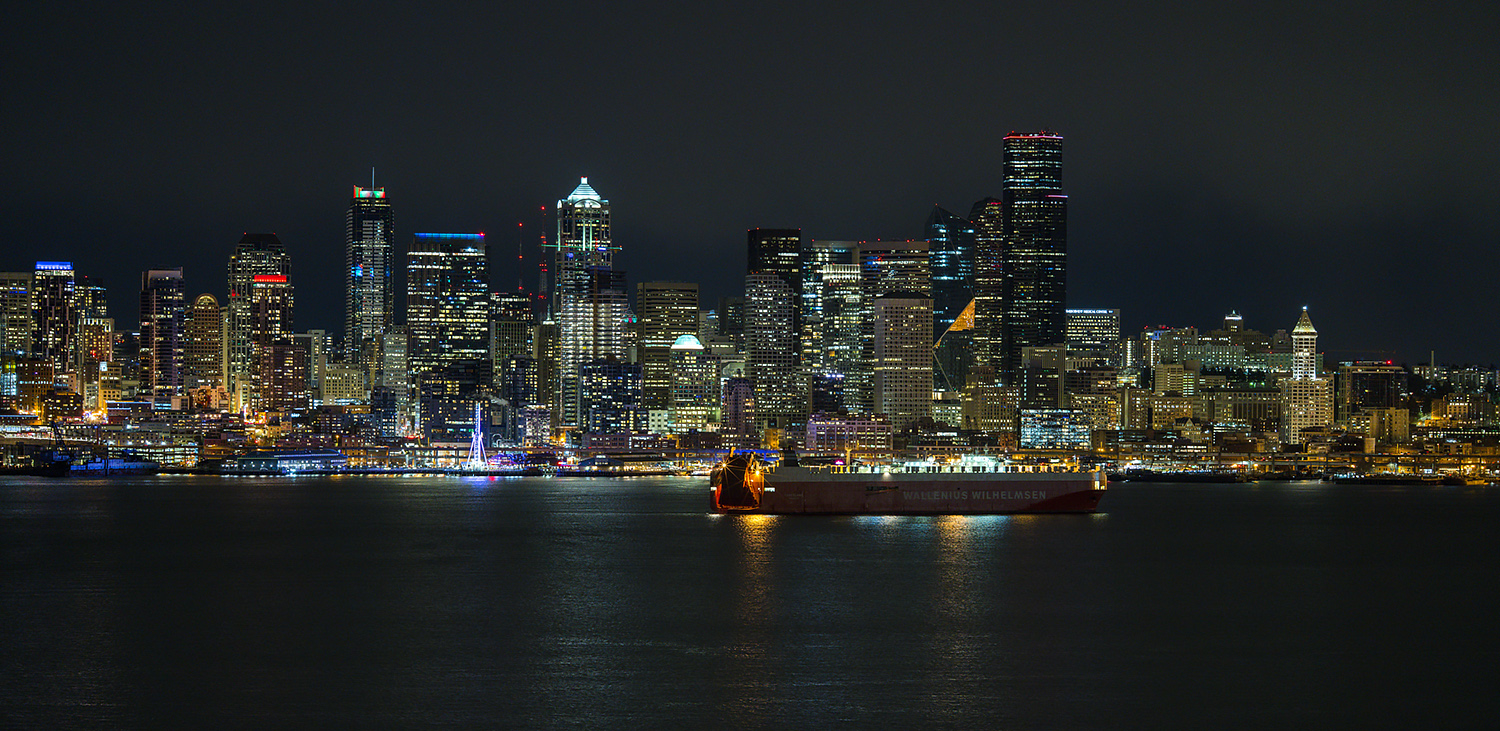
First real landscape shot with the new 110CV
Edited on Dec 16, 2018 at 12:36 AM · View previous versions
Infinity focus is very fiddly though to get best sharpness just like my 90/3.5 CV
- good thing the A7RIII has a great 100% stabilized live view.More later.
This was hand held with my elbow on a fence and fully electronic shutter - amazing.
Note: Just a bit of top/bottom crop.
First real landscape shot with the new 110CV
Edited on Dec 16, 2018 at 12:36 AM · View previous versions
Dec 16, 2018 at 12:31 AM
p.11 #16Voigtlander 110mm f/2.5 Macro APO-Lanthar Review
Tofino77 wrote:
Which SteadyShot focal length works best for the 110mm macro? 105mm or 120mm? Thanks
I have only tried the 105 as with the 65mm, the 60mm setting worked best.
Which SteadyShot focal length works best for the 110mm macro? 105mm or 120mm? Thanks
I have only tried the 105 as with the 65mm, the 60mm setting worked best.
Dec 16, 2018 at 12:33 AM
p.11 #17Voigtlander 110mm f/2.5 Macro APO-Lanthar Review
I haven't done any formal testing, but a few diagonal shots from tonight wide open show it to be sharp from corner to corner.
Dec 16, 2018 at 12:33 AM
p.11 #18Voigtlander 110mm f/2.5 Macro APO-Lanthar Review
Why not leave it to auto which should allow the camera to set it based on electronic communication with the lens? I always do that with all lenses that support electronic communication.
With manual legacy lenses I'd set it to closest value below actual FL when actual is not available for selection to avoid overcompensation unless the next higher selection option is much closer.
Tofino77 wrote:
Which SteadyShot focal length works best for the 110mm macro? 105mm or 120mm? Thanks
With manual legacy lenses I'd set it to closest value below actual FL when actual is not available for selection to avoid overcompensation unless the next higher selection option is much closer.
Tofino77 wrote:
Which SteadyShot focal length works best for the 110mm macro? 105mm or 120mm? Thanks
Dec 16, 2018 at 12:36 AM
p.11 #19Voigtlander 110mm f/2.5 Macro APO-Lanthar Review
I was concerned that my new Sigma 135/1.8 would make a better landscape lens, but the Sigma doesn't make nice sun stars even at f/4 . . ..
So the Sigma will be the low light f/1.8 AF lens and the 110/2.5 CV will be paired with the 65/2 CV for landscapes. The 40/1.2 is sometimes not wide enough, but it will do.
So I now have in E mount:
21/3.5 CV
40/1.2 CV
65/2 CV
110/2.5 CV
and the 90/3.5 APO SL-II CV & 180/4 APO SL CV (Nikon mount).
Time to sell some other stuff!
.So the Sigma will be the low light f/1.8 AF lens and the 110/2.5 CV will be paired with the 65/2 CV for landscapes. The 40/1.2 is sometimes not wide enough, but it will do.
So I now have in E mount:
21/3.5 CV
40/1.2 CV
65/2 CV
110/2.5 CV
and the 90/3.5 APO SL-II CV & 180/4 APO SL CV (Nikon mount).
Time to sell some other stuff!
Dec 16, 2018 at 12:41 AM
p.11 #20Voigtlander 110mm f/2.5 Macro APO-Lanthar Review
One more from yesterday afternoon.
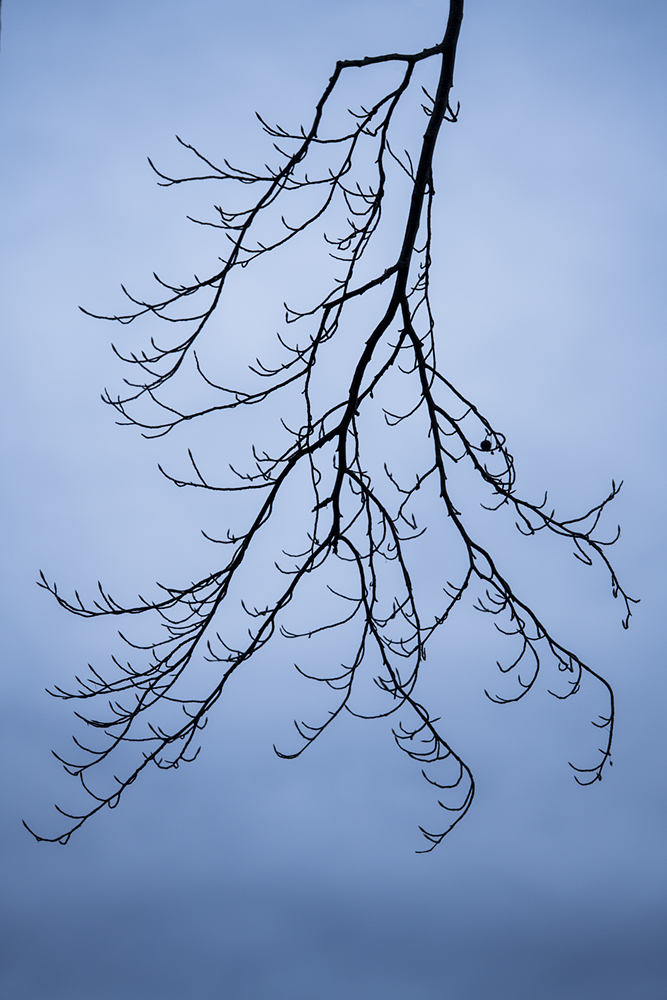
Gotta Make The Most Of A Gray Day
Gotta Make The Most Of A Gray Day
Dec 16, 2018 at 12:56 AM