Voigtlander 110mm f/2.5 Macro APO-Lanthar Review
p.41 #1Voigtlander 110mm f/2.5 Macro APO-Lanthar Review
smpetty wrote:
https://live.staticflickr.com/65535/53772110478_1cbf6dab93_b.jpgCL 1 2024 by Al Trujillo, on Flickr
https://live.staticflickr.com/65535/53778278136_4d2e0b066f_b.jpgSprout 2 by Al Trujillo, on FlickrThese are gorgeous! Any chance you would talk about how you lit these scenes?
Thanks,
Scott
Thank you Scott!
Those are all shot using natural lighting and in shade. My intent is to convert to B&W so visualization is big....I use Silver Efex Pro and start with a scroll down their presets until I find one that suits the image. From there I tweak the sliders, and I add a bit more vignetting to finish them out. These plants are uniformly green so they translate to B&W better. Send me a PM if you have any other questions. Again, thanks!!
Edited on Jul 07, 2024 at 06:44 AM · View previous versions
Al Trujillo wrote
https://live.staticflickr.com/65535/53770992897_40741a3a5c_b.jpgCL 2 2024 by Al Trujillo, on Flickrhttps://live.staticflickr.com/65535/53772110478_1cbf6dab93_b.jpgCL 1 2024 by Al Trujillo, on Flickr
https://live.staticflickr.com/65535/53778278136_4d2e0b066f_b.jpgSprout 2 by Al Trujillo, on Flickr
Thanks,
Scott
Thank you Scott!
Those are all shot using natural lighting and in shade. My intent is to convert to B&W so visualization is big....I use Silver Efex Pro and start with a scroll down their presets until I find one that suits the image. From there I tweak the sliders, and I add a bit more vignetting to finish them out. These plants are uniformly green so they translate to B&W better. Send me a PM if you have any other questions. Again, thanks!!
Edited on Jul 07, 2024 at 06:44 AM · View previous versions
Jul 06, 2024 at 10:36 AM
p.41 #2Voigtlander 110mm f/2.5 Macro APO-Lanthar Review
StoneCrop wrote:
I love your lighting on the first two! Really mysterious
https://live.staticflickr.com/65535/53772110478_1cbf6dab93_b.jpgCL 1 2024 by Al Trujillo, on Flickr
https://live.staticflickr.com/65535/53778278136_4d2e0b066f_b.jpgSprout 2 by Al Trujillo, on Flickr
Thank you Stone, I had a similar comment and replied to it (two threads down from yours). Send me a PM if you have other questions.
Al
I love your lighting on the first two! Really mysterious
Al Trujillo wrote
https://live.staticflickr.com/65535/53770992897_40741a3a5c_b.jpgCL 2 2024 by Al Trujillo, on Flickrhttps://live.staticflickr.com/65535/53772110478_1cbf6dab93_b.jpgCL 1 2024 by Al Trujillo, on Flickr
https://live.staticflickr.com/65535/53778278136_4d2e0b066f_b.jpgSprout 2 by Al Trujillo, on Flickr
Thank you Stone, I had a similar comment and replied to it (two threads down from yours). Send me a PM if you have other questions.
Al
Jul 06, 2024 at 10:50 AM
p.41 #3Voigtlander 110mm f/2.5 Macro APO-Lanthar Review
Salvia guaranitica 'Black and Blue'
 |
||
 |
||
|
Jul 06, 2024 at 01:55 PM
p.41 #4Voigtlander 110mm f/2.5 Macro APO-Lanthar Review
LMAA


ILCE-7RM4A Voigtlander MACRO APO-LANTHAR 110mm F2.5 lens 110mm f/2.5 1/2500s 100 ISO 0.0 EV
ILCE-7RM4A Voigtlander MACRO APO-LANTHAR 110mm F2.5 lens 110mm f/2.5 1/125s 100 ISO 0.0 EV
ILCE-7RM4A Voigtlander MACRO APO-LANTHAR 110mm F2.5 lens 110mm f/2.5 1/2000s 100 ISO 0.0 EV
ILCE-7RM4A Voigtlander MACRO APO-LANTHAR 110mm F2.5 lens 110mm f/2.5 1/320s 100 ISO 0.0 EV
ILCE-7RM4A Voigtlander MACRO APO-LANTHAR 110mm F2.5 lens 110mm f/2.5 1/160s 100 ISO -1.0 EV
ILCE-7RM4A Voigtlander MACRO APO-LANTHAR 110mm F2.5 lens 110mm f/2.8 1/2000s 100 ISO 0.0 EV
Jul 07, 2024 at 03:15 AM
p.41 #5Voigtlander 110mm f/2.5 Macro APO-Lanthar Review
 Leaves Aspen and Lichen by Al Trujillo, on Flickr
 Leaves Fall 2024 by Al Trujillo, on Flickr
 Leaves Backlit Oakbrush by Al Trujillo, on Flickr
Oct 07, 2024 at 06:31 AM
p.41 #6Voigtlander 110mm f/2.5 Macro APO-Lanthar Review
Fun lens! I usually take the 60mm for a walk in the woods, but decided to give it a go with the 110mm this time. A little more of a challenge without a tripod, but overall pretty easy to shoot and I'm happy with the results.
|
||
 |
||
|
|
||
 |
||
|
|
||
 |
||
|
|
||
 |
||
|
|
||
 |
||
|
|
||
 |
||
|
|
||
 |
||
|
|
||
 |
||
|
|
||
 |
||
|
Jan 12, 2025 at 08:40 AM
p.41 #7Voigtlander 110mm f/2.5 Macro APO-Lanthar Review
Fred Miranda wrote:
Order the Voigtlander 110mm f/2.5 Macro APO-Lanthar:
Amazon | B&H Photo | CameraQuest | Adorama
Help support FM by using our links for your purchase! - Thank you!
___________________
FM Rolling Review: Voigtlander 110mm f/2.5 Macro APO-Lanthar
The wait is finally over! Long production delays sparked anticipation of the Voigtlander 110mm f/2.5 Macro APO-Lanthar lens, and this month Voigtlander ultimately delivered.
It's not like Sony shooters didn't have anything else in their bags to work with. Most were satisfied with the Voigtlander 65mm f/2 Macro APO-Lanthar, because you have to admit, it does have superb resolution/contrast, lack of color aberration, and 1:2 macro capabilities....Show more →
Both 65 APO & 110 APO lenses have very similar barrel length when focusing at infinity but huge difference when at their respective macro ratios of 1:2 (65mm) and 1:1 (110mm). However, I want to compare the length at the same macro ratio of 1:2 for both lenses. Any one have both and share a photo?
Mar 04, 2025 at 03:42 PM
p.41 #8Voigtlander 110mm f/2.5 Macro APO-Lanthar Review
FredLee70x7 wrote:
Both 65 APO & 110 APO lenses have very similar barrel length when focusing at infinity but huge difference when at their respective macro ratios of 1:2 (65mm) and 1:1 (110mm). However, I want to compare the length at the same macro ratio of 1:2 for both lenses. Any one have both and share a photo?
Excluding the hood, the two are the same length at 1:2.
Mar 05, 2025 at 11:48 AM
|
p.41 #10Voigtlander 110mm f/2.5 Macro APO-Lanthar Review
Exactly what @mkuznicki mentioned. Yes, the 110mm can extend much further towards 1:1, but at 1:2, if I remember correctly both lenses are roughly the same length.
Mar 17, 2025 at 10:03 AM
p.41 #11Voigtlander 110mm f/2.5 Macro APO-Lanthar Review
 Wet Mountain Spring 2 by Al Trujillo, on Flickr
May 28, 2025 at 04:34 PM
p.41 #12Voigtlander 110mm f/2.5 Macro APO-Lanthar Review
Reviving 110 thread with night landscape this time 
 Ski Jump by Radek Kucharski, on Flickr
Jan 27, 2026 at 05:33 AM
p.41 #13Voigtlander 110mm f/2.5 Macro APO-Lanthar Review
I'm investigating whether it would be possible to use the teleconverters with the 110. Obviously they don't fit within the lens barrel, the front protrusion of the TCs physically won't insert into the back of the lens.
Has anyone tried this, adding extension tubes between the TC and the lens? It seems the lens is sharp enough the quality would be reasonable. Getting a extension tube with a large enough barrel to accomdate the TC would be the biggest problem.
Has anyone tried this, adding extension tubes between the TC and the lens? It seems the lens is sharp enough the quality would be reasonable. Getting a extension tube with a large enough barrel to accomdate the TC would be the biggest problem.
May 29, 2026 at 05:05 PM
p.41 #14Voigtlander 110mm f/2.5 Macro APO-Lanthar Review
benjimouse wrote:
I'm investigating whether it would be possible to use the teleconverters with the 110. Obviously they don't fit within the lens barrel, the front protrusion of the TCs physically won't insert into the back of the lens.
Has anyone tried this, adding extension tubes between the TC and the lens? It seems the lens is sharp enough the quality would be reasonable. Getting a extension tube with a large enough barrel to accomdate the TC would be the biggest problem.
Fred had tried this in 2019 with original Sony TCs - see https://www.fredmiranda.com/forum/topic/1574251/17#14720866 and https://www.fredmiranda.com/forum/topic/1574251/16#14720789
- first, the protruding part of Sony-TC was too thick for CV110, this is why an extension tube with full round inner circle was needed
-second, no electronic connection could be established despite both CV110 and extension tube having electronic contacts. Beside no information about aperture and focus, camera did block the shutter
Now, Viltrox has released a new teleconverter x2 which is different for both issues:
- despite the protruding glass being thicker than Sony, the outer plastic ring is thinner in a way that it fits in CV110 WITHOUT any extension tube. Even at infinity focus (glass comes to the rear of the lens), there is no collision with TC's glass
- while no electronic connection can be established and shutter is blocked in the beginning, Viltrox TC falls back into a "no contacts" mode after 2 minutes (!) which enables the shutter if "release with no lens attached" is chosen in the menu. Aperture set manually will not be shown in EVF or EXIF, but metering is working fine (tested with Aperture priority with Auto-ISO)
This is what I have successfully tested with Sony A7R IVa: you are getting an 2:1 magnification Ultra-Macro 220mm f/5 which gives you an effective 180/9 at minimal focus distance = still 30cm (working distance thus drops to 12cm with the TC attached).
Oct 05, 2026 at 06:04 AM
p.41 #15Voigtlander 110mm f/2.5 Macro APO-Lanthar Review
Mujabad, I was reading through this long thread and came across your intension to use the macro lens (Voiglander 2.5/110) for mounted slide copying.
I have recently acquired a "new-to-me" Sony 2.8/90 Macro and I intend on using it with a copying system from Valoi.
I was wondering what your results have been?
Cheers, Joachim
I have recently acquired a "new-to-me" Sony 2.8/90 Macro and I intend on using it with a copying system from Valoi.
I was wondering what your results have been?
Cheers, Joachim
Oct 05, 2026 at 02:43 PM
p.41 #16Voigtlander 110mm f/2.5 Macro APO-Lanthar Review
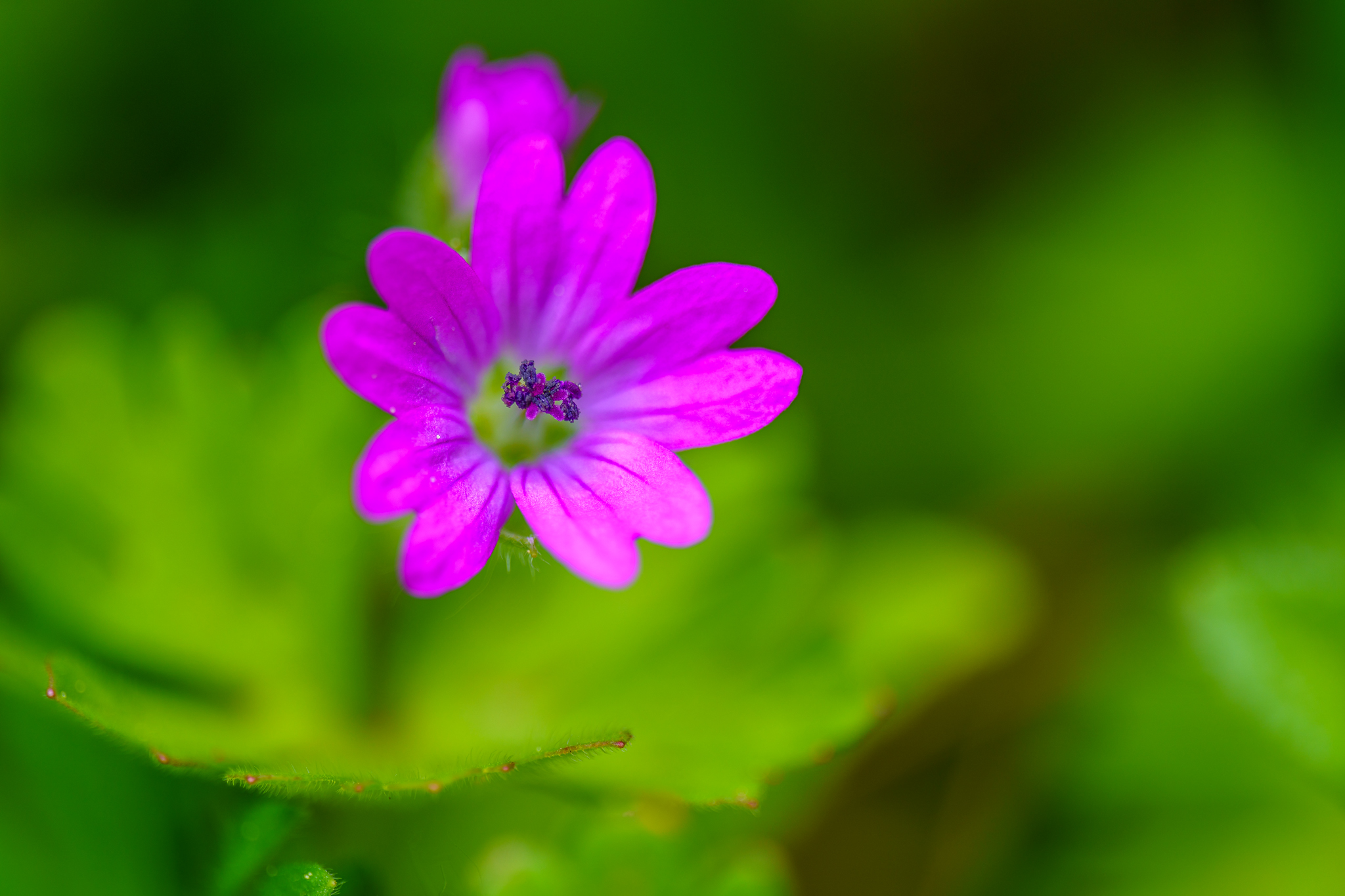
Another lens I had forgotten I had owned. I didn't want to go back through the 40+ pages of this thread, so apologies if I've posted this image already.
 |
||
 |
||
|
ILCE-7RM4A Voigtlander MACRO APO-LANTHAR 110mm F2.5 lens 110mm f/4.0 1/80s 100 ISO 0.0 EV
Oct 29, 2026 at 06:08 PM