This topic is in the 2018 archive. You can read it and like its posts here. It is read only.
Archive 2018Zeiss Loxia 25mm f2.4 is a distagon
p.21 #1Zeiss Loxia 25mm f2.4 is a distagon
For me the only reason to consider Loxia is the focal length. If I decide to get a 21mm lens, it will be either one of the Voigtländers (most likely the Nokton), so I'm not considering the Lox 21.
For the size aspect it shouldn't matter much since I use my bag (Think Tank Retrospective 5) as the measure and it can easily fit all of these lenses. And none are gigantic like the "Bigmas". The 21mm Nokton is on the borderline "heavy", but when all my other lenses are around 300-400 grams, one lens a bit over 500 ain't too much.
Just wish there were more "non-landscape" images around with the 21mm Nokton and 25mm Loxia that could help me decide... On these FM threads I've found the best ones. And I'm leaning heavily towards the Nokton.
Sep 27, 2020 at 07:14 AM
p.21 #2Zeiss Loxia 25mm f2.4 is a distagon
Tonzah78 wrote:
For me the only reason to consider Loxia is the focal length. If I decide to get a 21mm lens, it will be either one of the Voigtländers (most likely the Nokton), so I'm not considering the Lox 21.
For the size aspect it shouldn't matter much since I use my bag (Think Tank Retrospective 5) as the measure and it can easily fit all of these lenses. And none are gigantic like the "Bigmas". The 21mm Nokton is on the borderline "heavy", but when all my other lenses are around 300-400 grams, one lens a bit over 500 ain't too...Show more →
That's why I said that there a far greater numbers of interesting images with the GM.
For every image I see that calls for a 21 I will see nine that call for a 25.
That's why it's next on my list.
I would like the 1.4 on the CV 21 too but I am not sure how often I would take advantage of it.
Sep 27, 2020 at 08:10 AM
p.21 #3Zeiss Loxia 25mm f2.4 is a distagon
Gunzorro wrote:
Beautiful looking lens, like all the Loxias. I'm sure it will be outstanding.
I will be skipping this lens in favor of my Loxia 21. This is the same thinking that caused me to sell my ZE 21/2.8 in favor of my Canon 24 TSE II, which trumped the Zeiss with its perspective controls and similar focal length. I found it too redundant to have two bulky and expensive lenses of comparable optical quality. At least the Loxia are not bulky!
The only Loxia I would be interested in is the potential 28/2 to fill the gap between 21...Show more →
How things change!
I couldn't resist quoting myself regarding the Loxia 25.
Since posting these earlier remarks, I did follow through and get the Loxia 21, and it has become one of my favorite lenses ever.
But I did run into a great deal on a nice used Loxia 25 and grabbed it. It has as good, or better, IQ than the 21 -- that's a hard lens to tie or beat! I use the 25 more often these days and find it gaps well with my Loxia 35 and CV 40/1.2E.
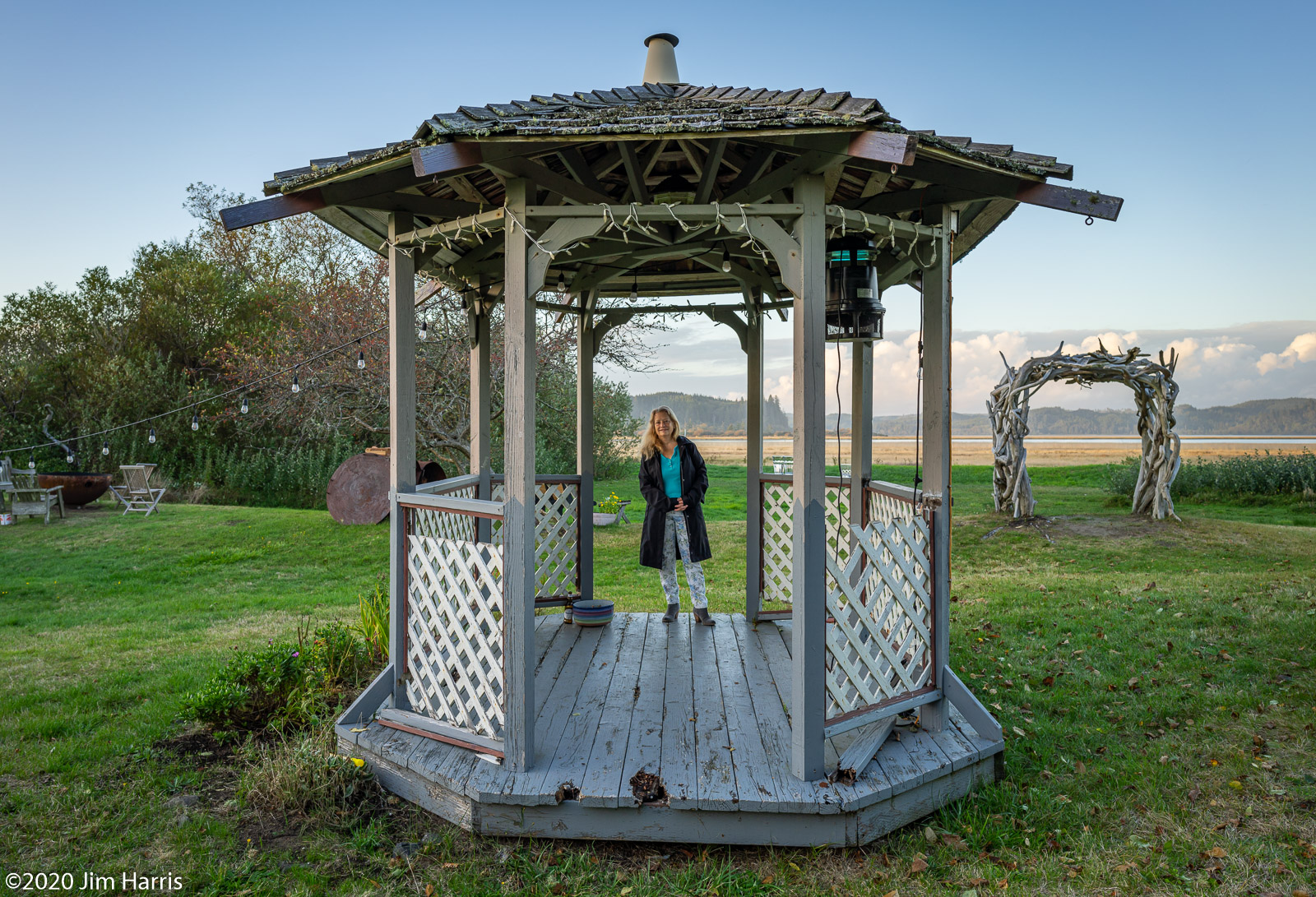
Just had it out last night for a dinner and walk at an old hotel on the Washington coast with my lovely wife. The perfect lens for a magical walk after dinner.
I doubt that I will ever see a Loxia 28/2, or a refresh of the Loxia 35, but I count myself very lucky to own this Loxia 25 and three other Loxia's (Loxii?).
Beautiful looking lens, like all the Loxias. I'm sure it will be outstanding.
I will be skipping this lens in favor of my Loxia 21. This is the same thinking that caused me to sell my ZE 21/2.8 in favor of my Canon 24 TSE II, which trumped the Zeiss with its perspective controls and similar focal length. I found it too redundant to have two bulky and expensive lenses of comparable optical quality. At least the Loxia are not bulky!
The only Loxia I would be interested in is the potential 28/2 to fill the gap between 21...Show more →
How things change!
I couldn't resist quoting myself regarding the Loxia 25.
Since posting these earlier remarks, I did follow through and get the Loxia 21, and it has become one of my favorite lenses ever.
But I did run into a great deal on a nice used Loxia 25 and grabbed it. It has as good, or better, IQ than the 21 -- that's a hard lens to tie or beat! I use the 25 more often these days and find it gaps well with my Loxia 35 and CV 40/1.2E.
Just had it out last night for a dinner and walk at an old hotel on the Washington coast with my lovely wife. The perfect lens for a magical walk after dinner.
I doubt that I will ever see a Loxia 28/2, or a refresh of the Loxia 35, but I count myself very lucky to own this Loxia 25 and three other Loxia's (Loxii?).
Sep 27, 2020 at 09:02 AM
p.21 #4Zeiss Loxia 25mm f2.4 is a distagon
DaveFP wrote:
Anyone still using this lens?
No comments over the last 2.5 years !
Ha-ha! Sorry, Dave -- If I had read the most recent replies, such as yours, I wouldn't have needed to quote myself from the beginning of the thread. I was so pleased to see this topic at the top of the list for a moment at least.
Great lens, but a lot of competition in the market place, especially from some fine 24mm AF lenses like Sony GM.
I love the rendering and color of the Loxia line, and in particular, the 21 and 25.
Sep 27, 2020 at 09:08 AM
p.21 #5Zeiss Loxia 25mm f2.4 is a distagon
DaveFP wrote:
I know if I buy the Loxia 25 Voigtlander will announce the CV 24 APO the next day.
Please buy a Loxia
I know if I buy the Loxia 25 Voigtlander will announce the CV 24 APO the next day.
Please buy a Loxia
Sep 27, 2020 at 10:31 AM
p.21 #6Zeiss Loxia 25mm f2.4 is a distagon
Gunzorro wrote:
No comments over the last 2.5 years !Ha-ha! Sorry, Dave -- If I had read the most recent replies, such as yours, I wouldn't have needed to quote myself from the beginning of the thread. I was so pleased to see this topic at the top of the list for a moment at least.
Great lens, but a lot of competition in the market place, especially from some fine 24mm AF lenses like Sony GM.
I love the rendering and color of the Loxia line, and in particular, the 21 and 25.
Thanks for the input Jim.
It's most likely my next lens.
I have the Loxia 50 and 35, and the Voigtlander 15 III VM.
I have the ZE Distagons to fill the gaps but I really would like to add some small lenses at this point.
My recent purchase of the 50 APO has whetted my appetite for a new, small, MF 21 and 25.
I need to get back out to Oregon. Miss it.
DaveFP wrote
Anyone still using this lens?No comments over the last 2.5 years !
Great lens, but a lot of competition in the market place, especially from some fine 24mm AF lenses like Sony GM.
I love the rendering and color of the Loxia line, and in particular, the 21 and 25.
Thanks for the input Jim.
It's most likely my next lens.
I have the Loxia 50 and 35, and the Voigtlander 15 III VM.
I have the ZE Distagons to fill the gaps but I really would like to add some small lenses at this point.
My recent purchase of the 50 APO has whetted my appetite for a new, small, MF 21 and 25.
I need to get back out to Oregon. Miss it.
Sep 27, 2020 at 10:57 AM
p.21 #7Zeiss Loxia 25mm f2.4 is a distagon
DaveFP wrote:
Tonzah78 wrote
For me the only reason to consider Loxia is the focal length. If I decide to get a 21mm lens, it will be either one of the Voigtländers (most likely the Nokton), so I'm not considering the Lox 21.For the size aspect it shouldn't matter much since I use my bag (Think Tank Retrospective 5) as the measure and it can easily fit all of these lenses. And none are gigantic like the "Bigmas". The 21mm Nokton is on the borderline "heavy", but when all my other lenses are around 300-400 grams, one lens a bit over 500 ain't too much.
Just wish there were more "non-landscape" images around with the 21mm Nokton and 25mm Loxia that could help me decide... On these FM threads I've found the best ones. And I'm leaning heavily towards the Nokton.
For every image I see that calls for a 21 I will see nine that call for a 25.
That's why it's next on my list.
I would like the 1.4 on the CV 21 too but I am not sure how often I would take advantage of it.
I had both at the same time and in my mind they're designed for different uses. The Loxia is a better lens in terms of sharpness and contrast, full stop. If you compare it's noticeable and its tough to 'unsee' the advantage the Loxia has. I also didn't like the CA performance of the 24GM.
That said, it's got great bokeh and being f/1.4, can get some nice shallow DOF. It renders people very nicely, it handles beautifully and its nicely sized with a reasonable weight. Stopped down it's sharper than most other 24s out there so it's a great double duty lens.
I could afford to keep only one so I shot them together and made my call... When I'm looking for a fast wide, I reach for a 35, not a 24. I'm just not good at seeing with that FOV for those types of scenes. And for pure landscape use, the Loxia is better. For anything else I'd likely choose the 24GM. I have a few other needs (wants!) to fill first but I could see myself buying the 24GM again.
Sep 27, 2020 at 11:07 AM
p.21 #8Zeiss Loxia 25mm f2.4 is a distagon
philip_pj wrote:
It's true you have to go back aways to find a better 24mm - and even then it won't work well on Sonys. Pricy too, $3000 but resale is good. It's the 2006 Leica Elmar 24/3.8, with excellent outer frames and 260 grams (46mm filters) to make it a pure landscape lens. But what a lens. Was a sad day when it came to light it would not play well on our cameras. German made, apparently. No sudden plunge from mid-frame like the L25 (and Milvus 25mm too) has.
https://photographylife.com/lenses/leica-elmar-m-24mm-f3-8-asph
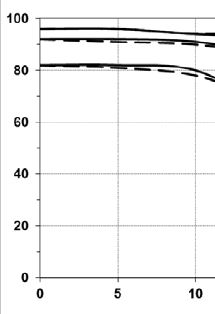
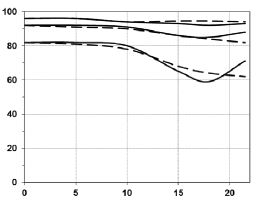
Sudden plunge? The MTF 50 of the Loxia at f5.6 is very similar. It too never goes below 60% which is insanely high for a minimum. The difference is just that it gets to 60 at 15mm and then rises a bit before the extreme corners. If you could see those differences in a image which you probably couldn't it would just be the Loxia being almost indiscernibly worse at 15mm (edge rather than real mid frame) and almost indiscernibly better in the corners.
Sep 27, 2020 at 06:31 PM
p.21 #9Zeiss Loxia 25mm f2.4 is a distagon
These below are both f5.6 (peak) results. It's the relative performance rather than the absolute numbers that will show in planar images, maybe along with the FC that is developing at high spatial frequencies at image height 17mm. It's why all the great modern lenses have more or less flat lines across the frame, like say the CV 50/2 and the SL Leica primes, others with unreliable MTF too. It's still excellence of course, but could be better.
so far so good
we lost a bit out there - 20-25% down
so far so good
we lost a bit out there - 20-25% down
Sep 27, 2020 at 08:22 PM

p.21 #10Zeiss Loxia 25mm f2.4 is a distagon
philip_pj wrote:
These below are both f5.6 (peak) results. It's the relative performance rather than the absolute numbers that will show in planar images, maybe along with the FC that is developing at high spatial frequencies at image height 17mm. It's why all the great modern lenses have more or less flat lines across the frame, like say the CV 50/2 and the SL Leica primes, others with unreliable MTF too. It's still excellence of course, but could be better.
I agree with David, however, the 20-25% drop is partly because it performs so well in the center. Compared to the Leica 24 f/3.8 the Loxia is 3-5% better in the center and 5-10% worse as you get to the far edges and corner. If you look at the Leica 24 f/3.8 Asph it has a smaller drop from center to far edges and corners of about 10%, but I don't think either the 3 to 5% it does worse than the Loxia in the center or the 5 -10% it does better than the Loxia in the far edges and corners is going to be visible. So in comparing these two wide angle lenses I don't think the MTFs support either lens being superior. They both evidence a very strong performance and one lens would have such a minimally better performance in one area or the other that the difference is unlikely to be noticeable.
Sep 27, 2020 at 09:15 PM
p.21 #11Zeiss Loxia 25mm f2.4 is a distagon
I still love this lens and use it regularly. I originally bought it for mostly landscape work, but I’ve actually tended to use it for more for walk around and portraits/group shots.
Some practical benefits the Loxia 25 has over many zooms
- Its flare resistance.
- The ease of use in rain due to its hood and small front element with a rain jacket.
- Portability and small size. It is easier to whip out when hiking than a zoom.
Some practical benefits the Loxia 25 has over many zooms
- Its flare resistance.
- The ease of use in rain due to its hood and small front element with a rain jacket.
- Portability and small size. It is easier to whip out when hiking than a zoom.
Sep 27, 2020 at 10:10 PM
p.21 #12Zeiss Loxia 25mm f2.4 is a distagon
philip_pj wrote:
These below are both f5.6 (peak) results. It's the relative performance rather than the absolute numbers that will show in planar images, maybe along with the FC that is developing at high spatial frequencies at image height 17mm. It's why all the great modern lenses have more or less flat lines across the frame, like say the CV 50/2 and the SL Leica primes, others with unreliable MTF too. It's still excellence of course, but could be better.
I agree entirely with @Steve Spencer here, so won’t repeat what he said. But will add one thing: you say it’s the relative performance that matters, not the absolute numbers. That’s true when the relative performance relates two numbers where at least one of them is below the threshold of visible difference. But with decent copies of both these lenses that criterion isn’t met (I’d also argue that relative performance is the same, just depends whether you want the lowest no at 15mm or 20mm. Now I hate dips 10mm from centre, but between 15 mm and 20 I might prefer 20, but of course it’s irrelevant here).
Sep 28, 2020 at 12:13 AM
p.21 #13Zeiss Loxia 25mm f2.4 is a distagon
DavidBM wrote:
I agree entirely with @Steve Spencer@ here, so won’t repeat what he said. But will add one thing: you say it’s the relative performance that matters, not the absolute numbers. That’s true when the relative performance relates two numbers where at least one of them is below the threshold of visible difference. But with decent copies of both these lenses that criterion isn’t met (I’d also argue that relative performance is the same, just depends whether you want the lowest no at 15mm or 20mm. Now I hate dips 10mm from centre, but between 15 mm and 20 I might...Show more →
I agree with Zeiss here: that is to say, the Zeiss MTF is actually measured, the Leica MTF is apparently computer generated without diffraction. Zeiss use a challenging 'full spectrum' light on their optical bench also; I don't think Leica even specifies that, so could be 'cheating' with a narrower band light.
Not saying the Leica doesn't have a great reputation, but its about to get its first real test with the recent release of the 40Mp M, so we will see.
Also, I recall Roger Cicala saying that you need about a 10% MTF difference to see any significant difference in a real-world image.
Let's not forget the recent Leica Apo-Sumicron-SL 35 F2 also philip_pj - which Leica was talking up as the best ever 35mm apon release - with the MTF graphs to match, but when DXO tested an actual sample it had a noticeable mid-field dip; not that it really matters as from what I've seen it has great rendering anyway...
philip_pj wrote
These below are both f5.6 (peak) results. It's the relative performance rather than the absolute numbers that will show in planar images, maybe along with the FC that is developing at high spatial frequencies at image height 17mm. It's why all the great modern lenses have more or less flat lines across the frame, like say the CV 50/2 and the SL Leica primes, others with unreliable MTF too. It's still excellence of course, but could be better.I agree with Zeiss here: that is to say, the Zeiss MTF is actually measured, the Leica MTF is apparently computer generated without diffraction. Zeiss use a challenging 'full spectrum' light on their optical bench also; I don't think Leica even specifies that, so could be 'cheating' with a narrower band light.
Not saying the Leica doesn't have a great reputation, but its about to get its first real test with the recent release of the 40Mp M, so we will see.
Also, I recall Roger Cicala saying that you need about a 10% MTF difference to see any significant difference in a real-world image.
Let's not forget the recent Leica Apo-Sumicron-SL 35 F2 also philip_pj - which Leica was talking up as the best ever 35mm apon release - with the MTF graphs to match, but when DXO tested an actual sample it had a noticeable mid-field dip; not that it really matters as from what I've seen it has great rendering anyway...
Sep 28, 2020 at 10:10 AM
p.21 #14Zeiss Loxia 25mm f2.4 is a distagon
Petegh wrote:
I agree entirely with @Steve Spencer@@ here, so won’t repeat what he said. But will add one thing: you say it’s the relative performance that matters, not the absolute numbers. That’s true when the relative performance relates two numbers where at least one of them is below the threshold of visible difference. But with decent copies of both these lenses that criterion isn’t met (I’d also argue that relative performance is the same, just depends whether you want the lowest no at 15mm or 20mm. Now I hate dips 10mm from centre, but between 15 mm and 20 I might prefer 20, but of course it’s irrelevant here).I agree with Zeiss here: that is to say, the Zeiss MTF is actually measured, the Leica MTF is apparently computer generated without diffraction. Zeiss use a challenging 'full spectrum' light on their optical bench also; I don't think Leica even specifies that, so could be 'cheating' with a narrower band light.
Not saying the Leica doesn't have a great reputation, but its about to get its first real test with the recent release of the 40Mp M, so we will see.
Also, I recall Roger Cicala saying that you need about a 10% MTF difference to see any significant difference in...Show more →
I wasn't aware that Leitz MTF was from design software (like most manufacturers) I had an idea it was along with Zeiss, the only other manufacturer that measured from samples. But I don't really why I thought that. If you could provide references I'd be very grateful - sort of thing it wold good to know (OTOH if you can't be bothered digging them out I of course understand - it would be a sad forum if we weren't able to share what we think we remember without being forced to look it up. People can make up their own minds about evidence!
But the only other thing I want to comment on in Roger's statement that you need a 10% difference in MTF to see any difference. He's very careful here: he's said you *need* a 10% difference. So you won't see a difference with out a 10% difference. He didn't say you *will* see a difference if there is a 10% difference. Whether you will see a difference depends on two things. The first is how big the difference has to be (let's agree 10% is necessary). The second is how high the absolute values are. If the highest absolute value is high enough so that 10% less is still above the threshold of perception in most circumstances, you won't see a difference even if it's 10% less.
DavidBM wrote
philip_pj wrote
These below are both f5.6 (peak) results. It's the relative performance rather than the absolute numbers that will show in planar images, maybe along with the FC that is developing at high spatial frequencies at image height 17mm. It's why all the great modern lenses have more or less flat lines across the frame, like say the CV 50/2 and the SL Leica primes, others with unreliable MTF too. It's still excellence of course, but could be better.Not saying the Leica doesn't have a great reputation, but its about to get its first real test with the recent release of the 40Mp M, so we will see.
Also, I recall Roger Cicala saying that you need about a 10% MTF difference to see any significant difference in...Show more →
I wasn't aware that Leitz MTF was from design software (like most manufacturers) I had an idea it was along with Zeiss, the only other manufacturer that measured from samples. But I don't really why I thought that. If you could provide references I'd be very grateful - sort of thing it wold good to know (OTOH if you can't be bothered digging them out I of course understand - it would be a sad forum if we weren't able to share what we think we remember without being forced to look it up. People can make up their own minds about evidence!
But the only other thing I want to comment on in Roger's statement that you need a 10% difference in MTF to see any difference. He's very careful here: he's said you *need* a 10% difference. So you won't see a difference with out a 10% difference. He didn't say you *will* see a difference if there is a 10% difference. Whether you will see a difference depends on two things. The first is how big the difference has to be (let's agree 10% is necessary). The second is how high the absolute values are. If the highest absolute value is high enough so that 10% less is still above the threshold of perception in most circumstances, you won't see a difference even if it's 10% less.
Sep 28, 2020 at 07:02 PM
p.21 #15Zeiss Loxia 25mm f2.4 is a distagon
DavidBM wrote:
I agree entirely with @Steve Spencer@@@ here, so won’t repeat what he said. But will add one thing: you say it’s the relative performance that matters, not the absolute numbers. That’s true when the relative performance relates two numbers where at least one of them is below the threshold of visible difference. But with decent copies of both these lenses that criterion isn’t met (I’d also argue that relative performance is the same, just depends whether you want the lowest no at 15mm or 20mm. Now I hate dips 10mm from centre, but between 15 mm and 20 I might prefer 20, but of course it’s irrelevant here).I agree with Zeiss here: that is to say, the Zeiss MTF is actually measured, the Leica MTF is apparently computer generated without diffraction. Zeiss use a challenging 'full spectrum' light on their optical bench also; I don't think Leica even specifies that, so could be 'cheating' with a narrower band light.
Not saying the Leica doesn't have a great reputation, but its about to get its first real test with the recent release of the 40Mp M, so we will see.
Also, I recall Roger Cicala saying that you need about a 10% MTF difference to see any significant difference in a real-world image.
Let's not forget the recent Leica Apo-Sumicron-SL 35 F2 also philip_pj - which Leica was talking up as the best ever 35mm apon release - with the MTF graphs to match, but when DXO tested an actual sample it had a noticeable mid-field dip; not that it really matters as from what I've seen it has great rendering anyway...I wasn't aware that Leitz MTF was from design software (like most manufacturers) I had an idea it was along with Zeiss, the only other manufacturer that measured from samples. But I don't really why I thought that. If you could provide references I'd be very grateful - sort of thing it wold good to know (OTOH if you can't be bothered digging them out I of course understand - it would be a sad forum if we weren't able to share what we think we remember without being forced to look it up. People can make up their own...Show more →
Yes, that's what the 'apparently' prefix to the Leica MTF comment was about: I never quote as fact anything that is a second hand reference - although in this case its a pretty solid source: Lloyd Chambers. AFAIK, Zeiss is the only company that publishes MTF data actually measured from real production lenses: whether they pick a golden copy or average a number of copies is information they will not give out (I've tried!).
Sigma apparently tests every lens they make before it leaves the factory, so they have the data, but I think even they only publish computer generated MTF (even their diffraction MTF is a simulation). It's probably so as not to disadvantage themselves against the competition, as lets face it, a lens is only ever going to be worse than its simulation. On that point: I'm not sure how all those 'out of spec' Sigma lenses make it out into the wild: I know their test bench is an Imatest type device using their Fovean sensor, so perhaps the fact that it only currently exists in aps-c format is the reason that soft edge or full frame corner isn't being picked up!
"if the highest absolute value is high enough so that 10% less is still above the threshold of perception in most circumstances, you won't see a difference even if it's 10% less": I understand what you're saying, but I think that's probably taking it a bit far: from what I recall, Roger's figure was just a quick educated guess to answer a question at the end of one of his articles - I'm sure he realized most wouldn't understand the over-simplification inherent in his comment. There are many variables involved when it comes to human perception: the contrast sensitivity function of human vision would change the necessary contrast difference required at different spatial frequencies for example, just to name one.
Petegh wrote
DavidBM wrote
philip_pj wrote
These below are both f5.6 (peak) results. It's the relative performance rather than the absolute numbers that will show in planar images, maybe along with the FC that is developing at high spatial frequencies at image height 17mm. It's why all the great modern lenses have more or less flat lines across the frame, like say the CV 50/2 and the SL Leica primes, others with unreliable MTF too. It's still excellence of course, but could be better.Not saying the Leica doesn't have a great reputation, but its about to get its first real test with the recent release of the 40Mp M, so we will see.
Also, I recall Roger Cicala saying that you need about a 10% MTF difference to see any significant difference in a real-world image.
Let's not forget the recent Leica Apo-Sumicron-SL 35 F2 also philip_pj - which Leica was talking up as the best ever 35mm apon release - with the MTF graphs to match, but when DXO tested an actual sample it had a noticeable mid-field dip; not that it really matters as from what I've seen it has great rendering anyway...
Yes, that's what the 'apparently' prefix to the Leica MTF comment was about: I never quote as fact anything that is a second hand reference - although in this case its a pretty solid source: Lloyd Chambers. AFAIK, Zeiss is the only company that publishes MTF data actually measured from real production lenses: whether they pick a golden copy or average a number of copies is information they will not give out (I've tried!).
Sigma apparently tests every lens they make before it leaves the factory, so they have the data, but I think even they only publish computer generated MTF (even their diffraction MTF is a simulation). It's probably so as not to disadvantage themselves against the competition, as lets face it, a lens is only ever going to be worse than its simulation. On that point: I'm not sure how all those 'out of spec' Sigma lenses make it out into the wild: I know their test bench is an Imatest type device using their Fovean sensor, so perhaps the fact that it only currently exists in aps-c format is the reason that soft edge or full frame corner isn't being picked up!
"if the highest absolute value is high enough so that 10% less is still above the threshold of perception in most circumstances, you won't see a difference even if it's 10% less": I understand what you're saying, but I think that's probably taking it a bit far: from what I recall, Roger's figure was just a quick educated guess to answer a question at the end of one of his articles - I'm sure he realized most wouldn't understand the over-simplification inherent in his comment. There are many variables involved when it comes to human perception: the contrast sensitivity function of human vision would change the necessary contrast difference required at different spatial frequencies for example, just to name one.
Sep 29, 2020 at 04:32 AM
p.21 #16Zeiss Loxia 25mm f2.4 is a distagon
Petegh wrote:
I agree entirely with @Steve Spencer@@@@ here, so won’t repeat what he said. But will add one thing: you say it’s the relative performance that matters, not the absolute numbers. That’s true when the relative performance relates two numbers where at least one of them is below the threshold of visible difference. But with decent copies of both these lenses that criterion isn’t met (I’d also argue that relative performance is the same, just depends whether you want the lowest no at 15mm or 20mm. Now I hate dips 10mm from centre, but between 15 mm and 20 I might prefer 20, but of course it’s irrelevant here).I agree with Zeiss here: that is to say, the Zeiss MTF is actually measured, the Leica MTF is apparently computer generated without diffraction. Zeiss use a challenging 'full spectrum' light on their optical bench also; I don't think Leica even specifies that, so could be 'cheating' with a narrower band light.
Not saying the Leica doesn't have a great reputation, but its about to get its first real test with the recent release of the 40Mp M, so we will see.
Also, I recall Roger Cicala saying that you need about a 10% MTF difference to see any significant difference in a real-world image.
Let's not forget the recent Leica Apo-Sumicron-SL 35 F2 also philip_pj - which Leica was talking up as the best ever 35mm apon release - with the MTF graphs to match, but when DXO tested an actual sample it had a noticeable mid-field dip; not that it really matters as from what I've seen it has great rendering anyway...I wasn't aware that Leitz MTF was from design software (like most manufacturers) I had an idea it was along with Zeiss, the only other manufacturer that measured from samples. But I don't really why I thought that. If you could provide references I'd be very grateful - sort of thing it wold good to know (OTOH if you can't be bothered digging them out I of course understand - it would be a sad forum if we weren't able to share what we think we remember without being forced to look it up. People can make up their own minds about evidence!
But the only other thing I want to comment on in Roger's statement that you need a 10% difference in MTF to see any difference. He's very careful here: he's said you *need* a 10% difference. So you won't see a difference with out a 10% difference. He didn't say you *will* see a difference if there is a 10% difference. Whether you will see a difference depends on two things. The first is how big the difference has to be (let's agree 10% is necessary). The second is how high the absolute values are. If the highest absolute value is high enough so that 10% less is still above the threshold of perception in most circumstances, you won't see a difference even if it's 10% less.Yes, that's what the 'apparently' prefix to the Leica MTF comment was about: I never quote as fact anything that is a second hand reference - although in this case its a pretty solid source: Lloyd Chambers. AFAIK, Zeiss is the only company that publishes MTF data actually measured from real production lenses: whether they pick a golden copy or average a number of copies is information they will not give out (I've tried!).
Sigma apparently tests every lens they make before it leaves the factory, so they have the data, but I think even they only publish computer generated MTF...Show more →
Sigma do claim to test every Art lens with their A1 slat-edge MTF tool, but of course don't say what the specification are that the lens has to live up to in order to be in spec. I've been told by reliable sources that unfortunately I'm not able to quote that indeed you are right, the published charts, including the ones including diffraction, come out of the design software. Having the diffractions numbers come of the software is absolutely fine - the tricky part is the extent to which the basic numbers reflect the reality of the lens as manufactured. The effect of diffraction on a theoretical diffraction free result is easy to calculate. It's just whether the manufactured lenses match the promise of the design that is tricky. Having said that, their recent stuff seems to be (although not trouble free like every manufacurer) to be remarkably low in variance given the extraordinary complexity of most of their recent designs. Like, 18 element lens showing less variation than six element ones. (though the relationship between complexity and variation isn't simple. Zeiss at one point found that increasing the number of elements to some degree made lenses easier to build and lowered variation to a degree, because it made the exact precision of placement of each one less significant)
DavidBM wrote
Petegh wrote
DavidBM wrote
philip_pj wrote
These below are both f5.6 (peak) results. It's the relative performance rather than the absolute numbers that will show in planar images, maybe along with the FC that is developing at high spatial frequencies at image height 17mm. It's why all the great modern lenses have more or less flat lines across the frame, like say the CV 50/2 and the SL Leica primes, others with unreliable MTF too. It's still excellence of course, but could be better.Not saying the Leica doesn't have a great reputation, but its about to get its first real test with the recent release of the 40Mp M, so we will see.
Also, I recall Roger Cicala saying that you need about a 10% MTF difference to see any significant difference in a real-world image.
Let's not forget the recent Leica Apo-Sumicron-SL 35 F2 also philip_pj - which Leica was talking up as the best ever 35mm apon release - with the MTF graphs to match, but when DXO tested an actual sample it had a noticeable mid-field dip; not that it really matters as from what I've seen it has great rendering anyway...
But the only other thing I want to comment on in Roger's statement that you need a 10% difference in MTF to see any difference. He's very careful here: he's said you *need* a 10% difference. So you won't see a difference with out a 10% difference. He didn't say you *will* see a difference if there is a 10% difference. Whether you will see a difference depends on two things. The first is how big the difference has to be (let's agree 10% is necessary). The second is how high the absolute values are. If the highest absolute value is high enough so that 10% less is still above the threshold of perception in most circumstances, you won't see a difference even if it's 10% less.
Sigma apparently tests every lens they make before it leaves the factory, so they have the data, but I think even they only publish computer generated MTF...Show more →
Sigma do claim to test every Art lens with their A1 slat-edge MTF tool, but of course don't say what the specification are that the lens has to live up to in order to be in spec. I've been told by reliable sources that unfortunately I'm not able to quote that indeed you are right, the published charts, including the ones including diffraction, come out of the design software. Having the diffractions numbers come of the software is absolutely fine - the tricky part is the extent to which the basic numbers reflect the reality of the lens as manufactured. The effect of diffraction on a theoretical diffraction free result is easy to calculate. It's just whether the manufactured lenses match the promise of the design that is tricky. Having said that, their recent stuff seems to be (although not trouble free like every manufacurer) to be remarkably low in variance given the extraordinary complexity of most of their recent designs. Like, 18 element lens showing less variation than six element ones. (though the relationship between complexity and variation isn't simple. Zeiss at one point found that increasing the number of elements to some degree made lenses easier to build and lowered variation to a degree, because it made the exact precision of placement of each one less significant)
Sep 29, 2020 at 04:47 AM
p.21 #17Zeiss Loxia 25mm f2.4 is a distagon
Petegh wrote:
I agree entirely with @Steve Spencer@@@@ here, so won’t repeat what he said. But will add one thing: you say it’s the relative performance that matters, not the absolute numbers. That’s true when the relative performance relates two numbers where at least one of them is below the threshold of visible difference. But with decent copies of both these lenses that criterion isn’t met (I’d also argue that relative performance is the same, just depends whether you want the lowest no at 15mm or 20mm. Now I hate dips 10mm from centre, but between 15 mm and 20 I might prefer 20, but of course it’s irrelevant here).I agree with Zeiss here: that is to say, the Zeiss MTF is actually measured, the Leica MTF is apparently computer generated without diffraction. Zeiss use a challenging 'full spectrum' light on their optical bench also; I don't think Leica even specifies that, so could be 'cheating' with a narrower band light.
Not saying the Leica doesn't have a great reputation, but its about to get its first real test with the recent release of the 40Mp M, so we will see.
Also, I recall Roger Cicala saying that you need about a 10% MTF difference to see any significant difference in a real-world image.
Let's not forget the recent Leica Apo-Sumicron-SL 35 F2 also philip_pj - which Leica was talking up as the best ever 35mm apon release - with the MTF graphs to match, but when DXO tested an actual sample it had a noticeable mid-field dip; not that it really matters as from what I've seen it has great rendering anyway...I wasn't aware that Leitz MTF was from design software (like most manufacturers) I had an idea it was along with Zeiss, the only other manufacturer that measured from samples. But I don't really why I thought that. If you could provide references I'd be very grateful - sort of thing it wold good to know (OTOH if you can't be bothered digging them out I of course understand - it would be a sad forum if we weren't able to share what we think we remember without being forced to look it up. People can make up their own minds about evidence!
But the only other thing I want to comment on in Roger's statement that you need a 10% difference in MTF to see any difference. He's very careful here: he's said you *need* a 10% difference. So you won't see a difference with out a 10% difference. He didn't say you *will* see a difference if there is a 10% difference. Whether you will see a difference depends on two things. The first is how big the difference has to be (let's agree 10% is necessary). The second is how high the absolute values are. If the highest absolute value is high enough so that 10% less is still above the threshold of perception in most circumstances, you won't see a difference even if it's 10% less.Yes, that's what the 'apparently' prefix to the Leica MTF comment was about: I never quote as fact anything that is a second hand reference - although in this case its a pretty solid source: Lloyd Chambers. AFAIK, Zeiss is the only company that publishes MTF data actually measured from real production lenses: whether they pick a golden copy or average a number of copies is information they will not give out (I've tried!).
Sigma apparently tests every lens they make before it leaves the factory, so they have the data, but I think even they only publish computer generated MTF...Show more →
The Leica case is a tricky one because they have historically had publications, for example Puts' "Leica M lenses: Their soul and secrets," that I believe had measured MTF charts. So, it is often hard to tell which MTFs are measured and which are simulations. Zeiss of course makes machines that measure MTF, so of course it makes sense for them to measure MTF, but the real question is how well the MTF, whether measured or simulated, represents the performance of a typical lens that is manufactured. If Zeiss bases their measured MTF using a copy they know is especially good it can be just as misleading (or almost as misleading) as a simulated MTF. Ideally, the MTF would be a composite of 50 lenses selected at random from production copies that are being sent to stores, but I don't think Zeiss or anyone else is doing that. The Lens Rentals Blog MTFs are the closest we are likely to get to that and fortunately we do have that for a lot of lenses.
DavidBM wrote
Petegh wrote
DavidBM wrote
philip_pj wrote
These below are both f5.6 (peak) results. It's the relative performance rather than the absolute numbers that will show in planar images, maybe along with the FC that is developing at high spatial frequencies at image height 17mm. It's why all the great modern lenses have more or less flat lines across the frame, like say the CV 50/2 and the SL Leica primes, others with unreliable MTF too. It's still excellence of course, but could be better.Not saying the Leica doesn't have a great reputation, but its about to get its first real test with the recent release of the 40Mp M, so we will see.
Also, I recall Roger Cicala saying that you need about a 10% MTF difference to see any significant difference in a real-world image.
Let's not forget the recent Leica Apo-Sumicron-SL 35 F2 also philip_pj - which Leica was talking up as the best ever 35mm apon release - with the MTF graphs to match, but when DXO tested an actual sample it had a noticeable mid-field dip; not that it really matters as from what I've seen it has great rendering anyway...
But the only other thing I want to comment on in Roger's statement that you need a 10% difference in MTF to see any difference. He's very careful here: he's said you *need* a 10% difference. So you won't see a difference with out a 10% difference. He didn't say you *will* see a difference if there is a 10% difference. Whether you will see a difference depends on two things. The first is how big the difference has to be (let's agree 10% is necessary). The second is how high the absolute values are. If the highest absolute value is high enough so that 10% less is still above the threshold of perception in most circumstances, you won't see a difference even if it's 10% less.
Sigma apparently tests every lens they make before it leaves the factory, so they have the data, but I think even they only publish computer generated MTF...Show more →
The Leica case is a tricky one because they have historically had publications, for example Puts' "Leica M lenses: Their soul and secrets," that I believe had measured MTF charts. So, it is often hard to tell which MTFs are measured and which are simulations. Zeiss of course makes machines that measure MTF, so of course it makes sense for them to measure MTF, but the real question is how well the MTF, whether measured or simulated, represents the performance of a typical lens that is manufactured. If Zeiss bases their measured MTF using a copy they know is especially good it can be just as misleading (or almost as misleading) as a simulated MTF. Ideally, the MTF would be a composite of 50 lenses selected at random from production copies that are being sent to stores, but I don't think Zeiss or anyone else is doing that. The Lens Rentals Blog MTFs are the closest we are likely to get to that and fortunately we do have that for a lot of lenses.
Sep 29, 2020 at 07:05 AM
p.21 #18Zeiss Loxia 25mm f2.4 is a distagon
I think the Loxia 25/2.4 will be beaten by some new lens to come out in the future, but for now, it’s one of the best primes we have in that range for pure sharpness. It wasn’t that many years ago when a dip in the corners on a wide prime was a given. The Loxia has a only a very smallish dip at least on my 42mp sensors.
It’s not night and day better than my Canon TSE 24mm and Sigma FE14-24. It is better, but not in a big way. At least on 42mp. I don’t own the R4 so I can’t test that. Other lenses I’ve had at 24mm. Canon 16-35/4, Sony FE16-35/4 and Sony 24-105/4. The Loxia was night and day better (that’s not to say they aren’t bad lenses, they are all very good).
It’s not night and day better than my Canon TSE 24mm and Sigma FE14-24. It is better, but not in a big way. At least on 42mp. I don’t own the R4 so I can’t test that. Other lenses I’ve had at 24mm. Canon 16-35/4, Sony FE16-35/4 and Sony 24-105/4. The Loxia was night and day better (that’s not to say they aren’t bad lenses, they are all very good).
Sep 29, 2020 at 08:46 AM
p.21 #19Zeiss Loxia 25mm f2.4 is a distagon
DavidBM wrote:
I agree entirely with @Steve Spencer@@@@@ here, so won’t repeat what he said. But will add one thing: you say it’s the relative performance that matters, not the absolute numbers. That’s true when the relative performance relates two numbers where at least one of them is below the threshold of visible difference. But with decent copies of both these lenses that criterion isn’t met (I’d also argue that relative performance is the same, just depends whether you want the lowest no at 15mm or 20mm. Now I hate dips 10mm from centre, but between 15 mm and 20 I might prefer 20, but of course it’s irrelevant here).I agree with Zeiss here: that is to say, the Zeiss MTF is actually measured, the Leica MTF is apparently computer generated without diffraction. Zeiss use a challenging 'full spectrum' light on their optical bench also; I don't think Leica even specifies that, so could be 'cheating' with a narrower band light.
Not saying the Leica doesn't have a great reputation, but its about to get its first real test with the recent release of the 40Mp M, so we will see.
Also, I recall Roger Cicala saying that you need about a 10% MTF difference to see any significant difference in a real-world image.
Let's not forget the recent Leica Apo-Sumicron-SL 35 F2 also philip_pj - which Leica was talking up as the best ever 35mm apon release - with the MTF graphs to match, but when DXO tested an actual sample it had a noticeable mid-field dip; not that it really matters as from what I've seen it has great rendering anyway...I wasn't aware that Leitz MTF was from design software (like most manufacturers) I had an idea it was along with Zeiss, the only other manufacturer that measured from samples. But I don't really why I thought that. If you could provide references I'd be very grateful - sort of thing it wold good to know (OTOH if you can't be bothered digging them out I of course understand - it would be a sad forum if we weren't able to share what we think we remember without being forced to look it up. People can make up their own minds about evidence!
But the only other thing I want to comment on in Roger's statement that you need a 10% difference in MTF to see any difference. He's very careful here: he's said you *need* a 10% difference. So you won't see a difference with out a 10% difference. He didn't say you *will* see a difference if there is a 10% difference. Whether you will see a difference depends on two things. The first is how big the difference has to be (let's agree 10% is necessary). The second is how high the absolute values are. If the highest absolute value is high enough so that 10% less is still above the threshold of perception in most circumstances, you won't see a difference even if it's 10% less.Yes, that's what the 'apparently' prefix to the Leica MTF comment was about: I never quote as fact anything that is a second hand reference - although in this case its a pretty solid source: Lloyd Chambers. AFAIK, Zeiss is the only company that publishes MTF data actually measured from real production lenses: whether they pick a golden copy or average a number of copies is information they will not give out (I've tried!).
Sigma apparently tests every lens they make before it leaves the factory, so they have the data, but I think even they only publish computer generated MTF (even their diffraction MTF is a simulation). It's probably so as not to disadvantage themselves against the competition, as lets face it, a lens is only ever going to be worse than its simulation. On that point: I'm not sure how all those 'out of spec' Sigma lenses make it out into the wild: I know their test bench is an Imatest type device using their Fovean sensor, so perhaps the fact that it only currently exists in aps-c format is the reason that soft edge or full frame corner isn't being picked up!
"if the highest absolute value is high enough so that 10% less is still above the threshold of perception in most circumstances, you won't see a difference even if it's 10% less": I understand what you're saying, but I think that's probably taking it a bit far: from what I recall, Roger's figure was just a quick educated guess to answer a question at the end of one of his articles - I'm sure he realized most wouldn't understand the over-simplification inherent in his comment. There are many variables involved when it comes to human perception: the contrast sensitivity function of human vision would change the necessary contrast difference required at different spatial frequencies for example, just to name one.Sigma do claim to test every Art lens with their A1 slat-edge MTF tool, but of course don't say what the specification are that the lens has to live up to in order to be in spec. I've been told by reliable sources that unfortunately I'm not able to quote that indeed you are right, the published charts, including the ones including diffraction, come out of the design software. Having the diffractions numbers come of the software is absolutely fine - the tricky part is the extent to which the basic numbers reflect the reality of the lens as manufactured....Show more →
I didn't mean to infer that Sigma has more variation than anyone else, its just that if they are testing each lens before it leaves the factory, it doesn't seem to make much difference, except from maybe weeding out the real lemons, compared to most other companies who don't do this.
Petegh wrote
DavidBM wrote
Petegh wrote
DavidBM wrote
philip_pj wrote
These below are both f5.6 (peak) results. It's the relative performance rather than the absolute numbers that will show in planar images, maybe along with the FC that is developing at high spatial frequencies at image height 17mm. It's why all the great modern lenses have more or less flat lines across the frame, like say the CV 50/2 and the SL Leica primes, others with unreliable MTF too. It's still excellence of course, but could be better.Not saying the Leica doesn't have a great reputation, but its about to get its first real test with the recent release of the 40Mp M, so we will see.
Also, I recall Roger Cicala saying that you need about a 10% MTF difference to see any significant difference in a real-world image.
Let's not forget the recent Leica Apo-Sumicron-SL 35 F2 also philip_pj - which Leica was talking up as the best ever 35mm apon release - with the MTF graphs to match, but when DXO tested an actual sample it had a noticeable mid-field dip; not that it really matters as from what I've seen it has great rendering anyway...
But the only other thing I want to comment on in Roger's statement that you need a 10% difference in MTF to see any difference. He's very careful here: he's said you *need* a 10% difference. So you won't see a difference with out a 10% difference. He didn't say you *will* see a difference if there is a 10% difference. Whether you will see a difference depends on two things. The first is how big the difference has to be (let's agree 10% is necessary). The second is how high the absolute values are. If the highest absolute value is high enough so that 10% less is still above the threshold of perception in most circumstances, you won't see a difference even if it's 10% less.
Sigma apparently tests every lens they make before it leaves the factory, so they have the data, but I think even they only publish computer generated MTF (even their diffraction MTF is a simulation). It's probably so as not to disadvantage themselves against the competition, as lets face it, a lens is only ever going to be worse than its simulation. On that point: I'm not sure how all those 'out of spec' Sigma lenses make it out into the wild: I know their test bench is an Imatest type device using their Fovean sensor, so perhaps the fact that it only currently exists in aps-c format is the reason that soft edge or full frame corner isn't being picked up!
"if the highest absolute value is high enough so that 10% less is still above the threshold of perception in most circumstances, you won't see a difference even if it's 10% less": I understand what you're saying, but I think that's probably taking it a bit far: from what I recall, Roger's figure was just a quick educated guess to answer a question at the end of one of his articles - I'm sure he realized most wouldn't understand the over-simplification inherent in his comment. There are many variables involved when it comes to human perception: the contrast sensitivity function of human vision would change the necessary contrast difference required at different spatial frequencies for example, just to name one.
I didn't mean to infer that Sigma has more variation than anyone else, its just that if they are testing each lens before it leaves the factory, it doesn't seem to make much difference, except from maybe weeding out the real lemons, compared to most other companies who don't do this.
Sep 30, 2020 at 07:35 AM
p.21 #20Zeiss Loxia 25mm f2.4 is a distagon
Look at high enough spatial frequencies, they all fail. But they are getting better fast, now we have some 50s behaving like 85s centre-to-edge, and some cutting edge 35s as well, such as Leica's SL 35/2. Soon enough will be 28s and 25s too. And that is a good - make that a very good - reason not to stay out of the contemporary market too long, if you are a high reputation lens producer.
Sep 30, 2020 at 09:52 PM