This is Part 6 of my review, and the final technical installment. I start with a demo of stopped-down diffraction. Even with fortuitous tilt opportunities, DOF is usually in short supply on the tabletop. Stopping down is a solution for more DOF, and also eliminates oversampling. False data rears its ugly head even when the sensor is claimed to have an AA filter because all of them are weaker than needed. Up to a point, diffraction is beneficial. Uncropped image:
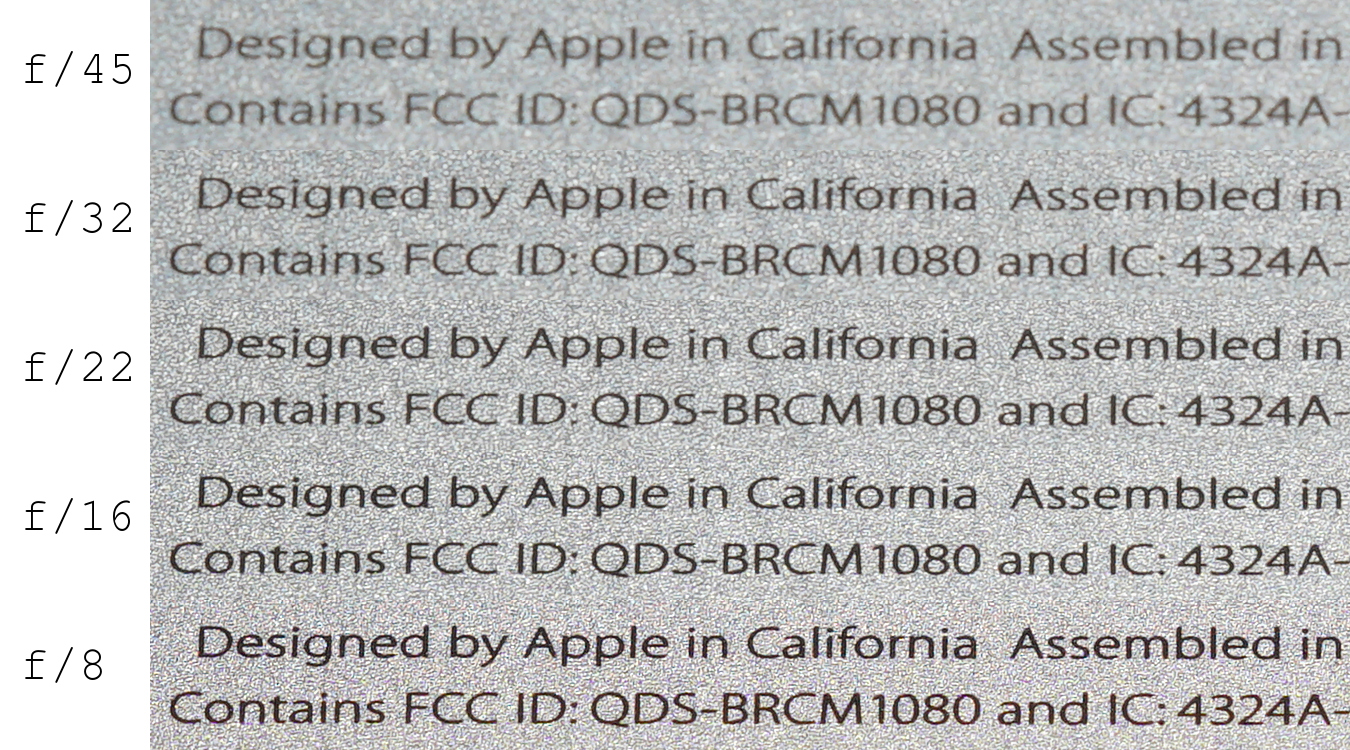
1x-scale crops from SOOC JPEGs, unsharpened:
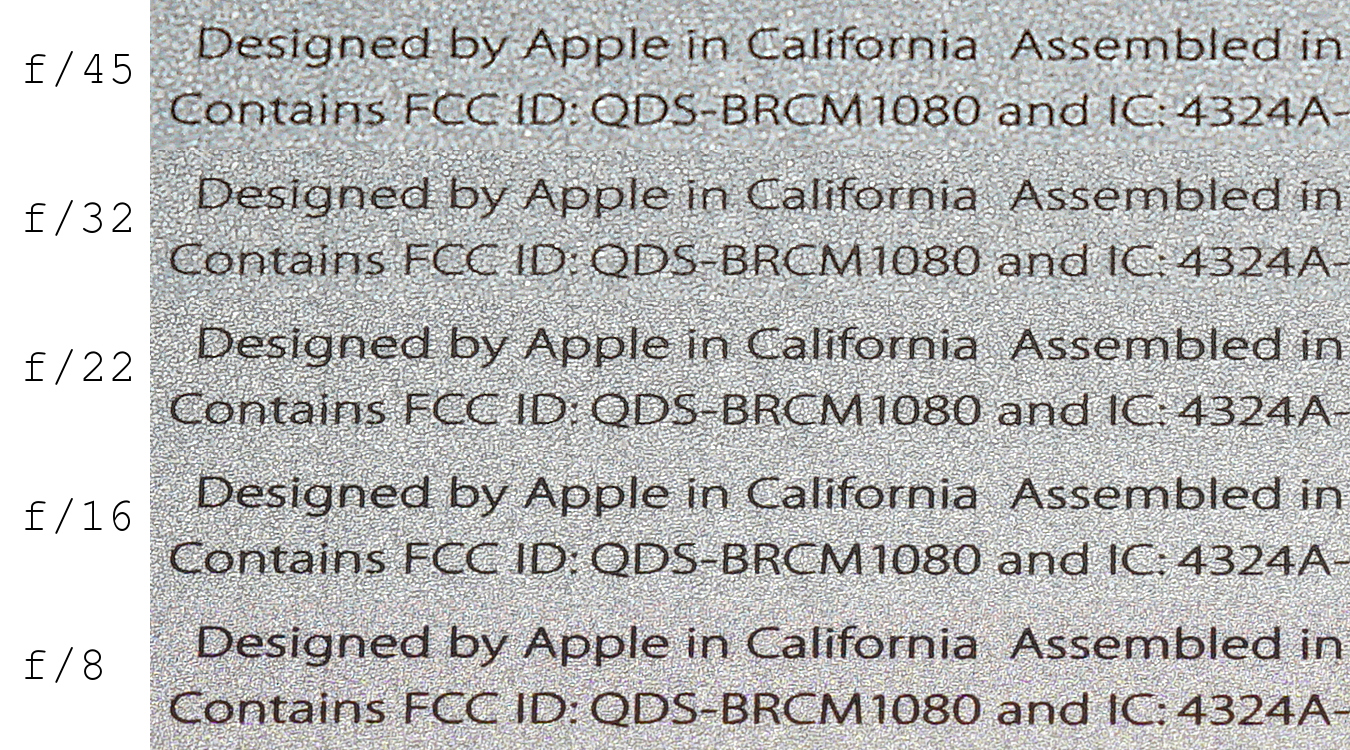
Of the apertures tested, image sharpness seems highest at f/8 but is actually plagued with crunchy aliased pixels and color speckles from the Bayer filter. By custom-sharpening each frame to match the apparent sharpness of f/8, we can compare apertures for true rendition:
f/16 is close to low-pass filtering that matches the A7ii sensel pitch, but I like f/22 a bit more. f/32 gives adequate detail when DOF is paramount. f/45 is only suitable if the image is scaled down.
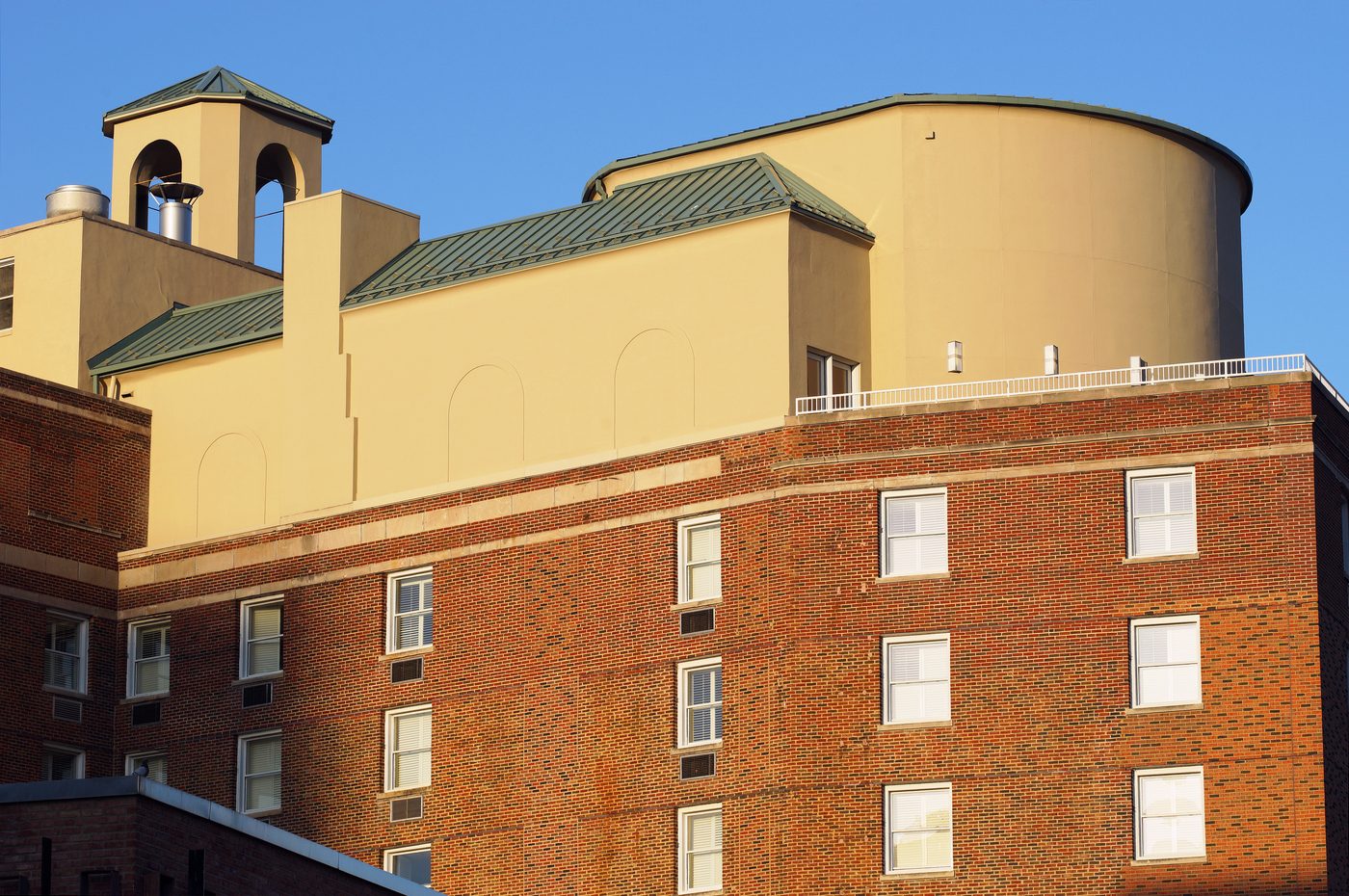
Next is an architectural scenic at f/11 with no movements. The converging lines, however slight, are not correctable with shift at this 135mm FL:
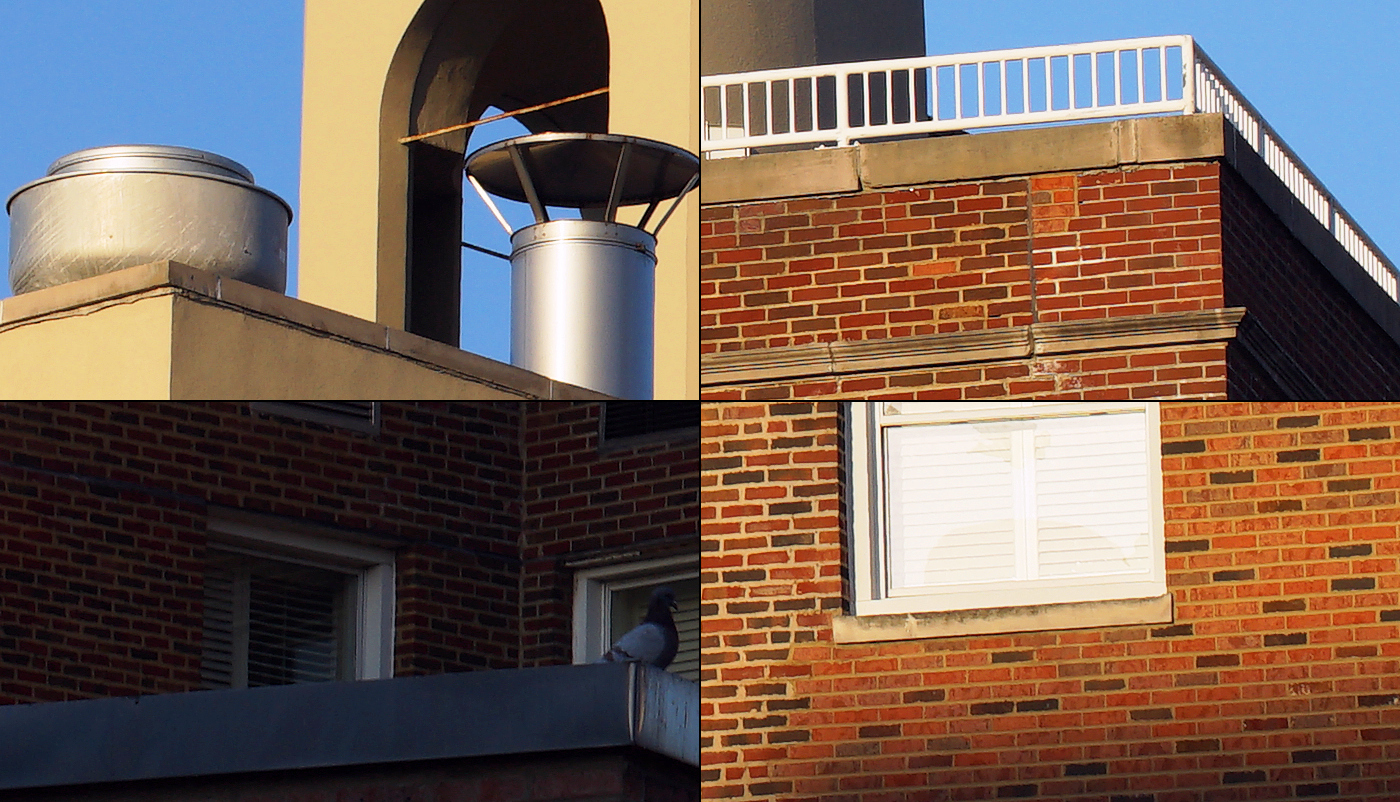
Performance is very high from corner to corner as seen by these 1x-scale edge crops (web sharpened):
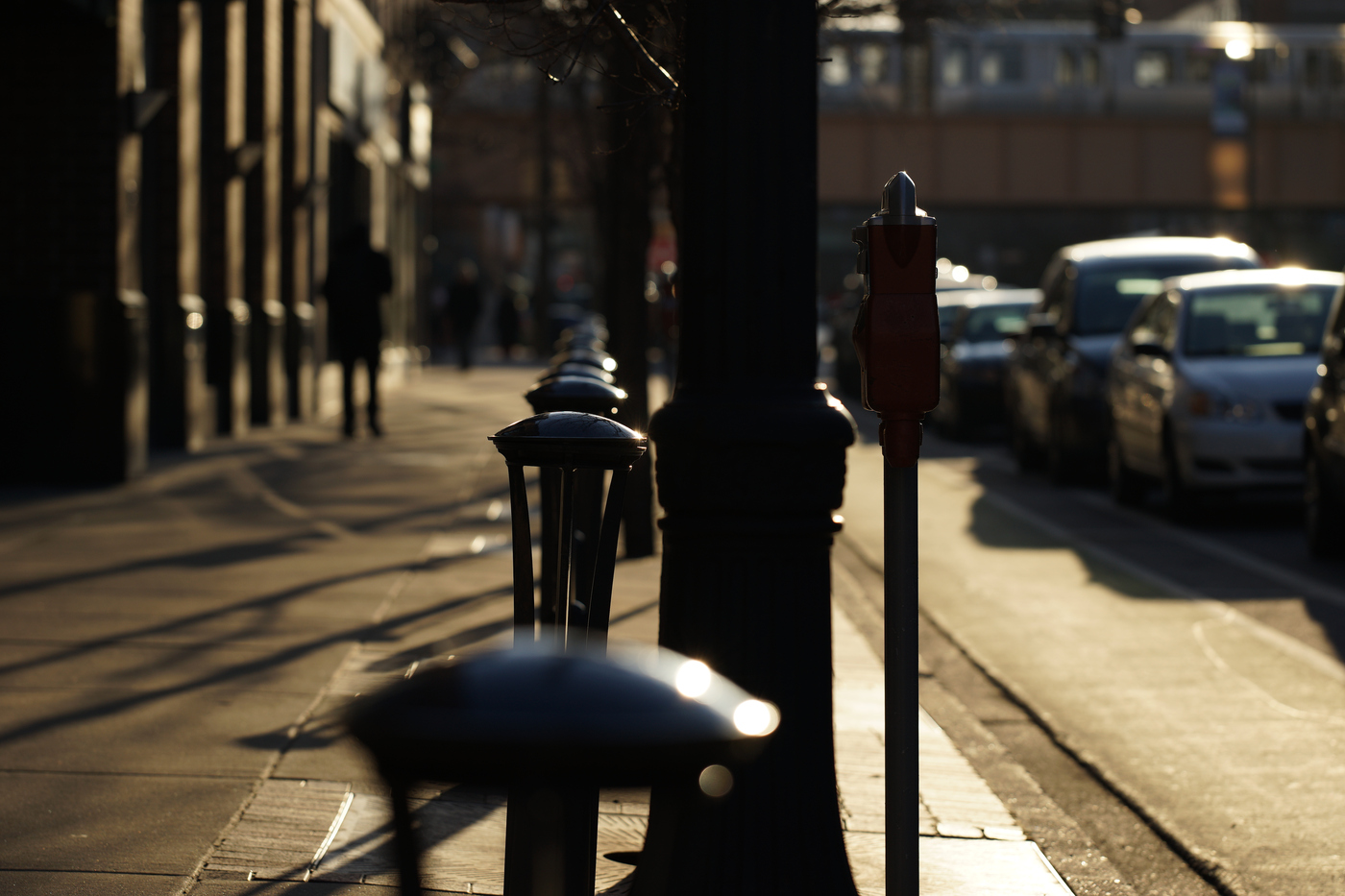
Finally, I present a real-world bokeh test with aperture wide open. All images below are web sharpened. Overview frame:
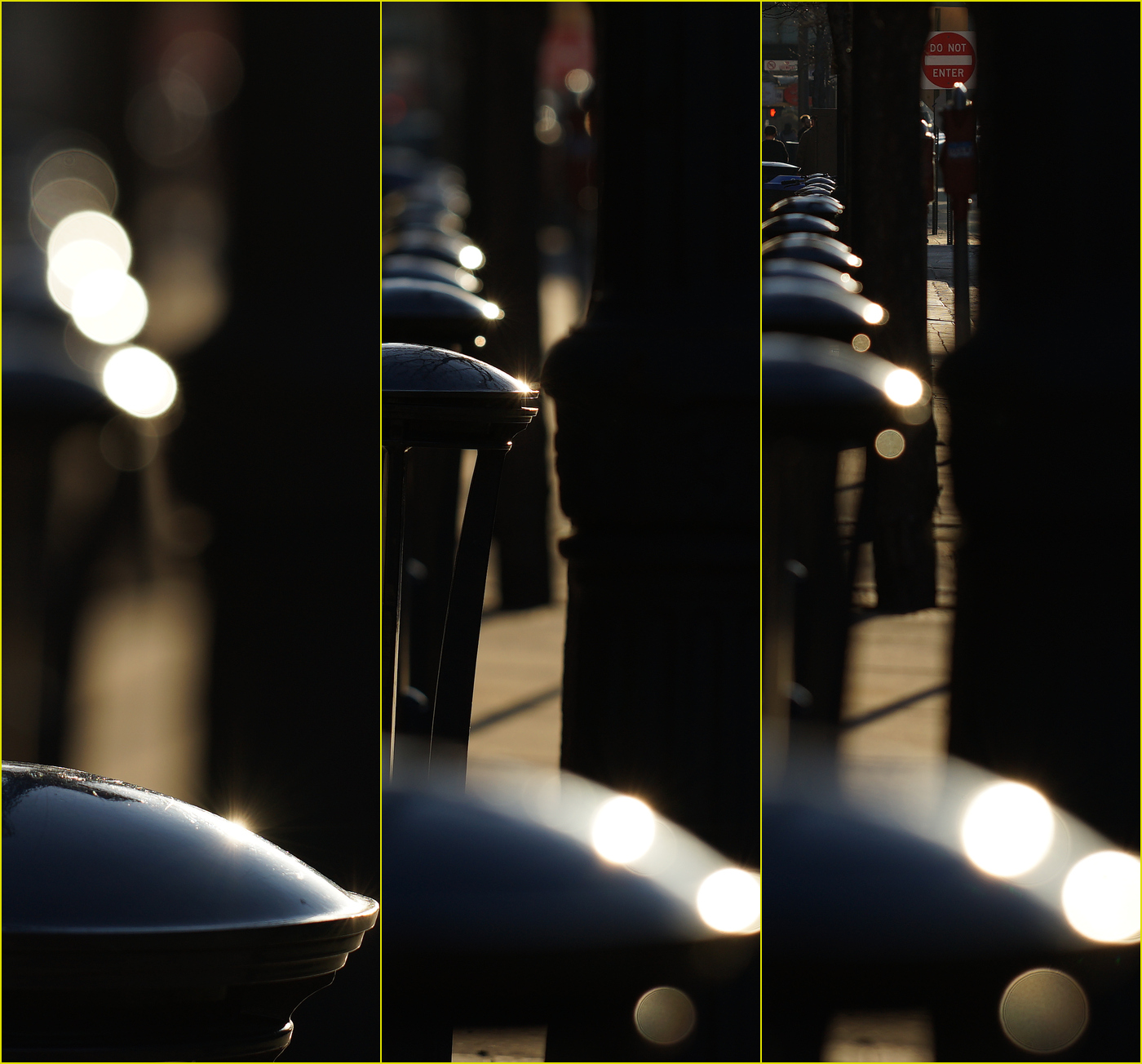
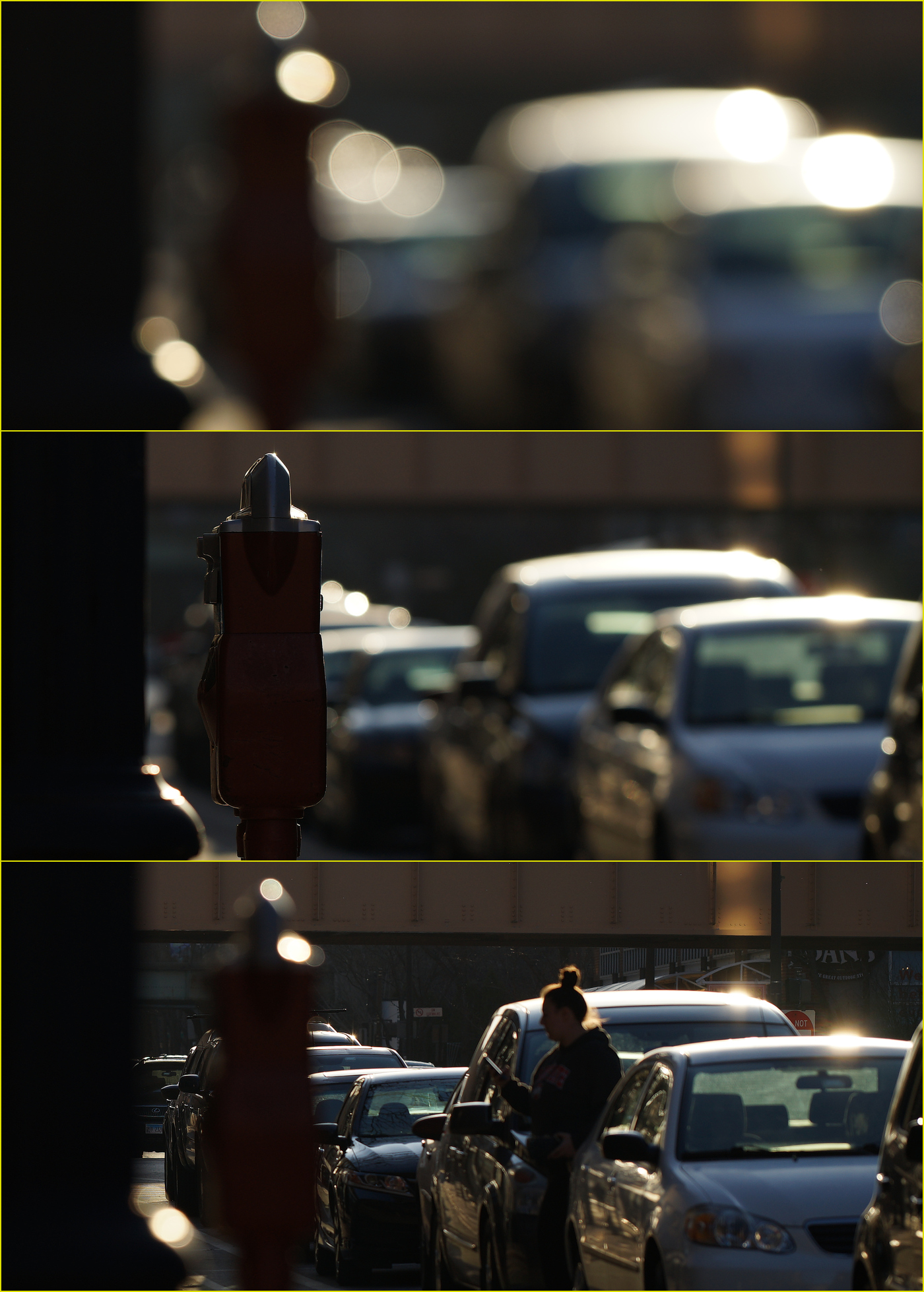
Three frames were captured at focus distances of 3m, 8m, and half a block. Crops are 0.5x-scale:
A thin outer rim is evident in the blur disc but energy distribution is very good, and color neutral. The effect is remarkably smooth bokeh fore and aft of the object plane, and no defocus color fringing of note. The TS-E 135 has a large front element that is not recessed, and I did not attach the hood, so the contre-jour lighting was a serious test. Unlike Samyang and their 135/2, Canon has succeeded commendably in controlling stray light. I should give similar kudos to Sigma (MC-11) and Sony (A7ii) for suppressing reflections.
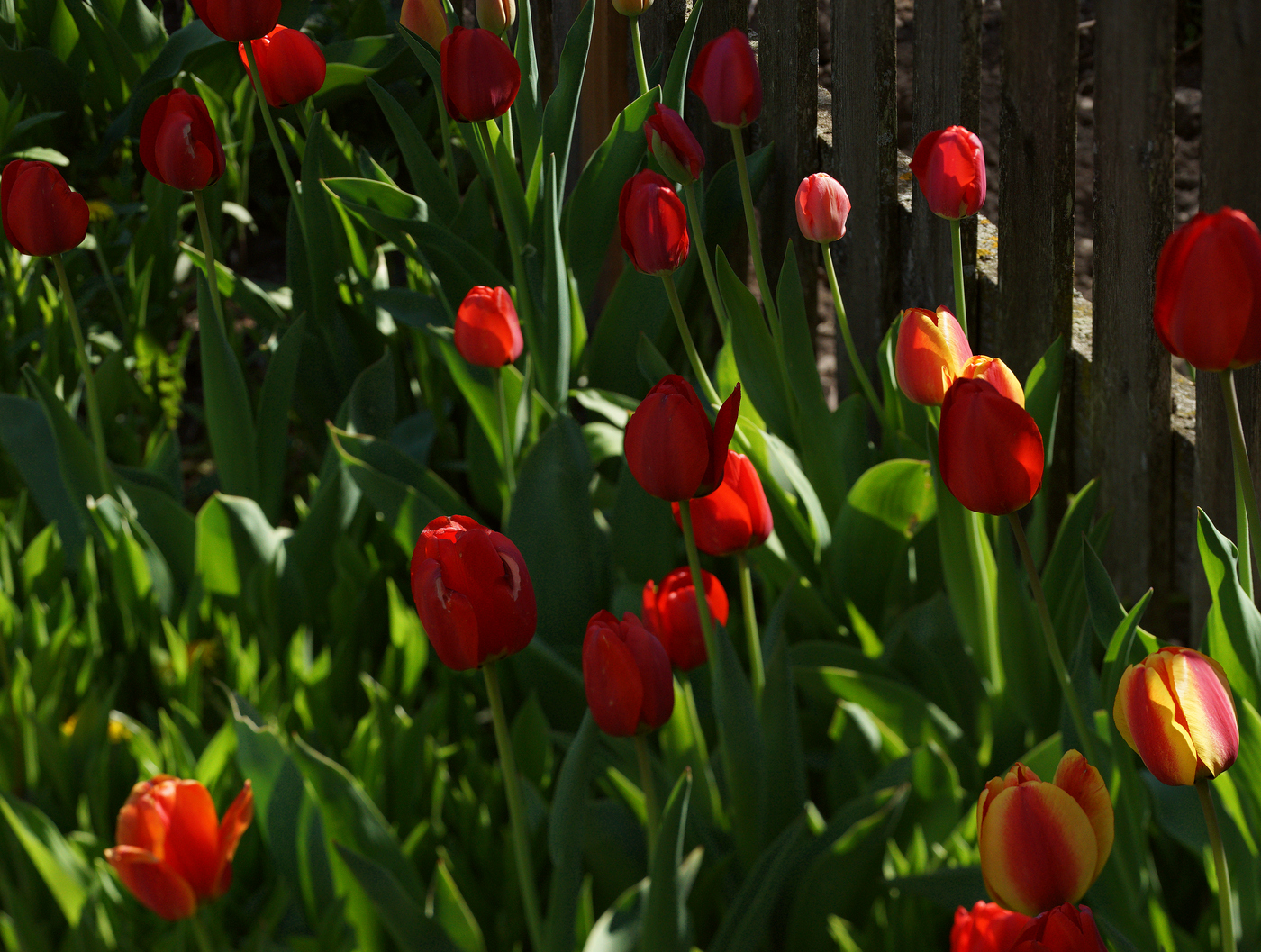
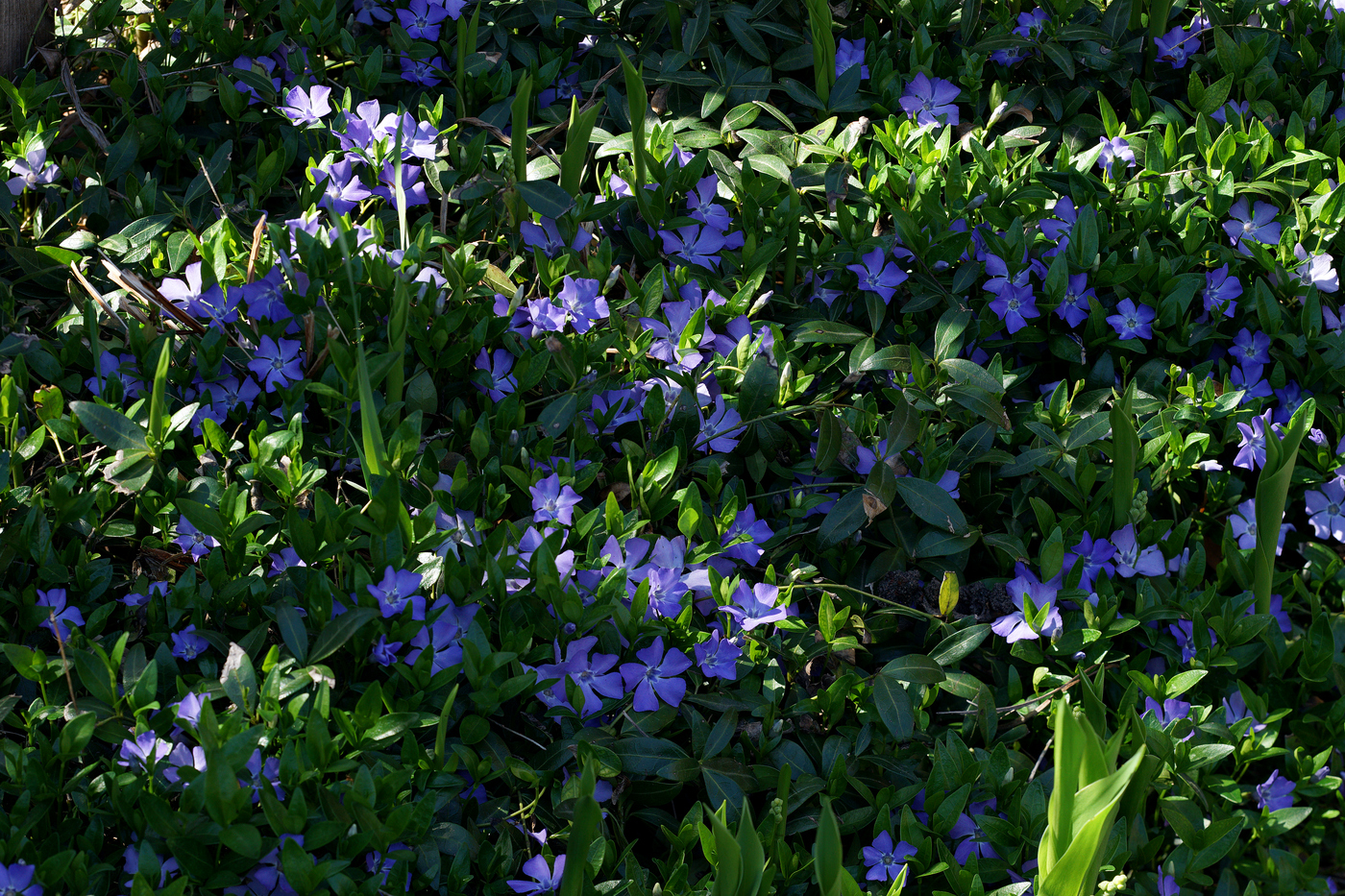
Tilting around the back garden with Canon TS-E 135 attached to the A7ii, and supporting tripod. Tilt is set to graze the blooms front to back, while most of the leaves are in the "background". ISO 800 and 1/1250s to freeze wind motion, f/8:
Tilt keeps ground cover in focus from front to back. ISO 400, 1/200s, f/8:
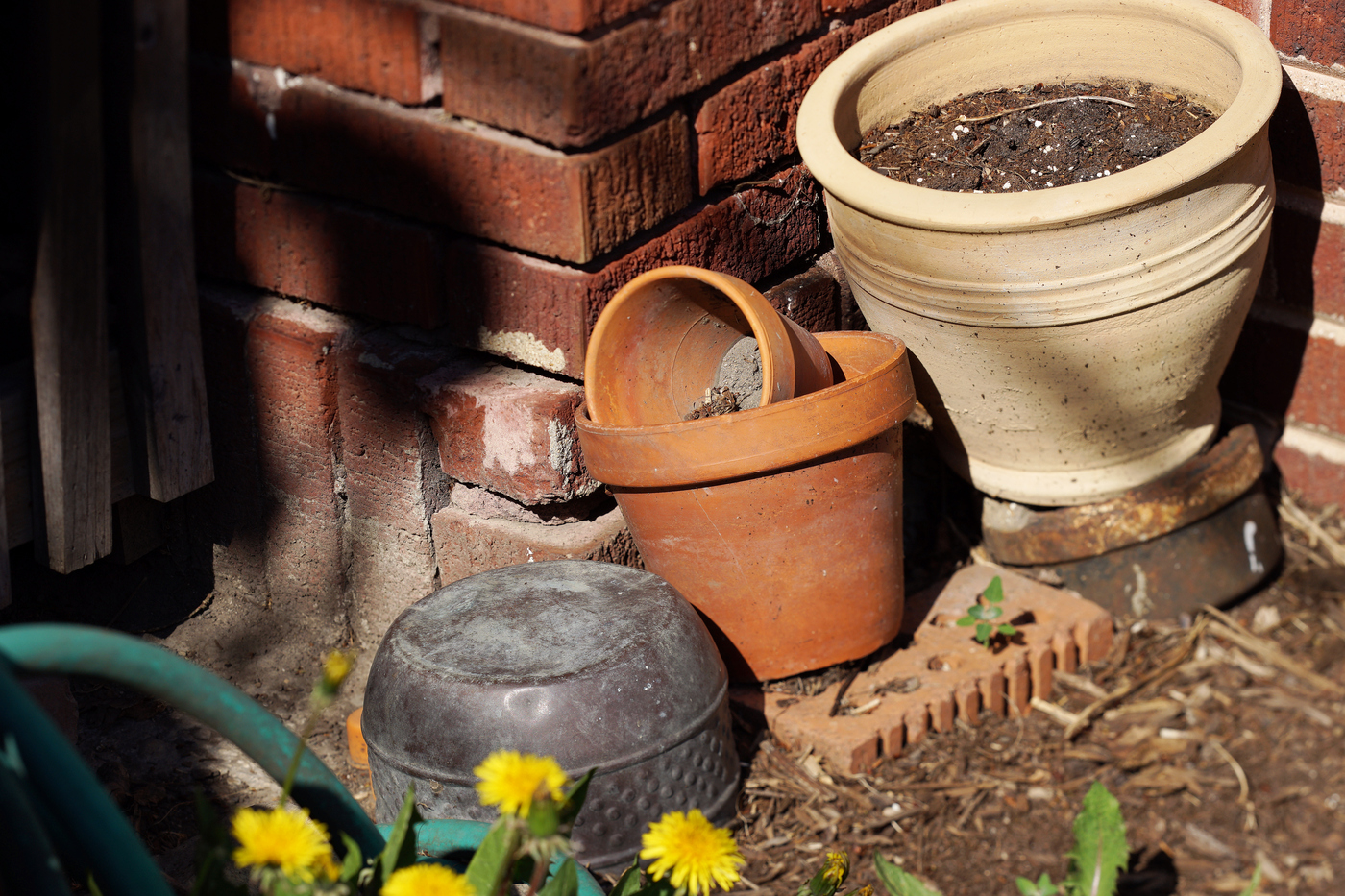
Object plane is a bit weird for this one (both rotation mechanism in play). The entire lower right is in the background, but the defocussed brick wall on top is in the foreground. ISO 100, 1/500s, f/8:
I shot flowers last summer with the Sony FE 100/2.8 T5.6 STF GM and its incredible Gaussian blur. However, the special effect requires open aperture, placing most flowers and flower beds outside DOF. The TS-E has very decent bokeh and is far more flexible for planting critical focus into the scene.
rico wrote:
Tilting around the back garden with Canon TS-E 135 attached to the A7ii, and supporting tripod. Tilt is set to graze the blooms front to back, while most of the leaves are in the "background". ISO 800 and 1/1250s to freeze wind motion, f/8:
Object plane is a bit weird for this one (both rotation mechanism in play). The entire lower right is in the background, but the defocussed brick wall on top is in the foreground. ISO 100, 1/500s, f/8:
I shot flowers last summer with the Sony FE 100/2.8 T5.6 STF GM and its incredible Gaussian blur. However, the special effect requires open aperture, placing most flowers and flower beds outside DOF. The TS-E has very decent bokeh and is far more flexible for planting critical focus into the scene....Show more →
Rico -- Thanks so much for your testing of the 135 TSE in practical situations. Beautiful results from this lens -- a real winner.