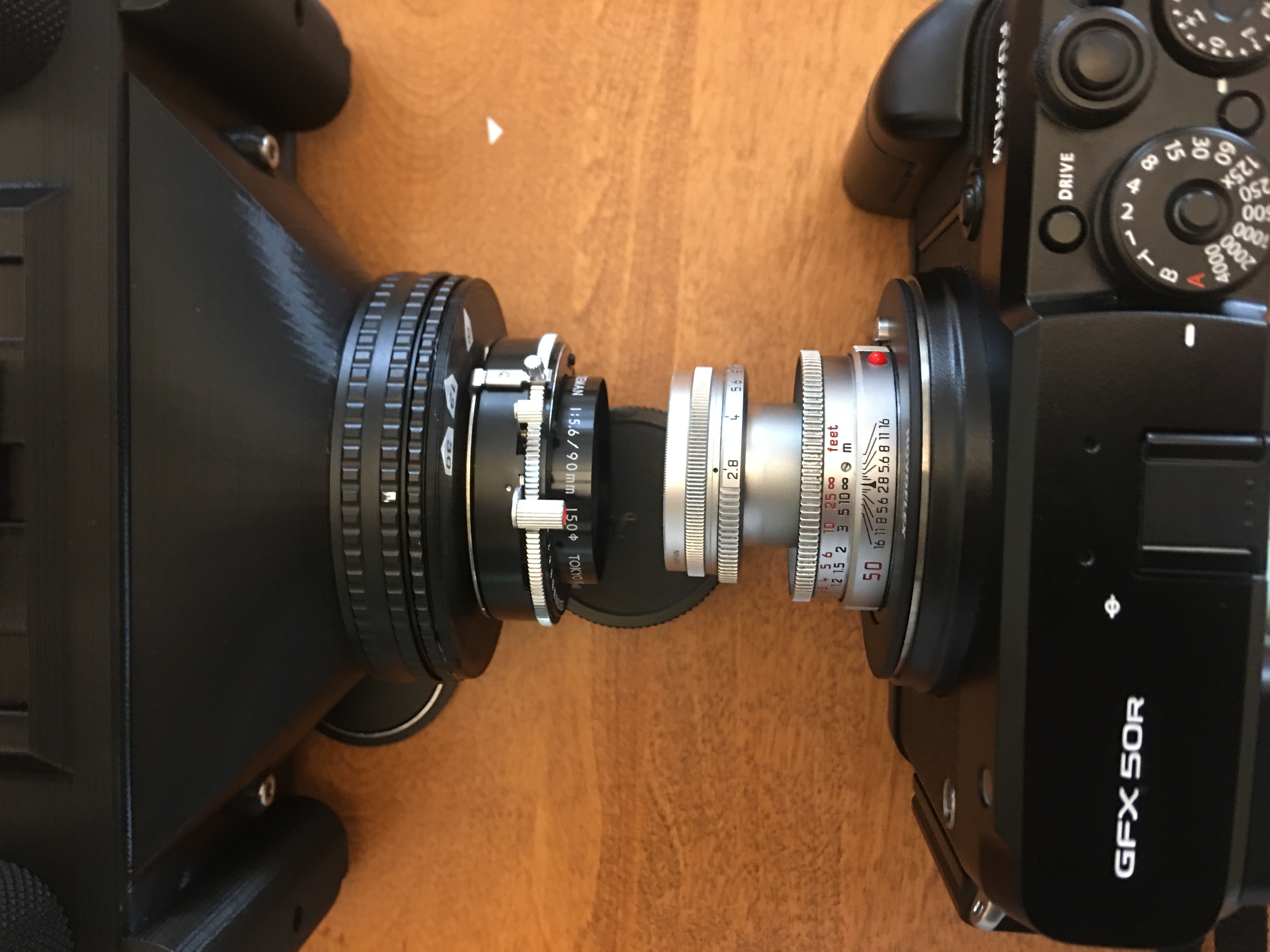
A lens at infinity is considered collimated. Collimated light is light traveling in parallel rays. But I was thinking of this in the case of the two cameras lens to lens where the source of light and receiver were also inline.
sfogg wrote:
A lens at infinity is considered collimated. Collimated light is light traveling in parallel rays. But I was thinking of this in the case of the two cameras lens to lens where the source of light and receiver were also inline.
Shawn
But how can the light be parallell when the exit pupil is not infintely small and the distance from it to the sensor is not infinity? Any point of light (in focus) at the subject will be projected as a point of light on the sensor, with rays from all areas of the lens' exit pupil. Those rays will not be parallell, right?
I think it's pretty well known that a thick sensor stack will affect even the center of the frame when using fast lenses with the exit pupil close to the sensor, if they are not optimized for the sensor stack. This would not happen if the rays were parallell, and then the optical distance is not the same for all rays (peripheral and central) as it would without a stack, or a thinner stack, at the same physical distance.
Makten wrote:
Unless I'm missing something, the rays won't be parallell even in the middle unless you use a very small aperture and/or a lens with the exit pupil very far away. But you are probably right that the stack is not the issue here. Too large error.
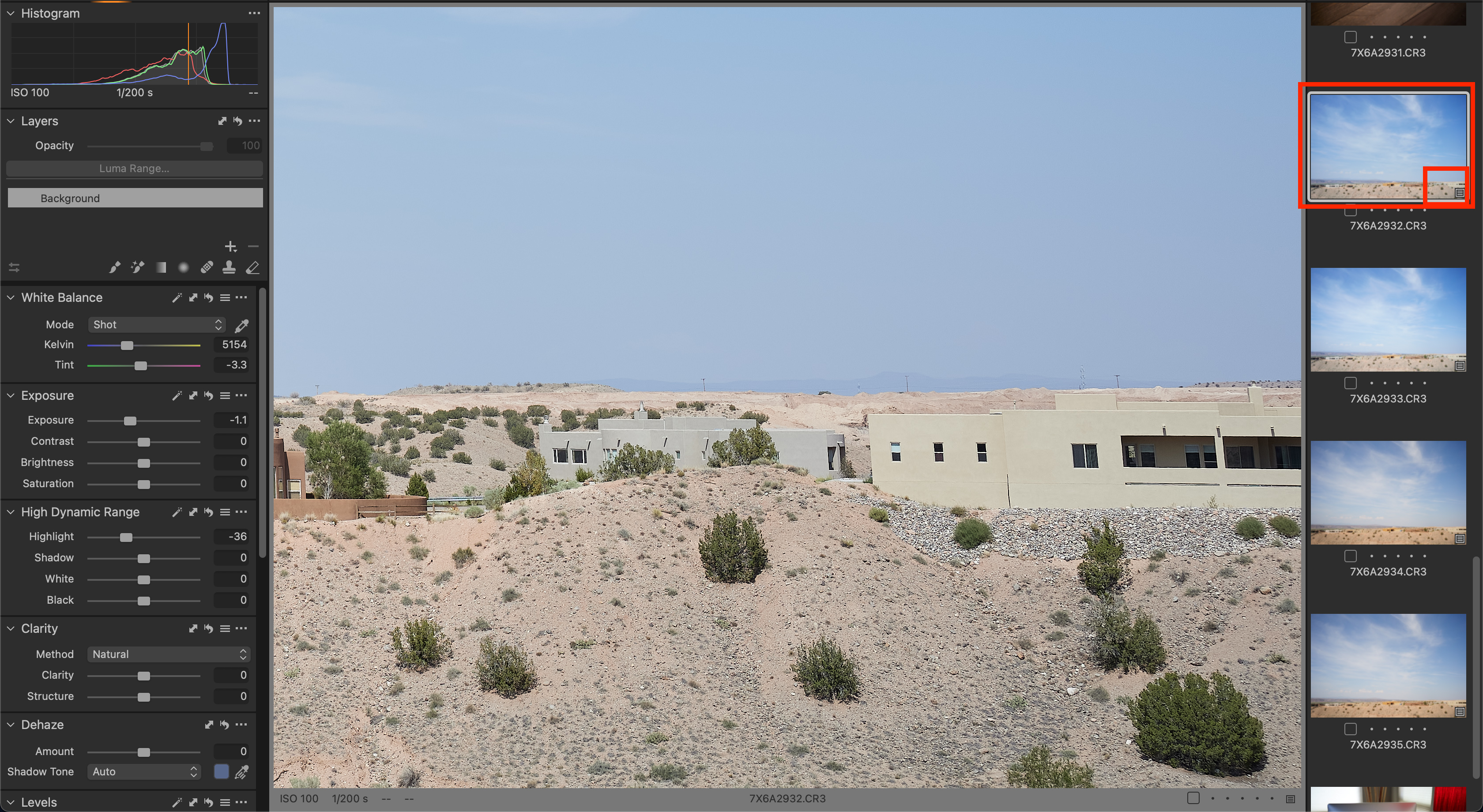
After testing first the CV 21 1.4 and just now the CV 35 APO on the R5 at infinity using the macro adapter, I'm thinking the sensor stack thickness has very little effect compared to the adapter being perfectly distanced to achieve infinity at the hard stop. What I am seeing now is perfect corner sharpness that is just ever so slightly below that of the M10-R, and that is probably because the M10-R is lower resolution and does not have an AA filter.
Both these lenses are torture tests for an adapter – both wide angle, both floating elements. The 35 APO is particularly demanding since it's highly-optimized for the M sensor design. Below is the 35 APO at infinity on the R5 at f/5.6. This is a screenshot of the far right corner at 1:1 magnification. Previously when I had tested the 35 APO on the R5, the corner performance was laughable – completely unusable and worse than a cheap kit lens – with the macro adapter, it's near perfect.
I'm going to go out on a limb and say that the common wisdom that M lenses are best adapted to SL cameras is a myth. Better performance on the SL may be largely due to the fact that the Leica M to SL adapter is perfectly designed and machined for infinity at the hard stop, while third party adapters are varying degrees of disasters. 6-bit coded lenses used on the SL also have the advantage of Leica's lens corrections being applied if one so chooses. The distortion correction alone for many wide angle M lenses moves softer corners out of the final image area.
Note that some Leica M wide angles perform better on the M than they do on the SL like the 21 3.4 SEM. In these cases, the microlens design and thinner sensor stack of the M sensor may be significant. So when considering which M lenses will best adapt to any other sensor, it may be helpful to read up on Leica Forum as to which M lenses perform well on the SL/SL2/SL2-S.
highdesertmesa wrote:
After testing first the CV 21 1.4 and just now the CV 35 APO on the R5 at infinity using the macro adapter, I'm thinking the sensor stack thickness has very little effect compared to the adapter being perfectly distanced to achieve infinity at the hard stop. What I am seeing now is perfect corner sharpness that is just ever so slightly below that of the M10-R, and that is probably because the M10-R is lower resolution and does not have an AA filter.
Both these lenses are torture tests for an adapter – both wide angle, both floating elements. The 35 APO is particularly demanding since it's highly-optimized for the M sensor design. Below is the 35 APO at infinity on the R5 at f/5.6. This is a screenshot of the far right corner at 1:1 magnification. Previously when I had tested the 35 APO on the R5, the corner performance was laughable – completely unusable and worse than a cheap kit lens – with the macro adapter, it's near perfect.
I'm going to go out on a limb and say that the common wisdom that M lenses are best adapted to SL cameras is a myth. Better performance on the SL may be largely due to the fact that the Leica M to SL adapter is perfectly designed and machined for infinity at the hard stop, while third party adapters are varying degrees of disasters. 6-bit coded lenses used on the SL also have the advantage of Leica's lens corrections being applied if one so chooses. The distortion correction alone for many wide angle M lenses moves softer corners out of the final image area.
Note that some Leica M wide angles perform better on the M than they do on the SL like the 21 3.4 SEM. In these cases, the microlens design and thinner sensor stack of the M sensor may be significant. So when considering which M lenses will best adapt to any other sensor, it may be helpful to read up on Leica Forum as to which M lenses perform well on the SL/SL2/SL2-S. ...Show more →
In this case it might be true because of the 35 APO having floating elements, but the performance of unit focusing lenses cannot be affected by adapter thickness. Unless the thickness is not uniform of course, causing a tilt, or if it doesn't even allow you to reach infinity.
I don't know how thick the sensor stack of the R5 is, but chances are that f/5.6 is stopped down enough to get rid of most of the astigmatism and curvature of field that the difference to the M sensor will introduce. If you shoot them at wider apertures, you'll propbably see a greater difference between the sensors.
You could also be looking at an area that actually gets better with the "wrong" stack thickness, if the lens was designed with the midframe prioritized over the corners. In that case you'll probably see worse mid frame performance on the Canon sensor, but possibly better corners. Many lenses have a wavy field and it's hard to get everything perfectly sharp in the same photo, while the lens can be sharp anywhere if you focus for that particular spot/radius.
Edit: However, what I meant with my previous post was that since the rays from the exit pupil are not parallell even at infinity and even in the dead center of the frame, I think one must take the sensor stack into consideration when deciding how thick an adapter needs to be. Which will then be complicated because all lenses don't have the same exit pupil distance and size.
Again, perhaps I'm missing something here, but then please correct me!
Makten wrote:
In this case it might be true because of the 35 APO having floating elements, but the performance of unit focusing lenses cannot be affected by adapter thickness. Unless the thickness is not uniform of course, causing a tilt, or if it doesn't even allow you to reach infinity.
I don't know how thick the sensor stack of the R5 is, but chances are that f/5.6 is stopped down enough to get rid of most of the astigmatism and curvature of field that the difference to the M sensor will introduce. If you shoot them at wider apertures, you'll propbably see a greater difference between the sensors.
You could also be looking at an area that actually gets better with the "wrong" stack thickness, if the lens was designed with the midframe prioritized over the corners. In that case you'll probably see worse mid frame performance on the Canon sensor, but possibly better corners. Many lenses have a wavy field and it's hard to get everything perfectly sharp in the same photo, while the lens can be sharp anywhere if you focus for that particular spot/radius.
Edit: However, what I meant with my previous post was that since the rays from the exit pupil are not parallell even at infinity and even in the dead center of the frame, I think one must take the sensor stack into consideration when deciding how thick an adapter needs to be. Which will then be complicated because all lenses don't have the same exit pupil distance and size.
Again, perhaps I'm missing something here, but then please correct me! ...Show more →
f/5.6 is where optimal corner performance starts on the M10-R for this lens, too – no improvement at f/8 on either. And the CV and Leica 35 and 50 APOs are as flat field as it gets for M lenses. Sharpness in my shot was the same at the center bottom, perhaps a little better. Sharpness at MFD and mid-distance center is also very high. Also for the 21 f/1.4, I tested it at MFD and f/1.4 focused on an object in very very far corner – sharp there, too.
If comparing f/2 at infinity on both there may be some difference in the corners – I don't know because I haven't tested this on the R5 yet. But even these APO lenses are not 100% perfect in the corners wide open at infinity on the M10-R, so I doubt there's much difference.
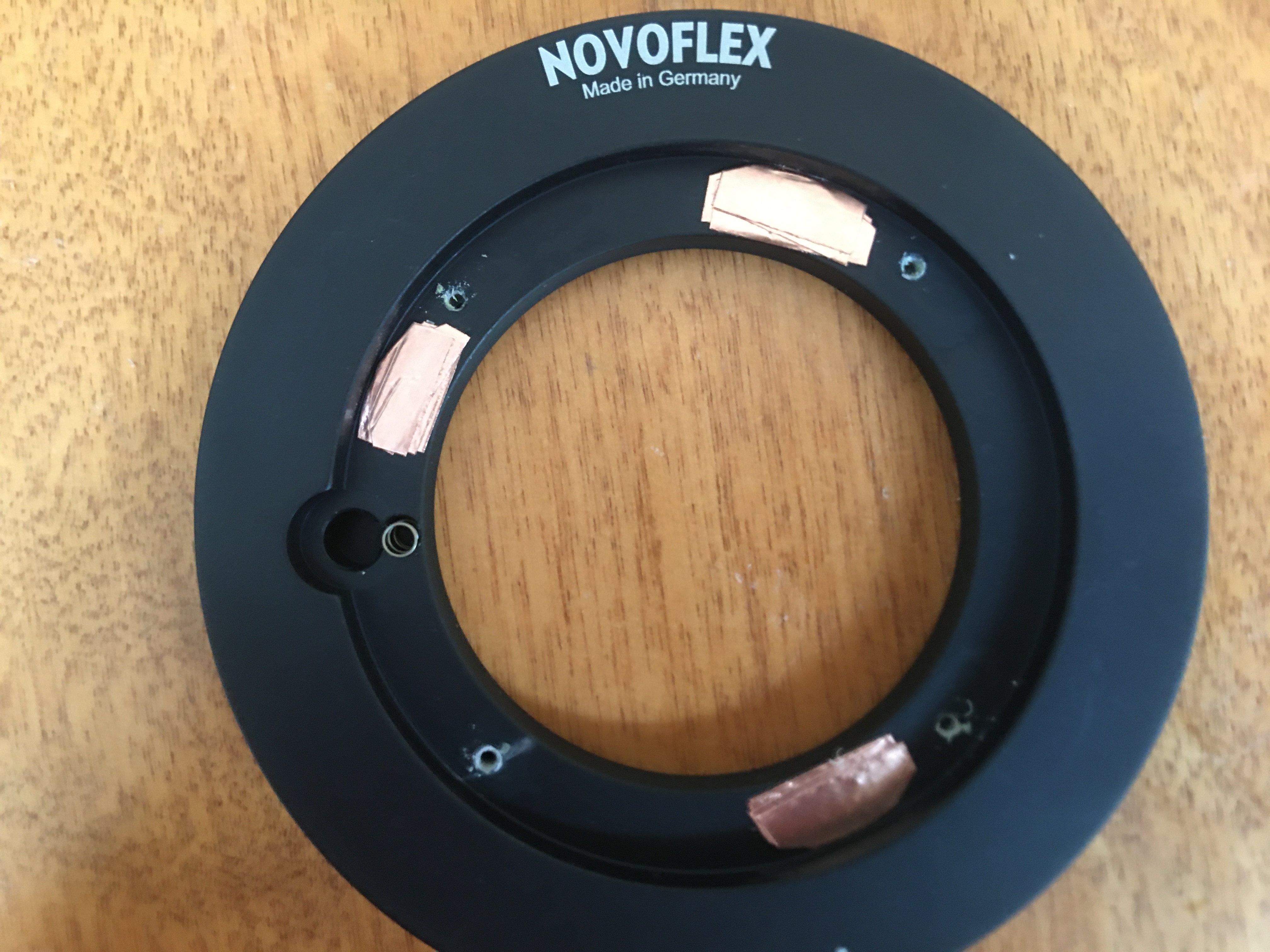
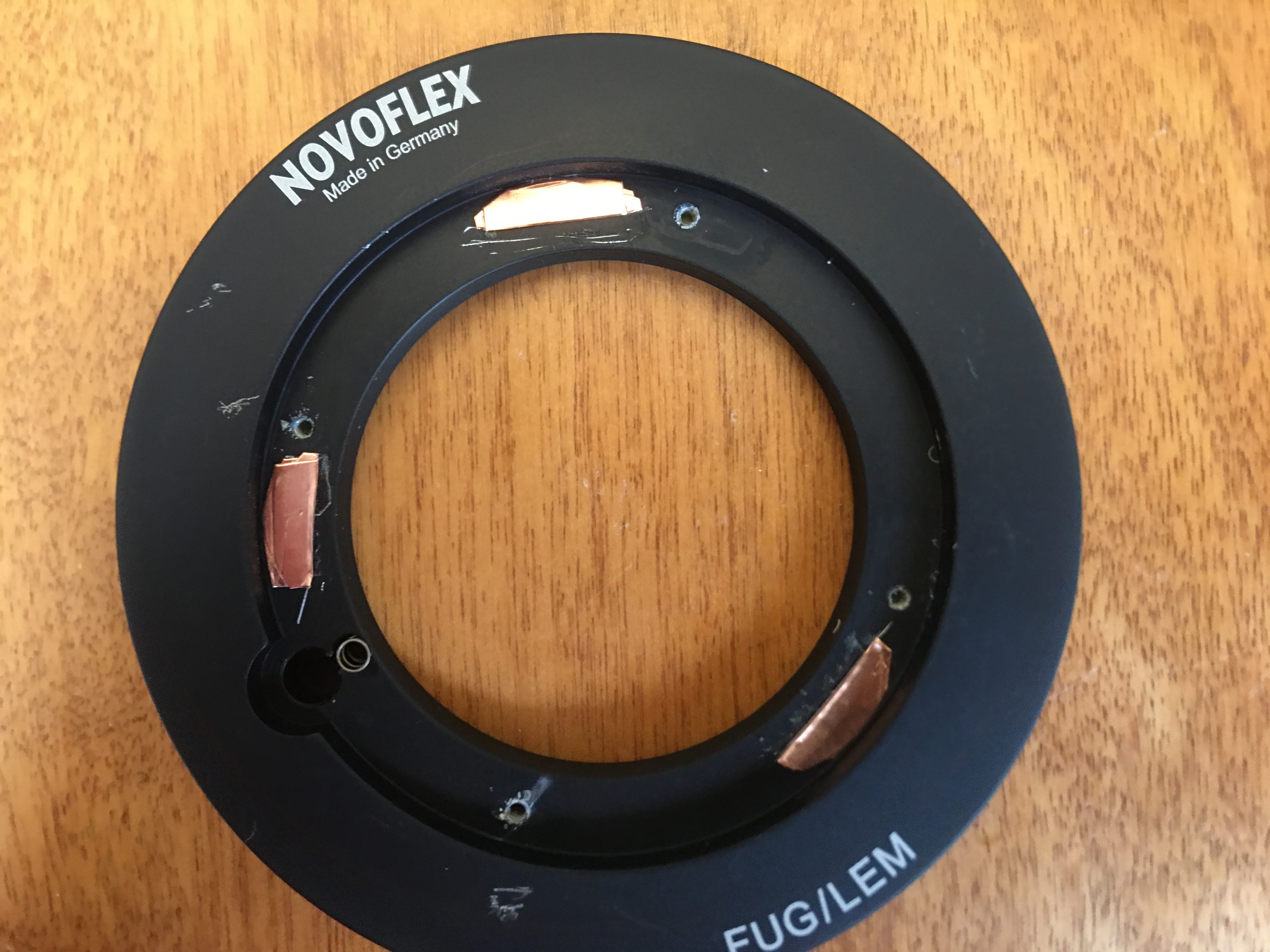
I have 4 layers of tape on right now. I think that might be ever so slightly too much but it is very close. If you do this I recommend cutting the tape with a curve up top to fit into the space in the adapter a bit. After you get the layers on cut across them with an exacto knife to keep the tape away from the edge of adapter. If you don't you might find it very difficult to mount/dismount a lens.
Pictures below. I might add another grouping of tape to even out the spacing a little more.
Correction, wasn't the tape that was causing lenses to be hard to install, was uneven support on the mounting plate. I ended up putting 4 pieces of tape on each side of the screw holes and the lenses mount/dismount like normal. Just tried my Voigtlander 12mm and it is hitting infinity at infinity so I'm calling this done. At least for now.
Follow up on the TTArtisan adapters I ordered. The M to Canon RF is dead-on focus at infinity hard stop (tested on 21 f/1.4), but the M to GFX is just as bad as the Novoflex, which is a bummer.
karlfotoz wrote:
Is there perhaps a spreadsheet with all the lenses that have been tested on this thread, with a works or doesn't and how well if it does?
I have seen a spreadsheet like the one you want. It was published via Google Sheets, so people can see it add information to it. Unfortunately, I didn't keep the link because I found it to be a pointless exercise. There are just too many variables in play for that kind of resource to be very useful to me (e.g., personal taste, standards, expectations and experience; equipment, technique and skill level).
In my personal experience -- take that for what it's worth! -- other people's experiences with various lenses can give you a broad general direction, but eventually you just have to get one and try it yourself.
An example of why there's really not much point in a spreadsheet; here's the Nikkor 50/2 AI (same optics as the images above) @ f/2 with no vignetting correction. I'd not say it "covers well", but it's certainly usable.
It's also pretty damn unsharp at f/2, but sharpens up (in the middle) nicely at f/2.8. But then what's the point? The GF 45/2.8 and 50/3.5 runs in circles around it, and the 50/3.5 gives massively more "pop" and "medium format look" at f/3.5 than what the Nikkor shows at any aperture.
Almost any 35/1.4 on FF performs better than this...
"Modern" optimal optical performance means the lenses are either larger, heavier, more expensive, not as well built (as the old manual lenses) or not available at f/2. Or maybe they're just not as fun - who knows, to each his/her own.
As simple as the nifty fifties with their 6 elements in 5 groups construction, not all are created equal. The Pentax M/A/F/FA 50/1.7 fared better coverage wise in my test than the Nikkor HC 50/2, Pentax A 50/2, Minolta MD 50/1.7 and Ricoh Rikenon 50/2 (a Tomioka lens, which seems to enjoy a cult reputation in Japan) and Rikenon 50/1.7. It also beats the Voigtlander 40/2 Ultron, far from an unusable lens, by a wide margin.
Don't have much 50/1.4 on hand but the Pentax A/F/FA 50/1.4 covers very well, which is better than the Pentax M 50/1.4 and in turn the Nikkor AI/AIS/AF/D 50/1.4 (hard vignetting). This verified the notion that the Pentax 50/1.4 went through a minor design change in the A iteration to improve sharpness and vignetting. I'd still be oblivious of it had I not took the hassle to figure the coverage thing out myself. Quite rewarding IMO.
Archlich wrote:
"Modern" optimal optical performance means the lenses are either larger, heavier, more expensive, not as well built (as the old manual lenses) or not available at f/2. Or maybe they're just not as fun - who knows, to each his/her own.
As simple as the nifty fifties with their 6 elements in 5 groups construction, not all are created equal. The Pentax M/A/F/FA 50/1.7 fared better coverage wise in my test than the Nikkor HC 50/2, Pentax A 50/2, Minolta MD 50/1.7 and Ricoh Rikenon 50/2 (a Tomioka lens, which seems to enjoy a cult reputation in Japan) and Rikenon 50/1.7. It also beats the Voigtlander 40/2 Ultron, far from an unusable lens, by a wide margin.
Don't have much 50/1.4 on hand but the Pentax A/F/FA 50/1.4 covers very well, which is better than the Pentax M 50/1.4 and in turn the Nikkor AI/AIS/AF/D 50/1.4 (hard vignetting). This verified the notion that the Pentax 50/1.4 went through a minor design change in the A iteration to improve sharpness and vignetting. I'd still be oblivious of it had I not took the hassle to figure the coverage thing out myself. Quite rewarding IMO....Show more →
I'm not really bothered by the questionable optical performance of old lenses. Spherical aberration and funky bokeh can be pretty nice sometimes. But I just can't stand lenses with massive vignetting, or worse, with backwards curvature of field. The Nikkor gives surprisingly flat field as you can see, and the sharper edges is most likely more due to the mechanical vignetting that makes the effective aperture smaller away from the center of the frame. There are lenses with better coverage, but often with much worse curvature of field.
If I was more interested in shooting closer, I'd probably be happy with a lot of old lenses. But unfortunately, when I want shallow DOF, I want it at a bit of distance. And then most adapted ~50 mm lenses don't perform well. At least not well enough to prefer them on the GFX ovre just shooting FF instead.
Makten wrote:
An example of why there's really not much point in a spreadsheet; here's the Nikkor 50/2 AI (same optics as the images above) @ f/2 with no vignetting correction. I'd not say it "covers well", but it's certainly usable.
It's also pretty damn unsharp at f/2, but sharpens up (in the middle) nicely at f/2.8. But then what's the point? The GF 45/2.8 and 50/3.5 runs in circles around it, and the 50/3.5 gives massively more "pop" and "medium format look" at f/3.5 than what the Nikkor shows at any aperture.
Almost any 35/1.4 on FF performs better than this...
Actually, that is a completely different lens.
The Nikkor 50/2 AI is a gaussian lens design that had to be built to clear the mirror on an SLR.
Ah, not easy to know when there is a Nikkor H.C. for SLR's too that is optically identical to the AI.
That last shot is f2 with zero vignetting correction applied and no crop.
Shawn
The AI would show the same lack of vignetting at that close distance. Which was my point, because for some reason almost all images shown for "proof of perfect coverage" are shot at close range. That doesn't mean they don't vignette or give rearwards curvature of field at larger distance. Can be seen in your tractor image.
sfogg wrote:
My mentioning LTM in that post was a big clue.
I also have the 50/2 AI, it vignettes more than the Sonnar.
Shawn
I think that looks very similar to the AI. The vignetting in my example is worse mostly because of high contrast, and it doesn't show any vignetting at all at f/8 and infinity.
A question: has anybody experiences with the Nikon 105mm f2.0 DC on a Gfx? Does it cover the image circle nicely? Is there maybe even a way to make if AF?
My search didn't return any results.... I had it long ago on a Nikon DSLR and it is probably my most loved portrait lens so far.


 But you are probably right that the stack is not the issue here. Too large error.