This topic is in the 2016 archive. You can read it and like its posts here. It is read only.
Archive 2016Comparison of Zeiss Otus 28 f/1.4 APO vs Leica M 28 f/1.4 ASPH

p.1 #1Comparison of Zeiss Otus 28 f/1.4 APO vs Leica M 28 f/1.4 ASPH
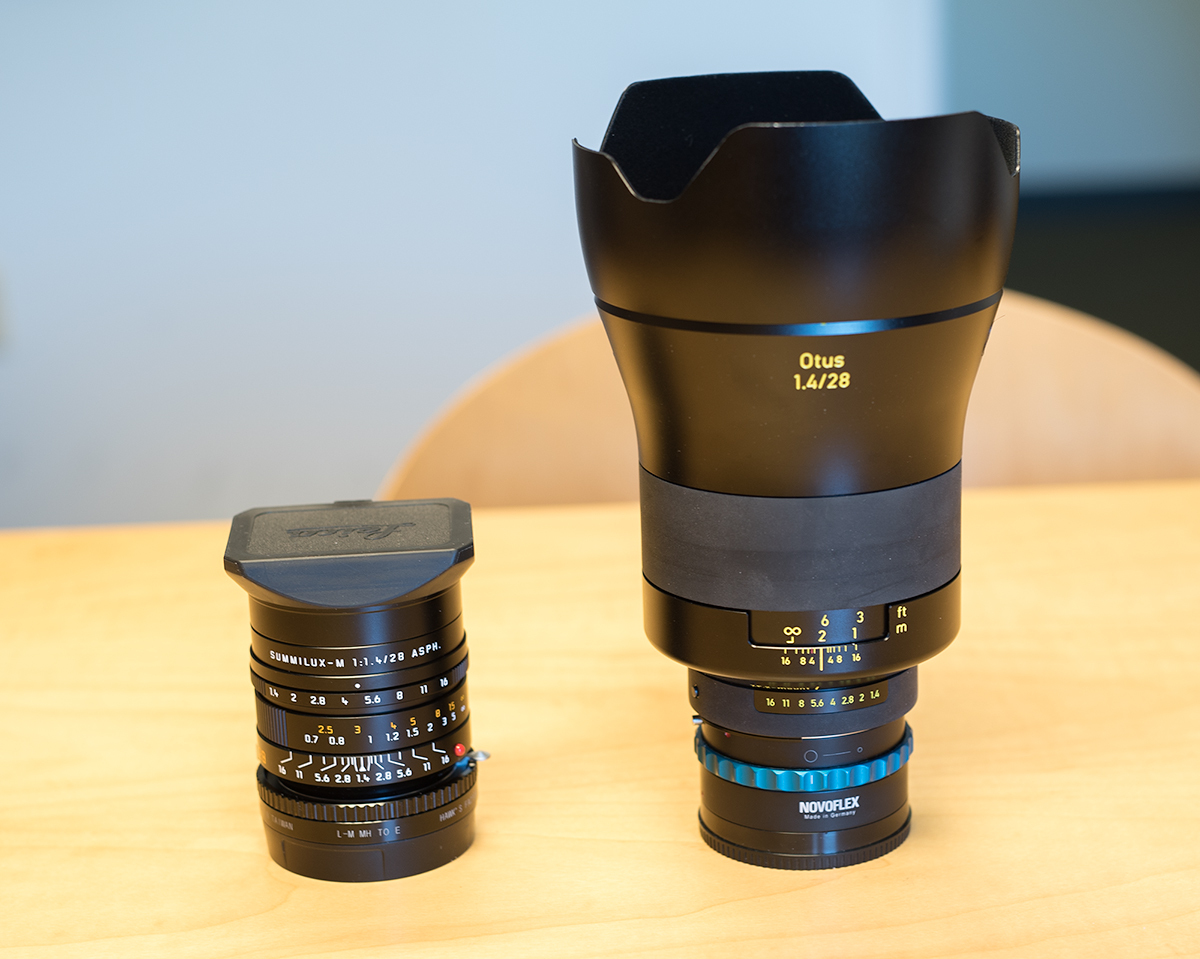
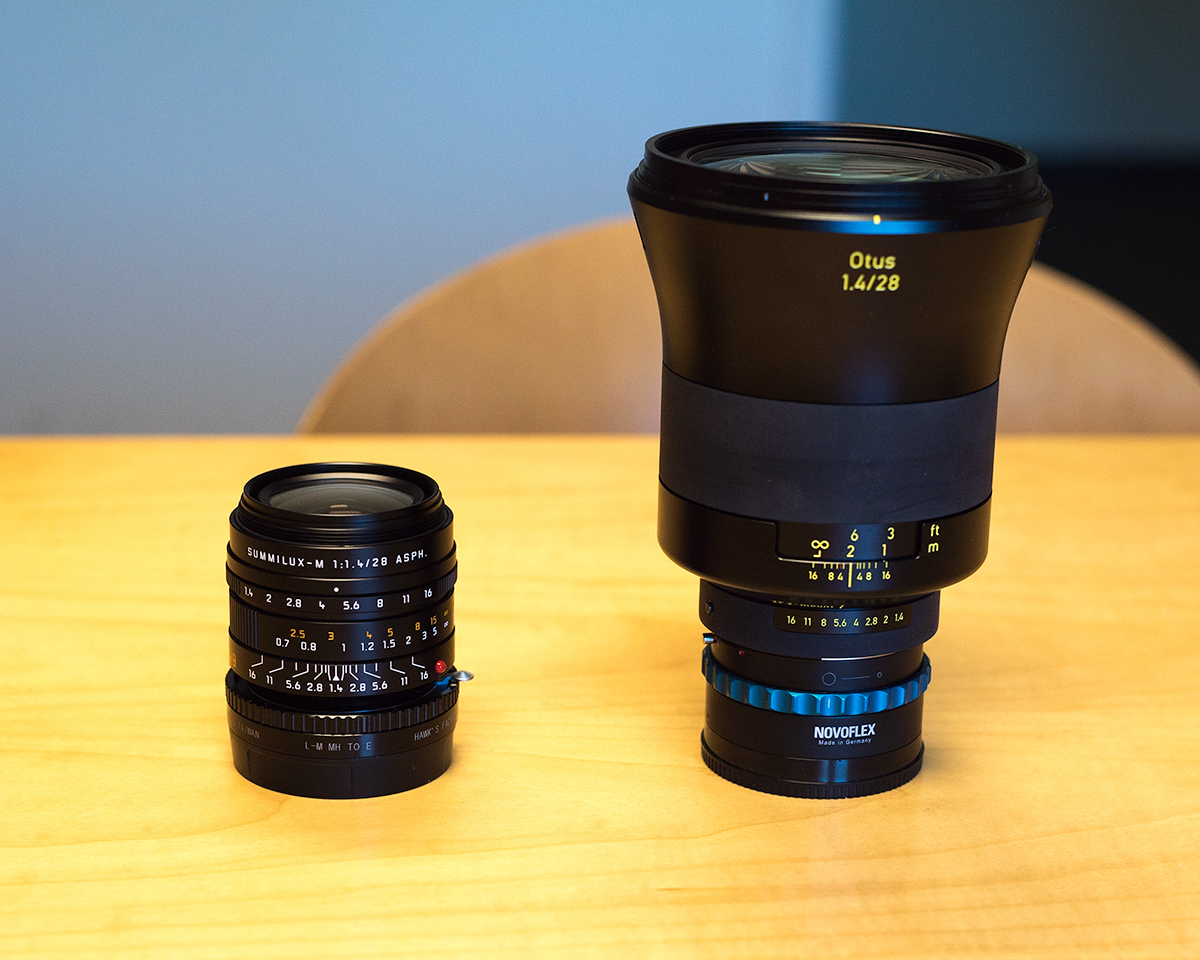
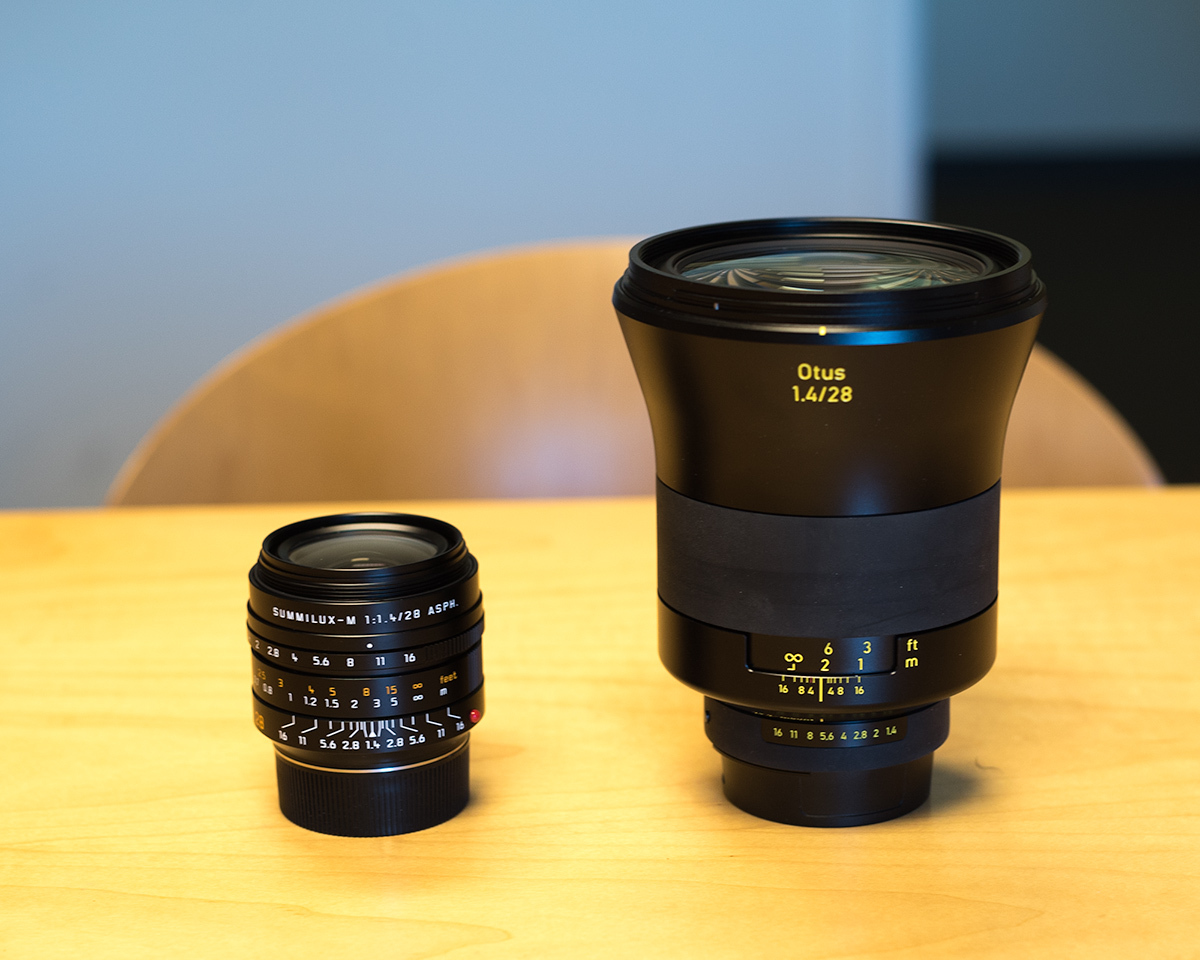
I have started to do a comparison of my Otus 28 with the Leica M 28 Lux and I will be posting a series of comparisons over the next couple of weeks. I will start below with a comparison in size. No other way to say it but there is a huge difference in size. Below are the lenses side by side. The first is with adapters and hoods. The second is with adapters and no hoods, and the last is without adapters or hoods. Comparisons of shots taken with the lenses will follow.
Oct 31, 2016 at 01:59 PM
p.1 #2Comparison of Zeiss Otus 28 f/1.4 APO vs Leica M 28 f/1.4 ASPH
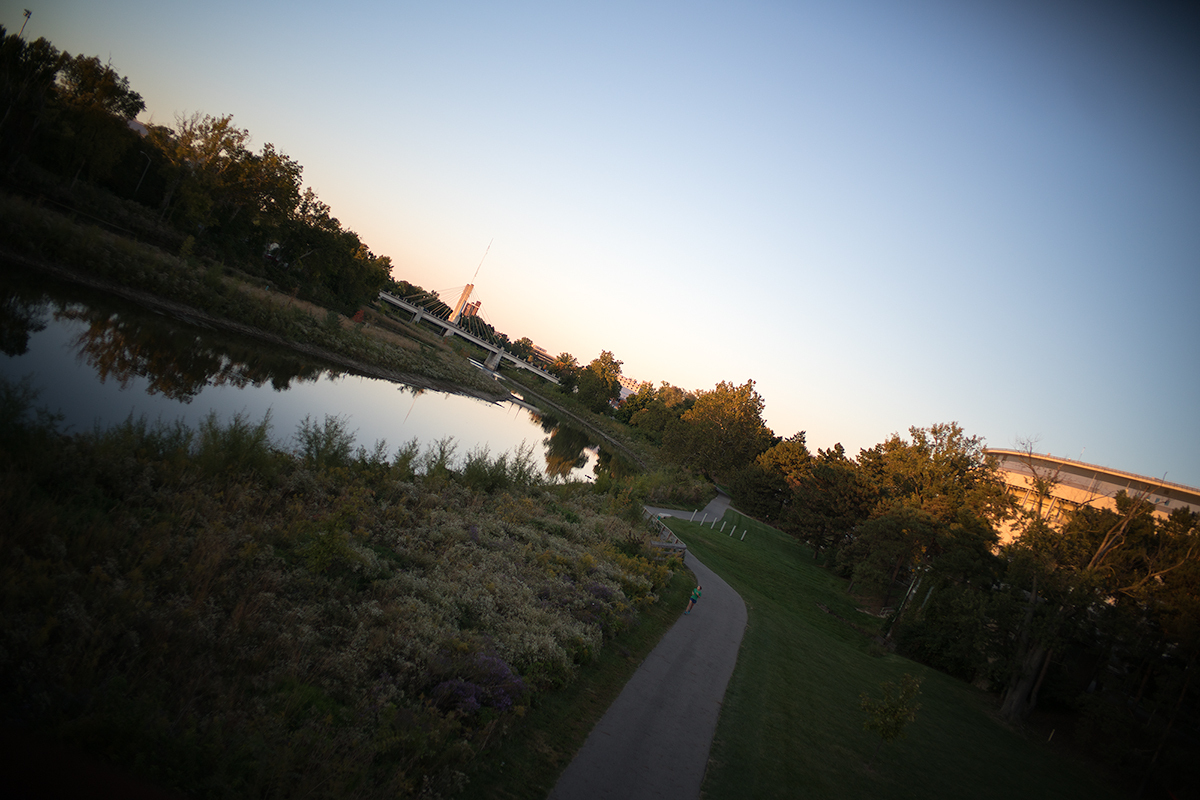
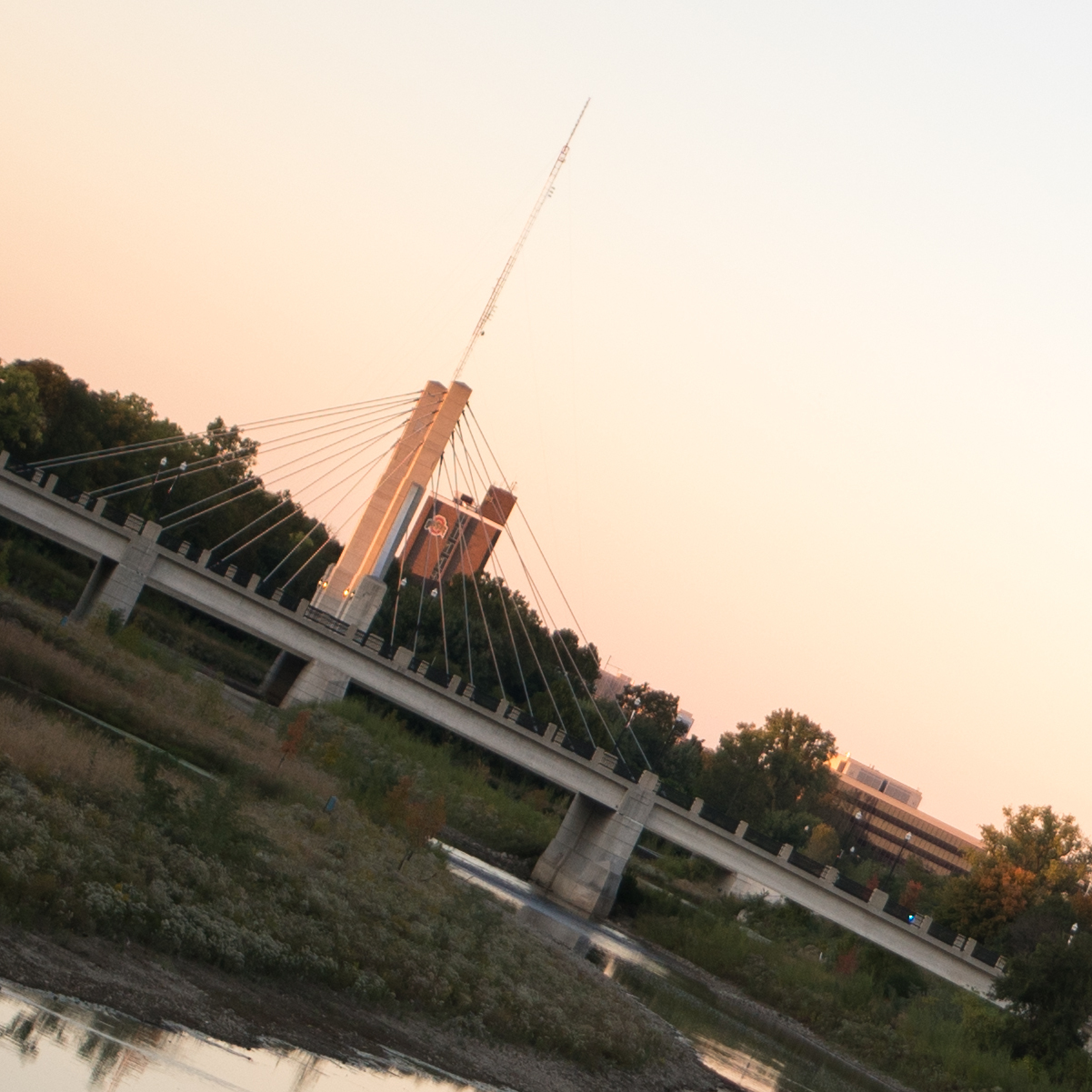
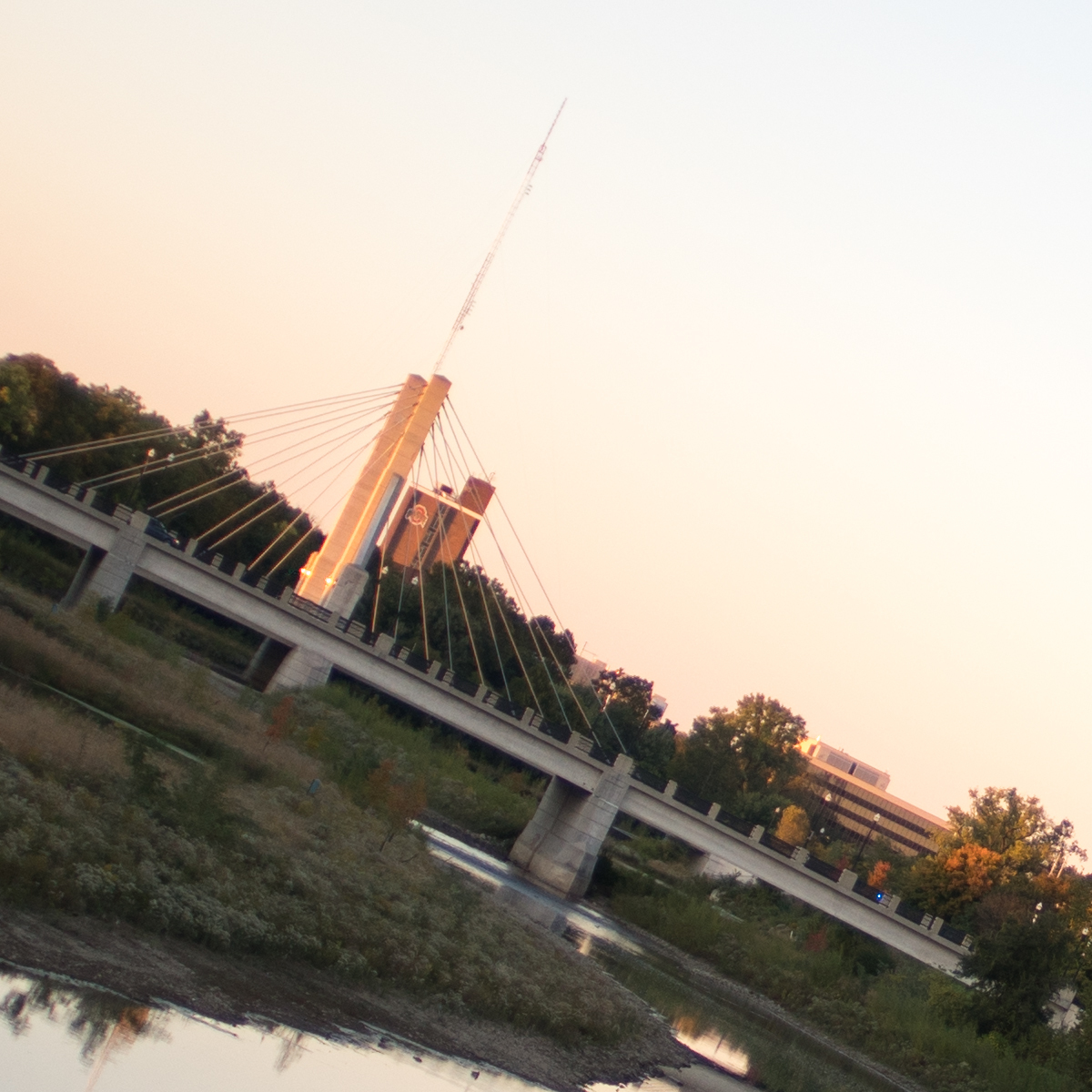
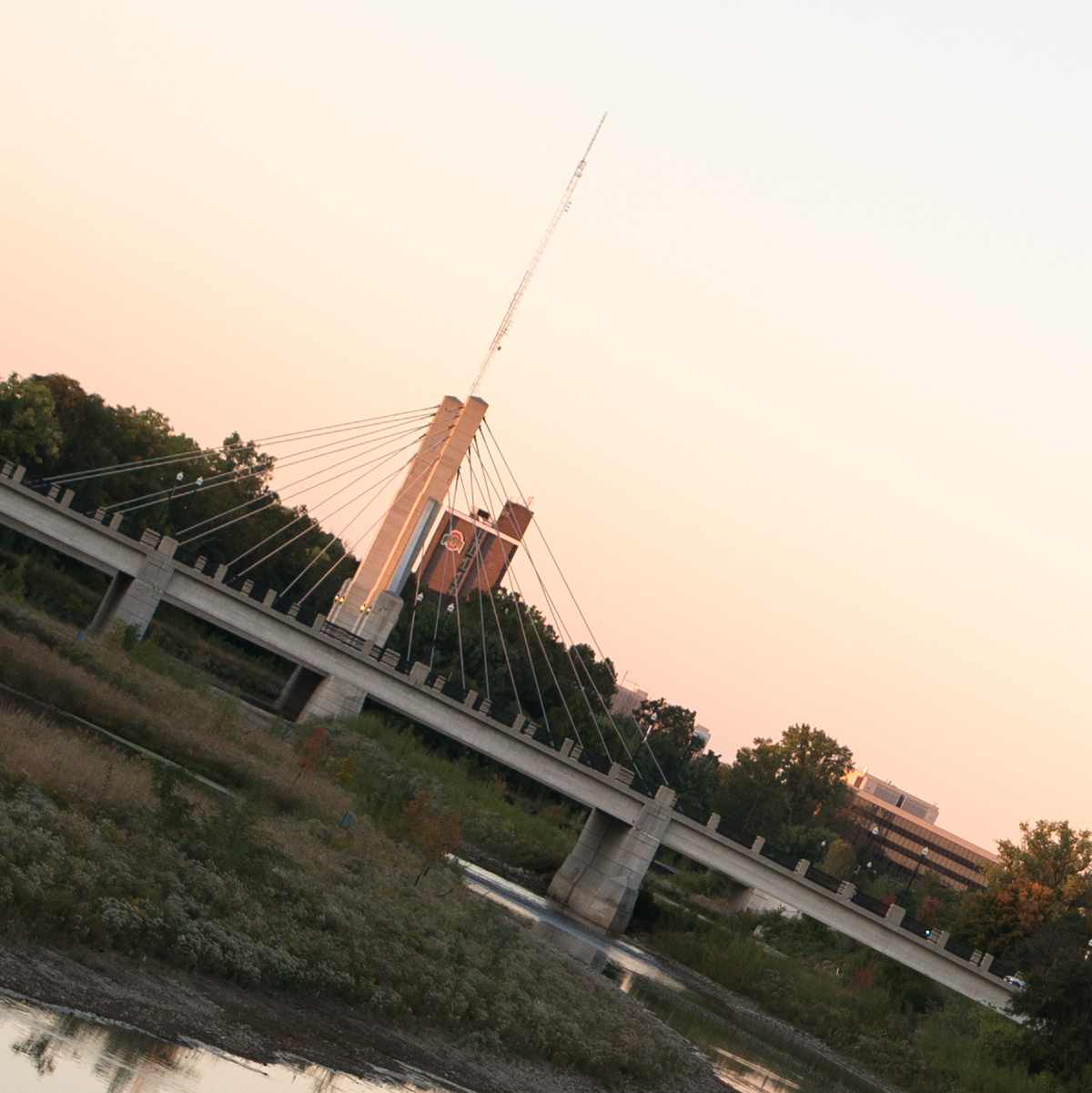
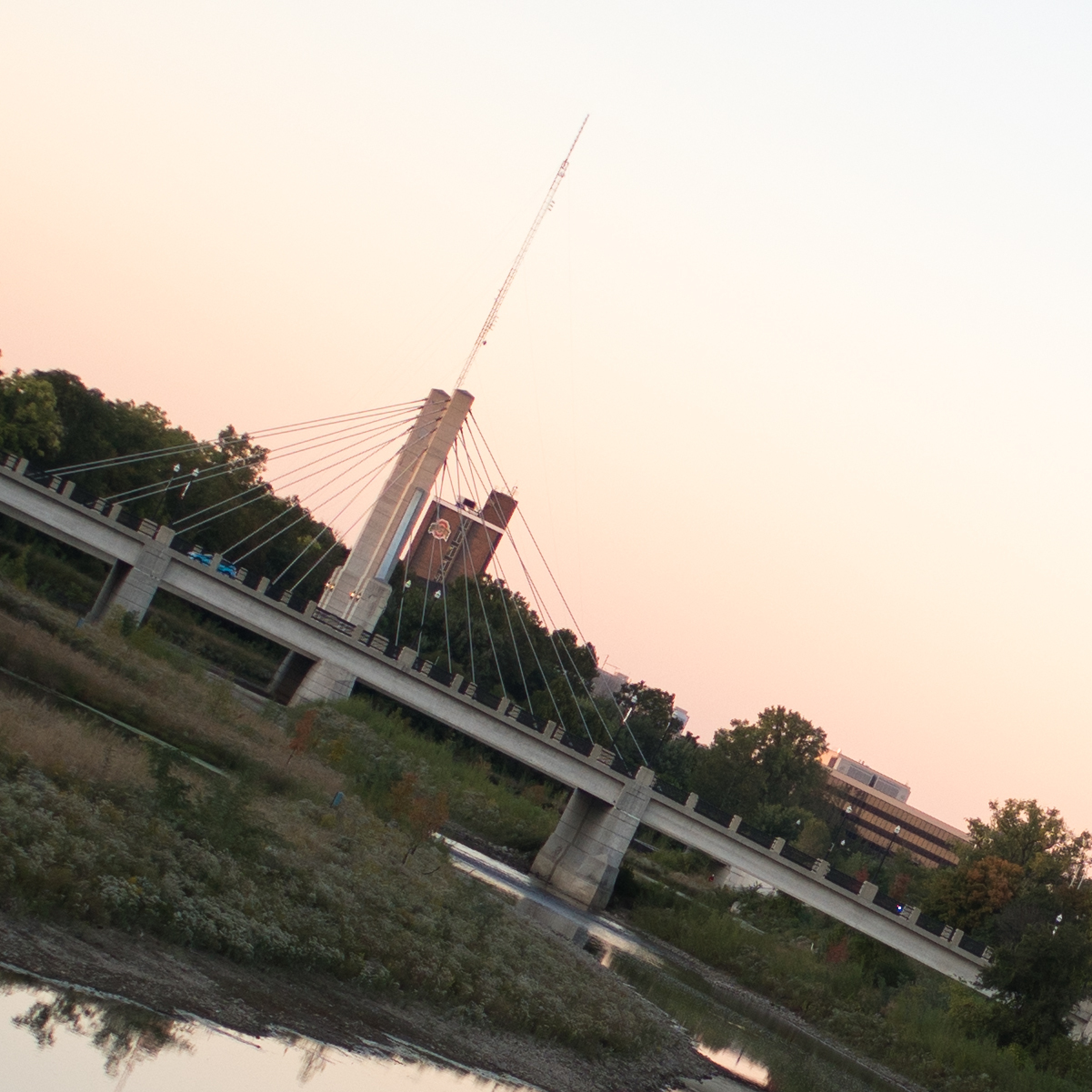
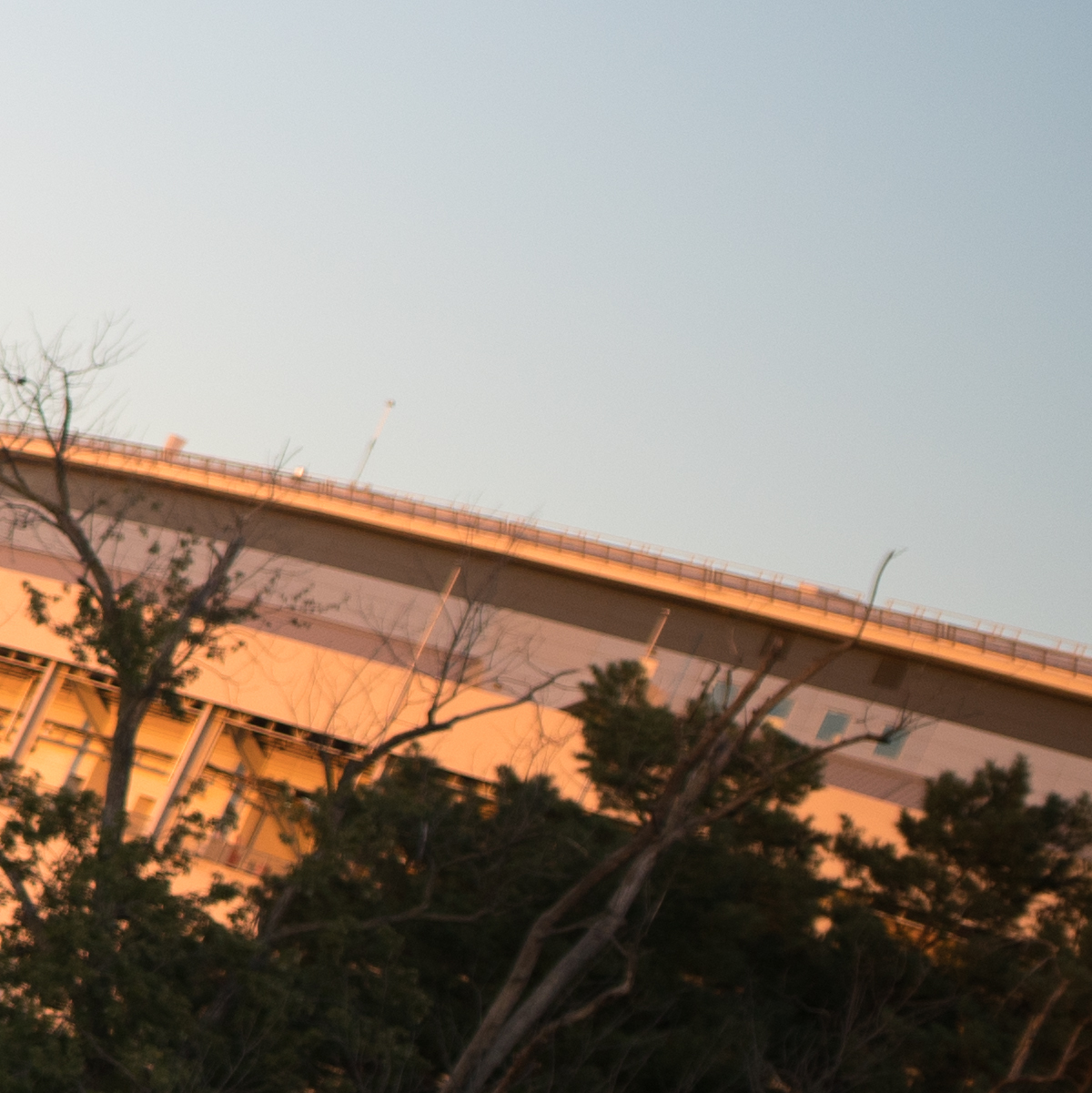
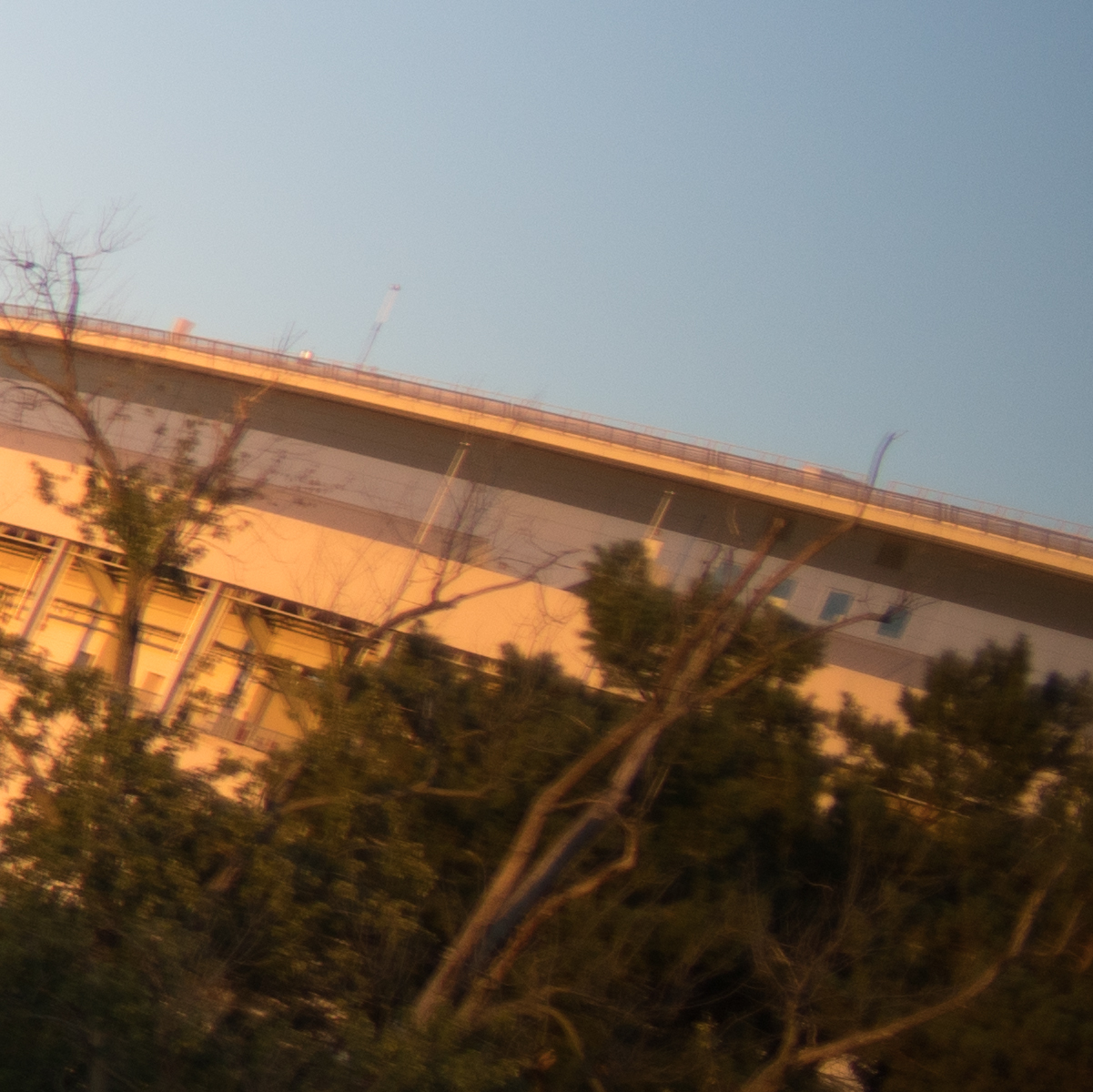
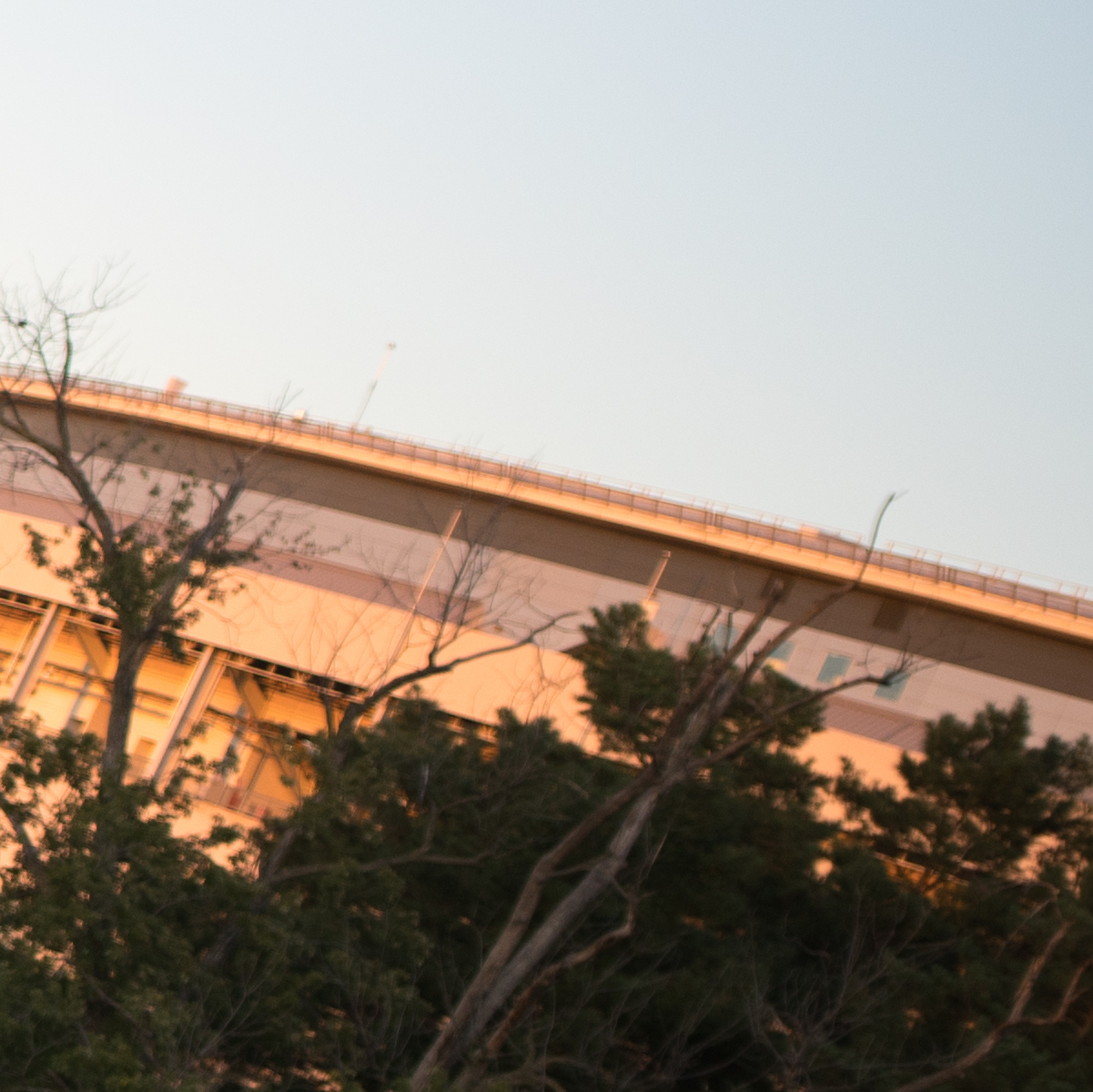
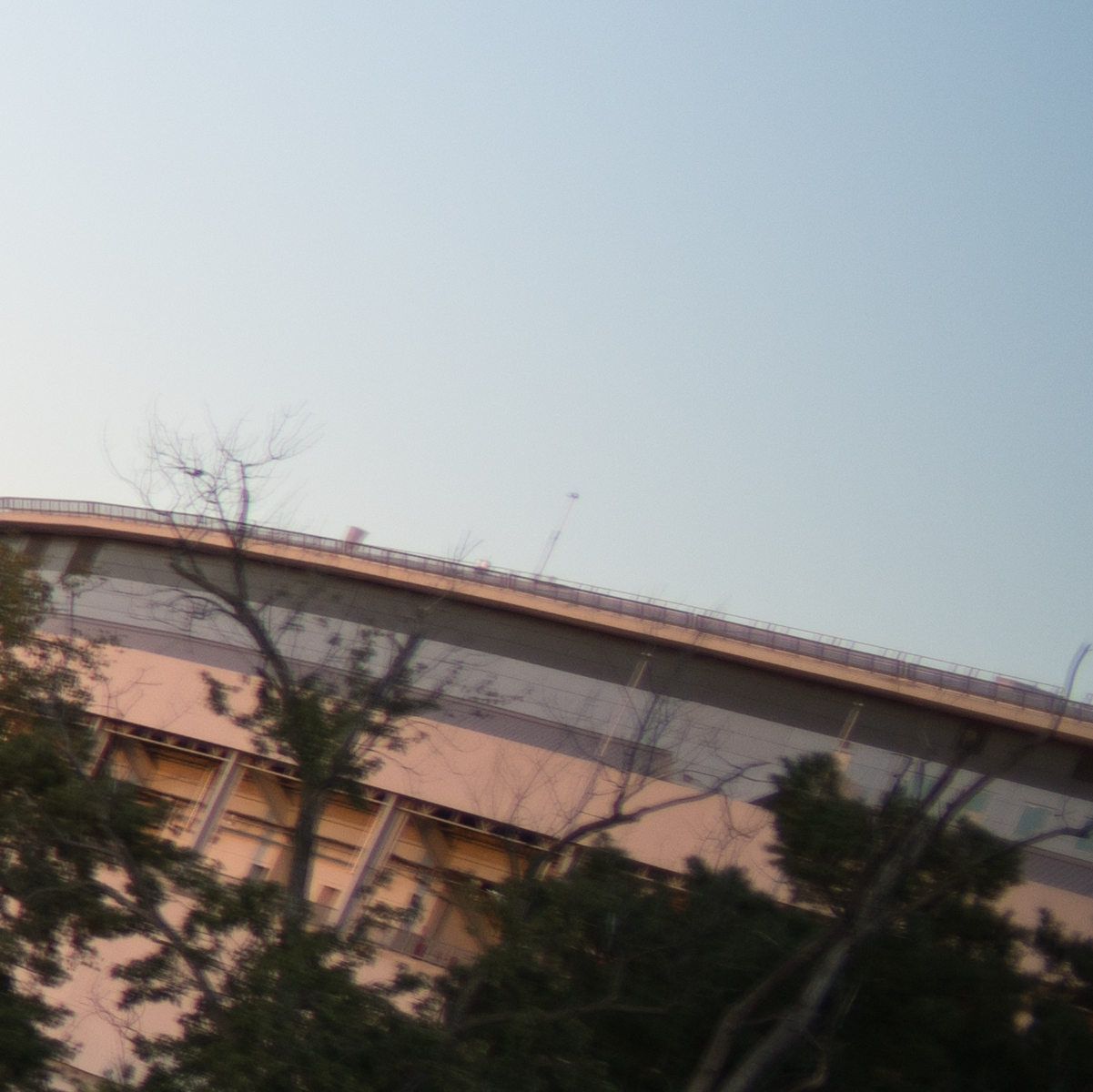
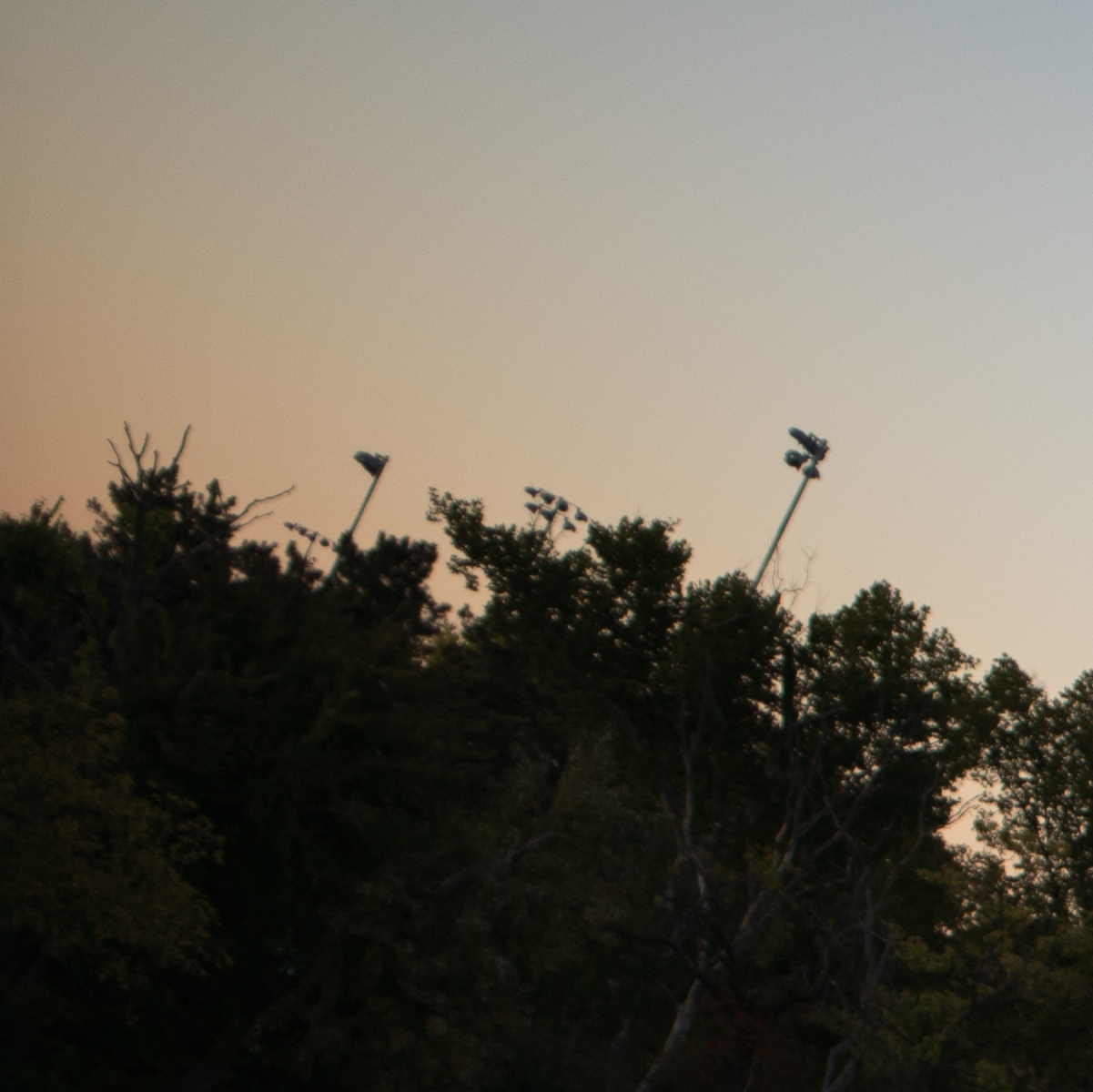
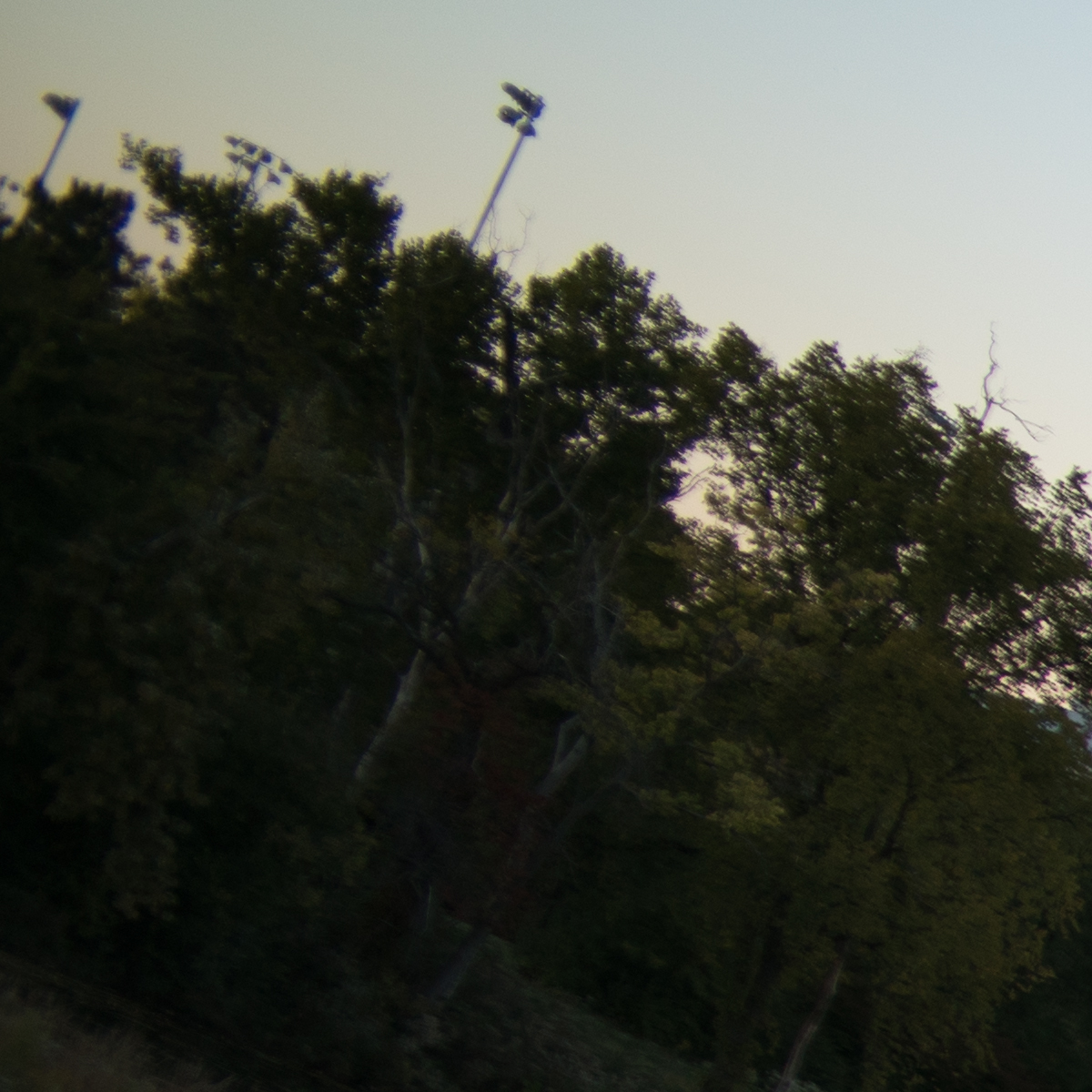
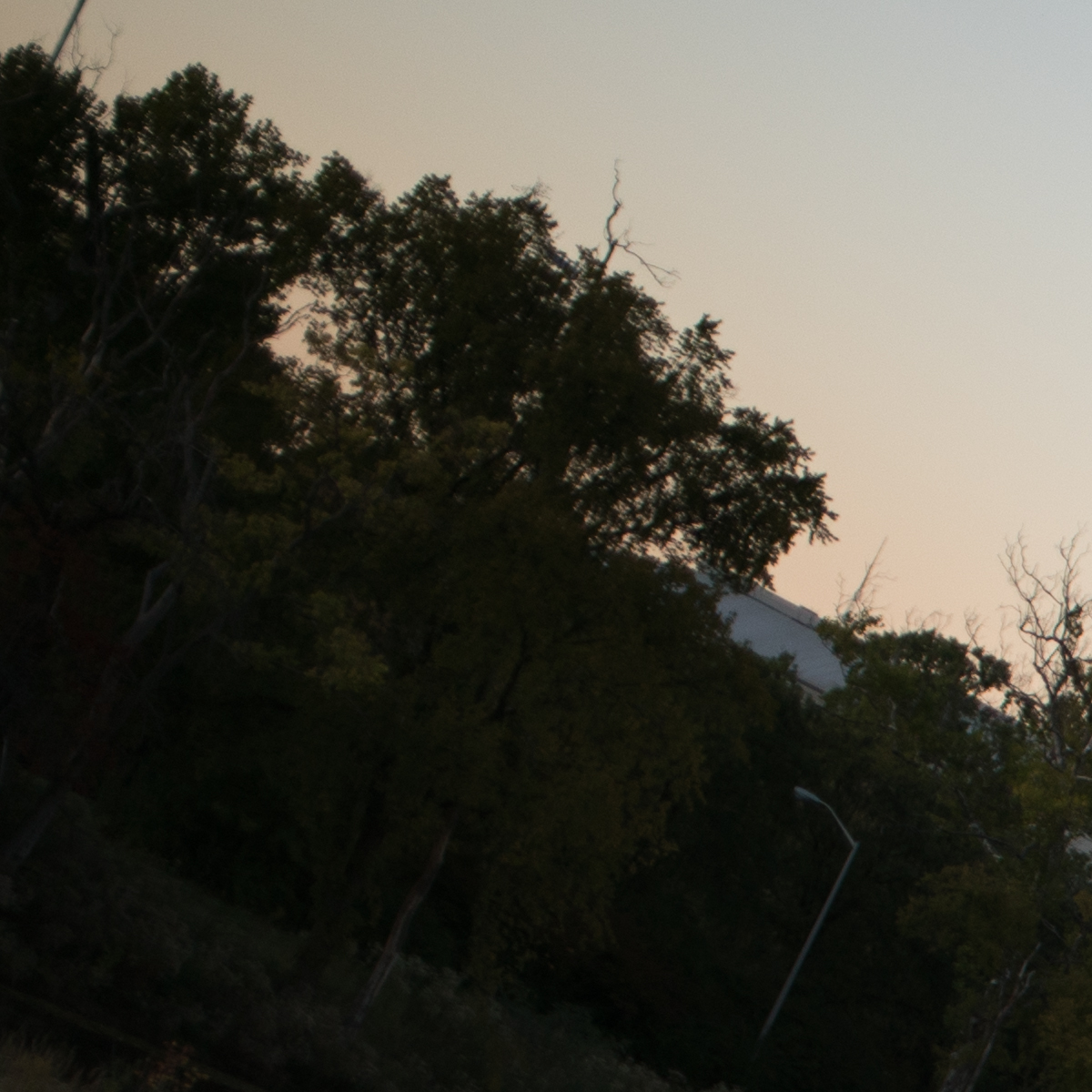
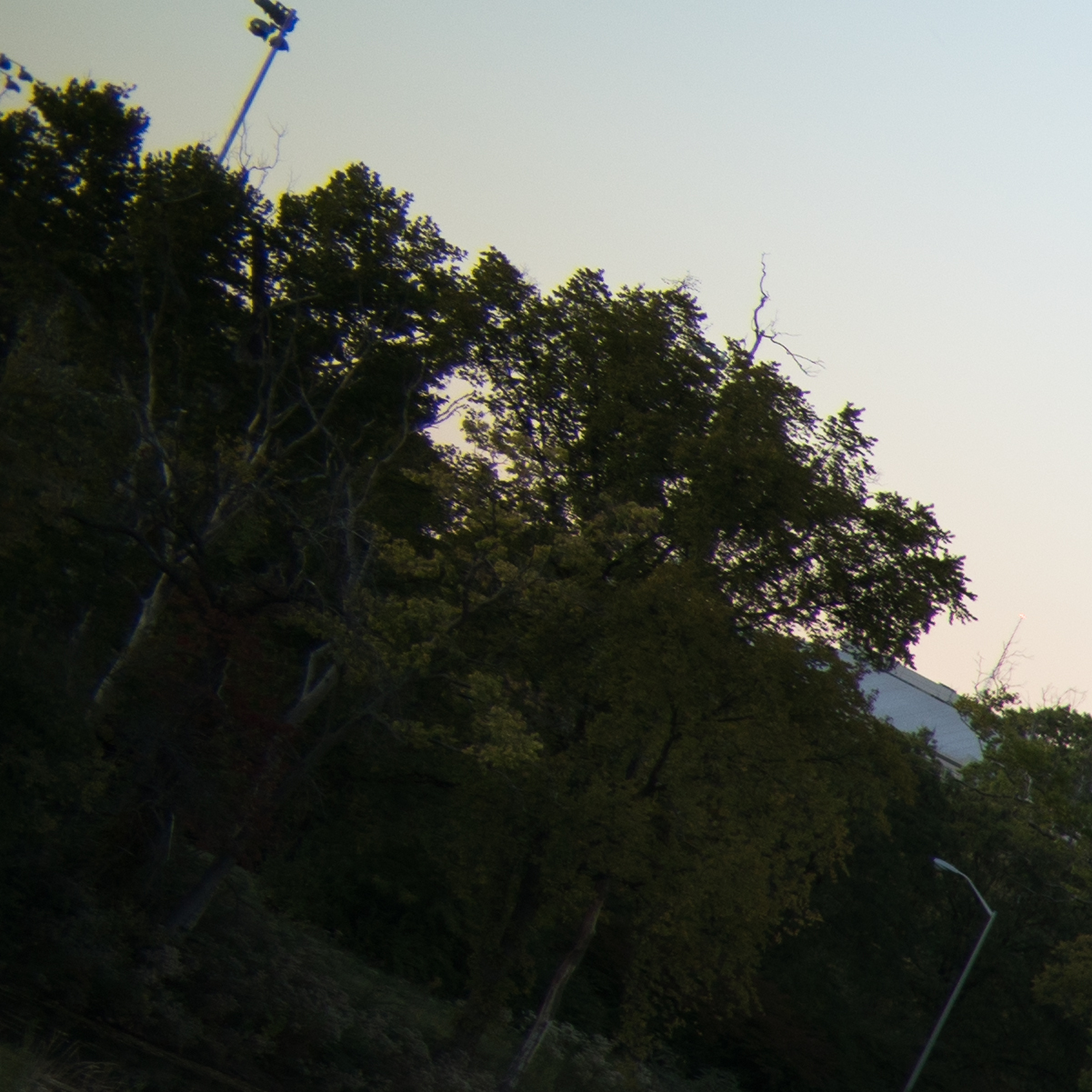
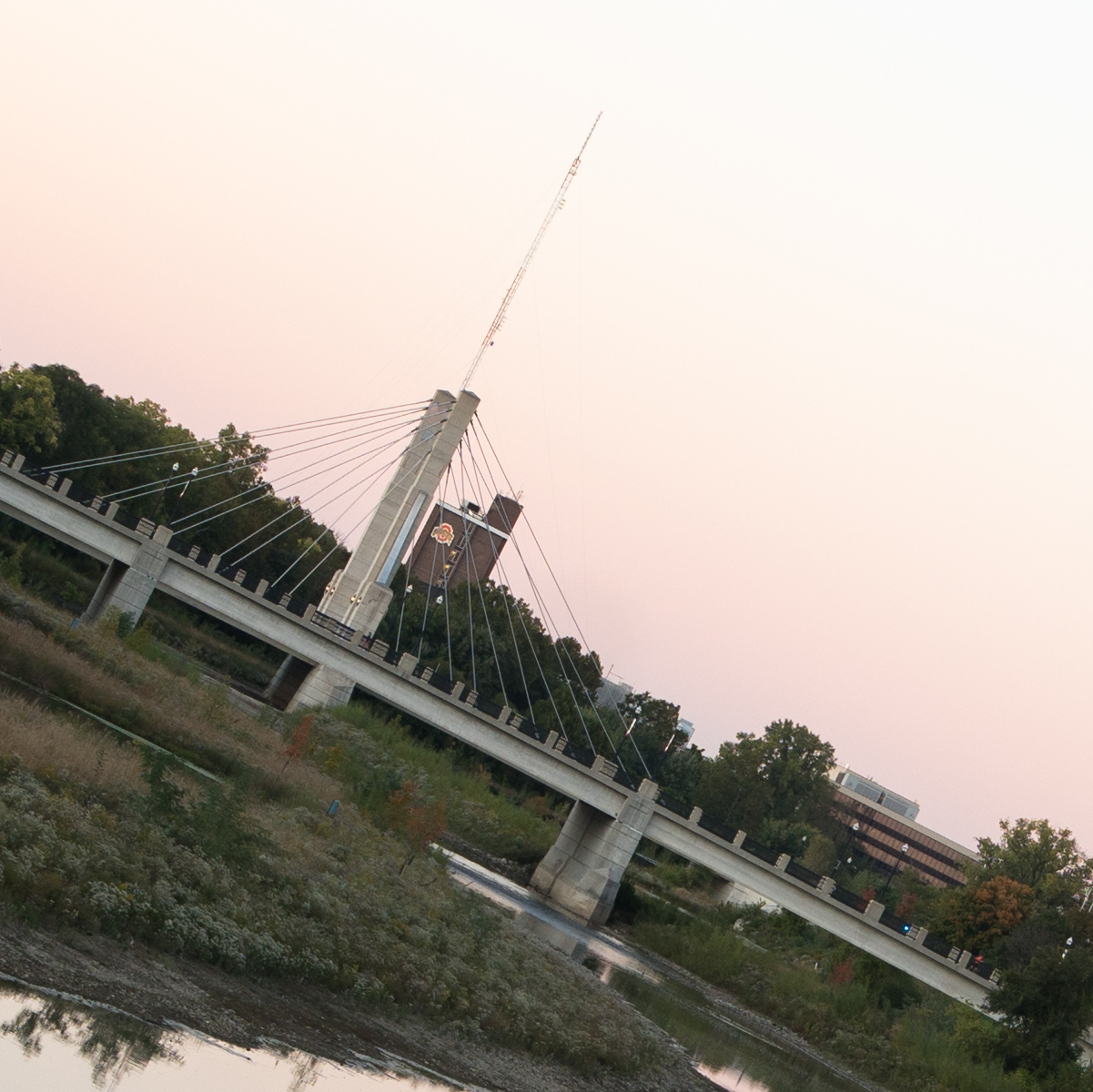
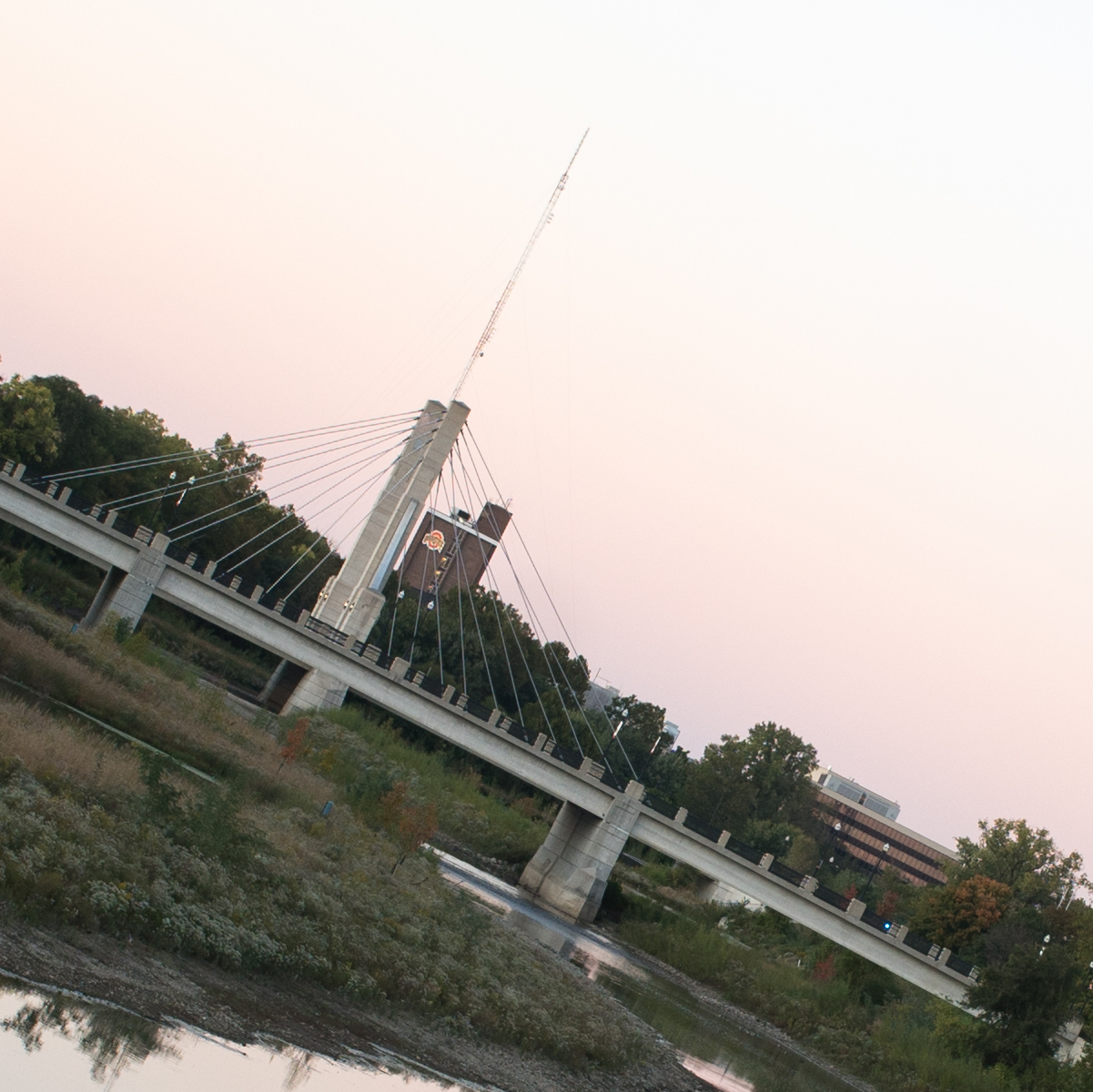
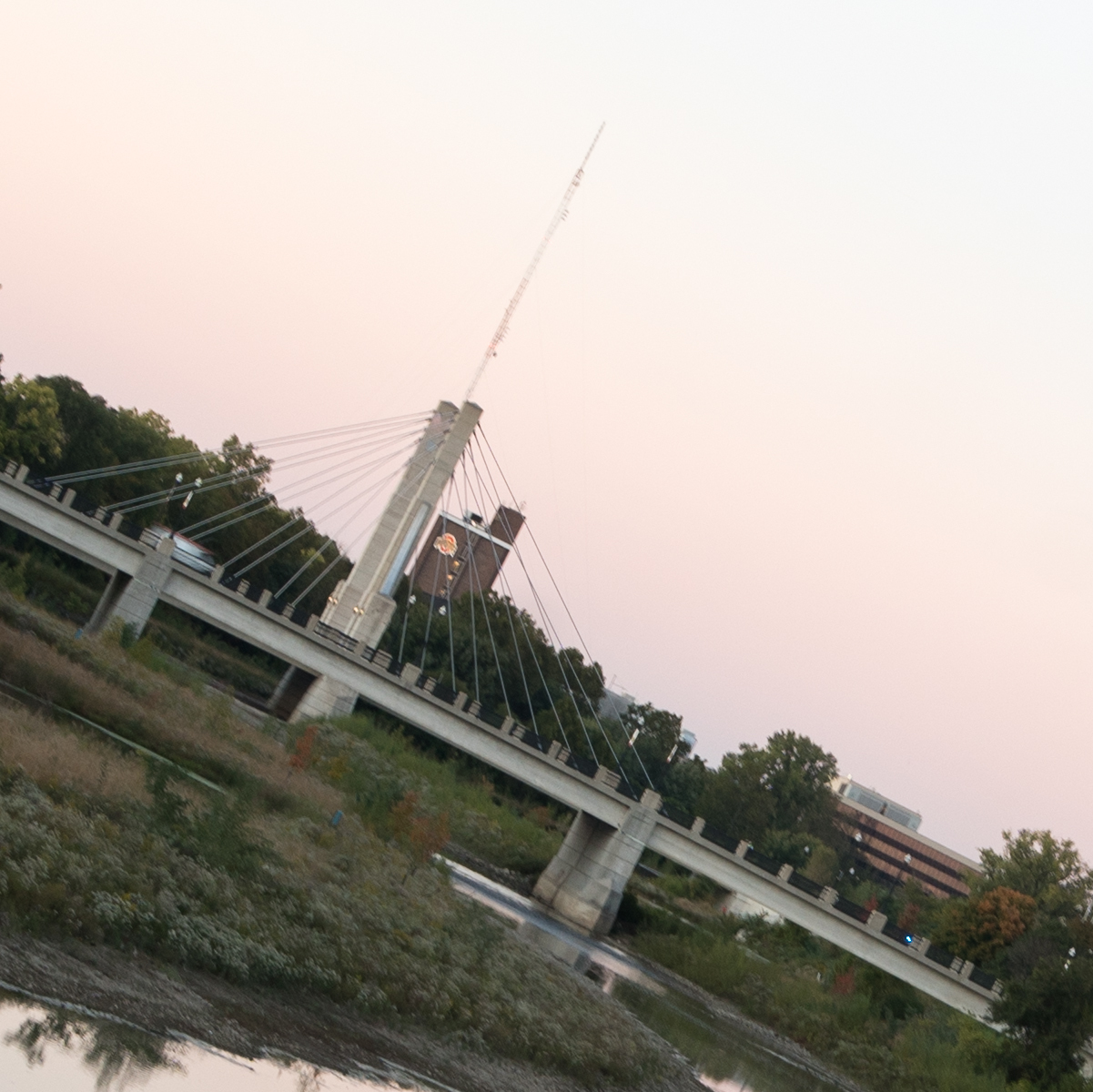
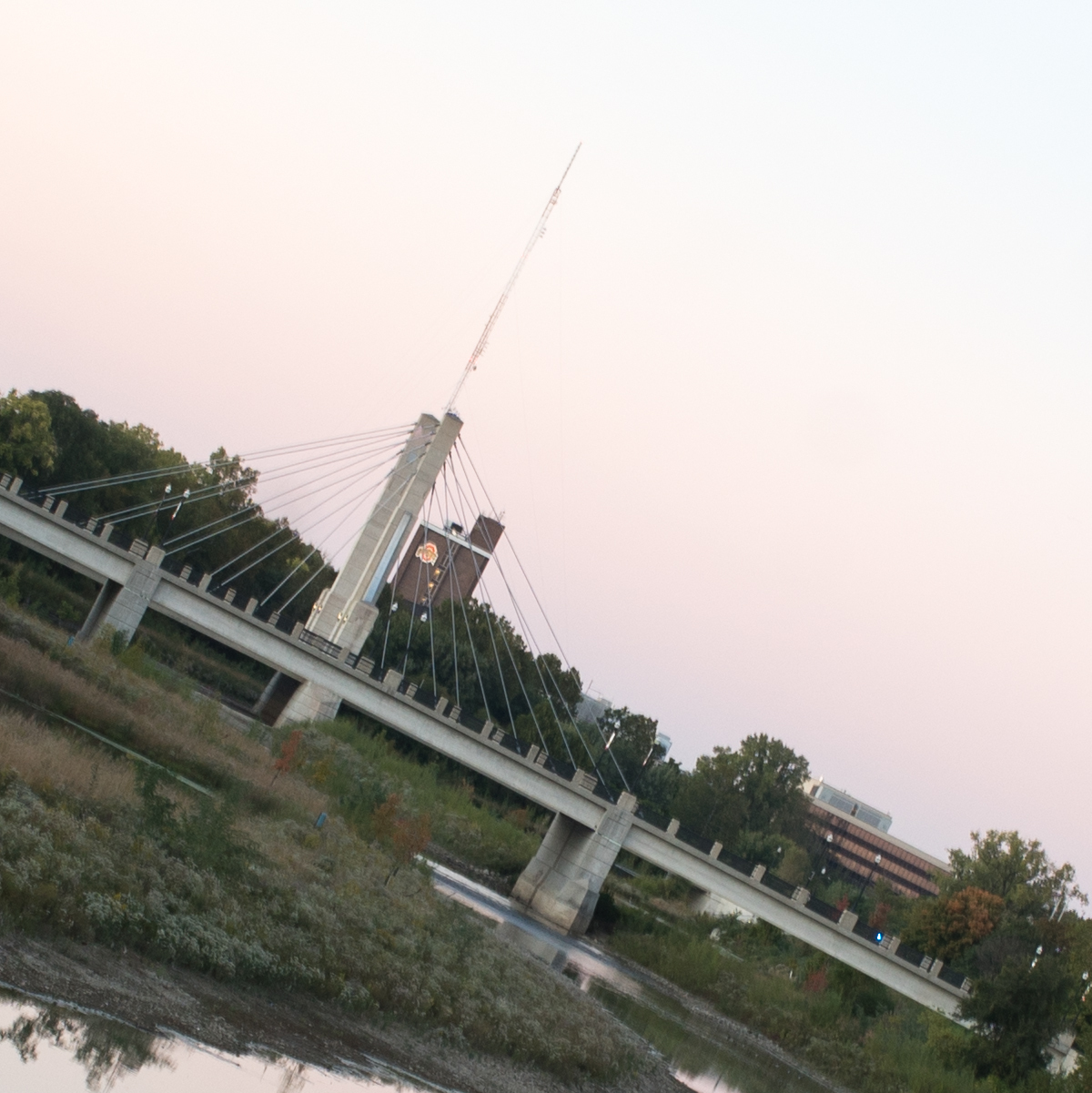
Next are some long distance (near infinity shots). I took these after work one night on my way home as the sun was setting to the left. I will first post a shot of the whole scene. I shot these on an angle from the upper left corner to the lower right. I was on a pedestrian bridge (there aren't even much in the way of hills here in Columbus, OH) and the center of the scene where I focussed is about 600 yards from where I took the shots. I will post shots in the center, right edge, and upper left corner. The right edge and the upper left corner are about 300 yards away, so closer than where I focussed in the center. This is important because until about f/4 these areas are probably not fully within the depth of field of the shots. I am only presenting the shots in which I focussed in the centre because both lenses showed a very flat field and the only story is at wide apertures if I focus on the right edge or the upper left corner, then the center isn't in focus and vice versa. For both lenses are f/4 or narrower it makes no difference whether you focus on the centre or the edge or the corner. One other thing you will certainly notice is that for some of the shots the camera moved when I was attaching the lens--this happened exclusively with the Otus, which is a bit of a bear to put on the camera without bumping it. So the framing will be slightly different from one aperture to the next. I fixed the framing for most shots, and they have good detail in the corner and edge, but a few aren't as good as I would like. Hey, you get what you pay for in this free test. So, the first picture is the whole scene followed by f/1.4 and f/2 in the centre. The Otus is always first followed by the Lux. Both f/1.4 shots are followed by both f/2 shots. Otus, then Lux, Otus, then Lux.
Edited on Oct 31, 2016 at 02:15 PM · View previous versions
Edited on Oct 31, 2016 at 02:15 PM · View previous versions
Oct 31, 2016 at 02:11 PM
p.1 #3Comparison of Zeiss Otus 28 f/1.4 APO vs Leica M 28 f/1.4 ASPH
Here is f/1.4 and f/2 on the right edge. Again Otus followed by the Lux. I do both f/1.4 shots then both f/2 shots.
Oct 31, 2016 at 02:14 PM
p.1 #4Comparison of Zeiss Otus 28 f/1.4 APO vs Leica M 28 f/1.4 ASPH
Here is f/1.4 and f/2 upper right corner. First are the f/1.4 shots, then the f/2 shots. The Otus is first in each pair followed by the Lux.
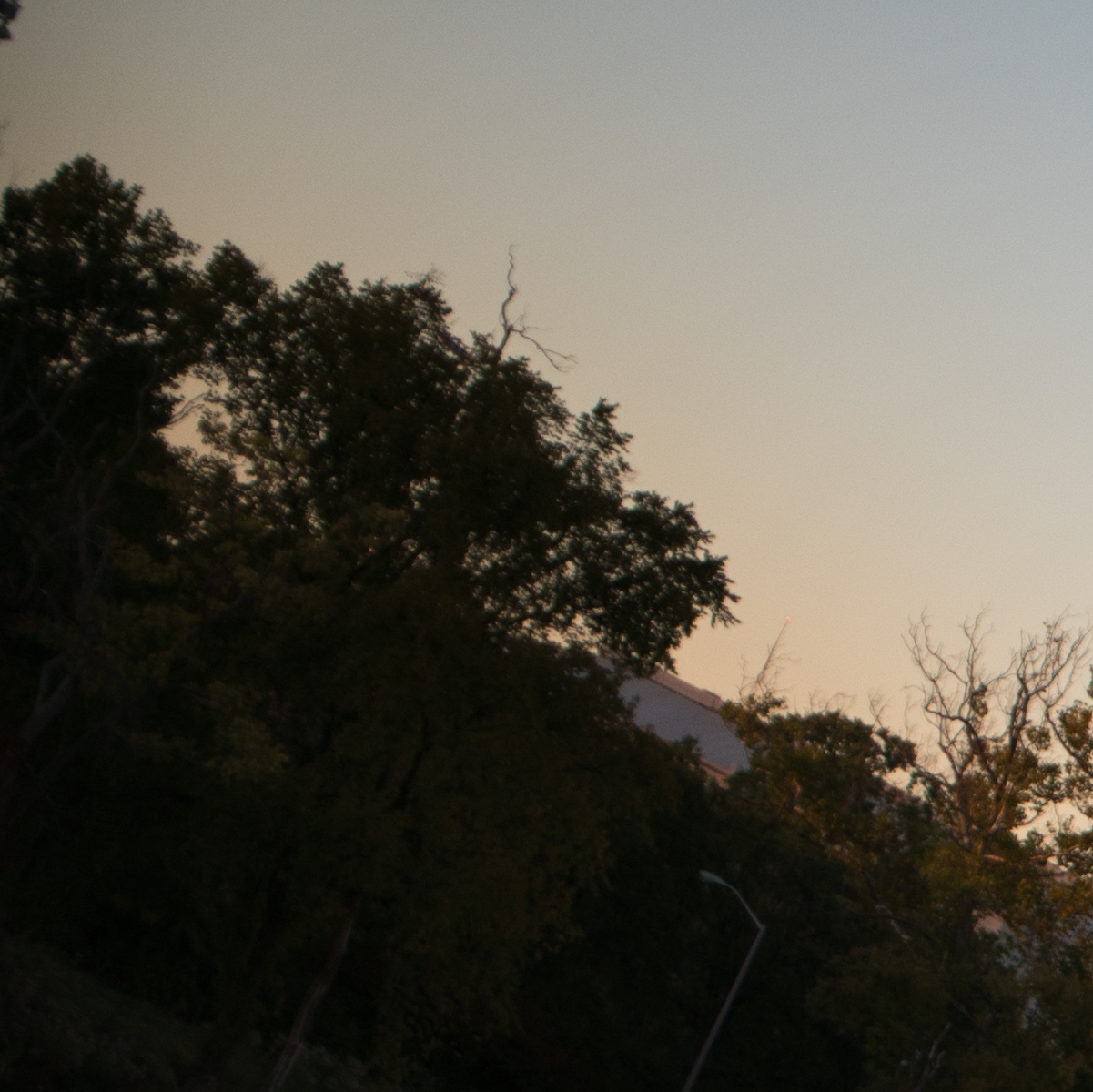
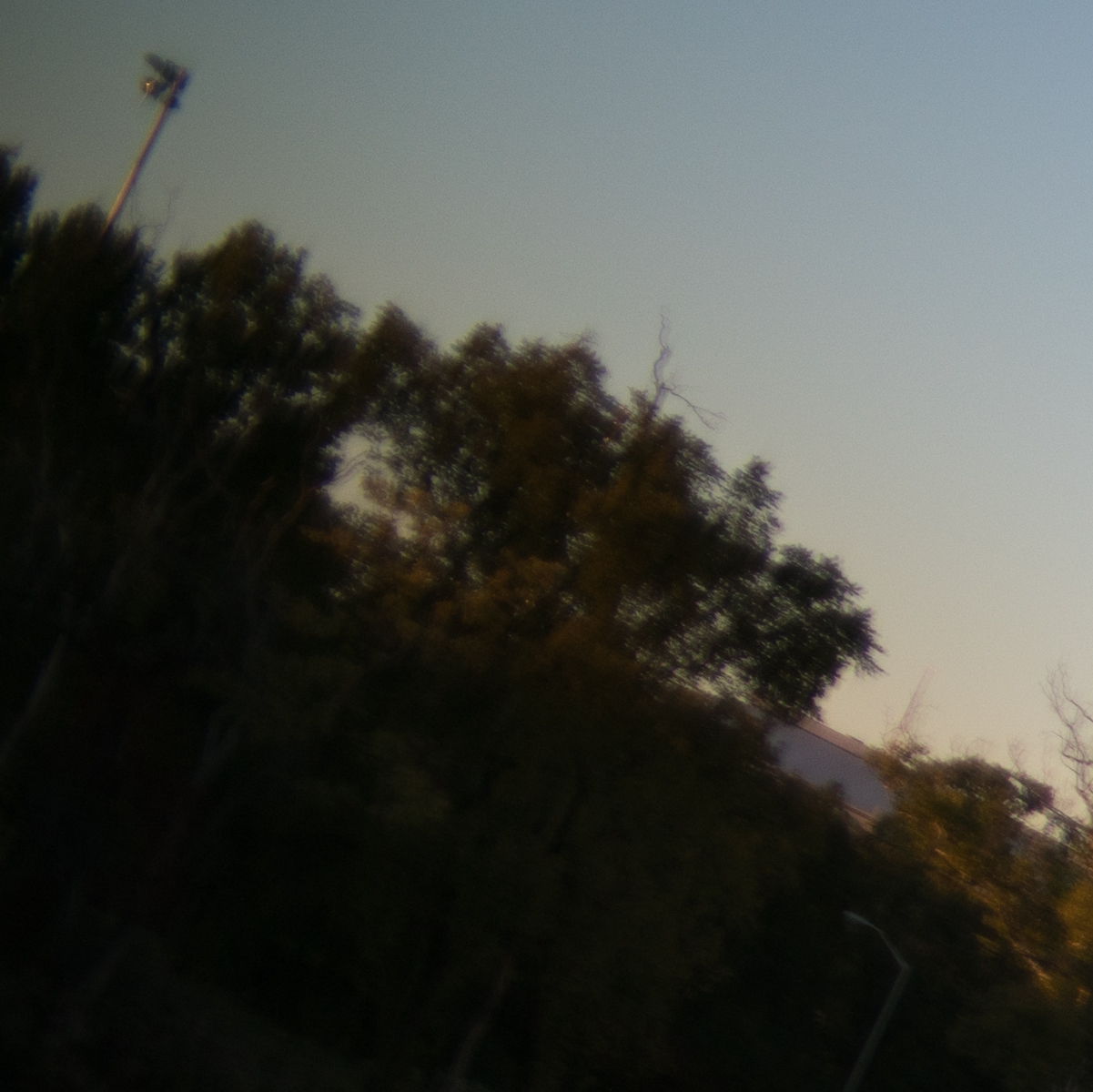
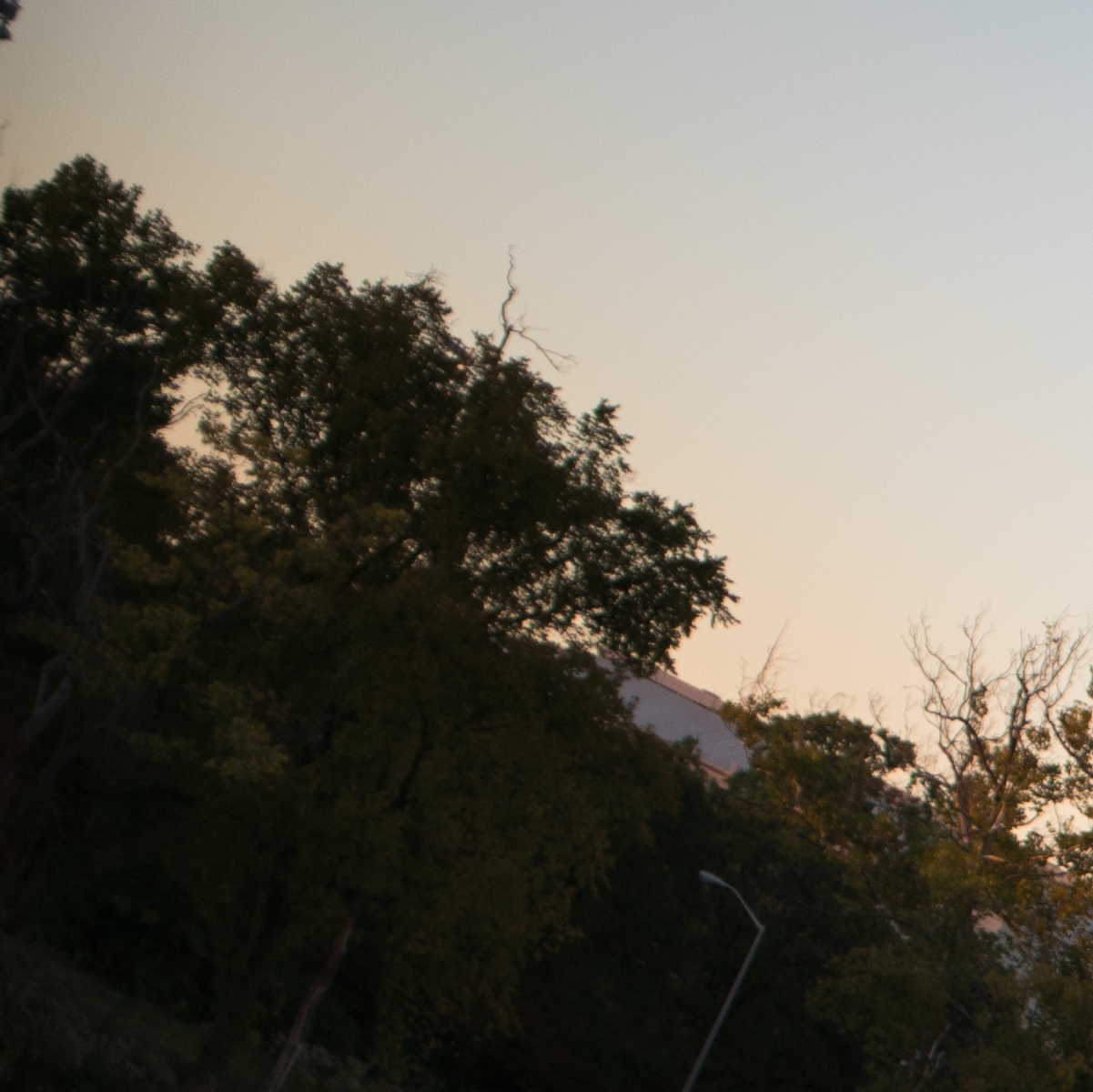
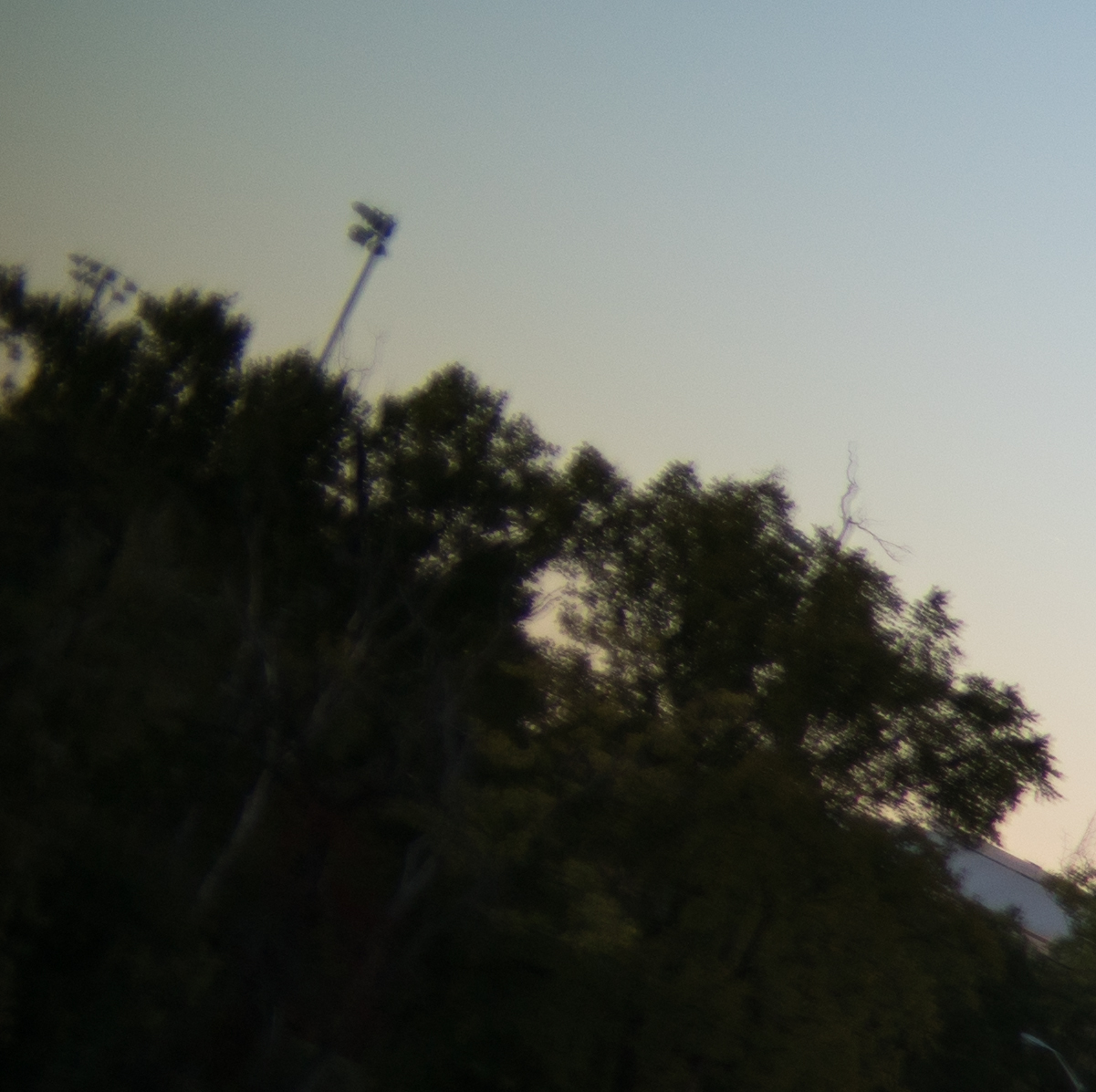
Oct 31, 2016 at 02:17 PM
p.1 #5Comparison of Zeiss Otus 28 f/1.4 APO vs Leica M 28 f/1.4 ASPH
Ok, now onto f/2.8 and f/4. This time in the center. Again I will present both f/2.8 shots followed by both f/4 shots. In each pair the Otus will come first followed by the Lux.
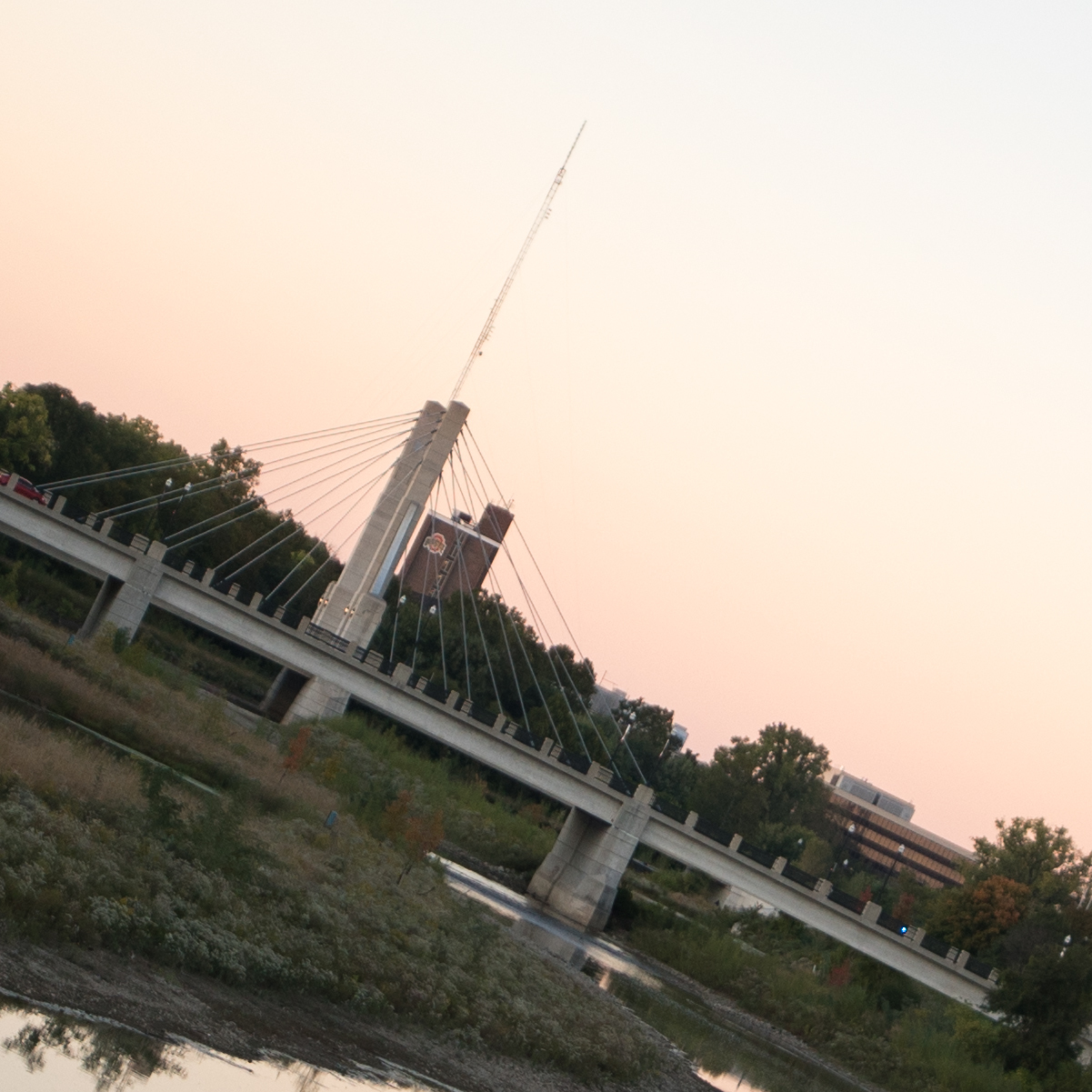
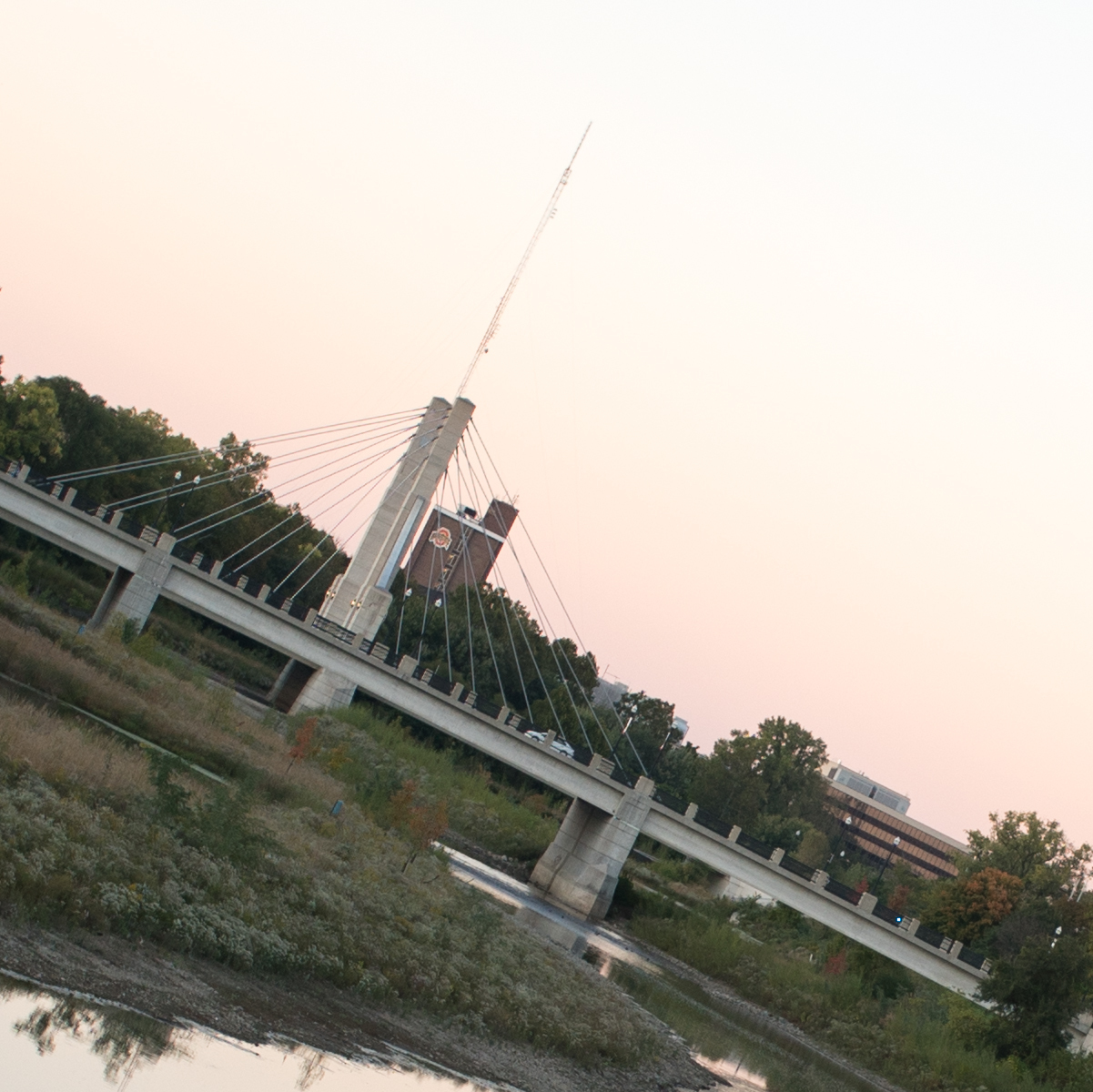
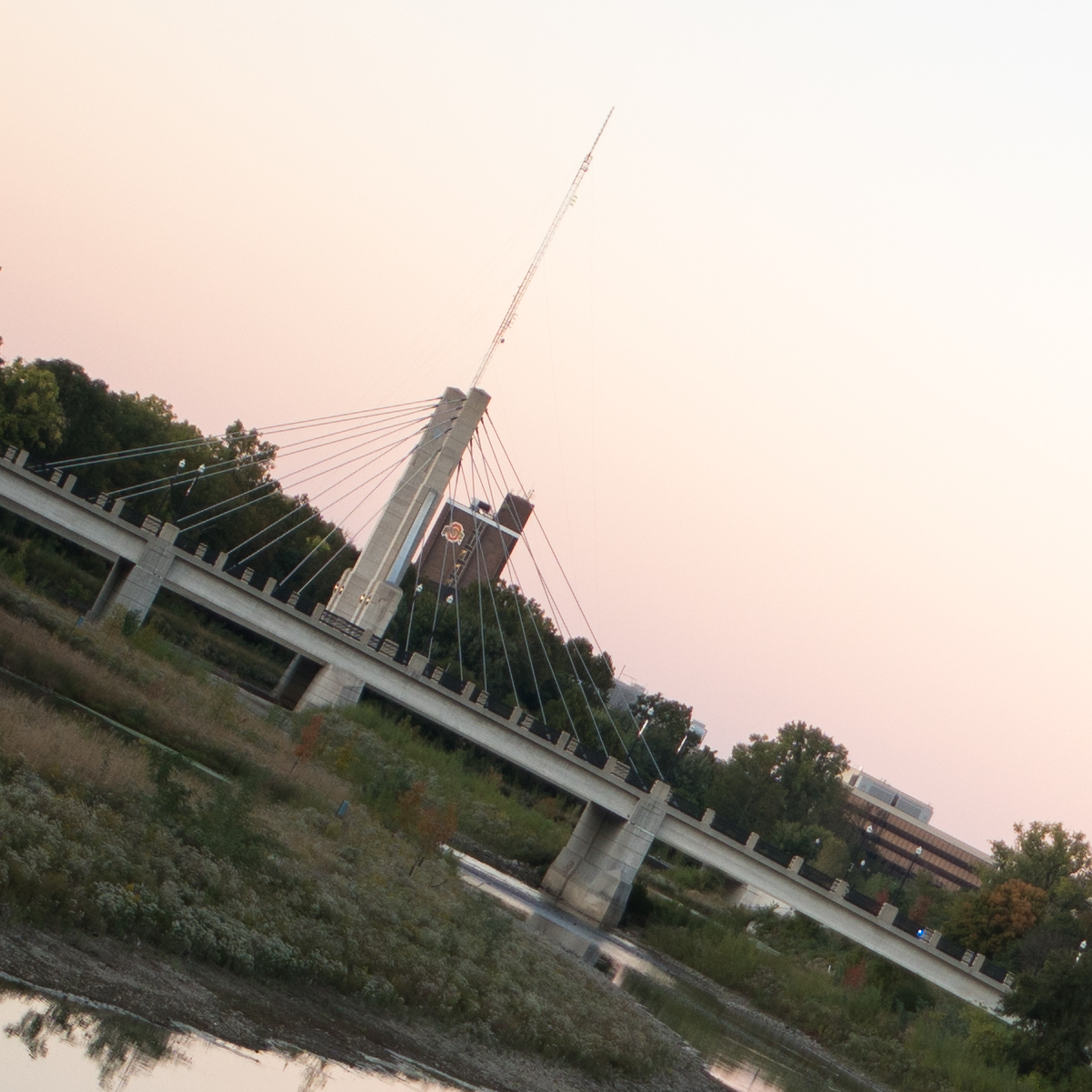
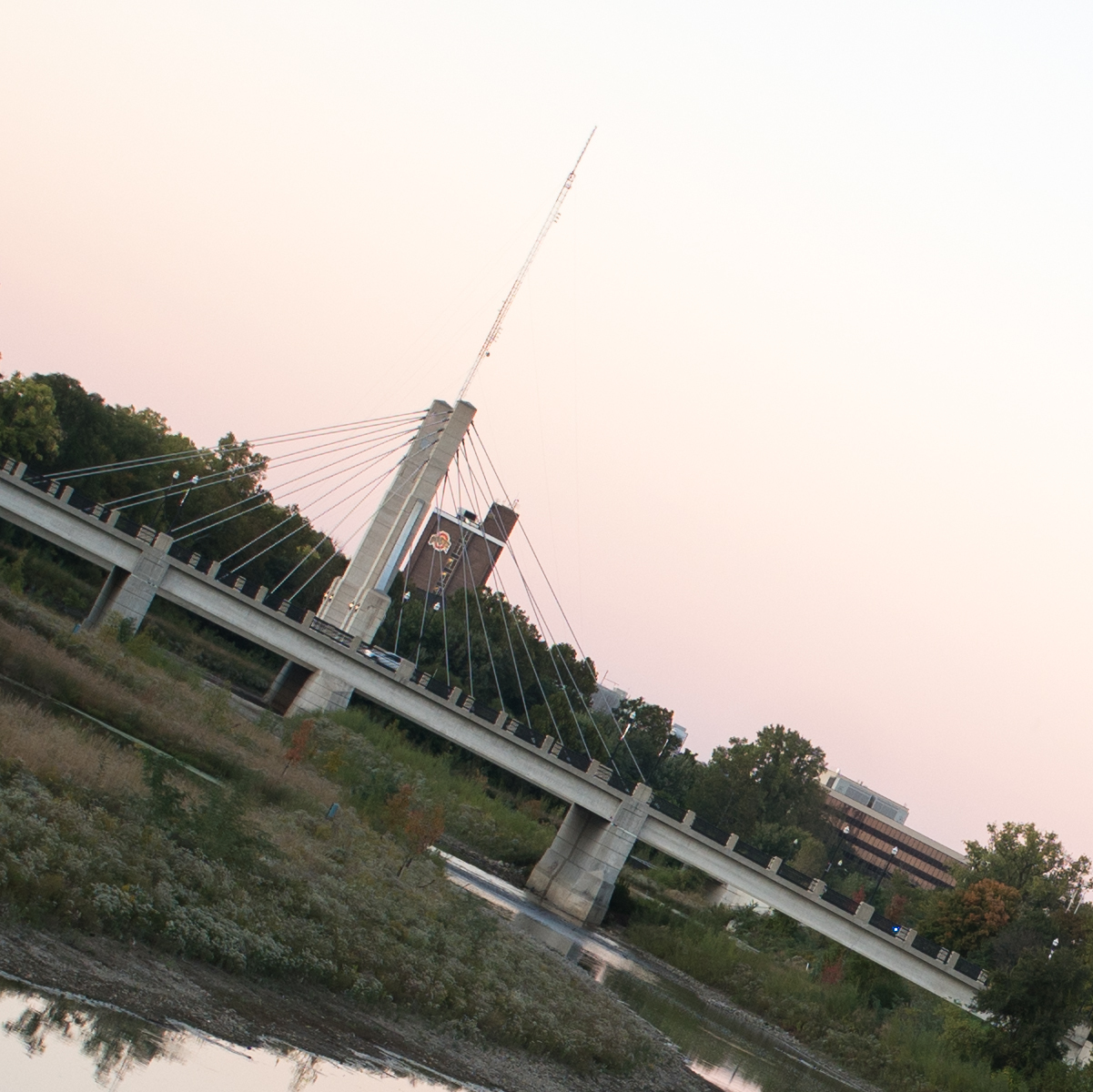
Oct 31, 2016 at 02:19 PM
p.1 #6Comparison of Zeiss Otus 28 f/1.4 APO vs Leica M 28 f/1.4 ASPH
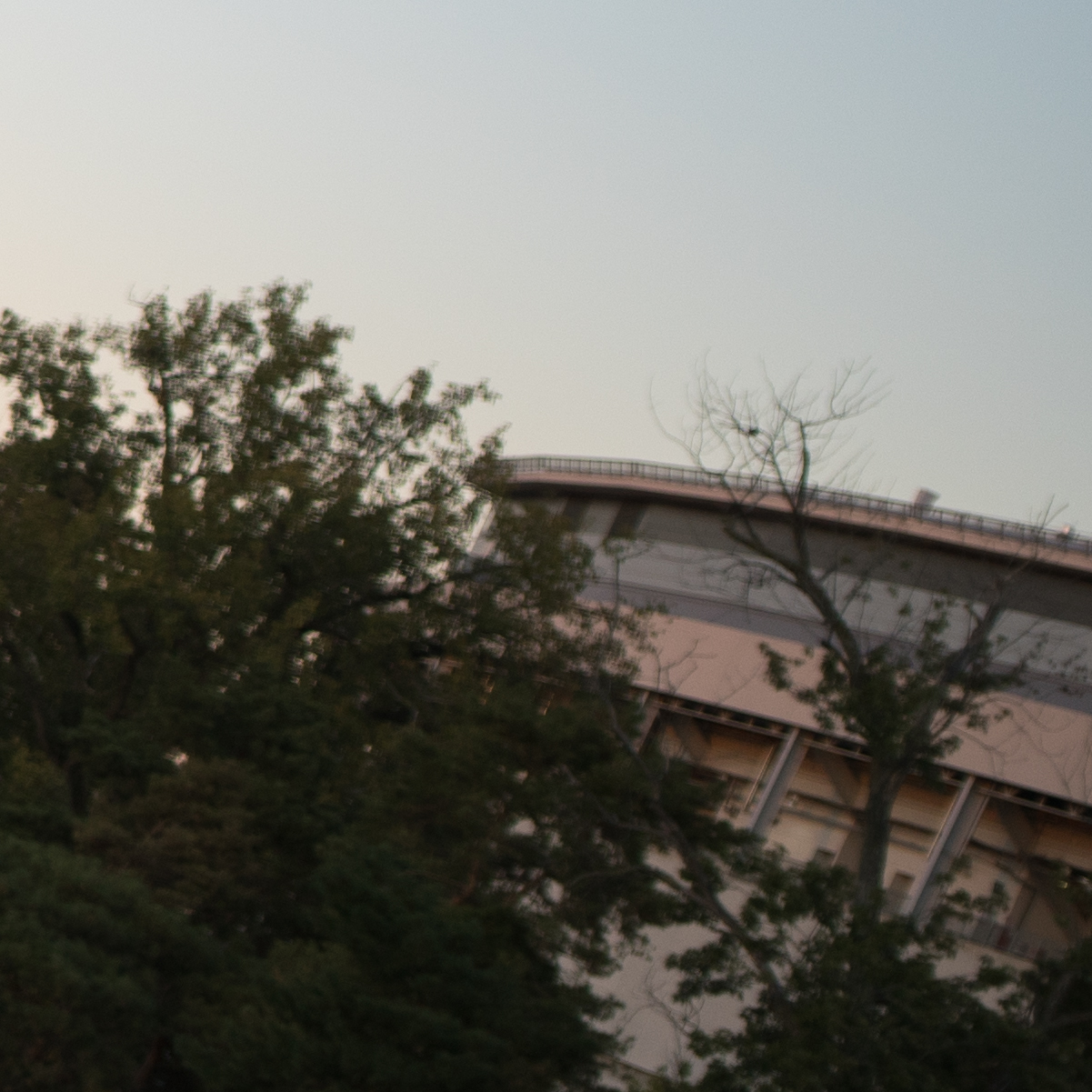
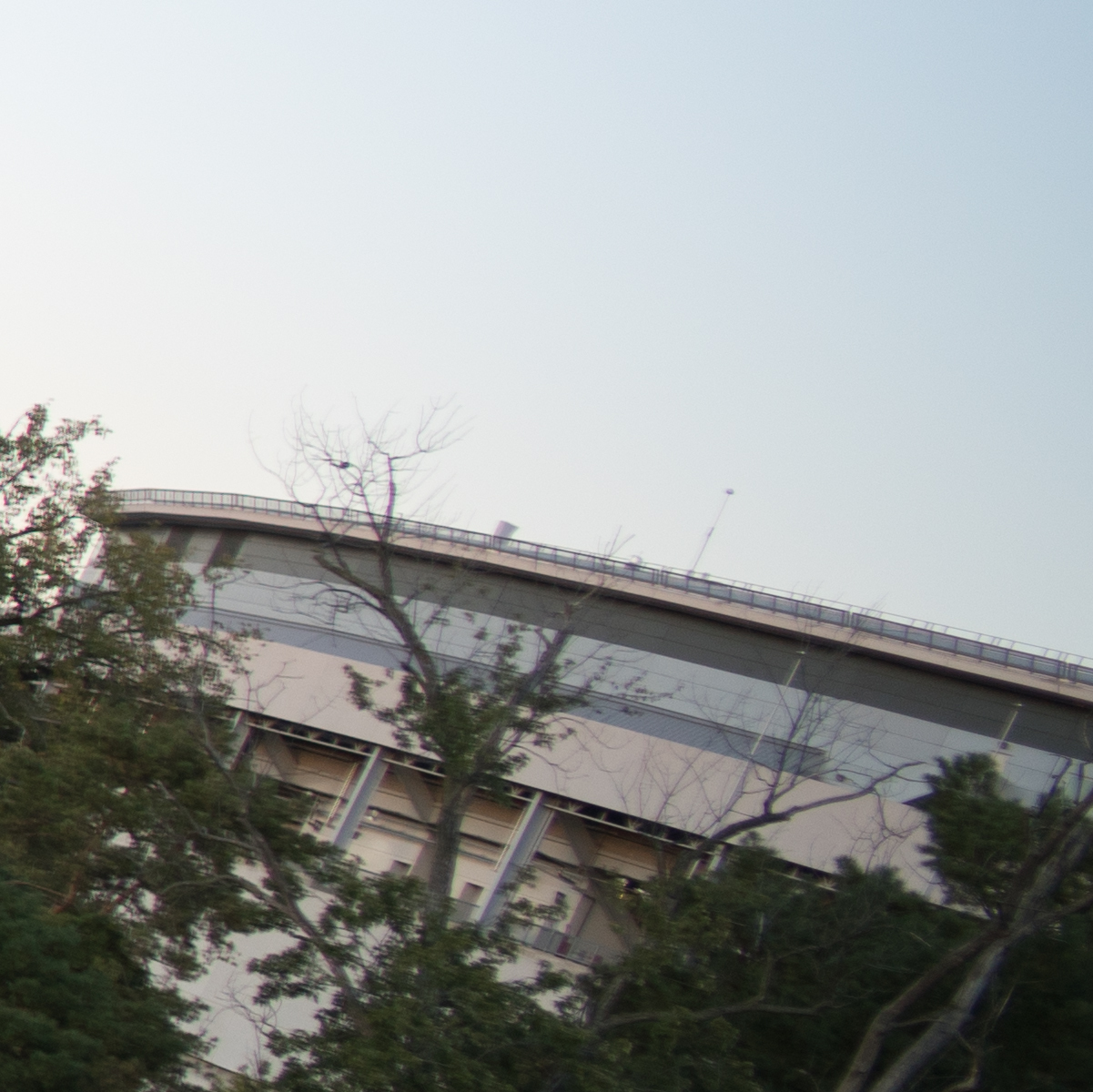
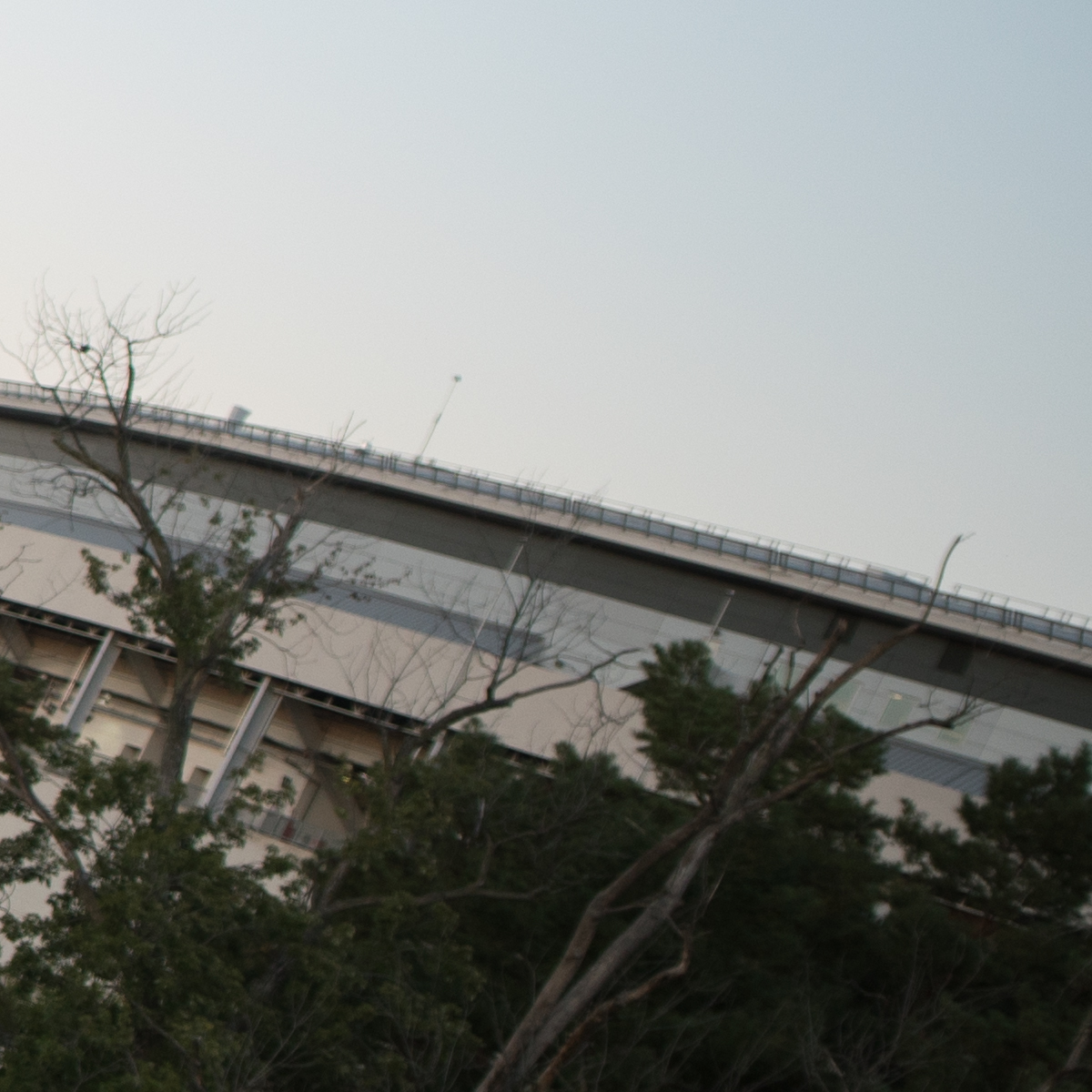
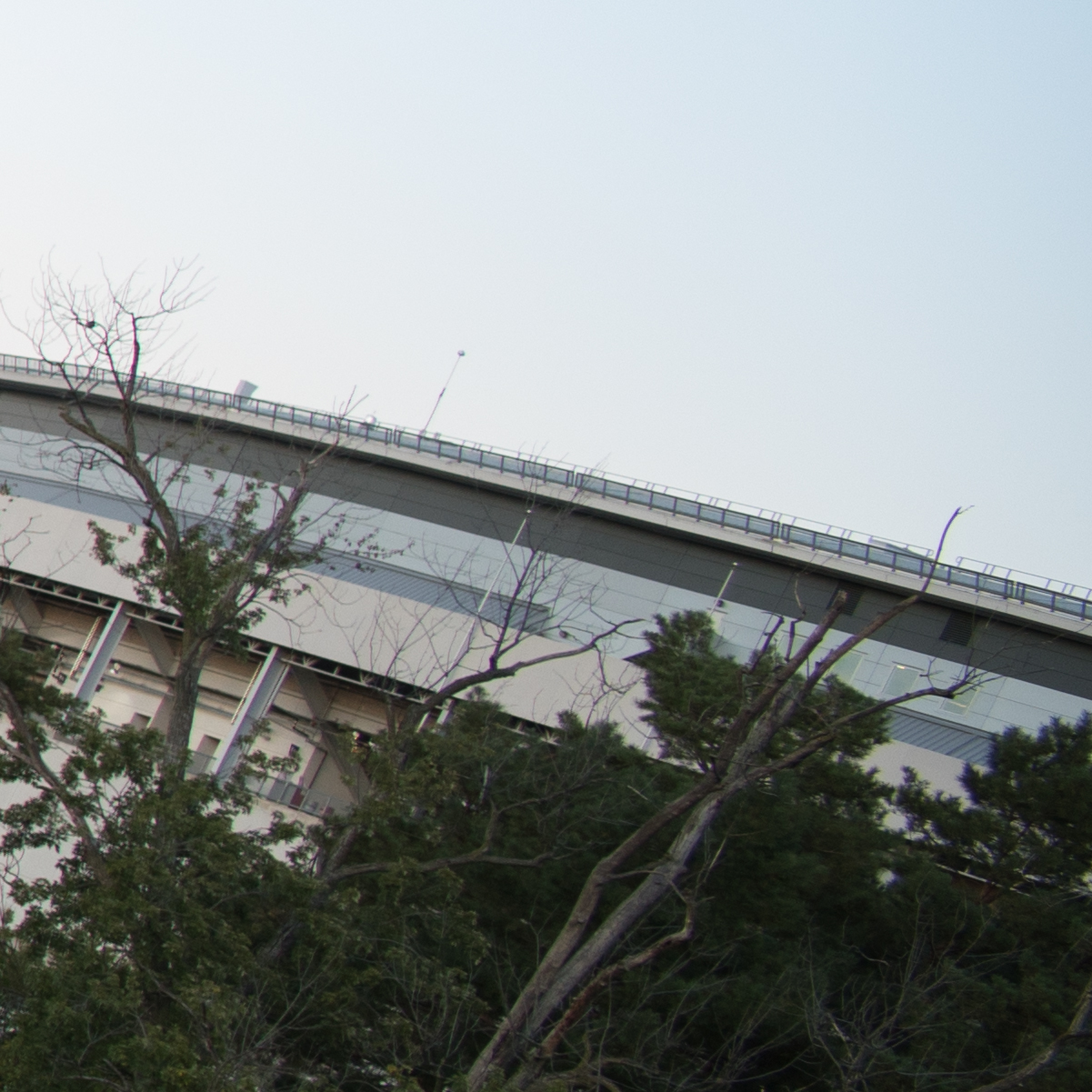
Now onto the right edge. These are starting to come into the depth of field, so hopefully more interesting. Again both f/2.8 shots followed by both f/4 shots. Within each pair the Otus is first followed by the Lux.
Oct 31, 2016 at 02:21 PM
p.1 #7Comparison of Zeiss Otus 28 f/1.4 APO vs Leica M 28 f/1.4 ASPH
On to the f/2.8 and f/4 upper left corner. Again both f/2.8 shots followed by both f/4 shots and within each pair the Otus is first followed by the Lux.
Oct 31, 2016 at 02:24 PM
p.1 #8Comparison of Zeiss Otus 28 f/1.4 APO vs Leica M 28 f/1.4 ASPH
Now onto f/5.6 and f/8. These are in the center. Again I will start with both f/5.6 shots followed by both f/8 shots and within each pair the Otus will be first followed by the Lux.
Oct 31, 2016 at 02:27 PM
p.1 #9Comparison of Zeiss Otus 28 f/1.4 APO vs Leica M 28 f/1.4 ASPH
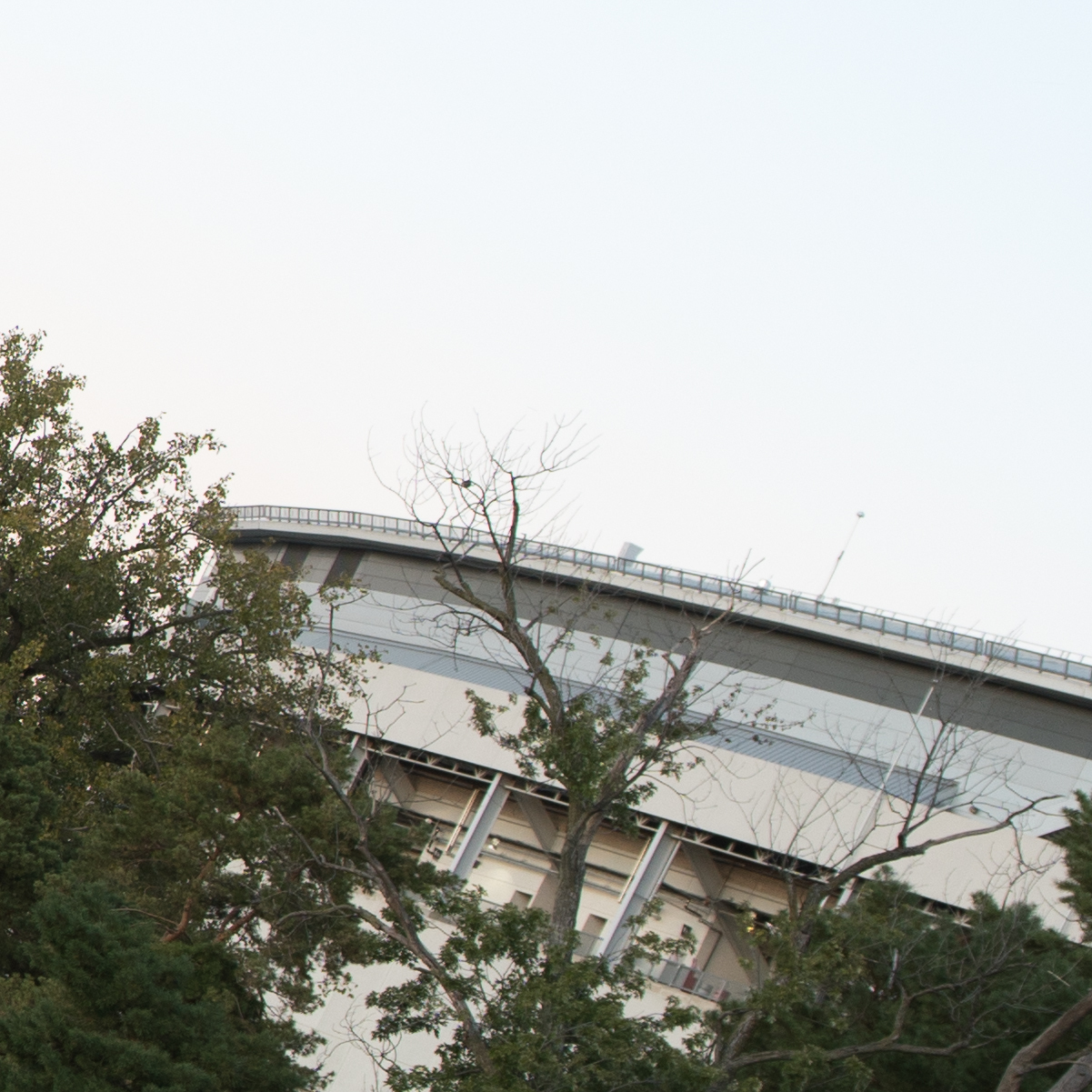
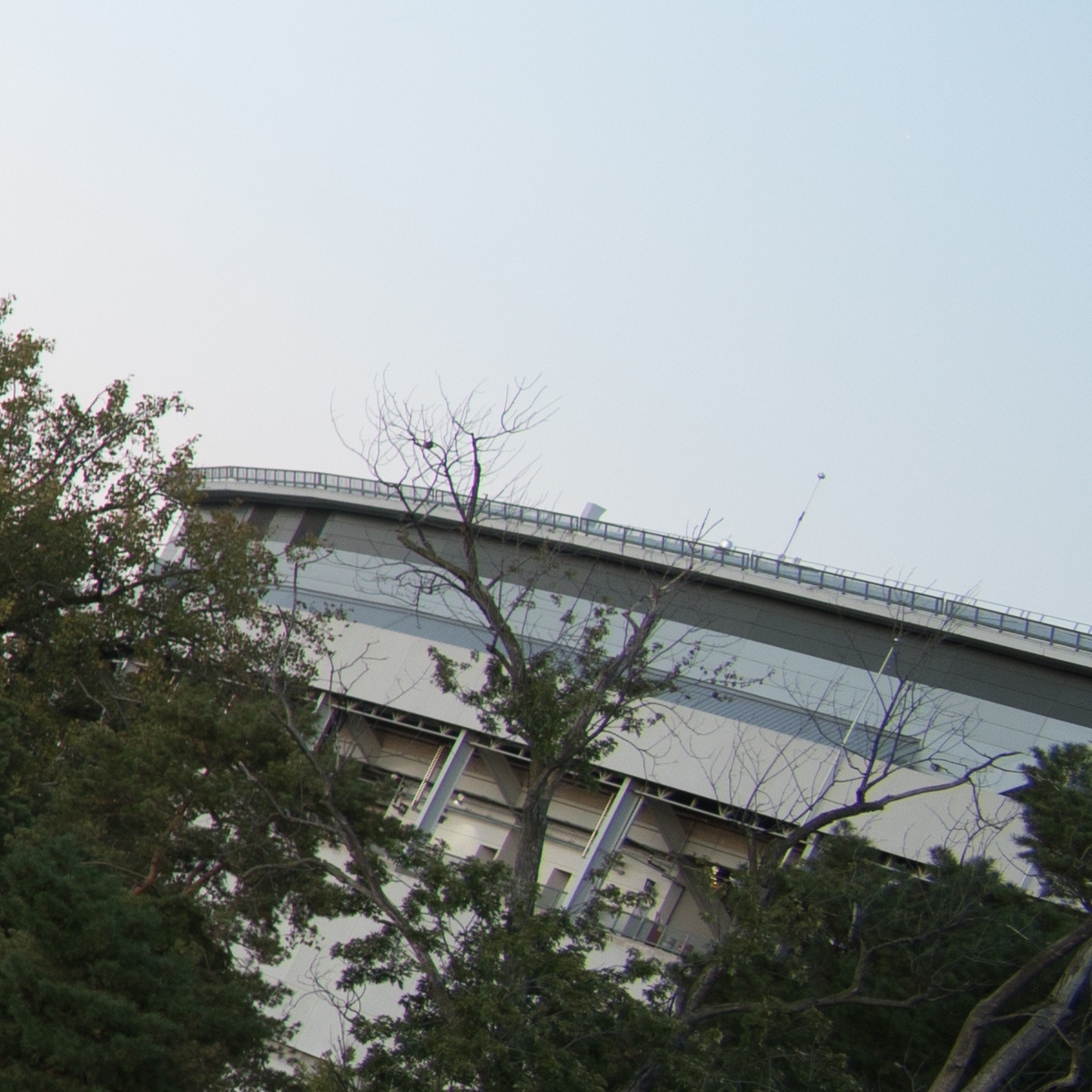
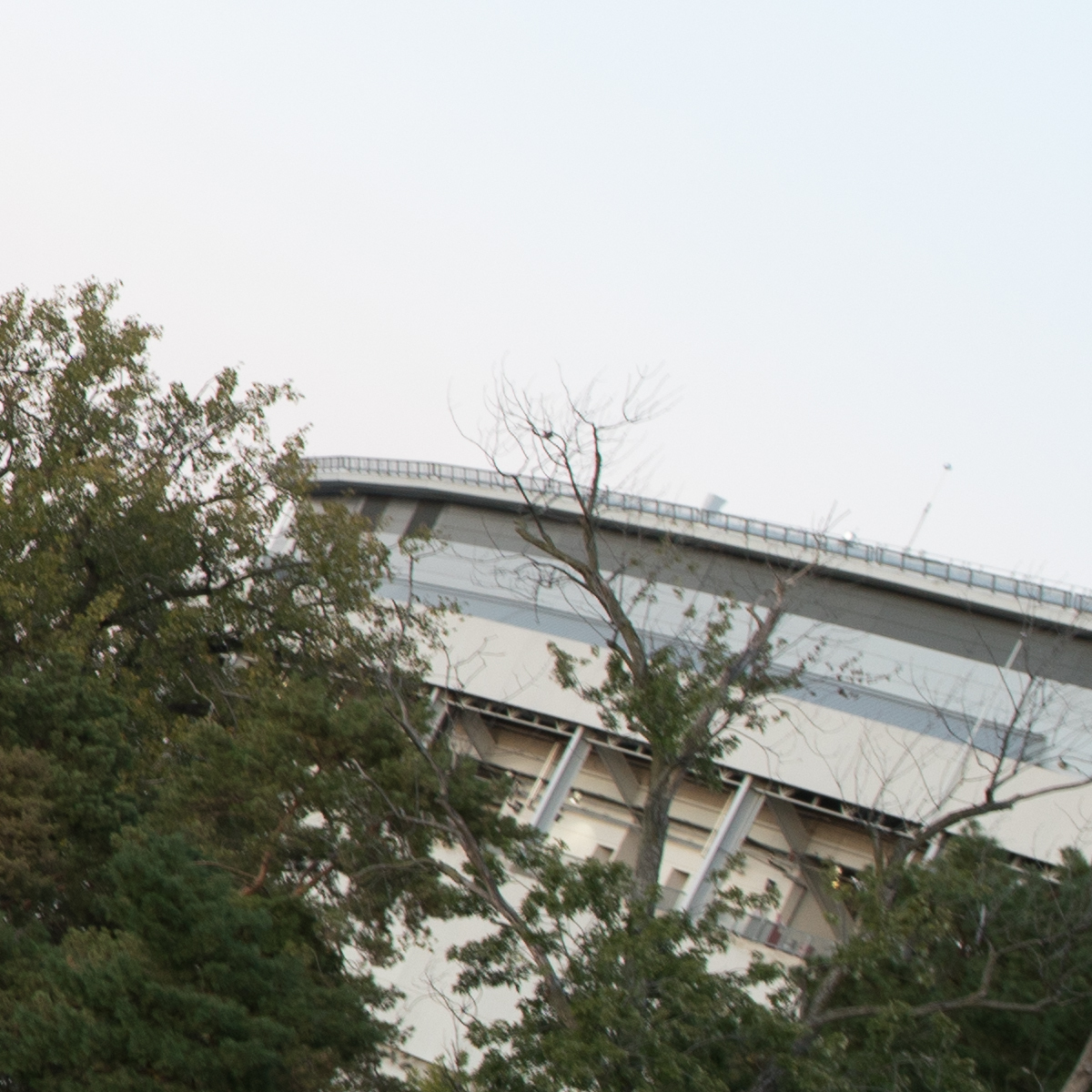
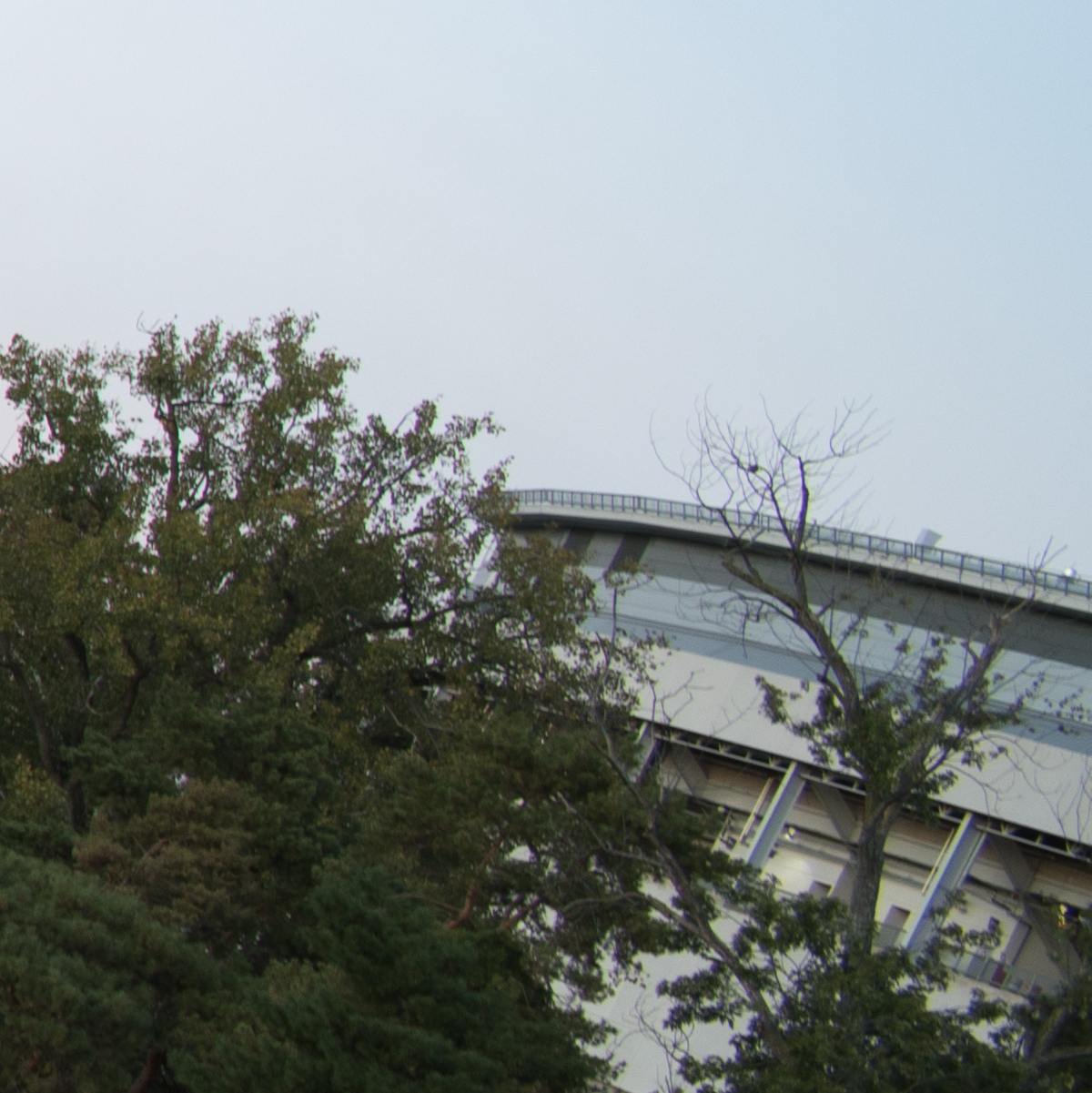
now on to the f/5.6 and f/8 right edge. Again both f/5.6 shots followed by both f/8 shots and within each pair the Otus is first followed by the Lux.
Oct 31, 2016 at 02:29 PM
p.1 #10Comparison of Zeiss Otus 28 f/1.4 APO vs Leica M 28 f/1.4 ASPH
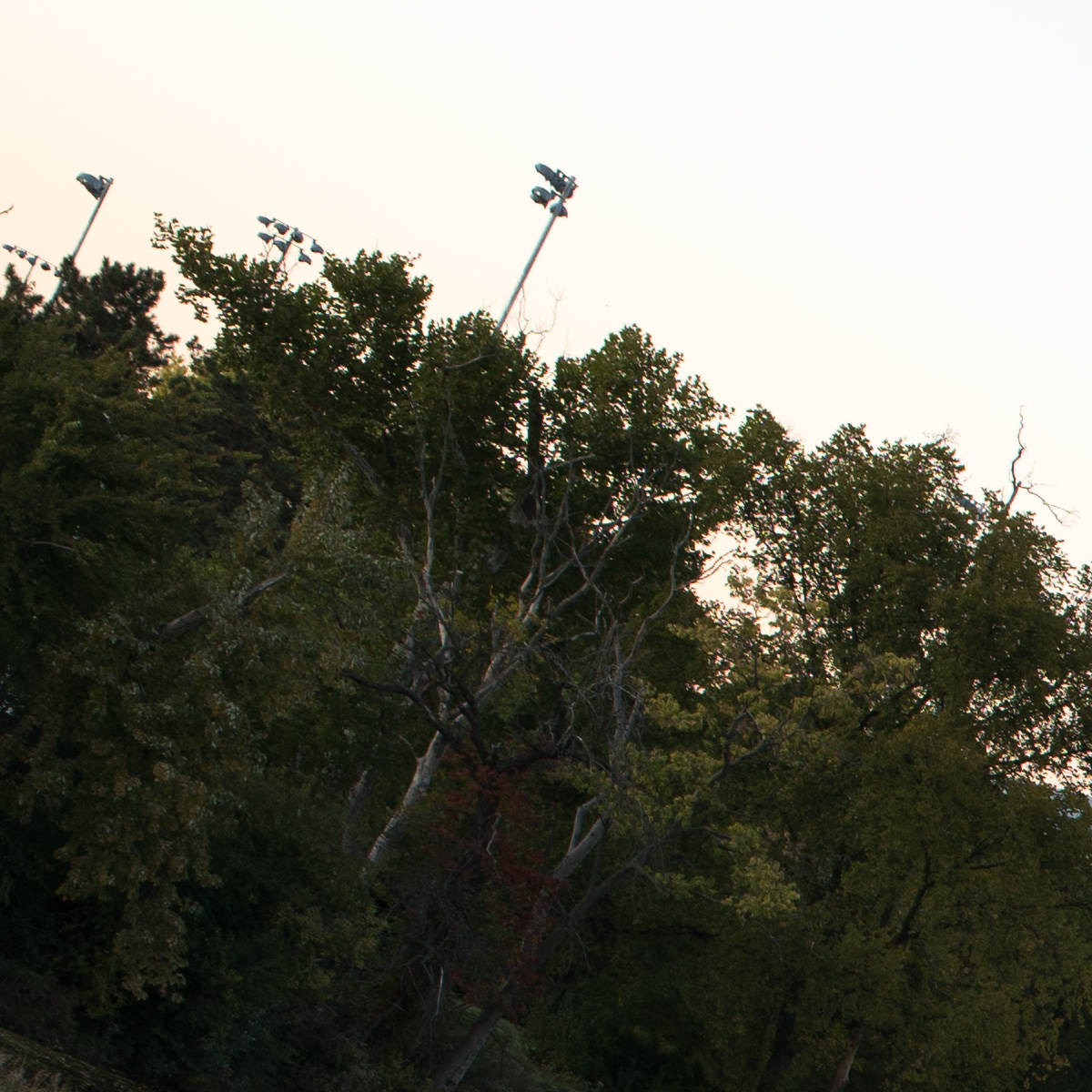
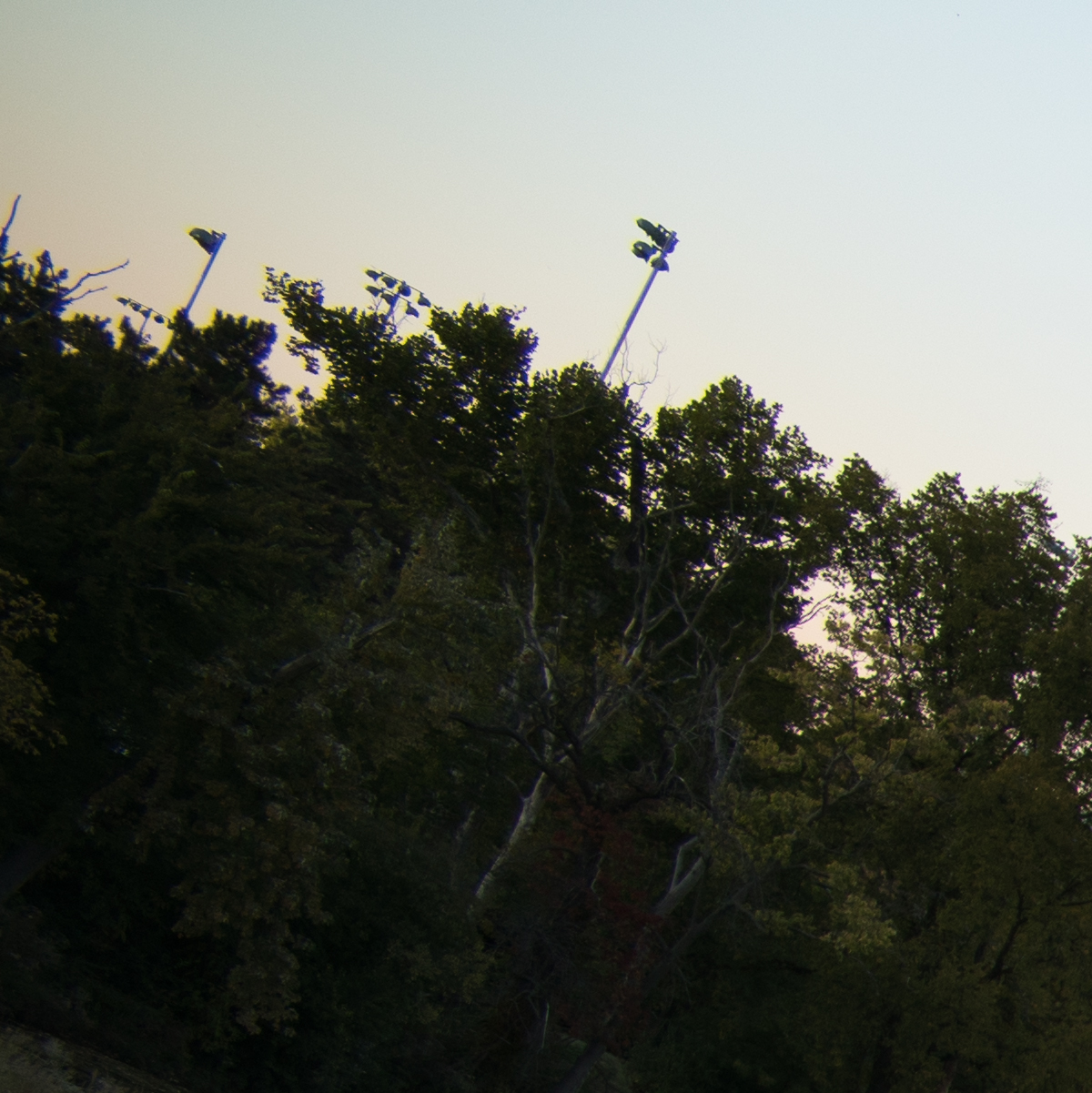
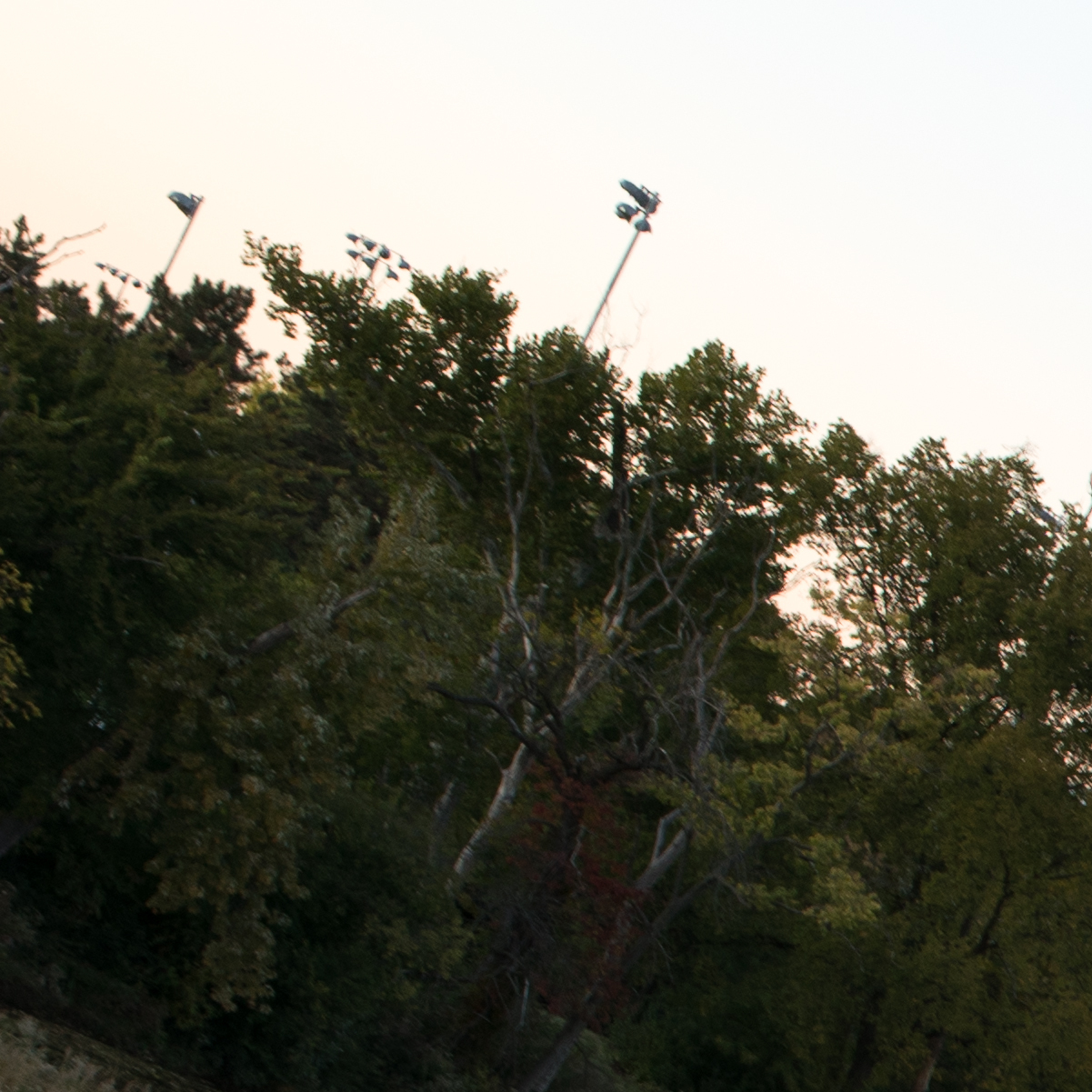
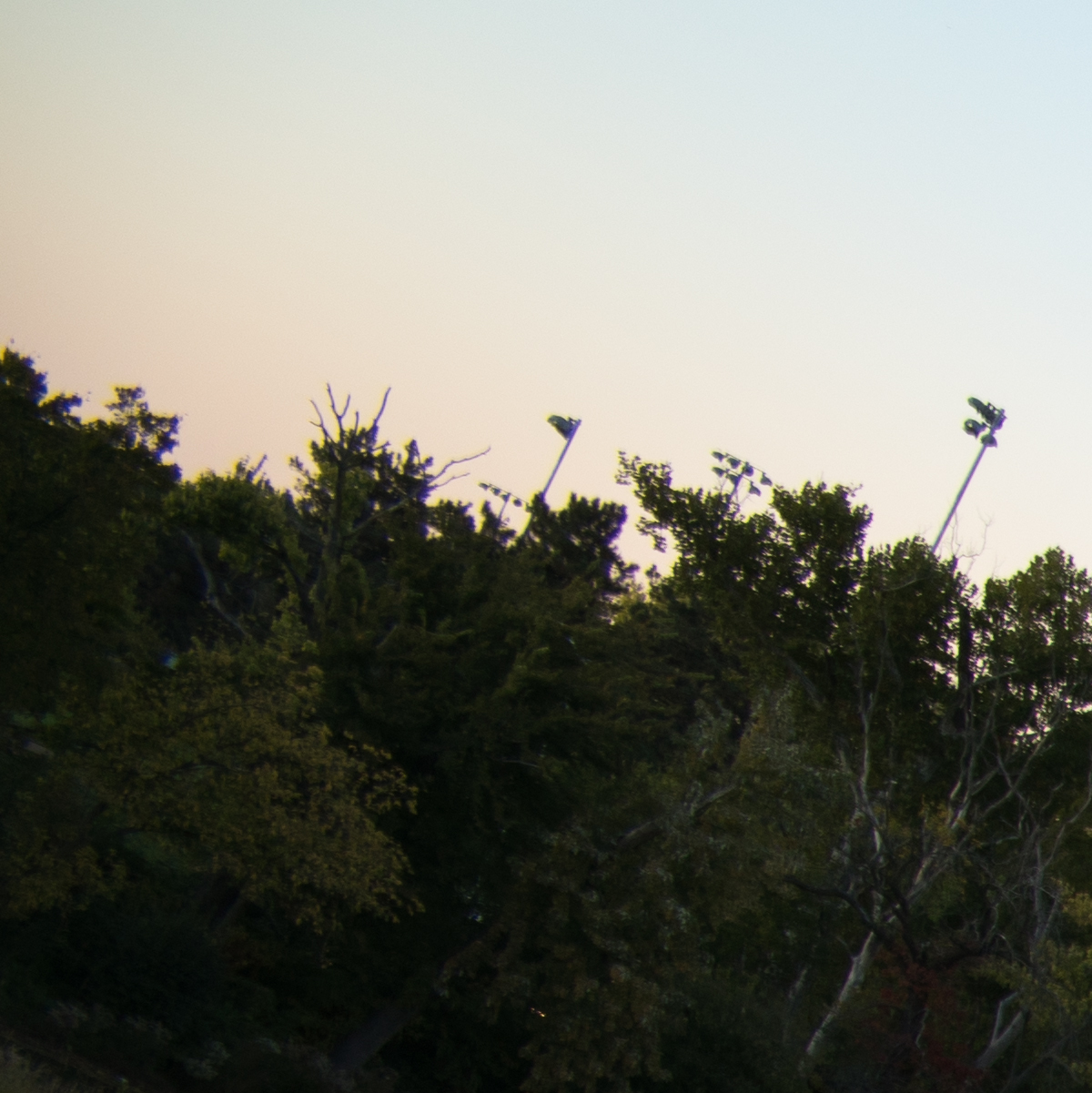
Finally these are the f/5.6 and f/8 upper left corner shots. Again first the f/5.6 shots, then the f/8 shots and within each pair the Otus is followed by the Lux.
Oct 31, 2016 at 02:31 PM
p.1 #11Comparison of Zeiss Otus 28 f/1.4 APO vs Leica M 28 f/1.4 ASPH
Now for my take. First as I said before posting any shots take the bad edges and corners below f/4 for what they are--those edges and corners are about 300 yards away when the scene was focussed about 600 yards away. I think it is likely that they do not fall within the depth of field. Alternatively, there might be some field curvature away from the camera. So, don't put too much stock into those poor edges and corners at wide apertures. I take it as a lesson, if you want good edges and corners it can be hard to find a scene that will work well with wide apertures. Many won't.
Now onto the differences. In my view, both lenses do quite well if you ignore the wide aperture edges and corners. The Lux is quite sharp across the whole frame (I didn't show the mid zones, but I see no evidence of a mid zone dip with either lens) at f/4 and f/5.6. This surprised me. In this scene the Lux is actually sharper across the field than the Otus. That said, sharpness isn't everything. The Lux definitely shows more CA than the Otus (which shows none--a pretty fantastic result). In fact, there is little question in my mind that the best image is the Otus at f/5.6. Very sharp across the whole frame (and even on the A7r II) and zero CA. That said, Lightroom's default for the Lux cleans up the CA quite well and that f/4 shot looks very good, with minimal work. (By the way, I just imported these into light room and cropped. So you are seeing them with very minimal processing, i.e., only what lightroom does by default and as they are shot on adapter the lens profile has not been activated).
So, for this type of landscape work if I want the very best images I will take the Otus, but I won't take it very far because the Lux is so good If I can't drive up to where I am shooting I will take the Lux. The Lux is also much much easier to handle on the camera. Mentioning the camera, these were all shot on a Berlebach wooden tripod with a heavy duty manfrotto hydrostatic head. I also used a 15mm rod set up with a lens support for the Otus. So there was plenty of support.
Over the next few weeks I will post a number of samples including bokeh, portraits, close ups (as a teaser the Lux is fantastic using the Hawk's helicoid for close ups). If there is something people want to see I will do my best to do it. Again these tests aren't perfect by any means, but I hope they provide some insight to both lenses.
Oct 31, 2016 at 02:47 PM
p.1 #12Comparison of Zeiss Otus 28 f/1.4 APO vs Leica M 28 f/1.4 ASPH
I'm not in the market for any of the lenses. I am however interested in your comparison Steve and I appreciate the work behind every similar work all good members here at FM bring to the community.
The size alone make me hope the Leica will come out as a kind of winner here. We'll see...
Thank you Steve! I know it is a hard work doing things like this.
/Jonas
The size alone make me hope the Leica will come out as a kind of winner here. We'll see...
Thank you Steve! I know it is a hard work doing things like this.
/Jonas
Oct 31, 2016 at 03:25 PM
p.1 #13Comparison of Zeiss Otus 28 f/1.4 APO vs Leica M 28 f/1.4 ASPH
Steve, nice work but none of it matters because the Otus focuses in the WRONG (Nikon) direction so it doesn't exist! Damn Nikon, a pox on them and their focusing direction.
Oct 31, 2016 at 03:38 PM
p.1 #14Comparison of Zeiss Otus 28 f/1.4 APO vs Leica M 28 f/1.4 ASPH
Thanks for doing these tests.
I enjoy the Summilux, but would avoid shooting distant landscapes at f1.4 other than at night, perhaps.
I find that it does have some purple fringing wide open with bright highlights at night, but they more or less disappear at even half a stop down. And they can be desaturated / cleaned up without much trouble in Lightroom.
What would be interesting would be some closer up shots, looking at the bokeh and other rendering characteristics, where the Summilux shots can be very attractive. I'm sure that the Otus would also be stunning.
But, like you, I find that size matters, and so would only really use the Otus indoors, where I did not have to carry it. If you have Leica gear, the case for the smaller lens will probably be even more compelling.
Oct 31, 2016 at 05:22 PM
p.1 #15Comparison of Zeiss Otus 28 f/1.4 APO vs Leica M 28 f/1.4 ASPH
JohnJ wrote:
Steve, nice work but none of it matters because the Otus focuses in the WRONG (Nikon) direction so it doesn't exist! Damn Nikon, a pox on them and their focusing direction.
They go both ways....the Canon mount Oti focus in the proper direction

Steve, nice work but none of it matters because the Otus focuses in the WRONG (Nikon) direction so it doesn't exist! Damn Nikon, a pox on them and their focusing direction.
They go both ways....the Canon mount Oti focus in the proper direction
Oct 31, 2016 at 05:26 PM
p.1 #16Comparison of Zeiss Otus 28 f/1.4 APO vs Leica M 28 f/1.4 ASPH
Goodrich wrote:
Thanks for doing these tests.
I enjoy the Summilux, but would avoid shooting distant landscapes at f1.4 other than at night, perhaps.
I find that it does have some purple fringing wide open with bright highlights at night, but they more or less disappear at even half a stop down. And they can be desaturated / cleaned up without much trouble in Lightroom.
What would be interesting would be some closer up shots, looking at the bokeh and other rendering characteristics, where the Summilux shots can be very attractive. I'm sure that the Otus would also be stunning.
But, like you, I find...Show more →
I agree with everything you say here except in these shots the CA is lateral CA and does not get any better when the lens is stopped down--if you look at these shots it is there even at f/8. It does clean up quite well if you apply the Lightroom profile.
Oct 31, 2016 at 05:39 PM
p.1 #17Comparison of Zeiss Otus 28 f/1.4 APO vs Leica M 28 f/1.4 ASPH
Hi Steve,
Have you considered comparing the lenses on a Leica SL or if you can get one a Kolari modified A7rII? I would think that this may well better show the performance of the Leica M 28mm f1.4 Asph lens.
Rich
Edited on Nov 01, 2016 at 05:46 AM · View previous versions
Have you considered comparing the lenses on a Leica SL or if you can get one a Kolari modified A7rII? I would think that this may well better show the performance of the Leica M 28mm f1.4 Asph lens.
Rich
Edited on Nov 01, 2016 at 05:46 AM · View previous versions
Oct 31, 2016 at 05:45 PM
p.1 #18Comparison of Zeiss Otus 28 f/1.4 APO vs Leica M 28 f/1.4 ASPH
naturephoto1 wrote:
Hi Steve,
Have you considered comparing the lenses on a Leica SL or if you can get one a Kolari modified A7rII? I would think that this may well better show the perfromance of the Leica M 28mm f1.4 Asph lens.
Rich
Hi Rich,
I don't have either camera available, so I won't be doing those tests. I don't know how much better it could be expected to do, however. It is quite sharp at f/4 and f/5.6 in these tests and seems to only lose a bit at f/8 probably due to diffraction. Perhaps if might be better at narrower apertures, but on this test that wouldn't help, and perhaps the CA might be less with a thinner sensor stack, but I doubt it. As I understand it, the sensor stack affects astigmatism but not CA, and I have seen reports from others that it has some CA on both the Leica SL and the M240. I think in these tests it shows how close it gets to the reference lens (i.e., gold standard) of the Otus. So, it might be just a bit better on the SL or a modified Sony, but honestly there isn't a lot of room to improve.
Oct 31, 2016 at 06:27 PM
p.1 #19Comparison of Zeiss Otus 28 f/1.4 APO vs Leica M 28 f/1.4 ASPH
At f/1.4 center, Otus is clearly the winner. There is trace of veiling glare on Summilux. Be noted that Summilux shows moderate astigmatism even on M240.
Oct 31, 2016 at 10:45 PM
p.1 #20Comparison of Zeiss Otus 28 f/1.4 APO vs Leica M 28 f/1.4 ASPH
Jeez, the Lux is going to shoot very well on Kolari or M sensor. 
I'd like to see some of your general photography with both.
I'd like to see some of your general photography with both.
Oct 31, 2016 at 11:41 PM