Official: Voigtlander 65mm f/2 Macro Apo-Lanthar
p.67 #1Official: Voigtlander 65mm f/2 Macro Apo-Lanthar
jamato8 wrote:
On my computer screen and even viewing the image once taken on the EVF the difference is more obvious.
So I wonder, since I have read a number of times that wide open the lens is excellent, does anyone see much difference when stopping down to f4 or 5.6.
Just looked under light through the lens. Surprised, there is dust on the inside element. Really surprised by this.From my perspective this is still fine performance wide open at 1:2. I don't doubt these is a slight drop in resolution, but what is more noticeable here is a razor thin depth of field that makes judging sharpness very difficult. DOF is so thin it is easy to judge aspects of the images that are not in the best plane of focus. I love shallow DOF close ups/macro, but on this shot I think the DOF is just too shallow in the wide open shot and that is in my view the primary reason the stopped down shot looks better.I agree that DOF plays a role on jamato's example, giving the f/4 crop the impression of more sharpness.
As with any lens, there is always a bump in contrast/resolution from wide open (This is the case with outstanding lenses like the ZF 135/2 APO)...so we can't expect the CV 65/2 to be any different. However, with this lens, I think the difference is very tiny and f/2.8 is already as sharp as it can be at center even at infinity distance.
Here is an example with a somewhat flat subject. It shows a dog's can food with very small lettering and as you can see, the focus area does not change much in terms of contrast/resolution from wide open to f/4 but it greatly varies as the can starts to curve (DOF). Look at the logo and then the word "Manufactured". The word starts very similar between the two apertures but at f/4 is much sharper at the end of it as the can curves very slightly.
@jamato8@@, if you can't duplicate the below with your lens, I would try a different copy.I have sent back the 1st 65 and got the second today.
Immediately through the EVF I can see the difference. More contrast wide open and just sharper. With images taken, there is little difference in sharpness from wide open with f4 just slightly better. This is more like what I was seeing on here and thank you Fred for posting the images of print as that really helped to define what I was and wasn't seeing with the first copy. This second one has what you are getting on the images you posted.
That's great news jamato!
Fred Miranda wrote
Steve Spencer wrote
jamato8 wrote
The first is f2 200 iso100. Mounted on a tripod and a timer used. Contrasty natural light so in this you can't see so much of the contrast loss. The second f4 50 iso100. IS off. Even on the EVF wide open you can see the difference. 3rd image uncropped of the f2 shot. Second full sized f4.On my computer screen and even viewing the image once taken on the EVF the difference is more obvious.
So I wonder, since I have read a number of times that wide open the lens is excellent, does anyone see much difference when stopping down to f4 or 5.6.
Just looked under light through the lens. Surprised, there is dust on the inside element. Really surprised by this.
As with any lens, there is always a bump in contrast/resolution from wide open (This is the case with outstanding lenses like the ZF 135/2 APO)...so we can't expect the CV 65/2 to be any different. However, with this lens, I think the difference is very tiny and f/2.8 is already as sharp as it can be at center even at infinity distance.
Here is an example with a somewhat flat subject. It shows a dog's can food with very small lettering and as you can see, the focus area does not change much in terms of contrast/resolution from wide open to f/4 but it greatly varies as the can starts to curve (DOF). Look at the logo and then the word "Manufactured". The word starts very similar between the two apertures but at f/4 is much sharper at the end of it as the can curves very slightly.
@jamato8@@, if you can't duplicate the below with your lens, I would try a different copy.
Immediately through the EVF I can see the difference. More contrast wide open and just sharper. With images taken, there is little difference in sharpness from wide open with f4 just slightly better. This is more like what I was seeing on here and thank you Fred for posting the images of print as that really helped to define what I was and wasn't seeing with the first copy. This second one has what you are getting on the images you posted.
That's great news jamato!
Feb 13, 2018 at 02:23 PM
p.67 #2Official: Voigtlander 65mm f/2 Macro Apo-Lanthar
jamato8 wrote:
Fred Miranda wrote
Steve Spencer wrote
jamato8 wrote
The first is f2 200 iso100. Mounted on a tripod and a timer used. Contrasty natural light so in this you can't see so much of the contrast loss. The second f4 50 iso100. IS off. Even on the EVF wide open you can see the difference. 3rd image uncropped of the f2 shot. Second full sized f4.On my computer screen and even viewing the image once taken on the EVF the difference is more obvious.
So I wonder, since I have read a number of times that wide open the lens is excellent, does anyone see much difference when stopping down to f4 or 5.6.
Just looked under light through the lens. Surprised, there is dust on the inside element. Really surprised by this.
As with any lens, there is always a bump in contrast/resolution from wide open (This is the case with outstanding lenses like the ZF 135/2 APO)...so we can't expect the CV 65/2 to be any different. However, with this lens, I think the difference is very tiny and f/2.8 is already as sharp as it can be at center even at infinity distance.
Here is an example with a somewhat flat subject. It shows a dog's can food with very small lettering and as you can see, the focus area does not change much in terms of contrast/resolution from wide open to f/4 but it greatly varies as the can starts to curve (DOF). Look at the logo and then the word "Manufactured". The word starts very similar between the two apertures but at f/4 is much sharper at the end of it as the can curves very slightly.
@jamato8@@, if you can't duplicate the below with your lens, I would try a different copy.
Immediately through the EVF I can see the difference. More contrast wide open and just sharper. With images taken, there is little difference in sharpness from wide open with f4 just slightly better. This is more like what I was seeing on here and thank you Fred for posting the images of print as that really helped to define what I was and wasn't seeing with the first copy. This second one has what you are getting on the images you posted.
You’re gonna love this lens! Persistence pays off. Congrats!
Feb 13, 2018 at 05:26 PM
p.67 #3Official: Voigtlander 65mm f/2 Macro Apo-Lanthar
Looking forward to getting one back this week.
Feb 13, 2018 at 05:37 PM
p.67 #4Official: Voigtlander 65mm f/2 Macro Apo-Lanthar
GMPhotography wrote:
Looking forward to getting one back this week.
Did you get it? Is it a keeper?
Looking forward to getting one back this week.
Did you get it? Is it a keeper?
Feb 17, 2018 at 02:18 PM
p.67 #6Official: Voigtlander 65mm f/2 Macro Apo-Lanthar
😂
GMPhotography wrote:
Keeper
GMPhotography wrote:
Keeper
Feb 17, 2018 at 04:05 PM
p.67 #7Official: Voigtlander 65mm f/2 Macro Apo-Lanthar
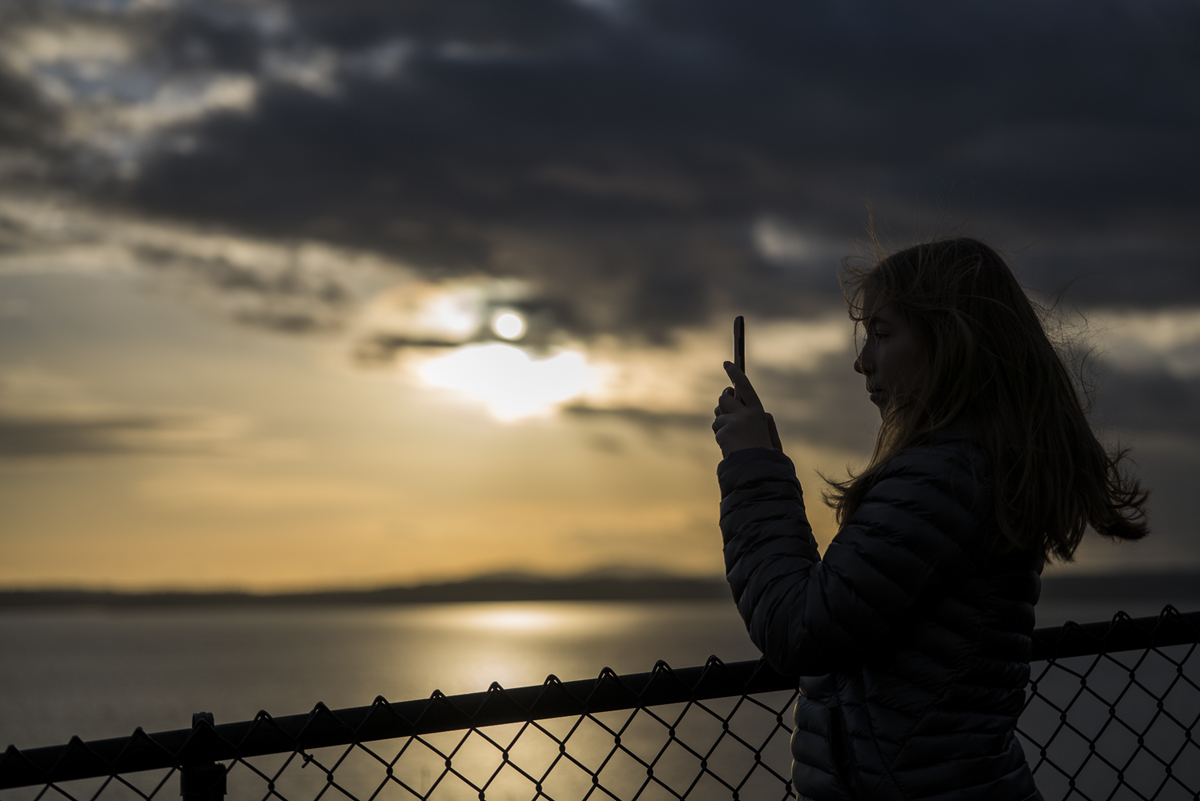
It doesn't really care if you point it into the sun . . .
Feb 24, 2018 at 09:50 PM
p.67 #8Official: Voigtlander 65mm f/2 Macro Apo-Lanthar
Did some field documentation today, which is one of the main reasons I got the 65. Edge to edge totally sharp with the right amount of contrast. Shooting directly into the setting sun I did pick up some flare but was able to edit it out. It will flare though. The quality of the images, the intense sharpness makes up for this.
Feb 24, 2018 at 10:45 PM
p.67 #9Official: Voigtlander 65mm f/2 Macro Apo-Lanthar
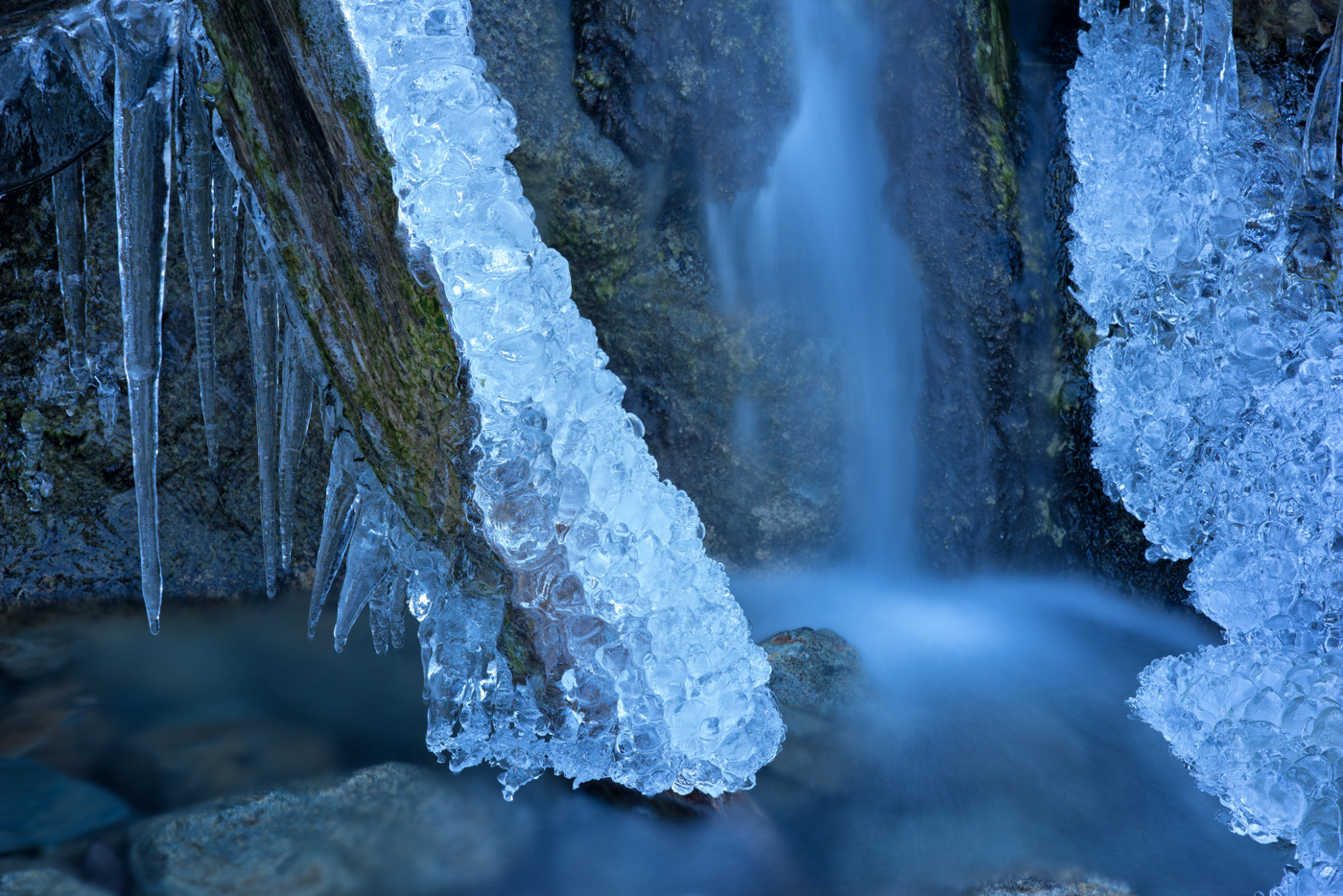
Frozen stream details, Lake District
Feb 26, 2018 at 05:10 PM
p.67 #10Official: Voigtlander 65mm f/2 Macro Apo-Lanthar
Mine is due to show up tomorrow.
Shouldn't have read this thread. But it should fit in perfectly for what I want it for.
Shouldn't have read this thread.
But it should fit in perfectly for what I want it for.Feb 26, 2018 at 09:07 PM
|


p.67 #12Official: Voigtlander 65mm f/2 Macro Apo-Lanthar


Edited on Feb 27, 2018 at 03:37 PM · View previous versions
Feb 27, 2018 at 03:31 PM
p.67 #13Official: Voigtlander 65mm f/2 Macro Apo-Lanthar
How do you think the FL and MFD would do for plated food photography?
Feb 27, 2018 at 03:35 PM
p.67 #14Official: Voigtlander 65mm f/2 Macro Apo-Lanthar
It focuses really close and can accept tubes making it even closer. Probably one of the best lenses I've ever owned. Saw one in the B/S too if you're looking.
Feb 27, 2018 at 03:38 PM
p.67 #15Official: Voigtlander 65mm f/2 Macro Apo-Lanthar
Its MFD from my initial playing is far closer than you'd need for food photography - unless you're only photographing mini cupcakes.
Feb 27, 2018 at 05:17 PM
p.67 #16Official: Voigtlander 65mm f/2 Macro Apo-Lanthar
How would you rate this vs the Planar T* 50mm 1.4 ZA? I'm thinking about returning mine to swap for this lens. I just got the Distagon 35 ZA and the Planar T 50 and I'm thinking CV 40 1.2 and CV 65 APO may be the better rendering lenses.
I don't mind MF lenses.
I don't mind MF lenses.
Feb 28, 2018 at 01:06 PM
p.67 #17Official: Voigtlander 65mm f/2 Macro Apo-Lanthar
I did a brief comparison with the Voigt 65 to Otus 55 - some, including myself, have commented that the 65's rendering is quite Otus-like, so I was curious to see how they actually compare one to one. Nothing scientific here, just a setup on a bookcase around 3 ft from the camera. I'll try some outdoor comparisons at greater distance when the weather improves.
I'm surprised to see that they are actually this close to one another. Disregarding the difference in focal length, the rendering is VERY similar, including bokeh and other factors. In fact, the 65 seems a touch sharper on the text. Here are a few test shots - just for fun, if nothing more.
First pair: Voigt 65 wide open from A7R3. Processed in ACR with default sharpening (25/1.0/25); no further sharpening on the jpgs. Full frame for reference, then a clip at actual res; focus point on the book spine text reading "by Les Line".
 test voigt 65 f2 0305 by D B, on Flickr
 test voigt 65 f2 clip 0305 by D B, on Flickr
Second pair: Otus 55 wide open (1.4); the rest as above.
 test otus 55 f1.4 0317 by D B, on Flickr
 test otus 55 f1.4 clip 0317 by D B, on Flickr
I'm surprised to see that they are actually this close to one another. Disregarding the difference in focal length, the rendering is VERY similar, including bokeh and other factors. In fact, the 65 seems a touch sharper on the text. Here are a few test shots - just for fun, if nothing more.
First pair: Voigt 65 wide open from A7R3. Processed in ACR with default sharpening (25/1.0/25); no further sharpening on the jpgs. Full frame for reference, then a clip at actual res; focus point on the book spine text reading "by Les Line".
test voigt 65 f2 0305 by D B, on Flickrtest voigt 65 f2 clip 0305 by D B, on FlickrSecond pair: Otus 55 wide open (1.4); the rest as above.
test otus 55 f1.4 0317 by D B, on Flickrtest otus 55 f1.4 clip 0317 by D B, on FlickrMar 01, 2018 at 02:58 PM
p.67 #18Official: Voigtlander 65mm f/2 Macro Apo-Lanthar
The B/S is raining these phenomenal lenses if anyone is in the market for one.
Mar 01, 2018 at 03:04 PM


p.67 #20Official: Voigtlander 65mm f/2 Macro Apo-Lanthar
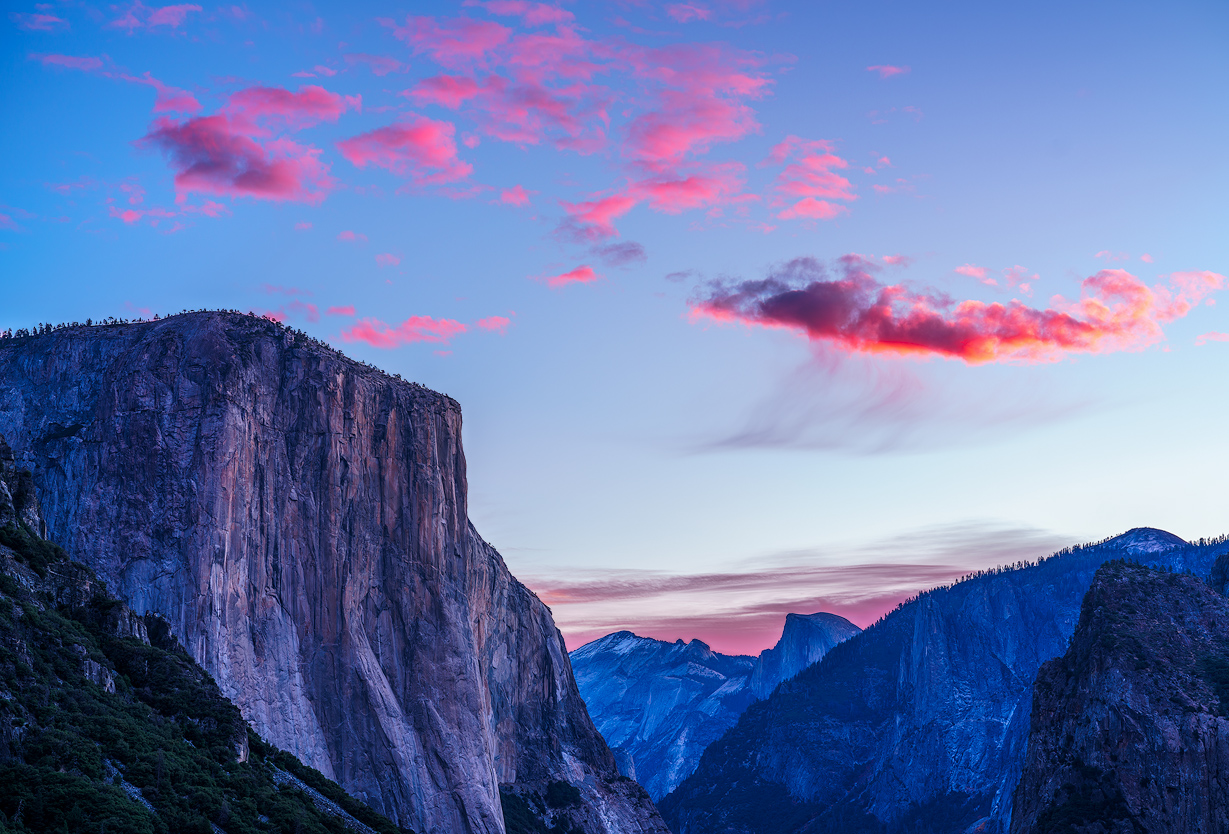
One from Yosemite with the CV 65/2 APO @f/5.6
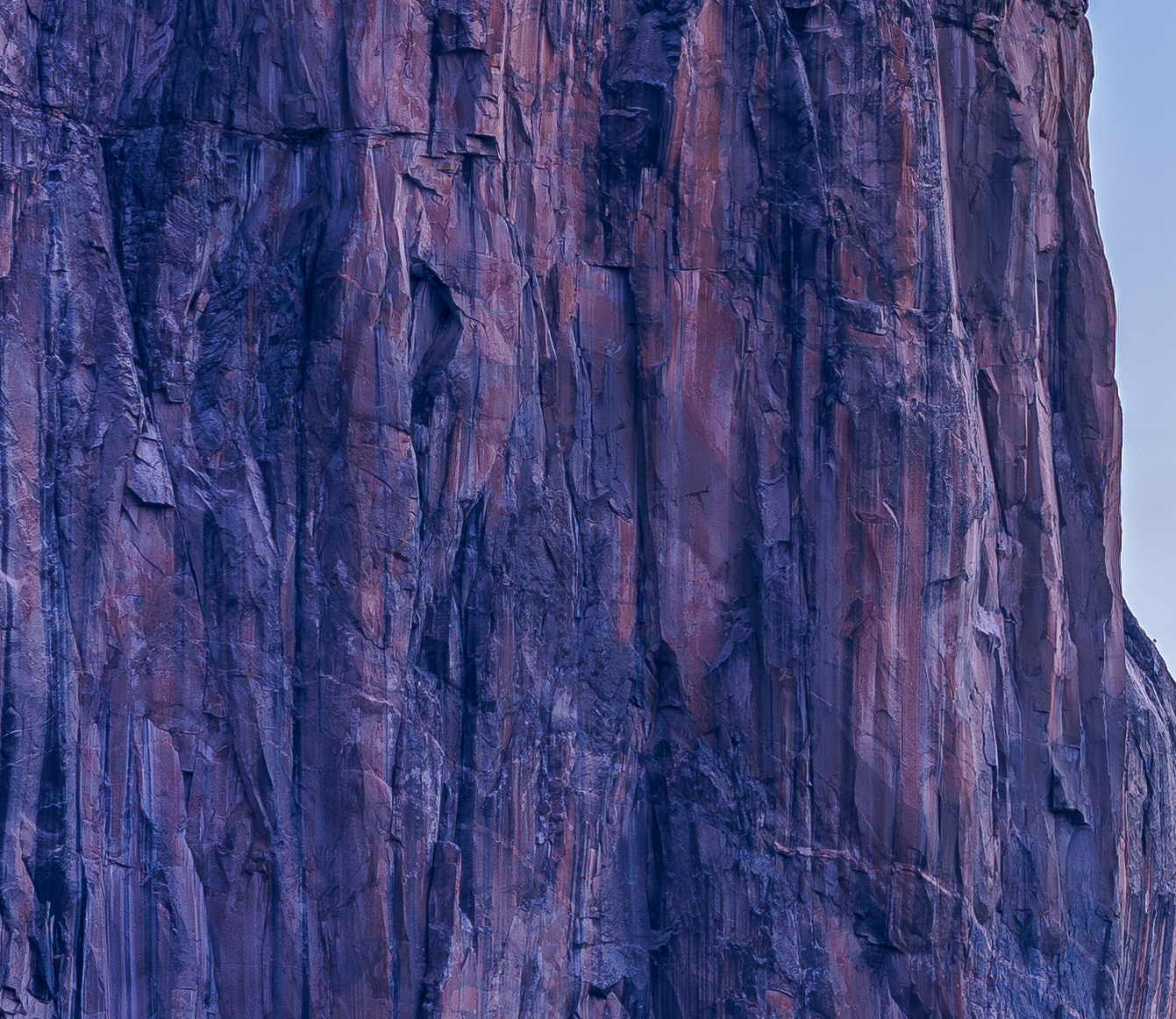
1:1 crop from above. Outstanding detail!
 |
||
 |
||
|
 |
||
 |
||
|
1:1 crop from above. Outstanding detail!
Mar 03, 2018 at 08:21 PM