The reason why the Coastal Optics 60/4 is so expensive, is the special glasses used to make it transmit ultraviolet and infrared light, in addition to visible light. It is also parfocal from 300nm to 1000nm, so it can be focused visually and still be in focus for ultraviolet and infrared light. These are highly unusual characteristics attained not even by the UV-Nikkor 105/4.5.
If this comes in under $1,000 I'm going to have a hard time not buying it. Might have to give up the 55mm 1.8 even though it's my only AF lens at this point.
I found sime samples, not very high res, on Cosina's Japanese site. Scroll a bit down and then click on the links on the right side, food images and some from Italy.
nampramos wrote:
Is it just me thinking that the price is a bit steep compared to the 90G?
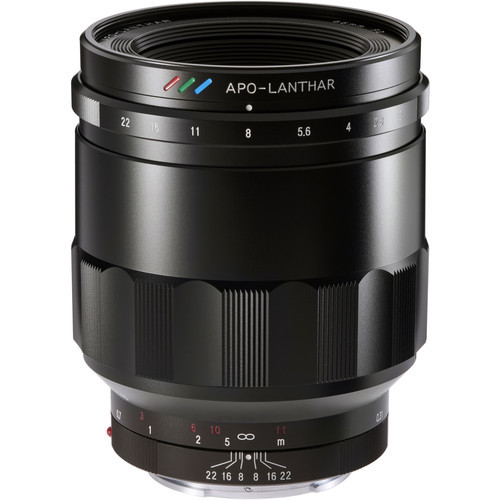
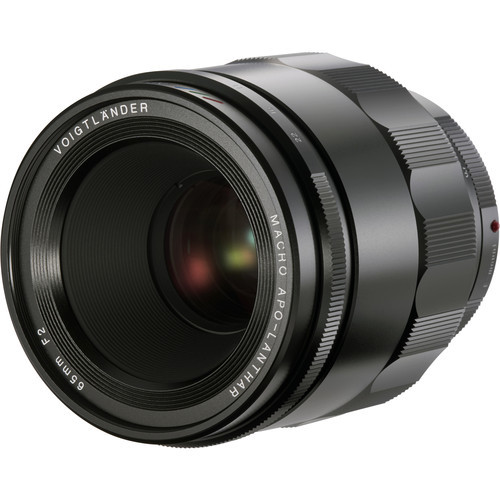
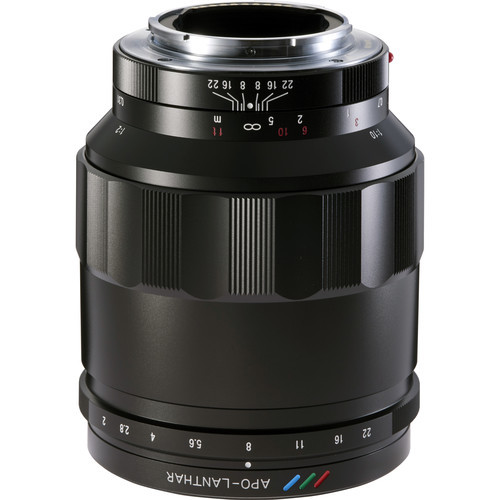
I think so, too. I have the Sony 90/2.8G, and I think it will be hard to beat. It will also have to beat the Sony 50/2.8 macro by a clear margin. For field use the Sony lenses win in my opinion. The Sony 90/2.8G weighs 602 grams, the 50/2.8 macro 236 grams and the Voigtländer 65/2 weighs 635 grams, i.e. more than the Sony 90/2.8G. The fast f/2 aperture of the Voigtländer 65/2 isn't needed for focusing with an EVF, but would be handy on a DSLR. The optical quality of the Voigtländer 65/2 will need to convince by a very clear margin.
bjornthun wrote:
I think so, too. I have the Sony 90/2.8G, and I think it will be hard to beat. It will also have to beat the Sony 50/2.8 macro by a clear margin. For field use the Sony lenses win in my opinion. The Sony 90/2.8G weighs 602 grams, the 50/2.8 macro 236 grams and the Voigtländer 65/2 weighs 635 grams, i.e. more than the Sony 90/2.8G. The fast f/2 aperture of the Voigtländer 65/2 isn't needed for focusing with an EVF, but would be handy on a DSLR. The optical quality of the Voigtländer 65/2 will need to convince by a very clear margin....Show more →
The fast f/2 aperture is also for shallow depth of field and that can be very nice for a macro. Two very nice macro include the Zeiss 100 f/2 and the Olympus OM 90 f/2 and what sets these lenses apart is the fast aperture (and by the way they are both 1:2 and minimum focus distance too) and even used the Zeiss cost more and the Olympus goes for about the same price as this lens. I don't find the price as being that steep given that it has just been introduced and it has that fast aperture.
Steve Spencer wrote:
The fast f/2 aperture is also for shallow depth of field and that can be very nice for a macro. Two very nice macro include the Zeiss 100 f/2 and the Olympus OM 90 f/2 and what sets these lenses apart is the fast aperture (and by the way they are both 1:2 and minimum focus distance too) and even used the Zeiss cost more and the Olympus goes for about the same price as this lens. I don't find the price as being that steep given that it has just been introduced and it has that fast aperture.
I have owned both the Zeiss ZF 100/2 and the Olympus OM 90/2, so I know what they can do. Both lenses have one pitfall, which is CA, particularly axial CA. The Sony 90/2.8G has much less of this, if at all, so for practical macro use the Sony wins. The Zeiss Touit 50/2.8 macro does much better in the CA department than the ZF 100/2, so I think that Zeiss needs a new FE macro lens to stay competitive. In the macro range f/2.8 also gives very shallow DoF.
All this said, the Oly 90/2 and Zeiss 100/2 both have tremendous resolving power, and are by no means bad lenses. However axial CA limits their usefulness at f/2, and they need stopping down to f/4 in the macro range, thus negating the usefulness of the fast aperture.
Jul 22, 2017 at 08:07 AM
Steve Spencer Offline • • • • • • • Upload & Sell: On
bjornthun wrote:
I have owned both the Zeiss ZF 100/2 and the Olympus OM 90/2, so I know what they can do. Both lenses have one pitfall, which is CA, particularly axial CA. The Sony 90/2.8G has much less of this, if at all, so for practical macro use the Sony wins. The Zeiss Touit 50/2.8 macro does much better in the CA department than the ZF 100/2, so I think that Zeiss needs a new FE macro lens to stay competitive. In the macro range f/2.8 also gives very shallow DoF.
All this said, the Oly 90/2 and Zeiss 100/2 both have tremendous resolving power, and are by no means bad lenses. However axial CA limits their usefulness at f/2, and they need stopping down to f/4 in the macro range, thus negating the usefulness of the fast aperture. ...Show more →
Yes, totally agree but that what points to the potential of this lens it is not only f/2 but the APO designation holds the promise of having both shallow depth of field and very low CA. I think that makes the price more understandable as it would be unique if it is indeed an f/2 macro with very little CA.
In my opinion, you can't really compare the Sony 90 and the Voigtländer 65. One is AF, and the other MF. That is a major difference IMHO. If you use either lens, wide open and at MFD, not such an unusual case, you have minimal DOF, and placing focus exactly where you want it is not trivial. Then MF and AF will feel very different. Conversely, if you like more DOF in your shots, close down the lnes and AF works fine.
This difference extends to how the lenses are designed and constructed. AF lenses require light mobile assemblies, and MF not.
So the comparison is IMHO restricted to macro use and price.
It's hard to find a bad macro lens, but this lens is interesting to me as a "general purpose" lens to pair with a moderate wide angle.
The FL is different, for me 50mm is neither here nor there and too close to my true love, 35mm lenses. It's relatively fast and focuses close. My FE 55 is really nice, I like a lot about it, but I hit the MFD all the time and it drives me nuts (note to self, buy extension tubes). This will probably have a really nice manual focus feel. I enjoy the process of taking photos about as much as the end result themselves, so having something that functions nicely is fairly important to me.
Steve Spencer wrote:
Yes, totally agree but that what points to the potential of this lens it is not only f/2 but the APO designation holds the promise of having both shallow depth of field and very low CA. I think that makes the price more understandable as it would be unique if it is indeed an f/2 macro with very little CA.
Agree, and there is one lens I didn't mention, the 15 year old Voigtländer Macro Apo Lanthar 125/2.5 for various DLSR mounts. I have seen on eBay a version for Sony A-mount with CPU. That lens makes me very optimistic that the APO designation of the 65/2 holds true. What remains to see is, if the Voigtländer delivers and if it is special. It won't be as unique as its' older brother nowadays, since the Sony 90/2.8G, the Touit 50/2.8 and also the Olympus 60/2.8 for MFT all are very well corrected wrt. CA and in particular axial CA. The Voigtländer 65/2 may be a great lens, but it will also be up to stiffer competition than the old brother.