Though slightly off-topic, I wonder how the 28mm Biogon ZM compares to the 35mm Distagon ZM? The 35mm seems to be a legend in its own time, but is the 28mm even close? Does anyone have experience with this lens?
I know about the FE 28mm and its..."characteristics," but would prefer the Zeiss look if the 28mm ZM has it in any way near that of the 35mm ZM (as demonstrated in this thread).
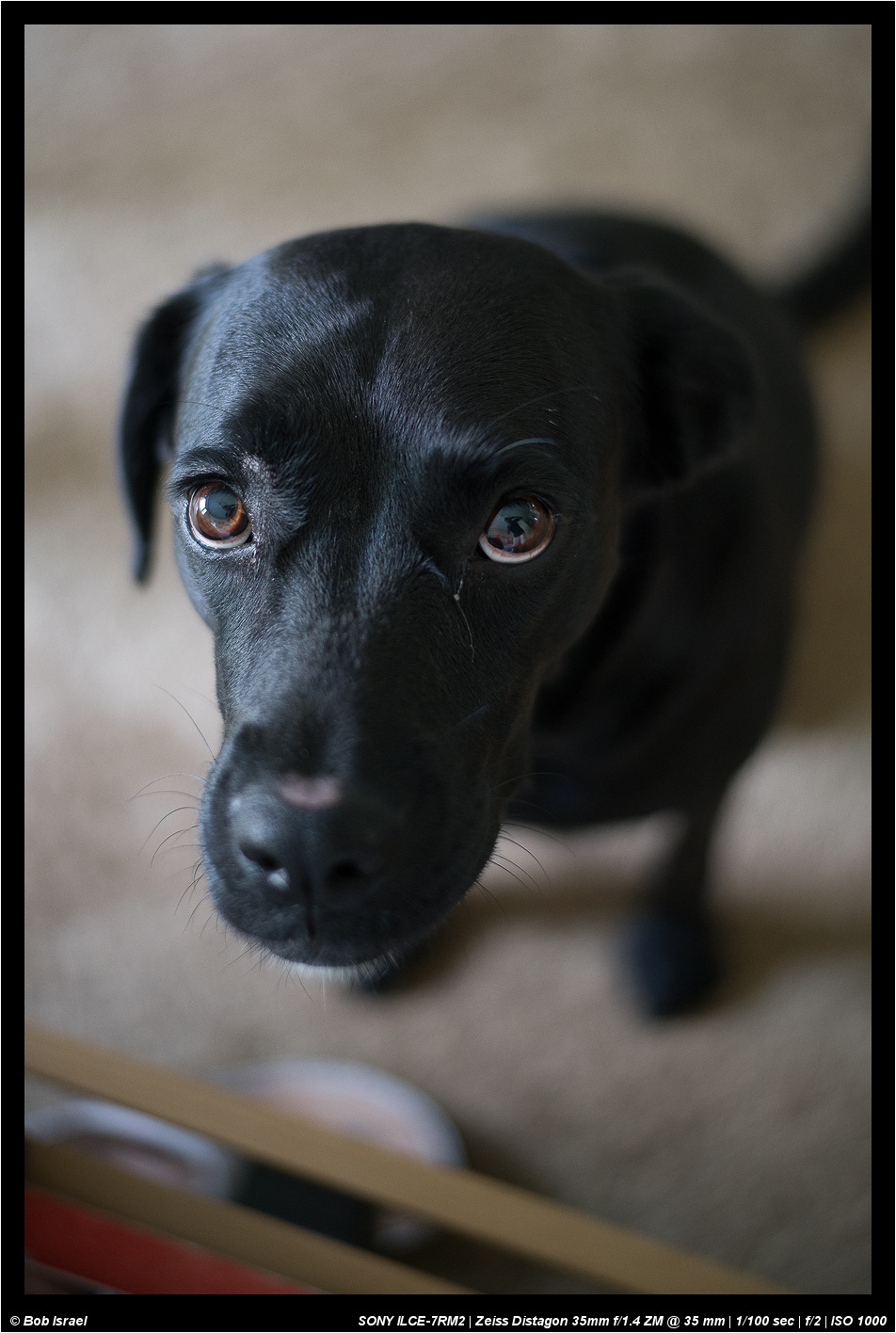
Mine arrived and every wow uttered by Guy is true! I only took a few quick snaps but the color, rendering, micro contrast, all of it just oozes the best of Zeiss. Sure it may have some nits on the A7R series but they don't come close to all you do get with this lens. I would write more but I'm off to play!
rji2goleez wrote:
Mine arrived and every wow uttered by Guy is true! I only took a few quick snaps but the color, rendering, micro contrast, all of it just oozes the best of Zeiss. Sure it may have some nits on the A7R series but they don't come close to all you do get with this lens. I would write more but I'm off to play!
Thanks Bob. See just look at that pop. Truly a Zeiss look. Love mine and I just got a ZM 85 F4 off eBay. I sold my original one to Fred and he loves it so I'm glad to replace it again. Trust me folks it's better than the GM 85. It don't have the GM look of course but it's a great landscape lens and its small and light, now it will AF. I like having both for different types of shooting. The GM is the people lens no question.
I think I'm done until we hear what Photokinia will bring but I got a damn nice kit now. I'm really happy
GM 24-70,GM 85
VC 15 choppy, Loxia 21, ZM 35, new FE 50 1.4, ZM 85 f4. I can mix and match
rscheffler wrote:
I would expect outwards field curvature due to the too-thick sensor stack. This should be expected based on the info stated in the Zeiss document CLB 41: From the series of articles on lens names: Distagon, Biogon and Hologon by H. H. Nasse:
"If the filter is significantly thicker, the contrast transfer for the image edge becomes worse for tangential structures. In the graph of the curves, this looks like the old retrofocus lenses but is caused by astigmatism rather than lateral chromatic aberration. The focus is shifted to greater distances for tangential structures by the additional path through the glass. If the best edge definition is to be achieved, then all that can be done is to stop down further."
IIRC, this is also the behavior of the CV35/1.7M on Sony, a lens which otherwise has a fairly flat plane of focus on Leica....Show more →
Fred Miranda wrote:
Great info Ron! It's just something to keep in mind when composition the scene using this lens.
Thanks Fred!
DavidBM wrote:
Interesting. So it's focus shift for tangential structures. Which means that just focusing on peripheral subjects won't fix things completely, because there's astigmatism: different structures focussed differently. A reason to consider waiting for a Lixia version, or otherwise save money by waiting for the One Perfect 35!
Yes, on paper it can sound pretty bad. It's definitely bad at wider apertures with a number of wide RF lenses, though often these become usable past f/8.
What I didn't quote from that Zeiss document was his point that Distagon lenses (like the ZM35/1.4) are designed so that the light rays hit the sensor more perpendicularly than traditional, more symmetrically designed rangefinder wide angle lenses. The degree of astigmatism with a Distagon will be less than say a Biogon. Nevertheless, the ZM35/1.4 definitely performs differently (worse) in respect to flatness of field on stock Sony sensors compared to Leica.
Here's what he wrote:
"Lenses with a very large beam tilt react in a much more sensitive manner to a change of refractive index in the image space caused by filter plates in front of the sensor (such as low pass and IR-blocking filters). If the filter plate is not considered in the design of the lens, the edge definition will suffer. The effect of the additional path through the glass grows exponentially with the beam inclination. A Distagon which never achieves more than 20° beam tilt in the corner of the image reacts more tolerantly than a symmetrical wide- angle lens, which might reach a 45° tilt. This is why filters in digital Leicas are very thin – to remain compatible with older optics."
Yes, on paper it can sound pretty bad. It's definitely bad at wider apertures with a number of wide RF lenses, though often these become usable past f/8.
What I didn't quote from that Zeiss document was his point that Distagon lenses (like the ZM35/1.4) are designed so that the light rays hit the sensor more perpendicularly than traditional, more symmetrically designed rangefinder wide angle lenses. The degree of astigmatism with a Distagon will be less than say a Biogon. Nevertheless, the ZM35/1.4 definitely performs differently (worse) in respect to flatness of field on stock Sony sensors compared to Leica.
Here's what he wrote:
"Lenses with a very large beam tilt react in a much more sensitive manner to a change of refractive index in the image space caused by filter plates in front of the sensor (such as low pass and IR-blocking filters). If the filter plate is not considered in the design of the lens, the edge definition will suffer. The effect of the additional path through the glass grows exponentially with the beam inclination. A Distagon which never achieves more than 20° beam tilt in the corner of the image reacts more tolerantly than a symmetrical wide- angle lens, which might reach a 45° tilt. This is why filters in digital Leicas are very thin – to remain compatible with older optics."...Show more →
I'm sad to inform that Hubert Nasse passed away yesterday. He was the designer of all Zeiss MTF and testing equipment. The quotes you posted on this thread were probably written by him.
Yes, on paper it can sound pretty bad. It's definitely bad at wider apertures with a number of wide RF lenses, though often these become usable past f/8.
What I didn't quote from that Zeiss document was his point that Distagon lenses (like the ZM35/1.4) are designed so that the light rays hit the sensor more perpendicularly than traditional, more symmetrically designed rangefinder wide angle lenses. The degree of astigmatism with a Distagon will be less than say a Biogon. Nevertheless, the ZM35/1.4 definitely performs differently (worse) in respect to flatness of field on stock Sony sensors compared to Leica.
Here's what he wrote:
"Lenses with a very large beam tilt react in a much more sensitive manner to a change of refractive index in the image space caused by filter plates in front of the sensor (such as low pass and IR-blocking filters). If the filter plate is not considered in the design of the lens, the edge definition will suffer. The effect of the additional path through the glass grows exponentially with the beam inclination. A Distagon which never achieves more than 20° beam tilt in the corner of the image reacts more tolerantly than a symmetrical wide- angle lens, which might reach a 45° tilt. This is why filters in digital Leicas are very thin – to remain compatible with older optics."...Show more →
Sure; the ray angles on a retrofocus lens will be less extreme, and more tolerant of glass.
My comment was on a different, but related point: various people have said that the (still good) poorer peripheral performance on the Distagon 35 was due to curvature of field. It it was *pure* curvature of field, with the same curvature for tangential as saggital structures, the the problem would show up in tests but be completely irrelevant for most real world wide aperture shooting: for if you have an off-axis subject in, say, a portrait, just so long as you focus on them they'll be nice and sharp (though what's sharp in the centre may be behind or in front of the putative focus plane; since in fact there is no focus plane but rather a focus curved surface.)
But it seems as though it's not pure curvature of field: the field is curved differently for saggital and tangential structures, so even focussing on the off-axis subject will give a result with some astigmatism.
This is not to dis the use of the ZM 35/1.4 on the Sony body. I'm sure this problem is mild compared to most RF lenses, and I can see a strong case (the one Fred and Guy have been making) for using it as an all purpose 35 solution, perhaps with an AF adapter for wide aperture portraits in place of the ZE 1.4; and stopped down it does what the Loxia (a biogon) does so well stopped down: nice contrast against the light, and great ten pointed sunstars.
But in pondering whether I want to go that way, I was just wondering if the wide aperture peripheral resolution can be completely fixed with focussing on off axis subjects, and the answer appears to be no (however small that problem is).
Fred Miranda wrote:
I'm sad to inform that Hubert Nasse passed away yesterday. He was the designer of all Zeiss MTF and testing equipment. The quotes you posted on this thread were probably written by him.
You need a sad face button as well as like. I've so enjoyed his articles over the years. Just about the only person writing about optics that fills the middle ground of telling you what you really want to know in some detail, while not writing in a way that requires a ton of specialist knowledge to understand.
Fred Miranda wrote:
I'm sad to inform that Hubert Nasse passed away yesterday. He was the designer of all Zeiss MTF and testing equipment. The quotes you posted on this thread were probably written by him.
Oh, sad news indeed! Yes, those quotes are from him...
Picture This! wrote:
Very nice Bob. Beautiful rendering.
If I recall correctly you had the FE35/1.4 sometime ago. From a pure image quality perspective, do you like the ZM35/1.4 better ?
That's a tough one. Better is probably not the right word as in this case it's quite subjective. Both are outstanding optics. But I think I like the ZM35/1.4 more for its rendering. It's pure Zeiss. There's a bit more color pop on the Zeiss. From a size comparison alone the ZM wins. Plus, throwing this lens on a Techart Pro Adapter gives you AF and close focusing. Mind you, I've only taken a half dozen images with this lens so far. More thoughts to follow.
rji2goleez wrote:
That's a tough one. Better is probably not the right word as in this case it's quite subjective. Both are outstanding optics. But I think I like the ZM35/1.4 more for its rendering. It's pure Zeiss.
What do you think about the midzones? I found a significant midzone dip on the FE 1.4/35. The CY 3.4/35-70 was clearly better in that area.
Jannik Peters wrote:
What do you think about the midzones? I found a significant midzone dip on the FE 1.4/35. The CY 3.4/35-70 was clearly better in that area.
I would agree with you Jannik. There's been others who have mentioned the midzone dip. And yes, I'm constantly surprised at how good the CY35-70 is across the board. But again, I'm not sure it has the 'look' of the ZM35/1.4. It's something special.
I have to say I'm quite glad that even used 35 1.4 ZM's cost an arm and a leg here and coupled with the Techart adapter they are just way too expensive, meaning I can ignore this threat and all those temptations you guys keep pulling out of your hats .
As for the FE 35 1.4, at least my sample was very sharp across the frame a few stops down, except for the lower right corner which never really got as sharp as the rest of the frame.
rji2goleez wrote:
Well Chris . . . We'll just have to keep tempting you. I've been looking at this lens since it came out and finally gave in to my GAS!
I knew somebody would say that, Bob. Fred, Guy and Joshua already got me thinking about the 24-70GM and you and Werner got me thinking about that 10 5.6, so my GAS is still there .
Man you guys are killing me. I've had my radar trained on this lens since its release, but I have enough lenses covering 35mm focal length that I've resisted so far. That may soon change. A couple of questions.
I currently use a CV 35/1.2 vII as my fast manual focus walkaround 35mm. I looks like the ZM 35/1.4 is about 90 grams lighter. I've always felt the lens was dens and somewhat front-heavy. How does the ZM feel in terms of handling on the Sony A7II series bodies?
I sometimes bust out the ZF.2 35/1.4 when I'm willing to deal with the weight, bulk, and nose-heavy handling. The rendering is so special to me, but I don't really like hauling it around. On my original A7, it pretty much necessitated using a tripod foot on the adapter, which was a pain for vertical composition. To me, the ZM seems to have crisper in-plane qualities with less SA, but the bokeh leaves something to be desired, at mid-distances anyway. Would those of you familiar with both lenses agree with that assessment?
I'll probably have to sell both to justify the ZM, but it certainly seems like a great all-rounder at 35mm. My travel kit would then boil down to FE16-35, ZM35, FE55, CV90/3.5 with two bodies. Sometimes less choice is more
I used to own the cv35/1.2 and it is much heavier and front heavy vs the zm35/1.4. And the zm is sharper in the center wide open too. The zm feels much more balanced. But the cv is no slouch either!
uscmatt99 wrote:
Man you guys are killing me. I've had my radar trained on this lens since its release, but I have enough lenses covering 35mm focal length that I've resisted so far. That may soon change. A couple of questions.
I currently use a CV 35/1.2 vII as my fast manual focus walkaround 35mm. I looks like the ZM 35/1.4 is about 90 grams lighter. I've always felt the lens was dens and somewhat front-heavy. How does the ZM feel in terms of handling on the Sony A7II series bodies?
I sometimes bust out the ZF.2 35/1.4 when I'm willing to deal with the weight, bulk, and nose-heavy handling. The rendering is so special to me, but I don't really like hauling it around. On my original A7, it pretty much necessitated using a tripod foot on the adapter, which was a pain for vertical composition. To me, the ZM seems to have crisper in-plane qualities with less SA, but the bokeh leaves something to be desired, at mid-distances anyway. Would those of you familiar with both lenses agree with that assessment?
I'll probably have to sell both to justify the ZM, but it certainly seems like a great all-rounder at 35mm. My travel kit would then boil down to FE16-35, ZM35, FE55, CV90/3.5 with two bodies. Sometimes less choice is more ...Show more →
Does not feel front heavy at all. It's actually quite a nice fit. If I had to compare maybe like a 55 1.8 but maybe heavier. I don't have specs in front of me but to me it balances very nice. Here is the thing with the two lenses you have nether one of them are as good at 1.4 maybe even F2. So if that's a priority this maybe the lens for you . It certainly has the Zseii look more than a lot of even Zeiss glass , it has very strong character so you have to take that in mind but at 1.4 it has more more micro contrast and resolving power than either lens you have. Actually both your lenses at 1.4 are considered less contrast and more softer than the ZM. The ZM has the bite wide open but it will still be soft in the corners like the two you have and either have similar bokeh or slightly better.
rji2goleez wrote:
I used to own the cv35/1.2 and it is much heavier and front heavy vs the zm35/1.4. And the zm is sharper in the center wide open too. The zm feels much more balanced. But the cv is no slouch either!
Bob so what's your first impressions since you have had it a day or two. I'm sold on it but love to hear fresh thoughts and BTW Fred and I have discussed this lens at length privately and we really have the same conclusions but more importantly the same usage thoughts. Love to hear yours if you don't mind.



 .
. .
.