snapsy wrote:
Ming Thein posted his first thoughts about the 5DS-R here, with a full review to follow. I'm a big fan of Ming's. First, I think he's a fantastic photographer. Second, his reviews are entirely centered around real-world usage, with heavy focus on ergonomics, workflow, and IQ, particularly for high-quality very-large prints. He also has a history of finding issues that everyone else misses. For example he was the first to report the D800/E "Left AF" issues.
There is some rambling about everything else but actually using the 5DsR.
I took my 5DS out for an early morning stint looking for sleeping butterflies. I found some freshly emerged marbled whites. This was the first time I've been able to get out and do some macro in the field. I'm loving this camera for macro though. Seems to work very well with the Canon 100mm f/2.8 L macro.
This is the full image down sized for the web and the one below is a approx 100% crop.
I'd forgotten to do any noise reduction before I'd done the crop and as the image is 15 stacked shots there is a bit of noise in the green but you can see the resolution. There was a tiny bit of wind too so that wouldn't have helped.
The thing does eat batteries though when using LV!
EB-1 wrote:
There is some rambling about everything else but actually using the 5DsR.
EBH
He's only had the camera a few days but does make some initial observations in the article about it:
* Better grip than D810
* 40mm f/2.8 STM performs well on it
* AF more customizable and more precise than D810
* VF not good for MF
* DR better than expect but short of the D810
snapsy wrote:
He's only had the camera a few days but does make some initial observations in the article about it:
* VF not good for MF
About this he wrote (in total, as far as I can see): "Manual focus is a disaster on both cameras; the finders are completely useless and we’ve got to resort to live view for anything critical."
That is one strange comment.
To me it is kind of like complaining that the film advance lever is missing from your DSLR.
On one hand, if he is referring to manual focus through the viewfinder — as we used to do back in the days of split prisms and so forth — I guess he has a point, one that is true of essentially all modern DSLR cameras. These cameras are not designed for manual focus, viewfinder shooting. There is good reason for this. Modern AF systems generally provide more accuracy and more speed than manually focusing through the viewfinder. For the most part, the best reason I can think of for wanting to look through the viewfinder, turn off AF, and manually focus would be that you did it that way back in the old days. (If that is your thing... DSLRs are probably not your best tool, anyway.)
On the other hand, if he refers to the range of ways in which these modern cameras implement manual focus, the "disaster" reference is nonsense. On the tripod, using live view and manually focusing, the experience is far more accurate and far more flexible that what we had available to us on older manually focusing SLR cameras. Yes, I used to use them. Let's review:
On those older cameras we did have focusing assistance from split prisms and the like in the viewfinder. They helped, and we could find focus relatively quickly that way — far faster than simply trying to manually focus on ground glass in the small SLR viewfinder. However, the result was generally far less accurate than today's AF systems and it was also a lot slower. Good AF is virtually instantaneous, but even skillful manual focusers took some time and a bit of rocking the focus ring back and forth.
But beyond that, once we got into more critical focus issues, the old manual system was far worse. If you wanted to check the effect of aperture on DOF you could (as you still can) press a DOF preview button. The viewfinder became very dark, making it harder to see the already small and somewhat dim image, and our ability to accurately gauge DOF was quite limited. However, with live view and exposure simulation, even in very dim light (including multiple stop ND filters!) we can hit the DOF preview button and still see a bright image of the scene... and we can zoom in to 16X (on the 5Ds) magnification and scroll around the screen to carefully inspect any element of the scene.
I've used both systems and I can tell you with absolute certainty that what we have today is most certainly nothing like a "disaster," and it is certainly much better and more flexible than what we had in the "good old days" of manually focusing on ground glass.
gdanmitchell wrote:
About this he wrote (in total, as far as I can see): "Manual focus is a disaster on both cameras; the finders are completely useless and we’ve got to resort to live view for anything critical."
That is one strange comment.
To me it is kind of like complaining that the film advance lever is missing from your DSLR.
On one hand, if he is referring to manual focus through the viewfinder — as we used to do back in the days of split prisms and so forth — I guess he has a point, one that is true of essentially all modern DSLR cameras. These cameras are not designed for manual focus, viewfinder shooting. There is good reason for this. Modern AF systems generally provide more accuracy and more speed than manually focusing through the viewfinder. For the most part, the best reason I can think of for wanting to look through the viewfinder, turn off AF, and manually focus would be that you did it that way back in the old days. (If that is your thing... DSLRs are probably not your best tool, anyway.)
On the other hand, if he refers to the range of ways in which these modern cameras implement manual focus, the "disaster" reference is nonsense. On the tripod, using live view and manually focusing, the experience is far more accurate and far more flexible that what we had available to us on older manually focusing SLR cameras. Yes, I used to use them. Let's review:
On those older cameras we did have focusing assistance from split prisms and the like in the viewfinder. They helped, and we could find focus relatively quickly that way — far faster than simply trying to manually focus on ground glass in the small SLR viewfinder. However, the result was generally far less accurate than today's AF systems and it was also a lot slower. Good AF is virtually instantaneous, but even skillful manual focusers took some time and a bit of rocking the focus ring back and forth.
But beyond that, once we got into more critical focus issues, the old manual system was far worse. If you wanted to check the effect of aperture on DOF you could (as you still can) press a DOF preview button. The viewfinder became very dark, making it harder to see the already small and somewhat dim image, and our ability to accurately gauge DOF was quite limited. However, with live view and exposure simulation, even in very dim light (including multiple stop ND filters!) we can hit the DOF preview button and still see a bright image of the scene... and we can zoom in to 16X (on the 5Ds) magnification and scroll around the screen to carefully inspect any element of the scene.
I've used both systems and I can tell you with absolute certainty that what we have today is most certainly nothing like a "disaster," and it is certainly much better and more flexible than what we had in the "good old days" of manually focusing on ground glass.
He's not saying LV is not an effective MF method on modern cameras, just that it it's a poor ergonomic experience. I agree with that sentiment - IMO EVFs are by far the best MF solution. I have strong opinions about cameras not getting in the way of the shooting experience. The idea of staring at an LCD where you see the scene rendered on the screen while also seeng the camera itself and then the true scene around the outlines of the camera ruins the entire flow of photogprahy for me. Although an EVF is digital it's still immersive like an OVF with the added MF benefits.
snapsy wrote:
Ming Thein posted his first thoughts about the 5DS-R here, with a full review to follow. I'm a big fan of Ming's. First, I think he's a fantastic photographer. Second, his reviews are entirely centered around real-world usage, with heavy focus on ergonomics, workflow, and IQ, particularly for high-quality very-large prints. He also has a history of finding issues that everyone else misses. For example he was the first to report the D800/E "Left AF" issues.
Thanks for reposting - found the answer to my question there - DR still is lacking, but the resolution for sure is up.
I hope a new release like the 5Div will overcome that - I went to a release presentation a couple weeks ago, and was not impressed with it - actually there was a noticeable bias towards the 5Ds model.
On the moire issue, I'll just mention I've not noticed any moire on any photos I've taken with the 5Dsr. I think you really have to look hard to find it. Probably if I can see a moire pattern with my eyes (which you can with some fabrics) I could get it to happen with the 5Dsr capture.
Actually, I don't quite think that is what he is saying either. He writes "unless we resort to live view..." as if that is some sort of outlier, and with the presumption that being able to manually focus though the viewfinder in the old-school way is a) critically important and b) poorly executed.
I think that one could argue for b), but that the argument would apply to DSLRs in general, unless you go back to the earlier models that allowed replaceable viewfinder screens. I can understand that there could be a small number of photographers who need such a thing in a DSLR, and for them this general development in DSLRs could be viewed as a negative. For far more photographers, that evokes a big "huh?," since we can't think of too many situations in which we think that manually focusing would be better than AF and in which we would not want to use the superior approach from live view.
For those photographers, I agree that some other camera might make more sense if this is a make or break thing. Perhaps it could be a mirrorless camera — though those also use live view as their only mode of operation. Some may implement it more effectively than Canon does in its DSLRs.
The only thing he says about live view in this quote is to exclude it ("...unless we resort to" it) which seems quite odd, since that is the primary approach to manual focus used by photographers using this camera and cameras like it.
By the way, the author of the references post is often worth reading.
YMMV,
Dan
snapsy wrote:
He's not saying LV is not an effective MF method on modern cameras, just that it it's a poor ergonomic experience. I agree with that sentiment - IMO EVFs are by far the best MF solution. I have strong opinions about cameras not getting in the way of the shooting experience. The idea of staring at an LCD where you see the scene rendered on the screen while also seeng the camera itself and then the true scene around the outlines of the camera ruins the entire flow of photogprahy for me. Although an EVF is digital it's still immersive like an OVF with the added MF benefits. ...Show more →
Dan,
Ming is referring to manual focusing of manual focus lenses like Zeiss Otus and Voigtlander 180 and how the viewfinder screens are now non-replaceable and only good for apertures narrower than f2.8. You used to be able to replace them with a faster screen which was darker but easier to focus at wide fast apertures.
Ming is using Zacuto back screen view finder/magnifier on his D810 for good, accurate manual focusing.
I have a lot of sharp manual focus Zeiss and Leica R lenses which I have been using on my 1ds3 and D800 E and will use them on my 5DsR very soon.
When you have the time, some ofvus prefer shooting with MF instead of AF. Mirrorless cameras provide EVFs with focus peaking to help MF.
wayne seltzer wrote:
Dan,
Ming is referring to manual focusing of manual focus lenses like Zeiss Otus and Voigtlander 180 and how the viewfinder screens are now non-replaceable and only good for apertures narrower than f2.8. You used to be able to replace them with a faster screen which was darker but easier to focus at wide fast apertures.
Ming is using Zacuto back screen view finder/magnifier on his D810 for good, accurate manual focusing.
I have a lot of sharp manual focus Zeiss and Leica R lenses which I have been using on my 1ds3 and D800 E and will use them on my 5DsR very soon.
When you have the time, some ofvus prefer shooting with MF instead of AF. Mirrorless cameras provide EVFs with focus peaking to help MF. ...Show more →
I do get that. (See my posts above.) And I understand that for some very small group of people (those who shoot manual focus lenses and want to do so in the style of the old street photographers and do this on a modern DSLR) this could make a difference. (I use a small mirrorless camera for that sort of thing.)
Context is important here.
Dan,
who began his photographic life oh so many years (decades, actually) ago shooting a variety of rangefinder, manual focus cameras, then graduated to shooting manual focus 35mm SLR cameras, and who now doesn't understand (but does accept) the appeal of shooting that way today. Yes, I still do street photography. :-)
I use manual focus for landscape, macro, street, even portrait and only need AF for fast moving things like wildlife and sports. I still prefer OVFs to EVFs and like having a dslr which works well for both AF and MF scenarios and not have two high MP cameras, one mirrorless and one dslr. I also feel using MF slows me down a bit to take more time making the image.
Some of us like the feel of a smooth mf ring like my Otus 55 has. I know we are a crazy lot. And some times as you know in night photography, you can only MF due to low light. I can still MF well enough most of the time with the stock screen and for those times I need more precision I can check quickly in LV.
I read your blog all the time Dan so I knew that you do street and night photography too! Look forward to more images from you with your new 5DsR!
I think it will be a few generations before I can ever embrace EVF.
This may be because I see sharpness and color really well and so I do not see the disastrous effects discussed by others. . But also I really felt that the current day EVF's were not good for placing a ND Grad - looking for a subtle change in exposure; or composing for color - in this case tree scenes. The EVF was simply not providing a proper representation. Now if working a typical landscape tripod workflow, I will use LV as a final check. Mostly I am right on or just a minor nudge anyway.
As for MF - the majority of my shots for landscape and even motorsports are MF. For a landscape I can dial right in to where I want; for motorsports I'll set a trap especially for a panning shot - to keep the AF from hunting when I car is not in view. That may change for my 300 / 2.8 once I properly learn and use the Power Focus feature.
Of the features I did like for EVFs, it was Focus Peaking. We'll see how they are in a few years - maybe higher res and better color then.
On another topic, I did use the 5DS for a Milky Way series up at Zion last weekend.
Overall, I was very delighted with the result and the new images will replace one or more I did on the 5D3.
The one item to share - I found I had to reduce the exposure time further to avoid star trails on the higher resolution image. Sure at certain view / print resolutions you wont see them; but I was shooting for larger potential print. My best results were between 10 and 13 seconds for lenses like the Sigma 35 1.4 and Zeiss 50/2. You could go longer with the Zeiss 21 due to focal length. In general, 50% faster exposure than before. As to DR / Noise, I found the 5DS file easier to work with and get better results with; than the 5D3.
snapsy wrote:
He's only had the camera a few days but does make some initial observations in the article about it:
* Better grip than D810
* 40mm f/2.8 STM performs well on it
* AF more customizable and more precise than D810 * VF not good for MF
* DR better than expect but short of the D810
Really? It's 2015 not 1975. Canon has only a handful of MF lenses for good reason. The 5D as other EOS series is an AF camera. Why would Canon design new bodies oriented to manual focus as was popular in the 19th-20th centuries?
However, if the AF is not up to par that's a different issue that needs to be addressed.
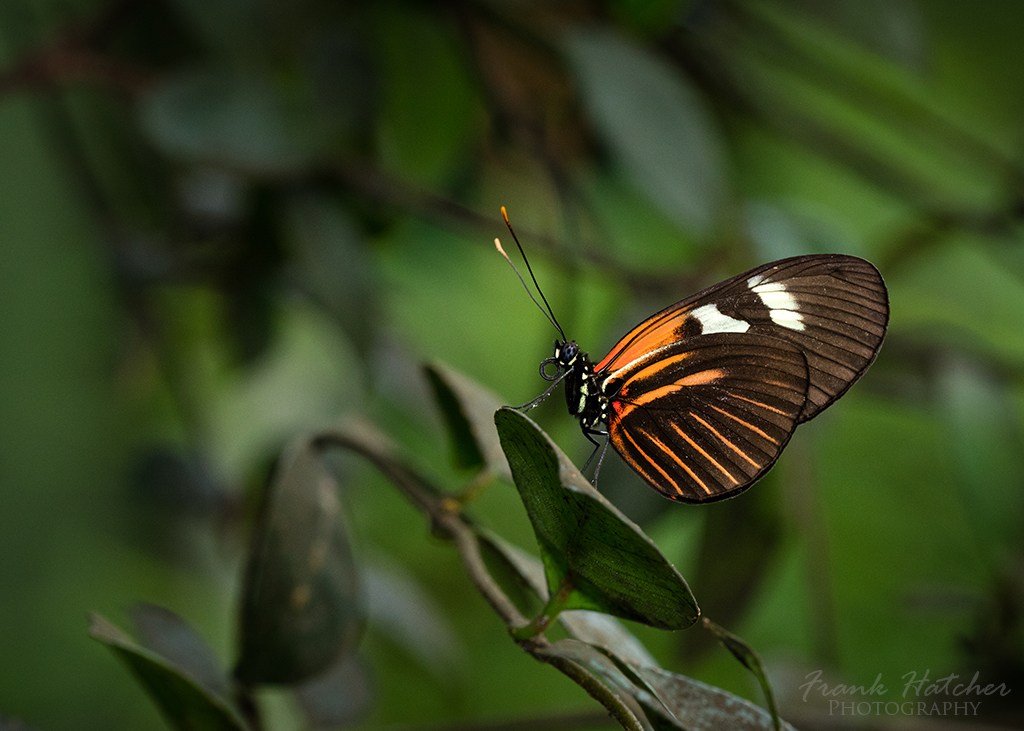
Not as amazing as the shots Oliver posted... but.. he did motivate me to go shoot some closeup and macro shots at the Butterfly Wonderland here in town.
I used the Zeiss 135mm and the Sigma 150mm macro. It's 85% humidity in the atrium. YUCK! but it keeps the butterflies happy and healthy.
On to the shots. ( I haven't shot macro in over a year.. be gentle)
EB-1 wrote:
Really? It's 2015 not 1975. Canon has only a handful of MF lenses for good reason. The 5D as other EOS series is an AF camera. Why would Canon design new bodies oriented to manual focus as was popular in the 19th-20th centuries?
However, if the AF is not up to par that's a different issue that needs to be addressed.
EBH
Because even the best PDAF system available today (5DM3/1DX) doesn't have the precision needed to produce peak MTF focus movement on a consistent basis. For example the 5DM3 has the best PDAF precision I've ever used yet if you lookup Roger C's AF consistency tests you'll see a non-trivial spread of measured MTFs across multiple AF cycles. And that's at only 22MP. Unless the 5DS has made a considerable leap in precision that means it will require even more care in focusing to produce maximum resolution.
EB-1 wrote:
Really? It's 2015 not 1975. Canon has only a handful of MF lenses for good reason. The 5D as other EOS series is an AF camera. Why would Canon design new bodies oriented to manual focus as was popular in the 19th-20th centuries?
However, if the AF is not up to par that's a different issue that needs to be addressed.
EBH
Pardon me, but I love using my manual focus lenses...I don't care what decade this is.
As much as I enjoy my 5D III, I don't use it for hand-held shooting with my manual focus lenses. I use my more technologically advanced cameras for that. You know, the ones with that very-21st century technology called an EVF. I am kidding (about "more technologically advanced"), but my point is simply that I don't love the disparaging comments suggesting that the use of manual focus lenses is an old-fashioned thing from a long bygone era. I appreciate that some manufactures are using advanced technology (like EVFs and IBIS) to make using manual focus lenses easier than they ever have been.


 And some times as you know in night photography, you can only MF due to low light. I can still MF well enough most of the time with the stock screen and for those times I need more precision I can check quickly in LV.






 I am kidding (about "more technologically advanced"), but my point is simply that I don't love the disparaging comments suggesting that the use of manual focus lenses is an old-fashioned thing from a long bygone era. I appreciate that some manufactures are using advanced technology (like EVFs and IBIS) to make using manual focus lenses easier than they ever have been.