This topic is in the 2015 archive. You can read it and like its posts here. It is read only.
Archive 2015Official Sigma 150-600mm Image Thread
p.15 #1Official Sigma 150-600mm Image Thread
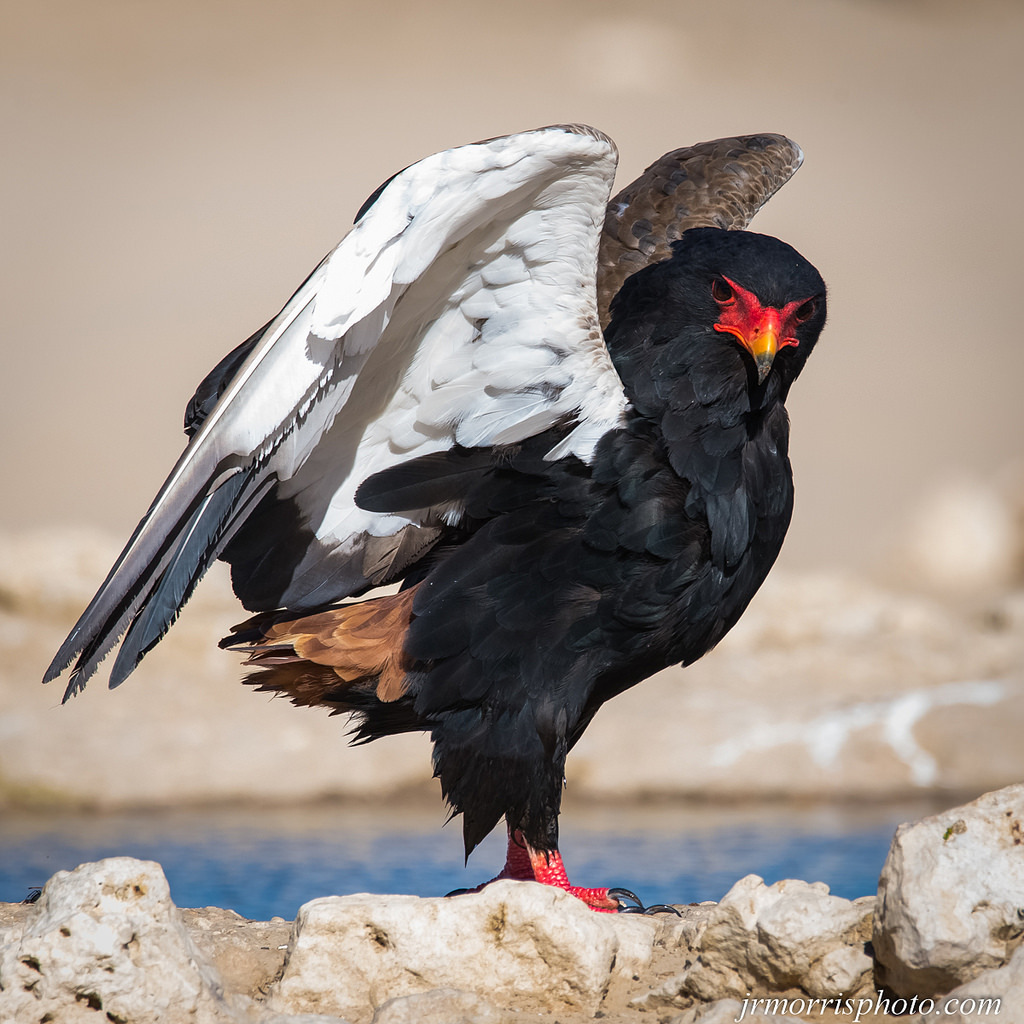
Sigma 150-600mm C/ Nikon D610
Kalahari, South Africa
Kalahari, South Africa
 |
||
 |
||
 |
Nov 20, 2015 at 09:17 PM

p.15 #3Official Sigma 150-600mm Image Thread
I recently got a Sigma 150-600 C and I' using with with my D800. I need some owners' feed backs and honest opinions about this lens. Like most of reviewers say that IQ from 150-350mm is very sharp,400-450mm still good and it gets a little soft from 500-600mm. Buy my copy particularly looks to be soft @ 600mm. The image below was taken hand-held,@ f/8, 1/1600, iso 200. The bird was still so it gave me a good opportunity to shoot. But when I checked the image on my monitor,all the images shot @ 600mm are disappointingly soft. But when I applied about 10-15% sharpening, it recovered quite a lot of details, becoming visibly sharper. Buy my photography friend,Morris( who is a good contributor to FM) said to me, I should be able to get a sharper image than I got and that he showed me a bird photo that his friend took with the Sigma 150-600 C @ 600. I was blown away by its IQ. Later on, I took more images using my tripod but the IQ from 600 still remained the same.
So before I decide to return this copy for another one, I want to ask you about what a realistic expectation from IQ you'd get from 600mm is. Do you get a acceptably sharp image all the time? Or do you have to sharpen it all the time?
Should my image though it's sharpened a bit, be better? Or is this what I should expect from this lens.
I really appreciate your help.
Thank you.
Hide Takahashi
https://wildlifephotography.smugmug.com/Birds/Birds/i-pZv3Xv2/0/XL/bird%2053-crop2-XL.jpg
Nov 22, 2015 at 02:32 PM
p.15 #4Official Sigma 150-600mm Image Thread
It could be that this is a softer copy or some AF adjustments are required.
Have you used the dock by chance?
Have you used the dock by chance?
Nov 22, 2015 at 03:04 PM
p.15 #5Official Sigma 150-600mm Image Thread
Hello Hide Takahashi, (p.15,#3)
To me, your picture seems fine as the eyes look very sharp. In page 13, #11 I have posted a shot on evaluation of UV filter. It is a reasonably objective method to assess a parameter when in doubt. You can take a few shots similarly and compare. Example - distance of 20 or 40ft (depending on space available) to subject, live view focusing, 10sec timer, tripod, 600mm settings, OS off. Cloth is a good subject as it has close weaves. The cloth should be taught and flat without wrinkles and undulations. A piece of text cut from standard printing sheet will also be useful. The flatness is important as everything of the subject should be a single plane to avoid issues due to DOF. Taking RAW format and using programs like photivo or Rawtherapee will give you complete control on processing sothat you can disable most of the de-noising and sharpening features. If you are not familiar with such processors, Nikon viewNX or whatever is supplied with the camera is okay but disable those features. If you can post a couple of such shots, many in this forum will be able to give you valuable comments. Sigma has a sophisticated lens testing method and I don't think different copies will show variance unless you are unlucky to get one of their production line testing rejections due to some operator by error putting it into the "passed" bin instead of "rejects" bin !
Edited on Nov 24, 2015 at 07:52 AM · View previous versions
Nov 24, 2015 at 06:06 AM
p.15 #6Official Sigma 150-600mm Image Thread
I found that the filter degraded the sharpness of my lens also so I took it off.
Nov 24, 2015 at 06:53 AM
p.15 #7Official Sigma 150-600mm Image Thread
Hello Laslo Varadi,
What was the brand and part description of your filter ? I will soon evaluate sigma WR UV filter AFJ9B0 presuming it will have un-detectable degradation of IQ. The dealer has agreed to give for test with the condition that I need buy only if performance is acceptable to me.
What was the brand and part description of your filter ? I will soon evaluate sigma WR UV filter AFJ9B0 presuming it will have un-detectable degradation of IQ. The dealer has agreed to give for test with the condition that I need buy only if performance is acceptable to me.
Nov 24, 2015 at 07:49 AM
p.15 #8Official Sigma 150-600mm Image Thread
unni wrote:
Hello Hide Takahashi, (p.15,#3)
To me, your picture seems fine as the eyes look very sharp. In page 13, #11 I have posted a shot on evaluation of UV filter. It is a reasonably objective method to assess a parameter when in doubt. You can take a few shots similarly and compare. Example - distance of 20 or 40ft (depending on space available) to subject, live view focusing, 10sec timer, tripod, 600mm settings, OS off. Cloth is a good subject as it has close weaves. The cloth should be taught and flat without wrinkles and undulations. A piece of text cut...Show more →
Thank you for such detailed information. I found that y in-camera sharpening was set to +2 and before I got this Sigma 150-600 C, I got very sharp images from all my other lenses but their focal length are from 24-300. I thought that @600,it's not so much forgiving as shorter focal length so I set the camera sharpening to +4. Although @ f6.3, it's not really sharp but it's better than before and @ f8-11, it get sharp. I will do more tests like you mentioned as well as some field test.
I'm not familiar with the soft wares you mentioned but I will look into them. I have a feeling now that my lens may not be a bad copy. If it's my user's fault, then I will take it over the real lens problem any time.
Nov 24, 2015 at 12:29 PM
p.15 #9Official Sigma 150-600mm Image Thread
In the link below, you can see some evaluation pictures of the 150-600C though it is part of a comparison study with the Nikon 200-500. Basically, I do not see it much meaningful to compare two lenses of different focal lengths though there is a good amount of overlap. Compromises have to be made for the extra 100mm of the 150-600C. It is a fact that 150-600C is soft relative to high end lenses but good results are easily possible by mild sharpening. Usually, sharpening may need an additional step of de-noising. Examining the image at 100% in plain areas after sharpening will show it. If its too much, select an appropriate algorithm to de-noise. I mostly use the "GreyCStoration on L" of photivo for the de-noising. Different algorithms have to be tried as picture content has an effect on effectiveness of each.
http://www.dpreview.com/forums/thread/3903795
http://www.dpreview.com/forums/thread/3903795
Nov 25, 2015 at 09:53 AM
p.15 #10Official Sigma 150-600mm Image Thread
Hide Takahashi wrote:
I recently got a Sigma 150-600 C and I' using with with my D800. I need some owners' feed backs and honest opinions about this lens. Like most of reviewers say that IQ from 150-350mm is very sharp,400-450mm still good and it gets a little soft from 500-600mm. Buy my copy particularly looks to be soft @ 600mm. The image below was taken hand-held,@ f/8, 1/1600, iso 200. The bird was still so it gave me a good opportunity to shoot. But when I checked the image on my monitor,all the images shot @ 600mm are disappointingly soft. But...Show more →
I just returned from Africa and ran about 20,000 shots through the Sigma 150-600mm C mostly at 600mm and from my experience found it quite sharp at 600mm when stopped down to f8(I pretty much leave it there). The Bateleur at the top of the page was shot at 600mm, f8, ss 1/1250 and iso1100. I've yet to put it on a tripod but do hope to one of these days. I also don't use a filter of any kind. It does struggle in low light but is to be expected from this caliber lens.
It sounds like you are shooting Raw so I would expect to do some post sharpening. I'm looking at your image on a laptop and it appears underexposed just a bit, but that could be my screen. Did you shoot more images trying different settings?
I would run many images through it with various settings and if you are not happy, return it and don't fight it if you are not pleased with the results.
John
Nov 26, 2015 at 01:20 AM
p.15 #11Official Sigma 150-600mm Image Thread
bridger1215 wrote:
So before I decide to return this copy for another one, I want to ask you about what a realistic expectation from IQ you'd get from 600mm is. Do you get a acceptably sharp image all the time? Or do you have to sharpen it all the time?
Should my image though it's sharpened a bit, be better? Or is this what I should expect from this lens.
I really appreciate your help.
Thank you.
Hide Takahashi
https://wildlifephotography.smugmug.com/Birds/Birds/i-pZv3Xv2/0/XL/bird%2053-crop2-XL.jpgI just returned from Africa and ran about 20,000 shots through the Sigma 150-600mm C mostly at 600mm and from my experience found it quite sharp at 600mm when stopped down to f8(I pretty much leave it there). The Bateleur at the top of the page was shot at 600mm, f8, ss 1/1250 and iso1100. I've yet to put it on a tripod but do hope to one of these days. I also don't use a filter of any kind. It does struggle in low light but is to be expected from this caliber lens.
It sounds like you are shooting...Show more →
Thank you for your comments, John. After I set the in-camera sharpening to +4, I took several distance subject shots using various focal length and it looks to be sharp @ f8. I'll need to some field test after Thanksgiving.
For this particular image I posted, I needed to underexpose a little to get more details because the intense sun was hitting on the bird face.
I hope my next field test will come out good and if it didn't, I will return it.
Hide
Hide Takahashi wrote
I recently got a Sigma 150-600 C and I' using with with my D800. I need some owners' feed backs and honest opinions about this lens. Like most of reviewers say that IQ from 150-350mm is very sharp,400-450mm still good and it gets a little soft from 500-600mm. Buy my copy particularly looks to be soft @ 600mm. The image below was taken hand-held,@ f/8, 1/1600, iso 200. The bird was still so it gave me a good opportunity to shoot. But when I checked the image on my monitor,all the images shot @ 600mm are disappointingly soft. But when I applied about 10-15% sharpening, it recovered quite a lot of details, becoming visibly sharper. Buy my photography friend,Morris( who is a good contributor to FM) said to me, I should be able to get a sharper image than I got and that he showed me a bird photo that his friend took with the Sigma 150-600 C @ 600. I was blown away by its IQ. Later on, I took more images using my tripod but the IQ from 600 still remained the same.So before I decide to return this copy for another one, I want to ask you about what a realistic expectation from IQ you'd get from 600mm is. Do you get a acceptably sharp image all the time? Or do you have to sharpen it all the time?
Should my image though it's sharpened a bit, be better? Or is this what I should expect from this lens.
I really appreciate your help.
Thank you.
Hide Takahashi
https://wildlifephotography.smugmug.com/Birds/Birds/i-pZv3Xv2/0/XL/bird%2053-crop2-XL.jpg
It sounds like you are shooting...Show more →
Thank you for your comments, John. After I set the in-camera sharpening to +4, I took several distance subject shots using various focal length and it looks to be sharp @ f8. I'll need to some field test after Thanksgiving.
For this particular image I posted, I needed to underexpose a little to get more details because the intense sun was hitting on the bird face.
I hope my next field test will come out good and if it didn't, I will return it.
Hide
Nov 26, 2015 at 02:21 AM
p.15 #12Official Sigma 150-600mm Image Thread
unni wrote:
In the link below, you can see some evaluation pictures of the 150-600C though it is part of a comparison study with the Nikon 200-500. Basically, I do not see it much meaningful to compare two lenses of different focal lengths though there is a good amount of overlap. Compromises have to be made for the extra 100mm of the 150-600C. It is a fact that 150-600C is soft relative to high end lenses but good results are easily possible by mild sharpening. Usually, sharpening may need an additional step of de-noising. Examining the image at 100% in plain areas...Show more →
I agree with you in that you'll need to do some de-noise job after sharpening. Is Photivo a better raw converter than PS,NX NX View?
Hide
Nov 26, 2015 at 02:26 AM
p.15 #13Official Sigma 150-600mm Image Thread
Hide Takahashi wrote:
http://www.dpreview.com/forums/thread/3903795I agree with you in that you'll need to do some de-noise job after sharpening. Is Photivo a better raw converter than PS,NX NX View?
Hide
Photivo and Rawtherapee are open source raw processing s/w. They have many good features and choices of algorithms. Photivo documentation needs improvement and no recent updations but it is one of the best. Rawtherapee is continually updated, has 32 bit floating point, forums are active and documentation is good. Both will look complicated initially ! PS being commercial, will be definitely great and will have many tutorials in the net. View NX is basic and good but features are not sufficient.
It is better to use the same software with which one is familiar, especially when you are evaluating something else. Using a new one will add-in errors and inefficiency which could spoil the lens evaluation tests.
unni wrote
In the link below, you can see some evaluation pictures of the 150-600C though it is part of a comparison study with the Nikon 200-500. Basically, I do not see it much meaningful to compare two lenses of different focal lengths though there is a good amount of overlap. Compromises have to be made for the extra 100mm of the 150-600C. It is a fact that 150-600C is soft relative to high end lenses but good results are easily possible by mild sharpening. Usually, sharpening may need an additional step of de-noising. Examining the image at 100% in plain areas after sharpening will show it. If its too much, select an appropriate algorithm to de-noise. I mostly use the "GreyCStoration on L" of photivo for the de-noising. Different algorithms have to be tried as picture content has an effect on effectiveness of each.http://www.dpreview.com/forums/thread/3903795
Hide
Photivo and Rawtherapee are open source raw processing s/w. They have many good features and choices of algorithms. Photivo documentation needs improvement and no recent updations but it is one of the best. Rawtherapee is continually updated, has 32 bit floating point, forums are active and documentation is good. Both will look complicated initially ! PS being commercial, will be definitely great and will have many tutorials in the net. View NX is basic and good but features are not sufficient.
It is better to use the same software with which one is familiar, especially when you are evaluating something else. Using a new one will add-in errors and inefficiency which could spoil the lens evaluation tests.
Nov 26, 2015 at 10:08 AM

p.15 #15Official Sigma 150-600mm Image Thread
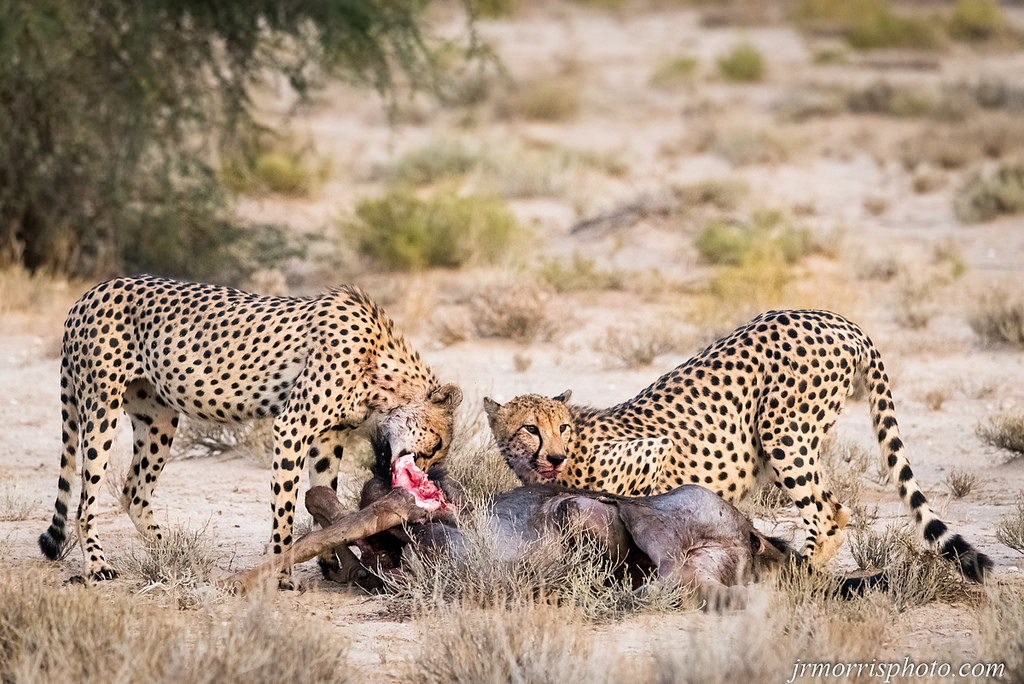
Sigma 150-600mm C/ Nikon D610
Kalahari, South Africa
Kalahari, South Africa
|
||
 |
||
|
Nov 27, 2015 at 11:36 AM
p.15 #16Official Sigma 150-600mm Image Thread
Still testing my Sigma 150-600 C with my D800.
C&C are welcome.
#1 f/8, 1/400,ISO 800, @ 310mm
https://wildlifephotography.smugmug.com/Birds/Birds/i-4LKwmF3/0/X2/DSC_2831bird%2070-X2.jpg
#2 f/8, 1/200, ISO 500, @ 600mm
https://wildlifephotography.smugmug.com/Birds/Birds/i-JfppLcq/0/XL/DSC_2855DSC_2855-XL.jpg
#3 f7.1, 1/800, ISO 640, @ 600mm
https://wildlifephotography.smugmug.com/Birds/Birds/i-NfFcWdP/0/XL/DSC_2767bird%2073-XL.jpg
#4 f/8, 1/320, ISO 800, @ 220mm
https://wildlifephotography.smugmug.com/Birds/Birds/i-xrqvvtr/0/X3/DSC_2812bird%2072-X3.jpg
Nov 27, 2015 at 12:29 PM

p.15 #18Official Sigma 150-600mm Image Thread
unni wrote:
Nikon D3100, Sigma 150-600C, handheld, 1-320sec, f7.1, ISO800, 600mm, open source Photivo and Gimp for processing
https://farm1.staticflickr.com/761/23371239146_f08d2851de_b.jpgMacaque by unni, on Flickr
Was taking a step or two to your left possible to get the stick out of the frame? Nice sharp and well exposed image.
Morris
Nov 29, 2015 at 09:13 AM
p.15 #19Official Sigma 150-600mm Image Thread
 112215DSC_6312 by Morris Altman, on Flickr
D300 + Sigma 150 - 600 Sport @ 440mm, ISO 400, 1/40, f6.3, fill flash (SB910 + Better Beamer)
Morris
Nov 29, 2015 at 09:15 AM
p.15 #20Official Sigma 150-600mm Image Thread
morris wrote:
https://farm1.staticflickr.com/761/23371239146_f08d2851de_b.jpgMacaque by unni, on FlickrWas taking a step or two to your left possible to get the stick out of the frame? Nice sharp and well exposed image.
Morris
Thanks Morris.
I was on a platform and there wasn't much space on the side. I do not remember seeing the stick in the viewfinder, would have missed observing it as I had to be quick to take the shot before the monkey moved away. I could take only one shot and it vanished before I could frame another one.
unni wrote
Nikon D3100, Sigma 150-600C, handheld, 1-320sec, f7.1, ISO800, 600mm, open source Photivo and Gimp for processinghttps://farm1.staticflickr.com/761/23371239146_f08d2851de_b.jpgMacaque by unni, on Flickr
Morris
Thanks Morris.
I was on a platform and there wasn't much space on the side. I do not remember seeing the stick in the viewfinder, would have missed observing it as I had to be quick to take the shot before the monkey moved away. I could take only one shot and it vanished before I could frame another one.
Nov 29, 2015 at 10:54 AM