ilkka_nissila wrote:
....I read from photographylife that the 1.7X optically is quite good on the 300 PF but the AF is sluggish. I don't recall the exact words used.
I find that even with the 1.4X the AF of the 300 PF tends to become a bit more erratic than when used without TC. But the detail is decent.
Yes, exactly. After careful fine tuning with the TC17EII images were acceptably sharp in good light at close distances. (And I'm very fussy about sharpness). But the AF struggled horribly @f6.7 even on single point. It just wasn't going to be a good solution for small birds around here that never sit still.
The other thing that I noticed is that a high percentage of shots were not sharp. I usually leave VR on SPORT mode on my E lenses and don't worry about the shutter speeds, but even at 1/2000 I was getting a lot of soft images...something that would never happen on my 600E. I can't put my finger on it, but there's something squirrely about the 300PF's VR. (Mine is not one of the problem-plagued originals).
ilkka_nissila wrote:
Is this because of the optical quality or mostly the AF? I have the 300 PF and TC-14E III and I read from photographylife that the 1.7X optically is quite good on the 300 PF but the AF is sluggish. I don't recall the exact words used.
Of course TC's slow down AF. That is because less light is reaching the sensor. Of course IQ is reduced with TC's. The laws of optical physics.
So what? There are reasons why many photographers use TC's and they find the results are acceptable TO THEM. Less cost, less weight, smaller size, and easier to maneuver.
Many test have proved that using a TC gives better results than upsizing.
If you want the best IQ, sure go use a 500 or 600 f4. However, an image captured with something one can handle is better than an image that you could not capture with a lens you did not want to use, or could not use.
Different strokes ............
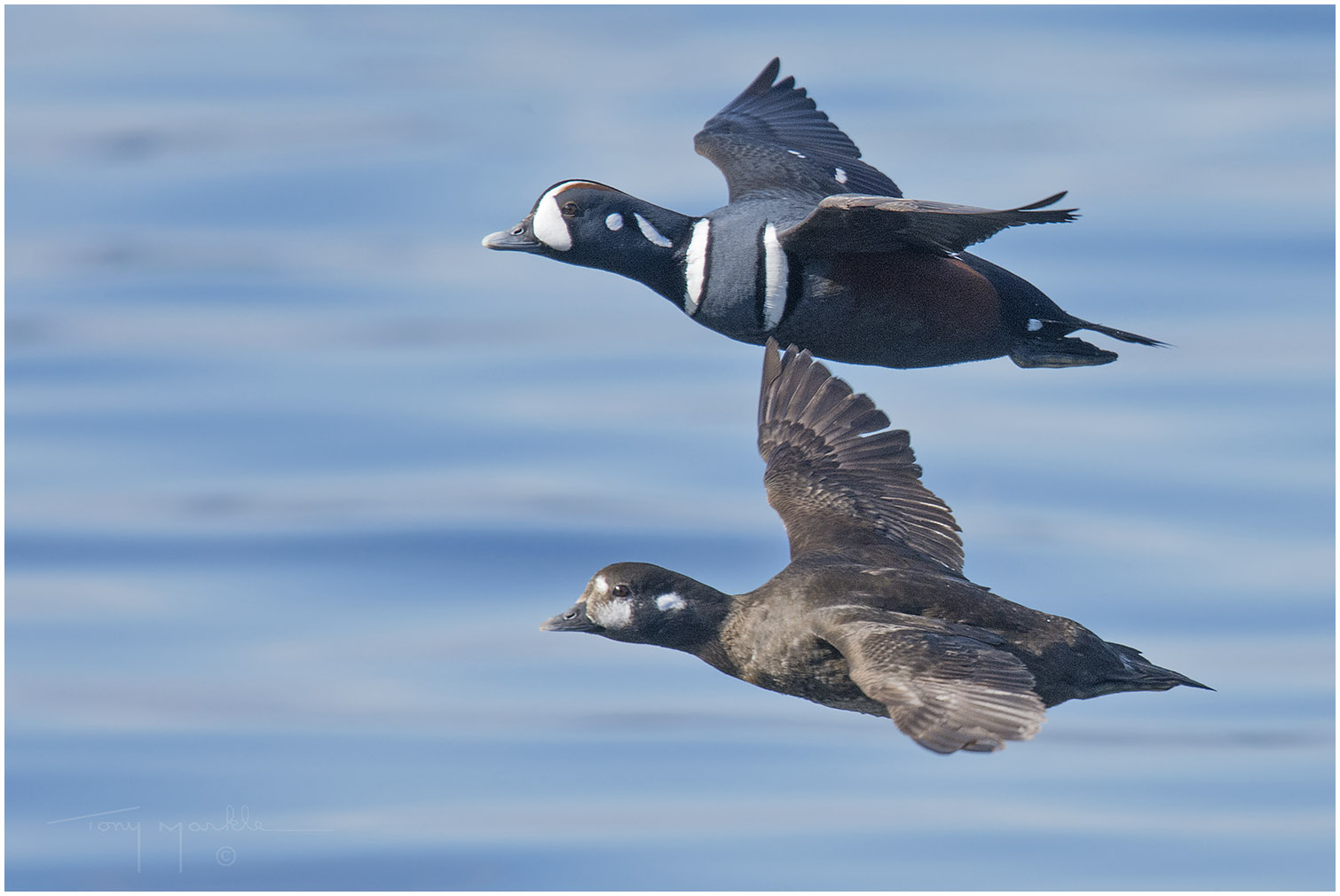
Hardly the sharpest shot, but I certainly was not going to be climbing over slippery rocks and shooting handheld with a 600 f4.
Yes. I find that better results are obtained using the D850 with EFCS ON and Qc mode. I realize it increases the shutter delay a bit but I find the increase in sharpness for hand held shots to be notable and I've gotten used to shooting in this way. Of course if one needs high fps (CH) or better individual shot timing (S) then one can not enjoy the benefits of the electronic shutter. Heavier lenses or lenses with less magnification should have fewer issues with the mechanical shutter.
Mounting the TC reduces the depth of field at a given distance so that may be why the AF needs to operate a bit slower so as to achieve the desired precision (I'm not saying it does, but that would seem a logical reason to slow the motor down).
Gary Irwin wrote:
[I usually leave VR on SPORT mode on my E lenses ....
Gary - can you please explain a bit further on the Sport mode ? I am usually turning of VR for s/s > 1250. Is the sport mode good at any speeds so that one can leave the lens in Sport mode for ever ?
sritri wrote:
Gary - can you please explain a bit further on the Sport mode ? I am usually turning of VR for s/s > 1250. Is the sport mode good at any speeds so that one can leave the lens in Sport mode for ever ?
Well let's call it a working theory. I originally read about it on Brad Hill's Blog quite a while ago. I've also seen some writeups that explain the technology and why Sport/Active is better for some things like BIF, for example but as usual I can't put my virtual finger on them at the moment.
Anyway, it's my understanding that NORMAL mode is supposed to be used where you are stationary and the subject is moving erratically. In this case VR compensates for "shake" in both horizontal and vertical axis. Most importantly, the mechanism attempts to RE-CENTRE itself after every shot, no doubt to be most effective for the next shot.
SPORT mode (formerly ACTIVE mode) is supposed to be used when panning, and VR compensates primarily for horizontal "shake". It DOES NOT attempt to recenter after every shot but rather works "relatively" from the previous position. That last part is the key.
The theory goes that when the action and shutter speeds are fast, in NORMAL mode VR can be easily overwhelmed because both axis are involved and because it's always trying to re-centre after each shot. Since it doesn't try to re-centre after every shot in SPORT mode, the VR mechanism isn't working as hard to reset itself. Of course unless all the jiggles and shakes are equally left or right once and a while you're liable to hit the "hard stop" and get an OOF shot. But interestingly, it just doesn't seem to happen that often.
Whether this is anywhere close to the truth or just urban legend, I don't know. All I can confirm is that my "keepers" have gone way up when use SPORT mode for all of my shooting, so much so that I no longer bother turning VR off at any shutter speed. I've done dozen-shot long BIF sequences with my D850+600E in SPORT mode and every single image was sharp, and that's just not been my experience when shooting NORMAL mode. The only downside is that SPORT mode isn't quite as effective as NORMAL for general VR use.
sritri wrote:
Gary - can you please explain a bit further on the Sport mode ? I am usually turning of VR for s/s > 1250. Is the sport mode good at any speeds so that one can leave the lens in Sport mode for ever ?
Sport and active are entirely different things and normal mode is also different in lenses that have sport mode from normal mode in lenses that have active mode.
In lenses with the normal/active division, normal mode detects panning direction and permits movement along it, compensating for the shake in the the orthogonal direction. Active mode is for situations where vigorous shake is expected such as on a moving platform. My experience with active mode is that in normal circumstances, it can produce noticeably reduced sharpness but it can lead to usable results in some situations where there is a lot of vigorous shake. I basically never use active mode as I’ve gotten such bad experiences with it. Even in a small boat in windy conditions I got better results using normal mode. It is possible that in newer lenses, active mode has improved.
Sport mode is the opposite and it is designed to handle erratically moving subjects (active mode is for moving platform) and it compensates less for vibrations than normal mode but it permits easier following of the subject when it changes direction of movement. In lenses which have the normal/sport division, normal mode is the more aggressive one and tries to compensate for vibration as effectively as possible, but this results in the VR lens group moving more off-center than in sport mode which performs minimal correction and so after the shot has been taken, the viewfinder image jumps as the VR group is recentered.
In lenses which feature normal/active modes, I use normal mode. In lenses with the normal/sport division, I use sport mode almost always, but occasionally when hand holding a shot of a static subject, I may use normal mode. Generally I prefer both the shooting experience as well as results from using sport mode.
ilkka_nissila wrote:
Sport and active are entirely different things and normal mode is also different in lenses that have sport mode from normal mode in lenses that have active mode.
In lenses with the normal/active division, normal mode detects panning direction and permits movement along it, compensating for the shake in the the orthogonal direction. Active mode is for situations where vigorous shake is expected such as on a moving platform. My experience with active mode is that in normal circumstances, it can produce noticeably reduced sharpness but it can lead to usable results in some situations where there is a lot of vigorous shake. I basically never use active mode as I’ve gotten such bad experiences with it. Even in a small boat in windy conditions I got better results using normal mode. It is possible that in newer lenses, active mode has improved.
Sport mode is the opposite and it is designed to handle erratically moving subjects (active mode is for moving platform) and it compensates less for vibrations than normal mode but it permits easier following of the subject when it changes direction of movement. In lenses which have the normal/sport division, normal mode is the more aggressive one and tries to compensate for vibration as effectively as possible, but this results in the VR lens group moving more off-center than in sport mode which performs minimal correction and so after the shot has been taken, the viewfinder image jumps as the VR group is recentered.
In lenses which feature normal/active modes, I use normal mode. In lenses with the normal/sport division, I use sport mode almost always, but occasionally when hand holding a shot of a static subject, I may use normal mode. Generally I prefer both the shooting experience as well as results from using sport mode. ...Show more →
That's good information. I have the 80-400 G which has the Active mode option and I rarely have used it. On the 300 PF it seems I have been mostly been using Normal mode and only occasionally Sport. Seems like I should use Sport mode more.
Chris Dees wrote:
Beautifull.
Is this with the D500 or D850?
Mine is a little sharper with the D500
These ones were D850. My 300PF plays nicer with my D500 and needs way less focus adjustment. With the D850 I have -18 for the 2xTC and -15 for the 1.7TC. But after doing those adjustments I don't see much difference in the final output between the two bodies. The D500 needs something in the -4 range (can't remember exactly).
arbitrage wrote:
These ones were D850. My 300PF plays nicer with my D500 and needs way less focus adjustment. With the D850 I have -18 for the 2xTC and -15 for the 1.7TC. But after doing those adjustments I don't see much difference in the final output between the two bodies. The D500 needs something in the -4 range (can't remember exactly).
I use the 300PF with the 1.4x and 2.0x version III TC's
D850 = 0, 0, -10
D500 = -4, -4, +4
The corrections for the 2.0x looks a bit odd to me, but it was double checked.