Tariq Gibran wrote:
So I'm not crazy after all in my impression of the lower DR from the raws which I previously posted about (someone suggested it was not really lower DR but a poor tone curve implementation by Samsung). If it is/ was a tone curve issue, underexposure to protect those highlights and then recovery of the shadows in post would show this...but you seem to be confirming there is not the room in the shadows to do so - at least to the degree possible with other APS and even m43 options. So, with regard to DR, your impression thus far is that it shoots like a smaller sensor camera than m43?
Yes I made that comment and I still maintain that highlight recovery doesn't tell you about sensor DR. It is completely a function of tone curve and metering. But I completely agree with you that if this lower headroom in highlight does not result in extra headroom in shadows then that does indicate lower DR.
There was a time when I owned both a Sony NEX-5N and Samsung NX200. When I initially took side-by-side pictures with them I thought that Samsung was overstating its ISO ratings because at similar exposures, the NX200 image was significantly darker. However after close examination I found out that they were actually giving the same exposure except that NX200 had a much steeper tone curve which transitions from bright to mid tones much faster giving a darker image. So if NX1 has a similar jpeg recipe as NX200 then I would not be surprised at all that it doesn't give much highlight room. Now you might expect that NX200 was universally darker than NEX-5N everywhere other than the most bright parts. However that was not the case. In some of the dark to mid-tones NX200 was actually brighter than NEX-5N. So it was a substantially different distribution of tones between the two. These things make it hard to compare because the shadow in one may not be the shadow in other at all.
Jordan, if you ever get the time it would be really interesting if you could take the same shot at the same time with both NX1 and say A6000 (if you still have it), making sure not to blow the highlights on either. Then compare the noise only after you have process both images to have similar brightness in all areas of the image.
I own the a6000, so I can do that, I'll also do my X-T1 at the same time. The more I shoot with the NX1, the more it does seem to be more to do with a steeper tone curve. The data appears to be there a lot of times, but it sharply drops in the highlights, requiring greater local correction than I'm used to.
One thing I'm very sure of is that I really, really like this camera. Samsung has made a very serious go here. Image quality is outstanding, it's super responsive, AF is phenomenal in most situations (it does slow down a fair bit in dim light, but in good light it's amazing), EVF and rear screen are probably the best looking on any camera I've ever used (though I still prefer the X-T1's because it's bigger and lags far less in low light), has excellent controls, is well built, etc, etc.... It's really a stellar camera.
Jman13 wrote:
I own the a6000, so I can do that, I'll also do my X-T1 at the same time. The more I shoot with the NX1, the more it does seem to be more to do with a steeper tone curve. The data appears to be there a lot of times, but it sharply drops in the highlights, requiring greater local correction than I'm used to.
Looking forward to seeing that comparison. You probably would anyway, but if you bracket the NX1 with underexposure it should eliminate the variable of the histogram giving a false idea of highlight clipping (which with a steeper tonal curve would be doubly bad).
Tariq Gibran wrote:
Looking forward to seeing that comparison. You probably would anyway, but if you bracket the NX1 with underexposure it should eliminate the variable of the histogram giving a false idea of highlight clipping (which with a steeper tonal curve would be doubly bad).
Hey, what's that white stuff in your images?
Same here. I never owned A6000 but I'm definitely interested in seeing how it performs against X-T1 (especially in low light). Also, I would like to see how Samsung "S" lenses stack up against Fuji (especially 50-150 f2.8 vs 50-140)
I don't have the 50-150 for review (which is too bad) but I'll tell you the 16-50/2-2.8 is really good. It's not exceptional wide open, but it's fairly good (some edge softness and spherical aberration up close). It's excellent stopped down a bit. My gut feeling is that the Fuji 18-55 is similar, but of course a full stop slower. It's also similar in pixel sharpness to that lens, but on the much higher resolution sensor, so it's possible with both on 16MP sensors, the Samsung would be better. I also think that the Fuji 16-55 is likely going to be better optically wide open, though I won't have a 28 megapixel sensor to test it with. I'll know somewhat hopefully soon, as I'm hoping to have the Fuji 16-55 in my hands soon for review.
Overall, my gut feeling is that except for possible DR (and even that first impression is softening slightly as I use the camera more...I really do need to test it), it has the best APS-C image quality of any camera I've used. At lower ISOs, it really is much more comparable to full frame than to the other APS-C cameras. The files are really clean and have great tonality and so much detail. It does quite well at high ISOs too, though 12,800 and 25,600 aren't great, but through ISO 6400, it's really very good, and better than my a6000.
Jman13 wrote:
I don't have the 50-150 for review (which is too bad) but I'll tell you the 16-50/2-2.8 is really good. It's not exceptional wide open, but it's fairly good (some edge softness and spherical aberration up close). It's excellent stopped down a bit. My gut feeling is that the Fuji 18-55 is similar, but of course a full stop slower. It's also similar in pixel sharpness to that lens, but on the much higher resolution sensor, so it's possible with both on 16MP sensors, the Samsung would be better. I also think that the Fuji 16-55 is likely going to be better optically wide open, though I won't have a 28 megapixel sensor to test it with. I'll know somewhat hopefully soon, as I'm hoping to have the Fuji 16-55 in my hands soon for review.
Overall, my gut feeling is that except for possible DR (and even that first impression is softening slightly as I use the camera more...I really do need to test it), it has the best APS-C image quality of any camera I've used. At lower ISOs, it really is much more comparable to full frame than to the other APS-C cameras. The files are really clean and have great tonality and so much detail. It does quite well at high ISOs too, though 12,800 and 25,600 aren't great, but through ISO 6400, it's really very good, and better than my a6000. ...Show more →
Thank you for the details. How do the OOC jpegs compare to Fuji? Also, at higher ISO, if you resize the pictures to 16mpx, how do they compare with X-T1's output?
I haven't shot a lot of JPEGs yet, but enough to draw some preliminary conclusions. At low ISO, JPEG output is mostly pretty good. Colors are nice and natural and there's plenty of detail. Smooth areas are a bit compressed, though, and show some artificial 'grain' if you will, that is totally absent in the RAW files. At high ISO, the JPEGs aren't particularly good, with lots of smearing and artifacts. About the same as the original A7's high ISO JPEGs (which isn't a good thing).
In RAW at high ISO, the NX1 looks better than any other APS-C camera I've seen up until about 3200. At higher ISOs it's much closer. 6400 probably still has a slight edge on the X-T1 (when accounting for the resolution difference, and resizing as you noted), but 12,800 and 25,600 are a bit worse (they get really blotchy in the shadows at those ISOs, at least in dim light). However, I don't have a lot to draw from at the highest ISOs yet...only taken one shot at 12,800 and 9 at 25,600.
Thank you for the detailed reply. From what I've gathered from various reviews so far is that the BSI sensor doesn't really live up to the expectation in low light as people had hoped. Most likely it is because Samsung's decision to go for higher mpx count. They could have achieved a lot better low light performance (at least in theory) if they had stayed between 20-24 mpx.
I think that they produced an incredible sensor to be honest: keeping files as clean or cleaner at relatively high ISOs to the best competition, WITH that extra resolution? Impressive.
Jman13 wrote:
I think that they produced an incredible sensor to be honest: keeping files as clean or cleaner at relatively high ISOs to the best competition, WITH that extra resolution? Impressive.
Do you think that it is "good enough" to replace your Fuji as your main kit?
Good enough? Yes. Will it? No. The cost alone would be a driving factor, but ultimately I am concerned about size in addition to performance and image quality, and the package I'd want for this camera would be large and expensive indeed. (I'd want the NX1, 16-50 and 50-150...not small, which could be forgiven for the capability, but also over $4,000 just for the camera and those two lenses. That's a lot of cash.)
If I shot more action or printed larger regularly, I'd certainly consider it. If I were starting fresh, I might be swayed, but currently, the X-T1 and those great primes keep me well satisfied, and I have a very capable and small a6000 kit if I am shooting something where I want higher resolution. But if I'm evaluating the overall package and disregarding other considerations, the NX1 is probably the most complete mirrorless camera on the market right now.
ajamils wrote:
Thank you for the detailed reply. From what I've gathered from various reviews so far is that the BSI sensor doesn't really live up to the expectation in low light as people had hoped. Most likely it is because Samsung's decision to go for higher mpx count. They could have achieved a lot better low light performance (at least in theory) if they had stayed between 20-24 mpx.
I think you overestimate how much low light improvement could be had by knocking back just 4 or 8 MP. Maybe if they took it down to 8-14 MP, while keeping the same technology, there would be better low light performance. For better or worse, I think that's a non-starter in the market for anything but a specialist low-light camera like the A7s.
Jman13 wrote:
Good enough? Yes. Will it? No. The cost alone would be a driving factor, but ultimately I am concerned about size in addition to performance and image quality, and the package I'd want for this camera would be large and expensive indeed. (I'd want the NX1, 16-50 and 50-150...not small, which could be forgiven for the capability, but also over $4,000 just for the camera and those two lenses. That's a lot of cash.)
It's similar in price to the XT1, 16-55 and 50-140. While the NX1 is slightly more expensive for the body, IMO it does give you more for spending more. Considerably higher resolution sensor, very fast AF and 4K video for those who value it. As a longtime Canon 1 series shooter, this camera is extremely enticing based on the on-paper feature set. I guess what I'm hoping to see definitively tested is AF performance in demanding situations, primarily with a telephoto lens. It's unfortunate you don't have the 50-150 to test...
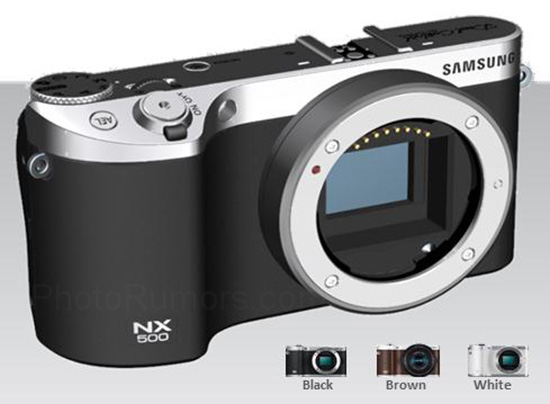
As for the NX500... same deal for me: no EVF, no interest, otherwise I'd consider getting it for alt lens use, though unfortunately M mount lenses seem to be a no-go on the NX mount...`
Indeed...which is why I said if I were starting new, this would be a very strong consideration. However, selling all my Fuji gear (well not all, since I review it and need a base system to continue that), and the price starts becoming prohibitive very quickly, especially once you start adding other lenses. However, if I were going with one system only and I didn't review them? I'd seriously consider the switch. The camera and (at least this) lens are very capable...more than capable actually. The only concern is: how serious is Samsung about the camera business. Sony has been in it long enough to think that there will still be e-mount cameras in 10 years. Samsung? Maybe. Maybe not. Heck, it wouldn't surprise me in 10 years if they were the dominant player, given their track record in other industries, but at this point it's a risky bet. The camera is great, though.
As to AF in 'demanding' situations. So far, it's only 'ok' there. If you have good light, it does a fantastic job. Probably the best in the mirrorless world, and the tracking is fantastic. In dimmer light, however, it's only average at best. Tracking isn't nearly as good indoors and in lower light scenarios, at least with this lens, it slows down a fair bit. I honestly think my X-T1 is the better focuser in dimmer light, including tracking, and neither are as good as the m4/3 cameras in dim light (for single shot). In good light, the Samsung is crazy fast, though.