p.16 #1 · A thinner sensor stack may be possible after all!
Lee Saxon wrote:
"even worse" ? I think Cosina is doing a spectacular job. The stuff they make themselves under the Voigtlander brand is well made too.
Also, I thought the cine lenses (not the rehoused ZF's, the real ones) were still made in Germany? And I thought the Japan thing started with the C/Y lenses and the ZF/ZE/etc line growing out of that once it ended; I had no idea the classic Hasselblad / Rollei stuff wasn't even German. Not that it really matters though, all you get for the increasingly absurd German price premium, at least these days, is awful quality control, if the stories about Leica are true.
I like Cosina too, though CV has had huge copy variations with lenses like the 21/4. And there is the Zeiss wobble, which was not handled well. As to issues with Leica quality control in germany, where are you getting that?
I'm not hearing it about current M lenses, and I've been watching boards filled with Leica haters ready to pounce, for years
Of course you get the odd person with a bad lens, but in general the quality of german stuff, including summarit seems great.
My understanding is that the Nadir was the 80s when some Canadian cams were not great, but I may be naive.
p.16 #2 · A thinner sensor stack may be possible after all!
sebboh wrote:
the "even worse" was sarcasm, i don't care where a lens was made. i was trying to point out the silliness of questioning the zeissiness of various designs by where they are manufactured.
as far as i know manufacture in japan was started with c/y. prior to that 35mm rollei production was done in singapore. i have no idea about medium format or cine equipment other than that my rolleicord was made in germany.
The Rollei 35 lenses were made in Germany as well as Singapore.
p.16 #4 · A thinner sensor stack may be possible after all!
As far as I'm concerned, made in Japan is more attractive than made in Germany (mostly by underpaid foreign labor). In the Leica M world, I have not heard yet of any ZM or VM lenses drifting but this is a common occurrence with German M lenses. Add to that lenses literally falling apart in pieces. We're not living in the 70s anymore if you had any doubts Japan and Korea are the current leaders in manufacturing quality.
p.16 #5 · A thinner sensor stack may be possible after all!
^^^ Clear voice saying as it is!
When in late 1970s Leica opened their division in Canada their new facility was technically superior to Wetzlar (posted excerpt from Puts's book on Mandler's thread about this very topic)
Not sure what is the end percentage needed for Leica to badge their lenses 'Made in Germany' but aren’t their lenses mostly made in Portugal? There are number of posts and videos showing quality of Portuguese production facilities, so perhaps one should check facts before knocking down Cosina.
p.16 #6 · A thinner sensor stack may be possible after all!
JaKo wrote:
When in late 1970s Leica opened their division in Canada their new facility was technically superior to Wetzlar (posted excerpt from Puts's book on Mandler's thread about this very topic)
I'm confused...is this different from ELCAN which Leitz established in Canada back in 1952?
p.16 #8 · A thinner sensor stack may be possible after all!
rscheffler wrote:
.........................
Even more OT, but now that Pentax (Ricoh) seems finally set to release a FF DSLR, maybe Ricoh can also put some effort into a GXR II with A24/36 M mount module.
I share your wishful thinking for that GXR-II Ron, but IMHO Ricoh keeps being the paradigm of inconsistency and unexpected decisions as far as photo products are concerned.
Instead of embarking themselves in that dubious FF DSLR affair where they will have to battle singlehanded with the Canikon duo and their impressive array of lenses and accessories (which Pentax hasn't, right now) they might enter the mirrorless arena fetching a niche, but solid segment that neither Leica nor Sony fulfill at present. A segment which is likely to grow or at least not to shrink in the immediate future.
For one thing, Ricoh can offer what Leica doesn't: affordable pricing and reliable/more refined electronics (better implementation of liveview, articulated LCD, EVF integrated in the body..)
On the other side, they can also offer what Sony doesn't with the current A7x lineup : friendliness with film era glass ( specially RF wides) and also ergonomics, controls and menus more akin to a photographer's mind. For instance, the GXR implementation of peaking is miles better than Sony's
That hypothetical ( and very improbable, I'm afraid ) GXRII-M wouldn't cost to Ricoh a single cent of investment on designing or manufacturing new lenses and shouldn't have to fight against the two big boys for the ever shrinking DSLR market.
Right, I'm familiar with that history which goes back to 1952. What is being referred to above with regard to "When in late 1970's Leica opened their division in Canada...". That's where I'm confused.
p.16 #12 · A thinner sensor stack may be possible after all!
mdemeyer wrote:
And rangefinder focusing foibles (of which there are many - and I love my ZM 50/1.5!) are all addressed by live view focusing. So, while the Sony and others of it's ilk have tradeoffs vs. classical rangefinder cameras that some love and others love to hate, we're all veering rather off-topic on this thread.
So I'll stop now and stay on track.
I think it still may be pertinent to this thread, simply because it seemed that there was an implication that there's a "correct" way calibrate Leica lenses at infinity, which isn't always necessary the case, and that makes the adapter situation a little tricky, especially if you use the lenses on both a rangefinder and LCD based camera.
p.16 #13 · A thinner sensor stack may be possible after all!
uhoh7 wrote: nice link and TY for that. But it's very superficial and stating what has been put forward from the lens introduction, no?
We've all learned the hard way how cover glass effects the edges and corners. So those diagrams simply show what we know, right?
Yes, except that the diagram shows a 2-mm plate and says Loxia.
We know zeiss designed the lens to perform better with the A7 sensor CG, because they said so at the beginning and because the wide ZMs show such smearing; they are going to have to change something.
What exactly did they change?
Why didn't they hit the ball out of the park with the Loxia 35 and their 2470 zoom?
You are way ahead of me in all this stuff, what do you think?
How was the Loxia 35/2 "specially adjusted" and why did it balloon into twice the size of the zm35/2?
If Zeiss say that they modified the design to apply a suitable reversed aberration, then that is what they did. I am not a lens designer, and which design parameters they tweaked to cancel the astigmatism does not really interest me. However, I would be surprised to hear that they reversed the aberration for anything else than the filter stack of the A7(r). It would not make sense.
I don't know why they tweaked the design of the existing Biogon though. They could have achieved a better 2/35 for the A7(r) if they had started from scratch.
By the way, I think that "15USD 35 Loxia is better on Mod" is a poor bet. In this way, the outcome depends on who is testing, sample variation, performance metrics and personal preference, etc. It should be something like "Zeiss tweaked the 2/35 specifically with the filter stack of the A7(r) in mind."
Then, ask Zeiss. I am not doing it, because I still feel embarrassed after the last time I asked for the obvious in order to settle a dispute here
p.16 #14 · A thinner sensor stack may be possible after all!
I would be interested if anyone has the Minolta CLE 28mm f2.8 M-Rokkor lens (preferably without the dreaded white spots) that has had the modification done on an A7/A7r. If so, I would be interested in hearing about the lens performance and if it may perform similarly to the tiny Minolta CLE MC 40mm f2 M-Rokkor lens. This could make an absolutely tiny package if it performs well.
p.16 #15 · A thinner sensor stack may be possible after all!
naturephoto1 wrote:
I would be interested if anyone has the Minolta CLE 28mm f2.8 M-Rokkor lens (preferably without the dreaded white spots) that has had the modification done on an A7/A7r. If so, I would be interested in hearing about the lens performance and if it may perform similarly to the tiny Minolta CLE MC 40mm f2 M-Rokkor lens. This could make an absolutely tiny package if it performs well.
Rich
+1
they're hard to find without the white spots though...
p.16 #16 · A thinner sensor stack may be possible after all!
naturephoto1 wrote:
I would be interested if anyone has the Minolta CLE 28mm f2.8 M-Rokkor lens (preferably without the dreaded white spots) that has had the modification done on an A7/A7r. If so, I would be interested in hearing about the lens performance and if it may perform similarly to the tiny Minolta CLE MC 40mm f2 M-Rokkor lens. This could make an absolutely tiny package if it performs well.
Rich
Hello
I have this lens (without white spots) and the Zeiss ZM25/2.8 and have sent my A7R to Kolari for conversion. Will report back as soon as I get it back. Hopefully by the end of this month.
p.16 #17 · A thinner sensor stack may be possible after all!
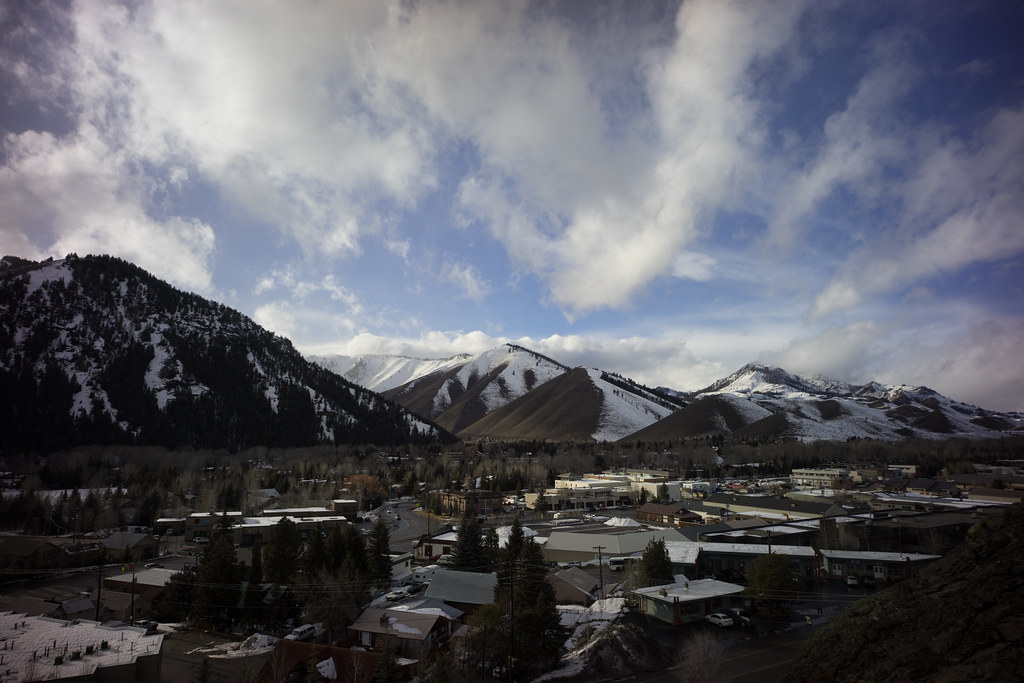
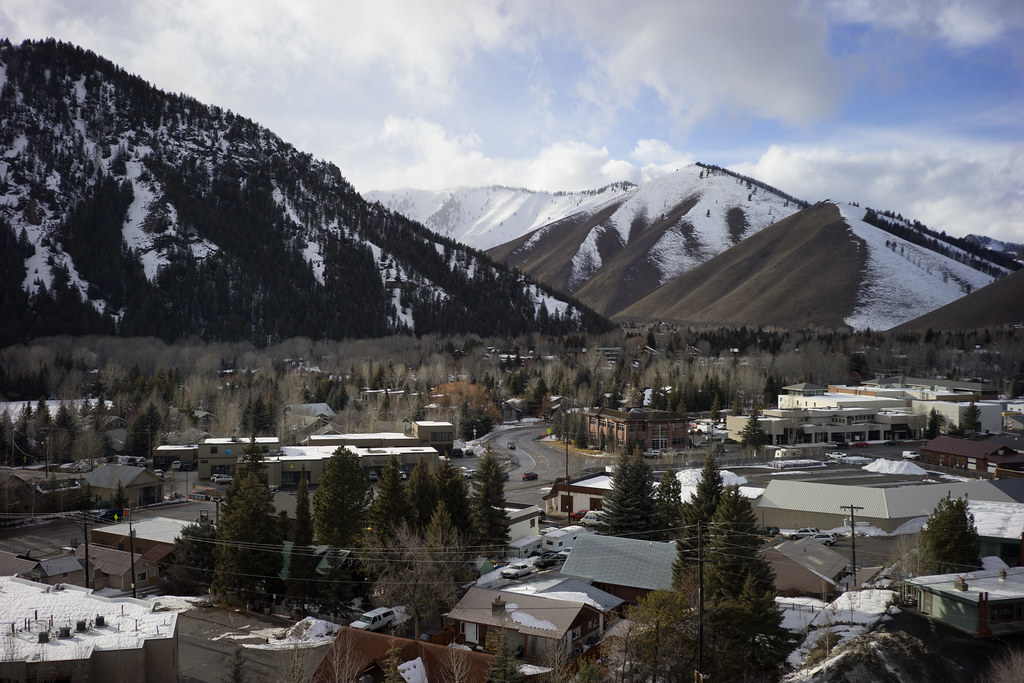
So, I had a short weather break and managed to get some shots with two lenses I consider "worst case", the tiny CV 21 and 35 Skopars. I had no expectations, but I thought I might as well see what they would do.
Since there is big copy variation and many of these lenses are decentered, not to mention the variable of adapters, these should not be seen as definitive, but these lenses can at least do this well.
For me, these lenses were totally unusable with heavy smearing at all apertures with infinity shots like this on the A7 and A7r. Here a close look will reveal considerable strangeness, but I'd say they are way better. I would not use them, I don't even use them on the M9, although they are much better than this with that camera.
p.16 #18 · A thinner sensor stack may be possible after all!
I'd agree the 21 is still not that great, but the 35 does look usable(on my iPad).
I still hope to see what the CV15 is like on a modified A7r before the arrival of CV15III
p.16 #19 · A thinner sensor stack may be possible after all!
douglasf13 wrote:
I think it still may be pertinent to this thread, simply because it seemed that there was an implication that there's a "correct" way calibrate Leica lenses at infinity, which isn't always necessary the case, and that makes the adapter situation a little tricky, especially if you use the lenses on both a rangefinder and LCD based camera.
I would just add with respect to the infinity stop calibration which affects both M9/M240 and A7 series. Generally the M lenses are calibrated with compromise to fit within the envelope of tolerances. The mount will vary and with a number of my M lenses, I sent back to Camera Clinic when I had the M9/M240/MM to match the infinity stop. Some cases it stopped short, and some were over. Every time the near, medium and far distances were calibrated at different f stops, there was a compromise to suit the best style of shooting. Sometimes the lens was well outside the tolerances and the cam iteself needed to be modified or replaced in Solms.
I do think once the "thin filter" mod evolves, then having the adapter matched to a group of lens/lenses would be a great to eliminate to question of de-centering and finding the optimum flange width.
p.16 #20 · A thinner sensor stack may be possible after all!
charles.K wrote:
I would just add with respect to the infinity stop calibration which affects both M9/M240 and A7 series. Generally the M lenses are calibrated with compromise to fit within the envelope of tolerances. The mount will vary and with a number of my M lenses, I sent back to Camera Clinic when I had the M9/M240/MM to match the infinity stop. Some cases it stopped short, and some were over. Every time the near, medium and far distances were calibrated at different f stops, there was a compromise to suit the best style of shooting. Sometimes the lens was well outside the tolerances and the cam iteself needed to be modified or replaced in Solms.
I do think once the "thin filter" mod evolves, then having the adapter matched to a group of lens/lenses would be a great to eliminate to question of de-centering and finding the optimum flange width.
I thought RF calibration deals with cam action to make sure that the RF moves accordingly. I don't think any of the first party can guarantee a highly precise distance from the sensor to mount surface, let alone these adapter makers to get a precise thickness across their production.
So that is why adapter like Hawk's and Phigment would be of great value (infinity adjustment). Unfortunately, they tend to loosen over time and would cause mount misalignment, especially if you do a lot of helicoid extensions.
The problem I'm having right now is that Michael said his Novoflex adapter is spot-on. But Novoflex officially state that they produce shorter adapter on purpose to accommodate camera mount and lens mount variations. For the first time, I hope my Rayqual is not too accurate .


 Japan and Korea are the current leaders in manufacturing quality.


 .
.