Milan Hutera wrote:
Does the "white box" for shooting products count? It cost about 10 euros using 4 styrofoam panels (100x50x7cm) and a roll of white paper for the background.
It will if you post a picture of it or a link to the picture.
I like the lever style leg locks on the Manfrotto 680B monopod except its plastic head piece with a sort of 2 piece telescoping arrangement of an adaptive 3/8" to 1/4" threaded lens/camera anchoring screw. The end plan was to install an RRS clamp with its anti-twist set screws biting into the head.
Well, there's no way I'm putting HAL on that "what were they thinking" plastic monopod head!
BTW, HAL is my only lens that has a name. It was bestowed upon it by my wife and is short for "Huge A** Lens". Its a 600mm f/4L IS USM.
Anyway, since I'm not easily deterred by such minor issues I naturally removed the offensive plastic part by sliding back the monopod's upper rubber grip revealing a long spring dowel pin that locked the head to the upper monopod tube. I pulled the pin out to remove the old head and while I was at it I also removed a plastic wrist strap ring. The leftover parts were then unceremoniously jettisoned it into my desk drawer (around 10 years ago) to be photographed today for this post. Talk about thinking ahead!
I then whipped up a drawing to hand off to my favorite friendly local machine shop to fabricate out of aluminum and finished off in black anodize.
Next I installed the new head by pressing it into the headless monopod tube where the former plastic one had been. Using my drill press I match-drilled 3 new holes thru the monopod tube into the new aluminum head and pressed in 3 hardened spring dowel pins. The rubber grip was then slid back into position.
I installed the RRS clamp with a 3/8" screw and washer along with 2 dog-nose set screws that engaged 2 holes I designed into the new head to facilitate the anti-twist feature. Loctite thread locker was used on all threaded fasteners.
Here's a close-up of the anti-twist dowel pins with a RRS clamp next to a new head.
Note: The clamp shown was borrowed from a tripod for this picture so there's extra parts shown; a shiny metal thread reducer bushing and a black dowel pin that were not used on the mod pod. The shiny light colored dowels shown are the ones used, one installed and one laying to the side: http://i48.photobucket.com/albums/f236/photonadave/2014_11_18_11660_FM_zpsc9822944.jpg
Edit: Correction, I took a closer to my pod and I now see that I used 4 of the spring dowel pins not 3 as stated and shown in the picture.
Dave, that mod of yours is super well presented, thank you.
If I had access to a friendly machine shop with favourable pricing, I'd probably have my Manfrotto 681B head replaced in the same way.
I normally do this on an empty wall in inside the house with this actual letter size printout. I use my own Micro Adjust method that I call the "Sound Tune" method. It utilizes Live View and sound. Really!
I do need to make a better target though, this one is the Mark 1 that I used after I built a more traditional target with a printed out scale mounted at an angle and shot pictures of. It was a particle board industrial boring looking fixture version of John_Ts festive test setup. I switched to my new method and scraped the fixture version otherwise I would be showing it here.
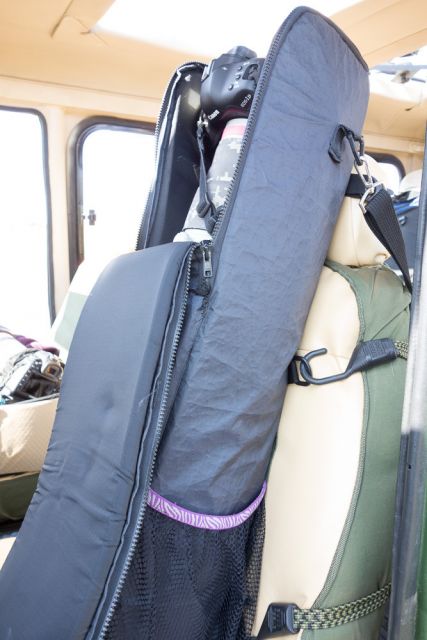
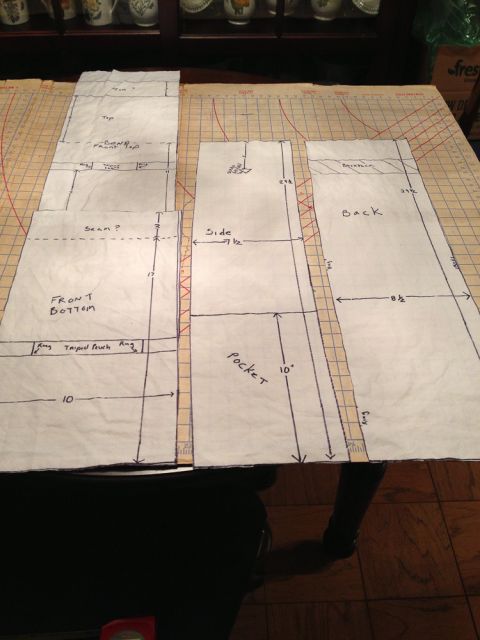
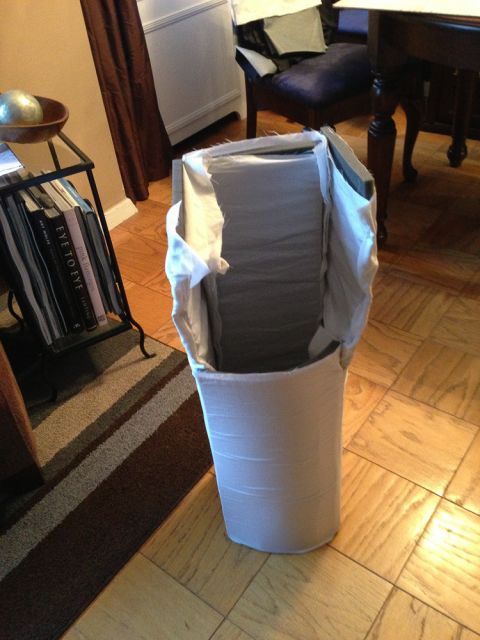
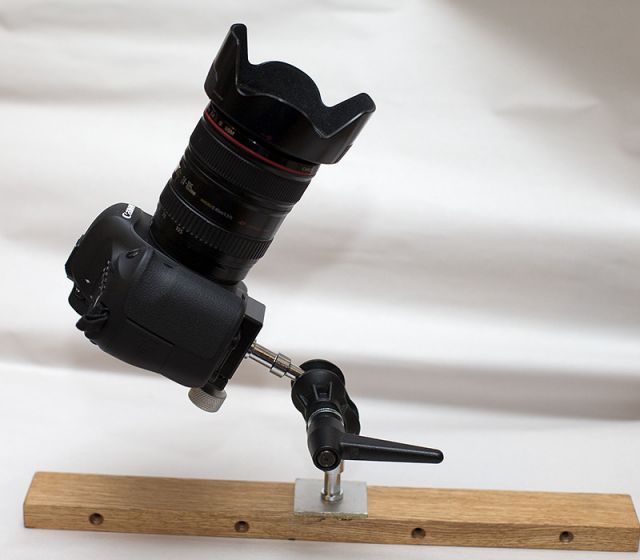
I made this long lens bag to accommodate my 600mm with hood extended and 1dx attached. Because of the roof having the flap come down allowed me to pull out the set-up easily and then it was secure when we were bouncing around roads.
Including shots of completed bag in action and the bits I started with.
This is perhaps a borderline modification since I have not designed, made or modified any hardware. The only thing I did was I used a product on lens models for which it was not developed, to a good effect.
The 4th Generation Design company market their CR-80 replacement foot for Canon 800mm f/5.6, and on that lens the foot has worked great for me, both for hand-held and pod mounted duty. http://stores.4gdphoto.com/cr-80-replacenent-lens-foot/
However, a couple of years ago I was experimenting a bit with different aftermarket feet for all of my MkII long lenses, and I found that CR-80 worked very nicely on 300 f/2.8 IS MkII as well as 200-400L, and most probably it would work equally well on 400 DO MkII.
The foot is plenty long, comfortable in hand when supporting the lens & shooting, it also gives sufficient finger clearance when used as a lens carrying handle, and it doesn't interfere with the hood reverse mount. Last but not least, the foot mounting flange with its bolts fits perfectly on all of those lenses.
I have a friend who was a product photographer, needed some hot light reflectors different from what he had. He lined the outside of a large salad bowl with aluminum foil, sprayed a coil of Crazy Foam until the foil was completely covered, and when it dried he cut the right sized hole in the center. They looked really funky but he used them for decades. If he still has them I'll submit pix on his behalf.
Since I assembled my own microscope (process of many years with continuous upgrades and changes), I encountered the issue to photograph at high magnification fast moving single cell organisms in a drop of water. Professional lab microscopes are equipped with a flash combined with the transmission light bulb, but such setup is still very expensive for the hobbyist. I had the idea to get a simple semi-transparent plastic mirror for $5 (as sample). I then constructed from a plastic holder a flappable stand which holds the mirror in an 45 degree angle to the ETTL Canon flash on the side which itself is connected via off-camera cord to my 5D MkII camera (the first photo shows in red the regular light transmission allowing to see and focus the image before releasing the flash light which comes from the side; the second the final setup with trinocular tube and Novoflex bellow to further adjust the magnification). In the end this simple $5 fix worked as well as a professional flash bulb. The third photo is one taken with this setup, the seed shrimp was moving. Only 1/200 sec flash caught it sharp enough, controlled for focus and shutter release with EOS Utility tool.
In this "Social media......OMG" decade, I love to see that there are still folks left who can think creatively as well as make things with their own hands.
I originally purchased this tripod sometime around 1978 or so to use with a Sinar F view camera however over the years all my other cameras spent more time on it. I sold the tripod 18 months ago or so.
Early on I became fed up with the little PITF (Pain In The Finger) round handle lock levers on the leg angle support arms so when I had a good opportunity and an idea to solve the problem I modified them with longer add-on extension levers.
I resized the inside of 3 pieces of stainless steel tubing with a reaming tool on a lathe that I had access to after hours at work creating an interference fit over the old lever's round handles and then bent and formed the flat sides on the ends.
To install them I thermally shrank the old levers in liquid nitrogen while thermally expanding the new extensions with heat. When ready the new extensions would be aligned and quickly slipped over the old levers. Within seconds the two parts became inseparable.
Edit: Hmmm, the picture above with the picture on the wall makes the it look more saturated on my calibrated screen displaying this post compared to when I turn around in my chair and look at it directly! I even toned it down -2 in DPP & replaced it!
I once assembled a homemade pano head rotating around a nodal point with up and down tilting for 360 degree stitching for a last-minute job out of parts from the local Home Depot....it was quite a contraption (the majority of the parts were a series of awkwardly joined steel L brackets, wood clamps and wing nuts!). I wish I had thought to take a picture of it.
artd wrote:
" I wish I had thought to take a picture of it. "
Same problem here!
I also took pictures of items that I sold on the famous auction site a few years back and can't find them even on my backups so I deliberately deleted them everywhere!
I did find the auction pictures for the Bogen 3050 tripod that I sold more recently.
PetKal wrote:
I can't tell without a picture of your "invention".
Well, until then, this will have to do: http://pp.vk.me/c4391/u2066358/126264741/z_650b9a07.jpg
An accessory holder for the Lens Cup. Probably the most expensive ever given its origin...
FWIW: I always keep the AF and IS switches set to ON. Even on the Lens Cup.
OK. Here's short descriptions and photos of some of my successful DIY projects, plus a vew "repurposed" items at the end.
1. Monoplank: strings through holes lets you tie it to a post or railing, works right some good
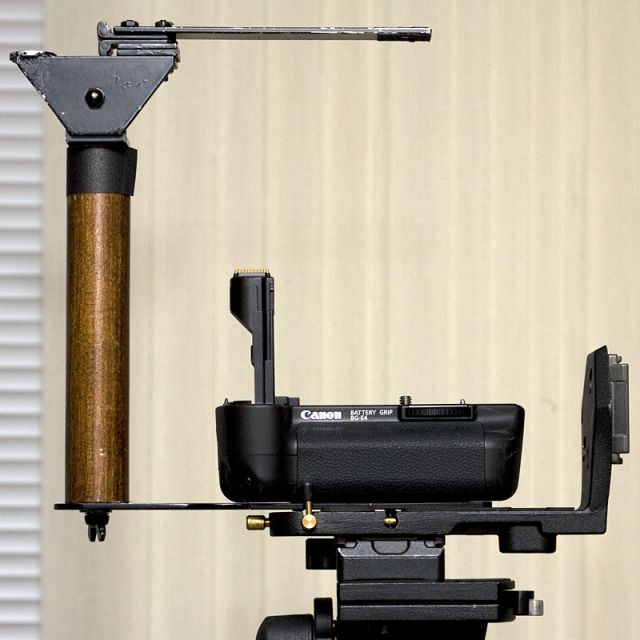
2. Flash bracket: used this for a few years.
It's a bit clunky compared to the RRS B87 Portrait Perfect (half-round) flash bracket I now use
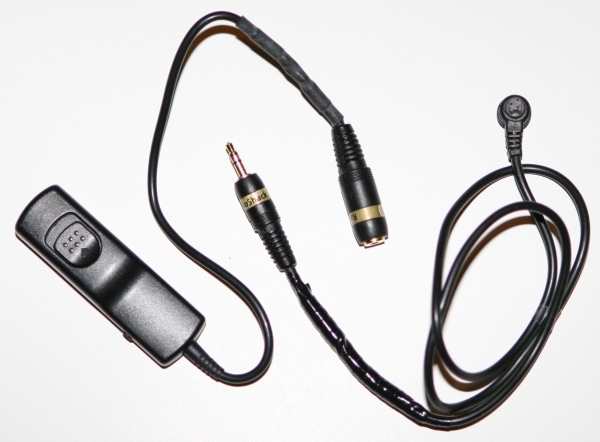
3. Remote release cord extension: cut release cord & graft on mini stereo phone jacks, add any length "headphone extender" cable
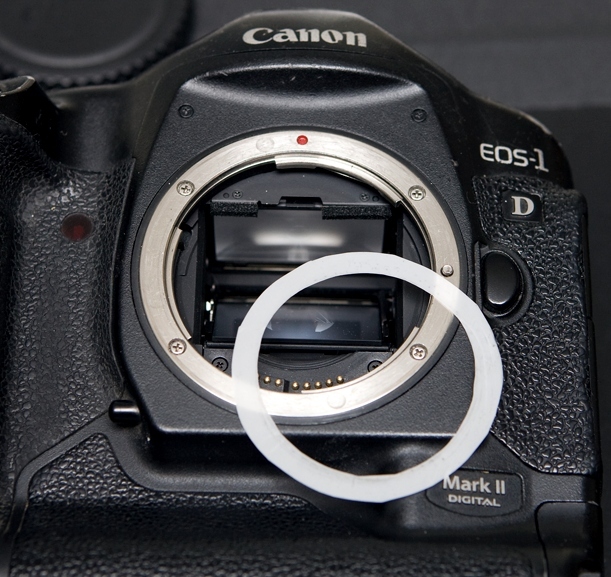
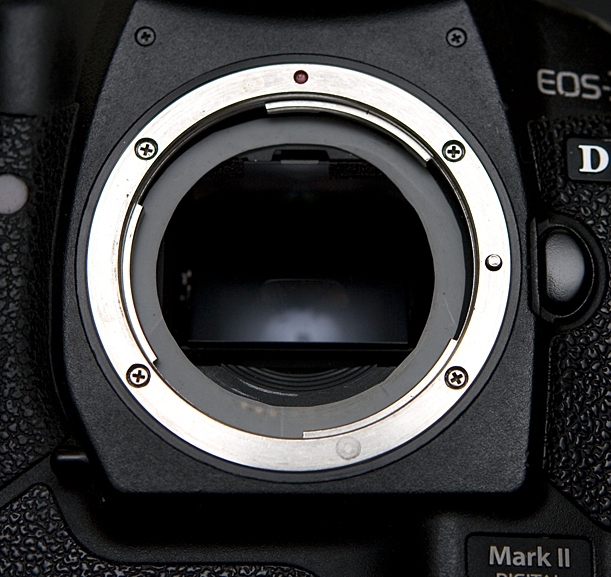
4. 1D-series Mk II Alt ring: mylar ring insulates camera contacts from lens mount, eliminates many problems with using Alt lenses on 1D-series Mk II cameras
5. Alt mylar ring in camera
Monoplank
DIY flash bracket with 5D grip
Remote release cable hacked for headphone extension cable
1D-series Mk II mylar ring for Alt lenses, on camera
1D-series Mk II mylar ring for Alt lenses, in camera
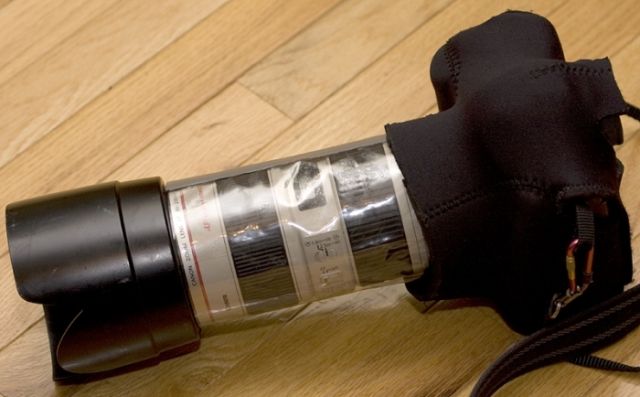
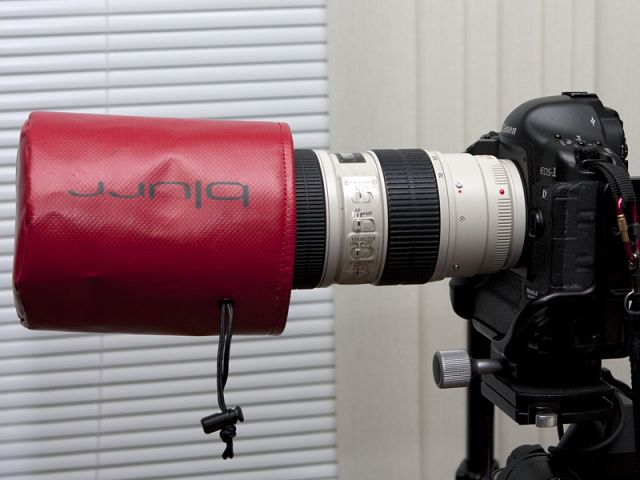
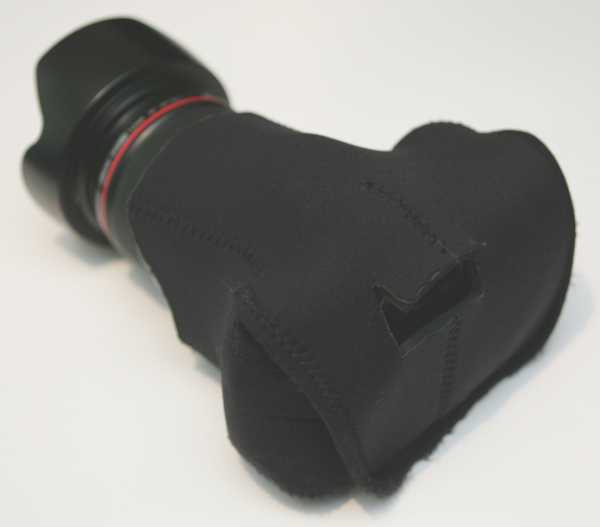
I used this "splash protection" setup for many years on ships and 'big' boats that weren't likely to tip over. Now I use Think Tank and AquaTech raincoats for similar conditions (and heavy rain).
1. splash protection: DIY soft plastic cover over 70-200/2.8L IS barrel and hacked Op/Tech SoftPouch camera/lens case over 1DII body,
2. splash protection: Blurr chalk bag (for rock climbing) for lens cap (usually fits over setup shown in image 1), easy to use when wearing lots of clothes and heavy gloves (attached to camera strap with bungie)
3. splash protection: similar plastic wrap on barrel and hacked SoftPouch on 24-105/4L IS and 7D.
Waterproof Protection
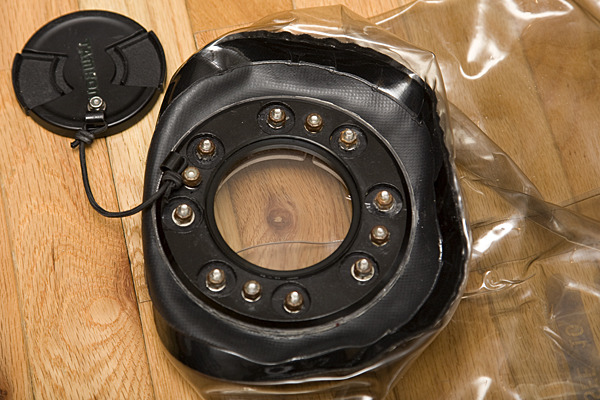
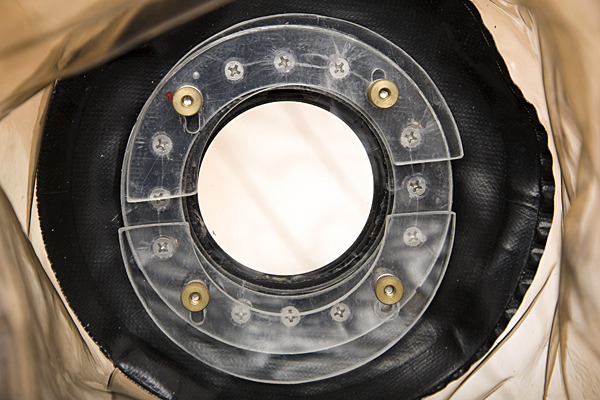
I used this DIY waterproof sea kayaking dry bag setup for many years, for both film and digital cameras. It's made from a Sea Otter See Bag (transparent dry bag), with a DIY "lens port" hacked into the bottom of the bag. The "split-ring" clamp thingy grips the edges of a 77 to 82mm step up ring that's attached to the front of the 24-105/4L IS lens that's in the bag, with a 5D/7D. It's totally waterproof.
Later, I bought an Ewa-Marine U-BP waterproof case, but I found it to be very unwieldy - not as good as the DIY solution. Now I use an Outex waterproof camera cover system (flexible), and it's most excellent.
4. waterproof camera dry bag, outside end
5. waterproof camera dry bag, inside showing split-ring clamp thingy