Wow, his was a surprise to me! Thanks a lot for selecting me as winner of the contest - even I believe that everyone of the participants deserves credit for their simple innovations, everyone had excellent ideas. Definitely a great idea for a photo thread!
The third photo in my entry post is a taken photo with the setup described.
PetKal wrote:
Although Retrofocus did post one photo ("seed shrimp"), I think many would like to see more.
Okay, here we go. Those photos would likely fit more into the Macro World forum, but since it is part of this thread here now, I will add a few more photos taken with this setup.
Photo of a tick head taken in infrared. Infrared has the big advantage in microscopy that it penetrates through insect shells. Expensive microscopes use special IR lamps - I achieved a decent result just by using the ETTL flash setup as described since the flash emits enough IR radiation to be collected on the digital sensor (with 715 nm filter cutoff in my IR-converted 5D MkII). 100x magnification, 1/60 sec, ISO 200 with flash.
Mosquitos are annoying - but their structures are very interesting at higher magnification. To allow their fast movements in flight, they carry special small shingles on top of their wing surface. Photo was taken at 400x magnification at 1/50 sec, ISO 200 with flash. Several photos stacked.
The last photo are onion cells which are very low in contrast. I added a method called phase contrast to my microscope which allows to reveal structures which are very low in contrast by using bright field light transmission. Again the described flash method proved very useful here - 400x magnification, 6 photos stacked. The cell nucleus is clearly visible. The small dark dots are the energy producers of the cell, the mitochondria.
PetKal wrote:
Yes, your gear-centered photography style clearly belongs to the venerable Russian school of film and visual arts which could be traced to the origins defined by that seminal gears celebratory work by Eisenstein's "Броненосец Потемкин".
I'm not even worthy to be named in the same breath... a high honor for me indeed! I'll be keeping up the efforts.
Phantom Medic wrote:
Hey! I won....now I will need to prepare a "thanks" type speech!!
Oscar, in your acceptance speech please make sure to thank me as well as Markle for some pro bono coaching and guidance we have been giving you on this forum.
I was impressed with the ideas and their implementations of the other participants in this contest!
My monopod modification post was sort of a small snapshot into one aspect of my career in product design where a suitable “off the shelf” catalog part was not available.
In such cases I would be faced with either trying to talk the supplier into creating a customer special or me reinventing the wheel by designing & creating from scratch a variant of someone else’s existing product if possible or by me designing a made from modified version & having it manufactured somewhere else.
In the case of my monopod mod I purchased all parts new with the modification already planned ahead aside from a few minor remaining details figured out during the process.
A side aspect of my post was a demonstration of the value of the advent of digital photography in rapid communication especially when overcoming language barriers of coworkers and suppliers elsewhere on our planet. After all a picture is worth a thousand words in any language and my interest in photography helped me with this.
The photos in several of my posts were created sort of on the fly the day they were posted as I suspect many of Jim Cowell’s and others were. If I was still working at my last company I imagine they’d either have me Google Glass equipped or walking around there wearing Go Pro equipped helmet!
Congrates to you Retrofocus. Thanks to PetCal and the gang for selecting me for runner-up. Retrofocus, that is a very nice set-up for Extreme Macro & microtography. Job well done.
Photonadave, i concur with COTS and not re-inventing the wheel. now that i am retired/disabled and living on a fixed income there is a quote that comes to mind, "Poverty is the Mother of Invention." it makes me analyze my inventory and find the components to meet one's application. in simple terms we become Application Engineers. i love tinkering and inventing almost as much as photography.
to my fellow tinkerers & inventors, carry on Gentlemen, carry on. cheers
PetKal wrote:
Oscar, in your acceptance speech please make sure to thank me as well as Markle for some pro bono coaching and guidance we have been giving you on this forum.
Today we forget about all the presidents, signers of the Declaration of Independence, Supreme Court justices, members of Congress, and other illustrious individuals who attended our alma mater, for today, your achievement in this FM forum contest makes you the most famous W&M alum
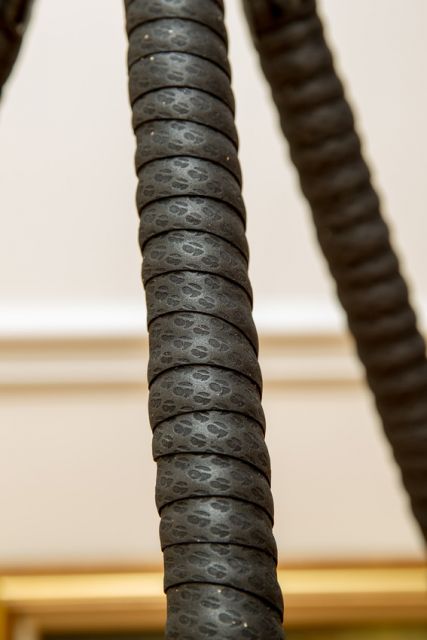
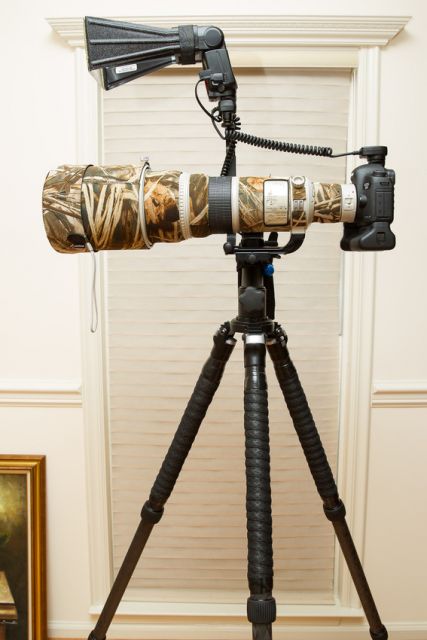
I have the lens coat leg warmers and they provided absolutely no padding for the shoulders what so ever, at least for the way I carry my gear; the leg locks are typically on the shoulders. The pads flex way too much for my taste and are too thick. So, I made my own leg warmers from bike handle bar tape (Bontrager gel tape). It's padded, grippy, keeps the hands warm, while not being too overly thick. I won't be using the lens coat anymore.
Today we forget about all the presidents, signers of the Declaration of Independence, Supreme Court justices, members of Congress, and other illustrious individuals who attended our alma mater, for today, your achievement in this FM forum contest makes you the most famous W&M alum
Thanks Mitesh but I am thinking that if Jefferson was alive today he would have probably made a kick ass long lens bag to rival mine! Speaking of W&M I have been mentoring a group of students on a writing project and man do I feel old! One of these days when I go home to visit family we are going to get together and go take some pictures!
I am too late for the contest, but nevertheless I show some of my DIY:
I could not decide which infrared pass filter would be the best to start infrared work, but I want a bright viewfinder - so no filters in front of the lenses. Additional I want to use the camera as backup camera. So I invented a DSLR system with interchangable infrared filters:
For some experiments with tilt lenses I want fast and shorter focal length - and usable for long exposures. So I madea DIY tilt lenses with a tilt base from a floodlight:
For macro with shorter focal length lenses I made a 8mm thin Canon EF extension tube - there are no thinner than 12mm extension tubes for Canon EF available:
I tested the stability with a big and heavy russian 500mm/8 mirror lens - the camera on the tripod, no problem after 8 hours.
When the mirror of one of two EOS 5D fell off, I used this and replaced it with a 100% reflecting DSLR mirror for brighter viewfinder instead of 60% - I do not need Autofocus. Furthermore I shortend the mirror assembly a bit for better acceptance of some adapted or converted lenses:
Normaly Minolta SR mount lenses need a sometimes complex Minolta conversion for Canon EF, I build an adapter which minimized the conversion work. Now such "adapters" are avialable on Ebay too:
On this 20mm lens it will not work, because of too much protrusion of the lens. And there is no iris operation. No problem for the lens I want - that one has a manual iris ring.
There is another way to get smoother bokeh, that is spherical aberration. Nikon has great lenses which can control the spherical aberration. After some research I found and modified a lens to do the same: Nikon Defocus Control alternative copy:
Sometimes I love to have big blur :-)
So I got the idea to reduce the focal lenght of my Canon FD 400mm/2.8 L to get something like a ~180mm/1.27 lens. It is a simple kind of tinkered focal reducer:
This would be great for the Sony Alpha 7 because of register distance, but I don´t have this camera at the moment. So I tested other lens combinations, and got for example a 150mm/2.0 lens or a 150mm/1.2 - these with cheaper slower base lenses:
I am too late for the contest, but nevertheless I show some of my DIY:
I could not decide which infrared pass filter would be the best to start infrared work, but I want a bright viewfinder - so no filters in front of the lenses. Additional I want to use the camera as backup camera. So I invented a DSLR system with interchangable infrared filters:
For some experiments with tilt lenses I want fast and shorter focal length - and usable for long exposures. So I madea DIY tilt lenses with a tilt base from a floodlight:
For macro with shorter focal length lenses I made a 8mm thin Canon EF extension tube - there are no thinner than 12mm extension tubes for Canon EF available:
I tested the stability with a big and heavy russian 500mm/8 mirror lens - the camera on the tripod, no problem after 8 hours.
When the mirror of one of two EOS 5D fell off, I used this and replaced it with a 100% reflecting DSLR mirror for brighter viewfinder instead of 60% - I do not need Autofocus. Furthermore I shortend the mirror assembly a bit for better acceptance of some adapted or converted lenses:
Normaly Minolta SR mount lenses need a sometimes complex Minolta conversion for Canon EF, I build an adapter which minimized the conversion work. Now such "adapters" are avialable on Ebay too:
On this 20mm lens it will not work, because of too much protrusion of the lens. And there is no iris operation. No problem for the lens I want - that one has a manual iris ring.
There is another way to get smoother bokeh, that is spherical aberration. Nikon has great lenses which can control the spherical aberration. After some research I found and modified a lens to do the same: Nikon Defocus Control alternative copy:
Sometimes I love to have big blur :-)
So I got the idea to reduce the focal lenght of my Canon FD 400mm/2.8 L to get something like a ~180mm/1.27 lens. It is a simple kind of tinkered focal reducer:
This would be great for the Sony Alpha 7 because of register distance, but I don´t have this camera at the moment. So I tested other lens combinations, and got for example a 150mm/2.0 lens or a 150mm/1.2 - these with cheaper slower base lenses: