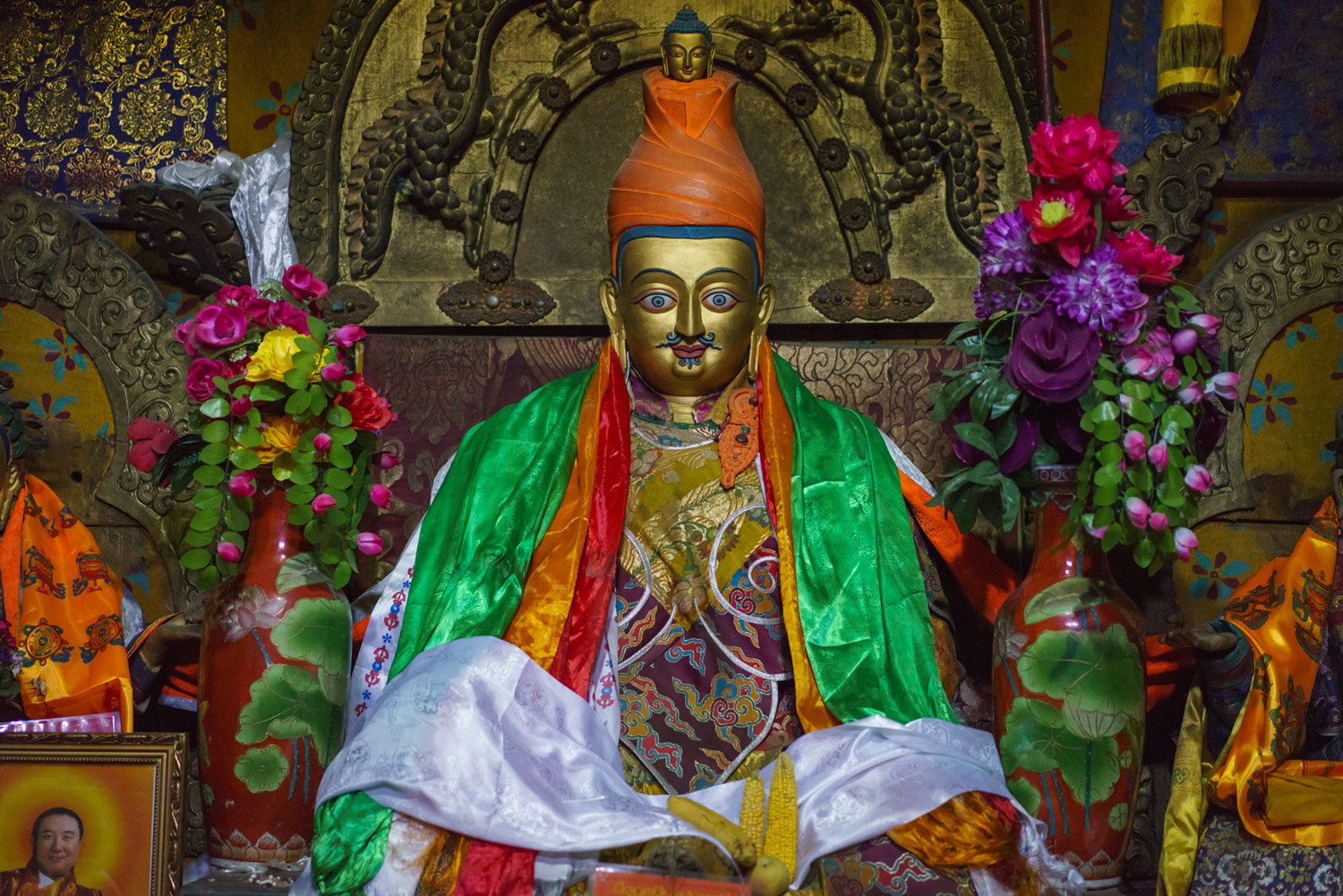
#1 is a modern assembly, #2 is an old piece in a very early monastery. I was harassed by the monks while taking both of these, as it turned out. You can see the changes in the faces, neither of which are very good, Tibetan human art tends to be utilitarian. It was not always so - ALL modern Buddhist art in the dominant branch of Mahayana ('great vehicle') owes its style and aesthetics to the ancient Greeks. They provided early Buddhism with the pantheon of deities (Heracles, etc), repurposed for Buddhism in the first century BC - then they crafted the amazing Gandhara statues. Ancient Greece also ended its days politically in northwest and west India, mostly in modern day Pakistan.
philip_pj wrote:
#1 is a modern assembly, #2 is an old piece in a very early monastery. I was harassed by the monks while taking both of these, as it turned out. You can see the changes in the faces, neither of which are very good, Tibetan human art tends to be utilitarian. It was not always so - ALL modern Buddhist art in the dominant branch of Mahayana ('great vehicle') owes its style and aesthetics to the ancient Greeks. They provided early Buddhism with the pantheon of deities (Heracles, etc), repurposed for Buddhism in the first century BC - then they crafted the amazing Gandhara statues. Ancient Greece also ended its days politically in northwest and west India, mostly in modern day Pakistan. ...Show more →
Looking at an Anhinga with wings open basking in the sun.
Cropped, tripod mounted 200-600mm set to 600mm and A7rIII; silent shutter.
ISO 400, f6.3, 1/2000 second.
December 6, 2020
Along Lake Apopka Wildlife Drive, Apopka, FL.
philip_pj wrote:
#1 is a modern assembly, #2 is an old piece in a very early monastery. I was harassed by the monks while taking both of these, as it turned out. You can see the changes in the faces, neither of which are very good, Tibetan human art tends to be utilitarian. It was not always so - ALL modern Buddhist art in the dominant branch of Mahayana ('great vehicle') owes its style and aesthetics to the ancient Greeks. They provided early Buddhism with the pantheon of deities (Heracles, etc), repurposed for Buddhism in the first century BC - then they crafted the amazing Gandhara statues. Ancient Greece also ended its days politically in northwest and west India, mostly in modern day Pakistan. ...Show more →
Phillip - very interesting about the second statue. Besides Alchi we came across a small village gompa with painted walls the characters of which seemed to us to be of the earlier Bhuddist art forms. Very different from anything else - even different from Alchi
David


 You can see the changes in the faces, neither of which are very good, Tibetan human art tends to be utilitarian. It was not always so - ALL modern Buddhist art in the dominant branch of Mahayana ('great vehicle') owes its style and aesthetics to the ancient Greeks. They provided early Buddhism with the pantheon of deities (Heracles, etc), repurposed for Buddhism in the first century BC - then they crafted the amazing Gandhara statues. Ancient Greece also ended its days politically in northwest and west India, mostly in modern day Pakistan.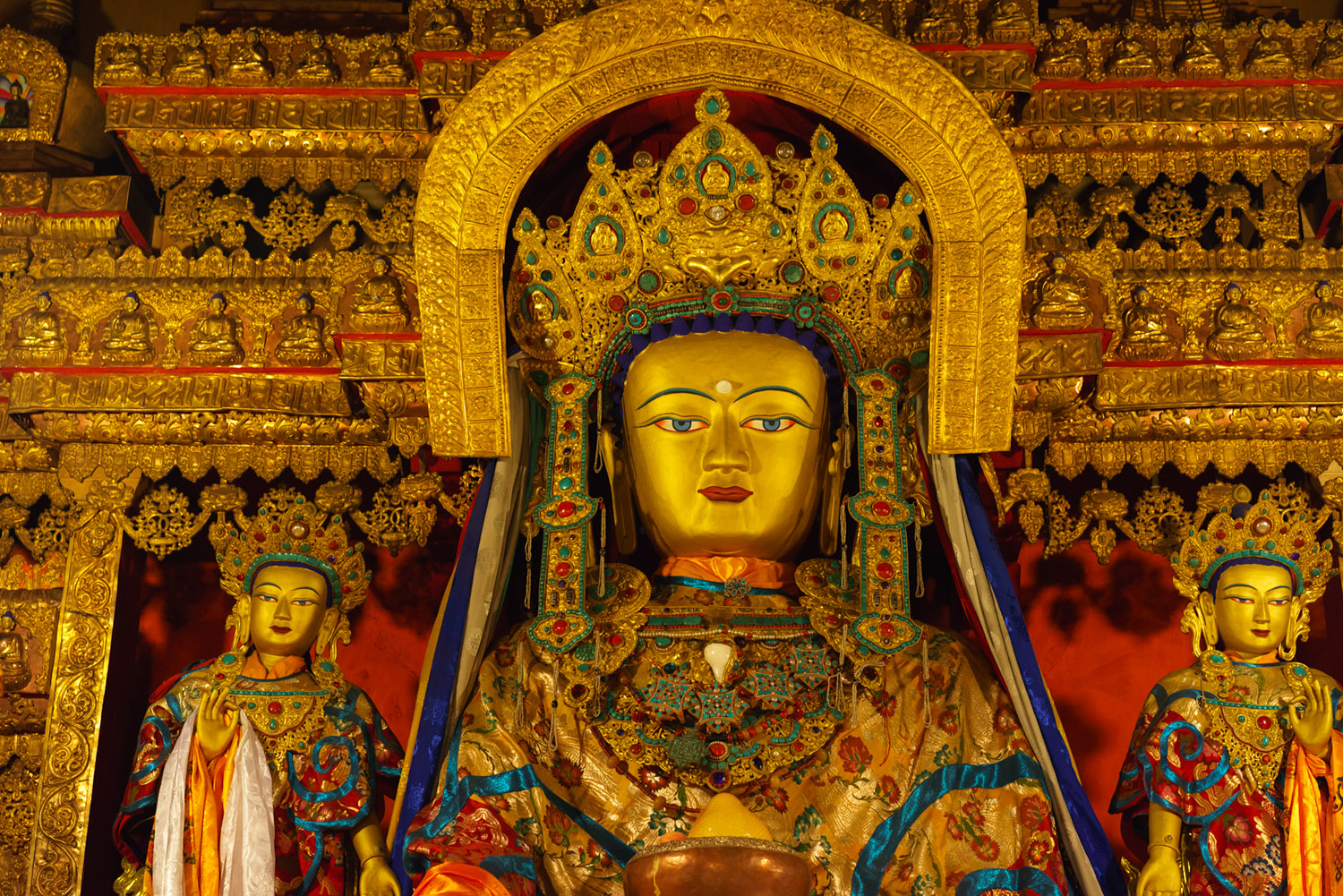










 .
.