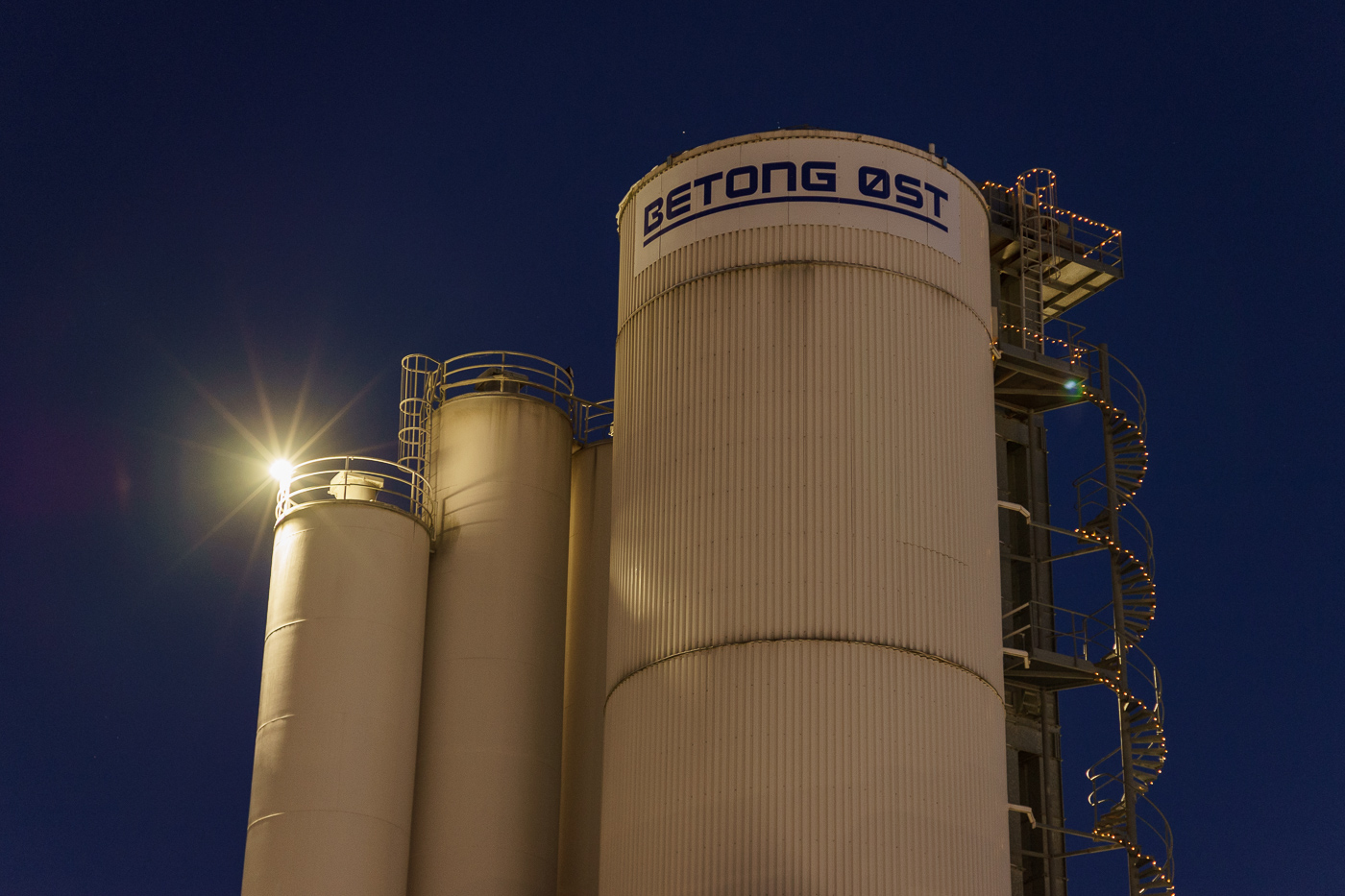
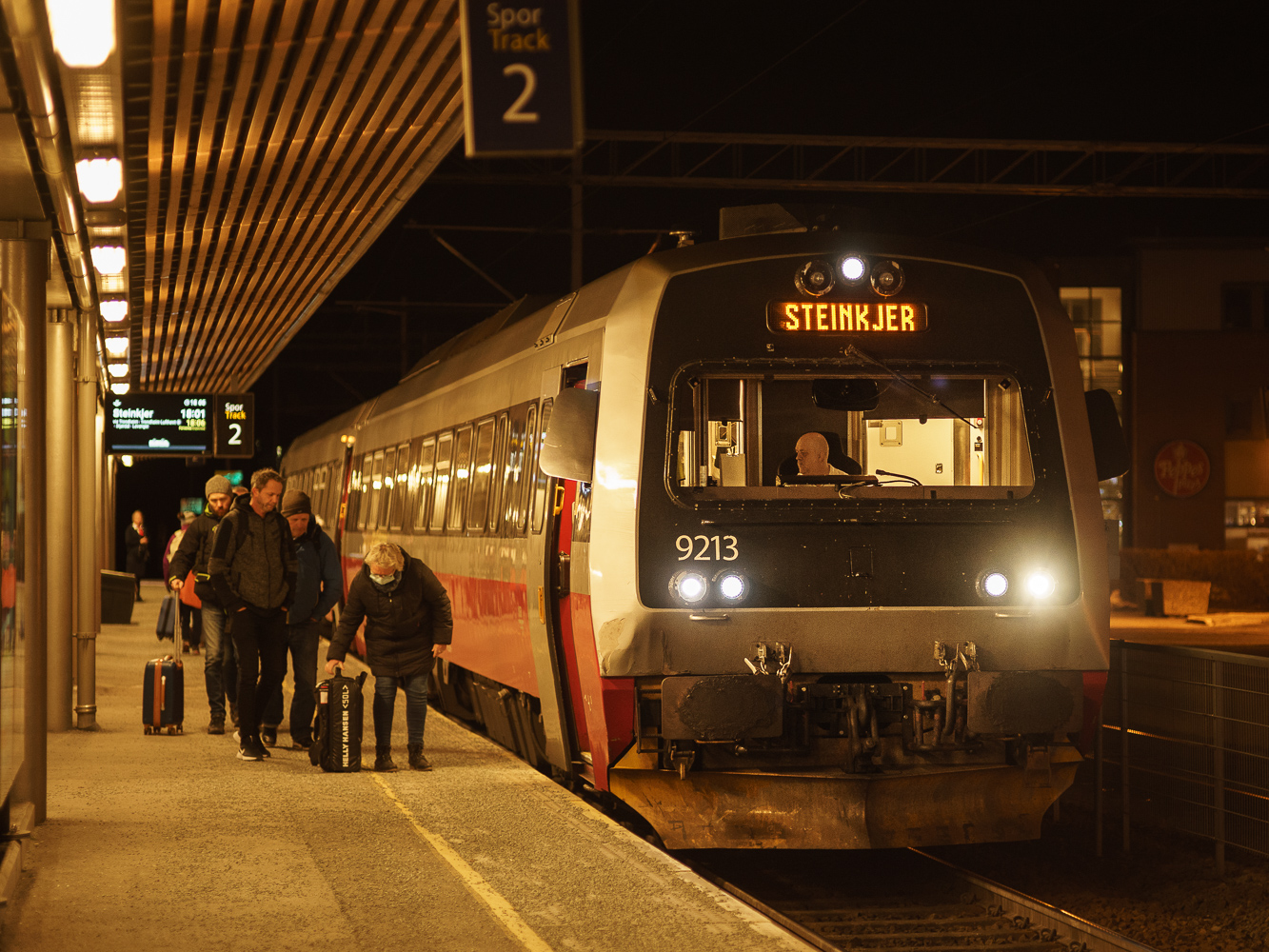
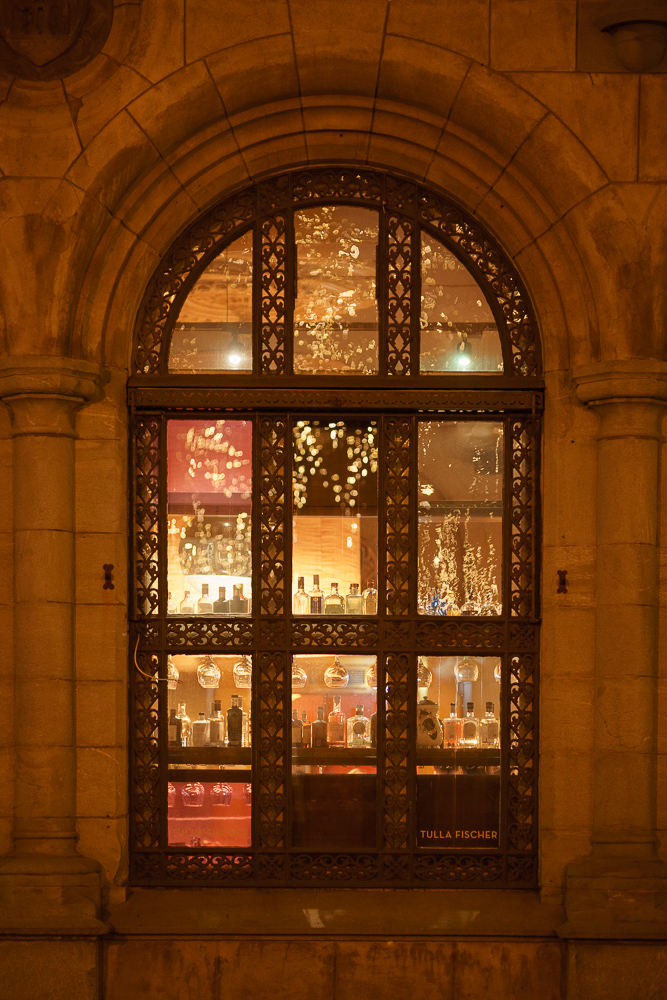
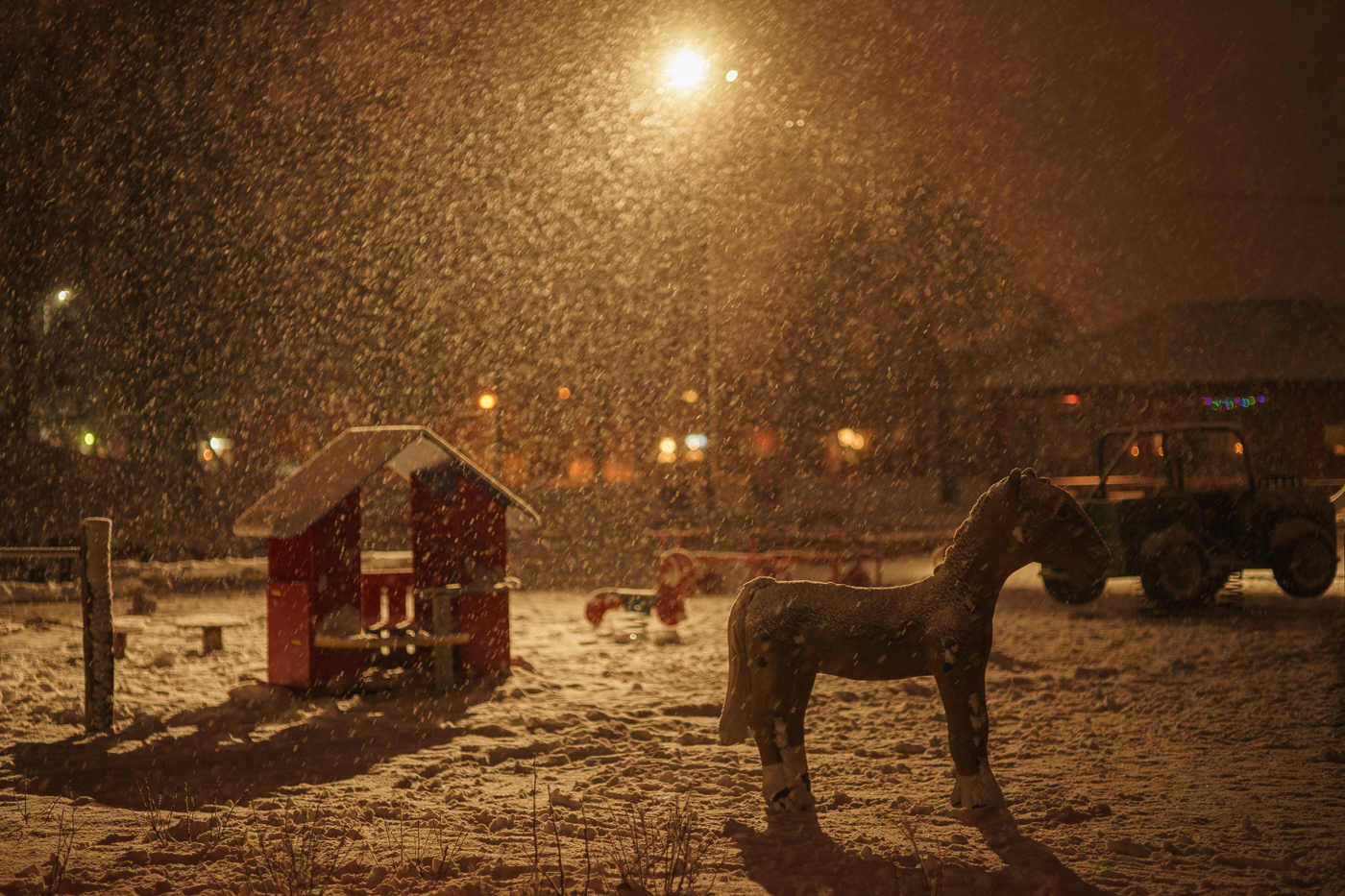
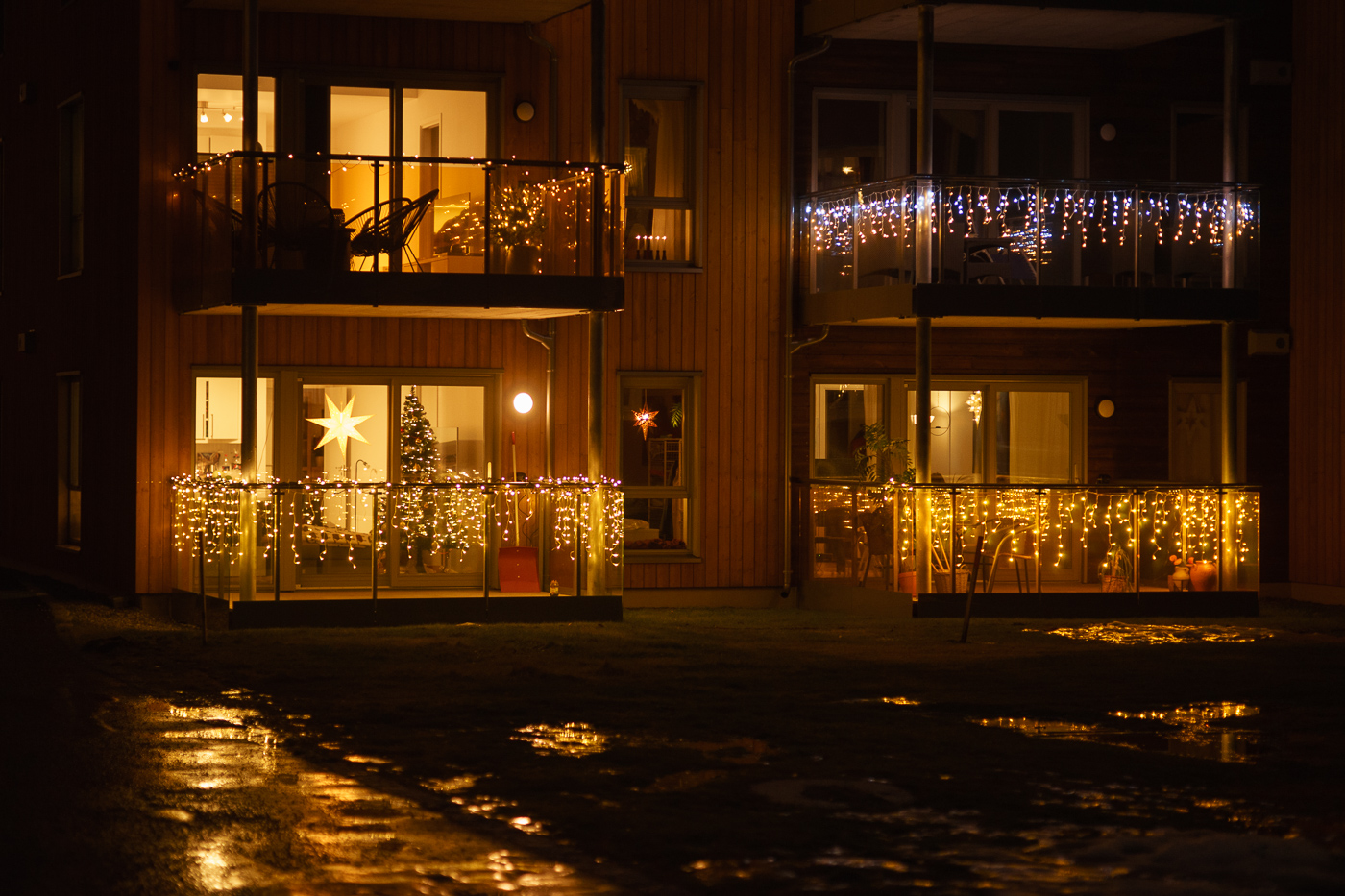
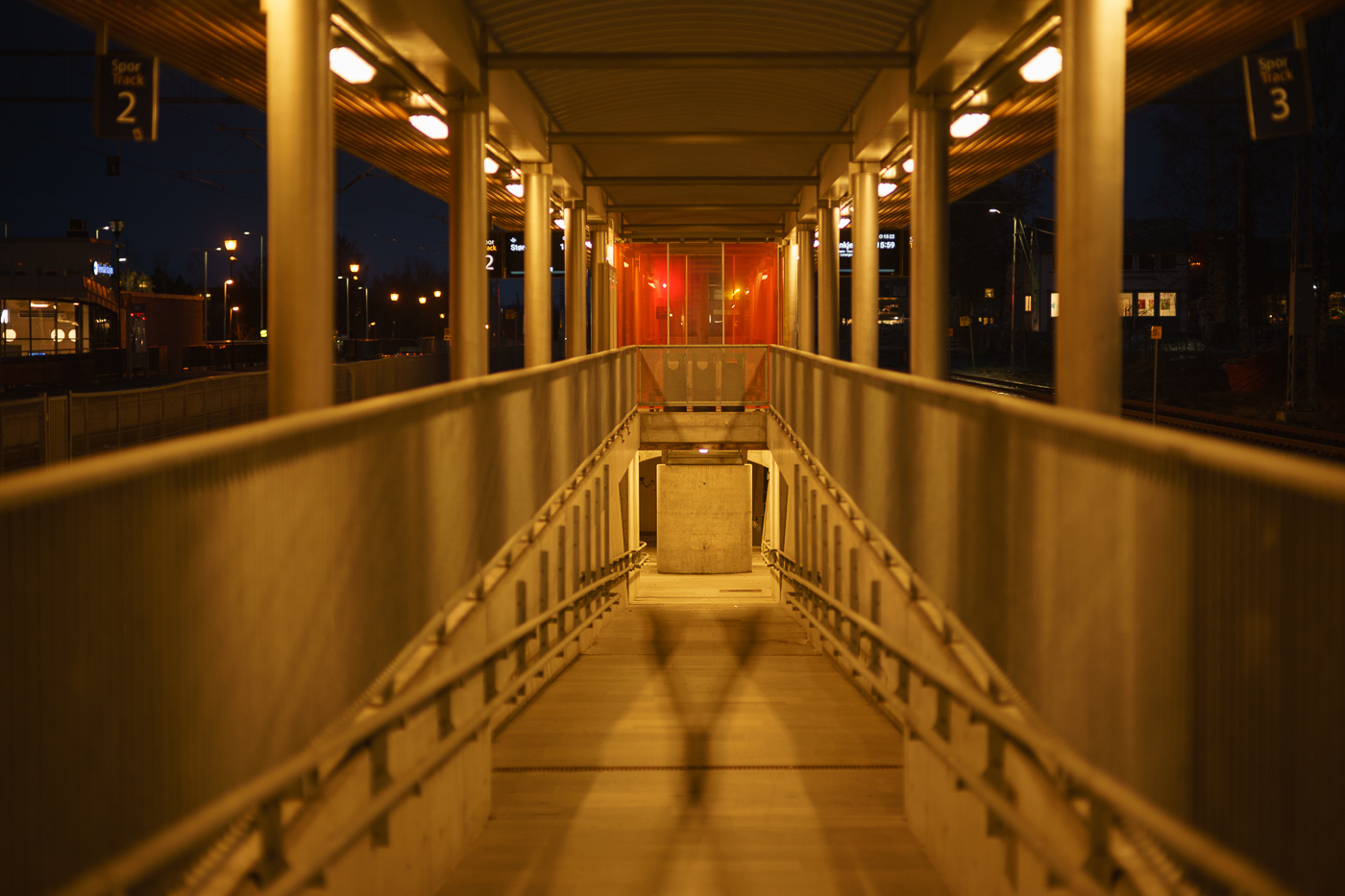
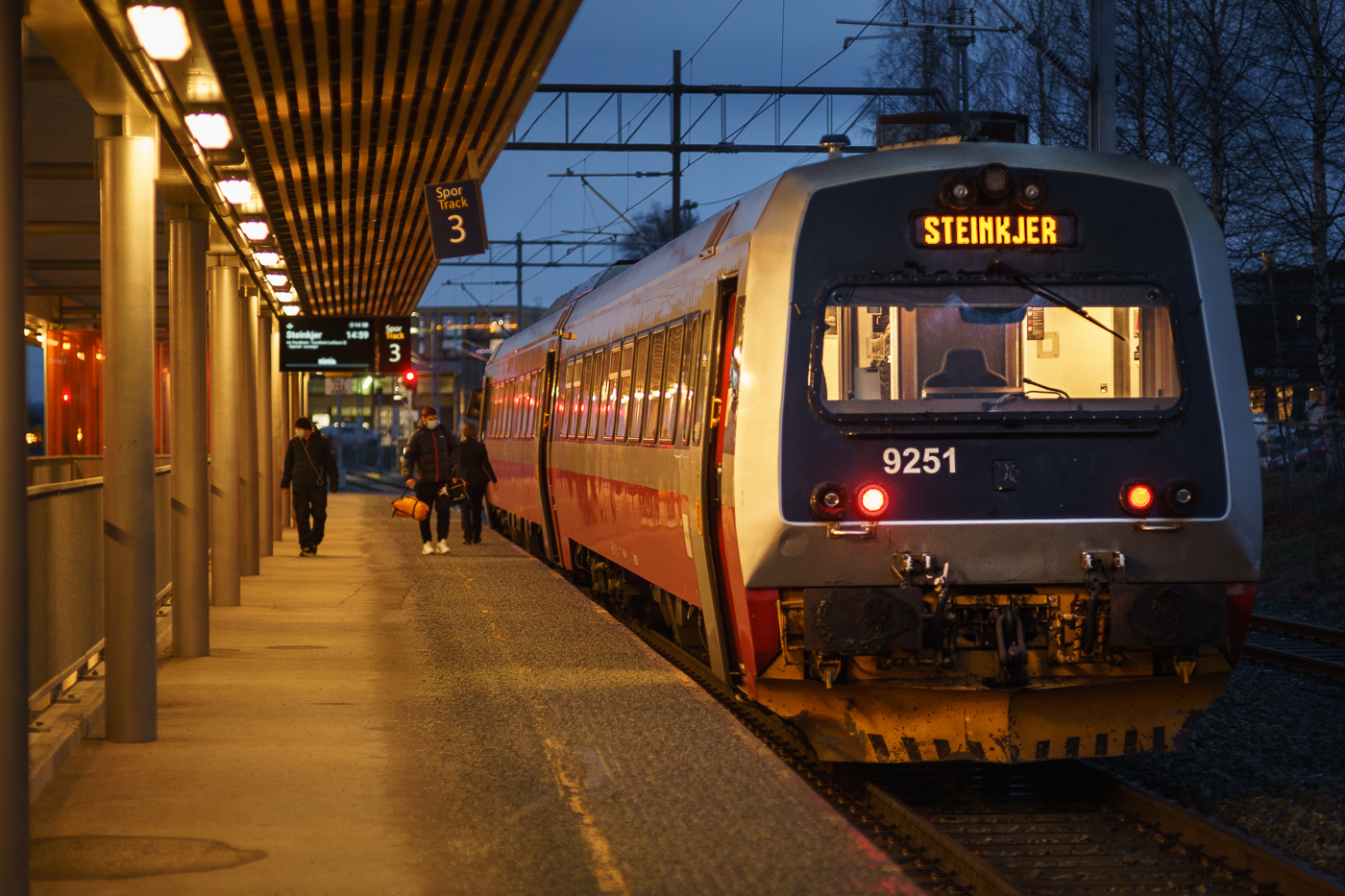
After dark shots taken around New Year. It won't get this dark again until fall.
Thanks @HelenaN! It helps to have a photogenic (and willing) subject.
Great after-dark shots. I spent a month in Bergen in the early 1990s for work, in late May/early June, and loved the fact that it was still light out at 11pm and everyone was outdoors in front of the restaurants and cafés, chatting and having a drink. I do a bit of work these days for the Arctic Council, which is based in Tromsø, but most of my travel for them (to Finland and Denmark so far) has been in the early winter when the days are very short. What a contrast!
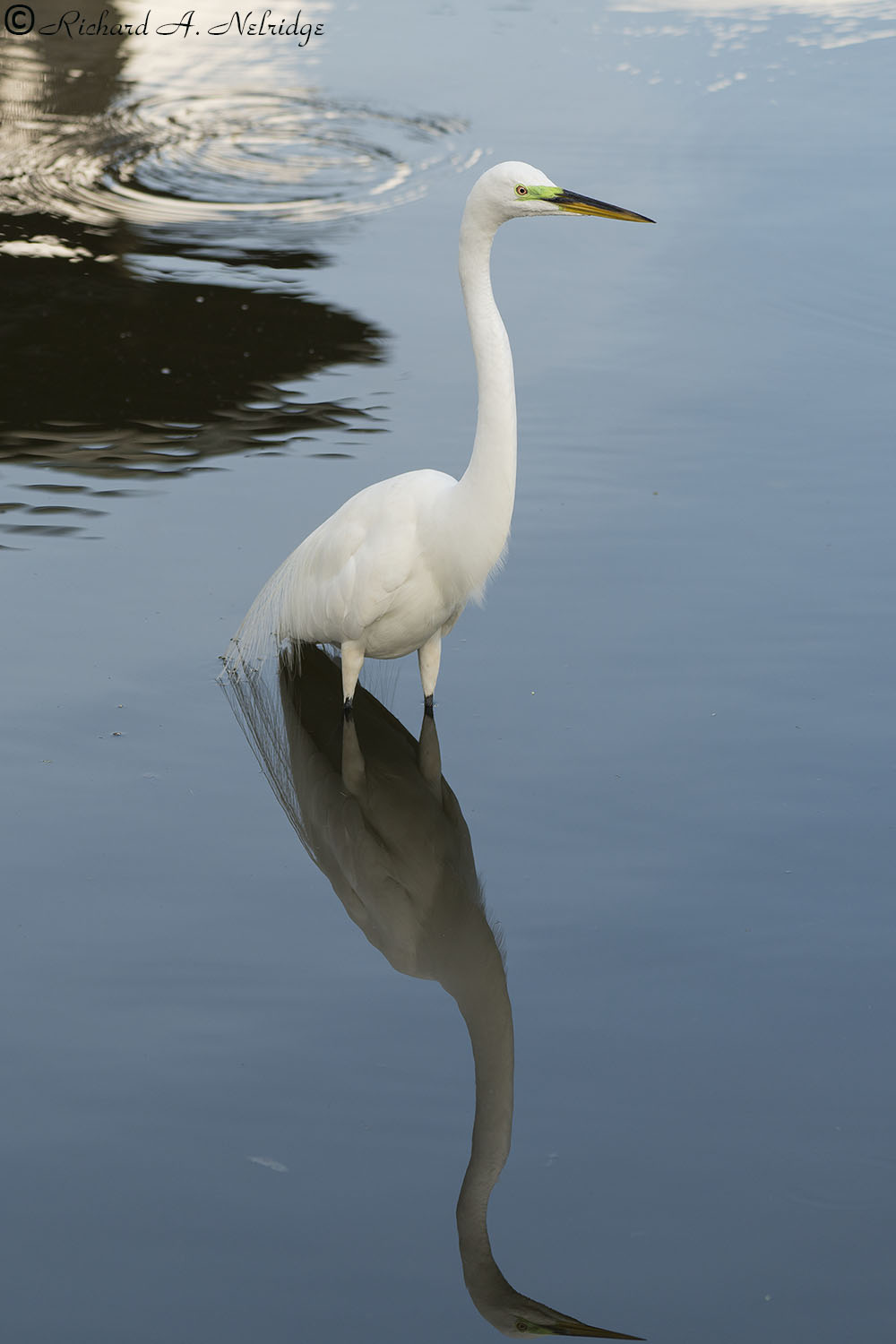
Looking at a wading Great Egret in breeding plumage and reflection.
Cropped from left and right, tripod mounted FE 100-400mm GM set to 139mm and A7rIII; silent shutter.
ISO 100, f5.0 1/500 second.
Exposure Corrected +0.59 Stops.
May 11, 2019
At Gatorland, Orlando or Kissimmee, FL.
And now Ladies and Gentlemen,a little discovery,pictured by Sony GM 50/1.2......
Last Saturday I visited a village 20km South-West of my home.There is a palace there - the former residence of one of the most famous Prussian marshals and a prince from the times of napoleonic wars.I mean Gebhard Leberecht Fürst Blücher von Wahlstatt,or simply Marshal von Blücher.
The palace was built as a castle in the 14th Century,but it's contemporary elevation shows the result of the XiXth Century renovation.Surrounded by the large park full of old oaks and picturesque fish ponds,where at this time of the year tenths of bird's species are singing.
Alas,I coud not get in for an espresso and a little glass of Hennesy XO drunk in a medieval courtyard,which i always do,as it is closed because of pandemic.
A7R2+Sony GM 50/1.2 at f8
A7R2+Sony GM 50/1.2 wide open
......there are two small cannons standing in front of the palace.At the first glance they look like XVII-XVIII Century's european cannons and not the ones from the XIX'th Century.............
A7R2+Sony GM 50/1.2 wide open.....
........initially I thought they are Prussian made cannons,yet closer inspection revealed to my emotion the coat of arms of the last King of Poland and Polish-Lithuanian Commonwealth Stanislaus Augustus Poniatowski.........
Sony GM 50/1.2 at f8
.......The cannon's production date says in latin 1779.Prussians must have stolen it from armory or win it during one of the numerous last battles fought by the dying Polish-Lithuanian Commonwealth.There are traces or re-calibration in the picture above,so they probably adjusted it to their standards in order to use further on.....
In 1779 American Brigade General Tadeusz Kościuszko - American and Polish historically important person was successfully fortifying West Point to prevent the bloodthirsty :=) assault of the British.Few years later he was back to leader the last,dramatic war against Russians to keep up independence,using similar cannons.May be the same.....
.....and in the cartridge chamber of one of the cannons live laborous ants, which can be seen when they come out in a row from the hole where the fuse was once applied to trigger an explosion of a powder charge and a cannon shot.
molson wrote:
Bethlehem Lutheran Church in Dalum, Alberta with a fresh coat of paint.
Hi molson!
I have recently struggled with 24-70/4 ZA Vario Tessar and I am glad to see someone showing pleasing example of picture from this good,but largely underrated lens.I like this picture for simple composition,vibrant colours and straight geometrical shapes.
Peire wrote:
And now Ladies and Gentlemen,a little discovery,pictured by Sony GM 50/1.2......
Last Saturday I visited a village 20km South-West of my home.There is a palace there - the former residence of one of the most famous Prussian marshals and a prince from the times of napoleonic wars.I mean Gebhard Leberecht Fürst Blücher von Wahlstatt,or simply Marshal von Blücher.
The palace was built as a castle in the 14th Century,but it's contemporary elevation shows the result of the XiXth Century renovation.Surrounded by the large park full of old oaks and picturesque fish ponds,where at this time of the year tenths of bird's species are singing.
Alas,I coud not get in for an espresso and a little glass of Hennesy XO drunk in a medieval courtyard,which i always do,as it is closed because of pandemic.
......there are two small cannons standing in front of the palace.At the first glance they look like XVII-XVIII Century's european cannons and not the ones from the XIX'th Century.............
........initially I thought they are Prussian made cannons,yet closer inspection revealed to my emotion the coat of arms of the last King of Poland and Polish-Lithuanian Commonwealth Stanislaus Augustus Poniatowski.........
.......The cannon's production date says in latin 1779.Prussians must have stolen it from armory or win it during one of the numerous last battles fought by the dying Polish-Lithuanian Commonwealth.There are traces or re-calibration in the picture above,so they probably adjusted it to their standards in order to use further on.....
In 1779 Brigade General Tadeusz Kościuszko - American and Polish historically important person was successfully fortifying West Point to prevent the bloodthirsty :=) assault of the British.Few years later he was back to leader the last war against Russians using similar cannons.May be the same.....
.....and in the cartridge chamber of one of the cannons live laborous ants, which can be seen when they come out in a row from the hole where the fuse was once applied to trigger an explosion of a powder charge and a cannon shot.
I don't want you to feel nauseous because of my praise again and again, but the way you use the limited availability of subjects to create continually beautiful,emotive pictures is much more than commendable. I wish I could always do the same.
I have recently struggled with 24-70/4 ZA Vario Tessar and I am glad to see someone showing pleasing example of picture from this good,but largely underrated lens.I like this picture for simple composition,vibrant colours and straight geometrical shapes.
Thanks, Piere! That 24-70 f4 ZA was always a bit of a mystery - it often seemed like you could get ten really sharp images in a row, and then get one where half of the image was unsharp - but when it worked properly, the result were pretty good.