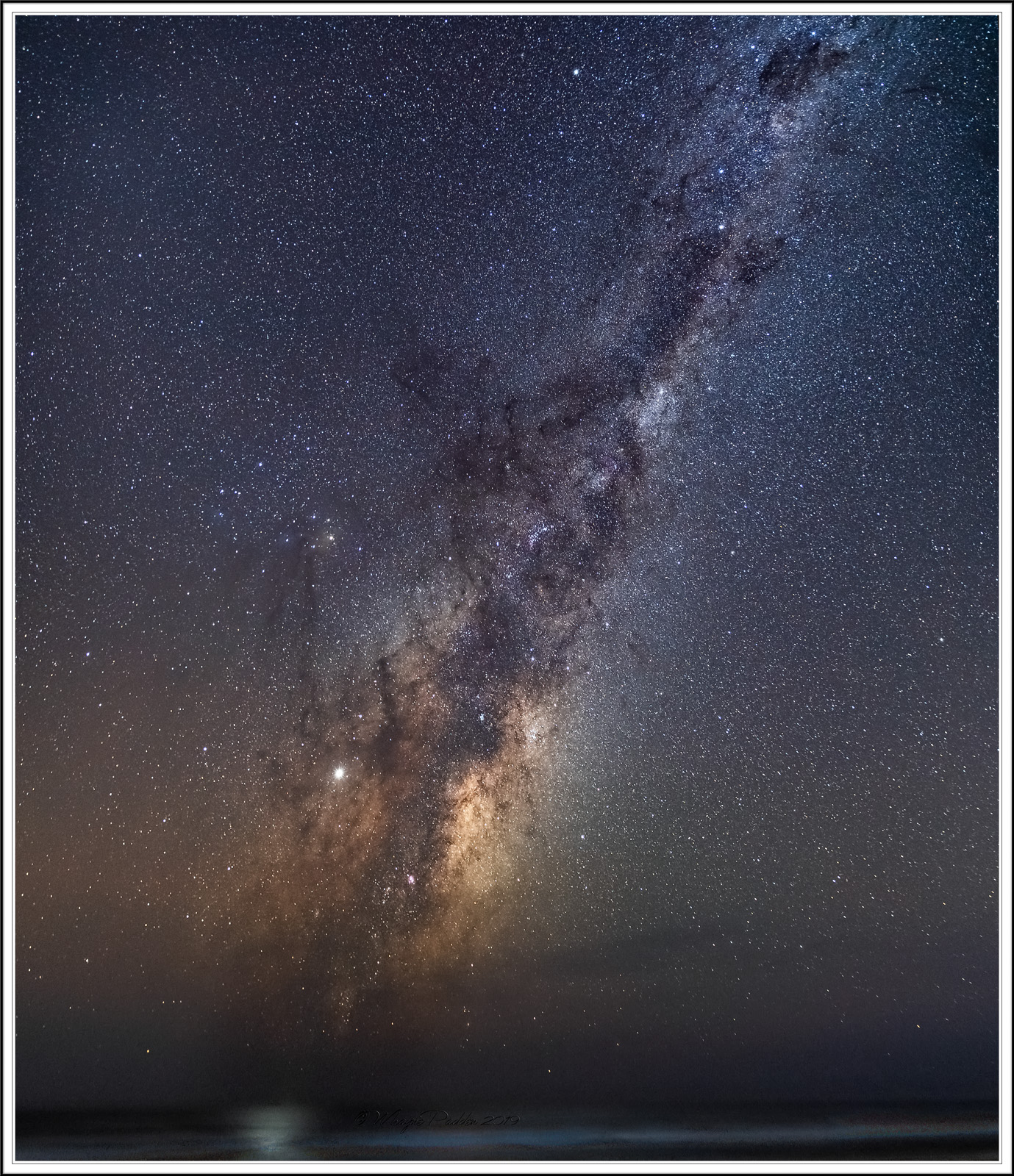
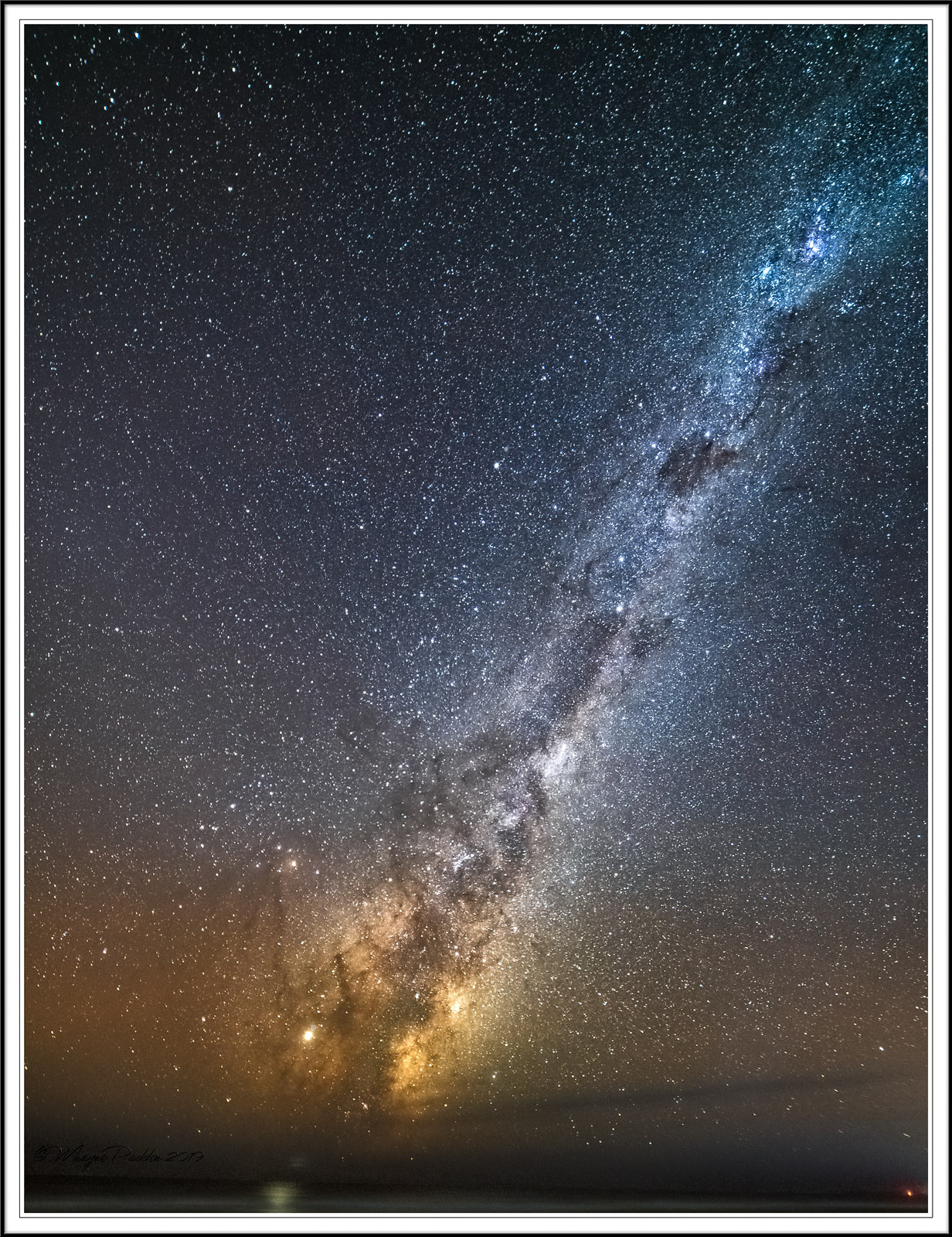
This is my maiden attempt at a Milkyway shot. This is a panorama made using three images in landscape orientation and each image of the panorama was the result of 5 shots, stacked to reduce noise. I would normally try say 10 shots for each stack, but thought I might be conservative for the panorama, plus with so much resolution I could always downsize to reduce noise further if needed.
The panorama was with the Canon 24-70 f/2.8L II @ 24mm f/2.8 and each exposure was 15s @ f/2.8. I also used the Samyang EF 14mm f/2.8 to do single image shots of Milkyway. In that case I took 10 shots and stacked them.
This was a dry run while I scout for a good foreground this week. I was pretty happy how this turned out but still have a lot to learn and improve. Next time I'll wait for the core of the Milkyway to rise higher too. I'm finding using Photopills and stellarium very handy. I found that for windows the free program sequator is good choice for stacking be it for aligning or for star trails.
3 shot panorama, 5 shots stacked, exposure is 5 x 15s
Single image, 10 shots stacked, exposure time is 10 x 20s
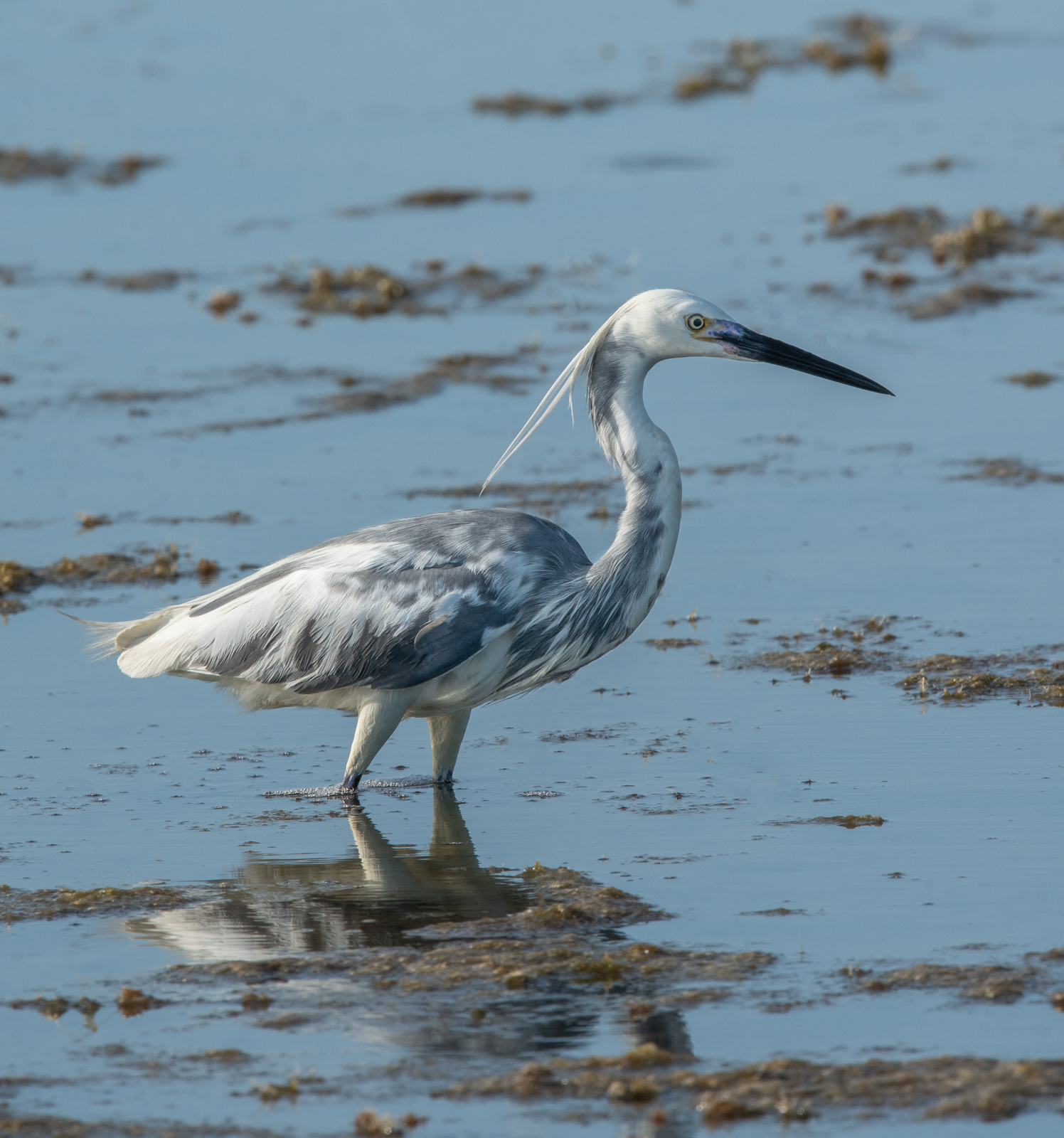
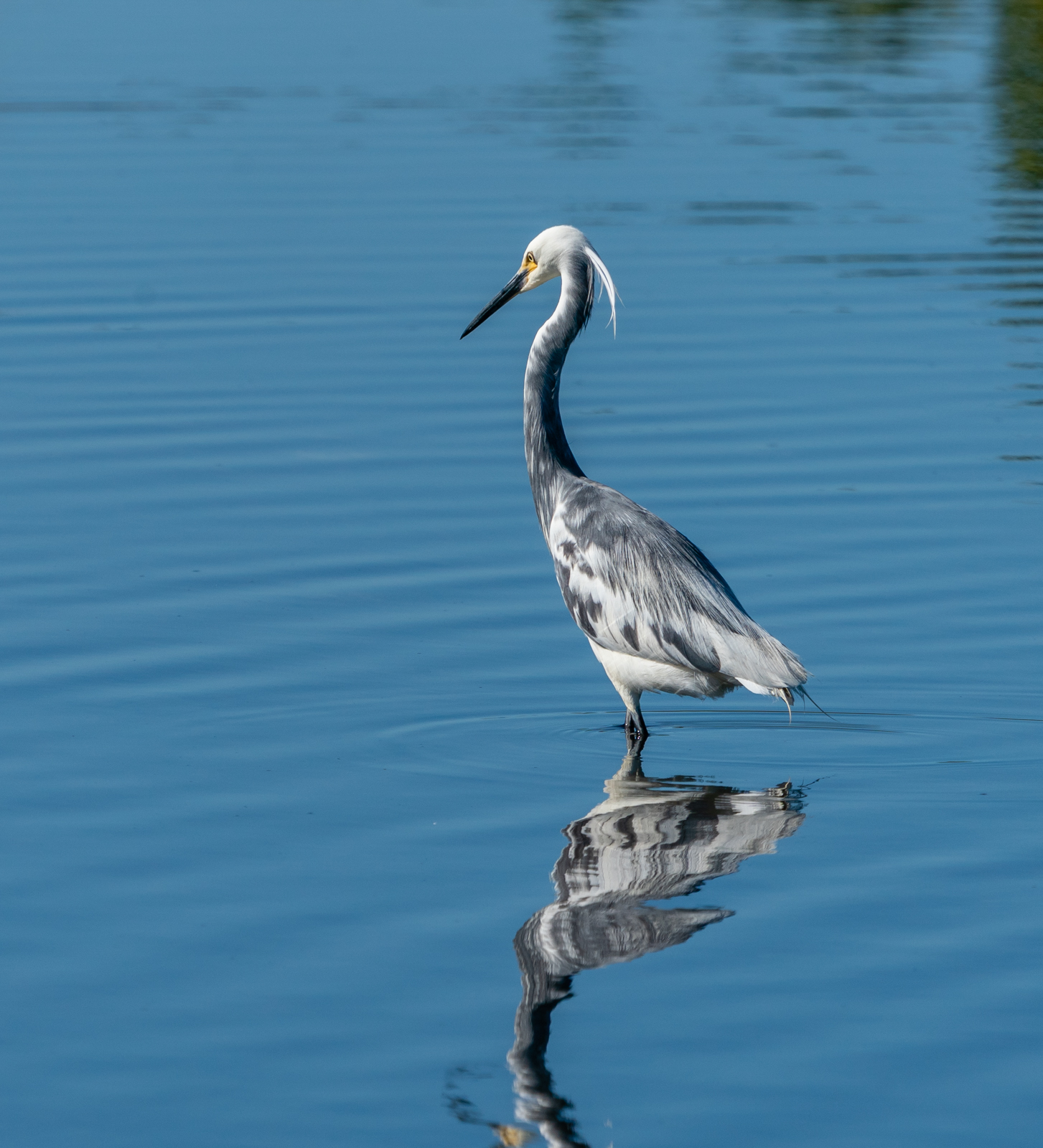
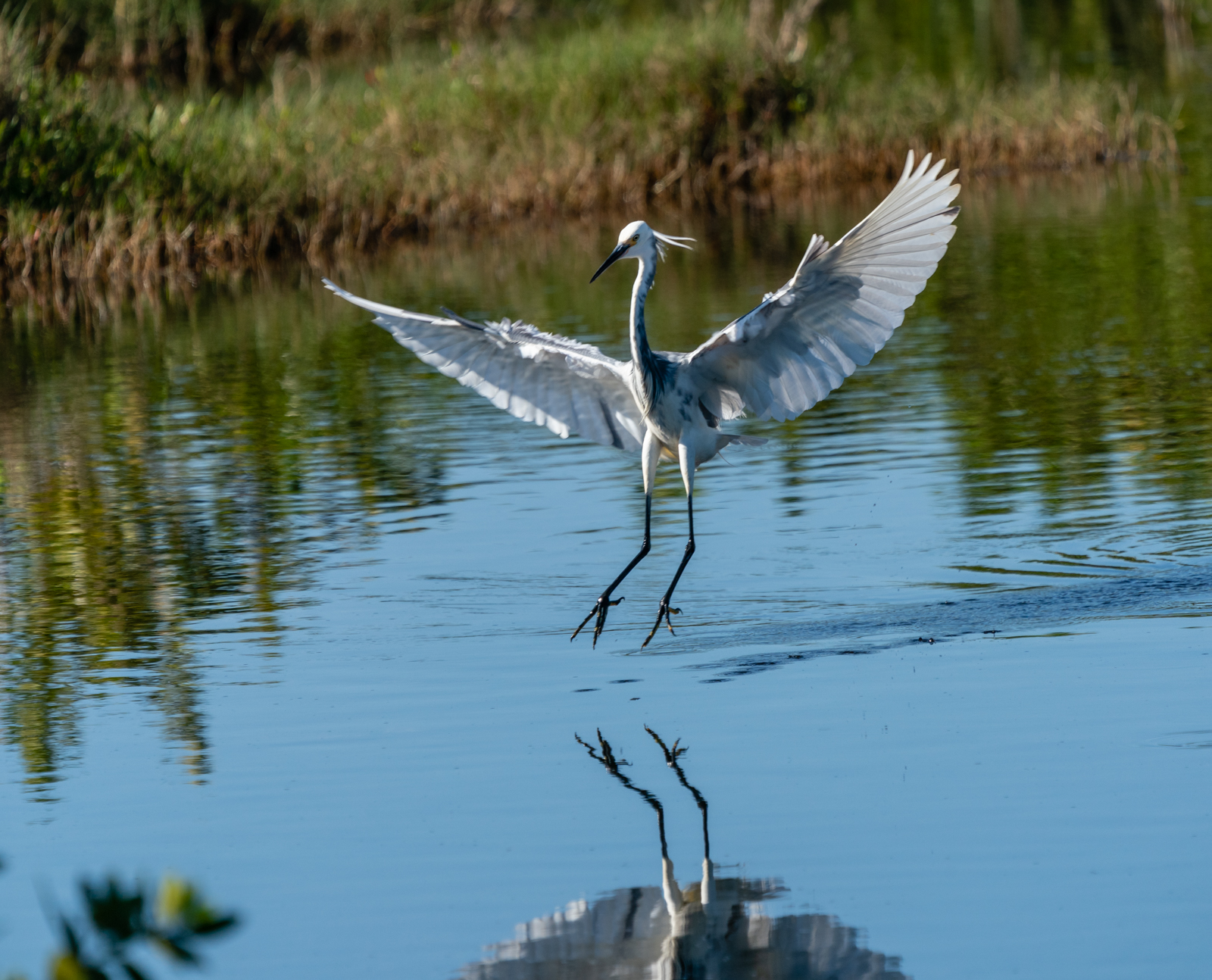
Extremely rare Hybrid bird in Merritt Island, (where the space center is).
This bird is a once in a lifetime bird. It has been seen at Merritt Island over the last few years. Consensus is that it is a Hybrid between a Tricolored Heron and a Snowy Egret (egrets are in the same family as Herons).
After seeing the bird a week ago, we decided to try going back with the A7Riii, Canon 600L and tripod to get better pics. Luckily, it was still around at the same location, but wasn't super cooperative. He never faced the sun, which was nice and low and soft, so I had to recover shadows quite a bit.
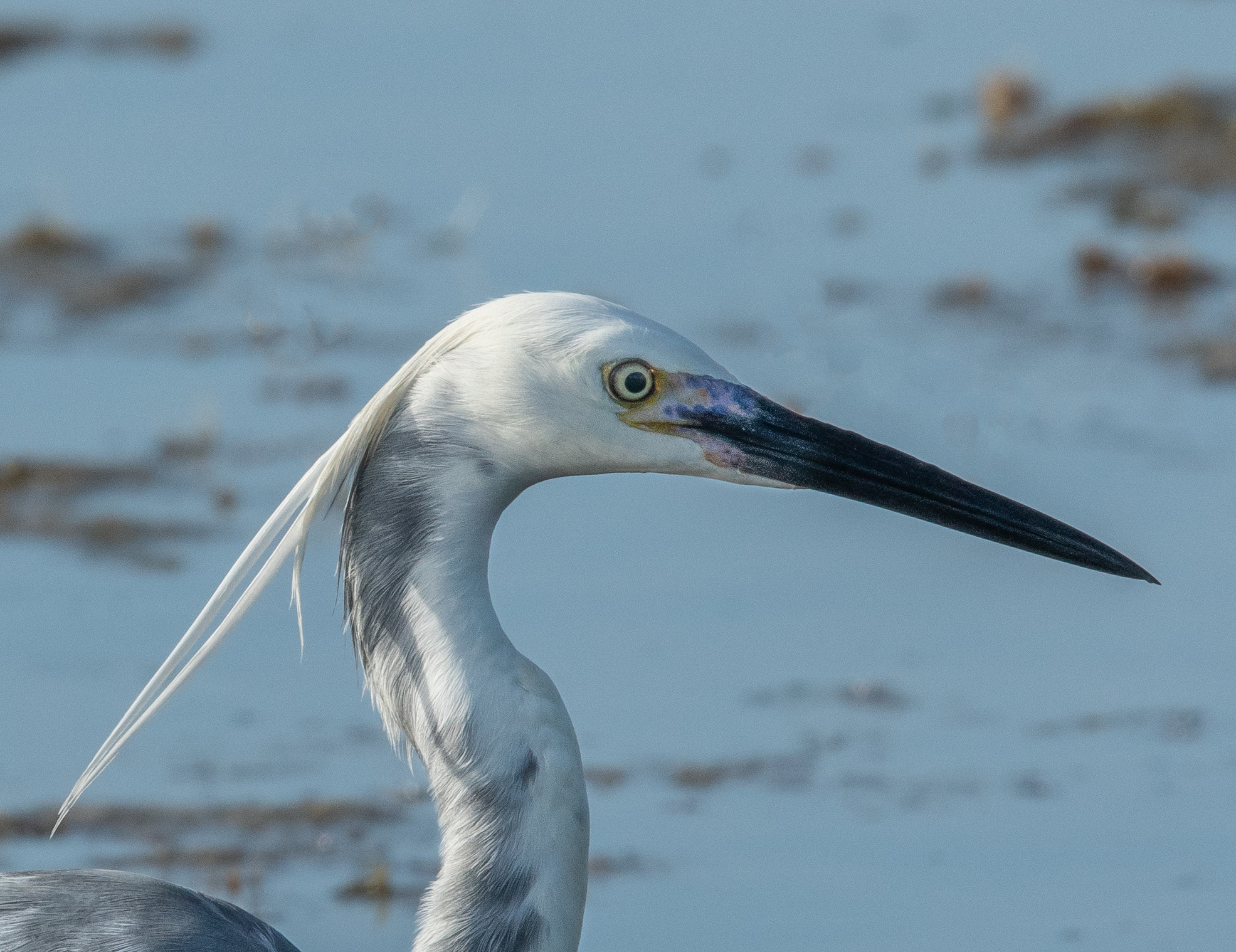
The interesting thing is: the right side of his bill is mottled bluish-purple with some yellow and the left side, seen in the other pics from last week, is solid yellow (like an Egret).
We will be going there and some other locations for the Big Birding day (May 4th), and I'll have the A7Riii mounted to the Canon lens, just in case! (funny, usually I say a lens will be mounted to my camera body, but with that big lens, it is more like the body will be mounted to the lens!).
The first shot is with the A7Riii, 600L Sigma 1.4TC and MC11. Second shot is a crop, so you can see the strange coloration of the bill. The other shots are with the A9, 100-400, and 1.4tc in slightly harsher light.
More happy skiers from me. I can see that it is springtime elsewhere on the northern hemisphere, and at sea level it is here as well, but in the mountains the winter still resides. Days are getting really long, and a long day you need for the Jiehkkevarri-traverse, by many considered the finest ski-tour in Norway. Starting and ending in spring conditions at sea level, the route traverses the glacier covered peaks Holmbukttind (1666m), Jiehkevarri(1834m) and Kveita(1751) with a distance of almost 30km and a total climb of 2500m. The main peak is the highest in the Lyngen alps.
Steep climb up from the fjord on the morning crust:
On the ridge towards Holmbukttind with crampons in icy conditions, normally done on skis:
Entering the top glacial plateau of Jiehkkevarri with Holmbukttind in the background. The route follows the ridge up from the right to the peak of Holmbukttind , then continues down the ridge towards us.
Happy skiers enjoying the view from the top glacial plateau:
Climbing towards Kveita with the main peak of Jiehkkevarri behind us. Our route down from the summit this time was a big zig-zag down through the crevassed area above the big ice falls, other years we have avoided the crevasses by climbing down the rocky area in the middle with skis on the back:
Back down to spring conditions after 10 hours of skiing: