It's been raining a lot in the Bay Area again lately -- yay. So we're getting some good views and sunsets, too bad I don't have enough time to go out more often :/
Post-processing was done in Google Photos of all places... sold my only LR-capable laptop because I didn't use it for anything else. Think I'll have to hunt for an older iMac maybe -- LR seems even slower on Windows, even my top-spec 16GB/dGPU Surface Book 1 was stuttering like crazy all the time.
No no I think you’re just starting.... I didn’t click “like” on the previous ones because she was looking too serious and preoccupied... but now that she started smiling, you have all my attention!
Werner -- one of your best black and whites, lovely.
Lora -- great landscapes of SF Bay, wonderful mood, I especially like the first one
Manuel -- How could anyone get bored with Lili, really nice portraits
Here are a few takes on dying tulip leaves plus a couple of other more convention flower pictures
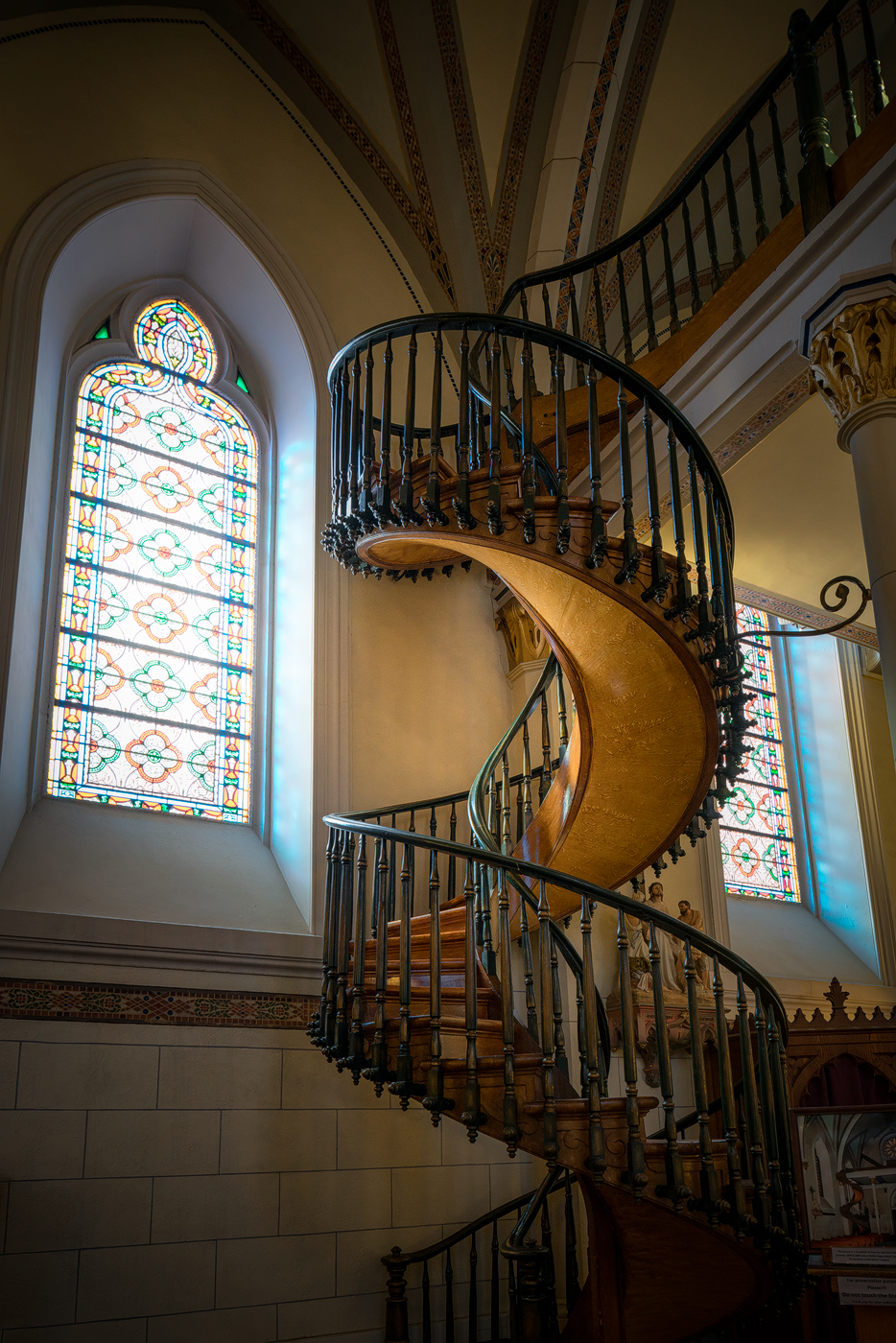
I recently returned from a trip to Santa Fe with family. It was our first visit to the town. I must say we had a great time there. The town is beautiful and full of wonderful things to photograph including the famous Loretto Chapel. Here is a handheld shot of the spiraling staircase. The craftsmanship is just beautiful.
"When the Loretto Chapel was completed in 1878, there was no way to access the choir loft twenty-two feet above. Carpenters were called in to address the problem, but they all concluded access to the loft would have to be via ladder as a staircase would interfere with the interior space of the small Chapel.
Legend says that to find a solution to the seating problem, the Sisters of the Chapel made a novena to St. Joseph, the patron saint of carpenters. On the ninth and final day of prayer, a man appeared at the Chapel with a donkey and a toolbox looking for work. Months later, the elegant circular staircase was completed, and the carpenter disappeared without pay or thanks. After searching for the man (an ad even ran in the local newspaper) and finding no trace of him, some concluded that he was St. Joseph himself, having come in answer to the sisters' prayers.
The stairway's carpenter, whoever he was, built a magnificent structure. The design was innovative for the time and some of the design considerations still perplex experts today.
The staircase has two 360 degree turns and no visible means of support. It is said that the staircase was built without nails—only wooden pegs. Questions also surround the number of stair risers relative to the height of the choir loft and about the types of wood and other materials used in the stairway's construction."
digital_AM wrote:
I recently returned from a trip to Santa Fe with family. It was our first visit to the town. I must say we had a great time there. The town is beautiful and full of wonderful things to photograph including the famous Loretto Chapel. Here is a handheld shot of the spiraling staircase. The craftsmanship is just beautiful.
"When the Loretto Chapel was completed in 1878, there was no way to access the choir loft twenty-two feet above. Carpenters were called in to address the problem, but they all concluded access to the loft would have to be via ladder as a staircase would interfere with the interior space of the small Chapel.
Legend says that to find a solution to the seating problem, the Sisters of the Chapel made a novena to St. Joseph, the patron saint of carpenters. On the ninth and final day of prayer, a man appeared at the Chapel with a donkey and a toolbox looking for work. Months later, the elegant circular staircase was completed, and the carpenter disappeared without pay or thanks. After searching for the man (an ad even ran in the local newspaper) and finding no trace of him, some concluded that he was St. Joseph himself, having come in answer to the sisters' prayers.
The stairway's carpenter, whoever he was, built a magnificent structure. The design was innovative for the time and some of the design considerations still perplex experts today.
The staircase has two 360 degree turns and no visible means of support. It is said that the staircase was built without nails—only wooden pegs. Questions also surround the number of stair risers relative to the height of the choir loft and about the types of wood and other materials used in the stairway's construction."...Show more →
Lovely image, and I also wanted to say how much I appreciate getting the story of what is being photographed. I would love to know more about the backstory and subjects for all of the images in this thread. For me, the meaningfulness of the beautiful and striking images would grow if there were details about both the subject and the making of the images.


 ... Zeiss 100-300, damn