Even if the ND is perfect and doesn't effect colour or reduce sharpness, the exact same effect could be done without an ND, simply by under exposing. If your main aim is to shoot fast glass wide open then there is a point, otherwise, all you are doing is narrowing the window of usable light before having to crank up the ISO which I really don't understand. Anyway, I don't really get your use of NDs, if you prefer shooting that way then fine but stating that they increase colour and sharpness is poor advice for anyone reading (however I assume most here are knowledgable enough to dismiss it)
carstenw wrote:
Have you looked here: http://www.micro-tools.de/
No, but now I did and should have sheet of 1mm and 2mm arriving next week. Thanks for finding the store for me!
paah75 wrote:
I don't know, but the "real" material should absorb 99% of light from any angle while being not as thick. I used this for flocking: http://www.fpi-protostar.com/flock.htm
Thanks for the link - if the stuff from micro-tools.de is no good, I'll try this one.
paah75 wrote:
With the Metabones mk III the problem is that the mask edges actually create additional reflections because of the design of the mask. TS-E lenses (like my 17/4L and 24/3.5L II) have very large imaging circle so I quess the change of hitting inner surfaces of an adapter is also higher.
Large image circle and shifting (light coming from "wrong" direction may have some effect to this). As I have not yet had any issues with Metabones III, I'll try to shoot with some EF-mount lenses next week (if weather is OK and I don't have too much work).
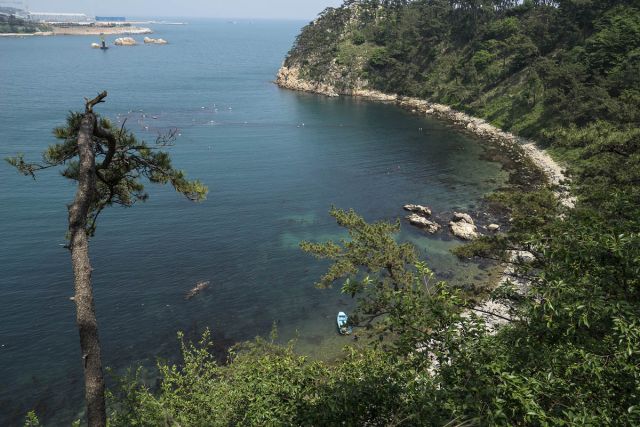
Carl Zeiss Planar T* 2/45 G @ f/5.6, 1/2s, A7r, B+W Kaesemann Circular Polarizer 46mm
To many posts about the ND filters to reply individually. I was in a hurry to reply last night as I had a meeting to attend and didn't realize I was wording my response so misleading or I would have worded things differently.
My original reply was to the question put to me about why I used them, I replied for even and correct exposure. In landscape photography they are helpful as the sky is usually a different exposure then the grass and trees.
For color correction I replied they help make picture more colorful and sharper...I meant the picture on the camera lcd or the evf for focusing and exposure correction. Thats what I was referring to when I said it perceived (appears)that way.
With the great live view on this camera it can be a good aid and the lens I was using a ND0.6 is pretty mild and similar to wearing sunglasses on a bright day. I have many filters in shades from 2 to 16 and some graduated filters for sky only.
I hope this clears things up and sorry for my confusing replies.
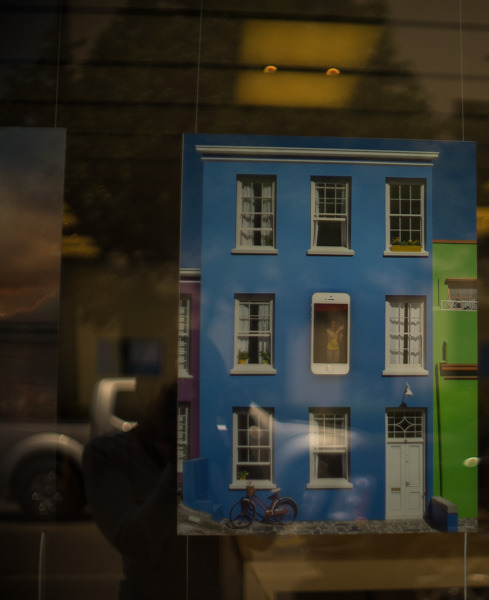
Here's a picture I took in town last night after the meeting.
Would someone be so kind to send me a PM telling me how i can zoom in on the image in live view on an A7, for the life of me i cannot figure it out.On a NEX 7 you hit a button and it zoomed .I cannot find that button on the A7.I will post a pic on this thread for the first time in the near future.
tjack wrote:
For color correction I replied they help make picture more colorful and sharper...I meant the picture on the camera lcd or the evf for focusing and exposure correction. Thats what I was referring to when I said it perceived (appears)that way.
Hi Jack, thanks for clarifying but I'm still slightly confused what is the benefit of using ND filters this way. For example your photo on last page was f/2.8, 1/60s, ISO 100 with ND 0.6 (=2 stop filter) ==> EV 11 light. Without filter it would have been 1/250s, which I would have preferred to avoid camera shake (if shoot handheld). From image capture point of view only difference on this kind of light is the shutter speed, and effect is negative not positive. On much brighter conditions (EV 15 or brighter, assuming photographer wants to shoot this scene with f/2.8) there could be benefit of avoiding EFCS caused vignetting, but it can also be done by disabling EFCS (if one has patience to go through the menu and finally find the setting).
From LCD/viewfinder point of view there is no different with or without the ND filter in this kind of light. In very bright light (1/8000s situations) camera may use smaller aperture to protect sensor from too much light, in which case I understand what you mean by LCD being sharper etc.