This topic is in the 2013 archive. You can read it and like its posts here. It is read only.
Archive 2013400 f/4 DO USM lens
p.1 #1400 f/4 DO USM lens
I need some input on this lens. If some of you are using it pro or con.
Oct 06, 2013 at 09:54 AM
p.1 #2400 f/4 DO USM lens
You might look in the wildlife section for posts from Imagemaster, (AKA Tony Markle), he has been using one.
Oct 06, 2013 at 11:14 AM
Lan11
Offline
[X]
Details
p.1 #3400 f/4 DO USM lens
I'm waiting for the next production shipment from Canon, expected at the year end, since the few remaining lenses in stock I checked had centering issues. When I finally get a good one I'll be delighted.
Oct 06, 2013 at 11:55 AM
p.1 #4400 f/4 DO USM lens
In case you haven't already checked out the "Reviews" section of this website, here is what fellow FMers have had to say about the lens.
Oct 06, 2013 at 12:15 PM
p.1 #5400 f/4 DO USM lens
If you are serious about obtaining one, Canon USA Direct has refurbished 400mm DO lenses in stock now at 15% off the normal refurbished discount price, which works out to just $4398--compare to B&H new price of $6299.
http://shop.usa.canon.com/shop/en/catalog/lenses-flashes/refurbished-lenses/ef-400mm-f4-do-is-usm-refurbished
All refurbished gear now has a 1-year factory warranty, and you have a 14-day return privilege in case you are unhappy with the lens.
If I didn't already own one of these fine lenses, I would be all over this purchase.
Oct 06, 2013 at 12:37 PM
p.1 #6400 f/4 DO USM lens
Agape wrote:
I need some input on this lens. If some of you are using it pro or con.
I rented it once. Did not want to return it! Awesome 400mm lens even wide open. IS works well and it is a great lens to use handheld since its much smaller and lighter than the other super teles. The 400mm 5.6L is good but this lens is better and has IS plus an extra stop obviously.
Oct 06, 2013 at 01:08 PM
p.1 #7400 f/4 DO USM lens
garyvot wrote:
If you are serious about obtaining one, Canon USA Direct has refurbished 400mm DO lenses in stock now at 15% off the normal refurbished discount price, which works out to just $4398--compare to B&H new price of $6299.
http://shop.usa.canon.com/shop/en/catalog/lenses-flashes/refurbished-lenses/ef-400mm-f4-do-is-usm-refurbished
All refurbished gear now has a 1-year factory warranty, and you have a 14-day return privilege in case you are unhappy with the lens.
If I didn't already own one of these fine lenses, I would be all over this purchase.
Thanks, I checked that out earlier today and just purchased one. Thanks again to everyone for all the information.
Wayne
Oct 06, 2013 at 01:34 PM

p.1 #8400 f/4 DO USM lens
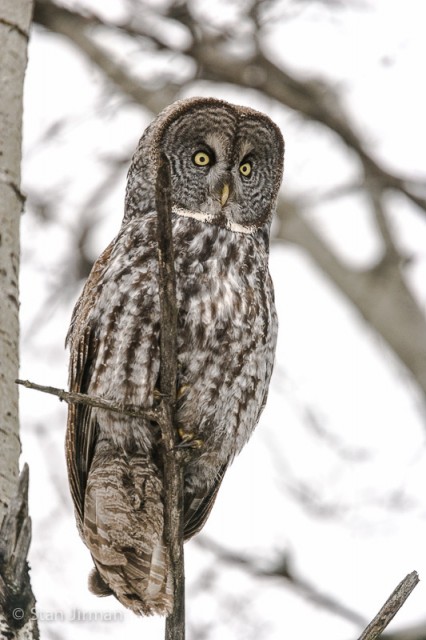
This is one of the more polarizing lenses in Canon's lineup. It lacks sharpness and contrast compared to comparable L-series primes, but it also lacks their weight. I have owned one since 2003 and absolutely love it. It's compact, light, and its sharpness can be fixed in post processing. However, I will admit that it is getting challenged by today's high density sensors, and it doesn't take TCs particularly well. It is also indisputable that by today's supertele standard, it has a really weird bokeh. But if you go on a hike or need to shoot an air show all day long, this is the best, especially if you can stop down one stop.
It's one of the big compromise lenses around, just like the 28-300. I love both of them as they have their place in the lens drawer
It's one of the big compromise lenses around, just like the 28-300. I love both of them as they have their place in the lens drawer
 |
||
 |
||
|
|
||
 |
||
|
|
||
 |
||
|
|
||
 |
||
|
|
||
 |
||
|
Oct 06, 2013 at 01:49 PM
p.1 #9400 f/4 DO USM lens
stanj wrote:
This is one of the more polarizing lenses in Canon's lineup. It lacks sharpness and contrast compared to comparable L-series primes, but it also lacks their weight. I have owned one since 2003 and absolutely love it. It's compact, light, and its sharpness can be fixed in post processing. However, I will admit that it is getting challenged by today's high density sensors, and it doesn't take TCs particularly well. It is also indisputable that by today's supertele standard, it has a really weird bokeh. But if you go on a hike or need to shoot an air show all...Show more →
This succinctly sums up my experiences with this lovely lens. It is a joy. I would think kayakers and day hikers would particularly like this lens's portability. F/4, image stabilization - very nice.
I've gone on modest day hikes with this lens and a small child in pack on my back. Not as easy with the 500mm f/4.
I would say it does take the 1.4x very well and worth using as often as needed.
I think the 2.0x IQ is not so great and probably not worth the bother unless you simply must have the photo and can't get any closer.
It can have funky bokeh if your background is complex (small branches) and fairly close to the subject.
They can be found used for under $4,000 now, making this lens a great super tele bargain.
I think most not minding the weight and size of the 500mm f/4 v1, would opt for that at a mildly higher used price.
As far as comparing to your 100-400 mm lens, which I rented prior to purchasing my 400 DO, I'd say you would have some modest gains. You can add a 1.4x and still be at f/5.6 max aperture with a focal length of 560mm Or stay at 400 mm and you can drop your ISO by half, reducing noise. Some say the 400 DO is modestly sharper, but I wouldn't get caught up in that. I'd go on any super tele primarily based on the specs and budget. Unless you really need the improved specs, it may not be worth the cost of an upgrade for you. Additionally you may be inclined to keep your zoom as my zoom ring on the 400 DO still doesn't work.
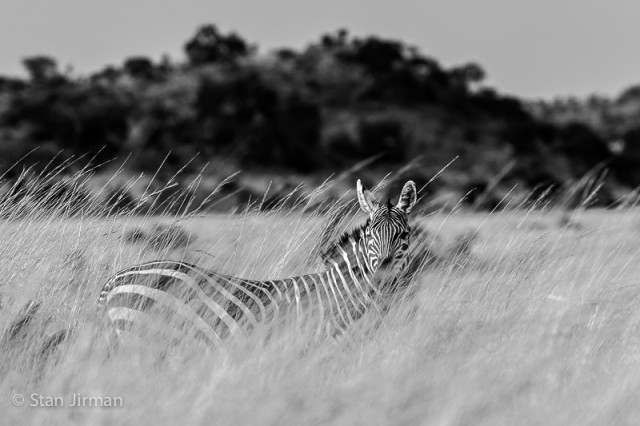
I've shared these photos before as part of my 400 DO love, hope I don't bore some.
The first two are with bare lens. The last two are with the 1.4x.
http://davidsphotography.zenfolio.com/img/s9/v92/p1646733125-5.jpg
http://davidsphotography.zenfolio.com/img/s11/v29/p1613053857-5.jpg
http://davidsphotography.zenfolio.com/img/s8/v78/p1697073625-5.jpg
400mm + 1.4x
http://davidsphotography.zenfolio.com/img/s9/v93/p1719644613-5.jpg
400mm + 1.4x
This is one of the more polarizing lenses in Canon's lineup. It lacks sharpness and contrast compared to comparable L-series primes, but it also lacks their weight. I have owned one since 2003 and absolutely love it. It's compact, light, and its sharpness can be fixed in post processing. However, I will admit that it is getting challenged by today's high density sensors, and it doesn't take TCs particularly well. It is also indisputable that by today's supertele standard, it has a really weird bokeh. But if you go on a hike or need to shoot an air show all...Show more →
This succinctly sums up my experiences with this lovely lens. It is a joy. I would think kayakers and day hikers would particularly like this lens's portability. F/4, image stabilization - very nice.
I've gone on modest day hikes with this lens and a small child in pack on my back. Not as easy with the 500mm f/4.
I would say it does take the 1.4x very well and worth using as often as needed.
I think the 2.0x IQ is not so great and probably not worth the bother unless you simply must have the photo and can't get any closer.
It can have funky bokeh if your background is complex (small branches) and fairly close to the subject.
They can be found used for under $4,000 now, making this lens a great super tele bargain.
I think most not minding the weight and size of the 500mm f/4 v1, would opt for that at a mildly higher used price.
As far as comparing to your 100-400 mm lens, which I rented prior to purchasing my 400 DO, I'd say you would have some modest gains. You can add a 1.4x and still be at f/5.6 max aperture with a focal length of 560mm Or stay at 400 mm and you can drop your ISO by half, reducing noise. Some say the 400 DO is modestly sharper, but I wouldn't get caught up in that. I'd go on any super tele primarily based on the specs and budget. Unless you really need the improved specs, it may not be worth the cost of an upgrade for you. Additionally you may be inclined to keep your zoom as my zoom ring on the 400 DO still doesn't work.
I've shared these photos before as part of my 400 DO love, hope I don't bore some.
The first two are with bare lens. The last two are with the 1.4x.
http://davidsphotography.zenfolio.com/img/s9/v92/p1646733125-5.jpg
http://davidsphotography.zenfolio.com/img/s11/v29/p1613053857-5.jpg
http://davidsphotography.zenfolio.com/img/s8/v78/p1697073625-5.jpg
http://davidsphotography.zenfolio.com/img/s9/v93/p1719644613-5.jpg
Oct 06, 2013 at 07:42 PM
p.1 #10400 f/4 DO USM lens
David, haven't seen those shots before....very nicely done.
Oct 06, 2013 at 08:06 PM
p.1 #11400 f/4 DO USM lens
garyvot wrote:
If you are serious about obtaining one, Canon USA Direct has refurbished 400mm DO lenses in stock now at 15% off the normal refurbished discount price, which works out to just $4398--compare to B&H new price of $6299.
http://shop.usa.canon.com/shop/en/catalog/lenses-flashes/refurbished-lenses/ef-400mm-f4-do-is-usm-refurbished
All refurbished gear now has a 1-year factory warranty, and you have a 14-day return privilege in case you are unhappy with the lens.
If I didn't already own one of these fine lenses, I would be all over this purchase.
Yes, quite a deal that is.
Oct 06, 2013 at 08:07 PM
p.1 #13400 f/4 DO USM lens
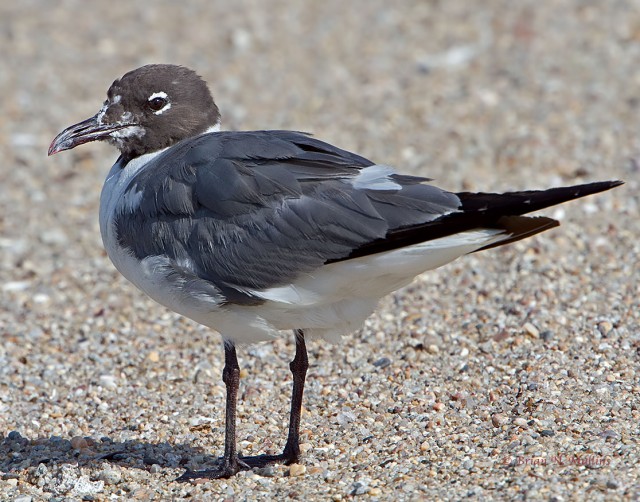
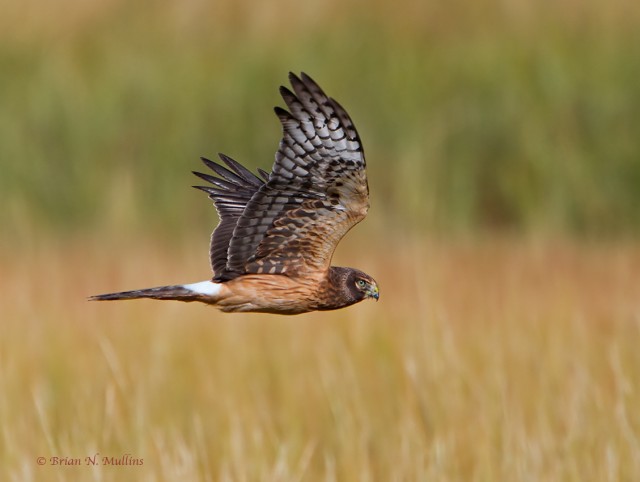
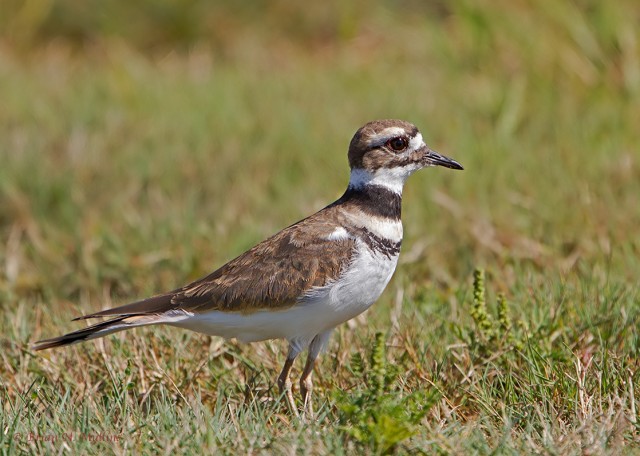
I've found it to be very good with a few quirks as others have mentioned. I've observed a weird, psychedelic-looking background under some lighting conditions and the old image stabilization is weak compared to the newer version. But generally I've found its capacity for getting images of high IQ to be better than expected. If it's a tad below some of the other Canon tele's, it's not by much.
Here's a few with the Canon 1.4 III TC attached.
Brian M.
Gull
Northern Harrier
Killdeer
Here's a few with the Canon 1.4 III TC attached.
Brian M.
 |
||
 |
||
|
Gull
|
||
 |
||
|
Northern Harrier
|
||
 |
||
|
Killdeer
Oct 07, 2013 at 10:40 AM
p.1 #14400 f/4 DO USM lens
Brian, very good quality shots, particularly considering that 1.4xTC was used.
The harrier background is exceptionally nice because it has not been "enhanced" in photoshop, therefore it is real yet smooth and plausible.
(Now, if you loped off about 15% off the frame top so that the harrier really flies above the ground, that would IMO complete that image really nicely. )
The harrier background is exceptionally nice because it has not been "enhanced" in photoshop, therefore it is real yet smooth and plausible.
(Now, if you loped off about 15% off the frame top so that the harrier really flies above the ground, that would IMO complete that image really nicely.
) Oct 07, 2013 at 11:46 AM
p.1 #15400 f/4 DO USM lens
PetKal wrote:
Brian, very good quality shots, particularly considering that 1.4xTC was used.
The harrier background is exceptionally nice because it has not been "enhanced" in photoshop, therefore it is real yet smooth and plausible.
(Now, if you loped off about 15% off the frame top so that the harrier really flies above the ground, that would IMO complete that image really nicely. )
Thank you, Peter.
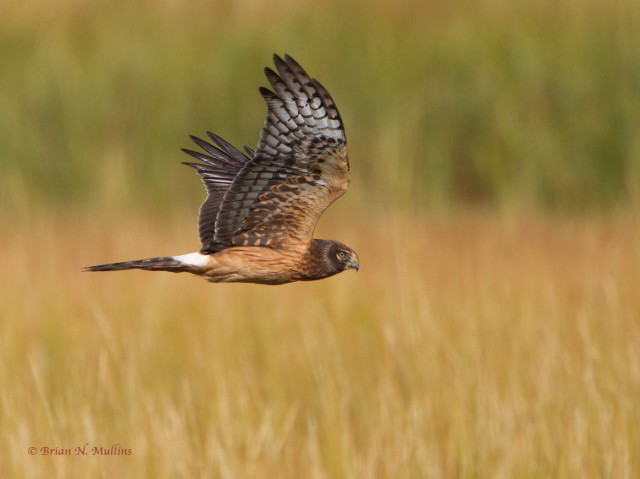
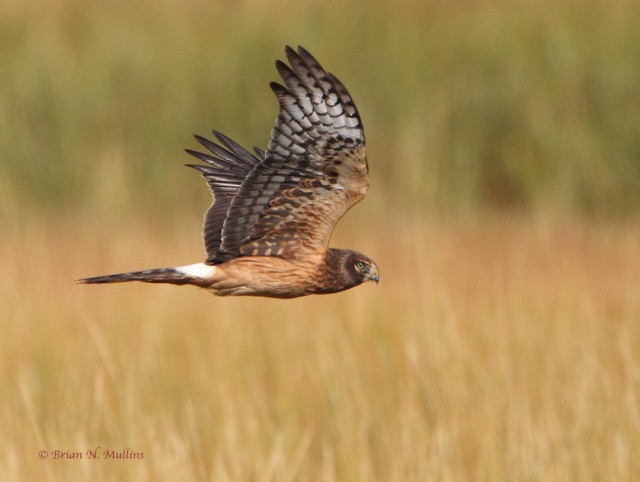
In the FWIW category: Hopefully, I won't be straying from the subject at hand--400mm DO--but what the heck, it's still the lens I used. I shot the Northern Harrier as a RAW file. I did some moderate noise reduction to the background which tends to smooth it. As an unscientific experiment, I decided to process the RAW image in Adobe Photoshop CC and Canon DPP at their bland default settings. After that I then had to considerably downsize both as JPEGs for web display using CC. I only added modest sharpening to the Harrier as both RAW converters seem to do very little sharpening, unlike the default in-camera JPEG setting. The first is the image processed by the Photoshop CC RAW converter and the second the Canon DPP.
I realize the downsizing itself influences the IQ. In these two, the backgrounds are noisier and little less smooth, and IMO the bird needs a bit more contrast and sharpening. The RAW converters do appear quite similar in their result.
Brian M.
Photoshop RAW converter
DPP RAW converter
Brian, very good quality shots, particularly considering that 1.4xTC was used.
The harrier background is exceptionally nice because it has not been "enhanced" in photoshop, therefore it is real yet smooth and plausible.
(Now, if you loped off about 15% off the frame top so that the harrier really flies above the ground, that would IMO complete that image really nicely.
) Thank you, Peter.
In the FWIW category: Hopefully, I won't be straying from the subject at hand--400mm DO--but what the heck, it's still the lens I used. I shot the Northern Harrier as a RAW file. I did some moderate noise reduction to the background which tends to smooth it. As an unscientific experiment, I decided to process the RAW image in Adobe Photoshop CC and Canon DPP at their bland default settings. After that I then had to considerably downsize both as JPEGs for web display using CC. I only added modest sharpening to the Harrier as both RAW converters seem to do very little sharpening, unlike the default in-camera JPEG setting. The first is the image processed by the Photoshop CC RAW converter and the second the Canon DPP.
I realize the downsizing itself influences the IQ. In these two, the backgrounds are noisier and little less smooth, and IMO the bird needs a bit more contrast and sharpening. The RAW converters do appear quite similar in their result.
Brian M.
|
||
 |
||
|
Photoshop RAW converter
|
||
 |
||
|
DPP RAW converter
Oct 07, 2013 at 03:17 PM
p.1 #16400 f/4 DO USM lens
brimull wrote:
The RAW converters do appear quite similar in their result.
Brian M.
Though I use ACR 90% of the time, I do use DPP as a kind of reference tool, as it gives the results that Canon intended for its cameras. I personally think all Canon RAW shooters should be familiar with DPP, as it can tell you a lot about how the camera's image processing chain works.
Anyway, using ACR, I've found it is possible to get a pretty close match to Canon's native results if you pick one of the "camera" color profiles (I tend to use Standard as a starting point for both converters). With the 5-series cameras I've always preferred Canon's colors, and only really liked using ACR once Adobe started mimicking native profiles. However, for the 7D and 1D Mark IV, I think Adobe does a better job with colors, so I use Adobe's native profile for those (this is just one of the reasons that makes these cameras quixotic).
For me, the major qualitative delta between DPP and ACR (other than workflow practice) is noise reduction--Adobe is just a LOT better at it--so I never use the in-built NR in DPP; rather, I'll process to TIFFs and use the Neat Image Photoshop plug-in, which is quite good.
DPP provides Canon's unique lens correction profiles that can substantially sharpen and improve results for images intended for exhibition printing (beyond the CA controls in Adobe software). "Challenging" lenses (which sometimes the 400 DO can be) can show real improvement using DPP (assuming you have a better plug-in for noise reduction).
Sorry for getting too off-topic.
Oct 08, 2013 at 10:43 AM
p.1 #17400 f/4 DO USM lens
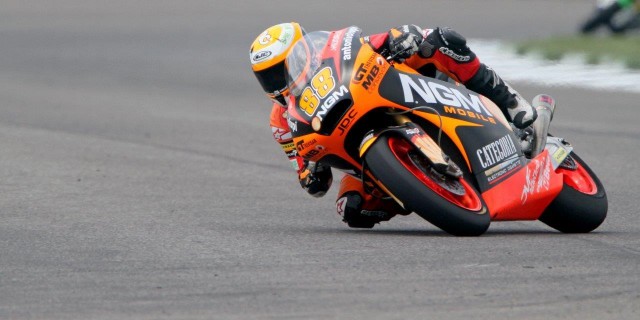
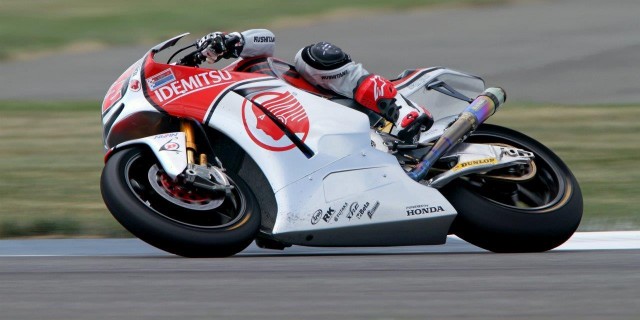
I've had good luck with my 400 DO w/ 1.4TC on a 7D. 40%-50% crops midday light.
Oct 08, 2013 at 10:57 AM
p.1 #18400 f/4 DO USM lens
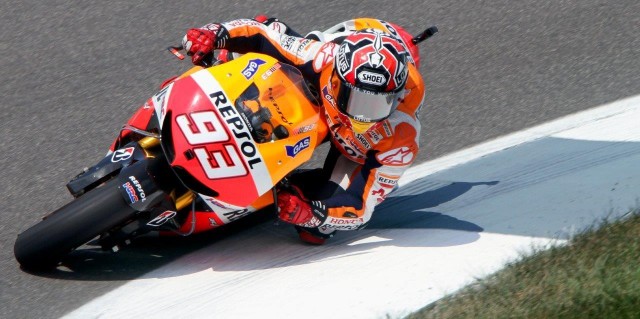
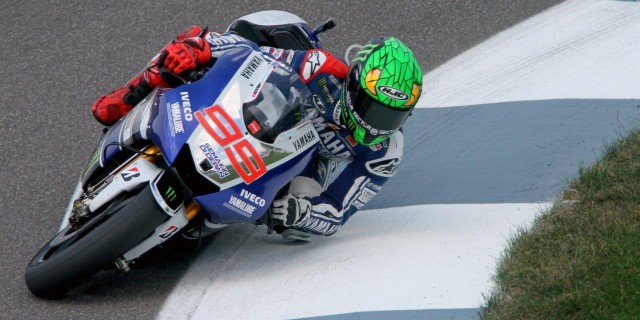
Here's unique shots as they're 85% crops. Was sitting WAY up in the stands to get a shot over the giant fence. Considering the harsh light I was happy with the results.
Oct 08, 2013 at 11:22 AM
p.1 #19400 f/4 DO USM lens
Agape wrote:
http://shop.usa.canon.com/shop/en/catalog/lenses-flashes/refurbished-lenses/ef-400mm-f4-do-is-usm-refurbished
All refurbished gear now has a 1-year factory warranty, and you have a 14-day return privilege in case you are unhappy with the lens.
If I didn't already own one of these fine lenses, I would be all over this purchase.Thanks, I checked that out earlier today and just purchased one. Thanks again to everyone for all the information.
Wayne
Wow, you actually bought one at that price?! Congratulations!
I noticed recently that the 300 f/2.8 II and 400 DO have appeared on the Canon refurb site. To my knowledge this is the first time that the "big whites" have appeared there. But they have been OOS.
garyvot wrote
If you are serious about obtaining one, Canon USA Direct has refurbished 400mm DO lenses in stock now at 15% off the normal refurbished discount price, which works out to just $4398--compare to B&H new price of $6299.http://shop.usa.canon.com/shop/en/catalog/lenses-flashes/refurbished-lenses/ef-400mm-f4-do-is-usm-refurbished
All refurbished gear now has a 1-year factory warranty, and you have a 14-day return privilege in case you are unhappy with the lens.
If I didn't already own one of these fine lenses, I would be all over this purchase.
Wayne
Wow, you actually bought one at that price?! Congratulations!
I noticed recently that the 300 f/2.8 II and 400 DO have appeared on the Canon refurb site. To my knowledge this is the first time that the "big whites" have appeared there. But they have been OOS.
Oct 09, 2013 at 10:53 AM
p.1 #20400 f/4 DO USM lens
I got my 400mm DO on the FM B & S board for $3,500 earlier this year. It's in great shape and had just gotten back from CPS service. Good deals for this lens are out there, you just have to be ready to jump when they come up.
At $5k-$6k this lens was never on my radar, but under $4k is where I think it starts to make sense, at least to me.
At $5k-$6k this lens was never on my radar, but under $4k is where I think it starts to make sense, at least to me.
Oct 09, 2013 at 11:10 AM