This topic is in the 2013 archive. You can read it and like its posts here. It is read only.
Archive 2013Ode to a lens - Minolta 35-70/3.5 Macro

p.1 #1Ode to a lens - Minolta 35-70/3.5 Macro
So I thought I would post a small writeup for my favorite alt lens so far, the Minolta 35-70/3.5 macro, in case anyone's interested and to spread a little bit of Minolta love 

5D3_6967 by J L Smith, on Flickr
So what makes this lens so special? For me, it's the bokeh, which can be downright awesome. When used in a certain fashion, the lens can produce images hard to replicate with other lenses.
Let's get a few things out of the way -- The lens isn't small, not like an old macro prime can be. It's a bit larger and heavier than a Fuji 18-55, and extends as you approach 35mm, and then extends (from the 70mm position) again once you enter "macro" mode, which goes only up to 1:4.
Here it is sitting next to a 18-55 for comparison:

5D3_6964 by J L Smith, on Flickr
Handling of the lens is a bit tricky, because you're messing about with a focus ring, zoom ring, and macro portion of the zoom ring, which is accessed by depressing the small release button and twisting past the 70mm mark. Add in the adapter, and it can make for some strange handling, as the combo can feel a bit front-heavy.

5D3_6966 by J L Smith, on Flickr
Flare resistance? -- Forget it. I don't even know if the thing is coated at all (maybe?), but that's okay.
Sharpness -- Good stopped down a little - can be a bit tricky and ghosty at f/3.5, but that's usually at MFD, where I shoot a lot of the time.
So with all the downsides, what are the upsides?
Price - If you can find it (there are a LOT of lenses of similar designation but not the same), it's a pretty cheap lens. I think I scored mine for $50. I just checked Ebay and saw one copy for $89.
Bokeh - Yeah, there's that word again. Thing is, you have to know how to induce the bokeh on this lens --
This lens craves illuminated backgrounds, whether back-lit or not. That's essentially why it's my primary flower lens - the handling means it takes a bit longer to line up a good shot (so it's hard to catch my kids), and it wants lots of light and color
(Taken with a NEX-5N -- flowers were horribly underexposed, thanks Sony DR!)

_DSC1737-Edit-Edit by J L Smith, on Flickr
(Another with a Sony NEX5N)

_DSC1596-Edit-2-Edit by J L Smith, on Flickr
With this lens, seemingly the busier the background, the better. Granted, post-processing can radically alter bokeh qualities, but if you're careful you can "preserve" the look.
Here's a JPEG from my XE1, with very slight brightness and contrast adjustments.

DSCF6287 by J L Smith, on Flickr
Not all is wacky, though -- some backgrounds can be very pleasing

DSCF6284 by J L Smith, on Flickr
But who the hell am I kidding? The busy backgrounds are the best with this lens. Here's one at I think f/5.6 or f/8

DSCF6780 by J L Smith, on Flickr
The particular shot above is a completely untouched JPEG from the XE1 - I really didn't know what to do to improve it.
The lens *can* be used for insects, but its working distance isn't all that great, so it takes some apathetic insects to be able to get closely (or better skills than mine, which aren't much)

DSCF6787 by J L Smith, on Flickr
More purple, without the bee

DSCF6788 by J L Smith, on Flickr
This should would normally play hell with some lenses, but I like how the minolta renders it

DSCF6795 by J L Smith, on Flickr
It's also pretty decent in non-macro settings. Here's 70mm and I think f/8

DSCF6798 by J L Smith, on Flickr
Sure you can see the straight aperture blades at play, but for some reason on this lens, it doesn't bother me

DSCF6801 by J L Smith, on Flickr
A rare bokeh-less photo from me, I wanted to see fine detail rendering - the original looks pretty darn good (f/5.6 I think)

DSCF6804 by J L Smith, on Flickr
Wider apertures and non-crazy backgrounds can produce very gentle rendering, I think these were f/3.5--

DSCF6805 by J L Smith, on Flickr

DSCF6803 by J L Smith, on Flickr
Fine-detail rendition exists, though -- This is straight from the camera JPEG with sharpening at 0 (normal), f/8 perhaps, maybe f/11 but doubtful

DSCF6809 by J L Smith, on Flickr
Another non-macro at 70mm

DSCF6810 by J L Smith, on Flickr
Probably f/8 or f/11, as the butterflies were extremely active so I was having to rush to try to get a shot and hoped the DOF would help

DSCF6837 by J L Smith, on Flickr
(not bad for ISO3200, that's a camera comment though )

DSCF6855-Edit by J L Smith, on Flickr
Wind blew this shot a bit, but I'm still happy with how it turned out

DSCF6867 by J L Smith, on Flickr
So, I'd say if you're a flower or bokeh enthusiast, it's worth a look. Also works fairly well with the Olympus OMD, especially the IBIS and the pivot LCD (I would set the IBIS to 50mm as a good compromise), but unfortunately I never got any really good shots with this lens on my OMD, guess I had parked it for a while during that time.
Thanks for reading
5D3_6967 by J L Smith, on Flickr
So what makes this lens so special? For me, it's the bokeh, which can be downright awesome. When used in a certain fashion, the lens can produce images hard to replicate with other lenses.
Let's get a few things out of the way -- The lens isn't small, not like an old macro prime can be. It's a bit larger and heavier than a Fuji 18-55, and extends as you approach 35mm, and then extends (from the 70mm position) again once you enter "macro" mode, which goes only up to 1:4.
Here it is sitting next to a 18-55 for comparison:
5D3_6964 by J L Smith, on Flickr
Handling of the lens is a bit tricky, because you're messing about with a focus ring, zoom ring, and macro portion of the zoom ring, which is accessed by depressing the small release button and twisting past the 70mm mark. Add in the adapter, and it can make for some strange handling, as the combo can feel a bit front-heavy.
5D3_6966 by J L Smith, on Flickr
Flare resistance? -- Forget it. I don't even know if the thing is coated at all (maybe?), but that's okay.
Sharpness -- Good stopped down a little - can be a bit tricky and ghosty at f/3.5, but that's usually at MFD, where I shoot a lot of the time.
So with all the downsides, what are the upsides?
Price - If you can find it (there are a LOT of lenses of similar designation but not the same), it's a pretty cheap lens. I think I scored mine for $50. I just checked Ebay and saw one copy for $89.
Bokeh - Yeah, there's that word again. Thing is, you have to know how to induce the bokeh on this lens --
This lens craves illuminated backgrounds, whether back-lit or not. That's essentially why it's my primary flower lens - the handling means it takes a bit longer to line up a good shot (so it's hard to catch my kids), and it wants lots of light and color
(Taken with a NEX-5N -- flowers were horribly underexposed, thanks Sony DR!)
_DSC1737-Edit-Edit by J L Smith, on Flickr
(Another with a Sony NEX5N)
_DSC1596-Edit-2-Edit by J L Smith, on Flickr
With this lens, seemingly the busier the background, the better. Granted, post-processing can radically alter bokeh qualities, but if you're careful you can "preserve" the look.
Here's a JPEG from my XE1, with very slight brightness and contrast adjustments.
DSCF6287 by J L Smith, on Flickr
Not all is wacky, though -- some backgrounds can be very pleasing
DSCF6284 by J L Smith, on Flickr
But who the hell am I kidding? The busy backgrounds are the best with this lens. Here's one at I think f/5.6 or f/8
DSCF6780 by J L Smith, on Flickr
The particular shot above is a completely untouched JPEG from the XE1 - I really didn't know what to do to improve it.
The lens *can* be used for insects, but its working distance isn't all that great, so it takes some apathetic insects to be able to get closely (or better skills than mine, which aren't much)
DSCF6787 by J L Smith, on Flickr
More purple, without the bee
DSCF6788 by J L Smith, on Flickr
This should would normally play hell with some lenses, but I like how the minolta renders it
DSCF6795 by J L Smith, on Flickr
It's also pretty decent in non-macro settings. Here's 70mm and I think f/8
DSCF6798 by J L Smith, on Flickr
Sure you can see the straight aperture blades at play, but for some reason on this lens, it doesn't bother me
DSCF6801 by J L Smith, on Flickr
A rare bokeh-less photo from me, I wanted to see fine detail rendering - the original looks pretty darn good (f/5.6 I think)
DSCF6804 by J L Smith, on Flickr
Wider apertures and non-crazy backgrounds can produce very gentle rendering, I think these were f/3.5--
DSCF6805 by J L Smith, on Flickr
DSCF6803 by J L Smith, on Flickr
Fine-detail rendition exists, though -- This is straight from the camera JPEG with sharpening at 0 (normal), f/8 perhaps, maybe f/11 but doubtful
DSCF6809 by J L Smith, on Flickr
Another non-macro at 70mm
DSCF6810 by J L Smith, on Flickr
Probably f/8 or f/11, as the butterflies were extremely active so I was having to rush to try to get a shot and hoped the DOF would help
DSCF6837 by J L Smith, on Flickr
(not bad for ISO3200, that's a camera comment though
)DSCF6855-Edit by J L Smith, on Flickr
Wind blew this shot a bit, but I'm still happy with how it turned out
DSCF6867 by J L Smith, on Flickr
So, I'd say if you're a flower or bokeh enthusiast, it's worth a look. Also works fairly well with the Olympus OMD, especially the IBIS and the pivot LCD (I would set the IBIS to 50mm as a good compromise), but unfortunately I never got any really good shots with this lens on my OMD, guess I had parked it for a while during that time.
Thanks for reading
Jun 09, 2013 at 10:29 PM
p.1 #2Ode to a lens - Minolta 35-70/3.5 Macro
Yours performs better than mine did, I ended up getting the Leica version which was much better.
Jun 09, 2013 at 11:30 PM
p.1 #3Ode to a lens - Minolta 35-70/3.5 Macro
LightShow wrote:
Yours performs better than mine did, I ended up getting the Leica version which was much better.
Yes maybe I got lucky I bought it from KEH in BGN condition but when I got it, I couldn't have told the difference from mint.
Yours performs better than mine did, I ended up getting the Leica version which was much better.
Yes maybe I got lucky
I bought it from KEH in BGN condition but when I got it, I couldn't have told the difference from mint. Jun 09, 2013 at 11:34 PM
p.1 #4Ode to a lens - Minolta 35-70/3.5 Macro
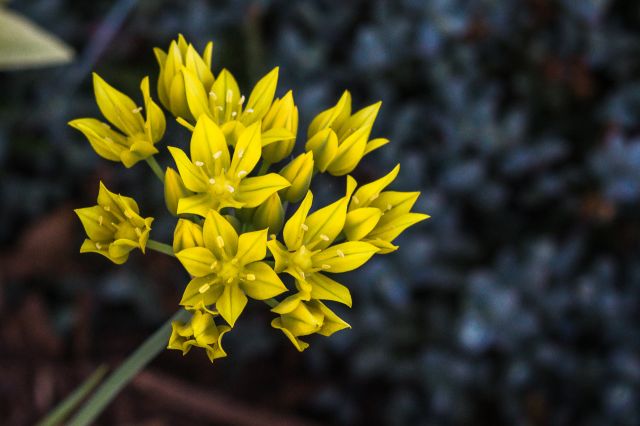
I agree this is an amazing lens which I keep putting back on the camera. I have had the non-macro version for several months and just bought the macro version and took my first half dozen shots this evening in the last light of day with high ISO and an f/8 setting on a Nex 5n.
Jun 09, 2013 at 11:45 PM
p.1 #5Ode to a lens - Minolta 35-70/3.5 Macro
ebookman wrote:
I agree this is an amazing lens which I keep putting back on the camera. I have had the non-macro version for several months and just bought the macro version and took my first half dozen shots this evening in the last light of day with high ISO and an f/8 setting on a Nex 5n.
Very nice to hear. From the little information about the lens I have found, the Minolta f3.5 (constant) macro is supposedly the best of the several variations and may have influenced the Leica version. How true that is I don't know. Enjoy it
Jun 09, 2013 at 11:55 PM
p.1 #6Ode to a lens - Minolta 35-70/3.5 Macro
Thanks for sharing, I'm sure it was your photos from the NEX-5N about a year or so ago that made me pick up a copy for myself. I only recently picked up a 5N to use it on. I look forward to it!
I believe there are 4 versions of this lens (not including the Leicas, of which only one was based on this design IIRC)-
MC
MD
MD macro
some rubbish 4th version
And, of course, the 2nd and 3rd version are supposed to be the best and the extra "macro" makes the 3rd the more sought after.
Edited on Jun 10, 2013 at 01:14 AM · View previous versions
Jun 10, 2013 at 12:09 AM


p.1 #8Ode to a lens - Minolta 35-70/3.5 Macro
Very nice set cpteq.I share your thoughts about this special zoom and have one copy myself.
Jun 10, 2013 at 01:04 AM
p.1 #9Ode to a lens - Minolta 35-70/3.5 Macro
It was a great lens back in the days - and still is. When I was working a lab there were a few floating around and I saw the excellent results many times when printing peoples photos - one guy only had that lens on the X-E1. A very nice, basic camera.
Personally I found the 35-70 range too limited, like having a slow aperture "normal" lens with a little spread. But, there is no denying the IQ of it.
Personally I found the 35-70 range too limited, like having a slow aperture "normal" lens with a little spread. But, there is no denying the IQ of it.
Jun 10, 2013 at 01:07 AM
p.1 #10Ode to a lens - Minolta 35-70/3.5 Macro
I was out with mine yesterday. I've not yet done it but apparently you can remove a stop and open it up (at the wide end) to ~2.8
http://ic2.pbase.com/g9/63/551663/2/150707174.upSUvZB6.jpg
http://ic2.pbase.com/g9/63/551663/2/150707169.gaC2loBw.jpg
http://ic2.pbase.com/g9/63/551663/2/150707170.YNAtJisR.jpg
Mike
http://ic2.pbase.com/g9/63/551663/2/150707174.upSUvZB6.jpg
http://ic2.pbase.com/g9/63/551663/2/150707169.gaC2loBw.jpg
http://ic2.pbase.com/g9/63/551663/2/150707170.YNAtJisR.jpg
Mike
Jun 10, 2013 at 03:08 AM
p.1 #11Ode to a lens - Minolta 35-70/3.5 Macro
Good to hear you're ready to rock it Dude!
Great set Phillip, thanks for contributing. Nice to hear it's getting some German love
Thanks Mcbroom for the photos and interesting note about the stop. I would probably screw my copy up trying that
Great set Phillip, thanks for contributing. Nice to hear it's getting some German love
Thanks Mcbroom for the photos and interesting note about the stop. I would probably screw my copy up trying that
Jun 10, 2013 at 06:03 AM
p.1 #12Ode to a lens - Minolta 35-70/3.5 Macro
wow, this lens does look pretty fantastic! The first Minolta that really impresses me, and it's a mid-range zoom. haha
Jun 10, 2013 at 08:22 AM


p.1 #15Ode to a lens - Minolta 35-70/3.5 Macro
Great spam I will have to give the lens a whirl at some non flowers shots to see how I like it...I typically use the fuji 18-55 for those shots.
I will have to give the lens a whirl at some non flowers shots to see how I like it...I typically use the fuji 18-55 for those shots. Jun 10, 2013 at 02:58 PM
p.1 #16Ode to a lens - Minolta 35-70/3.5 Macro
Got this lens a few days ago and i like it a lot.
http://farm8.staticflickr.com/7352/8979225912_3cfc4c090b_b.jpg
http://farm9.staticflickr.com/8260/9010684210_19406206e5_b.jpg
http://farm8.staticflickr.com/7352/8979225912_3cfc4c090b_b.jpg
http://farm9.staticflickr.com/8260/9010684210_19406206e5_b.jpg
Jun 10, 2013 at 03:08 PM
p.1 #17Ode to a lens - Minolta 35-70/3.5 Macro
how about that Minolta colour?
Jun 11, 2013 at 07:51 AM
p.1 #18Ode to a lens - Minolta 35-70/3.5 Macro
JimUe wrote:
how about that Minolta colour?
I'm not sure I can attribute much of the color, at least with my copy, to the lens. Seems to work a bit more pleasing to me using my Fuji vs my NEX5N, so I give that credit to the camera
Then again, I guess I could do a little head-to-head if I get the time (maybe next week) to see how it all plays out.
Jun 11, 2013 at 08:00 AM
p.1 #19Ode to a lens - Minolta 35-70/3.5 Macro
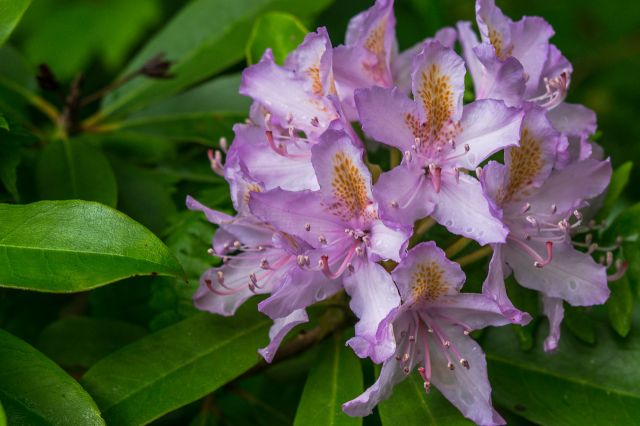
Macro shot taken during a rain storm while standing under a tree. Very soft lighting.
Jun 12, 2013 at 10:04 PM
p.1 #20Ode to a lens - Minolta 35-70/3.5 Macro
fine, i'll actually try using mine now.
Jun 12, 2013 at 10:38 PM