p.2 #1 · Anyone out there actually like "noisy" images.
Monito wrote:
My statements rarely contradict themselves and when they do it is because I have learned; but not from you. As usual you have not read logically: just because you don't want a 5D3 for lower noise doesn't mean that others are fools for wanting a 5D3 for lower noise. That was the point you missed.
It is obvious to all except a few that if I want a 5D3 for less noise than a 5D2 it does not contradict operating a 5D2 a certain way to achieve low noise results.
I agree with Monito. The 5DIII has much better looking noise with lower shadow banding. You can always add more noise or grain.
p.2 #3 · Anyone out there actually like "noisy" images.
David Baldwin wrote:
"There is very few cams that produce nice noise on higher ISO. Plus distribution of noise/grain is pretty different than on film."
Ok, I will stick my neck out. Here is a link to a large 5D2 image, I think I shot it at ISO 3200. You don't have to like the shot, but its got the kind of "filmy" grain look that I myself like:
I don't mind noise that is uniform but I can rarely get my 5D2 to produce uniform noise like your sample image. My 1D3 has a much more uniform and somewhat artistic noise at higher ISOs that I prefer. That said, I shoot regularly at ISO3200/6400/12800 and at that point the grain isn't leaving the picture without destroying detail. I always remove chroma noise because it just looks ugly and screws up the coloration. I have found that reducing granular noise is a bit of bell shaped curve with detail on the y-axis and noise reduction on the x-axis. Lightroom is able to reduce noise and accentuate details up to a certain point. That is where I stop reducing noise. To me, at least, it is about extracting as much natural detail and color out of the high ISO photos at possible without destroying the image. That usually involves leaving a good amount of grain in - I don't think it takes away from the photo to the point where I would screw up the rendering of my subjects' faces (making them look like "plastic" or "waxy").
With street phototgraphy, I leave the granular noise in. Gives it a rougher more realistic feel that I like.
p.2 #4 · Anyone out there actually like "noisy" images.
I use minimal NR on all my images. Enough color NR to remove any color noise at very high ISO and mild normal NR to preserve maximum detail. My ISO 12,800 images usually have as little NR as my ISO 100 images.
p.2 #5 · Anyone out there actually like "noisy" images.
You make an excellent point, in my view.
There is an odd obsession, or so it seems to me, with trying to achieve perfectly noise-free images. However, as you note, a bit of noise - perhaps at a level that the viewer may not quite even notice - can give the image a quality that isn't present when noise is flattened out too much. Pushing things too far towards noise-free, especially in very large prints, can end up creating a sort of plastic, false appearance.
In a few cases I have been known to add a tiny bit of noise to a print.
I sometimes wonder how many folks have seen classic photographic prints from the film era close up and in person - rather than as reproduced at small sizes on computer screens. The fact is that you can virtually always see the grain in those photographs, even some truly wonderful images, and it doesn't really degrade the photograph at all. If anything it can enhance the quality a bit.
(Someone pointed out that the presence of noise actually creates an impression of a sharper image when film is printed large. Although it is not uncommon at all to find that edge sharpness - resolution - in these older images is less than that from digital images using the same size sensor/negative, if you enlarge the film quite a bit the grain can still be in good focus, which creates a subjective impression of sharpness.)
So, I would not say that I like "noisy images," but I am certain that I don't think that the complete elimination of noise is necessary or even a good thing.
Dan
David Baldwin wrote:
Often on FM I come across comments that suggest it is now completely orthodox to want all images processed so that all noise is removed. I am wondering if digital imaging has rewired our photographic brains to consider that noise is inherently a problem, not an aesthetic tool.
I will try to be clearer. I cut my photographic teeth processing my own black and white film. I loved low light work and quickly encountered film grain, paticularly when I "pushed" Trix or faster film. Seemed to me that grain made photographs graphic, interesting, gritty, like a pointillist painting. I learned to love the "feel" heavy grain delivered.
Now with digital, we have smoothing and noise reduction algorithms galore, and while I understand in some contexts sensor noise is death, I do wonder if we are being brainwashed into believing that all noise/grain is bad, and are therefore in danger of forgetting the creative opportunity of graphic noise.
p.2 #7 · Anyone out there actually like "noisy" images.
Like any effect or affectation, a little noise goes a long way, and should be used sparingly.
I would go noiseless, if it were possible. To that end, I shoot at the lowest possible ISO for the subject, and use minimal noise reduction (usually up to 15 in LR for luminance). It's really not much of a problem -- recent sensors (1Ds3, and on) have very little noise from 50 to 400. Even 800 cleans up very easily.
p.2 #8 · Anyone out there actually like "noisy" images.
David Baldwin wrote:
Often on FM I come across comments that suggest it is now completely orthodox to want all images processed so that all noise is removed. I am wondering if digital imaging has rewired our photographic brains to consider that noise is inherently a problem, not an aesthetic tool.
I will try to be clearer. I cut my photographic teeth processing my own black and white film. I loved low light work and quickly encountered film grain, paticularly when I "pushed" Trix or faster film. Seemed to me that grain made photographs graphic, interesting, gritty, like a pointillist painting. I learned to love the "feel" heavy grain delivered.
Now with digital, we have smoothing and noise reduction algorithms galore, and while I understand in some contexts sensor noise is death, I do wonder if we are being brainwashed into believing that all noise/grain is bad, and are therefore in danger of forgetting the creative opportunity of graphic noise.
Sometimes it is nice if it has a more filmic look to it, sometimes even added in on purpose, especially for B&W.
But plenty of times it is certainly best to not be there at all.
One thing I hate is waxy/watercolor! IMO many people way overdo NR tools, I always like to keep that to a min and hate the fake look with crisp edges and zero surface detail, if there is some noise, there is some noise, don't make it a very fake looking wax-works IMO. Give the noise any day over that.
p.2 #9 · Anyone out there actually like "noisy" images.
grain added to B&W conversions (wasn't the wedding photographer but had camera, don't know anything about it, don't do it, just took a few snaps now and then when I could without moving from my spots or getting in way of the actual photographer):
a bit large with the sizes posted but I didn't want to downscale the grain away too much (the grain with any of these simple downscales doesn't look quite a natural in the original size images):
I think it is too fine to show on these at other than original scale but:
anyway for stuff like this I'm not sure that a bit of ADDED noise in the replica grain form doesn't even help (although in some ways it's actually easier to add it in realistically if the original image is like ISO200 and noise free though )
It's a good shot, and you nailed the focus on the eyes. I have to wonder if you were making a point by overdoing the NR, or if the processing seems right to you.
p.2 #15 · Anyone out there actually like "noisy" images.
I can't remember seeing a picture and thinking it was better because it was noisy, but I can remember pictures that were so effective that the noise didn't matter
When you have cameras like my 5D3 that can, if required and with good exposure be almost noise-free at 6,400 ISO then noise is seldom a major issue in general photography for me (and I was a concert pro struggling at 1250ASA with uprated Ectachrome Pro Tungsten)
I've not used noise as a creative tool I must admit.
p.2 #17 · Anyone out there actually like "noisy" images.
Having processed my own B&W films I agree with you that low light work with film make, IMHO, a beautiful effect (i.e. Ilford 3200). On the other hand, I have never much liked grain in color films. With digital I have the same issues, and I prefer an image that has grain when is presented in B&W rather than color. Nevertheless, with digital I prefer images as grain-free as possible as I do not like the digital grain.
David Baldwin wrote:
Often on FM I come across comments that suggest it is now completely orthodox to want all images processed so that all noise is removed. I am wondering if digital imaging has rewired our photographic brains to consider that noise is inherently a problem, not an aesthetic tool.
I will try to be clearer. I cut my photographic teeth processing my own black and white film. I loved low light work and quickly encountered film grain, paticularly when I "pushed" Trix or faster film. Seemed to me that grain made photographs graphic, interesting, gritty, like a pointillist painting. I learned to love the "feel" heavy grain delivered.
Now with digital, we have smoothing and noise reduction algorithms galore, and while I understand in some contexts sensor noise is death, I do wonder if we are being brainwashed into believing that all noise/grain is bad, and are therefore in danger of forgetting the creative opportunity of graphic noise.
p.2 #18 · Anyone out there actually like "noisy" images.
I don't think the technology (or an aspect/artifact of the technology) should become the art, it seems like people seem to try to rationalize everything these days.
p.2 #20 · Anyone out there actually like "noisy" images.
"I don't think the technology (or an aspect/artifact of the technology) should become the art, it seems like people seem to try to rationalize everything these days."
Now I don't think that's fair. If anything we can be accused of being starry eyed about the technical artifacts of the past, not those of the present (if people's anecdotes about 5D3 ISO 6400 are anything to go by). That alone should show that we are not rationalizing.
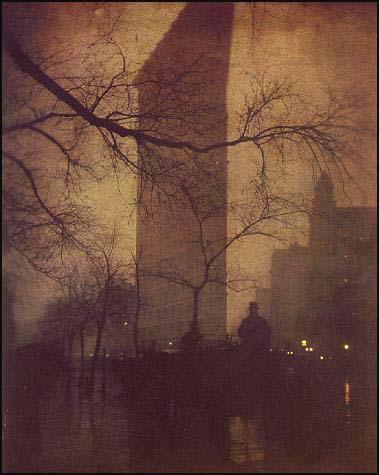
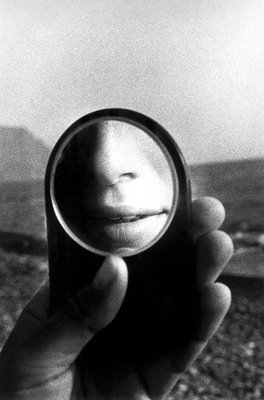
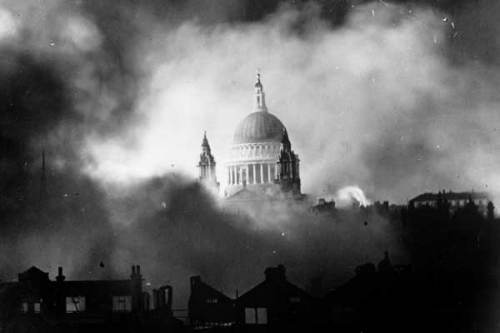
As for weaknesses in technology, photographic history is littered with great photographers taking the weaknesses in the process and creatively making use of them as another technique:


 )
)