p.4 #1 · Anyone out there actually like "noisy" images.
This seems to be turning into an interesting discussion, particularly with respect to the differing opinions about whether an image should be judged within the context of its' time and artist, or without. I admit i have played devils advocate a little here, though through a genuine interest in the discussion rather than a desire to troll.
When i see people praising a classic image with obvious technical (and possibly even aesthetic) deficiencies in a modern sense, i find myself wondering - If i were to produce this image now and post it on the forums, would it garner such praise or would people go past it without a second look? Indeed, if i were to approach galleries to sell such an image, would i be shown the door or taken on?
I find it hard to believe that the answer to the above with respect to the Steichen image is that people would not go straight on past it. Which means to me that it doesn't stand out when placed outside its context. I meant what i said earlier - i don't think it is a great piece outside its time: Though i have never been to the location, i would hazard a guess that the location and point of view naturally appeal to anyone who walks along there, as it is a naturally good viewpoint that many photographers would choose. The inclusion of a foreground element adds depth, and the overall composition is good, but i don't find it amazing. I do find the tree branches distracting though and I wonder at the opinion and intention of the photographer with respect to these. The "mood" is to me the defining feature of the image, which whilst very well achieved, does not alone elevate the image to "great" in my eyes.
Taken in context however, my opinion is that this is an amazing image. The use of complicated and innovative chemistry to achieve a goal (the "mood") at a time when photography was still a relatively expensive and technically challenging endeavour in itself, is astonishing. The context of the wider photographic and artistic movements of the times, of the photographer and his work (thanks Artd for the brief background there) further enhances its' merit. So to me, it is an image that holds greatness only when considered in a wider context, and when considered outside of this context i think it is a good, but not great, image.
With respect to the OP, i'm not sure i believe that the noise was intentionally a big part of the image. It was pointed out earlier that the technology existed at the time to capture sharp images, and similarly the technology existed to take dark and noisy shots too if this were the objective of the photographer. The point here was clearly to enhance (and perhaps even "engineer") mood via the multi-tone printing process, and that being the case i would speculate that the photographer might well have been more satisfied with his method development if it yielded little less noise and a little more sharpness.
p.4 #2 · Anyone out there actually like "noisy" images.
Composition, Light, Shadow and content are all things that we use to convey the mood of an image.
Noise/grain brings it's own emotional element to a shot as well.
When you know what things are available to you to use to evoke a particular sense or another those things become like paint upon the artist palette. A choice to be used or ignored at the artist discretion.
p.4 #3 · Anyone out there actually like "noisy" images.
15Bit wrote:
When i see people praising a classic image with obvious technical (and possibly even aesthetic) deficiencies in a modern sense, i find myself wondering - If i were to produce this image now and post it on the forums, would it garner such praise or would people go past it without a second look?
That's sort of like asking, "If I were to produce music exactly like Mozart and share it, would people regard it the same way that they regard Mozart?" Or, "If I invented the printing press today, would people be as impressed by my invention as they were by that of Gutenberg?"
p.4 #4 · Anyone out there actually like "noisy" images.
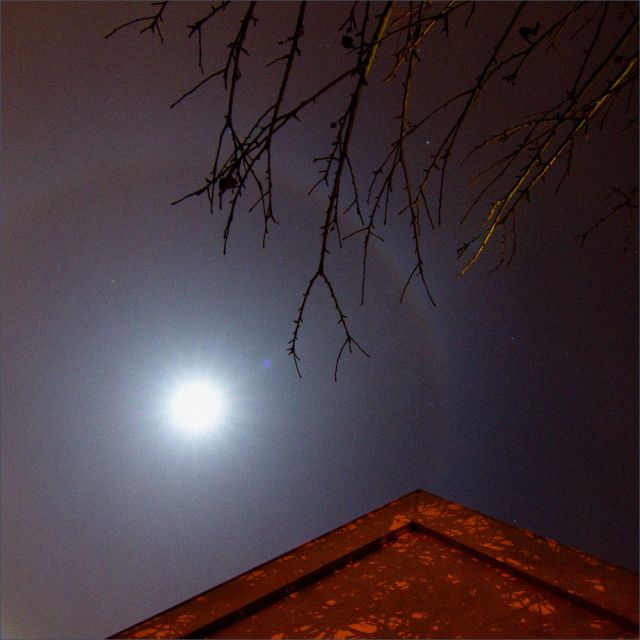
Ok, back to film grain. Sticking my neck out really far this time, I'm posting one of my "edgier" images, so don't expect everyone to like it, but I'm posting it as an example of my own work that I personally feel benefits from "grain" or noise. This is a crop from a pretty much unprocessed high ISO 7D image.
p.4 #5 · Anyone out there actually like "noisy" images.
gdanmitchell wrote:
That's sort of like asking, "If I were to produce music exactly like Mozart and share it, would people regard it the same way that they regard Mozart?" Or, "If I invented the printing press today, would people be as impressed by my invention as they were by that of Gutenberg?"
Dan
Yes and no, respectively. I don't think the printing press analogy doesn't really hold here I think. Mozart does though, and people do listen to and enjoy Mozart's works without prior knowledge of the music being by Mozart, or of the context in which they were were written. If someone were to produce the music of Mozart now I think it would stand up well.
p.4 #6 · Anyone out there actually like "noisy" images.
15Bit wrote:
Yes and no, respectively. I don't think the printing press analogy doesn't really hold here I think. Mozart does though, and people do listen to and enjoy Mozart's works without prior knowledge of the music being by Mozart, or of the context in which they were were written. If someone were to produce the music of Mozart now I think it would stand up well.
I sort of see your point about the printing press, though it isn't quite the cut and dried.
However, almost no self-respecting composer today would waste time trying to compose what Mozart composed. Doing so today would, at best, provoke a response of "Hey, that sounds like Mozart wrote it!" You cannot out-Mozart Mozart.
p.4 #7 · Anyone out there actually like "noisy" images.
Noise has always been a by product of poor technology. Kodak and Fuji spent years and millions trying to reduce it with new film technologies. I for one am glad to be rid of noise if at all possible.
p.4 #8 · Anyone out there actually like "noisy" images.
gdanmitchell wrote:
However, almost no self-respecting composer today would waste time trying to compose what Mozart composed. Doing so today would, at best, provoke a response of "Hey, that sounds like Mozart wrote it!" You cannot out-Mozart Mozart.
Absolutely, but that's not quite what i meant. I should probably have qualified the comment by including "if Mozart had not lived and produced the music he had". I thought it was implicit from the context, but in the multi-stranded conversations that go on in a thread context is easily lost and "implicitly obvious" can quickly become nothing of the sort.
p.4 #9 · Anyone out there actually like "noisy" images.
Good art should be timeless. If you depend on a medium, it is not these things. It is just like I can show a compelling photograph as a print or on a computer monitor, either way it is still compelling. We don't look at the defects of the computer monitor (relative to the print) and call it art, we just use it for the convenience it offers knowing full well tommorow it could be replaced by something better.
p.4 #10 · Anyone out there actually like "noisy" images.
Access wrote:
Good art should be timeless. If you depend on a medium, it is not these things. It is just like I can show a compelling photograph as a print or on a computer monitor, either way it is still compelling.
So a very realistic plastic reproduction of a marble statue would be just as good?
Must all "good art" be timeless? Or can some of it exist and have great value in its own time but not beyond? And if it must be timeless, how can we determine whether or not any current art is great or not? And if we can, must something other than its confirmed timelessness be part of the determination?
These things are a bit more nuanced and complex, I'm afraid... ;-)
p.4 #11 · Anyone out there actually like "noisy" images.
15Bit wrote:
When i see people praising a classic image with obvious technical (and possibly even aesthetic) deficiencies in a modern sense, i find myself wondering - If i were to produce this image now and post it on the forums, would it garner such praise or would people go past it without a second look? Indeed, if i were to approach galleries to sell such an image, would i be shown the door or taken on?
Yes, quite an interesting discussion.
Now, let’s think about it this way: you could take a technically perfect and aesthetically pleasing image to a gallery, and they would be just as likely to show you the door. The thing about galleries, they need to display something of value. And “value” is in itself a human construct that is meaningless without context.
Think about money. Say you hold in your hand a crumply piece of paper with some numbers printed on it, and some fancy graphics. Are you going to judge that piece of paper’s value solely on its own, with no context? Obviously you don’t judge it simply from its physical appearance. To understand why it has value, you need to interpret it within a context.
In other words, nothing has “value” without context. Art is no exception.
We each individually have things which we value, and those values are determined by our individual contexts. A worthless trinket to one person might be a family heirloom to someone else. A baseball bat is quite valuable to a baseball player, but not very valuable to an accountant. But, as humans, we can do more than just define what we individually value. We can try to understand why other people assign value to the things they do. A pretty cool thing can happen then: we might expand our understanding of other human beings. And that's one of the ways in which I think art is pretty neat.
p.4 #12 · Anyone out there actually like "noisy" images.
artd wrote:
Yes, quite an interesting discussion.
Now, let’s think about it this way: you could take a technically perfect and aesthetically pleasing image to a gallery, and they would be just as likely to show you the door. The thing about galleries, they need to display something of value. And “value” is in itself a human construct that is meaningless without context.
Think about money. Say you hold in your hand a crumply piece of paper with some numbers printed on it, and some fancy graphics. Are you going to judge that piece of paper’s value solely on its own, with no context? Obviously you don’t judge it simply from its physical appearance. To understand why it has value, you need to interpret it within a context.
In other words, nothing has “value” without context. Art is no exception.
We each individually have things which we value, and those values are determined by our individual contexts. A worthless trinket to one person might be a family heirloom to someone else. A baseball bat is quite valuable to a baseball player, but not very valuable to an accountant. But, as humans, we can do more than just define what we individually value. We can try to understand why other people assign value to the things they do. A pretty cool thing can happen then: we might expand our understanding of other human beings. And that's one of the ways in which I think art is pretty neat....Show more →
p.4 #13 · Anyone out there actually like "noisy" images.
Access wrote:
If you depend on a medium, it is not these things. It is just like I can show a compelling photograph as a print or on a computer monitor, either way it is still compelling.
I don't agree with this - i cannot see "art" being medium independent. Go to an exhibition of paintings, then go to the foyer shop and look at the posters of those paintings, then look on the internet for the same. Are they really all the same? I don't believe so. I remember standing in front of a painting a few years ago quite entranced. The poster of the same held my attention all of 5 seconds.
artd wrote:
In other words, nothing has “value” without context. Art is no exception.
This certainly true of financial "value", but is it also true of artistic value? Have you never seen a picture about which you nothing and been "wowed"?
Edit: Sorry - i seem to be playing devils advocate still
p.4 #14 · Anyone out there actually like "noisy" images.
15Bit wrote:
This certainly true of financial "value", but is it also true of artistic value? Have you never seen a picture about which you nothing and been "wowed"?
Yes, to both questions.
I think it is true of "value" whether financial, artistic, personal, etc. Something cannot inherntly posses value of any sort unless it also has a context within which that value has meaning.
As far as seeeing a picture (or any work of art in any medium for that matter) which hasn't "wowed" me, that happens all the time. And, on the flip side of that coin, I've seen stuff that makes me ooh and ah like a fireworks display, but fades from memory just as quickly.
Still, sometimes when something doesn't "wow" me, but it's displayed in a context that suggests it contains artistic merit (e.g. a gallery or a museum) I might choose to make an extra effort to investigate why someone else found value in it. Sometimes I can understand and even appreciate the piece, even if I don't react to it on an emotional level. Sometimes, it makes me think about something I had never thought about before. And sometimes, I find myself completely surprised and awed by something, and the fact that I had initially been dismissive of it makes that moment that much more interesting. Those moments might be rare, but they are absolutely amazing when they do happen.
Edit: Sorry - i seem to be playing devils advocate still
p.4 #15 · Anyone out there actually like "noisy" images.
Art is a purely personal matter, medium aside, if it invokes lasting emotions then it rocks
I still shoot film; Fuji Velvia 50, sometimes 100 in a pinch, Ilford PanF as well, for their ultra fine grain. But I also shoot with Ilford HP5 because I like it's 'grainy' look.
Each film has it's own beauty and can be used to manage mood, context if you like. With digital we have much the same choices only now it's body, pixel size/quality and ISO based. For super fine, smooth tonality in images you can't beat the 5D or one of the 1D2 bodies; they produce IQ much like fine grain film.
As of late the 18mp's of the 1DX seems to nearly match the IQ of the older FF bodies. IMHO, if you look back at the older crop bodies 20D-40D, compare them to the 18mp crop bodies of today, at lower ISOs they have somewhat the same smooth tonality as the older 5D.
Today's higher MP bodies just kill at the higher ISOs and are of great benefit, but my eyes like the older big pixel look much more...but I like newer features; liveview, auto dust removal, as well...so multiple bodies it must be if I'm to eat all the cake
p.4 #16 · Anyone out there actually like "noisy" images.
artd wrote:
Still, sometimes when something doesn't "wow" me, but it's displayed in a context that suggests it contains artistic merit (e.g. a gallery or a museum) I might choose to make an extra effort to investigate why someone else found value in it. Sometimes I can understand and even appreciate the piece, even if I don't react to it on an emotional level. Sometimes, it makes me think about something I had never thought about before. And sometimes, I find myself completely surprised and awed by something, and the fact that I had initially been dismissive of it makes that moment that much more interesting. Those moments might be rare, but they are absolutely amazing when they do happen.
I happen to teach in the arts, and one question I have my students consider is how best to deal with work that they don't "get" but which others seem to believe has value. There are a few options:
1. Get angry over it. Say things like "How can anyone think that is worth $X" and "a five year old could do that" or "that artist is just pulling the wool over people's eyes." One form of a priori rejection...
2. Laugh at it and make fun of it. "That silly artist, taking herself so seriously about this stuff." Another form of a priori rejection...
3. With the context that someone thinks that this has value, make an effort to try to understand what they see in it and what they value in it. Two outcomes are possible. You might confirm your dislike for it, which is fine if you have first been honestly open to seeking what it might possess. Or you might discover something of value in a place where you thought there was none, a form of enlightenment.
As a person who, like most, has occasionally tried option 1 or option 2, only to eventually discover that I had rejected something that turned out to be very powerful and very wonderful, I try - but not always successfully - to use approach 3 when confronting new things. (As an example, my attitude about photographer/artist Jeff Wall went from "huh?" and "you must be kidding!" to an honest and enthusiastic "wow!" after I had a couple of opportunities to spend time viewing his work in a gallery.)
That said, in the end, I personally rarely enjoy work that ends up seeming to have little intrinsic meaning to me beyond its context and explanation or which is primarily about the explanation. But that's me. ;-)
p.4 #17 · Anyone out there actually like "noisy" images.
15Bit wrote:
I don't agree with this - i cannot see "art" being medium independent. Go to an exhibition of paintings, then go to the foyer shop and look at the posters of those paintings, then look on the internet for the same. Are they really all the same? I don't believe so. I remember standing in front of a painting a few years ago quite entranced. The poster of the same held my attention all of 5 seconds.
I'm not talking about art-in-the-abstract or concrete items. Just the impact of a photograph. I also don't get entranced looking at a painting, real or not.
Of course a print is not the same _thing_ as an image on a computer monitor or even the projected image of a slide onto a white screen. But the photograph can have the same impact or compelling nature regardless of how it is displayed or shown.
It's like if I have a movie on a VHS tape, and the same edition/cut of the movie on a DVD. The tape is obviously a different item than the DVD, but that doesn't mean the movie is different. The viewing experience might be a little different but we don't claim that the defects of the VHS tape or the video artifacts of the DVD's digital compression are 'art'. And no matter what, the impact or compelling nature of the movie (or lack thereof) to a given individual remains the same regardless of the medium used.
gdanmitchell wrote:
I happen to teach in the arts, and one question I have my students consider is how best to deal with work that they don't "get" but which others seem to believe has value. There are a few options:
...
3. With the context that someone thinks that this has value, make an effort to try to understand what they see in it and what they value in it. Two outcomes are possible. You might confirm your dislike for it, which is fine if you have first been honestly open to seeking what it might possess. Or you might discover something of value in a place where you thought there was none, a form of enlightenment. ...Show more →
Another option is to just ignore it. Neither like nor dislike, ignore it and move on.
If you don't get it, then maybe it's just not for you -- there is no need to form an opinion on everything, or even to study why you have no opinion of it.
I do not seek enlightenment through examination, I just do what I do, without expectation, and then move on.