This topic is in the 2011 archive. You can read it and like its posts here. It is read only.
Archive 2011SPECS! pg6. Is this the new NEX7/5E?
p.4 #1SPECS! pg6. Is this the new NEX7/5E?
Not many people need anything above 6-8 MP. I rarely print above 8x12 so I find myself in this group too.however, it is important to note that high density sensors in the 30++ range, whether the extra pixels are needed or not, have some beneficial effects. Increasing the pixel density will make the AA filter unnecessary for instance. It helps also get more accurate color in the demosaicing process. I am totally against the opinion that high density sensors require higher resolution lenses. It's not the sensor, it's how large you print. And definitely if you printlreally large, 35mm FF, let alone APS, is not exactly the most suitable format.
Jul 28, 2011 at 04:30 AM
p.4 #2SPECS! pg6. Is this the new NEX7/5E?
If the 24mp sensor shows the resolution limitations of the lenses, it could cause 2 things, a slow down of resolution increases, and a new wave of lenses with higher resolution capabilities.
I would prefer an improvement in dynamic range, and noise reduction at ALL iso's,
a faster readout of the data, & more sensitivity, all before a increase in resolution(+ others I have overlooked).
What Canon has done the last few generations, is balance improvements in noise reduction with an increase in resolution, such that net noise levels have arguably gone up rather than down,
my fear is that Sony will do the same to surpass Canon in the resolution race. I hope my fears are for nothing and this will be the best sensor yet, forcing canon to do better.
Jul 28, 2011 at 04:55 AM
p.4 #3SPECS! pg6. Is this the new NEX7/5E?
Looks like a big announcement could be coming near the end of August.
http://www.sonyalpharumors.com/sr5-the-sony-dday-on-august-2324-the-biggest-sony-photo-products-announcement-in-history/
Sony will announce the A77, A65, NEX-7, (probably a NEX-5N and VG20 too) and the new 16-50mm f/2.8 SSM and 24mm f/1.7 Zeiss E-mount lens (+ maybe 50mm and 55-210mm) on August 23/24!
Jul 31, 2011 at 07:24 PM
p.4 #4SPECS! pg6. Is this the new NEX7/5E?
LightShow wrote:
Looks like a big announcement could be coming near the end of August.
http://www.sonyalpharumors.com/sr5-the-sony-dday-on-august-2324-the-biggest-sony-photo-products-announcement-in-history/
Same day as Nikon's announcement? Somebody in Sony's PR department must be getting an earful! :-P
Looks like a big announcement could be coming near the end of August.
http://www.sonyalpharumors.com/sr5-the-sony-dday-on-august-2324-the-biggest-sony-photo-products-announcement-in-history/
Earlier quote
Sony will announce the A77, A65, NEX-7, (probably a NEX-5N and VG20 too) and the new 16-50mm f/2.8 SSM and 24mm f/1.7 Zeiss E-mount lens (+ maybe 50mm and 55-210mm) on August 23/24!Same day as Nikon's announcement? Somebody in Sony's PR department must be getting an earful! :-P
Aug 01, 2011 at 01:02 PM
p.4 #5SPECS! pg6. Is this the new NEX7/5E?
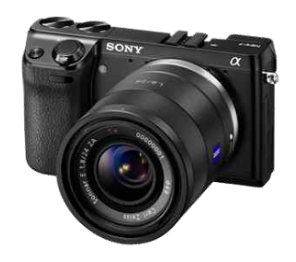
New PICS!!!!
http://photorumors.com/2011/08/02/upcoming-sony-announcement-nex-7-nex-5n/
Possibly new lenses:
E mount lenses: 24mm f/1.8, 50mm f/1.8 and 55-210 f/4.5-6.3
****
From the first post:
http://www.sonyalpharumors.com/sr4-hot-is-that-the-first-image-of-the-nex-7
http://img3.imageshack.us/img3/9797/senzaolo1sm.jpg
****

It looks like the NEX5N will get an external OLED viewfinder which won't be compatible with any other NEX camera.
http://www.sonyalpharumors.com/sr5-new-external-oled-viewfinder-for-all-current-nex-cameras-coming-too/
http://photorumors.com/2011/08/02/upcoming-sony-announcement-nex-7-nex-5n/
Possibly new lenses:
E mount lenses: 24mm f/1.8, 50mm f/1.8 and 55-210 f/4.5-6.3
****
From the first post:
http://www.sonyalpharumors.com/sr4-hot-is-that-the-first-image-of-the-nex-7
http://img3.imageshack.us/img3/9797/senzaolo1sm.jpg
****
It looks like the NEX5N will get an external OLED viewfinder which won't be compatible with any other NEX camera.
http://www.sonyalpharumors.com/sr5-new-external-oled-viewfinder-for-all-current-nex-cameras-coming-too/
Aug 02, 2011 at 05:26 AM

p.4 #7SPECS! pg6. Is this the new NEX7/5E?
Nex 7 and Zeiss 24/1.8. Me wants 
Aug 02, 2011 at 05:54 AM
p.4 #8SPECS! pg6. Is this the new NEX7/5E?
Wow, awesome news. The Nex5N or Nex7 is definately on my wantlist because of the viewfinder. Lets see what turns out in reality though.
Aug 02, 2011 at 05:55 AM
p.4 #9SPECS! pg6. Is this the new NEX7/5E?
edwardkaraa wrote:
Nex 7 and Zeiss 24/1.8. Me wants
Make that 2...
Nex 7 and Zeiss 24/1.8. Me wants
Make that 2...
Aug 02, 2011 at 05:59 AM
p.4 #10SPECS! pg6. Is this the new NEX7/5E?
The nex 7 looks a bit larger and ergonomically better. Too bad about the lack of backward compability on the viewfinder though.
Aug 02, 2011 at 06:00 AM
p.4 #11SPECS! pg6. Is this the new NEX7/5E?
http://www.sonyalpharumors.com/sr5-huge-sony-leak/
According to our sources that is the list of new products Sony will announce on August 24:
A77
Vertical Grip VG-C77AM
16-50mm f/2.8 SSM
A65
NEX-7
NEX-5N
LA-EA2
XGA-external OLED viewfinder
Zeiss 24mm f/1.8
Sony 55-210mm f/4-6.3 OSS
Sony 50mm f/1.8 OSS
VG-20
The LA-EA2 is an A mount adapter with SLT mirror giving A mount lenses PDAF.
it could be something like Leica's Visoflex unit:
http://www.sonyalpharumors.com/sr3-la-ea2-translucent-will-cost-around-400/
Aug 02, 2011 at 06:04 AM
p.4 #12SPECS! pg6. Is this the new NEX7/5E?
It's interesting that the 24/1.8 is a Sonnar not a Distagon design.
Aug 02, 2011 at 06:09 AM
p.4 #13SPECS! pg6. Is this the new NEX7/5E?
That sounds strange. Where did you pick that up, Edward?
Aug 02, 2011 at 06:22 AM
p.4 #15SPECS! pg6. Is this the new NEX7/5E?
I wonder what that means for the optical characteristics of such a wide lens
Aug 02, 2011 at 06:29 AM
p.4 #16SPECS! pg6. Is this the new NEX7/5E?
edwardkaraa wrote:
It's interesting that the 24/1.8 is a Sonnar not a Distagon design.
Isn't Distagon a retrofocus design? If that is the case, I'd imagine they wouldn't need to resort to that due to the short register distance.
It's interesting that the 24/1.8 is a Sonnar not a Distagon design.
Isn't Distagon a retrofocus design? If that is the case, I'd imagine they wouldn't need to resort to that due to the short register distance.
Aug 02, 2011 at 06:34 AM
p.4 #17SPECS! pg6. Is this the new NEX7/5E?
The Sonnar design has been used in a 40/2.8 (rollei) and the pre-war 35/2.8 Biogon is very Sonnar-ish in design (but not the traditional Sonnar design).
I sincerely doubt a 24mm lens (even if it is 35mm effective FOV) will share anything in common with the Sonnar style of rendering. The reason they may be calling it a Sonnar is because the Sonnar is quite telecentric, and lenses HAVE to be close to telecentric in order to perform perfectly on the NEX.
That being said, Zeiss use their designations (Distagon, Biogon, Sonnar) willy nilly with the exception of large format. In the ZM range the 85/2 Sonnar is more of a Planar. Many of the longer telephoto Sonnars are completely different to any Tessar/Planar/Sonnar design.
Aug 02, 2011 at 06:46 AM
p.4 #18SPECS! pg6. Is this the new NEX7/5E?
Well, the ZM wides in this FL range are Biogon. Sonnar designs are usually simple and luminous designs, but not very well corrected for spherical aberrations, even though the ZA 135/1.8 Sonnar cannot be taken as an example as it is very well corrected, and is practically as sharp WO as stopped down.
Aug 02, 2011 at 06:48 AM
p.4 #19SPECS! pg6. Is this the new NEX7/5E?
phigment wrote:
Isn't Distagon a retrofocus design? If that is the case, I'd imagine they wouldn't need to resort to that due to the short register distance.
They would because symmetrical wide angles don't work well on the NEX.
Isn't Distagon a retrofocus design? If that is the case, I'd imagine they wouldn't need to resort to that due to the short register distance.
They would because symmetrical wide angles don't work well on the NEX.
Aug 02, 2011 at 06:52 AM
p.4 #20SPECS! pg6. Is this the new NEX7/5E?
Edward, the only true biogon ZM is the 21/4.5 (even then, the curvature and diameter ratio between front/rear groups isn't true to the original biogon design), the rest are at best biogon/distagon hybrids.
The 135/1.8 is not a *true* Sonnar design unless you want to take 6 elements and an entire group out of the lens
An example of a 'true' Sonnar with exceptional performance is the Nikkor 105/2.5 or 85/2 (in S mount).
The 135/1.8 is not a *true* Sonnar design unless you want to take 6 elements and an entire group out of the lens
An example of a 'true' Sonnar with exceptional performance is the Nikkor 105/2.5 or 85/2 (in S mount).
Aug 02, 2011 at 06:56 AM