The 50MP doesn't have much PF at all, but then you'd be losing the wonderful rendering of the Planar for the utilitarian rendering of the MP... Leica also has PF issues, but perhaps less so, in general. They weight their tradeoffs differently. I think though, that tweaking the PF slider in LR would make this a non-issue most of the time.
Yea well, problem with LR is that in case you shoot S5 Pro, its useless. Im not using it for anything else than convenient import from card and basic look what I should throw away and keep. Results Im posting (and will post) are impossible to achieve with LR or any conventional RAW developer. At least with S5. For regular cams, LR is okey.
I call it "Color contrast" on my Tumblr. Guess I dont have brain for inventing catchy names.. Probably first time when 1280 limit isnt enough for me.
Hm, anyway nothing prevents me from owning more than 50mm..
Nice flower pics Ronny 85 seems to have nice bokeh even with closeups..
Preaching to the converted maybe, but an important message for the times nevertheless:
"The best Zeisses all share a common house characteristic that I can best describe with the words "microcolor" and "microcontrast." They discriminate very well between very close shades of color on a minute level, and they have very good large-structure (5 lp/mm or 10 lp/mm) contrast.
They tend to even their sharpness out across the image height (i.e. the whole frame) and tend to be balanced for consistency up and down the aperture range. Add very good flare and veiling glare resistance and a warm bias, and you get an image morphology that goes far beyond simpleminded notions of sharpness.
It's very tempting to say something like "Zeiss looks at every image quality, not just sharpness." But that's over the top and kind of absurd, because of course other lensmakers look at other qualities too.
But I get a bit sick of all the sharpness talk. Sharpness is like crack to photo enthusiasts. They just want more more more without limit and never mind that there are sixty other considerations that go into the integrity of a lens image. And once they're on that crack, in true addict fashion, they let everything else in their photographic lives fall by the wayside."
philip_pj wrote:
Preaching to the converted maybe, but an important message for the times nevertheless:
"The best Zeisses all share a common house characteristic that I can best describe with the words "microcolor" and "microcontrast." They discriminate very well between very close shades of color on a minute level, and they have very good large-structure (5 lp/mm or 10 lp/mm) contrast.
They tend to even their sharpness out across the image height (i.e. the whole frame) and tend to be balanced for consistency up and down the aperture range. Add very good flare and veiling glare resistance and a warm bias, and you get an image morphology that goes far beyond simpleminded notions of sharpness.
It's very tempting to say something like "Zeiss looks at every image quality, not just sharpness." But that's over the top and kind of absurd, because of course other lensmakers look at other qualities too.
But I get a bit sick of all the sharpness talk. Sharpness is like crack to photo enthusiasts. They just want more more more without limit and never mind that there are sixty other considerations that go into the integrity of a lens image. And once they're on that crack, in true addict fashion, they let everything else in their photographic lives fall by the wayside."
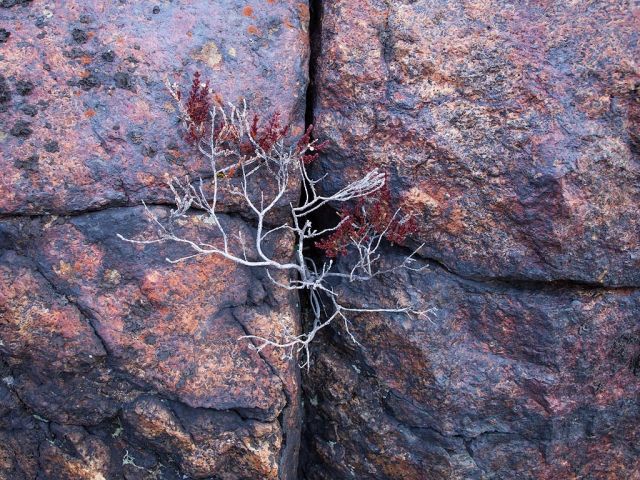
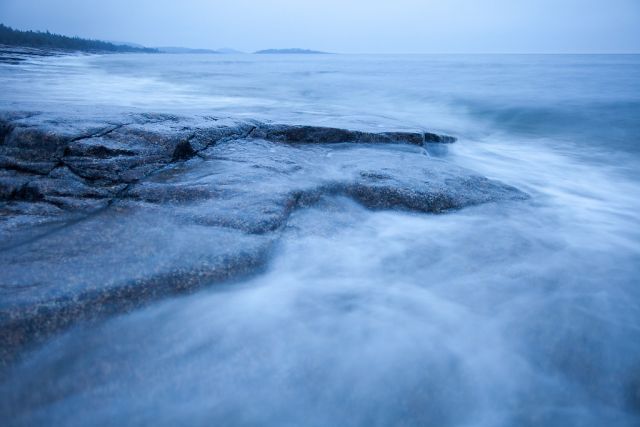
Here are some photos from a landscape workshop at Höga Kusten (The High Coast) in Sweden. I brought 4 lenses, 21 and 28 Distagon and 50 and 85 Planar, but almost all photos was taken with either the 21 or the 28. The 21 for wider landscapes and the 28 for closer photos.


 As far as I know Leica R lens usually dont have issues with any kind of PF or CA?