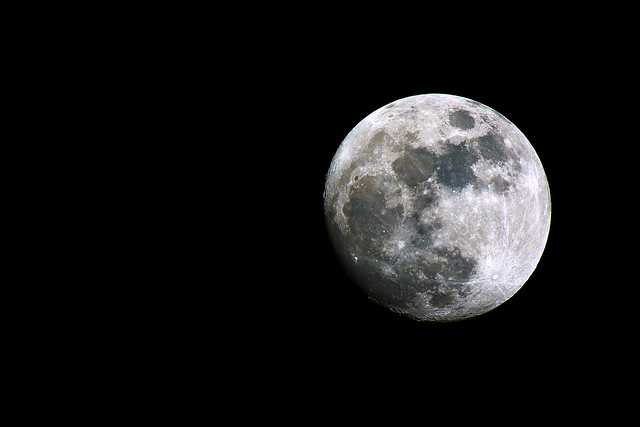
That's still very good but whoa, the 18MP and the APS-C crop factor really makes that huge! Bigger that I thought anyway... About three times bigger. :o
meehzhzh...Pentax 645 600mm meamssfdmsdmf Canon 1.4 teleconverter....lmwaerlkamse....some of added contrast in DPP to bring it back to life, some USM...
Cropped to square mwemrwlekr.....
EOS 5DII, uh..
Shooting Mode Manual Exposure
Tv( Shutter Speed ) 1/60
Av( Aperture Value ) 0.0 (f/11 I think?)
ISO Speed 100
Image Size 5616x3744
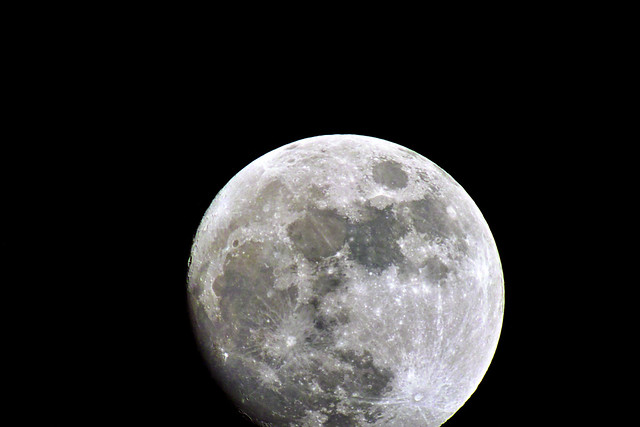
That's pretty much 1:1, I think....100%. I think I leaned too heavily on the USM, to get some better definition. Our air in LA is polluted, don't you know!
(sorry if I am screwing over the thread here, Bifurcator, with my rambling ways!)
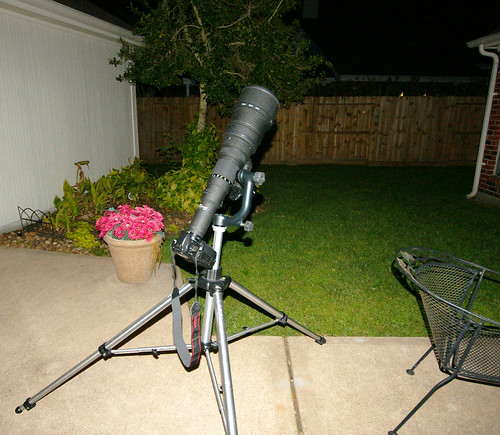
That's the lens. The carrying handle is a cool idea but adds lots of weight and frankly, bulks it up when you place it in a backpack.
In that image above, the 128mm (!) OEM protective Pentax filter is missing. The manual states: "...the filter is designed for part of the optical system, it is advisable to keep it on all the time."
Another great feature is the rotating portion of the lens tube. You don't rotate the barrel through the collar, you only twist the rear tube/camera through 360 degrees.
Yeah, several lenses I have have a rear filter and all of them say that "it's part of the optical formula" but in my tests it does nothing other than add internal reflections. In both the FD 300/2.8L and the FD 300/4L for example I can see it plainly. If I set my camera to spot metering and then point it just off the edge of the full Moon the EVF amplifies the image (tryig to compensate for the blackness of space) and the internal reflections of the Moon surface show up very brightly. Slide out the rear filter and the reflection disappears leaving only clean black space and a white Moon. And all my resolution tests show that there's no detectable difference with or without it. Maybe it would matter for AF or something?
So IMO if you're shooting bright or high-contrast objects you're better off without it and otherwise it just doesn't matter either way.
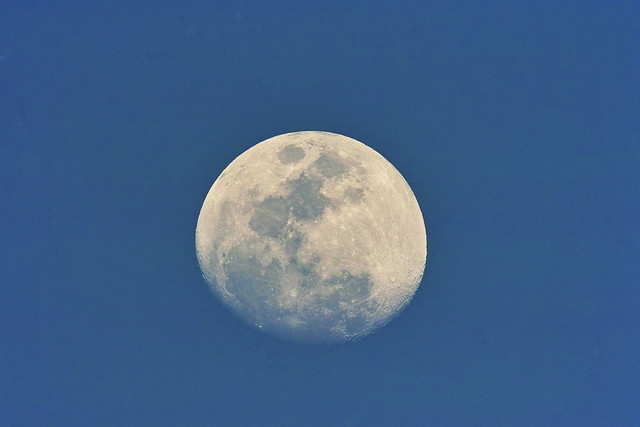
That's through clouds in the day-time BTW... I'm waiting for a clear night to get a good shot with this tamron. I'm thinking it'll be pretty great cuz the lens is actually quite sharp for terrestrial imaging.
Here's a little better shot with this lens. It was still still hazy and the sky was dawn-ish but both less so than the previous image. With crystal skys this lens should be even better than this...
The Moon:
400mm, f/5.6, 1/20s, ISO 100
The Lens (again):
Tamron 200-400mm AF, IF, LD, f/5.6
Man, atmospheric conditions sure make a massive difference... :P


 Here's my processed image of the RAW you sent me: