Greene17 wrote:
I do alot of sunrise/sunset pictures but most dont turn out as well as I would hope. What is some of the must have gear for these types of shots?
broken alarm clock (so you don't get woken hideously early for some annoying sunrise and have an entire day's clear though to plan the sunset shot)
Agree about the GND, but it's tough to align the filter if the horizon isn't straight or if you have objects (like a tree) stretching into the horizon. That object will also be darkened by the GND. But, better than without a GND and making the sky look bland or the ground look dark.
http://light.smugmug.com/Scapes/MotherEarth/IMG1559/709824813_3GH2x-X2.jpg
Used a GND on this and apparently didn't position it right
Camera: Canon EOS 30D
Exposure Time: 0.04s (1/25)
Aperture: f/10.0
ISO: 100
Focal Length: 17mm (27.2mm in 35mm)
Flash: flash did not fire, compulsory flash mode
Exposure Program: aperture priority
Exposure Bias: -1 EV
I have a Cokin P holder and Singh-Ray GND of 0.9 density. I don't shoot sunsets that often, otherwise I would have got a 0.6 as well. For really wide lenses, you might need to either hand-hold the filter to avoid vignetting from the holder, or get a Cokin Z-Pro.
Greene17 wrote:
Thanks for all the info Heres one that didnt work, trying to get the rows in the field to show some of the light but then the sky is blown out.
Ah, exactly. The graduated ND would have helped here. The multiple exposure method would also work here.
The latter is my normal approach. I'd put the camera on a tripod and make two (or more) exposures, each optimized for either the shadow or sky area. Then I bring the two into a singe photoshop files as smart layers and use a mask to combine them
In your example the GND could be the simpler approach if you have one. A singe exposure - if you have the right GND - could handle the whole thing.
In a scene without a linear division between the dark/light areas or a scene in which the difference isn't exactly that of the two areas of your GND the multiple exposure method affords more control over the result.
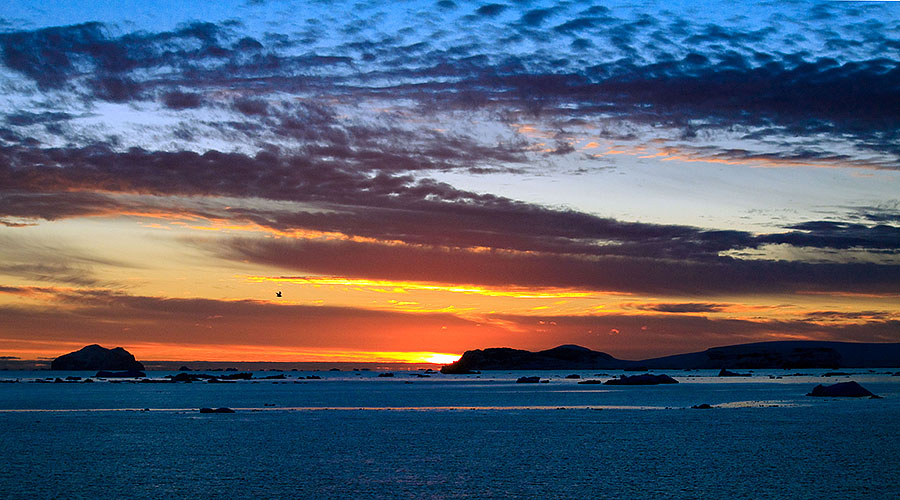
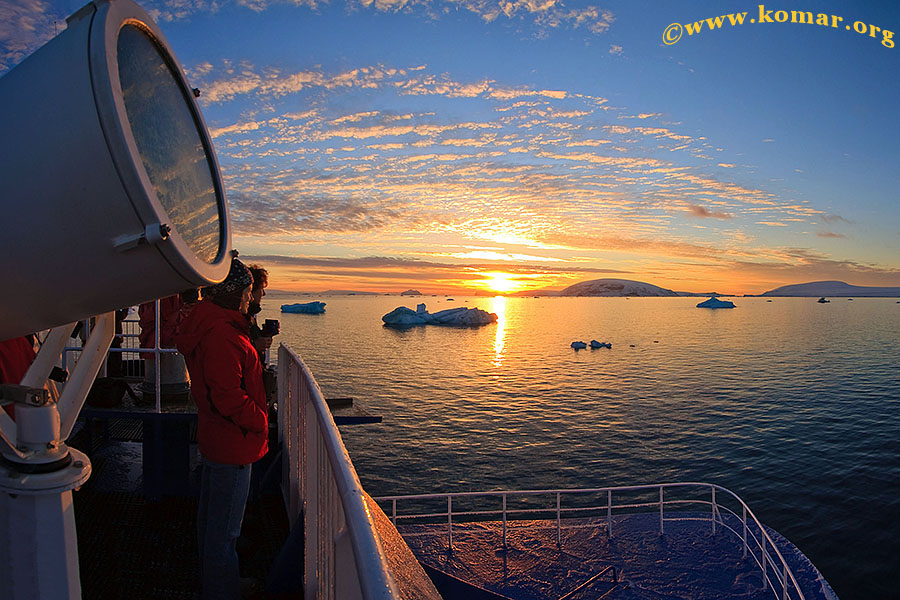
As mentioned, ND lens can help a lot to balance the exposure - HDR is your friend too ... although some judicious use of RAW/Photoshop processing can often yield somewhat pleasing results from a single image without an ND - some pics of sunrise in Antarctica! ;-)
Dave Jr wrote:
Ok, so what is a reasonable GND system if you want to cover several lens sizes (82mm, 77mm, 67mm)?
I would suggest 4"x6" filters, ie the size that would fit Cokin Z-pro. Hi Tech are quite good for the money. I'd get a 2 and 3 stop soft and hard edge. The larger filters will cover the 82mm lenses and make it easy to handhold them if you want to and makes it easy to place the transition where you like.
Dave Jr wrote:
Ok, so what is a reasonable GND system if you want to cover several lens sizes (82mm, 77mm, 67mm)?
I would look at the Cokin Z Pro Holder - you get adapter rings based on the threat size of your lenses (58mm, 67mm, 72mm. 77mm etc.)
To start with, I would look at Hi Tech GND filters (I think you can get them from B&H). I would suggest getting a storage bag for 4x5" or 4x6" filters - Adorama has one for $15 roughly. Those filters are susceptible to being scratched.


 Heres one that didnt work, trying to get the rows in the field to show some of the light but then the sky is blown out.