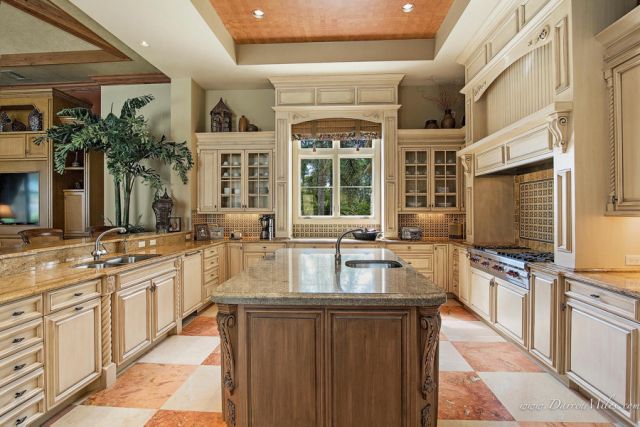
Nice shot. If absolute symmetry was the goal of the shot, just watch the transverse plane of the camera. You can see it's off plane by the lines in the ceiling.
P Alesse - I noticed that too, I just go the lens back from repair and am wondering if that's some sort of centering issue (front element was replaced) as the levels in camera and on the tri-pod were both dead center.... Hmmmmmm....?
dkmiles1 wrote:
P Alesse - I noticed that too, I just go the lens back from repair and am wondering if that's some sort of centering issue (front element was replaced) as the levels in camera and on the tri-pod were both dead center.... Hmmmmmm....?
A bubble level woldn't pick it up. There are three planes in which any object can move...
1) Lateral/Sagital Plane: This would be your camera tilting up or down which a bubble level would detect.
2) Coronal/Frontal Plane: Picture the camera rotating like the wheel on a car. What most people will comment on regarding the horizon. The bubble level would also detect this.
3) Axial/Transverse Plane: This is the plane that is most often overlooked in photography and can make horizons from a close distance look off. Most important... a bubble level wouldn't detect when off. Looking down at your camera from say the ceiling, your camera can rotate clockwise or counterclockwise.
Here's one more example to explain all three planes using a monopod. With a monopod attached and you lined up like you normally would to take shot, do the following..
1) Push the camera away from you while keeping the monopod anchored, now pull it back. You are moving the camera in the Lateral plane. The only difference is that you have to picture the camera spinning on an axel going through the camera from side to side.
2) Tilt the camera from its standing monopod position left and right. That's Frontal Plane. Just now have to picture that axel gong through the camera from front to back and spinning along that axel.
3) Finally, now simply just rotate the monopod with your wrist. That's transverse plane. And the axel... you can probably guess... through camera from top to bottom. Since the mopod is attached in that plane already, it's the only movement you are making where the camera doesn't truly move from it's anchor point.
Why important... if your transverse plane of your camera isn't exactly parallel to the plane of your scene, in this case, the back wall in your shot, the symmetry will be lost. That seems to be the case here.
I'm not an interior photographer, nor a landscape photographer for that matter. I'm a sports photographer and the reason why I need to keep a vested interest in my camera planes is that it can make team shots look crooked if the transverse plane of my camera is not perfecty aligned with the lines in my team shot, even though my other two planes are dead on.
Final note... this really only comes into play when you are shooting close distances. A landscape photog would be less concerned with the transverse plane and concentrate more on the other two planes.
P Alesse wrote:
A bubble level woldn't pick it up. There are three planes in which any object can move...
1) Lateral/Sagital Plane: This would be your camera tilting up or down which a bubble level would detect.
2) Coronal/Frontal Plane: Picture the camera rotating like the wheel on a car. What most people will comment on regarding the horizon. The bubble level would also detect this.
3) Axial/Transverse Plane: This is the plane that is most often overlooked in photography and can make horizons from a close distance look off. Most important... a bubble level wouldn't detect when off. Looking down at your camera from say the ceiling, your camera can rotate clockwise or counterclockwise.
Here's one more example to explain all three planes using a monopod. With a monopod attached and you lined up like you normally would to take shot, do the following..
1) Push the camera away from you while keeping the monopod anchored, now pull it back. You are moving the camera in the Lateral plane. The only difference is that you have to picture the camera spinning on an axel going through the camera from side to side.
2) Tilt the camera from its standing monopod position left and right. That's Frontal Plane. Just now have to picture that axel gong through the camera from front to back and spinning along that axel.
3) Finally, now simply just rotate the monopod with your wrist. That's transverse plane. And the axel... you can probably guess... through camera from top to bottom. Since the mopod is attached in that plane already, it's the only movement you are making where the camera doesn't truly move from it's anchor point.
Why important... if your transverse plane of your camera isn't exactly parallel to the plane of your scene, in this case, the back wall in your shot, the symmetry will be lost. That seems to be the case here.
I'm not an interior photographer, nor a landscape photographer for that matter. I'm a sports photographer and the reason why I need to keep a vested interest in my camera planes is that it can make team shots look crooked if the transverse plane of my camera is not perfecty aligned with the lines in my team shot, even though my other two planes are dead on.
Final note... this really only comes into play when you are shooting close distances. A landscape photog would be less concerned with the transverse plane and concentrate more on the other two planes.
I think I know what happened too... The tripod plate that attached to the camera was mounted slightly left of center - noticed it after the shot and fixed it on the next one.... Didn't even think it would alter things.
I'll chalk it up to another one of those nuances that I'll need to think about when in the field. Thanks for the tip!!