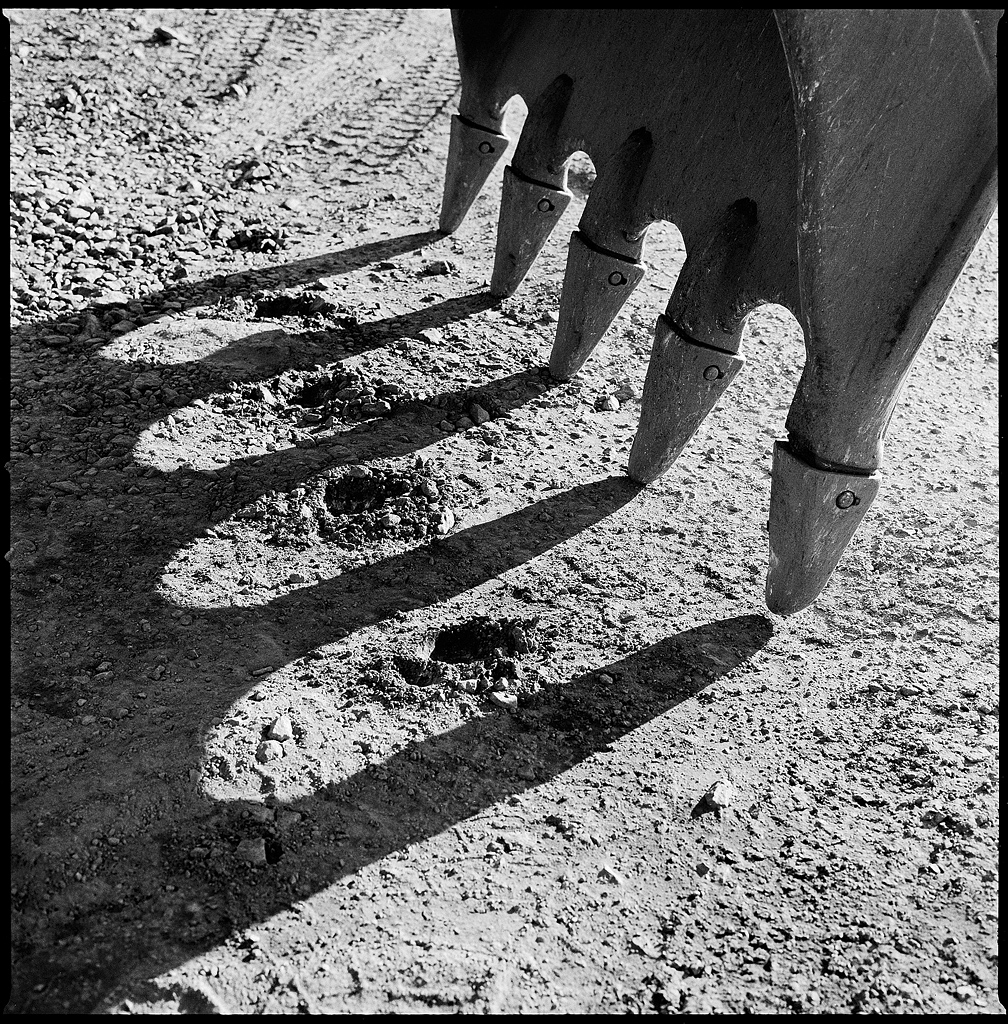
Get a Bronica SQB with a 80PSB. If you like it then start thinking about Hasselblads or other more expensive stuff. If you don't like it sell it for what you bought it for and job done. Do not buy anything else (like backs, lenses, prisms, etc) till you're sure you want to continue. And as said, a 80mm lens in 6x6 is much more versatile than you can imagine.
Makten wrote:
The metering in my P67II died and it's a lot less fun to use when I have to fiddle with the handheld meter (Gossen Digiflash) instead. It's a lot less accurate as well, but at least very small.
Regarding the Fuji rangefinders, I had the GM670 and the Bessa III 667, and I can't recommend the older one. It's huuuuuge, even compared to a Hassy, and the viewfinder is only so-so (same standard as the later 670 models if I'm not wrong). The Bessa on the other hand, is a masterpiece. The rangefinder beats any Leica and even the Zeiss Ikon, which should say something. It folds to something that looks like a small purse and the lens is super sharp. But, the price is high and it doesn't feel very sturdy.
I'd take a look at the Bronica RF645 if I wanted a rangefinder.
-----------------------
Edit: Sending B&W film off for development is madness. Anyone can do it at home and it doesn't require a darkroom. 4x5" is even worse!
Color film is a different story though, even if I'd recommend doing that at home as well, when you have some experience with B&W.
Personally, I scan my negs since I'm not interested in prints. But even if I was, I'd buy a medium priced flatbed scanner. The lab will either charge too much for a great scan or give you some crap in JPG that is nearly useless for anything but web display, if even that. ...Show more →
Shooting medium format film and not being interested in printing those glorious negatives is just plain weird IMO!
alwang wrote:
Makten, what's your kit/process look like for developing B&W 4x5? I've been thinking about getting into this, but it looks like most were recommending a Combi Plan as a 4x5 daylight tank, and that's now been discontinued. Are there other good options, or would I need to mess with trays?
4x5" is large format, which I have yet to try. I have no idea of what you need, but it's probably not more complicated than roll film.
rattymouse wrote:
Shooting medium format film and not being interested in printing those glorious negatives is just plain weird IMO!
Sure, I don't mind being weird. My nonexistant interest in prints is because I seldom look at a picture again once it's finished, so I'd just waste my time and money making prints. And there are of course lots of benefits with a larger format even for viewing on a computer screen.
Makten wrote:
4x5" is large format, which I have yet to try. I have no idea of what you need, but it's probably not more complicated than roll film.
Sure, I don't mind being weird. My nonexistant interest in prints is because I seldom look at a picture again once it's finished, so I'd just waste my time and money making prints. And there are of course lots of benefits with a larger format even for viewing on a computer screen.
It's somewhat hard for me to see the generous benefits of medium format film over a computer screen. With prints, the benefits smack you in the face, beat you down, and walk all over you. I'll never forget the first time I saw a print from my GSW690. Dang but that was amazing compared to 35mm.
Also impressive is when you show other people prints from medium format cameras. It's great fun to watch the reactions as almost no one has any idea what medium format and have never been (ahem), exposed to such.
alwang wrote:
Makten, what's your kit/process look like for developing B&W 4x5? I've been thinking about getting into this, but it looks like most were recommending a Combi Plan as a 4x5 daylight tank, and that's now been discontinued. Are there other good options, or would I need to mess with trays?
The Combiplan is great if you can find one. Though it does use a lot of chemicals if you are only developing single sheets at a time. It also leaks a tad while inverting which annoys some people (not me). Great even development though. A wanted add on largeformatforums may get you a used one.
I'd personally recommend BTZS tubes. They use an incredibly small amount of chemicals, they are cheap, and they give even development. I load it in the bathroom day or night and am good to go. I have 3 caps which makes it easier for C-41 developing and 2 bath developing. http://www.viewcamerastore.com/servlet/the-70/BTZS-Film-Tube-Cap/Detail
I've also done stand development to great success with the 4x5 tube by having a few hundred ml of my Rodinal 1:100 set up - dumping it in quickly and putting the cap on extremely quick and then agitating vigorously for a minute. The initial agitation is most crucial for even development and even more so with stand. After the minute I stand the tube upright, take the cap off, and top off the developer to ensure it is 100% covering the film. Fun stuff .
I had very little success with trays. Agitation technique was difficult for me and results were poor with very uneven development. It also forced me to develop in the dark at night instead of being able to lounge around my PC or whatever. Uneven development went away the first time I used my Combiplan and BTZS tubes. The only time I've had uneven development with either of those methods was my first time trying divided pyro 2 bath. I didn't use photoflo in the first bath and didn't agitate correctly.
1x1is great for portraits. Might look at Rollei tlr. A lot of stuff is cheap now. I can't deal with 12 shots per roll right now. Wl better for composition. Hass has sharp lenses but the Mamiya 6 is what I used to want.
rattymouse wrote:
It's somewhat hard for me to see the generous benefits of medium format film over a computer screen. With prints, the benefits smack you in the face, beat you down, and walk all over you. I'll never forget the first time I saw a print from my GSW690. Dang but that was amazing compared to 35mm.
I don't know what screen you are using, but you can see the difference even at tiny websizes.
Zaitz wrote:
The Combiplan is great if you can find one. Though it does use a lot of chemicals if you are only developing single sheets at a time. It also leaks a tad while inverting which annoys some people (not me). Great even development though. A wanted add on largeformatforums may get you a used one.
I'd personally recommend BTZS tubes. They use an incredibly small amount of chemicals, they are cheap, and they give even development. I load it in the bathroom day or night and am good to go. I have 3 caps which makes it easier for C-41 developing and 2 bath developing. http://www.viewcamerastore.com/servlet/the-70/BTZS-Film-Tube-Cap/Detail
I've also done stand development to great success with the 4x5 tube by having a few hundred ml of my Rodinal 1:100 set up - dumping it in quickly and putting the cap on extremely quick and then agitating vigorously for a minute. The initial agitation is most crucial for even development and even more so with stand. After the minute I stand the tube upright, take the cap off, and top off the developer to ensure it is 100% covering the film. Fun stuff .
I had very little success with trays. Agitation technique was difficult for me and results were poor with very uneven development. It also forced me to develop in the dark at night instead of being able to lounge around my PC or whatever. Uneven development went away the first time I used my Combiplan and BTZS tubes. The only time I've had uneven development with either of those methods was my first time trying divided pyro 2 bath. I didn't use photoflo in the first bath and didn't agitate correctly.
The Yankee 4x5 tank gets generally poor reviews. ...Show more →
Thanks for the tips! Would presoaking lessen the risk of uneven devlopment?
Thanks for the tips! Would presoaking lessen the risk of uneven devlopment?
No problem. For tray I tried presoaking but it didn't help me much. The agitation technique needs to be pretty sound for trays. One of my problems was:
"...when you agitate your negative, be careful not to push it down into the developer too fast. This causes swirling of the solution at the edges of the film and causes areas of increased density."
I didn't try tray developing for long because I feel the Combiplan and BTZS tube are just much better for me.
For 2-bath a pre-soak is done. The photoflo in bath A helps a ton with uneven development though as it allows the chemicals from A to drain quickly and more evenly before inserting the negative into B. Divided Pyro can be a bit tricky because development begins immediately when the negative is inserted into bath B. So agitation and complete film coverage has to be immediate. It's a true divided developer where reducer is soaked in bath A and development does not begin until the negative is in B.
Otherwise uneven development hasn't been an issue for me thankfully with normal processing methods. The tank and tube both work well. I do pre-soak usually with both methods.
Gunzorro wrote:
ratty -- I'm even weirder than Makten. I've never had any interest in either developing or printing medium or large format film -- no film really.
Then I understand why you don't see the benefits of larger formats on screen.
Thanks for the link. I wish you took the same photo with each camera instead of changing. Seems to defeat the purpose.
They were not shot the same day, but the difference in sharpness and definition would be the same anyway. A format that is eight times larger will of course always look better if everything is done right.
Makten wrote:
Then I understand why you don't see the benefits of larger formats on screen.
They were not shot the same day, but the difference in sharpness and definition would be the same anyway. A format that is eight times larger will of course always look better if everything is done right.
Actually, I made a small mistake. I have a MacBook Pro w/ 15" matte screen. Fully calibrated of course.
Makten wrote:
Then I understand why you don't see the benefits of larger formats on screen.
They were not shot the same day, but the difference in sharpness and definition would be the same anyway. A format that is eight times larger will of course always look better if everything is done right.
I think if you redid the test shooting the NEX at f2.8 and shooting the Hasselblad at f6.7, and then scanned the results with an Epson flatbed, the results would be much closer. I think what your test primarily shows is the limitation in shooting ultra-fast lenses wide open.
I do believe there is a difference in tonality between APS-C and medium-format that is perceptible even in web-sized images; I'm just not sure there's much of a sharpness difference at these resolutions.
I don't care for any developing or printing. I never had a fascination with darkroom, as so many other people do. I was blessed/cursed with tons of great photo labs in LA (anyone remember Newell?).
alwang wrote:
I think if you redid the test shooting the NEX at f2.8 and shooting the Hasselblad at f6.7, and then scanned the results with an Epson flatbed, the results would be much closer. I think what your test primarily shows is the limitation in shooting ultra-fast lenses wide open.
Of course, but that was not the idea. 80/2.8 is not "ultra-fast", which shows the weakness of smaller formats. You will never get the same definition at the same DOF.
I do believe there is a difference in tonality between APS-C and medium-format that is perceptible even in web-sized images; I'm just not sure there's much of a sharpness difference at these resolutions.
Anyting that can be seen counts. To me the square format and the magnificent viewfinder of the Hasselblad would make me choose it even if the NEX was just as sharp.
Anyway, it doesn't matter. What matters is that I want to use nice cameras that give me nice images, even if I don't give a damn about prints. Some people seem to be upset by this, for some reason. As if prints is the only thing that counts. It's not.
Makten wrote:
Of course, but that was not the idea. 80/2.8 is not "ultra-fast", which shows the weakness of smaller formats. You will never get the same definition at the same DOF.
My point is you will get that definition at the same DOF, if that DOF is large. So it depends on what you like to shoot. If you like to shoot shallow DOF, I don't think there's any debate larger formats are superior. If you like to shoot stopped down, there's not much difference in detail.
Makten wrote:
Anyting that can be seen counts. To me the square format and the magnificent viewfinder of the Hasselblad would make me choose it even if the NEX was just as sharp.
Anyway, it doesn't matter. What matters is that I want to use nice cameras that give me nice images, even if I don't give a damn about prints. Some people seem to be upset by this, for some reason. As if prints is the only thing that counts. It's not.
I'm not upset at all. I also enjoy shooting 6x6 film, and I never make prints from negatives either. I also shoot NEX. I'm just having a discussion about the relative merits between the platforms.
alwang wrote:
My point is you will get that definition at the same DOF, if that DOF is large. So it depends on what you like to shoot. If you like to shoot shallow DOF, I don't think there's any debate larger formats are superior. If you like to shoot stopped down, there's not much difference in detail.
Actually, I mostly shoot well stopped down and I still appreciate the benefits of a larger format. "Detail" is only a small part of image quality. I don't think I could have gotten this punch and crispness with the NEX-5N, regardless of whatever lens I put on it.
The larger the format, the greater the local contrast in proportion to the final image height. This was shot with the standard Zeiss 80/2.8 @ f/11 or f/16 on the Hassy 500 c/m.
I'm not upset at all. I also enjoy shooting 6x6 film, and I never make prints from negatives either. I also shoot NEX. I'm just having a discussion about the relative merits between the platforms.


 I have no idea of what you need, but it's probably not more complicated than roll film.