Last weekend morning I went to Stanford to take comparison shots with my Contax N 50/1.4 and ZE 50/2 MP to show the different rate of focus falloff between the two lenses especially stopped down. This topic came up again recently in the Zeiss thread but I first noticed it last year while shooting comparison landscape shots and mentioned in a discusion Samuli were having about the two lenses on pg 26 of Zeiss Z* thread. Samuli then posted some forest comparison shots which showed this behavior where the 50 P focus falls off at a faster rate from the focus point than the 50MP.This helps better isolate the subject from the background and shows spatial relationships between objects in a scene from front to back. It also renders volume and shape better in objects.
I have shot these comparison shots on a tripod with MLU and focused using LiveView at 10x with a Hoodman Loupe. No PP except downsizing and sharpening for web.
#1 50P at f1.4 (full scene)
#2 50P at f2 (full scene)
#3 50MP at f2 (full scene)
I'm surprised by how much the far-background blur discs change in size between the P and MP lenses; I suppose this could be mostly due to the ~6"-1ft focus point difference between the two sets of images (P appears to be focused closer than the MP), which is a fairly substantial shift at this focus distance.
With all else being equal, wouldn't you expect to see more structure in the OOF areas from the lens with a significantly smaller front element?
wayne seltzer wrote:
This helps better isolate the subject from the background and shows spatial relationships between objects in a scene from front to back. It also renders volume and shape better in objects.
If I had to guess based on your images, I would sat that the 50MP had perhaps a half a stop (maybe a little less) worth of additional DOF over the 50P.
And as much as people have issues with the bokeh produced by the 50mm Planar, it looks quite reasonable in your samples.
freaklikeme wrote:
With all else being equal, wouldn't you expect to see more structure in the OOF areas from the lens with a significantly smaller front element?
Yes and no. The smaller front element makes the MP more likely to vignette at f/2, which expands DOF towards the corners of the frame (the blur discs are cut off). But there is no theoretical difference in the middle of the frame, if you don't account for different design in terms of correction for spherical aberration.
I think much of the "phenomenon" is because they are not focused exactly the same. For some reason everyone that tries to compare these lenses have the same difficulty to focus them accurately to the same distance, so something is clearly going on with the designs.
Thanks Wayne. Very interesting comparison. I just got my MP, and I know why!
Makten wrote:
I think much of the "phenomenon" is because they are not focused exactly the same. For some reason everyone that tries to compare these lenses have the same difficulty to focus them accurately to the same distance, so something is clearly going on with the designs.
The N f/1.4 P apparently has no floating elements. The MP does. And it´s a fair guess that the P has undercorrected spherical aberration to enhance the bokeh, as has e.g. the new 35/1.4. As a consequence it has some degree of focus shift, which obviously changes the field of best focus when the aperture is changed.
Focusing is critical when doing these kind of tests. I´m almost desperate with my testing of the 250mm Superachromat vs Vario-Sonnar vs... I see no other way than focusing tethered on my 27" iMac. Not very convenient. But 10x live view is not up to snuff when doing critical comparisons. Not if you really want to know.
I accidentally had #33 and 34 in view in stead of #32 and 33. They look very similar in most aspects (P at 4, MP at 2.8).
Have a look or two at Nasse´s paper Depth of Field and Bokeh, perhaps p35 and forward. My guess: The P has under corrected SPA, the MP (almost?) corrected, or at least far less SPA. That would affect the lightness distribution on the OOF point spreads in significantly different ways. Although we seldom look at the quality of closer than sharp field bokeh, this might add some insight into the matter on differences between the P and the MP. My prediction is that the P should have uglier close up bokeh than the MP.
IMO, Zeiss has always used this intentionally in their designs. For instance, the 28/2 Hollywood lens was designed to give less DOF and marketed as such, while their makros as far as I know, have an extended DOF which is a desirable feature in a macro lens.
Okay... I am reviving this thread again., another friend once again is offering me his 50MP for cheap.
from what I've read mostly all the time.., that 50MP's bokeh is nervous and almost have the same contrast as with the plane of focus.... and then some say bokeh is smooth.
Now here are my questions:
1. when does the 50MP gets nervous? near or medium focusing distance?
2. at what focusing distance will I get a less contrasty backgound? or is it even possible with this lens?
Some peopke don't like the 50 MP because at medium distance (~15ft) the plane of focus is not planar and has some Field Curvature. Close and infinity is great. Bokeh is subjective, but i like the 50MP bokeh and don't think it is busy. You should try before you buy to see if you like its rendering.
wayne seltzer wrote:
Some peopke don't like the 50 MP because at medium distance (~15ft) the plane of focus is not planar and has some Field Curvature. Close and infinity is great. Bokeh is subjective, but i like the 50MP bokeh and don't think it is busy. You should try before you buy to see if you like its rendering.
For me biggest problem was extreme steep field curvature in corners (depending focus distance either whole zone-C or just outer part of it). It's present always when outer part of the glass is used => let's say any time your focus distance is more than 1 meter (39inch). When you focus close, lens extends and "bad" part of glass is not used and whole field of view is planar = exactly what you want from makro lens! With landcapes your will not notice it has DOF is so huge. Also in landscapes outward field curvature means that your bottom corners focus way past the ground level (=look soft, not necessarily distracting) and who cares what your corners at the sky look like as there is not much detail.
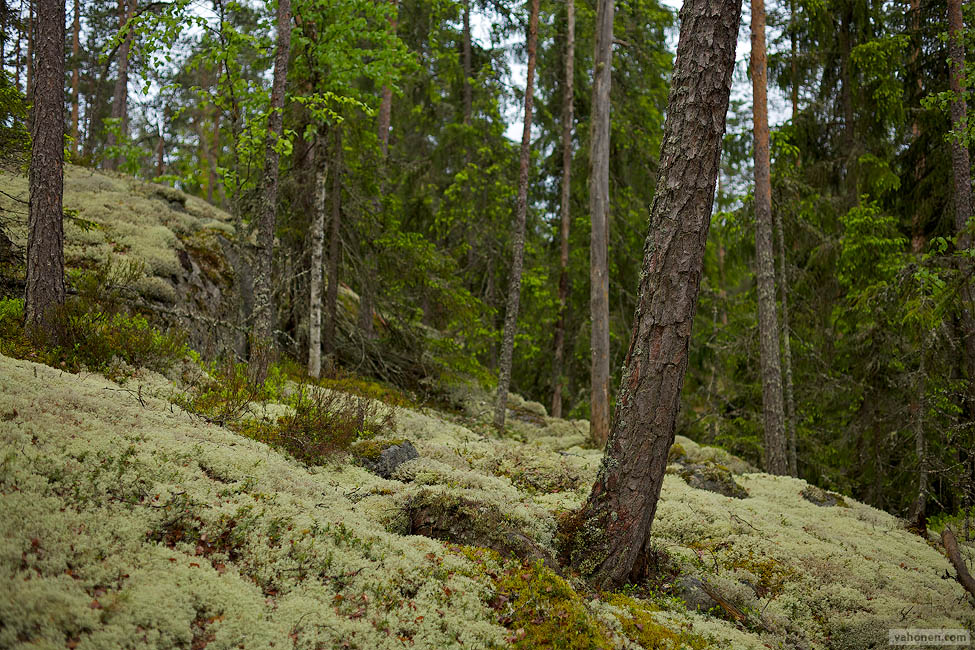
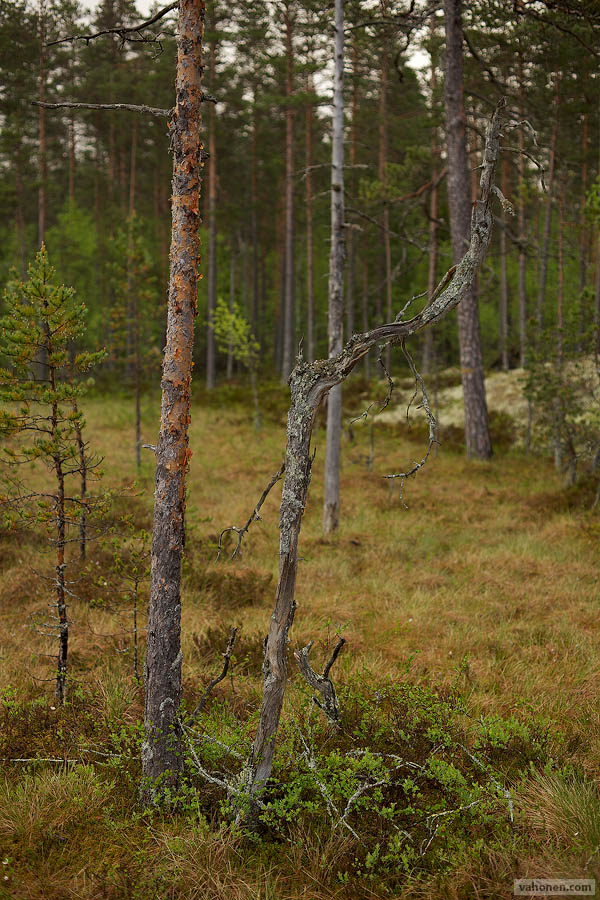
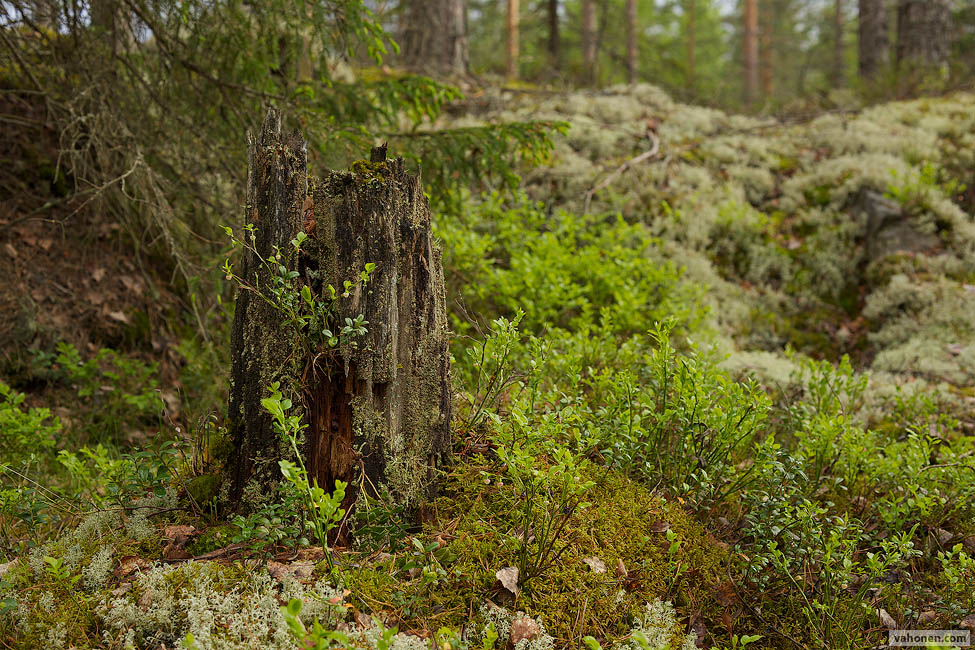
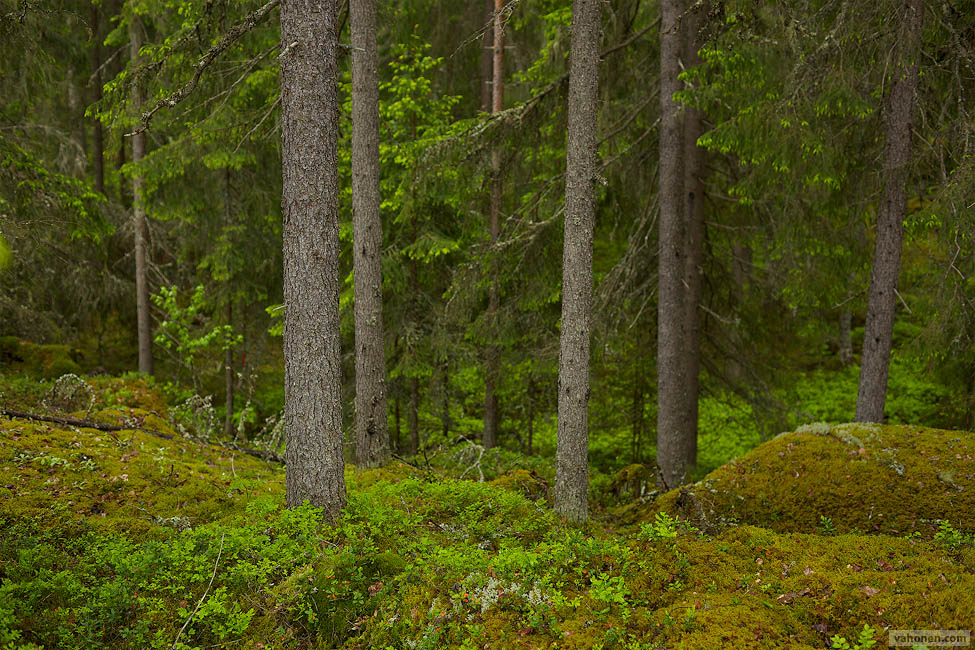
Example of field curvature ( images are from my old website, if they don't come up just refresh this page until they load, database in the old website has seen better days )
#1 Top corners are almost completely in focus
#2 Boke very distracting at the top due to focusing to the trees at background
Secondary problem was that boke is distracting in most boke scenes. This is because of two reasons (and field curvature mentioned above)
a) boke has as high contrast as focus plane, extreme distracting when I prefer and I'm used to lenses having less contrast in boke
b) boke can be distracting when there is suitable frequency pattern in background, this tends to happen more when shooting ~1m (39inch) distance than when your subject is at medium distance (~3 meter / ~9 feet).
Examples of distracting boke behaviour:
Above large distance boke shots #1 and #2; due to medium shooting distance both have nice boke in A-zone and B-zone.
#3 When focusing close, but not yet in close-up territory lens tends to make boke annoying like this. I would estimate this is ~125cm (50inch) focus distance.
Third problem can be problem or not, depends what you want; for same aperturte many other lenses have visually thinner DOF and more blurred background. All examples I linked show this, boke always has "thick and heavy" look due to this, except close-ups and makros.
Also one can take "positive approach" and figure out "how you can use the weaknesses and turn them to positive outcome". This scene for example works quite well with high contrast boke:
#4 scene which works with high contrast boke
On positive side this ZE/ZF Makro-Planar 2/50 is one of the best short makro lens I have ever owned or shoot. Makro and close-up results are way better than with Sigma EX-series 50mm, Sony FE 50mm makro, Leica R 60mm or even C/Y Makro-Planar 2.8/60 (which is better on range 1:2 to 1:1 to my eye, where ZE/ZF 2/50 needs tubes as it only focuses 1:2) - in my opinion ZE/ZF 2/50 is only beat by Rodenstock APO-Rodagon-N 1:2.8 f=50mm, and even then only in scenes the 5 blade aperture of APO-Rodagon doesn't kill the shot... Better in this case is my definition of better, may differ from yours, bad work it should not be used. Specially enjoyed handhold makro-shooting as I had the ZE-version, and it could be focused @ f/2 (no focus shift at makro distances) and lens electronically closed to shooting aperture [luxury which most of my lenses don't do...] when I took the shot.
Samuli Vahonen wrote:
Like Wayne says boke is subjective.
For me biggest problem was extreme steep field curvature in corners (depending focus distance either whole zone-C or just outer part of it). It's present always when outer part of the glass is used => let's say any time your focus distance is more than 1 meter (39inch). When you focus close, lens extends and "bad" part of glass is not used and whole field of view is planar = exactly what you want from makro lens! With landcapes your will not notice it has DOF is so huge. Also in landscapes outward field curvature means that your bottom corners focus way past the ground level (=look soft, not necessarily distracting) and who cares what your corners at the sky look like as there is not much detail.
Example of field curvature ( images are from my old website, if they don't come up just refresh this page until they load, database in the old website has seen better days )
Secondary problem was that boke is distracting in most boke scenes. This is because of two reasons (and field curvature mentioned above)
a) boke has as high contrast as focus plane, extreme distracting when I prefer and I'm used to lenses having less contrast in boke
b) boke can be distracting when there is suitable frequency pattern in background, this tends to happen more when shooting ~1m (39inch) distance than when your subject is at medium distance (~3 meter / ~9 feet).
Examples of distracting boke behaviour:
Above large distance boke shots #1 and #2; due to medium shooting distance both have nice boke in A-zone and B-zone.
#3 When focusing close, but not yet in close-up territory lens tends to make boke annoying like this. I would estimate this is ~125cm (50inch) focus distance. http://www.vahonen.com/1/jpg.php4?id=378&format=.jpg
Third problem can be problem or not, depends what you want; for same aperturte many other lenses have visually thinner DOF and more blurred background. All examples I linked show this, boke always has "thick and heavy" look due to this, except close-ups and makros.
Also one can take "positive approach" and figure out "how you can use the weaknesses and turn them to positive outcome". This scene for example works quite well with high contrast boke:
#4 scene which works with high contrast boke http://www.vahonen.com/1/jpg.php4?id=379&format=.jpg
On positive side this ZE/ZF Makro-Planar 2/50 is one of the best short makro lens I have ever owned or shoot. Makro and close-up results are way better than with Sigma EX-series 50mm, Sony FE 50mm makro, Leica R 60mm or even C/Y Makro-Planar 2.8/60 (which is better on range 1:2 to 1:1 to my eye, where ZE/ZF 2/50 needs tubes as it only focuses 1:2) - in my opinion ZE/ZF 2/50 is only beat by Rodenstock APO-Rodagon-N 1:2.8 f=50mm, and even then only in scenes the 5 blade aperture of APO-Rodagon doesn't kill the shot... Better in this case is my definition of better, may differ from yours, bad work it should not be used. Specially enjoyed handhold makro-shooting as I had the ZE-version, and it could be focused @ f/2 (no focus shift at makro distances) and lens electronically closed to shooting aperture [luxury which most of my lenses don't do...] when I took the shot.


 )
)