gdanmitchell
Offline
• • • • • • •
Upload & Sell: Off
|
 p.65 #2 · which lens has the most 3D POP? p.65 #2 · which lens has the most 3D POP? | |
It is easily debunked by observing that many, many great photographers have made and today make photographs exhibiting the so-called “dimensionality” that seems to. quality as “pop.” I’ve seen it in photographs made with just about every possible kind of gear.
It is also pretty obvious when you look at photographs that supposedly present this quality that a fairly obvious set of characteristics are typically found in the photographs. You don’t see all of them in every such photograph, but you can easily see several of them in virtually all of them — including the features that I identified in the photographs in this thread.
I’m not claiming that all lenses are identical, but I am utterly certain that anyone using any of a bunch of excellent lenses with skill and understanding of image making will make photographs that have this quality regardless of which brand or specific model of lens or camera is bing used.
Again, it isn’t about some magical difference among lenses. It is about understanding how a whole set of visual elements come together in photographs —lighting, color relationships, selective focus, choice of focal length and aperture, composition, lighting, and post-processing techniques including vignetting and selective control of things like curves, saturation, color balance, saturation.
If this were not the case, every photograph made with The Great Pop Lens would have… it. But I’ve seen a ton of banal, flat photographs made with fine lenses. The lenses don’t make the. photograph. And I’ve seen a lot of photographs that have “it” that have been made with just about any gear you can imagine: Holga, Big Three DSLRs with zooms, LF film, you name it.
It isn’t the lens.
This whole game of looking for the One Marvelous Lens That Produces Pop is a sad diversion from learning about the obvious photographic techniques that produce the effect. It is as if someone wanting to be the world greatest violinist spent their time looking for the World’s Greatest Violin… or hte perfect rosin… or the very best string in their quest to play with expression and skill… instead of studying hard and practicing diligently.
(The old joke: “How do you get to CArnegie Hall?” the NY visitor asked the cabbie. “Practice, practice, practice,” he replied.)
RustyBug wrote:
Not sure how you can wholesale discount the lens as having any contribution to the rate of transition change. Do you know something that none of the lens designers know?
I personally did a shootout between three different 28mm lenses, tripod based, same lighting and there was indeed a difference that was posted / shared more than a decade ago. The lenses in that shootout were the Oly 28/2.8, Nikon 28/2.8 AIS and C/Y 28/2.8 (iirc).
The ONLY variable was the lens ... and the lenses each drew differently.
Also, it should be noted that there were other shootouts where folks were able to take the native results from two different lenses and tweak them in post, so they were much closer in resemblance. The salient point being that if folks made changes in pp to minimize the difference ... then, the difference had to exist, based on the lenses.
I appreciate the point that the human physiological response to dimensionality cues is predicated upon a variety of factors. But, I won't wholesale discount the lens as not having any contribution to those physiological response factors ... i.e. rates of transitions, etc. ... being integral to different lens designs / designers.
We can agree to disagree, if you like ... but, the lens IS PART of the optical projection path.
 ...Show more → ...Show more →
|


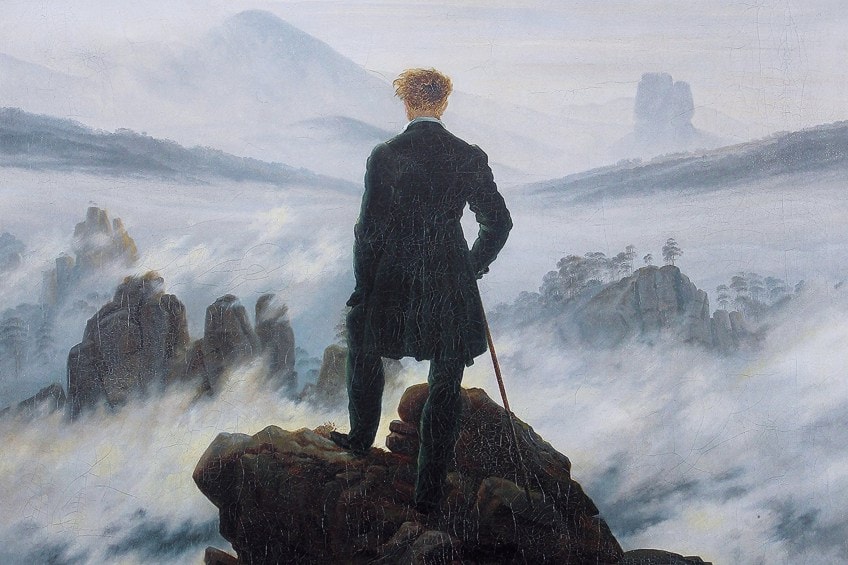


 premise that the brush doesn't matter or contribute at all, either.