bjhurley wrote:
Minolta Rokkor 28mm/2 on Sony A7iii. Not a very flattering photo (she's threading a needle) but the 3D effect is pretty striking....especially look at her hands. This is likely due as much/more to the lighting as to the lens.
For "3D Pop", at least what it means to me, you don't have to have a fast lens, although faster lenses seem to be better at producing what I see as 3D.
bjhurley wrote:
Minolta Rokkor 28mm/2 on Sony A7iii. Not a very flattering photo (she's threading a needle) but the 3D effect is pretty striking....especially look at her hands. This is likely due as much/more to the lighting as to the lens.
It has nothing to do with the lens. If you look up the reason behind dodging and burning (not just about enhancing the contrast), the most often demonstrated example would be how you can turn a gray circle into a sphere by simply adding a specular highlight and shadow.
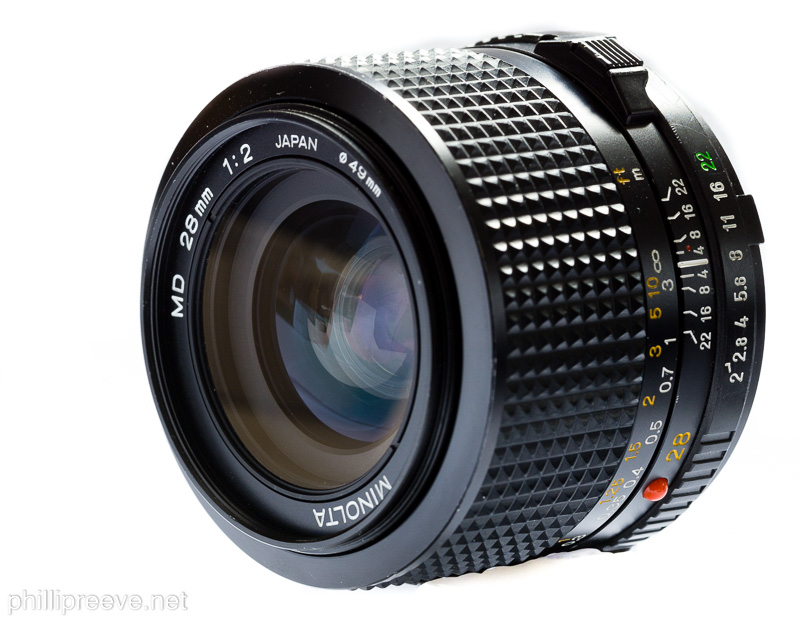
As the Minolta Rokkor 28mm/2 you mentioned, MC or MD one?
Is the same lens Phillips reviewed before?
If yes, I will not pass it if I saw a good one next time.
Thanks, I guess it's technically amazing but I wouldn't say it's particularly good as a photograph. The 3D effect is incredible, though, especially when you look at her hands, which seem to come out of my computer screen at me. As I noted in the post, I think that's due more to the lighting than to the lens itself, although I took some other photos of her that evening with that same lighting and a different Minolta lens and the 3D effect was much lower. This was fairly hard lighting, not very flattering, but I was experimenting with some different lighting setups and my partner Claire was very patiently serving as the model while she did some cross-stitching. If I'd used softer lighting I don't think you would have seen that same pop at all.
Yes, this is the MD Rokkor 28/2, but there were four versions of the Rokkor MD 28/2. Mine is the one with the floating front element. It has 10 elements in 9 groups; you should get that version, either the 1977 or 1978 model, not the later model from 1981 with 9 elements in 9 groups, which doesn't have the same magic. It's easy to tell that 1981 model because it had 49mm filter threads; all the earlier ones had 55mm threads. The very earliest MD 28/2 from 1975 only went down to f16; the two you want (either 1977 or 78) went down to f22. So if you find a Rokkor MD 28mm/f2 lens with 55mm filter threads and maximum f stop of f22 you'll have a great lens. The earlier one that goes down only to f16 is probably the same optical formula and just as good, I never tried it though. This lens is beautiful for portraits with a kind of painterly quality to it wide open; also pretty sharp (though not exceptionally so) for landscapes stopped down. Like many older lenses it doesn't have great flare resistance.
Just by way of comparison, here's another photo from the same evening, same lighting although she wasn't in the same position so the lighting is a little softer. This was taken with the Rokkor 55/1.7, wide open. Much less 3D pop compared with the 28mm lens.
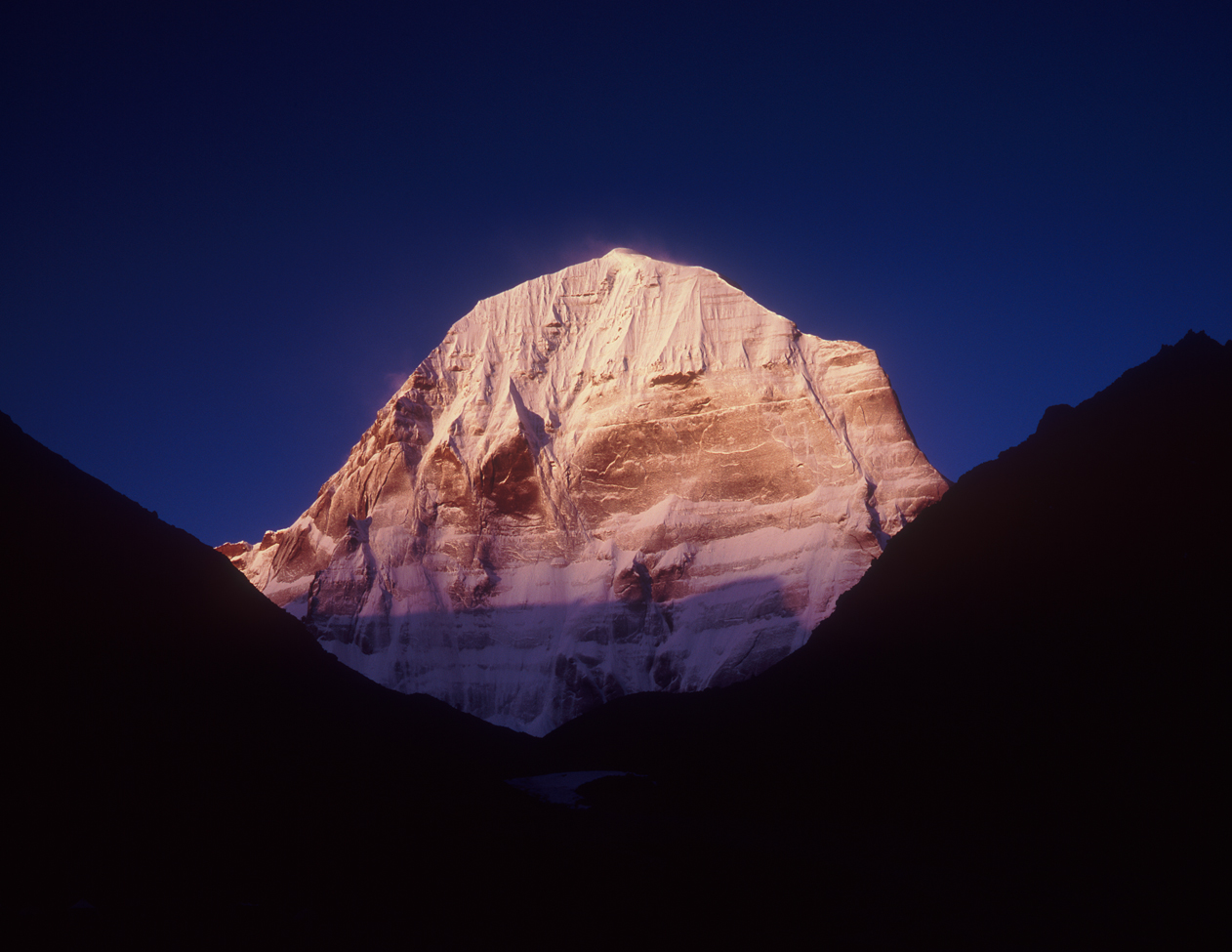
This is a beautiful photograph. I wish I had taken it. I wish I had been there to take it. The texture of the rock in that light is beautiful, but the image it seems to me is quite flat. What does it mean to say it pops? Isn't it really a poor metaphor to try to explain a photo in terms of a sound?
This is a great 3-d photo, but it has much more to do with the fact that this is a photographer who knows how to compose an image than any particular lens. This would b a great photo taken with an IPhone 13.
It is simply a photo taken (on Velvia 50) with the lens mentioned, not a demo of 3D (image depth perception).
I doubt many would want to have been there. I climbed out of the tent at 5am, -20C set up tripod, it took 20 minutes of shaking to recover later in my bag! It's Mt Kailash (around 6700m), that face is 1500m. I slept at 5150m, with a local dog sleeping on my feet - true story.
philip_pj wrote:
It is simply a photo taken (on Velvia 50) with the lens mentioned, not a demo of 3D (image depth perception).
I doubt many would want to have been there. I climbed out of the tent at 5am, -20C set up tripod, it took 20 minutes of shaking to recover later in my bag! It's Mt Kailash (around 6700m), that face is 1500m. I slept at 5150m, with a local dog sleeping on my feet - true story.
And now proceed to tell us you were the first who climbed Mt. Kailash 🤣
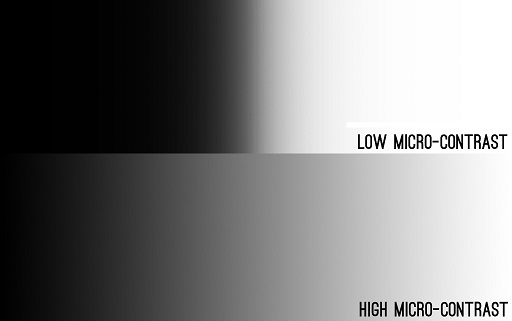
Ugh... I'm sorry but 99% of the images posted here are not ''3D pop.'' I came to see some amazing micro-contrast goodness and to hopefully discover some new glass to buy but was majorly disappointed to find only low aperture shots and with no 3D pop anywhere in sight.
Boys and girls... Listen. There's a difference between micro-contrast ''3D pop'' aka. actual ''3D pop'' and just the low aperture subject separation due to ''bokeh'' aka. foreground/background blur.
Very few newer lenses have that ''3D pop,'' because newer lenses have terrible micro-contrast, all at the cost of higher sharpness. The only newer lenses with super good micro-contrast are mostly Hasselblad, Zeiss, Leica and Voigtlander lenses.
It's not a scientific rule, for example the Lumix S PRO 50mm f/1.4 has 13 glass elements but it still has some of the best micro-contrast renders... But in general, the ''rule'' is that the lower the glass element count, the better/cleaner the light will pass through to the sensor - and the better that is, the better the micro-contrast is - and micro-contrast equals to ''3D pop!''