darrellc wrote:
I like to call that effect the "wrath towards Khong" when reading such nonsense, as here's where it all started: https://petapixel.com/2016/03/14/problem-modern-lenses. Though as I re-read the article again, I do notice the noses are looking a bit flat...
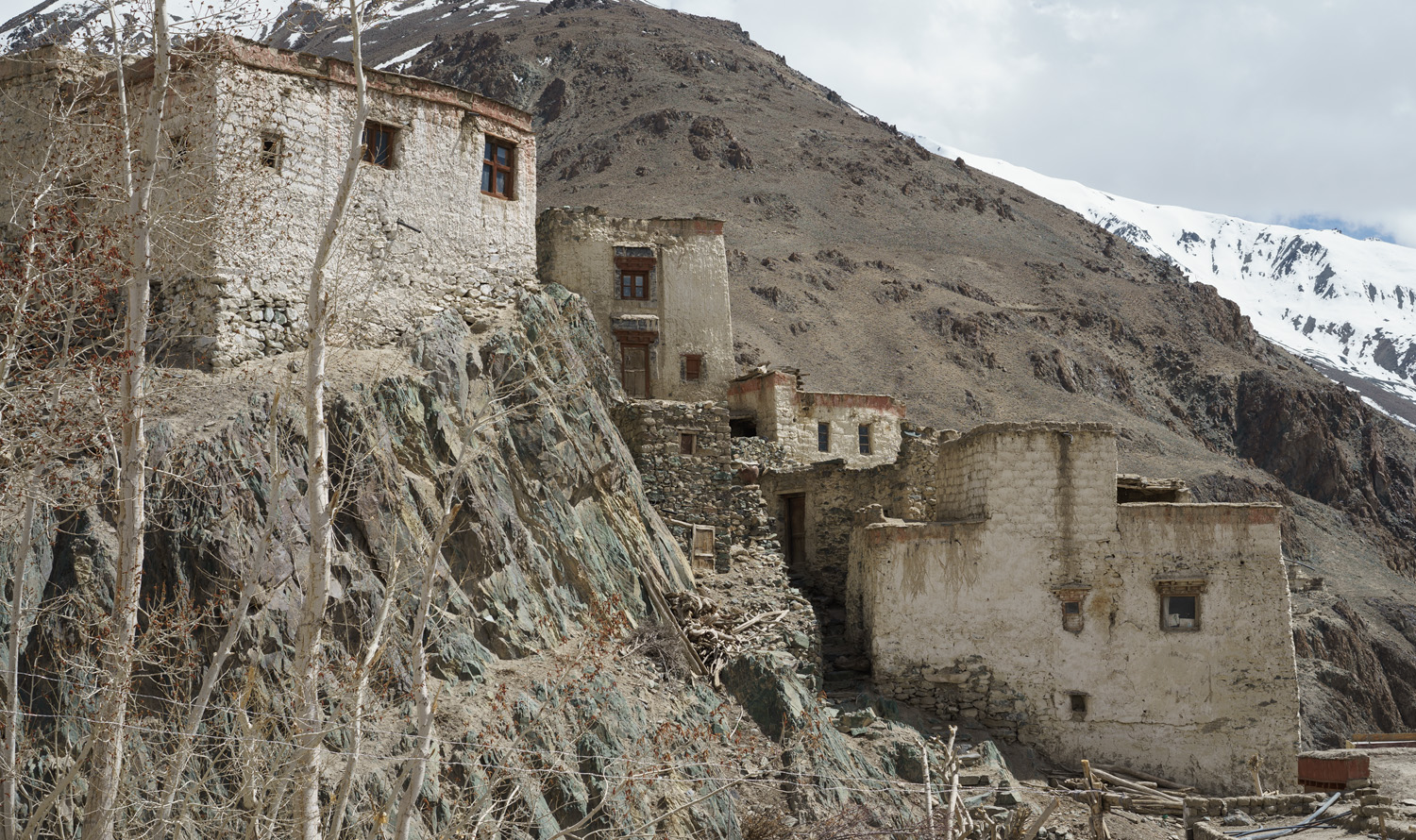
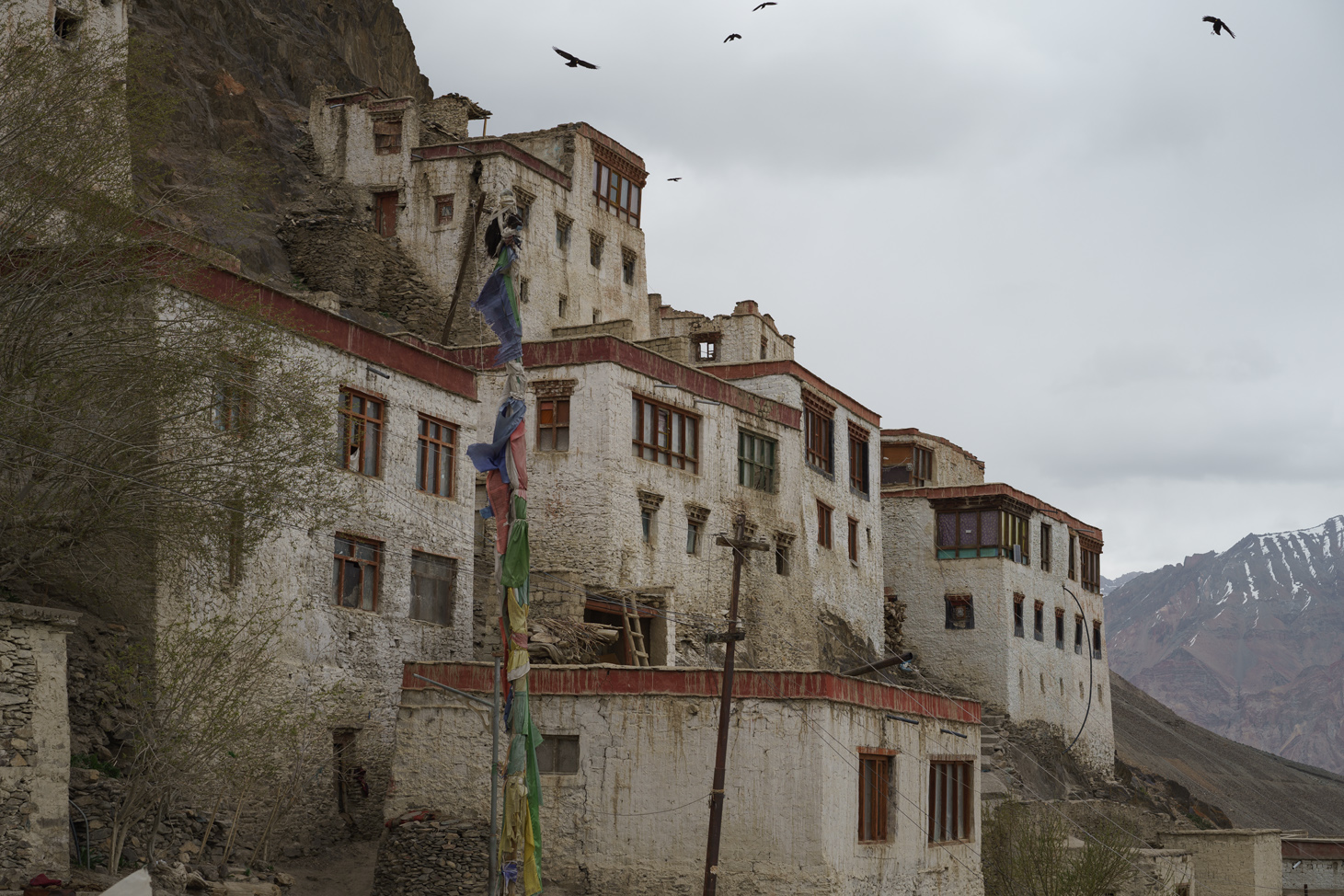
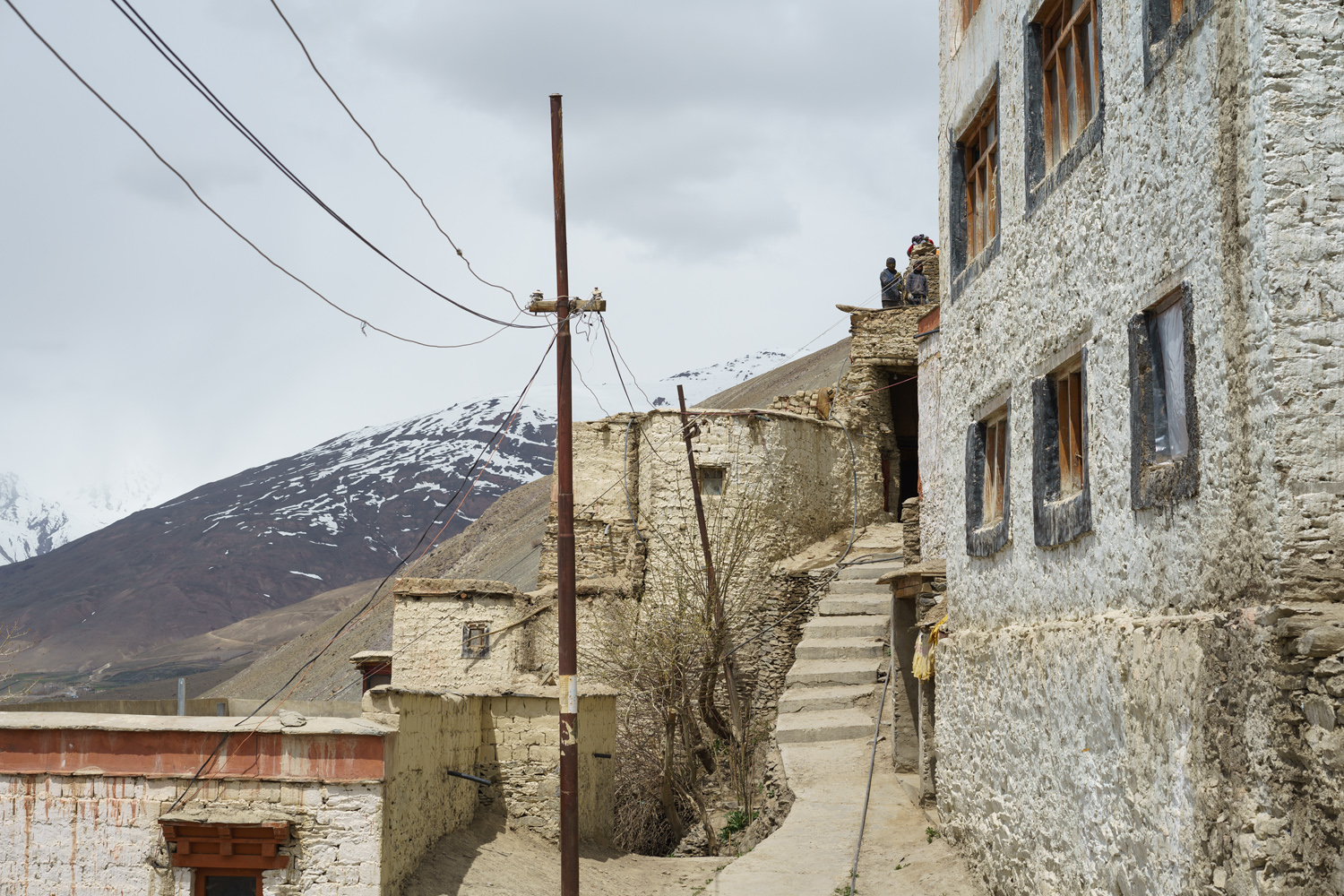
Landscapes need full DOF, or something close to it. My work has been (in part) a long term search for the best way to convey depth in 'documentary' images (that is, a visitor would recognise them) taken under ultra bright light in daytime middle hours. I see this as the acid test of this kind of imaging. A lot of it comes down to very high and well-balanced levels of acutance. All this is leaving aside the usual optical tricks of leading lines, high separation, the juxtaposition of bright and dark, and light and dark content, sharp to not so sharp, saturated to less saturated, profile-induced atmospherics. For this genre, the drawing of image content must be utterly credible for the viewer to 'see' the three dimensionality in a satisfying way. A couple of examples in #1 and #2 and #3 - a 'cheating' image which uses walls, lines, paths and more to overcome the flat and amorphous light:
philip_pj wrote:
Landscapes need full DOF, or something close to it. My work has been (in part) a long term search for the best way to convey depth in 'documentary' images (that is, a visitor would recognise them) taken under ultra bright light in daytime middle hours. I see this as the acid test of this kind of imaging. A lot of it comes down to very high and well-balanced levels of acutance. All this is leaving aside the usual optical tricks of leading lines, high separation, the juxtaposition of bright and dark, and light and dark content, sharp to not so sharp, saturated to less saturated, profile-induced atmospherics. For this genre, the drawing of image content must be utterly credible for the viewer to 'see' the three dimensionality in a satisfying way. A couple of examples in #1 and #2 and #3 - a 'cheating' image which uses walls, lines, paths and more to overcome the flat and amorphous light:...Show more →
These photos surely would have looked better if you had used your Contax 35-70. (And perhaps turned down exposure just a little bit in photo #1 and #3.) This way - with the Sony 55 - they look run-of-the-mill, frankly.
Imagine if the subjects were standing on a lawn, would this image have the same sense of depth and impact? No, it would not, it's an optical trick. Most images with purported '3D' use such tricks, the most common being the new age separation technique we see from so many f1.2 lens images. Such lenses often deliver ordinary full DOF photos, shot at f8/f11.
Bob_S wrote:
One thing I've learnt, 3D pop is in the eye of the viewer and totally subjective, the more sentimental the lens, the more 3D pop the viewer sees.
I disagree, because, I've illustrated the phenomena.
I've uploaded images with what I think some degree of three dimensionality to them and went on and on about how I liked the 3D effect.
I named a nonsense lens and/or camera responsible for the image.
I received some degree of agreement about the 3D effect.
When I use the same image and name an expensive, old, or specific brand of lens I receive much more agreement and commentary on the effect.
I've done this a half dozen times over the last 12-15 years with the same results each time.
Don't underestimate how powerful the placebo of a device with either a high end brand and or name tag can influence a consumer.
What I've found too is that if the lens delivered a single photo with the effect, the owner would rave about how it does this, even though a significantly cheaper lens, new or 'vintage' would have delivered the exact same result for the same scene at the same focal distance, angle etc. etc.
Happy for you to disagree, I'd pay good money for a lens that consistently delivered more three dimensional images, but I cannot find one.
Sometimes a radioactive $10K Zeiss from 1960 that was used for a portrait of Marilyn Monroe will deliver as many 3D images as a Sony FE 1.8/50 on sale via eBay.
I don't know of any lenses which exhibits "3D POP".
However, I can observe images with “3D POP” quality (whatever that means) because of a combination of the following:
(i) the subject is separated from background with high contrast
(ii) the background is plain and simple (e.g., plain sky)
(iii) the subject is extremely sharp and
(iv) the background and/or foreground have a nice bokeh due to the lens being wide open
Most lenses can probably achieve that, as this thread proves. But what do I know – I should stop babbling and go out take some pictures 😊.
Bob_S wrote:
I don't see 3D in those last two posts. Is it just me?
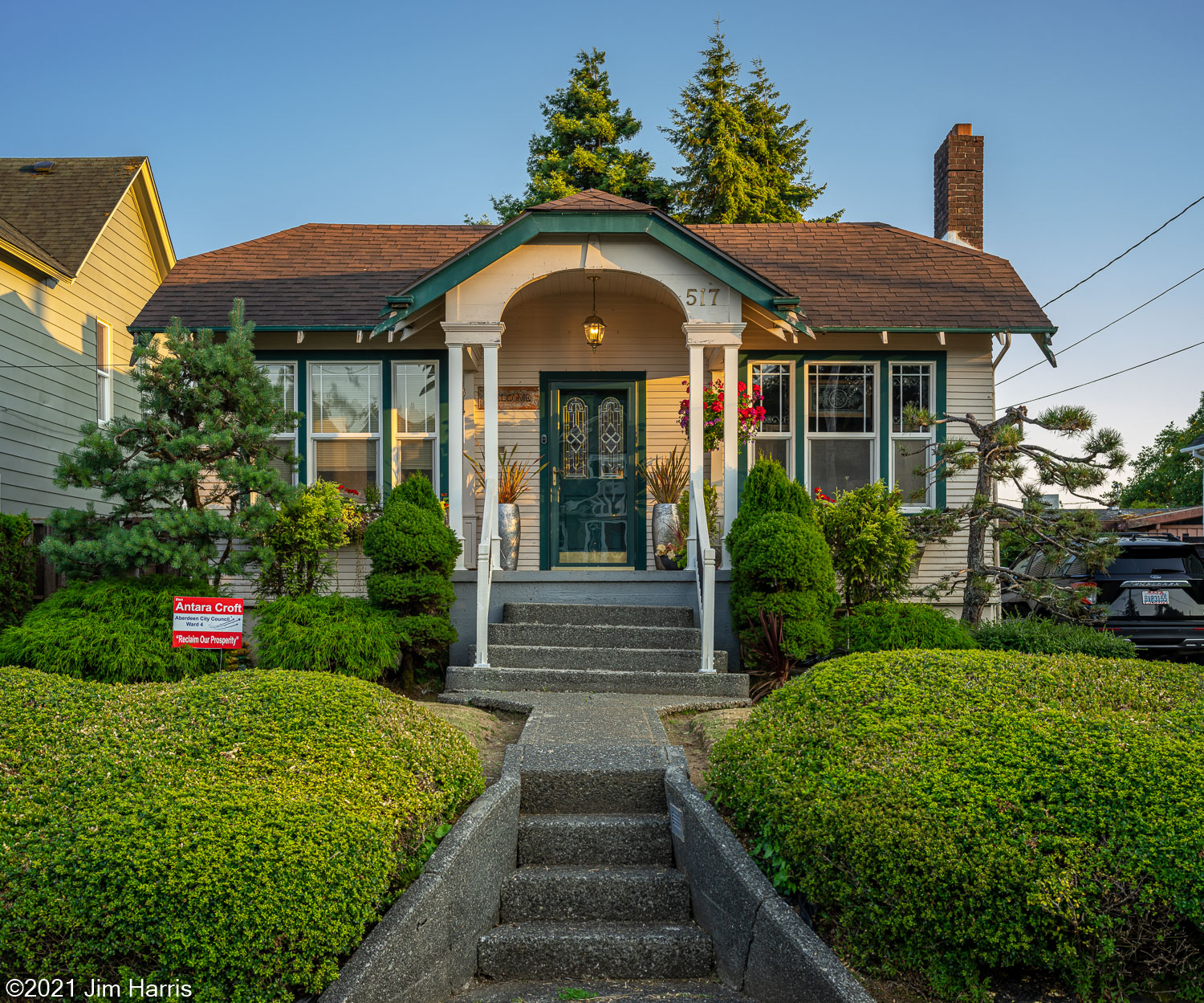
I can see a little bit of 3D in the pictures of philip_pj and Jim, subtle, but present.
The picture of Hasenbein just doesn't look really sharp on my screens and the subject is far too close for a 3D impression.
But that's very subjective.
Many consider the combination of narrow DOF and sharpness to be 3D Pop. They therefore place the subject as close as possible to the camera. I don't think that's 3D Pop, it's just a narrow DOF.
I differentiate (my personal opinion) between (3D) Pop and 3D.
The former is what John Dizzo (with his Sigma 20mm f1.4, for example) masterfully demonstrated here, a subject relatively close to the camera, but so far away that there is still a somewhat blurred foreground, then the subject and then slightly! blurred background. If the distance is right and you use the right lens, then the subject will "pop" out of the picture regardless of the light conditions, it looks like a collage / glued on the image.
The second is a landscape, architecture, ... shot that appears three-dimensional. Large parts of the image are sharp. Nevertheless, the subject seems very plastical. The Loxia 35mm could create such images very well ...
Well, that's my opinion. The pictures of philip_pj and Jim fall into my 2nd category.
I get the most '3D pop' from the Samyang 35/2.8 with full body shots of small children at 3-4 metres with a background over 20m behind them.
With the Distagon 35/1.4 ZM I get nothing like it, at 1.4, but more at 2.8 (I'm guessing it has something to do with field curvature) although still not as seperated as the Samyang.
Shooting fast wide open doesn't give me the sharp outlining of the increased depth of field shot.
HelBen85 wrote:
I can see a little bit of 3D in the pictures of philip_pj and Jim, subtle, but present.
The picture of Hasenbein just doesn't look really sharp on my screens and the subject is far too close for a 3D impression.
But that's very subjective.
Many consider the combination of narrow DOF and sharpness to be 3D Pop. They therefore place the subject as close as possible to the camera. I don't think that's 3D Pop, it's just a narrow DOF.
I differentiate (my personal opinion) between (3D) Pop and 3D.
The former is what John Dizzo (with his Sigma 20mm f1.4, for example) masterfully demonstrated here, a subject relatively close to the camera, but so far away that there is still a somewhat blurred foreground, then the subject and then slightly! blurred background. If the distance is right and you use the right lens, then the subject will "pop" out of the picture regardless of the light conditions, it looks like a collage / glued on the image.
The second is a landscape, architecture, ... shot that appears three-dimensional. Large parts of the image are sharp. Nevertheless, the subject seems very plastical. The Loxia 35mm could create such images very well ...
Well, that's my opinion. The pictures of philip_pj and Jim fall into my 2nd category. ...Show more →
I think that is a fair and accurate assessment of several types of "3D Pop". I feel that if one is able to be drawn into a scene with sufficient realism (often perspective, or forced perspective), lighting, and sharp details, it suffices to be called 3D Pop. Restricted DOF is the other method, but more of an optical "trick", concentrating the viewer's perception on a specific area or item in focus, not necessarily 3D look.