which lens has the most 3D POP?
p.28 #1which lens has the most 3D POP?
philip_pj wrote:
'All that means is the lens resolution for certain lower quality lenses may not increase with a higher resolution sensor. This is also true for every Canon lens over 4 years old.' Leaving that one without comment.
Anyone who tries to tell you you need current lenses for current sensors is simply lying to you, in order to sell you new lenses.
Or has fallen victim to the lies of people who try to sell you new lenses.
Thats all there is.
The idea that high resolution is a priviledge of the digital age is very weird anyway. Low sensitivity film, especially if black and white, has always offered very high resolution.
Aug 09, 2019 at 01:39 AM
p.28 #2which lens has the most 3D POP?
Goodrich wrote:
https://live.staticflickr.com/65535/48471061176_064b59fde3_k.jpgThe land that time forgot, for now.
As far as pop goes, this is a very good example IMO and its not a Zeiss lens Would like to see the same at a more narrow apeture if possible. F5.0-5.6 if you have it ?
Regardless, an interesting image to look at anyway. I like it.
https://live.staticflickr.com/65535/48471061176_064b59fde3_k.jpgThe land that time forgot, for now.
As far as pop goes, this is a very good example IMO and its not a Zeiss lens
Would like to see the same at a more narrow apeture if possible. F5.0-5.6 if you have it ?Regardless, an interesting image to look at anyway. I like it.
Aug 10, 2019 at 12:45 PM
p.28 #3which lens has the most 3D POP?
Sauseschritt wrote:
Anyone who tries to tell you you need current lenses for current sensors is simply lying to you, in order to sell you new lenses.
Or has fallen victim to the lies of people who try to sell you new lenses.
Thats all there is.
The idea that high resolution is a priviledge of the digital age is very weird anyway. Low sensitivity film, especially if black and white, has always offered very high resolution.
Agree. Proven many tens of thousands of times over, more recently when people started adapting everything and anything from the very old to the classics to the most modern and everything inbetween on Sony mirrorless. Nikon Z and Canon R will be the next wave to IMO revitalize forgotten glass. But some new modern glass has also achieved optical excellence above and beyond as well. Plenty to go around for everyone's taste and motivations.
philip_pj wrote
'All that means is the lens resolution for certain lower quality lenses may not increase with a higher resolution sensor. This is also true for every Canon lens over 4 years old.' Leaving that one without comment.Or has fallen victim to the lies of people who try to sell you new lenses.
Thats all there is.
The idea that high resolution is a priviledge of the digital age is very weird anyway. Low sensitivity film, especially if black and white, has always offered very high resolution.
Agree. Proven many tens of thousands of times over, more recently when people started adapting everything and anything from the very old to the classics to the most modern and everything inbetween on Sony mirrorless. Nikon Z and Canon R will be the next wave to IMO revitalize forgotten glass. But some new modern glass has also achieved optical excellence above and beyond as well. Plenty to go around for everyone's taste and motivations.
Aug 10, 2019 at 12:56 PM
p.28 #4which lens has the most 3D POP?
Thanks. I don’t think that I have any f5.6 shots.
Aug 11, 2019 at 09:58 AM
p.28 #5which lens has the most 3D POP?
Thanks for bringing this up, and since this is mentioned, here's the RX1R version I've just uploaded. Side by side doesn't really look too different (phone camera obviously had a wider view) with the RX1R had more color depth. That scene contributed most of the effect imho.

chris9 wrote:
A short summary of the last 20 pages of this thread is based on the likes:
10 likes jeffersoncasey https://www.fredmiranda.com/forum/topic/983034/6
camera: Huawei Mate 9, same photos on RX1R look even better
conclusions by jeffersoncasey:
what is important: light and graduation
what is not important: light and graduation much more important than camera.
jeffersoncasey's remarks: a picture needs shadows and dark regions or else the photo is perceived flat.
remarks: photo 1 does not include any background and foreground blur effects but uses reflections in the water, which are blurred.
My own conclusion: In general I agree but philip_pj shows me that it is possible to get the effect...Show more →
Aug 11, 2019 at 10:15 AM
p.28 #6which lens has the most 3D POP?
Goodrich wrote:
Thanks. I don’t think that I have any f5.6 shots.
No worries. Whenever you can I'd like to see what that lens can do 5.6 pls send me a PM if you get a chance one day. That scene you posted already is a 3D reference shot
Thanks. I don’t think that I have any f5.6 shots.
No worries. Whenever you can I'd like to see what that lens can do 5.6 pls send me a PM if you get a chance one day. That scene you posted already is a 3D reference shot
Aug 11, 2019 at 10:19 AM
p.28 #7which lens has the most 3D POP?
I know this has some leading lines, and I know I've seen other shots on here that have dimensionality to them. Anyone see 3D pop in this shot, or does it miss the mark?
-Tim
 |
||
 |
||
|
-Tim
Aug 12, 2019 at 11:08 AM
p.28 #8which lens has the most 3D POP?
It's important to realise that stopped-down 3D is not a necessary factor in excellent image-making. It seems likely that many lens designers (and perhaps manufacturers) don't value it highly. That is a view reinforced by current and projected trends - to ever faster 'great wide open' lenses of an ever wider range of focal lengths.
They've found something new to sell the market on, with ever better CAD and glass formulations. It makes sense that they would see f8 performance as secondary and it may not even enter their thinking at all. It could easily be part of the heavy lens trend. Would Sigma or Zeiss really envisage users carrying a 1200-1600 gram 105/1.4 into the backblocks to shoot away at f8?
The viewing eye can be relied on to scan an image in a predictable way. Although many photographers may seem to like looking hard for minor CA or poor corners first at times, their viewers can be counted on to do something very different, and this is probably a universal trait. It goes this way:
. high saturation to low saturation
. sharp to unsharp
. bright to dull to dark
. high contrast to low contrast
. scene centres (or near) to rest of frame
. large image objects ('motifs' in Zeiss speak) to small motifs
Think of each of: color, sharpness, contrast and tone as a range with gradations inside each of them.
Now, looking at Tim's image immediately above, we see (or at least I hope we can agree to say we see) a lot of greenery and the red/brown front of the structure, both with little colour or tone gradation. [This narrow hue range issue (plus flat light) affects Jim's old car image above as well, which is surrounded by highly saturated 'single hue' greens.]
It's near midday and the blue sky is also evenly coloured. Light is very even, making 3D a tough assignment even for lenses with good 3D characteristics. So contrast is low in the main motifs of structure and grass. Sharpness is good everywhere (which we want). The colours are evenly saturated as well as 'hue-bound'. There is only one major focus - the building. The lawn is sloping strangely, there may be a drainage just behind the structure.
Because the near corner of the wall *looks* a little tilted, the eye naturally is wary of placing much belief in the image - it looks odd. The reason is the windows, which are actually tilted, due to the upward angle of the shot. The drawing of the rock wall is both sharp and well lit, but you cannot easily identify the actual near corner of it and this creates a perceptual problem - the wall almost looks perpendicular to the camera. The accentuated slope to the bottom of the top floor boarding is half way up the image, confusing the eye still further. The right wall is also sloping inwards.
These shaping aspects go to the importance of 'authenticity' for 3D images - such images must look feasible as a first step to believing it has 3D. Does it matter? No, it is a fine photograph nonetheless.
Aug 14, 2019 at 09:05 PM
p.28 #9which lens has the most 3D POP?
I think you can archive 3D pop with many good lenses.
Here an image taken with the Voigtländer 21mm F1.4 for me the scene has a bit of 3D Pop (Cows)
 Cow Pasture by H. Wiedow, auf Flickr
Here an image taken with the Voigtländer 21mm F1.4 for me the scene has a bit of 3D Pop (Cows)
Cow Pasture by H. Wiedow, auf FlickrAug 16, 2019 at 04:49 AM
p.28 #10which lens has the most 3D POP?
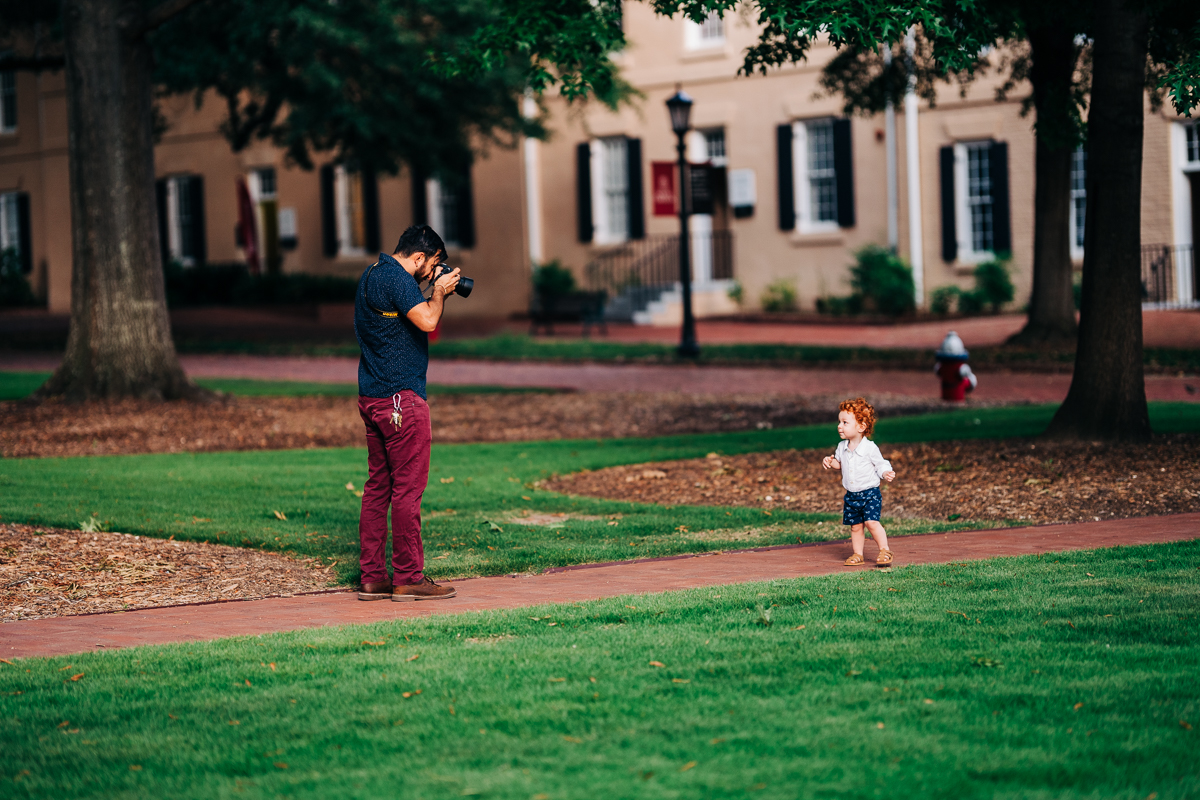
Prosaic shot that, to my eye, has a good 3d pop to it.
Aug 16, 2019 at 12:09 PM
|
p.28 #11which lens has the most 3D POP?
beardedspoooon wrote:
Prosaic shot that, to my eye, has a good 3d pop to it.
You people have just got to state what lens you’re using! Look at the thread’s title.
And one more thing: Please state the lens you’re using por favor!!!
Prosaic shot that, to my eye, has a good 3d pop to it.
You people have just got to state what lens you’re using! Look at the thread’s title.
And one more thing: Please state the lens you’re using por favor!!!
Aug 20, 2019 at 09:57 PM
p.28 #12which lens has the most 3D POP?
abase21 wrote:
I think you can archive 3D pop with many good lenses.
Here an image taken with the Voigtländer 21mm F1.4 for me the scene has a bit of 3D Pop (Cows)
https://live.staticflickr.com/65535/48535850237_6535204c07_h.jpgCow Pasture by H. Wiedow, auf Flickr
That’s a particularly lovely cow pasture image. Beautiful!
I’ve been tempted to sell my Loxia 21mm for the CV 21 1.4 as it does indeed have a wonderful rendering.
Aug 20, 2019 at 10:01 PM
p.28 #13which lens has the most 3D POP?
Back with an example of the use of subtle colour hue separation in developing 3D. Here, a very flat sky day which robs the effect of light and contrast on mountain sides. Cosina's excellent color separation steps up to depict each successive ridgeline distinctly, as well as the colours of the far mountain, the reason for the image. This lens is sharp without being 'edgy' in the modern mode that so many know and have come to love. It doesn't have to shout to get the job done. [great place if anyone wanders up that way: Wanla, north Zanskar].
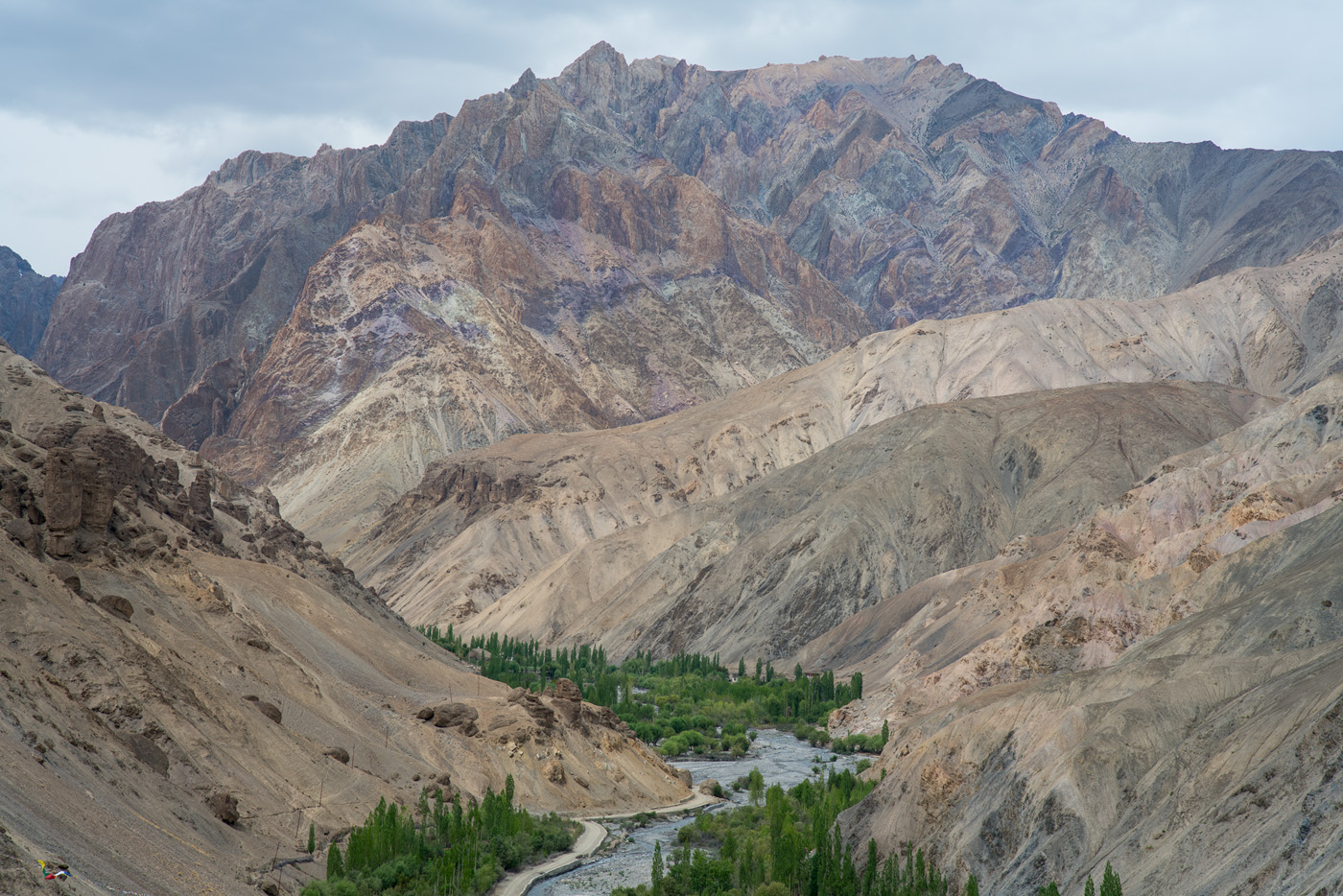
Voigtlander Color-Heliar 75/2.5
Voigtlander Color-Heliar 75/2.5
Aug 21, 2019 at 12:28 AM
p.28 #14which lens has the most 3D POP?
I don't think it's the lens though. I think it's a combination of composition and the lens. That shot was Sigma 105/1.4. I think the 3D effect comes from the way it transitions to the out of focus areas and the varying contrast between what is and isn't in focus. I've taken plenty with the Sigma that lacks the 3D effect. 
darbo wrote:
You people have just got to state what lens you’re using! Look at the thread’s title.
And one more thing: Please state the lens you’re using por favor!!!
darbo wrote:
beardedspoooon wrote
Prosaic shot that, to my eye, has a good 3d pop to it.And one more thing: Please state the lens you’re using por favor!!!
Aug 21, 2019 at 04:57 AM
p.28 #15which lens has the most 3D POP?
..the Voigtländer has it ;-)
 Sun in the forest by H. Wiedow, auf Flickr
Aug 25, 2019 at 12:04 PM
p.28 #17which lens has the most 3D POP?
I have been watching effect that give a sense of real depth. I’d say pop, 3d, microcontrast, depth, and other terms may refer to combinations of different things.
Pop: For very fast apertures that melt the background I hear Pop more often. This happens more frequently when there is significant saturation and a lack of visible aberrations at normal view distances.
3D: I have seen most description of this with a range of services. The background is most often still discernible. The goal is to make the foreground as much as posible ultra sharp with high contrast at least at te vowing distance (good mid level frequencies maybe 10 to 20 lp / mm. The background need to resemble what one eye would perceive as a normally blurred background when focused at the sharp object. If the image is very nitid, the background I mildly blurred, this is often more akin to 3D look. This can happen with any lens by especially 35 to 85mm. But if 85mm, the distance to sharp object need to be higher vs a 35mm, so that the background is not too blurry.
Effect killers (may still be a lovely picture) are noticeable aberrations especially fringing, muddy mid frequencies, main object not sharp, specular highlights, sunstars, too much or too little blur, too saturated, too little saturation (may still have a lot of dimensionality and pop, even a semi 3d in the shape in focus if colors are very graduated), many foreground object in semi-sharp focus (ie. as we refocus, we can’t focus on some, and breaks the ilusion). A transition does not break it, only too many separate objects with only a very few in sharp focus, color rendering (a bit, especially bad red rendering), mid frequency contrast (texture) that is low, very blown out patches (unnatural) may usually suspend the belief too, blur (it will add movement and dinamism but may break 3D).
If you have good vision control and peripherical vision training, you can cover one eye, and the look at a pencil tip and try to perceive the background (without focusing on it!!!). If you train yourself to focus on will not automatically, you can see what the mind observed as background blur. Any lens where the output is not very different from it can produce this 3D effect when you are looking at the object in focus.
Aug 29, 2019 at 11:44 PM
p.28 #18which lens has the most 3D POP?
Proof that some Zeiss lenses do help the effect (unedited, except for a slight lift of the exposure).

Rollei Zeiss Distagon 1.4/35
Rollei Zeiss Distagon 1.4/35
Sep 09, 2019 at 09:22 AM
p.28 #19which lens has the most 3D POP?
tsdevine wrote:
I know this has some leading lines, and I know I've seen other shots on here that have dimensionality to them. Anyone see 3D pop in this shot, or does it miss the mark?
https://live.staticflickr.com/65535/48510687601_1d134660a4_h.jpg
-Tim
Tim -- I don't really see a 3D Pop here, but the fine details and contrast in the building and tree leaves make for a very lifelike feel. Not 3D so much as a very accurate representation, without any gimmicks.
I think a lot of the time, things we think of as lens aberrations and DOF. Curvature of field and spherical aberration often add to the 3D effect, but at a cost to general image quality. I think this is why we often see posts from enthusiastic users of older lenses adapted to modern digital cameras.
Anyhow, nice picture -- as per your usual posts!
Sep 09, 2019 at 10:43 AM
p.28 #20which lens has the most 3D POP?
Thanks, I think given that I normally do stopped down landscape shooting, I either limit myself to lenses that perform well there, and/or don't delve into that aspect enough to pick the lenses that do well at both. (A little character/magic at wider apertures and more realistic rendition stopped down.)
These threads always interest me though, and I usually end up participating a little, even if it ends up being more of a false positive.
Gunzorro wrote:
tsdevine wrote
I know this has some leading lines, and I know I've seen other shots on here that have dimensionality to them. Anyone see 3D pop in this shot, or does it miss the mark?https://live.staticflickr.com/65535/48510687601_1d134660a4_h.jpg
-Tim
I think a lot of the time, things we think of as lens aberrations and DOF. Curvature of field and spherical aberration often add to the 3D effect, but at a cost to general image quality. I think this is why we often see posts from enthusiastic users of older lenses adapted to modern digital cameras.
Anyhow, nice picture -- as...Show more →
Sep 09, 2019 at 10:55 AM