which lens has the most 3D POP?
p.166 #1which lens has the most 3D POP?
tsdevine wrote:
While I guess pop is more eye catching than dimensionality, I still enjoy the latter, even at f/11.
https://live.staticflickr.com/65535/55640324431_8aa1833a1f_h.jpg
I have the feeling that this photo might have looked different - better - if it hadn't been resized to 1600 x 1067 (1.7MP).
At this resolution, it looks as if it was over-sharpened, and the resized jpeg doesn't represent the original image well.
Considering that this is a pro photography site, I expect many (if not most) people should view the images posted here on a 4 - 5K display; thus, resizing to 8MP at the minimum would make more sense that 1.7MP.
I wish this had been the rule on this site.
Nov 08, 2026 at 10:37 AM
p.166 #2which lens has the most 3D POP?
ruthenium wrote:
https://live.staticflickr.com/65535/55640324431_8aa1833a1f_h.jpgI have the feeling that this photo might have looked different - better - if it hadn't been resized to 1600 x 1067 (1.7MP).
At this resolution, it looks as if it was over-sharpened, and the resized jpeg doesn't represent the original image well.
Considering that this is a pro photography site, I expect many (if not most) people should view the images posted here on a 4 - 5K display; thus, resizing to 8MP at the minimum would make more sense that 1.7MP.
I wish this had been the rule on this site.
Yeah, I can't win. If I resize too large, often people complain....if I make it small, then people complain. I don't doo much with smaller images, so I don't spend much time trying to optimize for them.
It's become less of a joy over time here lately.
Here's full size, maybe still be too sharpened for taste.
Full Size
Edited on Nov 08, 2026 at 11:24 AM · View previous versions
tsdevine wrote
While I guess pop is more eye catching than dimensionality, I still enjoy the latter, even at f/11.https://live.staticflickr.com/65535/55640324431_8aa1833a1f_h.jpg
At this resolution, it looks as if it was over-sharpened, and the resized jpeg doesn't represent the original image well.
Considering that this is a pro photography site, I expect many (if not most) people should view the images posted here on a 4 - 5K display; thus, resizing to 8MP at the minimum would make more sense that 1.7MP.
I wish this had been the rule on this site.
Yeah, I can't win. If I resize too large, often people complain....if I make it small, then people complain. I don't doo much with smaller images, so I don't spend much time trying to optimize for them.
It's become less of a joy over time here lately.
Here's full size, maybe still be too sharpened for taste.
Full Size
Edited on Nov 08, 2026 at 11:24 AM · View previous versions
Nov 08, 2026 at 11:12 AM
p.166 #3which lens has the most 3D POP?
Ripolini wrote:
I had no doubt that FOR YOU background blur/separation is a must 🤣
Ask AI and you get the following answer:
Misconception 1: 3D Pop is just another word for Background Blur
• The Myth: If you buy a massive f/1.2 or f/1.4 lens and shoot it wide open to completely obliterate the background, you automatically get 3D pop.
• The Reality: Ultra-smooth, "milky" background blur (Gaussian blur) can actually flatten an image. True 3D pop tricks the brain into seeing depth because of the focus falloff—the gradual, structured transition from sharp to blurry. If the background is a completely uniform, textureless mush, the
I wrote more or less the same things a few hundred posts ago, without using AI 😂
...Show more →
I agree with the above, and the photos in question are repetitive, that is detrimental to their effect on a viewer. While a smooth background is suitable in some compositions, it becomes banal and wearisome when used indiscriminately and repetitively.
My take on the series of pictures from jojib is that their background, whether discernible or smoothed to oblivion, is typically irrelevant, foreign to, and disconnected from the subject, and is typically a distraction rather than an organic part of the compositions. When this is the case - when a model and a background don't connect - I better like photos of models taken in a studio environment against a plain background.
It has been already noted in this thread that a contrasty, all-in focus subject against a blurred background can create an impression of the subject as having been cut-and-pasted. This is how the pictures from jojib often look to me, and I don't associate this effect with neither 3-dimentionality nor 3D pop.
jojib wrote
So for me background blur/separation is a must.Ask AI and you get the following answer:
Misconception 1: 3D Pop is just another word for Background Blur
• The Myth: If you buy a massive f/1.2 or f/1.4 lens and shoot it wide open to completely obliterate the background, you automatically get 3D pop.
• The Reality: Ultra-smooth, "milky" background blur (Gaussian blur) can actually flatten an image. True 3D pop tricks the brain into seeing depth because of the focus falloff—the gradual, structured transition from sharp to blurry. If the background is a completely uniform, textureless mush, the
I wrote more or less the same things a few hundred posts ago, without using AI 😂
...Show more →
I agree with the above, and the photos in question are repetitive, that is detrimental to their effect on a viewer. While a smooth background is suitable in some compositions, it becomes banal and wearisome when used indiscriminately and repetitively.
My take on the series of pictures from jojib is that their background, whether discernible or smoothed to oblivion, is typically irrelevant, foreign to, and disconnected from the subject, and is typically a distraction rather than an organic part of the compositions. When this is the case - when a model and a background don't connect - I better like photos of models taken in a studio environment against a plain background.
It has been already noted in this thread that a contrasty, all-in focus subject against a blurred background can create an impression of the subject as having been cut-and-pasted. This is how the pictures from jojib often look to me, and I don't associate this effect with neither 3-dimentionality nor 3D pop.
Nov 08, 2026 at 11:16 AM
p.166 #4which lens has the most 3D POP?
To each their own. I still prefer a lot of separation. For me this image is flat

SONY ILCE-7M5
1/2500s f/2.8 at 28.0mm iso100
But these ones have a lot of pop

Canon EOS R6 Mark II
1/500s f/1.2 at 50.0mm iso100

Canon EOS R6 Mark II
1/640s f/5.0 at 50.0mm iso100
SONY ILCE-7M5
1/2500s f/2.8 at 28.0mm iso100
But these ones have a lot of pop
Canon EOS R6 Mark II
1/500s f/1.2 at 50.0mm iso100
Canon EOS R6 Mark II
1/640s f/5.0 at 50.0mm iso100
Nov 08, 2026 at 11:30 AM
p.166 #5which lens has the most 3D POP?
tsdevine wrote:
https://live.staticflickr.com/65535/55640324431_8aa1833a1f_h.jpgI have the feeling that this photo might have looked different - better - if it hadn't been resized to 1600 x 1067 (1.7MP).
At this resolution, it looks as if it was over-sharpened, and the resized jpeg doesn't represent the original image well.
Considering that this is a pro photography site, I expect many (if not most) people should view the images posted here on a 4 - 5K display; thus, resizing to 8MP at the minimum would make more sense that 1.7MP.
I wish this had been the rule on this site.Yeah, I can't win. If I resize too large, often people complain....if I make it small, then people complain. I don't doo much with smaller images, so I don't spend much time trying to optimize for them.
It's become less of a joy over time here lately.
"If I resize too large, often people complain" - if this is because the resulting images don't fit into the screen view - this is a problem of posting, not the problem of MP size.
For examples of posting large images from Flickr, see
https://www.fredmiranda.com/forum/topic/1891396/0#16752299
If you mean something different, then I am not sure about the problem that might have caused the complaints.
ruthenium wrote
tsdevine wrote
While I guess pop is more eye catching than dimensionality, I still enjoy the latter, even at f/11.https://live.staticflickr.com/65535/55640324431_8aa1833a1f_h.jpg
At this resolution, it looks as if it was over-sharpened, and the resized jpeg doesn't represent the original image well.
Considering that this is a pro photography site, I expect many (if not most) people should view the images posted here on a 4 - 5K display; thus, resizing to 8MP at the minimum would make more sense that 1.7MP.
I wish this had been the rule on this site.
It's become less of a joy over time here lately.
"If I resize too large, often people complain" - if this is because the resulting images don't fit into the screen view - this is a problem of posting, not the problem of MP size.
For examples of posting large images from Flickr, see
https://www.fredmiranda.com/forum/topic/1891396/0#16752299
If you mean something different, then I am not sure about the problem that might have caused the complaints.
Nov 08, 2026 at 11:38 AM
p.166 #6which lens has the most 3D POP?
jojib wrote:
To each their own. I still prefer a lot of separation. For me this image is flat
https://a4.pbase.com/g13/30/64330/2/176666179.5717c81d.jpg
SONY ILCE-7M5
1/2500s f/2.8 at 28.0mm iso100
But these ones have a lot of pop
https://a4.pbase.com/g13/30/64330/2/176577725.7f7e79ac.jpg
Canon EOS R6 Mark II
1/500s f/1.2 at 50.0mm iso100
https://a4.pbase.com/g13/30/64330/2/176601424.04e8d9fd.jpg
Canon EOS R6 Mark II
1/640s f/5.0 at 50.0mm iso100
The 2nd image is what I see as an example of the subject having been "cut-and-pasted"
In the 3rd image, there is some pop - the green branch (in front of the subject) pops slightly out of the frame. The main subject in this photo looks relatively flat to me. The relationship between the subject (model) and the background is ambiguous. Is there any? What kind of connection you were thinking about when composed this photo with Louis Vuitton in the background?
Edited on Nov 08, 2026 at 11:49 AM · View previous versions
Nov 08, 2026 at 11:41 AM
p.166 #7which lens has the most 3D POP?
ruthenium wrote:
https://a4.pbase.com/g13/30/64330/2/176666179.5717c81d.jpg
SONY ILCE-7M5
1/2500s f/2.8 at 28.0mm iso100
But these ones have a lot of pop
https://a4.pbase.com/g13/30/64330/2/176577725.7f7e79ac.jpg
Canon EOS R6 Mark II
1/500s f/1.2 at 50.0mm iso100
https://a4.pbase.com/g13/30/64330/2/176601424.04e8d9fd.jpg
Canon EOS R6 Mark II
1/640s f/5.0 at 50.0mm iso100The 2nd image is what I see as an example of the subject having been "cut-and-paste"
In the 3rd image, there is some pop - the green branch (in front of the subject) pops slightly out of the frame.
The cut and paste look is exactly what I wanted!
jojib wrote
To each their own. I still prefer a lot of separation. For me this image is flathttps://a4.pbase.com/g13/30/64330/2/176666179.5717c81d.jpg
SONY ILCE-7M5
1/2500s f/2.8 at 28.0mm iso100
But these ones have a lot of pop
https://a4.pbase.com/g13/30/64330/2/176577725.7f7e79ac.jpg
Canon EOS R6 Mark II
1/500s f/1.2 at 50.0mm iso100
https://a4.pbase.com/g13/30/64330/2/176601424.04e8d9fd.jpg
Canon EOS R6 Mark II
1/640s f/5.0 at 50.0mm iso100
In the 3rd image, there is some pop - the green branch (in front of the subject) pops slightly out of the frame.
The cut and paste look is exactly what I wanted!
Nov 08, 2026 at 11:43 AM
p.166 #8which lens has the most 3D POP?
tsdevine wrote:
https://live.staticflickr.com/65535/55640324431_8aa1833a1f_h.jpgI have the feeling that this photo might have looked different - better - if it hadn't been resized to 1600 x 1067 (1.7MP).
At this resolution, it looks as if it was over-sharpened, and the resized jpeg doesn't represent the original image well.
Considering that this is a pro photography site, I expect many (if not most) people should view the images posted here on a 4 - 5K display; thus, resizing to 8MP at the minimum would make more sense that 1.7MP.
I wish this had been the rule on this site.Yeah, I can't win. If I resize too large, often people complain....if I make it small, then people complain. I don't doo much with smaller images, so I don't spend much time trying to optimize for them.
It's become less of a joy over time here lately.
Here's full size, maybe still be too sharpened for taste.
Full Size
Hope you keep on posting!! For me it's always better to be a player than an analyst :-)
ruthenium wrote
tsdevine wrote
While I guess pop is more eye catching than dimensionality, I still enjoy the latter, even at f/11.https://live.staticflickr.com/65535/55640324431_8aa1833a1f_h.jpg
At this resolution, it looks as if it was over-sharpened, and the resized jpeg doesn't represent the original image well.
Considering that this is a pro photography site, I expect many (if not most) people should view the images posted here on a 4 - 5K display; thus, resizing to 8MP at the minimum would make more sense that 1.7MP.
I wish this had been the rule on this site.
It's become less of a joy over time here lately.
Here's full size, maybe still be too sharpened for taste.
Full Size
Hope you keep on posting!! For me it's always better to be a player than an analyst :-)
Nov 08, 2026 at 11:44 AM
p.166 #9which lens has the most 3D POP?
jojib wrote:
The cut and paste look is exactly what I wanted!
Consequently, all your posts with images are off topic.
This thread is already flooded with enough useless stuff.
The cut and paste look is exactly what I wanted!
Consequently, all your posts with images are off topic.
This thread is already flooded with enough useless stuff.
Nov 08, 2026 at 11:49 AM
p.166 #10which lens has the most 3D POP?
Ripolini wrote:
Consequently, all your posts with images are off topic.
This thread is already flooded with enough useless stuff.
I disagree. Like I said cut and paste delivers the subject in a monitor busting mode---so that to me is 3D. Hey but you can make the last word if you like.
jojib wrote
The cut and paste look is exactly what I wanted!This thread is already flooded with enough useless stuff.
I disagree. Like I said cut and paste delivers the subject in a monitor busting mode---so that to me is 3D. Hey but you can make the last word if you like.
Nov 08, 2026 at 11:54 AM
|
p.166 #11which lens has the most 3D POP?
jojib wrote:
To each their own. I still prefer a lot of separation. For me this image is flat
https://a4.pbase.com/g13/30/64330/2/176666179.5717c81d.jpg
SONY ILCE-7M5
1/2500s f/2.8 at 28.0mm iso100
But these ones have a lot of pop
https://a4.pbase.com/g13/30/64330/2/176577725.7f7e79ac.jpg
Canon EOS R6 Mark II
1/500s f/1.2 at 50.0mm iso100
https://a4.pbase.com/g13/30/64330/2/176601424.04e8d9fd.jpg
Canon EOS R6 Mark II
1/640s f/5.0 at 50.0mm iso100
I Don't see it here. I see it all the time in your 35mm Viltrox.
Nov 08, 2026 at 12:22 PM
p.166 #12which lens has the most 3D POP?
Garmadon wrote:
https://a4.pbase.com/g13/30/64330/2/176666179.5717c81d.jpg
SONY ILCE-7M5
1/2500s f/2.8 at 28.0mm iso100
But these ones have a lot of pop
https://a4.pbase.com/g13/30/64330/2/176577725.7f7e79ac.jpg
Canon EOS R6 Mark II
1/500s f/1.2 at 50.0mm iso100
https://a4.pbase.com/g13/30/64330/2/176601424.04e8d9fd.jpg
Canon EOS R6 Mark II
1/640s f/5.0 at 50.0mm iso100I Don't see it here. I see it all the time in your 35mm Viltrox.
Thanks.
Joji
jojib wrote
To each their own. I still prefer a lot of separation. For me this image is flathttps://a4.pbase.com/g13/30/64330/2/176666179.5717c81d.jpg
SONY ILCE-7M5
1/2500s f/2.8 at 28.0mm iso100
But these ones have a lot of pop
https://a4.pbase.com/g13/30/64330/2/176577725.7f7e79ac.jpg
Canon EOS R6 Mark II
1/500s f/1.2 at 50.0mm iso100
https://a4.pbase.com/g13/30/64330/2/176601424.04e8d9fd.jpg
Canon EOS R6 Mark II
1/640s f/5.0 at 50.0mm iso100
Thanks.
Joji
Nov 08, 2026 at 12:25 PM
p.166 #13which lens has the most 3D POP?
jojib wrote:
To each their own. I still prefer a lot of separation. For me this image is flat
But these ones have a lot of pop
According to what you wrote:
- 1st image at f/2.8 is flat (well it has flat light and terrible subject-to-background relationship).
- 2nd image at f/1.2 has pop (at least here the subject position with respect to the rest of the scene isn't as terrible as in the previous photo);
- 3rd image at f/5 has pop too (your words, not mine 😂).
Do you see that you're starting to agree with me that the aperture has little to do with “pop”?
Nov 08, 2026 at 12:59 PM
p.166 #14which lens has the most 3D POP?
MichaelErlewine wrote:
Here is pop. Hasselblad XCD 120mm, top, Nikon Z7 bottom, not sure which lens for the Nikon. It could be the Voigtlander 125mm APO Lanthar but I would have to spend an hour to find the original raw file and I don't have that kind of time just now. I can post more that 'pop' if you like.
I really like your macro work and appreciate that you share your experiences with some very unusual lenses in that area. Thanks for that!
With those you've posted, I see very interesting and highly detailed images, but while I would say there's some amount of 3D Pop in the first, I don't see any in the second shot. I think I've seen more of it in some of the shots you've once shared with the Macro Varon:

But of course there's the aspect of color-contrast heavily at play here as well as lighting. The lens does deliver in terms of sharpness for sure. But as usual... a lot of that might just have to do with my perception. People perceive these kinds of things very differently, as this thread shows on every corner.
Edited on Nov 08, 2026 at 02:30 PM · View previous versions
Here is pop. Hasselblad XCD 120mm, top, Nikon Z7 bottom, not sure which lens for the Nikon. It could be the Voigtlander 125mm APO Lanthar but I would have to spend an hour to find the original raw file and I don't have that kind of time just now. I can post more that 'pop' if you like.
I really like your macro work and appreciate that you share your experiences with some very unusual lenses in that area. Thanks for that!
With those you've posted, I see very interesting and highly detailed images, but while I would say there's some amount of 3D Pop in the first, I don't see any in the second shot. I think I've seen more of it in some of the shots you've once shared with the Macro Varon:
But of course there's the aspect of color-contrast heavily at play here as well as lighting. The lens does deliver in terms of sharpness for sure. But as usual... a lot of that might just have to do with my perception. People perceive these kinds of things very differently, as this thread shows on every corner.
Edited on Nov 08, 2026 at 02:30 PM · View previous versions
Nov 08, 2026 at 02:29 PM
p.166 #15which lens has the most 3D POP?
Ripolini wrote:
But these ones have a lot of popAccording to what you wrote:
- 1st image at f/2.8 is flat (well it has flat light and terrible subject-to-background relationship).
- 2nd image at f/1.2 has pop (at least here the subject position with respect to the rest of the scene isn't as terrible as in the previous photo);
- 3rd image at f/5 has pop too (your words, not mine 😂).
Do you see that you're starting to agree with me that the aperture has little to do with “pop”?
Thanks.
For me 'pop' is all about rendering/contrast/clarity/vibrance. Thus the first picture lacked it in my opinion. It's also missing 3D. However, if I shot it with the Viltrox 35/1.2 LAB wide open it will have 3D---based on my definition of 3D which is like the subject trying to leap out of my monitor. But it will still lack the pop. Maybe if the subject wore red then she would separate herself from the dull background and give the image more pop.
Now if you go by the AI definition of 3D--a lot of my portraits are probably disqualified. Since they are portraits I think putting in a foreground element will be a distraction unless it blends with the subject. I think a foreground element needs to be present to make a bonafide 3D image. Again, this is just my opinion. I think pop is easier to achieve. 3D images are very difficult to compose. And most of the portraits here (not just mine) are 2D but with depth.
jojib wrote
To each their own. I still prefer a lot of separation. For me this image is flatBut these ones have a lot of pop
- 1st image at f/2.8 is flat (well it has flat light and terrible subject-to-background relationship).
- 2nd image at f/1.2 has pop (at least here the subject position with respect to the rest of the scene isn't as terrible as in the previous photo);
- 3rd image at f/5 has pop too (your words, not mine 😂).
Do you see that you're starting to agree with me that the aperture has little to do with “pop”?
Thanks.
For me 'pop' is all about rendering/contrast/clarity/vibrance. Thus the first picture lacked it in my opinion. It's also missing 3D. However, if I shot it with the Viltrox 35/1.2 LAB wide open it will have 3D---based on my definition of 3D which is like the subject trying to leap out of my monitor. But it will still lack the pop. Maybe if the subject wore red then she would separate herself from the dull background and give the image more pop.
Now if you go by the AI definition of 3D--a lot of my portraits are probably disqualified. Since they are portraits I think putting in a foreground element will be a distraction unless it blends with the subject. I think a foreground element needs to be present to make a bonafide 3D image. Again, this is just my opinion. I think pop is easier to achieve. 3D images are very difficult to compose. And most of the portraits here (not just mine) are 2D but with depth.
Nov 08, 2026 at 02:29 PM
p.166 #16which lens has the most 3D POP?
simplejoy wrote:
I really like your macro work and appreciate that you share your experiences with some very unusual lenses in that area. Thanks for that!
With those you've posted, I see very interesting and highly detailed images, but while I would say there's some amount of 3D Pop in the first, I don't see any in the second shot. I think I've seen more of it in some of the shots you've once shared with the Macro Varon:
https://www.fotozones.com/live/uploads/monthly_2018_03/_MEB9309-2-MV85-777.thumb.jpg.eb929809fa6023e02ef8fa936945b941.jpg
But of course there's the aspect of color-contrast heavily at play here as well as lighting. The lens does deliver in terms of sharpness for...Show more →
This one looks so real...
MichaelErlewine wrote
Here is pop. Hasselblad XCD 120mm, top, Nikon Z7 bottom, not sure which lens for the Nikon. It could be the Voigtlander 125mm APO Lanthar but I would have to spend an hour to find the original raw file and I don't have that kind of time just now. I can post more that 'pop' if you like.With those you've posted, I see very interesting and highly detailed images, but while I would say there's some amount of 3D Pop in the first, I don't see any in the second shot. I think I've seen more of it in some of the shots you've once shared with the Macro Varon:
https://www.fotozones.com/live/uploads/monthly_2018_03/_MEB9309-2-MV85-777.thumb.jpg.eb929809fa6023e02ef8fa936945b941.jpg
But of course there's the aspect of color-contrast heavily at play here as well as lighting. The lens does deliver in terms of sharpness for...Show more →
This one looks so real...
Nov 08, 2026 at 02:42 PM
p.166 #17which lens has the most 3D POP?
For me personally, this feels like it pops...
 Don't be another brick in the wall. Stand out! by simple.joy, on Flickr
or this
 For the last time: It's not flat! by simple.joy, on Flickr
This one as well:
 Market cap by simple.joy, on Flickr
or this, taken with a different lens:
 Fall incoming by simple.joy, on Flickr
and these with yet another significantly different one:
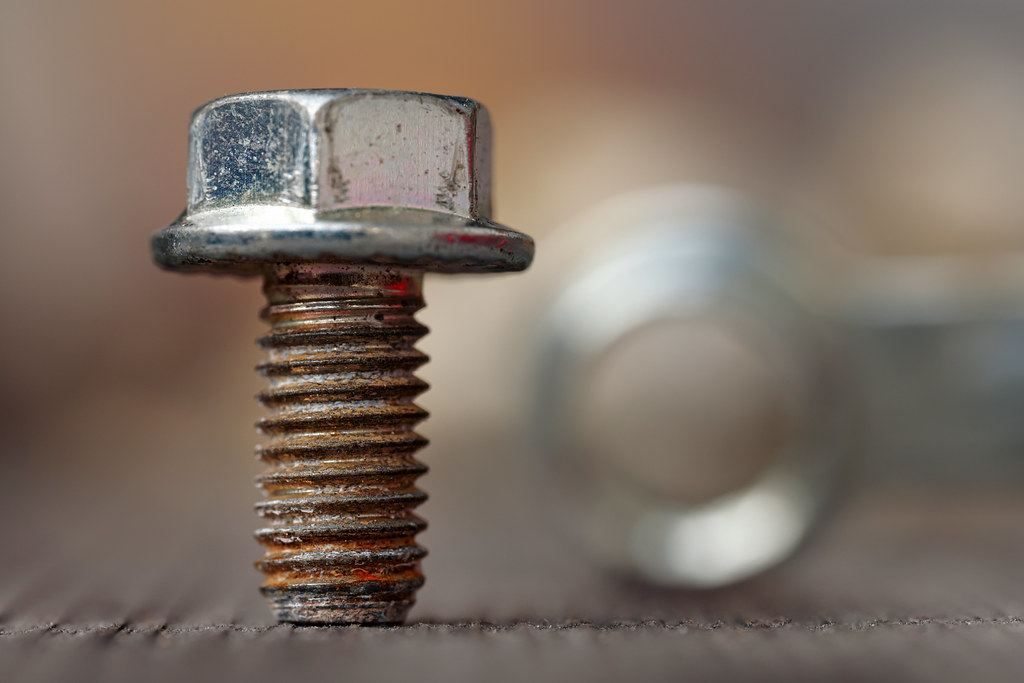 Love at first sight! by simple.joy, on Flickr
 Bean around the block by simple.joy, on Flickr
 Top of the fruit-chain by simple.joy, on Flickr
Notice, that (except for the last one) I've tried to avoid images where color-contrast is the main driver of the impact. I guess most people are going to disagree, since it's probably too much blur in the background. But since it's not smooth at all in many of them, it just works exceptionally well for my own taste.
Don't be another brick in the wall. Stand out! by simple.joy, on Flickror this
For the last time: It's not flat! by simple.joy, on FlickrThis one as well:
Market cap by simple.joy, on Flickror this, taken with a different lens:
Fall incoming by simple.joy, on Flickrand these with yet another significantly different one:
Love at first sight! by simple.joy, on FlickrBean around the block by simple.joy, on FlickrTop of the fruit-chain by simple.joy, on FlickrNotice, that (except for the last one) I've tried to avoid images where color-contrast is the main driver of the impact. I guess most people are going to disagree, since it's probably too much blur in the background. But since it's not smooth at all in many of them, it just works exceptionally well for my own taste.
Nov 08, 2026 at 02:42 PM
p.166 #18which lens has the most 3D POP?
@simplejoy beautiful images especially the first one which has both pop and 3D to my eyes.
Nov 08, 2026 at 02:51 PM
p.166 #19which lens has the most 3D POP?
jojib wrote:
Consequently, all your posts with images are off topic.
This thread is already flooded with enough useless stuff.I disagree. Like I said cut and paste delivers the subject in a monitor busting mode---so that to me is 3D. Hey but you can make the last word if you like.
I think what he’s getting at is that you’ve posted basically the same shot over and over: a different model, a fast prime, the same look. After 50 or 60 of them, they stop adding anything to the conversation. We get it, you like how a fast lens makes a portrait pop. But at this point it’s the same picture with a different face. Mix it up or tell us something about the shot, otherwise it’s just noise.
Ripolini wrote
jojib wrote
The cut and paste look is exactly what I wanted!This thread is already flooded with enough useless stuff.
I think what he’s getting at is that you’ve posted basically the same shot over and over: a different model, a fast prime, the same look. After 50 or 60 of them, they stop adding anything to the conversation. We get it, you like how a fast lens makes a portrait pop. But at this point it’s the same picture with a different face. Mix it up or tell us something about the shot, otherwise it’s just noise.
Nov 08, 2026 at 03:14 PM
p.166 #20which lens has the most 3D POP?
Sure, how about some headshots. There's no 3D but for me they pop.
135G, 135L, 28-105/2.8 DG DN ART


135G, 135L, 28-105/2.8 DG DN ART
Nov 08, 2026 at 04:04 PM