which lens has the most 3D POP?
p.160 #1which lens has the most 3D POP?
My scientific mindset leads me to follow this post closely, hoping to find an answer to this question. Because yes, I believe a "pop" effect does exist (a concept well known to painters and graphic designers).
On the other hand, I think it will be impossible for us to successfully reverse-engineer "pop" images. We would need the exact same shot captured by dozens of lenses with different characteristics to draw any conclusions. We would then have to categorize these images, at which point the human factor would play a very (too) significant role.
What could help us is getting the perspective of an optical engineer to establish some concrete facts. I’ve always wondered why, during interviews with professionals from companies like Zeiss, Sony, Sigma, etc., this question was never brought up. I can easily imagine the CEO of Sigma answering it honestly (especially given their new CL lineup).
Oct 27, 2026 at 03:01 AM
p.160 #2which lens has the most 3D POP?
...
But this is quite possible, at least to some extent, a cultural issue rather than one of visual ability. It is also pretty much unrelated to the question about lenses.
This was simply a reference to the fact that people do not always perceive an image, including its colors, in exactly the same way. If we want to dig deeper into the optical side of things, green and purple fringing are classic signs of chromatic aberration. Reducing or eliminating that aberration improves local contrast and perceived sharpness, which can also enhance the visual separation between the subject and the background, contributing to what many photographers describe as "3D pop".
Oct 27, 2026 at 06:38 AM
p.160 #3which lens has the most 3D POP?
4ALL wrote:
But this is quite possible, at least to some extent, a cultural issue rather than one of visual ability. It is also pretty much unrelated to the question about lenses.This was simply a reference to the fact that people do not always perceive an image, including its colors, in exactly the same way. If we want to dig deeper into the optical side of things, green and purple fringing are classic signs of chromatic aberration. Reducing or eliminating that aberration improves local contrast and perceived sharpness, which can also enhance the visual separation between the subject and the background, contributing to what many photographers describe as "3D pop".
Reducing or (good luck!) eliminating CA in a lens is a fine thing, as is doing the same in post where it works quite well for all except possibly TS lenses.
“Perceived sharpness” (or what I call “subjective sharpness”) is important and almost completely unrelated to lens choice. For example, If you photograph a flower in flat light against a relatively focused, complex background it won’t seem all that sharp compared to a photograph of the same flower against a darker, very diffused background emphasizing less saturated and/or complementary colors… even if that flower itself is objectively slight less sharp in the second example.
Again, the perception of so-called “dimensionality” is influenced by many things, and among those things tiny differences in performance among good lenses are virtually meaningless. Just use a good lens (prime, zoom, whatever manufacturer) and get on with it.
Earlier quote
...But this is quite possible, at least to some extent, a cultural issue rather than one of visual ability. It is also pretty much unrelated to the question about lenses.
Reducing or (good luck!) eliminating CA in a lens is a fine thing, as is doing the same in post where it works quite well for all except possibly TS lenses.
“Perceived sharpness” (or what I call “subjective sharpness”) is important and almost completely unrelated to lens choice. For example, If you photograph a flower in flat light against a relatively focused, complex background it won’t seem all that sharp compared to a photograph of the same flower against a darker, very diffused background emphasizing less saturated and/or complementary colors… even if that flower itself is objectively slight less sharp in the second example.
Again, the perception of so-called “dimensionality” is influenced by many things, and among those things tiny differences in performance among good lenses are virtually meaningless. Just use a good lens (prime, zoom, whatever manufacturer) and get on with it.
Oct 27, 2026 at 08:51 AM
p.160 #4which lens has the most 3D POP?
With all due respect, I think your take is a massive oversimplification. While you do have a point regarding light and contrast, this view overlooks core optical and historical realities of how depth and dimensionality work in photography.
What we call "3D pop" stems in part from early 3D principles—not necessarily stereoscopy, but visual depth cues and plane separation. Decades ago, using a zoom lens in a professional studio or for high-end modeling was practically unheard of, and it certainly wasn't due to a lack of physical space. In medium and large format portraiture, zooms weren’t even part of the conversation until very recently, when manufacturers started heavily promoting them.
The reality today is that you can actually achieve a basic compression effect much more easily with a generic zoom than with an expensive, ultra-fast prime. This is exactly why we see so many people shooting outdoor portrait sessions with all kinds of zooms. It isolates the subject, but it’s a flat kind of isolation. On the flip side of that coin, we have the modern iPhone crowd who relentlessly push their way into the frame with wide-angle lenses, causing horrific perspective distortion—but that’s an entirely separate off-topic issue.
If you are shooting flat landscapes, the difference between a zoom and a prime can be negligible. But in close-up portraiture, the difference is night and day. A wide-angle lens used up close creates massive, unflattering distortion. A long zoom, on the other hand, compresses the space so much that it completely fails to render the subtle depth between the tip of the model's ear and their eye. There is a reason classic portraiture taught us to focus meticulously on the eye—not just to get it sharp, but to properly manage how the depth of field falls across the structure of the human face. A great prime captures that transition; a zoom often flattens it.
Contax Aria Planar 50mm [email protected]
What we call "3D pop" stems in part from early 3D principles—not necessarily stereoscopy, but visual depth cues and plane separation. Decades ago, using a zoom lens in a professional studio or for high-end modeling was practically unheard of, and it certainly wasn't due to a lack of physical space. In medium and large format portraiture, zooms weren’t even part of the conversation until very recently, when manufacturers started heavily promoting them.
The reality today is that you can actually achieve a basic compression effect much more easily with a generic zoom than with an expensive, ultra-fast prime. This is exactly why we see so many people shooting outdoor portrait sessions with all kinds of zooms. It isolates the subject, but it’s a flat kind of isolation. On the flip side of that coin, we have the modern iPhone crowd who relentlessly push their way into the frame with wide-angle lenses, causing horrific perspective distortion—but that’s an entirely separate off-topic issue.
If you are shooting flat landscapes, the difference between a zoom and a prime can be negligible. But in close-up portraiture, the difference is night and day. A wide-angle lens used up close creates massive, unflattering distortion. A long zoom, on the other hand, compresses the space so much that it completely fails to render the subtle depth between the tip of the model's ear and their eye. There is a reason classic portraiture taught us to focus meticulously on the eye—not just to get it sharp, but to properly manage how the depth of field falls across the structure of the human face. A great prime captures that transition; a zoom often flattens it.
 |
||
 |
||
|
Contax Aria Planar 50mm [email protected]
Oct 27, 2026 at 12:29 PM
p.160 #5which lens has the most 3D POP?
 DSC09009 by Werner Wurst, on Flickr
Oct 27, 2026 at 12:42 PM
p.160 #6which lens has the most 3D POP?
4ALL wrote:
With all due respect, I think your take is a massive oversimplification. While you do have a point regarding light and contrast, this view overlooks core optical and historical realities of how depth and dimensionality work in photography.
What we call "3D pop" stems in part from early 3D principles—not necessarily stereoscopy, but visual depth cues and plane separation. Decades ago, using a zoom lens in a professional studio or for high-end modeling was practically unheard of, and it certainly wasn't due to a lack of physical space. In medium and large format portraiture, zooms weren’t even part of the conversation...Show more →
You are talking about the effect of focal length, not about any magical 3D properties of lenses. Focal length can be one element that contributes to the effect, but that’s not really what this thread’s assertions are about. (I shoot focal lengths from 16mm to close to 900mm angle-of-view-equivalent, and I use both primes and zooms. Each has its place.)
Edited on Oct 28, 2026 at 11:47 AM · View previous versions
Oct 27, 2026 at 04:27 PM
p.160 #7which lens has the most 3D POP?
Just an example - Minolta CA Shift Rokkor 2.8/35mm from late 1970s - no fancy ED, Aspheric or large aperture.
Actually it's taken around F9.5
 _QWZ5797 by Nikolai Vassiliev, on Flickr
For me it's rather volumetric and 'poppy' being optically not perfect.
 _QWZ5798 by Nikolai Vassiliev, on Flickr
 _QWZ5795 by Nikolai Vassiliev, on Flickr
Actually it's taken around F9.5
_QWZ5797 by Nikolai Vassiliev, on FlickrFor me it's rather volumetric and 'poppy' being optically not perfect.
_QWZ5798 by Nikolai Vassiliev, on Flickr_QWZ5795 by Nikolai Vassiliev, on FlickrOct 28, 2026 at 10:12 AM
p.160 #8which lens has the most 3D POP?
Okay, donning my flamesuit for this comment: I have seen more 3-D "pop" from careful use of lighting than any other single factor. Yes I appreciate shallow DoF, yes I appreciate glorious bokeh, yes I appreciate telephoto compression and wide-angle expansion, and yes I even appreciate legacy lens designs that had notable vignette and sharpness fall-off. But none of those looks render 3-D pop anywhere near as much as good lighting creating balanced highlights with well positioned and defined shading.
Oct 28, 2026 at 10:24 AM
p.160 #9which lens has the most 3D POP?
I admit I like reading posts in this thread, despite having a minimal interest in "which lens has the most 3D POP."
I believe that this thread should be of interest to anyone interested in human mentality, psychology, and behavior. I look forward to more posts from @philip_pj - their elaborate craziness fascinates me. I am also looking forward to high-spirited responses to these posts. I like reading the serious and good quality explanations of the technical aspects of photography. I like seeing photos posted here: the really good ones and those that are good examples of less than ideal composition, uninteresting subjects, and colors/WB that make me feel that my display should be recalibrated.
All of the above has been educational to me - please, keep the thread alive!
Oct 28, 2026 at 10:49 AM
p.160 #10which lens has the most 3D POP?
in this thread, I tend to read relatively little, so, see little of the "heat," anymore, but I do enjoy many of the posted images. Light is better than heat. 
Oct 28, 2026 at 11:17 AM
|
p.160 #11which lens has the most 3D POP?
RexGig0 wrote:
in this thread, I tend to read relatively little, so, see little of the "heat," anymore, but I do enjoy many of the posted images. Light is better than heat.
Same here. It’s like Playboy for me….I’m in for the pictures not the articles:-)
in this thread, I tend to read relatively little, so, see little of the "heat," anymore, but I do enjoy many of the posted images. Light is better than heat.
Same here. It’s like Playboy for me….I’m in for the pictures not the articles:-)
Oct 28, 2026 at 03:52 PM
p.160 #12which lens has the most 3D POP?
Stills and Cine - worlds apart or close-coupled arenas of imaging?
We now start seeing the word 'cinematic' entering the lexicon of opinion when describing certain stills lenses' characteristics. If not original, the term is certainly in greater usage. To what extent do the major players in our familiar world also involve themselves in the cine and video worlds?
Taken together Canon, Sony and Nikon currently enjoy around 80% of the stills photography market, not just the lion's share but the lion pride's share.
Canon was an early entrant to cine, having made their first lenses for that field in 1970. However, it is very different for the RF mount. They only began rolling out the CN-R lens range (and the first VCM lens) in the first half of 2024, a blink of the eye when we see that the RF mount appeared back in 2018.
Sony is not really a lens player at all in the other world of cine, instead they concentrate on producing their large and growing range of cine cameras, large and small, from entrant to high end. They, of course, hope that users will consider using GM lenses.
Nikon intend to make a range of VV Series lenses for cine usage - they are reported as 'in development / coming', just as Christmas is. Their Z-mount is also a 2018 development.
It seems fair to state that none of these mass market lens makers did much to bridge the gap, to jump the moat, to branch out and explore further afield, so to speak. Over the period of eight years the two most established firms have managed to fire nary a shot, and for Sony E-mount the period is all of 13 years.
Turning to the Chinese entrants to our photography market, we se a rather different story. These are their lens producers that have produced cine or dedicated video lenses (Google AI) along with their first cine/video lens:
Viltrox (2021) with three ranges;
Thypoch (2024) and parent DZO (2019);
Sirui (2015) anamorphic and VP-!;
Laowa (2018);
Meike (2018);
Zhongyi (Mitakon) (2021);
7Artisans (2021);
Kinefinity (2018);
Chiopt (2021).
It seem to be the case that the Japanese lens makers would rather be the big fish in a high volume pond than battle it out with the heavyweights in a low volume and technically more demanding pond.
Designing a cine lens is generally harder than designing a stills lens because of the strict mechanical, optical, and operational demands required in a cinema workflow.
So these data help to answer the question 'where and how did the Chinese come from so fast?' They have spend the last 5-10 years learning their craft in a tough neighbourhood. It also helps explain several of the different characteristics of their stills lenses - from glass selection, rendering styles, to bokeh quality, focus fade, and yes - 3D modeling.
Oct 28, 2026 at 04:14 PM
p.160 #13which lens has the most 3D POP?
3D is a fundamental need for cinema, there may even be agreement on this statement.
"Shallow focus is not the same as separation. The advantage of larger sensors is better pop and delineation.
Showing the relations between objects in the scene requires sufficient depth of field to render these objects recognizable. But slight defocusing, with objects getting smoothly and slowly out of focus with increasing distance from the focus point, can enhance the illusion of depth.
Two reasons for this.
First, slight defocus mimics the workings of the eye (especially in dim environments), creating a natural image.
Second, it simulates one of the cues of depth perception: texture gradient. The eye sees nearby objects in fine detail, and objects in the distance appear less detailed. While this is usually related to linear perspective, a similar effect happens with objects slowly falling out of focus. Artists sometimes emulate the slight defocus of the eye by painting only the main subject in fine detail.
Bokeh brightness variation creates a nice frame, but calling the background a "depth plane" would be taking "plane" a bit literal. Very shallow focus is a viable cinematic device for some purposes, but it will never render a space with sufficient depth. Anything in front and behind the focus point becomes an impressionistic blur, isolating the focused object.
Deep focus is often considered yielding flatness due to every element in the scene being equally sharp. But equal sharpness is far less objectionable (if at all) than very shallow focus when depth is concerned. It can even lend pictorial qualities to an image. And while there is no way to inject depth in a very shallow focus picture, there are approaches to separate depth planes in a deep focus image.
Let’s touch on a minor point. The quality of the lens and the resolution of the medium have impact on textures and texture gradient. An image lacking clarity at its focus point will appear flatter than a crisper image. And when coupled with slight focus fall-off, the crisp image will demonstrate a more readily noticeable texture gradient."
https://www.shutterangle.com/2012/creating-depth-dof-deep-staging-resolution/
Oct 28, 2026 at 04:20 PM
p.160 #14which lens has the most 3D POP?
ruthenium wrote:
I admit I like reading posts in this thread, despite having a minimal interest in "which lens has the most 3D POP."
I believe that this thread should be of interest to anyone interested in human mentality, psychology, and behavior. I look forward to more posts from @philip_pj@ - their elaborate craziness fascinates me. I am also looking forward to high-spirited responses to these posts. I like reading the serious and good quality explanations of the technical aspects of photography. I like seeing photos posted here: the really good ones and those that are good examples of less than ideal...Show more →
Seriously, with this thread alone I do believe that someone could start their PhD dissertation in social psychology on group dynamics and interrelationships.
The technical aspects of the original post are sometimes trampled by the boxing matches that pop up at times. But they truly are fun to read each morning over a cup of coffee.
Oct 28, 2026 at 04:25 PM

p.160 #16which lens has the most 3D POP?
philip_pj wrote:
https://www.shutterangle.com/2012/creating-depth-dof-deep-staging-resolution/
Excellent Phillip. Fills in a few missing pieces when I was doing 3D animation and video courses.

https://www.shutterangle.com/2012/creating-depth-dof-deep-staging-resolution/
Excellent Phillip. Fills in a few missing pieces when I was doing 3D animation and video courses.
Oct 28, 2026 at 08:03 PM
p.160 #17which lens has the most 3D POP?
(first up, pls don't be offended if I don't revisit some threads after posting - the frequent angst is unhelpful, and I'm just a guy with a different opinion)
When you consider the installed base of clinical super-sharp wide open lenses, they seem to have proliferated so widely. They stand in stark contrast to the smooth and pleasant wide open performance followed by sharp at middle apertures of the opposite design lenses - something we associate with 'vintage' rendering even in a few modern lenses.
The producers of the sharp at f1.4 (or faster!) lenses can't really afford to lose the debate between these two opposing camps of lens design. This is because, in using these lenses, photographers literally have nowhere to go if they want something different, something more aesthetically pleasing.
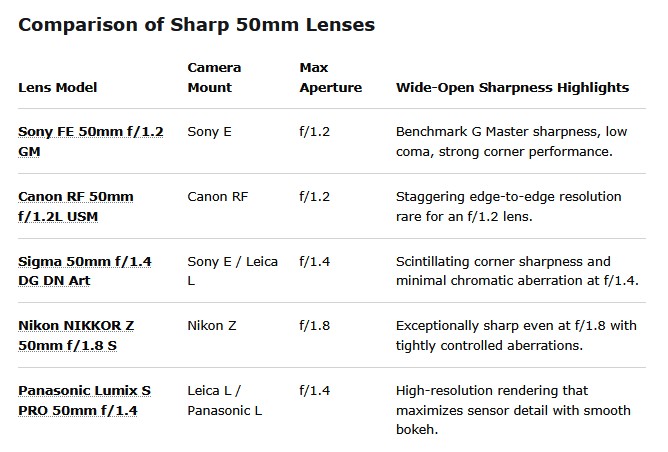
A fine example is the Leica Q3 43, for which you struggle to find even a single close focus portrait online or in reviews. This is despite the Q series accounting for 40% of Leica sales! (see the chart below for the rogues gallery of sharp plane/big blur lenses and note the descriptions).
That is life when f2 looks as sharp or even sharper (for example, Leica APO 35/2) than f4 or f5.6. You are then in the realm of filter dependence or post-work softening, ploys that are an admission of optical deficiency. It could almost be called an 'aberration'.
This is relevant to the 3D debate because these APO lenses are very flat and planar in their rendering styles, when compared tp the opposite design style of more rounded sharpness, sharp in the center with elegant fade into the outer frames. A Voigtlander 50/2 APO looks very different from their 40/1.2, as one example. Other new age 'pseudo vintage' lenses can be found in Nikon's f1.4 lenses for Z, and we see Leica coming out with a series of 'reissues'.
So looking across the market, we see these tentative and somewhat isolated and downplayed moves in this direction of more appealing lens rendering, which favor 3D with focus fade and fall-off.
Putting it together, I expect this state of affairs to continue, with the APO and sharp wide open fast lens style being granted all manner of fanfare and adulation (even LLL, very sad), while the less specified lenses will remain downplayed out on the periphery. They all know it is coming though.
Witness sharpoholic Sigma's new cine lens range - the Aizu. Here is the description: 'Look & Character: Combines modern sharpness with an organic, naturally soft look, smooth bokeh, minimized distortion, and controlled focus breathing.' They are trying to have two bob each way. See their video here, doesn't resemble the ARTs much:
https://www.sigma-global.com/en/cine-lenses/aizu-prime/25_13/
The boss says they are sharp at infinity but 'if you shoot close it becomes much softer and it has a nice character'. So there. Almost all movies are shot at close ranges, because they feature something very unusual in stills photography these days: people!
'Discussing New Sigma Aizu Prime Cine Lenses with CEO Kazuto Yamaki' (YT)
note the emphasis here for these 'portrait lenses'.
When you consider the installed base of clinical super-sharp wide open lenses, they seem to have proliferated so widely. They stand in stark contrast to the smooth and pleasant wide open performance followed by sharp at middle apertures of the opposite design lenses - something we associate with 'vintage' rendering even in a few modern lenses.
The producers of the sharp at f1.4 (or faster!) lenses can't really afford to lose the debate between these two opposing camps of lens design. This is because, in using these lenses, photographers literally have nowhere to go if they want something different, something more aesthetically pleasing.
A fine example is the Leica Q3 43, for which you struggle to find even a single close focus portrait online or in reviews. This is despite the Q series accounting for 40% of Leica sales! (see the chart below for the rogues gallery of sharp plane/big blur lenses and note the descriptions).
That is life when f2 looks as sharp or even sharper (for example, Leica APO 35/2) than f4 or f5.6. You are then in the realm of filter dependence or post-work softening, ploys that are an admission of optical deficiency. It could almost be called an 'aberration'.
This is relevant to the 3D debate because these APO lenses are very flat and planar in their rendering styles, when compared tp the opposite design style of more rounded sharpness, sharp in the center with elegant fade into the outer frames. A Voigtlander 50/2 APO looks very different from their 40/1.2, as one example. Other new age 'pseudo vintage' lenses can be found in Nikon's f1.4 lenses for Z, and we see Leica coming out with a series of 'reissues'.
So looking across the market, we see these tentative and somewhat isolated and downplayed moves in this direction of more appealing lens rendering, which favor 3D with focus fade and fall-off.
Putting it together, I expect this state of affairs to continue, with the APO and sharp wide open fast lens style being granted all manner of fanfare and adulation (even LLL, very sad), while the less specified lenses will remain downplayed out on the periphery. They all know it is coming though.
Witness sharpoholic Sigma's new cine lens range - the Aizu. Here is the description: 'Look & Character: Combines modern sharpness with an organic, naturally soft look, smooth bokeh, minimized distortion, and controlled focus breathing.' They are trying to have two bob each way. See their video here, doesn't resemble the ARTs much:
https://www.sigma-global.com/en/cine-lenses/aizu-prime/25_13/
The boss says they are sharp at infinity but 'if you shoot close it becomes much softer and it has a nice character'. So there. Almost all movies are shot at close ranges, because they feature something very unusual in stills photography these days: people!
'Discussing New Sigma Aizu Prime Cine Lenses with CEO Kazuto Yamaki' (YT)
|
||
 |
||
|
note the emphasis here for these 'portrait lenses'.
Oct 28, 2026 at 11:08 PM
p.160 #18which lens has the most 3D POP?
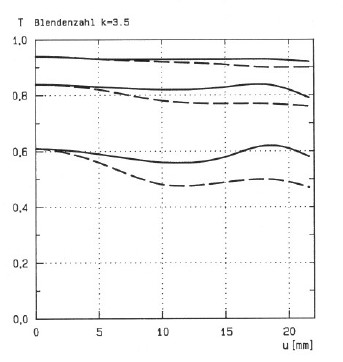
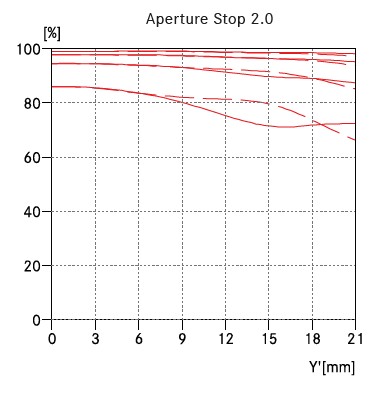
The MTF frequency that matters to portraiture is the 10 lpmm line pair. The 43 year old CZ lens does 94% wide open, and the flashy SL Leica does maybe 97% - pretty close, huh. Let me tell you this: you could not take this image with the SL even wide open, let alone f3.5, and have it look as good.
The photo encourages your eye to fully appreciate her wistful expression, she looks entirely natural, beautiful skin tones (untouched by the way), a longish focus fade that shows context in the fruit, boxes and scales. So this is the essence of 3D in a portrait image, we see the outlines of her face, the hair strands, and the focus fall-off.
The gestalt wins out over the micro-contrast gains. These lenses were made concurrently with the Zeiss Super Speeds that are so in demand right now, they have been beloved for 50 years. Not too many cinematographers want to use APO Leica SL lenses, but see what the Zeiss lenses were used on:
https://shotonwhat.com/lenses/zeiss-super-speeds
But it's down over 20% in the 'detail' spatial frequency of 40 lpmm! Well that 20% will cost you plenty in etching the skin on her face, which repels your eyes rather than welcoming you to view her. I'd wager the color would be less attractive too out of the SL, it would be too 'perfect'. These are the things that get lost in lens reviews featuring charts and deep 100% searches for aberrations. Modern sharp lenses leave you nowhere to get this look, when you have the 80% plus 40 lpmm at f2. It sounds like a losing formula because that is exactly what it is.
Carl Zeiss Sonnar 100mm f3.5
Carl Zeiss Sonnar 100mm f3.5 MTF at f3.5
Leica APO-Summicron-SL 90mm f2 MTF at f2
The photo encourages your eye to fully appreciate her wistful expression, she looks entirely natural, beautiful skin tones (untouched by the way), a longish focus fade that shows context in the fruit, boxes and scales. So this is the essence of 3D in a portrait image, we see the outlines of her face, the hair strands, and the focus fall-off.
The gestalt wins out over the micro-contrast gains. These lenses were made concurrently with the Zeiss Super Speeds that are so in demand right now, they have been beloved for 50 years. Not too many cinematographers want to use APO Leica SL lenses, but see what the Zeiss lenses were used on:
https://shotonwhat.com/lenses/zeiss-super-speeds
But it's down over 20% in the 'detail' spatial frequency of 40 lpmm! Well that 20% will cost you plenty in etching the skin on her face, which repels your eyes rather than welcoming you to view her. I'd wager the color would be less attractive too out of the SL, it would be too 'perfect'. These are the things that get lost in lens reviews featuring charts and deep 100% searches for aberrations. Modern sharp lenses leave you nowhere to get this look, when you have the 80% plus 40 lpmm at f2. It sounds like a losing formula because that is exactly what it is.
|
||
 |
||
|
Carl Zeiss Sonnar 100mm f3.5
|
||
 |
||
|
Carl Zeiss Sonnar 100mm f3.5 MTF at f3.5
|
||
 |
||
|
Leica APO-Summicron-SL 90mm f2 MTF at f2
Oct 28, 2026 at 11:57 PM
p.160 #19which lens has the most 3D POP?
Regarding the original post, the more I look at photos taken with the Sigma 28–70mm f/2.8, the more I notice a certain “pop” to them. It’s one of the few zoom lenses that produces this kind of rendering.
Does anyone else feel the same way?
Does anyone else feel the same way?
Oct 29, 2026 at 03:52 AM
p.160 #20which lens has the most 3D POP?
Jack Flesher wrote:
Okay, donning my flamesuit for this comment: I have seen more 3-D "pop" from careful use of lighting than any other single factor. Yes I appreciate shallow DoF, yes I appreciate glorious bokeh, yes I appreciate telephoto compression and wide-angle expansion, and yes I even appreciate legacy lens designs that had notable vignette and sharpness fall-off. But none of those looks render 3-D pop anywhere near as much as good lighting creating balanced highlights with well positioned and defined shading.
Ask any painter, this is the most impactful way you create 3D in a 2D medium. I live in Italy and am surrounded by the works of masters in this. I can see it employed in various ways, on various subjects, going back thousands of years through yesterday. With photography the techniques have changed, we can depend on natural light, or managed light, but the concepts haven't changed.
You will note that what we are doing is "Photography". Literally "Drawing With Light"
It is not "hyalography". "Drawing With Glass".
Edited on Oct 29, 2026 at 04:50 AM · View previous versions
Oct 29, 2026 at 04:13 AM