which lens has the most 3D POP?
p.159 #1which lens has the most 3D POP?
4ALL wrote:
It feels a bit like measuring an engine's displacement to evaluate a symphony..
I’m going to remember that one! ;-)
And…
I’m reminded about a goofball middle school joke that went around for a while among nerdy friends when I was a kid:
“Why is a duck a duck?”
“Because one leg is both the same.”
It feels a bit like measuring an engine's displacement to evaluate a symphony..
I’m going to remember that one! ;-)
And…
I’m reminded about a goofball middle school joke that went around for a while among nerdy friends when I was a kid:
“Why is a duck a duck?”
“Because one leg is both the same.”
Oct 23, 2026 at 09:33 AM
p.159 #2which lens has the most 3D POP?
Colour is fascinating topic in itself, both in the perception of it, with cultural, physical and psychological factors; and from the production of it by our lenses. It is also tightly coupled to dimensionality or 3D, our topic here.
The personal perceptual side is best dealt with in a separate discussion, so we can look at the role of lenses in the creation of 3D imagery first. It gets little attention but colour discrimination if very important to the representation of 3D.
Using the big search engine, we can ask the value-free question:
'is color discrimination correlated with dimensionality - the perception of depth in an photographic image?'
Here is its summary:
'Yes, color discrimination is profoundly correlated with the perception of depth and dimensionality in a photographic image. While human color vision operates in a three-dimensional cognitive space (hue, saturation, and lightness), our brain repurposed these color metrics to decipher a separate physical dimension: spatial depth. In a flat, two-dimensional photograph, fine color discrimination is one of the essential monocular "pictorial cues" used to construct a convincing psychological illusion of 3D space.'
'Differentiating a subtle color hue variation enables the brain to separate a foreground subject from a background plane, mentally restoring the lost dimension.'
It makes sense that our environments, particularly the natural environment, is easier to get a fix on and navigate safely if we see nuances in the colors of foliage, rocks etc. It can be crucial in low light. This appears to all be uncontroversial, but one never knows.
Oct 24, 2026 at 07:31 PM
p.159 #3which lens has the most 3D POP?
Now, fully on topic, we can ask the big SE another critical question:
'Do photographic lenses vary widely in color tonal separation - changes of hue?'
This one was interesting:
'Yes, photographic lenses vary significantly in how they render color tonal separation and subtle changes of hue. While many modern photographers focus primarily on sharpness and contrast, a lens’s optical design, glass composition, and chemical coatings heavily influence how distinct, nuanced, and saturated different colors appear relative to one another.'
It went on with some valuable insights:
1. Glass Composition and Rare Earth Elements
The physical glass formulation dictates how light wavelengths travel through the lens elements:
• Micro-Contrast and Separation: Older lenses (like vintage Leica, Zeiss, or Minolta "Rokkor" glass) often utilized proprietary glass formulations, sometimes containing rare earth elements like thorium or lanthanum. These formulations are prized for high micro-contrast—the ability to communicate subtle transitions between similar tones and hues (e.g., distinguishing five different shades of dark green in a forest canopy).
• Modern Standardized Glass: Many modern lenses favor standardized, highly pure synthetic glass optimized for mathematical sharpness. While extremely sharp, some photographers feel this results in a "flatter" or more clinical color presentation where subtle hue variations blend together.
No real need to read between the lines here.
Oct 24, 2026 at 07:48 PM
p.159 #4which lens has the most 3D POP?
Now for some images. Before that, it's important to say that there is no right or wrong here. Some lenses have poor discrimination and are extremely valuable in other environments. In fact, I just bought one, Mandler's 50/1.4, a remake of an old Leica M lens. It's not for landscapes, however, we can use stronger 'posterised' color for artistic purposes in urban settings.
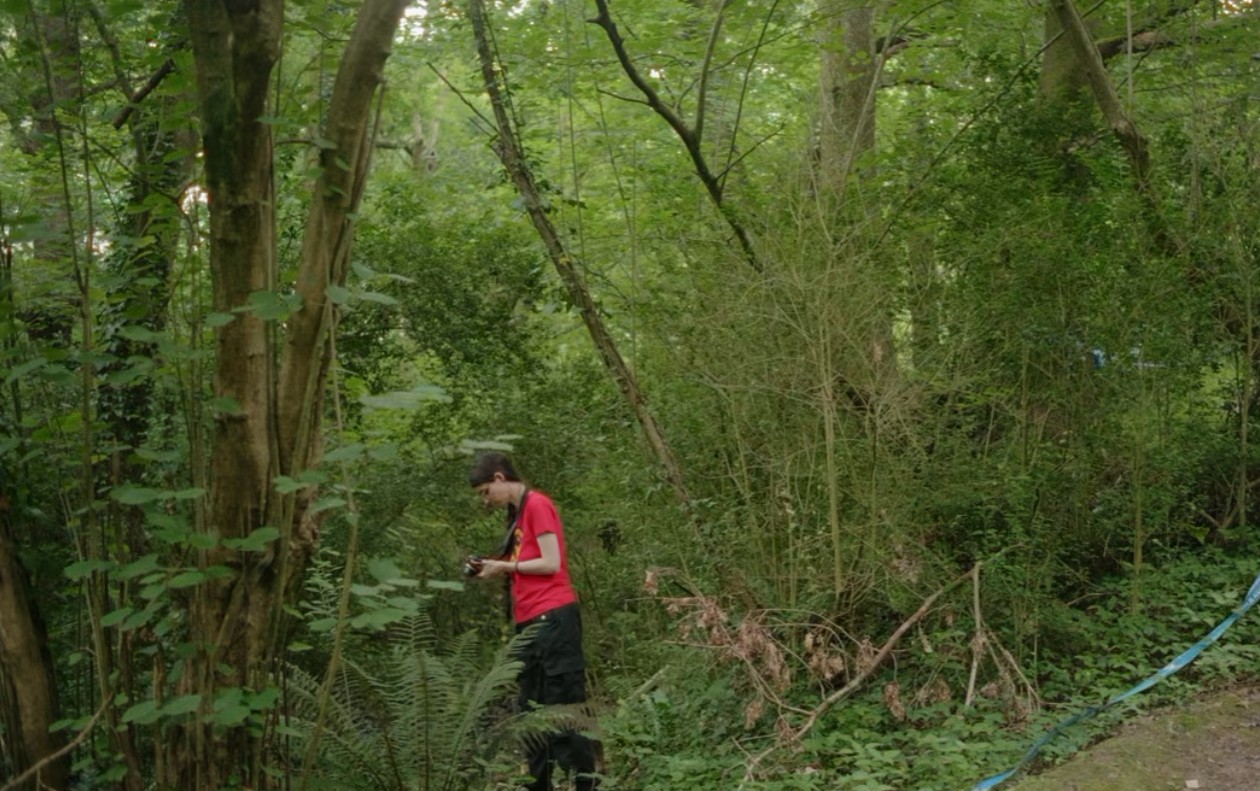
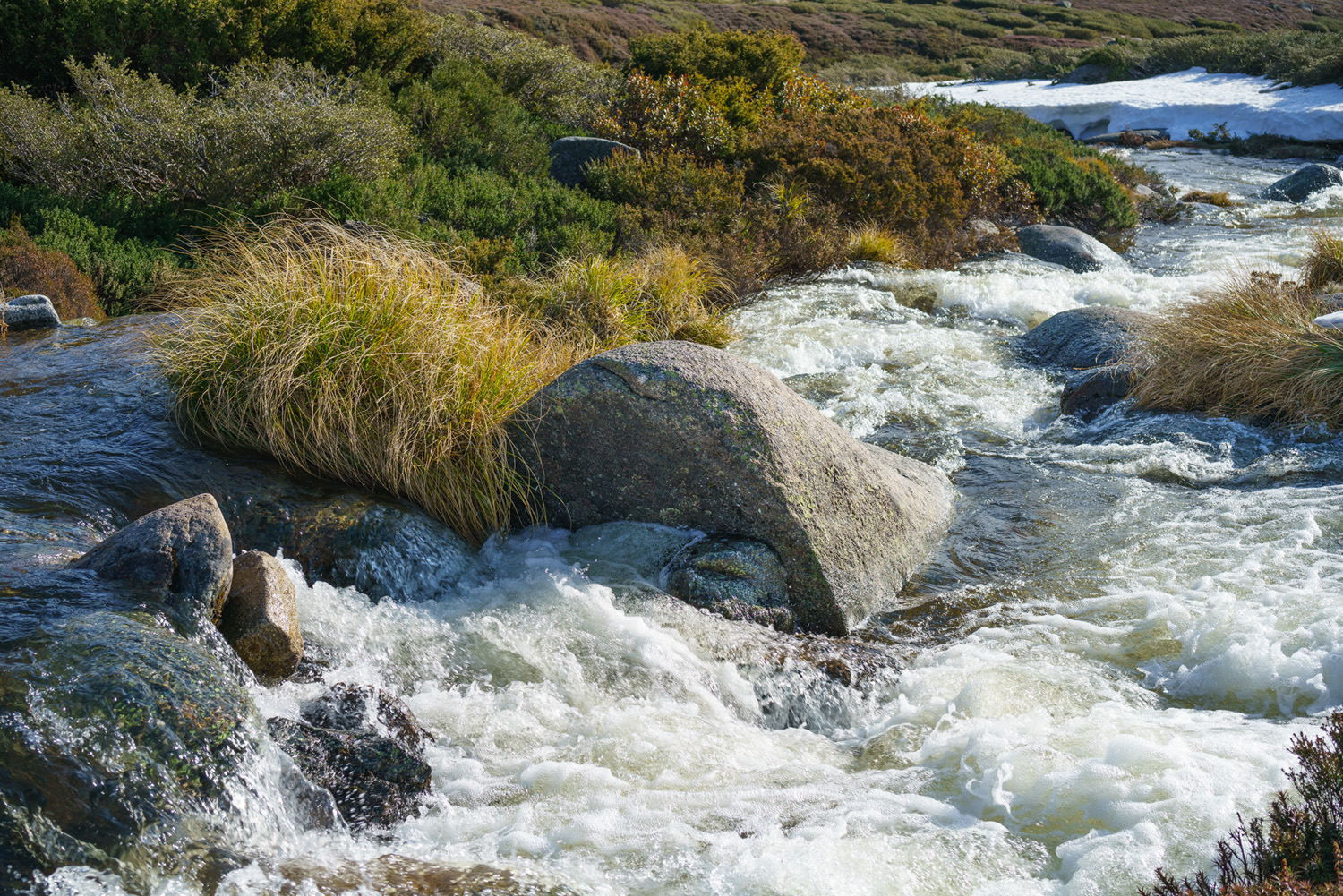
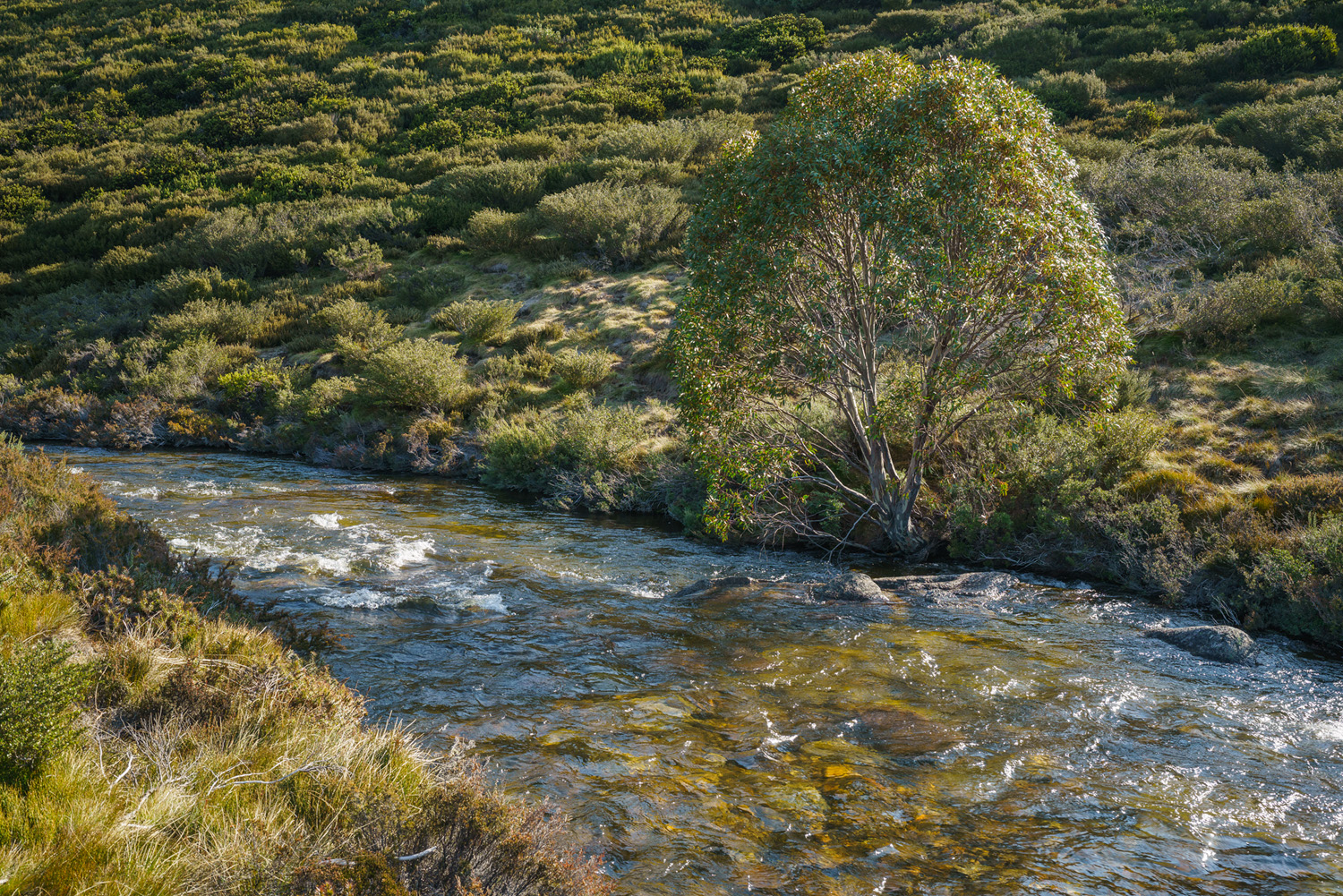
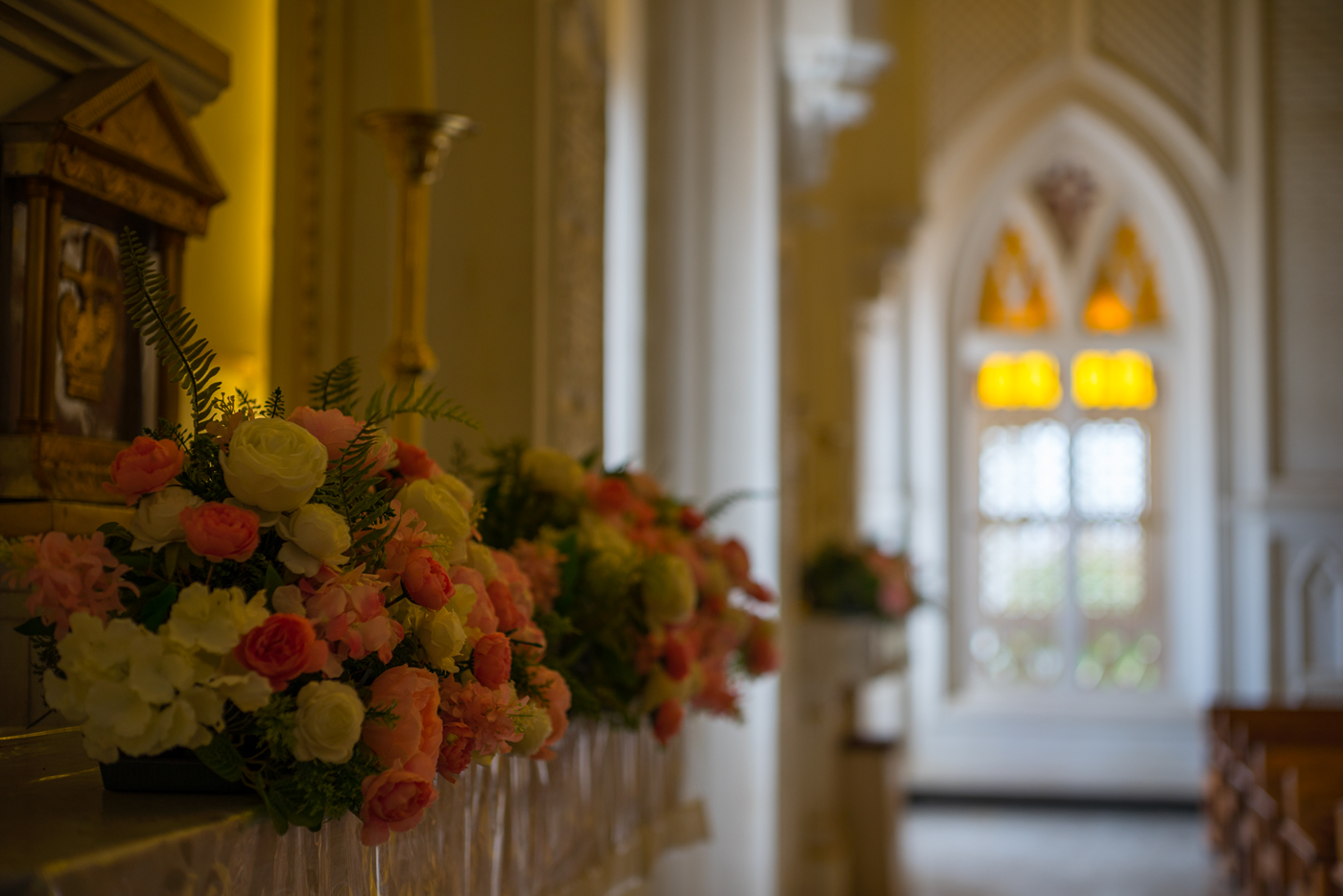
Image one is from Lily Schwartz's review of the Mandler 35mm lens - you can (hopefully) see the near-uniformity of the greens here. Image two is from a simple ancient design refreshed by Cosina, a Heliar 50/3.5. The third image is from a state-of-the-art APO lens - the Voigtlander 35/2 APO. Image four shows color separation of the Thypoch SImera 75/1.4, showing how this one handled different flower colours in poor light.
These last two got the same post work, and were shot in similar light, same camera. The Voigtlander is stacked to the gunwhales with special glass (APD) and four aspheric surfaces, in an 11/9 design, so 18 glass-air surfaces in all. The Heliar is a 5/3 design, standard optical glass only, with just six glass-air surfaces. Both scenes contain an abundance of different plants and trees. The Simera is a 9/8 design with a very different method of correction, the traditional crown/flint balanced pairings.
courtesy of Lily Schwartz
Cosina Voigtlander 50/3.5
Cosina Voigtlander 35/2 APO
Thypoch SImera 75/1.4
Image one is from Lily Schwartz's review of the Mandler 35mm lens - you can (hopefully) see the near-uniformity of the greens here. Image two is from a simple ancient design refreshed by Cosina, a Heliar 50/3.5. The third image is from a state-of-the-art APO lens - the Voigtlander 35/2 APO. Image four shows color separation of the Thypoch SImera 75/1.4, showing how this one handled different flower colours in poor light.
These last two got the same post work, and were shot in similar light, same camera. The Voigtlander is stacked to the gunwhales with special glass (APD) and four aspheric surfaces, in an 11/9 design, so 18 glass-air surfaces in all. The Heliar is a 5/3 design, standard optical glass only, with just six glass-air surfaces. Both scenes contain an abundance of different plants and trees. The Simera is a 9/8 design with a very different method of correction, the traditional crown/flint balanced pairings.
 |
||
 |
||
|
courtesy of Lily Schwartz
|
||
 |
||
|
Cosina Voigtlander 50/3.5
|
||
 |
||
|
Cosina Voigtlander 35/2 APO
|
||
 |
||
|
Thypoch SImera 75/1.4
Oct 24, 2026 at 08:18 PM
p.159 #5which lens has the most 3D POP?
When I search on “ 'is color discrimination correlated with dimensionality - the perception of depth in a photographic image?,” I get nothing remotely like what appears above.
Oct 25, 2026 at 01:50 AM
p.159 #6which lens has the most 3D POP?
Perhaps Fred could open an "esoterica" subforum and move philip pj’s posts there. At this point, it’s nothing short of psychological torture for any rational person.
Oct 25, 2026 at 01:55 AM
p.159 #7which lens has the most 3D POP?
gdanmitchell wrote:
When I search on “ 'is color discrimination correlated with dimensionality - the perception of depth in a photographic image?,” I get nothing remotely like what appears above.
Just being honest I see no meaningful presentation of depth in Philip_PJ recent post above. In fact, I see plenty of problems with focus/sharpness, exposure and composition. This is not uncommon when I view his photographs and claims being made. So much so, that I am never fully sure that he is serious, or just having us on.
Contrast this with some of the images in this link of similar subjects.
https://www.google.com/search?sca_esv=c4ec89d65893a06b&rlz=1C1UEAD_enUS1063US1063&sxsrf=APpeQnvZdD7KnmZzhdXIugNfAOnCV3np0w:1792919556349&udm=2&fbs=ABfTbFVyMZGZf1hfvX9uKjN_-G8c4u0nXx4bEIpwm1lnNH832cSpkWkfSwsmpNIrD_OQ-UdFAe4qAwsQWVbrtprjzBSpD5WmxHV9GQVdPkL5dutr9Tsk9Psqv8-BeuxQCSKzxuGpkDeZ8iXI-CcjRzWQgvHa7UDv7gTcjy-XfyZymi1rYZAPBLe-_W1YsnfcpDzTRDqEt_20&q=g+dan+mitchell+photography&sa=X&ved=2ahUKEwj8_pDq6dSXAxXf87sIHfzUJGkQtKgLegQIIRAB&biw=1683&bih=1056&dpr=1.65
For me it is clear where the credibility resided in this discussion. Having shot near this photographer in the Sierra Nevada Mountains a couple of times I will point out that he seems to most commonly shoot with Zoom lenses rather than exotic primes. Photographic skill, a deep understanding of subject matter, and composition, seem to be the actual defining factor in the ability to create a 3-D point of view in a 2-D medium.
Oct 25, 2026 at 03:28 AM
p.159 #8which lens has the most 3D POP?
Now reading philip_pj's post (p.158 #14) and also reading post #4 at this page, staring at the images and then reading the comments following it I feel a bit sad. It's a subtle change from the more obvious promotion of certain lenses he used to post for a long time. This is even worse in my opinion.
This forum was known for balanced discussions and a high level of knowledge. Now alternative science and pure scheiße fill some threads with horrible content. I'll stay away for some time hoping Fred can sort this.
This forum was known for balanced discussions and a high level of knowledge. Now alternative science and pure scheiße fill some threads with horrible content. I'll stay away for some time hoping Fred can sort this.
Oct 25, 2026 at 04:33 AM
p.159 #9which lens has the most 3D POP?
Jonas B wrote:
Now reading philip_pj's post (p.158 #14) and also reading post #4 at this page, staring at the images and then reading the comments following it I feel a bit sad. It's a subtle change from the more obvious promotion of certain lenses he used to post for a long time. This is even worse in my opinion.
This forum was known for balanced discussions and a high level of knowledge. Now alternative science and pure scheiße fill some threads with horrible content. I'll stay away for some time hoping Fred can sort this.
Why not just hide him? I have done this successfully for years.
Oct 25, 2026 at 08:56 AM
p.159 #10which lens has the most 3D POP?
carstenw wrote:
This forum was known for balanced discussions and a high level of knowledge. Now alternative science and pure scheiße fill some threads with horrible content. I'll stay away for some time hoping Fred can sort this.Why not just hide him? I have done this successfully for years.
That’s the million dollar question. Rather than polluting the thread with endless dribble complaining about this one individual…why not either hide him…or if truly not interested in the topic, just stay out of the thread. Freud would probably love to analyze this behaviour.
Jonas B wrote
Now reading philip_pj's post (p.158 #14) and also reading post #4 at this page, staring at the images and then reading the comments following it I feel a bit sad. It's a subtle change from the more obvious promotion of certain lenses he used to post for a long time. This is even worse in my opinion.This forum was known for balanced discussions and a high level of knowledge. Now alternative science and pure scheiße fill some threads with horrible content. I'll stay away for some time hoping Fred can sort this.
That’s the million dollar question. Rather than polluting the thread with endless dribble complaining about this one individual…why not either hide him…or if truly not interested in the topic, just stay out of the thread. Freud would probably love to analyze this behaviour.
Oct 25, 2026 at 09:23 AM
|

p.159 #12which lens has the most 3D POP?
The matter of color rendering is a component in the visual cues. In today's realm the amount of digital color science dialogue and malleability, the emphasis in of such has been lost in the shuffle. Going back to Erwin Puts and his works on Leica lenses, there is a section regarding the variance of impact on color.
When a color cast projection is in play, the prevailing amount of hue contrast is reduced. Since the visual cues are predicated on varying degree of contrast and rate of change in contrast ... it is deducible that APO or near APO lenses that are well corrected for color, will retain the most amount of hue contrast attainable. We largely consider the focal plane as primary, but the other contributing factors of aberrations, field curvature, micro-contrast, etc. all build into the perceptions ... color rendering of the optical projection is but one, as well. Granted, to a degree, when we (properly) adjust for WB, it has the capability of restoring a degree of the maximal hue contrast. For this (among others) reason, it is largely omitted from the discussion ... wherein years past it was likely more salient a discussion point, as noted in Puts documentation.
Similarly, we saw lighting brands (i.e. Profoto / Broncolor, etc.) work toward this end as well, to present a degree of maximal hue separation capability. In the mass public consumer realm, such considerations are not often considered. However, in the realm of striving to get that last micro-% of hue separation, some lenses are more keenly attentive to this than others ... but, one piece of the puzzle, regarding acutance, transitions, et al.
In some regard, Zeiss coatings play in to this paradigm historically too, wrt to the "pop" that folks find appealing from some of their favorite Zeiss glass.
Oct 25, 2026 at 10:37 AM
p.159 #13which lens has the most 3D POP?
The impact lenses have on color today is vanishingly small next to the impact of in-camera interpretation of the raw file, much less the typical post processing workflows used by almost all serious photographers.
(This was less so in the days of shooting color transparencies, when much of the “processing” had to be “pre” rather than “post.”)
The point that color has some effect on so-called dimensionality (a point that I have made repeatedly in this God-forsaken thread) is not remotely the same as claiming that small differences in color transmission from certain magical lenses creates the effect… while simultaneously suggesting that the far more significant color effects of in-camera and post-processing are insignificant.
Edited on Oct 25, 2026 at 02:22 PM · View previous versions
Oct 25, 2026 at 11:31 AM
p.159 #14which lens has the most 3D POP?
Jonas B wrote:
Now reading philip_pj's post (p.158 #14) and also reading post #4 at this page, staring at the images and then reading the comments following it I feel a bit sad. It's a subtle change from the more obvious promotion of certain lenses he used to post for a long time. This is even worse in my opinion.
This forum was known for balanced discussions and a high level of knowledge. Now alternative science and pure scheiße fill some threads with horrible content. I'll stay away for some time hoping Fred can sort this.
carstenw wrote:
Why not just hide him? I have done this successfully for years.
Hiding him turns the posts invisible for me only. The total quality of the forum is still affected.
Oct 25, 2026 at 11:42 AM
p.159 #15which lens has the most 3D POP?
chez wrote:
That’s the million dollar question. Rather than polluting the thread with endless dribble complaining about this one individual…why not either hide him…or if truly not interested in the topic, just stay out of the thread. Freud would probably love to analyze this behaviour.
I know a few more here who would make interesting study objects. Or is it subjects in English? Anyway. Just read my reply to Carsten.
Oct 25, 2026 at 11:44 AM
p.159 #16which lens has the most 3D POP?
One of the most important variables is that not everyone perceives colors in the same way. I am not even referring to people with color blindness. Even individuals with normal vision can perceive colors and their shades differently. This also applies to people who see with only one eye. Although they lack stereoscopic vision, they can often judge distances remarkably well by relying on experience and other visual cues. There are also individual differences and, to some extent, differences related to sex. More than once, I have found myself arguing with a woman about whether a particular color was green, sea-green, or somewhere in between. In addition, some people simply have difficulty distinguishing colors or perceiving depth and three-dimensionality on a monitor. For these reasons, visual perception is not the same for everyone.
Oct 26, 2026 at 08:59 AM
p.159 #17which lens has the most 3D POP?
gdanmitchell wrote:
OK, mom. ;-)
Ears burning?
OK, mom. ;-)
Ears burning?
Oct 26, 2026 at 10:29 AM
p.159 #18which lens has the most 3D POP?
4ALL wrote:
More than once, I have found myself arguing with a woman about whether a particular color was green, sea-green, or somewhere in between.
+1
How about a light, "mint" green vs. beige ... I've had that argument more times than I care to recall.
More than once, I have found myself arguing with a woman about whether a particular color was green, sea-green, or somewhere in between.
+1
How about a light, "mint" green vs. beige ... I've had that argument more times than I care to recall.
Oct 26, 2026 at 06:59 PM
p.159 #19which lens has the most 3D POP?
^^^
The issues around naming colors as “blue” or “green” and the boundary between the two is pretty well known. You can have some fun with it here — it is an online test of where you place the dividing line between green and blue.
But this is quite possible, at least to some extent, a cultural issue rather than one of visual ability. It is also pretty much unrelated to the question about lenses.
Edited on Oct 26, 2026 at 10:42 PM · View previous versions
Oct 26, 2026 at 08:01 PM
p.159 #20which lens has the most 3D POP?
philip_pj wrote:
I've always been suspicious of complex lenses and their ability to depict depth - even as they provide great clarity via ultra tech coatings. I also think we need to show the failures as well as the successes in lens assessments. Here are two full DOF images, one from a famous lens that has a design of 15 elements in 13 groups; followed by an image from a small medium format lens with a 7 elements in 6 groups design.
The first lens features early APD glass (very expensive), and the second features purely plain optical glass with no aspherics,...Show more →
Philip,
When you shoot with vintage lenses do you leave the imperfections ie colour fringing or do you remove them in post? I have the old EF 85/1.2 L II and sometimes I remove the colour fringing although it doesn’t show up on Instagram.
Oct 26, 2026 at 08:10 PM