which lens has the most 3D POP?
p.158 #1which lens has the most 3D POP?
Noted Jonas, I turned off the EFCS for the future. Nonetheless, I love the bokeh of my Viltrox 35/1.2 LAB N in ALL DISTANCES.
Far

SONY ILCE-7M5
1/5000s f/1.2 at 35.0mm iso100
Mid

SONY ILCE-7M5
1/640s f/1.2 at 35.0mm iso100
Close

SONY ILCE-7M5
1/8000s f/1.2 at 35.0mm iso100
Far
SONY ILCE-7M5
1/5000s f/1.2 at 35.0mm iso100
Mid
SONY ILCE-7M5
1/640s f/1.2 at 35.0mm iso100
Close
SONY ILCE-7M5
1/8000s f/1.2 at 35.0mm iso100
Oct 04, 2026 at 05:47 AM
p.158 #2which lens has the most 3D POP?
jojib wrote:
Noted Jonas, I turned off the EFCS for the future. Nonetheless, I love the bokeh of my Viltrox 35/1.2 LAB N [...]
Your love will raise to new levels. (I should have said avoid EFC at high shutter speeds and wide aperture values.)
It's a pity you didn't got to see Stockholm; it's a _very_ nice city in the summertime. Well, everything doesn't work out as planned.
Stay well!
Oct 04, 2026 at 09:57 AM
p.158 #3which lens has the most 3D POP?
Thanks again Jonas! One thing about turning off the EFCS---it takes numerous clicks to get one image. It's kinda irritating. Anyway, I'll stick with it at least for the next shoot.
Yeah looking forward to see Stockholm in the near future!
Joji
Yeah looking forward to see Stockholm in the near future!
Joji
Oct 04, 2026 at 01:51 PM
p.158 #4which lens has the most 3D POP?
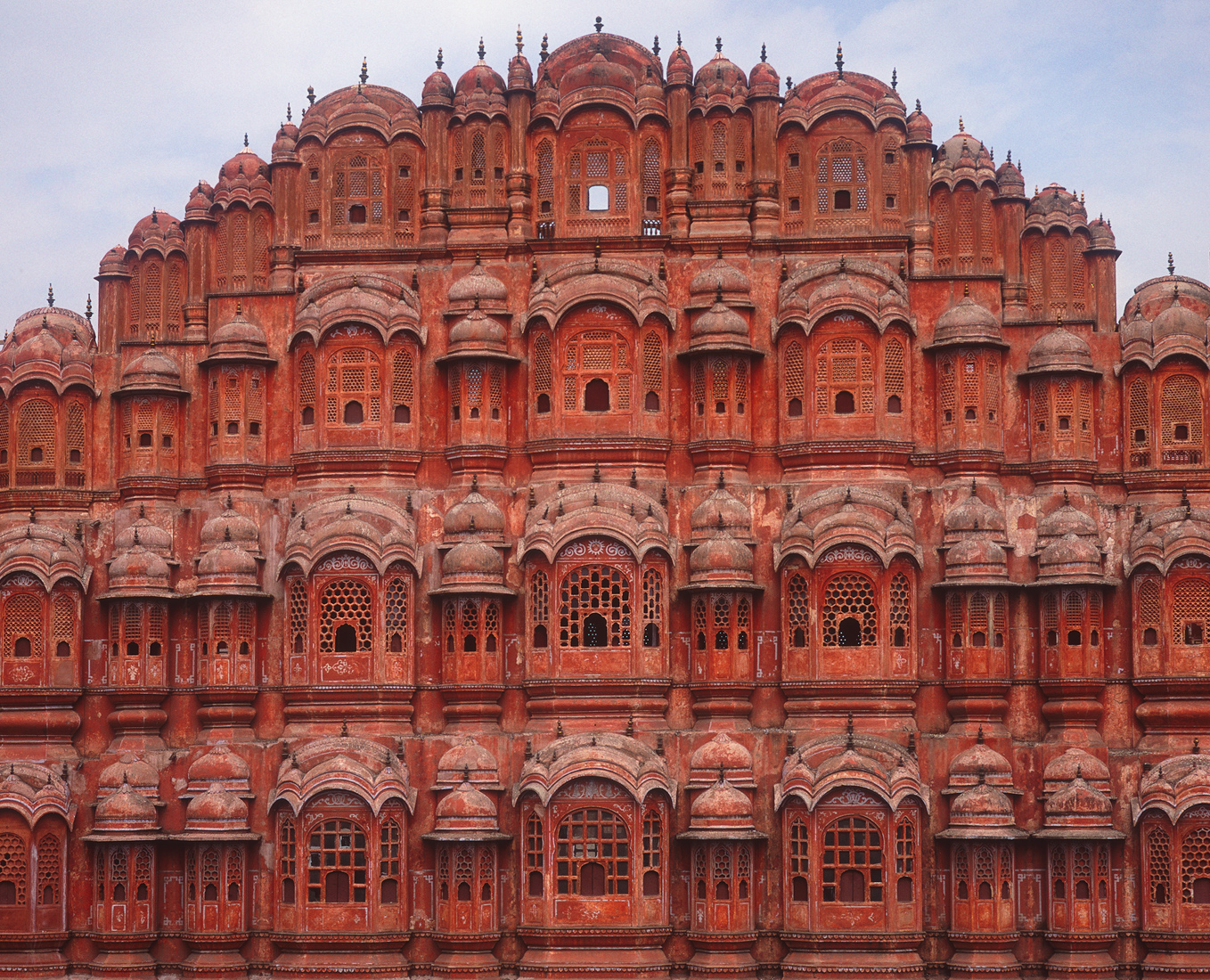
I've always been suspicious of complex lenses and their ability to depict depth - even as they provide great clarity via ultra tech coatings. I also think we need to show the failures as well as the successes in lens assessments. Here are two full DOF images, one from a famous lens that has a design of 15 elements in 13 groups; followed by an image from a small medium format lens with a 7 elements in 6 groups design.
The first lens features early APD glass (very expensive), and the second features purely plain optical glass with no aspherics, no ED nor lead oxide. The first image looks very flat to me despite having the opportunity to show depth; the second image was shot in harsh Rajasthani summer daylight, of a rather flat palace facade. But it looks alive, with great tonal gradation (both luminosity and color).
Film was fantastic for 3D, and the simple lenses of the era then supercharged the effect. "Looking at production trends and camera rental data, industry experts estimate that true vintage optics or rehoused vintage series represent roughly 15% to 30% of high-end and independent narrative film productions." And this is after 20 years of digital lens design supremacy!
Carl Zeiss 21/2.8 Distagon - a 1993 design
Fuji GA645 - a 1995 design
The first lens features early APD glass (very expensive), and the second features purely plain optical glass with no aspherics, no ED nor lead oxide. The first image looks very flat to me despite having the opportunity to show depth; the second image was shot in harsh Rajasthani summer daylight, of a rather flat palace facade. But it looks alive, with great tonal gradation (both luminosity and color).
Film was fantastic for 3D, and the simple lenses of the era then supercharged the effect. "Looking at production trends and camera rental data, industry experts estimate that true vintage optics or rehoused vintage series represent roughly 15% to 30% of high-end and independent narrative film productions." And this is after 20 years of digital lens design supremacy!
 |
||
 |
||
|
Carl Zeiss 21/2.8 Distagon - a 1993 design
|
||
 |
||
|
Fuji GA645 - a 1995 design
Oct 04, 2026 at 03:52 PM
p.158 #5which lens has the most 3D POP?
jojib wrote:
Thanks again Jonas! One thing about turning off the EFCS---it takes numerous clicks to get one image. It's kinda irritating. Anyway, I'll stick with it at least for the next shoot. [...
But... then you can go fully electronic instead. You seem to take images of mainly in daylight with non moving subjects. Silentium!
Oct 04, 2026 at 11:55 PM
p.158 #6which lens has the most 3D POP?
Ripolini wrote:
I respectfully disagree. DoF has nothing to do with dimensionality.
If this assumption were correct, all macro pictures would transmit a sense of depth and/or 3D.
Consequently, this thread would be flooded with close-ups and macro images (with no focus stacking).
Haha, and that's exactly where I think I caught you.... You're right.
If shallow depth of field and ever-increasing sensor resolution were the main ingredients of dimensionality, then this thread should be filled almost entirely with macro photographs and images from the highest-pixel-count cameras on the market.
I think the biggest source of confusion is that we've introduced a new term to describe something that was never clearly defined in the first place: "pop." Nowadays, we constantly hear that an image has more pop, or that a particular lens has more pop. It's become a fashionable expression, but different photographers often mean completely different things by it.
In my opinion, that's where most of the misunderstanding comes from. Some people use "pop" to describe subject separation, others micro-contrast, others smooth tonal transitions, and some simply mean shallow depth of field. Everyone uses the same word while talking about different visual characteristics.
I still remember seeing the term used extensively on DPReview around the time the first Leica APO samples were published. Back then, people often described certain lenses as having more "pop" because the image seemed to have a stronger sense of depth or presence, even if they couldn't fully explain why.
As I've said before, the idea itself goes back to the old Zeiss discussions about images appearing to "jump off the screen." Whether that impression comes from lighting, perspective, tonal transitions, subject separation, micro-contrast, stereopsis, or depth of field is still open to interpretation. Personally, I don't think shallow depth of field is either necessary or sufficient on its own to create the effect, but it can certainly contribute to it.
But 3D Pop is almost the next level of photography folklore. It is not a specific optical property, but rather a perceived sense of depth and presence that may result from a combination of lighting, perspective, subject separation, micro-contrast, tonal transitions, lens rendering, and sometimes depth of field. That's probably why discussions about it never seem to reach a final conclusion. 😄
Oct 05, 2026 at 07:07 AM
p.158 #7which lens has the most 3D POP?
Jonas B wrote:
But... then you can go fully electronic instead. You seem to take images of mainly in daylight with non moving subjects. Silentium!
Hey Jonas,
Ok, I followed your advice. Here on Niagara-on-the-Lake. The triple tap is annoying but I quickly got used to it. Oh and the dome (on Godox) worked---I see the nice catchlights :-)
Sonnar 55/1.8

SONY ILCE-7M5
1/640s f/1.8 at 55.0mm iso100
jojib wrote
Thanks again Jonas! One thing about turning off the EFCS---it takes numerous clicks to get one image. It's kinda irritating. Anyway, I'll stick with it at least for the next shoot. [...Hey Jonas,
Ok, I followed your advice. Here on Niagara-on-the-Lake. The triple tap is annoying but I quickly got used to it. Oh and the dome (on Godox) worked---I see the nice catchlights :-)
Sonnar 55/1.8
SONY ILCE-7M5
1/640s f/1.8 at 55.0mm iso100
Oct 05, 2026 at 12:45 PM
p.158 #8which lens has the most 3D POP?
The weather was beautiful and sunny today, which gave me a great opportunity to test my new NiSi True Color CPL filter.
Leica Camera AG LEICA M10-R C Sonnar 50mm 1/500 ISO100 - Wide Open Vignetting (1.5 Shift Focus Version)
Edited on Oct 19, 2026 at 06:15 PM · View previous versions
|
||
 |
||
|
Leica Camera AG LEICA M10-R C Sonnar 50mm 1/500 ISO100 - Wide Open Vignetting (1.5 Shift Focus Version)
Edited on Oct 19, 2026 at 06:15 PM · View previous versions
Oct 17, 2026 at 04:04 PM
p.158 #9which lens has the most 3D POP?
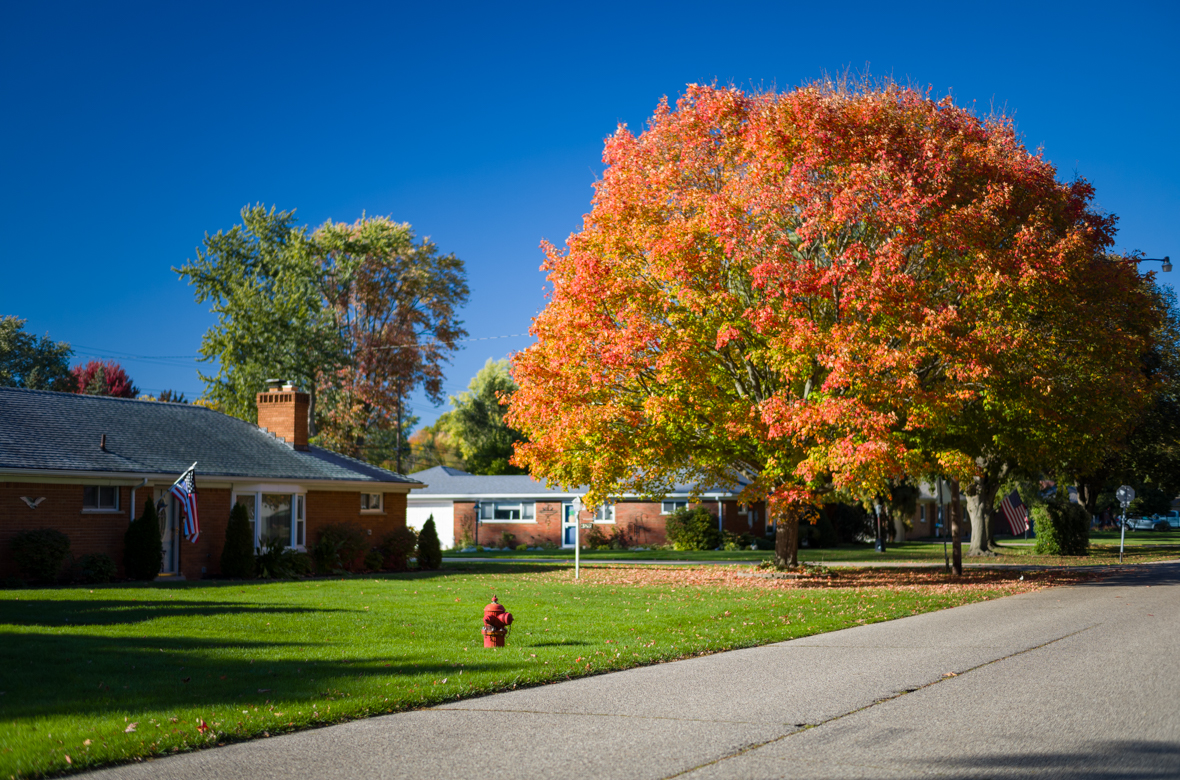
I was really excited about my new filter (NiSi True Color Pro Nano CPL) and couldn't wait to test it on the Summilux. The weather was perfect, with the same beautiful sunshine we had yesterday.
Fall Colors with the NiSi True Color CPL - Leica Camera AG LEICA M10-R Summilux 50mm ASPH II 1/1000 ISO100 F1.4
Fall Colors with the NiSi True Color CPL - Leica Camera AG LEICA M10-R Summilux 50mm ASPH II 1/1000 ISO100 F1.4
|
||
 |
||
|
Fall Colors with the NiSi True Color CPL - Leica Camera AG LEICA M10-R Summilux 50mm ASPH II 1/1000 ISO100 F1.4
|
||
 © 4ALL 2026 |
||
|
Fall Colors with the NiSi True Color CPL - Leica Camera AG LEICA M10-R Summilux 50mm ASPH II 1/1000 ISO100 F1.4
Oct 18, 2026 at 03:42 PM
p.158 #10which lens has the most 3D POP?
philip_pj wrote:
Film was fantastic for 3D, and the simple lenses of the era then supercharged the effect.
Can you post a scan? Because this thread has been searching for 3D pop for 15 (!) years. Some people who commented on the first page are no longer with us. They literally died waiting. Please! Release the proof so we can beat the guys on the UFO forums.
Oct 18, 2026 at 09:49 PM
|
p.158 #11which lens has the most 3D POP?
old-gregg wrote:
Can you post a scan? Because this thread has been searching for 3D pop for 15 (!) years. Some people who commented on the first page are no longer with us. They literally died waiting. Please! Release the proof so we can beat the guys on the UFO forums.
I'm not the person you're replying to, but one example of this that I really like is the 105mm f/2.4 on the Pentax 6x7. That lens introduced me to pop.
 000408190006 by tile_86
I found it translated to 35mm as well, this was with the Otus 55mm on my Nikon F6.
 otus by tile_86
philip_pj wrote
Film was fantastic for 3D, and the simple lenses of the era then supercharged the effect.I'm not the person you're replying to, but one example of this that I really like is the 105mm f/2.4 on the Pentax 6x7. That lens introduced me to pop.
000408190006 by tile_86I found it translated to 35mm as well, this was with the Otus 55mm on my Nikon F6.
otus by tile_86Oct 19, 2026 at 12:22 AM
p.158 #12which lens has the most 3D POP?
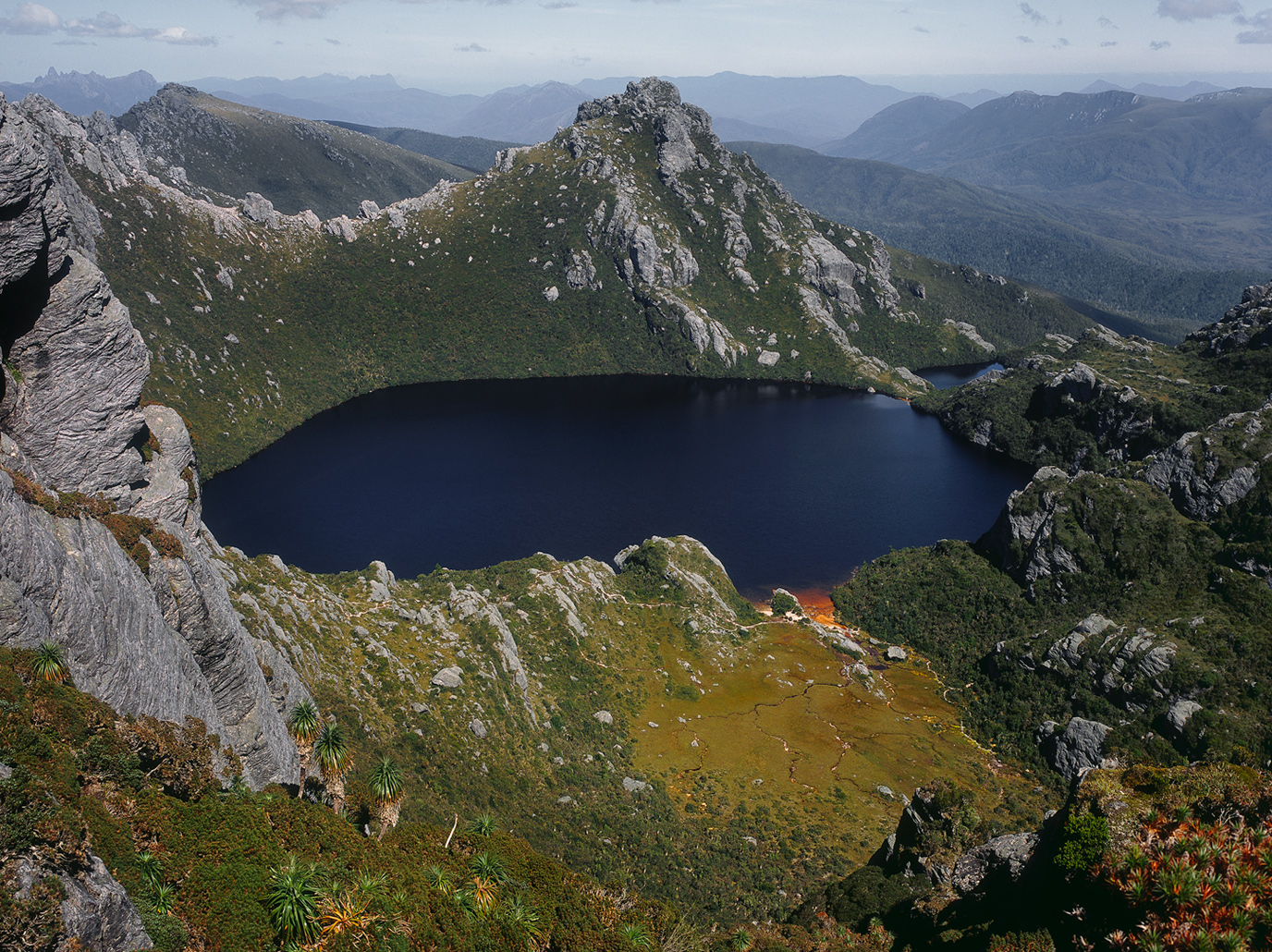
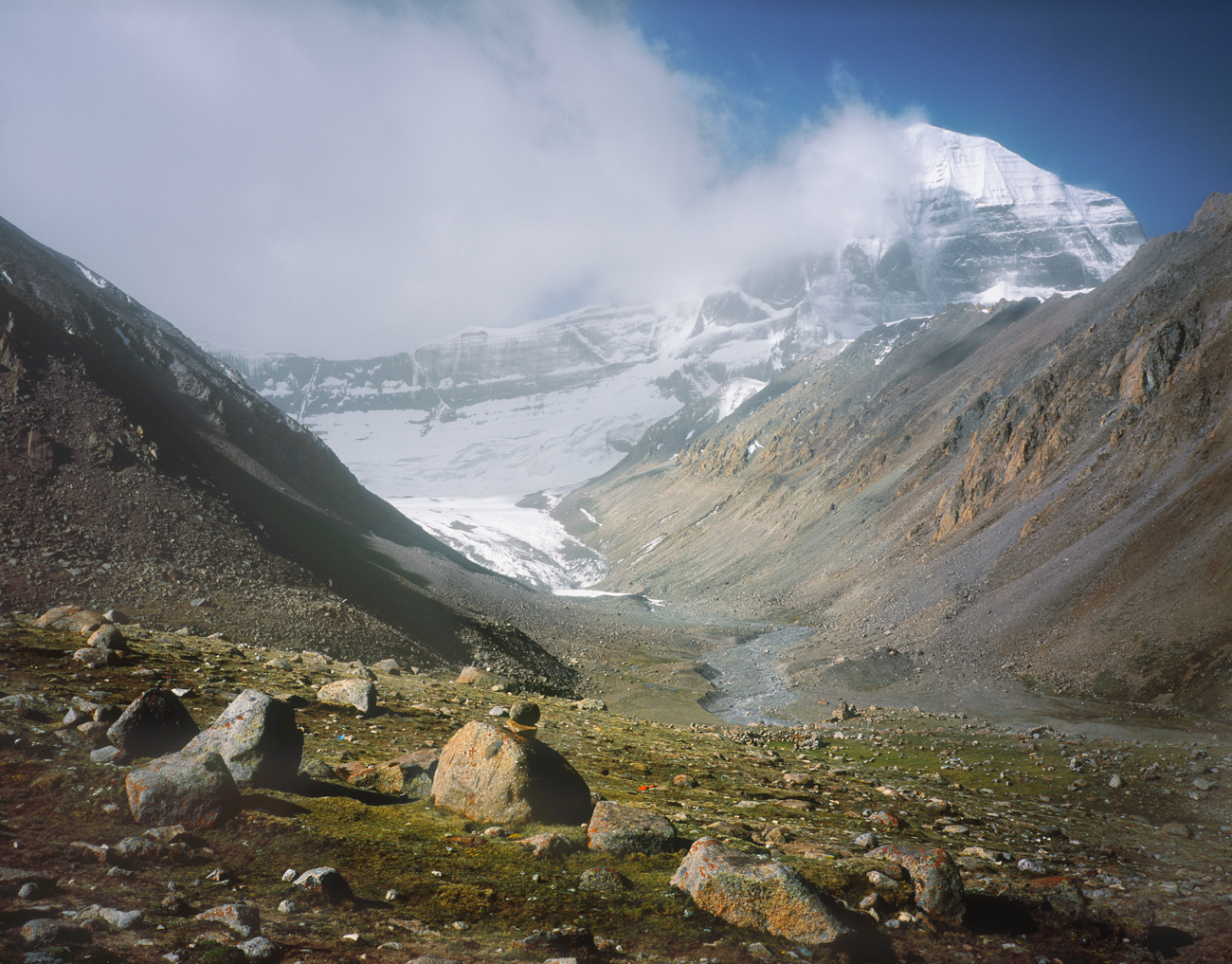
I often wonder how many members who leave abruptly never to return with no obvious reason simply carked it, quite a number I'd say, especially since the event that cannot be mentioned. I got interested i restoring the thread after the cine people started seeking lenses with dimensionality, even if FM's text handler still underlines the word. I figured no one would ever believe me, but they might have some doubt about their negative views if they heard it from professionals who put millions of dollars at stake. AS you see, it's still a mess. People are mostly still under the spell of sharp subject plane followed by deep bokeh behind. It's not how human vision works, though, is it?
Anyway, a few film images for you. What happened with film was easy to explain - medium format and large format portrayed image depth really well. They were around five times the film real estate of 35mm, that is why. One simple rule for seeing 3D is this: how far from the cameras are various objects in the image? Speaking of regular focal lengths here - say 35mm to 70mm. The rules change for wides and teles. cheers.
..
..
Anyway, a few film images for you. What happened with film was easy to explain - medium format and large format portrayed image depth really well. They were around five times the film real estate of 35mm, that is why. One simple rule for seeing 3D is this: how far from the cameras are various objects in the image? Speaking of regular focal lengths here - say 35mm to 70mm. The rules change for wides and teles. cheers.
|
||
 |
||
|
..
|
||
 |
||
|
..
|
||
 |
||
|
Oct 19, 2026 at 01:22 AM
p.158 #13which lens has the most 3D POP?
philip_pj wrote:
What happened with film was easy to explain - medium format and large format portrayed image depth really well. They were around five times the film real estate of 35mm, that is why.
Your scans are great, the 1st one is freaking insane. But, unfortunately, what you're saying above is incorrect. I am not arguing with you, physics is. The image circle size alone does not define how in-focus and OOF areas are rendered. The combination of [image circle area, focal length, lens speed] defines the image. You shrink one variable, and you change anothers to compensate, thus it's possible to create 100% identical images with many sensor size + lens combinations. There is no such thing as "large format look".
I have a few ideas for why so many photographers are confused, and it's a combination of not having STEM curiosity and limited access to gear. Today, it's all cheap and available. You and I can recreate the HP5+ 4x5 @f/5.6 image on a 35mm T-Max 100 negative and f/1.2 lens. But Ansel couldn't.
Oct 19, 2026 at 10:57 AM
p.158 #14which lens has the most 3D POP?
I used a Minolta Dimage Scan Multi Pro.
Appeals to pseudo-scientific theory won't work here, I'm afraid, as we are dealing with visual literacy. You can take it up with the copywriters at Leitz, Zeiss, Cooke if you wish. I'm with them. But where would we be with total agreement on everything?
One reason for the angst, perhaps the largest factor in that kind of response to the 3D image issue, is that perception itself varies widely among the population at large. I had hoped it was a learning experience - such that you get better at it with experience - but in recent times it seems that either you have it or you don't.
You see all the accidents where people run into the back of another vehicle? People who can't track a ball in the air? Many people don't process image depth at all well, the world literally lacks great depth to them. But it's vital to sports people, to fast driving and sports motorcycles, many outdoor sports. It's closely related to a factor called sRT - simple reaction time.
'sRT—most commonly standing for Simple Reaction Time (or in specialized vision training, Stereoscopic Reaction Time)—is fundamentally related to depth perception, as both are core pillars of an athlete's visual-cognitive system.'
And strongly correlated with intelligence, sad but true:
https://pmc.ncbi.nlm.nih.gov/articles/PMC5608941/
Because sRT has been studied for over a century (1880s), researchers use this test to track the decline in general human intelligence ('G') as selection pressure has weakened dramatically over more than a century now - largely through a radical drop in child mortality. Around 84% of mutations target the brain, some say it's more. Child mortality was around 45% in the West in the year 1800, now it's about 3%.
And: urban centres have a significantly higher rate of myopia (nearsightedness) and eyeglass use than rural areas (and countries), largely driven by lifestyle differences, indoor habits, and closer screen exposure. There is much more, but that will suffice, I think. cheers.
Oct 19, 2026 at 02:07 PM
p.158 #15which lens has the most 3D POP?
philip_pj wrote:
Appeals to pseudo-scientific theory won't work here
To hear this statement, coming from the ultimate pseudo-expert, reaches a level of absurdity that simply cannot be topped.
What a farce!
Edited on Oct 19, 2026 at 02:28 PM · View previous versions
Appeals to pseudo-scientific theory won't work here
To hear this statement, coming from the ultimate pseudo-expert, reaches a level of absurdity that simply cannot be topped.
What a farce!
Edited on Oct 19, 2026 at 02:28 PM · View previous versions
Oct 19, 2026 at 02:22 PM
p.158 #16which lens has the most 3D POP?
Inductive logic and motivated reasoning can be funny things to those watching others spew it. I know I’m amused. ;-)
Oct 19, 2026 at 02:26 PM
p.158 #17which lens has the most 3D POP?
You see all the accidents where people run into the back of another vehicle?
And strongly correlated with intelligence, sad but true:
selection pressure has weakened dramatically over more than a century now - largely through a radical drop in child mortality.
Wow, just wow.
Oct 19, 2026 at 03:58 PM


p.158 #19which lens has the most 3D POP?
j4nu wrote:
Wow, just wow.
Yes, just wow! He talks about one type of reaction time, then cites a study that uses a different type of reaction time. That study actually suggests that the relation of reaction time to intelligence test performance is at least partially artifactual and not real, so the study he cites actually undermines his position. Then he goes on to completely misunderstand evolutionary pressures--the absence of selection pressure does not change the prevalence of a gene in the population. It is only when something makes it more likely you won't reproduce that the prevalence actually drops. So in this weird discussion you would have to say that in the last 200 years (a super short period for evolutionary changes) there would have had to be a strong selection against smart people (i.e., smart people would have had to been a lot more likely to die and not have kids). If smart people are just as likely to have kids as dumb people then the population doesn't change at least not quickly and certainly not in a 200 year period.
TLDR: citation suggests the opposite of what Phillip claimed and he appears to horribly misunderstand the theory of evolution and he doesn't know what reaction time is either
Earlier quote
You see all the accidents where people run into the back of another vehicle?Earlier quote
And strongly correlated with intelligence, sad but true:Earlier quote
selection pressure has weakened dramatically over more than a century now - largely through a radical drop in child mortality.Yes, just wow! He talks about one type of reaction time, then cites a study that uses a different type of reaction time. That study actually suggests that the relation of reaction time to intelligence test performance is at least partially artifactual and not real, so the study he cites actually undermines his position. Then he goes on to completely misunderstand evolutionary pressures--the absence of selection pressure does not change the prevalence of a gene in the population. It is only when something makes it more likely you won't reproduce that the prevalence actually drops. So in this weird discussion you would have to say that in the last 200 years (a super short period for evolutionary changes) there would have had to be a strong selection against smart people (i.e., smart people would have had to been a lot more likely to die and not have kids). If smart people are just as likely to have kids as dumb people then the population doesn't change at least not quickly and certainly not in a 200 year period.
TLDR: citation suggests the opposite of what Phillip claimed and he appears to horribly misunderstand the theory of evolution and he doesn't know what reaction time is either
Oct 19, 2026 at 05:23 PM
p.158 #20which lens has the most 3D POP?
Even if someone proved that people 150 years ago had faster reaction times or higher IQs, that still wouldn't explain a single Picasso painting.
It feels a bit like measuring an engine's displacement to evaluate a symphony. The measurement may be real and interesting, but it has nothing to do with the question being discussed.
Reaction times, evolution, and IQ are one topic. Art is another. Even if every claim about reaction times were correct, it still wouldn't tell us why Picasso's work is considered important or influential.
Oct 23, 2026 at 06:55 AM